

The biggest Guatemala itinerary mistake first-time travelers make isn’t choosing the wrong places. It’s choosing the wrong order. Guatemala looks compact on a map. Most people see it and assume the distances are manageable, the roads are straightforward, and the transfers are quick. Then they land, follow the standard route every blog recommends, and spend somewhere between half a day to a full day just getting from place to place — multiple times — on mountain roads that don’t behave the way Google Maps promises they will.
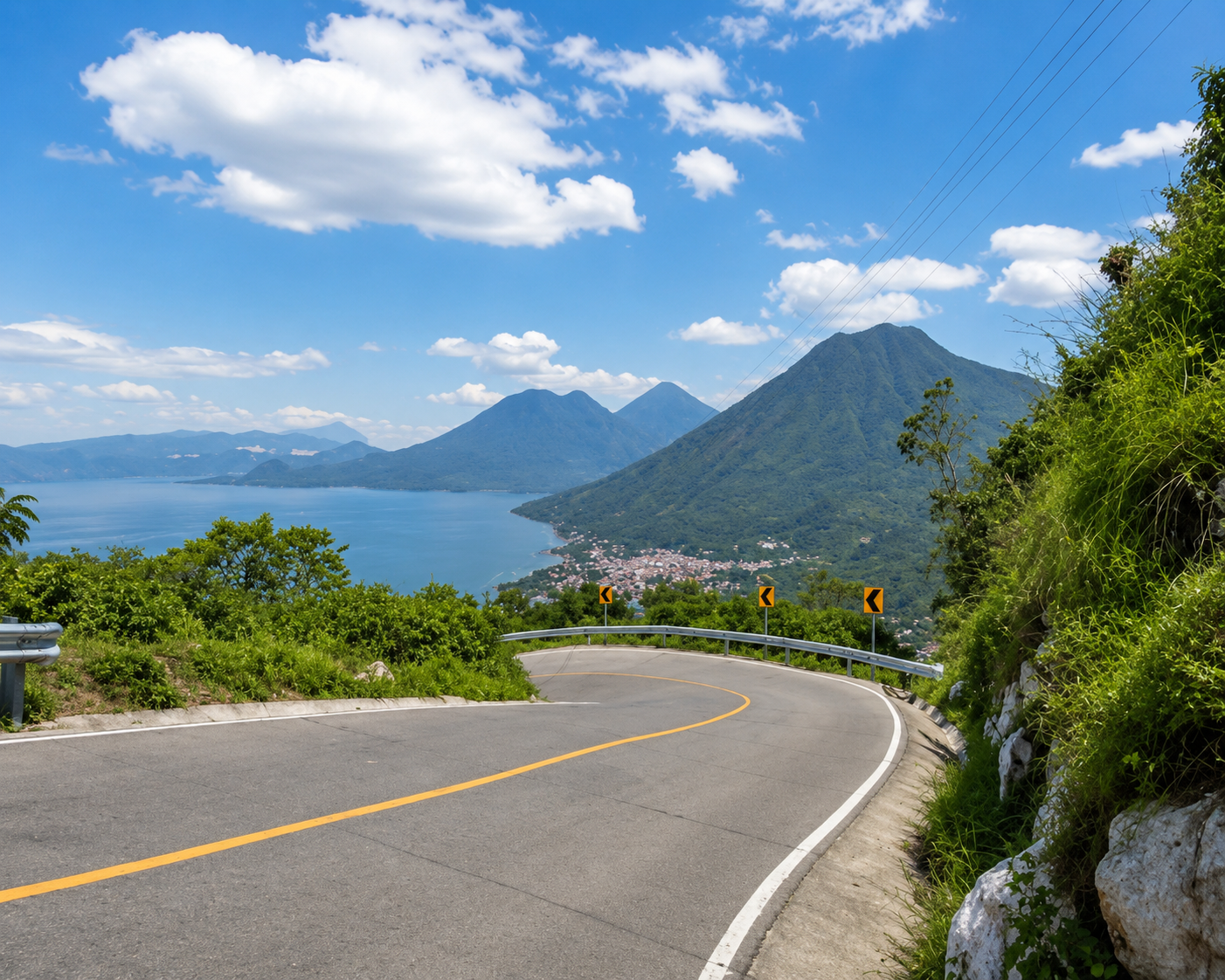
I’ve watched this play out with travelers for years — people who researched their trip extensively, who read every blog, who spent weeks planning. Not because they didn’t do the work, but because the information about how Guatemala actually moves isn’t in most travel guides. The logistics, the geography, the wind on the lake in the afternoon, the traffic leaving Guatemala City, the way altitude catches people off guard — these are the things that separate a smooth, memorable Guatemala trip from an exhausting one.
This article isn’t about what to do in Guatemala — I’ve covered that in detail in the full Guatemala itinerary guides. This is about how to structure your trip so you spend your time actually experiencing the country instead of spending it in a shuttle window, counting the hours to your next destination.
Read this if you are
✓ Planning your first Guatemala trip and trying to figure out the right order ✓ Already built an itinerary and something feels off about the routing ✓ Trying to add Acatenango and wondering where it fits
✓ Arriving late and not sure whether to start at the lake or Antigua ✓ Traveling with kids, older family members, or anyone who needs a gentler pace
The Problem
The Route Everyone Plans (And Why It Creates Problems)
Most Guatemala itineraries look like this. The airport is close to Antigua, so travelers go there first. A few days later they head to Lake Atitlán. Then they work their way back toward the airport at the end.
Hardest transfer done first · Natural geographic flow · No backtracking · You arrive at the airport fresh from Antigua, 45 minutes away
|
❌ The Common Route Airport Long transfer in the middle of trip · Backtracking at the end · Two major transfers instead of one · Most exhausting days happen when you’re already tired |
✓ The Smarter Route Airport |
The common route means you’re making the longest, most demanding transfer — Guatemala City to Lake Atitlán — in the middle of your trip, after you’ve already spent days out of your routine. Then you’re making a second major transfer back toward the airport at the end, when you’re most tired and least interested in sitting in a shuttle for three hours.
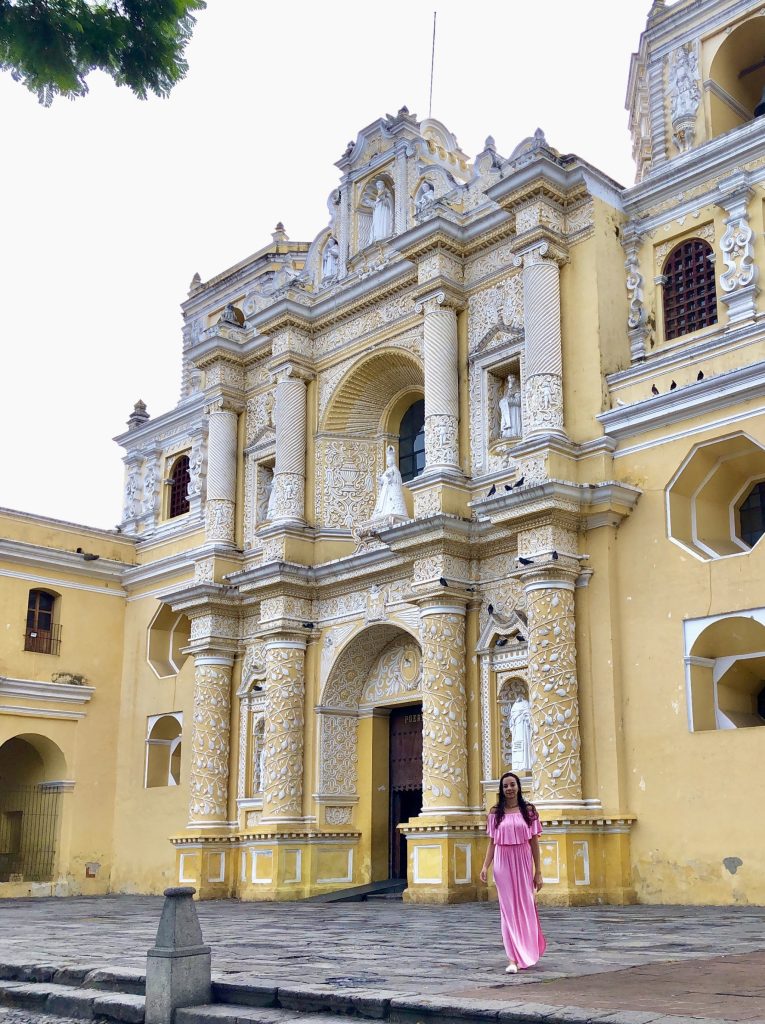
I’ve talked to hundreds of travelers who come back from Guatemala saying some version of: “It was amazing, but we felt like we were constantly moving.” That’s almost always why. Not bad destinations — bad route flow.
The Backtracking Problem
Many travelers add a final night back in Antigua before their flight home — which means the long winding mountain road between the lake and Antigua gets driven twice, in both directions. That road descends roughly 1,000 meters from the Pan-American Highway to Panajachel in about 20 minutes of curves. The first time is interesting. The second time, tired at the end of your trip, with luggage, is just exhausting. The smarter route eliminates that entirely.
Section One
Get the Hardest Transfer Over With First
The drive from Guatemala City Airport to Lake Atitlán is the longest, most demanding transfer in the standard Guatemala itinerary. Depending on traffic, customs delays, and the time of year, it takes anywhere from 3 to 5 hours. That involves getting out of Guatemala City traffic (which can easily absorb an hour on its own during peak times), climbing through the highland roads, and descending steeply from Sololá down to Panajachel on a road that does not allow for speed and does not forgive motion sickness.
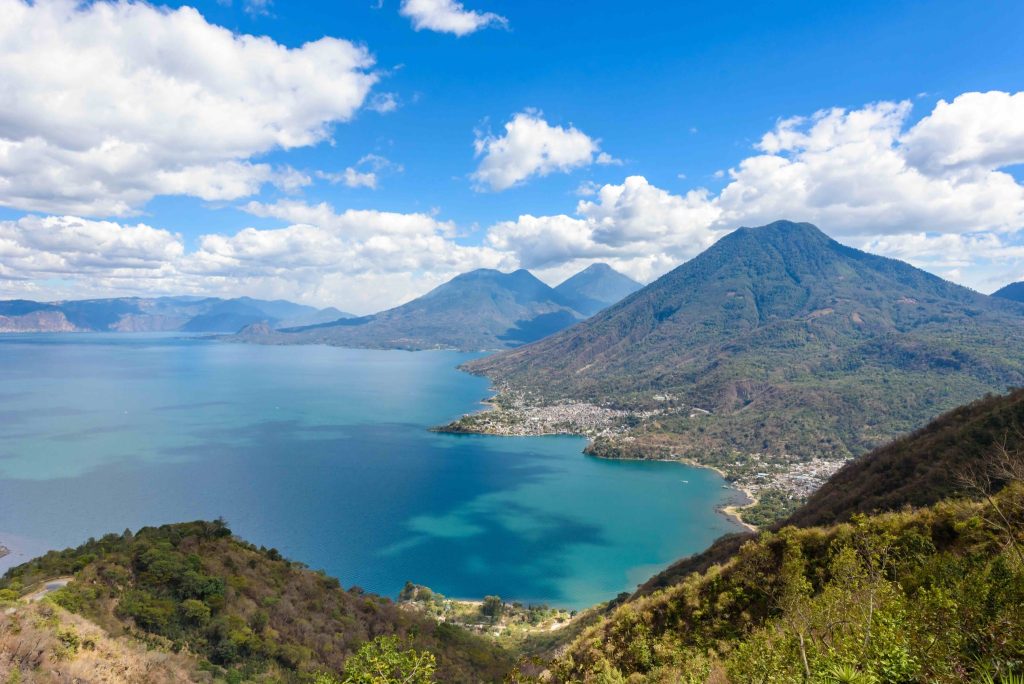
Doing that transfer on Day 1 — fresh, energized, with nothing to compare it to — is a completely different experience from doing it on Day 4 or 5, when you’ve already been walking cobblestones, hiking volcanoes, and adjusting to altitude. And crucially, doing it first means you never have to do it again. The rest of your trip flows naturally back toward Guatemala City, each day easier than the last in terms of logistics.
🚐 How to Do the Airport → Lake Transfer
The two options are a private shuttle from the airport directly to Lake Atitlán or a shared shuttle. For this specific transfer, I recommend private — especially on Day 1 with luggage, jet lag, and the unknowns of customs timing. Private gives you departure flexibility, a direct route, and the ability to stop if someone needs a break. The shared shuttles are fine but run on fixed schedules that may not align with when you actually clear customs.
If you’re traveling as a couple or family, private transport often costs only marginally more than shared once you split it — and gives you a first day that feels under control rather than chaotic.
📌 Google Maps Is Lying to You
Guatemala City to Panajachel shows up as about 2 hours on Google Maps. In reality, plan for 3 to 3.5 hours on a good day, 4 to 5 on a difficult one. Guatemala City traffic in the afternoon is genuinely brutal — I’ve sat in the city for 90 minutes before even reaching the highway. Market days in towns along the route can slow things down significantly. And the final descent to Panajachel isn’t fast under any conditions. Add an hour to whatever the app tells you and you’ll be prepared instead of frustrated.
Section Two
Why This Route Feels Like a Completely Different Trip
The difference isn’t just about distance or hours. It’s about the mental and physical weight of constant transitions. Every time you change hotels, there’s a process: pack, manage luggage, check out, find your shuttle pickup, arrive somewhere unfamiliar, figure out where things are. That process is tiring even when it goes smoothly. On a 7-day trip with multiple destination changes, it accumulates.
A good Guatemala itinerary is less about the destinations and more about the flow between them. Here’s what the lake-first route looks like in practice:
| Day | Common Route | Smarter Route |
|---|---|---|
| Day 1 | Arrive → Antigua (45 min) | Arrive → Lake Atitlán (3–4 hrs) — hardest transfer done |
| Day 2 | Full day in Antigua ✓ | Full day on the lake ✓ |
| Day 3 | Full day in Antigua ✓ | Full day on the lake ✓ |
| Day 4 | ⚠ Transfer to Lake Atitlán (3–4 hrs) — half day lost | Lake → Antigua (3 hrs) — moving toward airport |
| Day 5 | Full day at Lake ✓ | Full day in Antigua ✓ |
| Day 6 | ⚠ Lake → Antigua (3 hrs) — again | Full day in Antigua ✓ |
| Day 7 | Antigua → Airport (45 min) | Antigua → Airport (45 min) |
Same destinations. Same total days. The common route has two half-days consumed by the Antigua-to-Atitlán transfer going and coming. The smarter route has one transfer, done on Day 1 when you’re fresh, and one manageable 3-hour leg on Day 4 moving in the right direction.
✨ One More Bonus
The smarter route also makes Chichicastenango much easier to visit if that’s on your list. The market town sits naturally along the highway between the lake and Antigua — you can stop on the way between regions without it being a detour. On the common route, getting to Chichicastenango from Antigua and back adds a dedicated day or a complicated detour. On this route, it’s a natural stop on a day you’re already moving.
Already Planning?
I Can Map This Out Specifically For Your Dates, Flight Times and Travel Style
Route flow is where most trips go wrong, and it’s also the easiest thing to fix before you book. Tell me your travel dates and I’ll tell you exactly how to structure it.
The Most Important Caveat
This Only Works If Your Flight Arrives Early Enough
Here is the part of this conversation that almost nobody talks about openly — and it’s the most important nuance in this entire article. The lake-first route is the smarter route, but it only works cleanly if your flight arrives early enough. And “early enough” is more specific than it sounds. If your dates are flexible, it’s worth comparing cheap flights on a site like Kiwi, since even shifting your search by a day or two can land you on a morning arrival instead of an afternoon one. As you’ll see below, that changes your entire first day.
The airport-to-lake transfer takes 3 to 5 hours. Add customs time — 30 minutes on a smooth day, 90 minutes when it’s busy — luggage collection, and organizing your shuttle. You’re looking at departing the airport at least 45 minutes to an hour after your plane touches down, on a good day.
If your flight lands at 10 AM, you can reach Panajachel by mid-afternoon and still have a reasonable arrival. If your flight lands at 2 PM, you’re arriving at the lake at 7 or 8 PM at the earliest — tired, possibly in the dark, and potentially facing rough water conditions for the boat crossing to your village.
⚠ This Is Especially Important For
Families with children · Older travelers · Anyone arriving from Europe or after multiple connections · Travelers who are anxious about logistics · Anyone arriving in rainy season when afternoon conditions on the lake can deteriorate quickly. For these travelers, the calculus changes significantly — and I’ll explain exactly what to do in each case below.
The Flight Arrival Time Guide
| Flight Arrives At | Recommendation | Why |
|---|---|---|
| Before 11 AM | Head directly to Lake Atitlán | You’ll arrive at Panajachel by mid-afternoon with time to settle before dark. Morning lake conditions for any crossing will be calm. |
| 11 AM – 2 PM | Go to Panajachel, stay overnight there, cross to your village by morning boat | You’ll arrive in Panajachel by late afternoon — doable, but the afternoon wind on the lake may make a village crossing unpleasant. Stay in Pana, cross calm the next morning. |
| 2 PM – 7 PM | One night in Antigua strongly recommended | By the time you clear customs and get through Guatemala City traffic, reaching the lake in daylight is unlikely. Antigua is 45 minutes from the airport. Sleep well, head to the lake in the morning. |
| After 7 PM | Airport hotel or Antigua — do not attempt the lake | A late-night arrival followed by a 4-hour mountain transfer is a bad start to any trip. An airport hotel lets you start fresh in the morning. Several solid options near La Aurora Airport. |
💡 Important note on the table: These times are guidelines, not rules. Guatemala City traffic, customs queues, rainy season afternoon downpours, and whether you’re traveling with kids or have mobility considerations can all push these windows earlier. When in doubt, add an hour to your estimates and plan the more conservative option. Starting your trip rested is worth it.
🏨 Where to Stay Near Guatemala City Airport
If your flight lands late and you need a clean, comfortable night before heading to the lake or Antigua, several solid hotels sit close to La Aurora Airport. The Hilton Guatemala City and Barceló Guatemala City are reliable options with airport transfers available. Boutique options in the Zona Viva offer a nicer experience if you want your first night in Guatemala to feel like something.
What Nobody Tells You About Lake Atitlán
The Xocomil: Why Afternoon Matters More Than You Think
There’s a weather phenomenon on Lake Atitlán called the Xocomil. The name comes from the Kaqchikel Maya and translates roughly as “the wind that carries away sin.” I’ve always found that poetic for something that can also carry away your enthusiasm for boat travel if you’re caught in it unprepared.
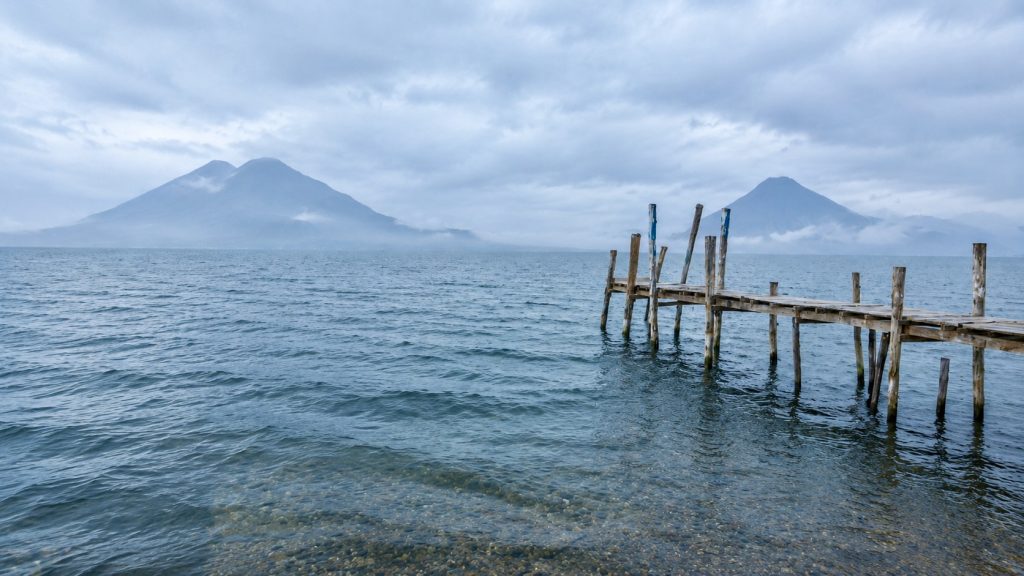
The Xocomil is a strong wind that typically picks up on the lake between noon and 2 PM, sometimes earlier during rainy season, and can last through the evening. The lake goes from calm, glassy, and extraordinarily beautiful in the morning to choppy, rough, and uncomfortable in the afternoon with some regularity. The boats used for inter-village transport — the lanchas públicas — are small, open, and very much at the mercy of whatever the lake decides to do.
Who This Affects Most
Children · Older travelers · Anyone with motion sickness · Travelers with luggage who aren’t used to the boats · People arriving at the lake for the first time who don’t know what to expect. The morning boats — roughly before 11 AM — are almost always calm. Plan your village crossings for the morning and your afternoons on land, and you’ll rarely encounter rough water. Plan an afternoon arrival at a remote village and you’re rolling the dice.
⛵ How to Work Around the Xocomil
The practical adjustment is simple. Do your village-hopping in the morning. Be on a boat before 11 AM whenever possible. If you want to visit multiple villages in one day, start early and plan to be back at your base by early afternoon. Save the afternoon for activities that don’t require crossing water: hiking above the village, exploring local workshops, sitting at a restaurant with a lake view.
For a complete breakdown of the boat schedule between villages and the best way to navigate the lake, I’ve written a complete guide to Lake Atitlán boat services — read it before you arrive.
Section Three
Why Staying in Panajachel Your First Night Sometimes Makes the Most Sense
If you’re arriving at the lake in the afternoon, say, you cleared customs by noon and reached Panajachel by 4 PM. I often recommend staying your first night in Panajachel itself rather than taking a lancha to a village that same afternoon.
People always want to get straight to San Pedro, San Marcos, Santa Cruz or San Juan, those are the charming villages, those are the places worth staying. And they’re right. But arriving at those villages after a 4-hour transfer, in the afternoon with the Xocomil picking up, with luggage and potentially with kids, is how a promising first day becomes a stressful one.
💡 One night in Panajachel: It’s not a destination in the same way the villages are, but it has good restaurants, a beautiful lakefront, and it positions you perfectly for a calm morning boat crossing to wherever you actually want to stay. You lose nothing and gain a much smoother arrival experience.
|
⭐ Best in Panajachel · Great Views Hotel Atitlán Beautiful gardens, lake and volcano views, great restaurant, comfortable rooms. The best option in Panajachel for a first night on the lake. A favorite for a reason. |
Best Value · Village Atmosphere Villa Santa Catarina In Santa Catarina Palopó, reachable by tuk-tuk from Pana. Volcanic geothermal pool, stunning lake views, and significantly better value than a Panajachel town hotel. |
Section Four
When Starting in Antigua Still Makes Sense
I’m giving you the smarter route, but I’m not telling you it’s the only route. Antigua first is absolutely the right call in certain situations, and trying to force the lake-first structure onto the wrong trip creates its own problems. The real mistake isn’t “starting in Antigua.” It’s building a route that requires backtracking to Antigua from the lake at the end.
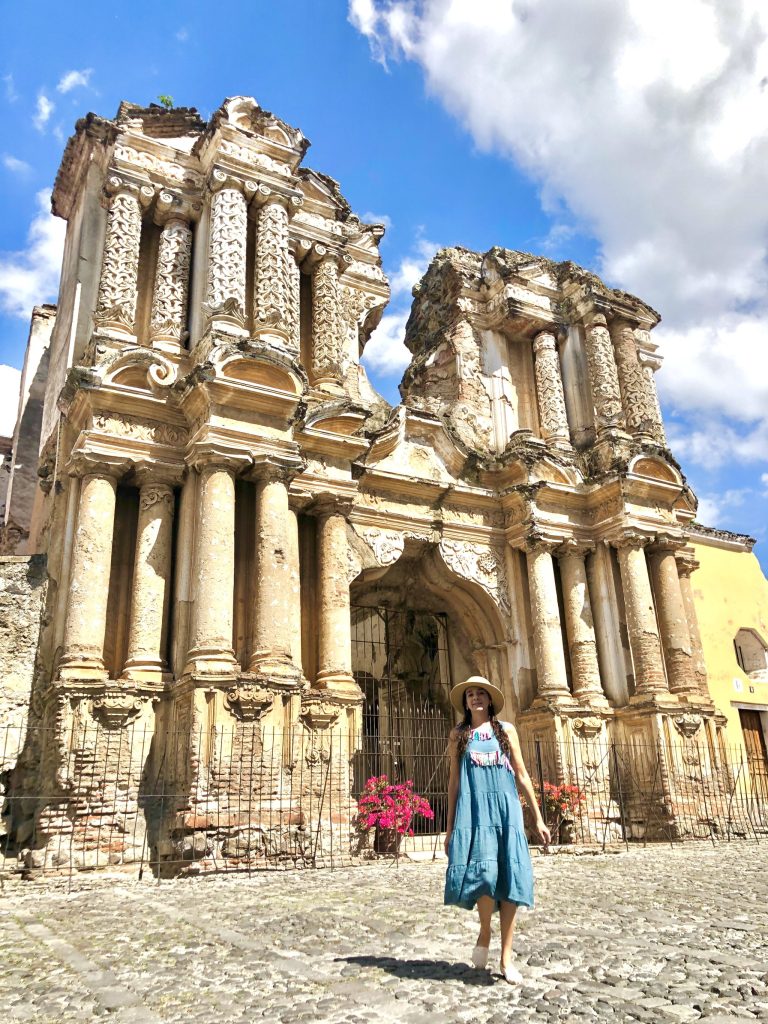
| ✈️ | Flight lands after 2 PM Antigua is 45 minutes from the airport. The lake is 3–5 hours. The math makes the decision for you. One night in Antigua, then head to the lake in the morning. |
| 👨👩👧 | Traveling with young children A 4-hour shuttle with tired kids after a flight is a stressful way to start a vacation. Antigua gives the family a calm, walkable first day to adjust before the longer transfer. The cobblestone streets and volcano views of Antigua hold a child’s attention — the shuttle does not. |
| 🌍 | Arriving from a long international flight Coming from Europe or after multiple connections? You may have been traveling for 12 to 18 hours. One night in Antigua to sleep in a real bed before the mountain road to the lake is not a compromise — it’s a good decision. You’ll enjoy the lake significantly more if you arrive rested. |
| 🧭 | General anxiety about the logistics If the thought of navigating an unfamiliar country for 4+ hours on Day 1 makes you nervous, don’t fight it. Antigua is gentle, walkable, beautiful, and extremely easy to orient in. Use it to adjust to Guatemala, get your footing, and then do the lake transfer feeling settled rather than anxious. |
| 🏔 | Acatenango is on your list (see next section) If you’re planning to hike Acatenango, altitude acclimatization in Antigua (1,500m) before you attempt the climb (4,200m) is genuinely valuable. Starting in Antigua, acclimatizing for a day, doing the hike, then heading to the lake for recovery is the best possible sequence for serious hikers. |
🏨 Where to Stay in Antigua Your First Night
Skip the large hotels. Antigua’s best stays are small, boutique, and rooted in the city’s history. Two that I trust and personally recommend: El Convento Boutique Hotel — right on Calle del Arco, the most beautiful street in the city, and Mesón Panza Verde — intimate, beautifully decorated, one of my longtime favorites.
For the transfer the next morning from Antigua to Atitlán, a private shuttle from Antigua to Lake Atitlán is the comfortable, flexible option — especially if you’re staying in one of the lake villages rather than Panajachel.
The Details Matter
Not Sure Which Route Is Right for Your Specific Trip?
Your flight time, your travel group, your energy, the time of year — all of it changes the right answer. This is exactly what I work through with people in the planning service. Send me your details and I’ll tell you specifically which route makes sense for you.
The Honest Conversation
The Acatenango Question — And Why I Don’t Recommend It for Most People
Let me be direct with you about Acatenango, because most travel content isn’t. The photos are real. The views of Fuego erupting next to you, the crater at 4,200 meters, the camping in the clouds — all of it is genuine. I’ve done it. I recommend it to specific travelers with full confidence.
I just don’t recommend it for most travelers, and I want to explain why — because the social media version of Acatenango and the actual physical reality of Acatenango are two different things.
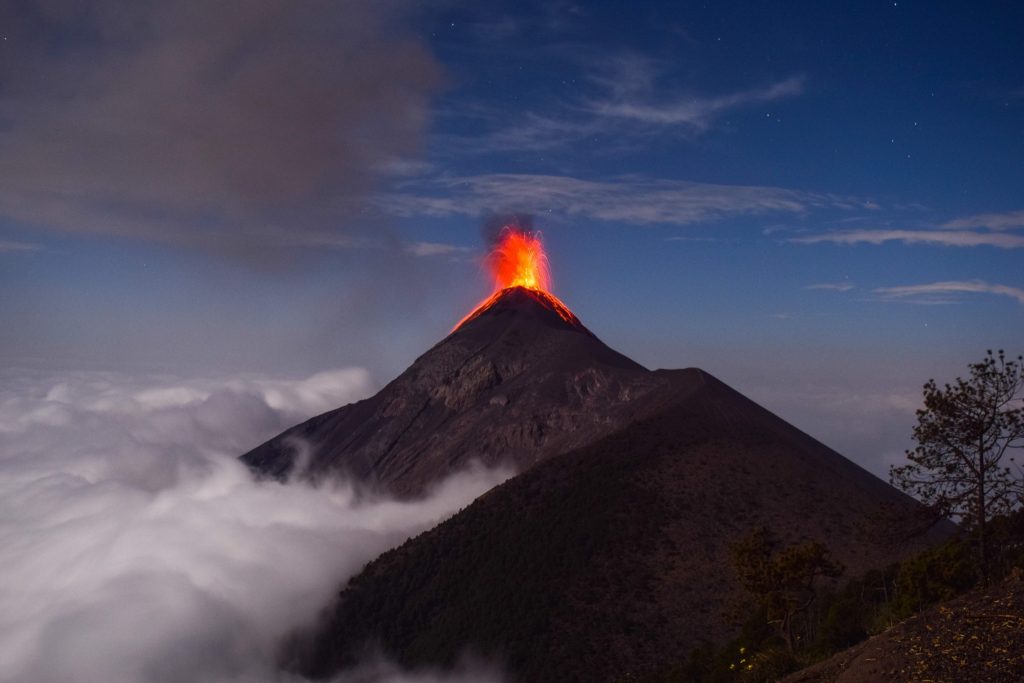
What the Reels Don’t Show You
Acatenango is a mountain climb, not a hike. It sits at 4,200 meters (13,780 feet). The ascent involves significant elevation gain on loose volcanic scree — the kind of surface that gives under your feet and makes every step harder than it looks. Most standard tours take 25 to 50 people. You hike in a single-file line for hours. I’ve watched genuinely fit, athletic people in their 20s and 30s turn back before the summit. The altitude catches people in ways that are nearly impossible to predict, even for people who exercise regularly.
And when you finish — if you finish — the recovery is real. The soreness from that climb can last two to three days. I’ve heard from multiple travelers who pushed through the hike, made it to the top, and then spent their Lake Atitlán days too exhausted and sore to enjoy any of it. The lake and Acatenango are in direct tension with each other unless you build meaningful recovery time between them.
Who Should Actually Do Acatenango
If you regularly do demanding mountain hikes, are comfortable at altitude, and have built dedicated recovery days into your itinerary — yes, do it. It’s extraordinary. If you’re in good shape but your fitness is gym-based or you rarely hike at elevation — be honest with yourself about this one. The mountain doesn’t care about your gym routine.
🌋 The Smarter Alternative for Most Travelers: Pacaya
Pacaya is an active volcano, genuinely impressive, and dramatically more accessible than Acatenango. You walk across hardened lava fields with heat rising through the ground. The afternoon Pacaya sunset tour — watching the lava glow intensify as the sky darkens — is one of the most memorable Guatemala experiences I’ve ever had. Bring marshmallows and sticks. Roasting them over active lava costs nothing and makes a better memory than the summit pizza.
For most first-time travelers, Pacaya is the correct volcano experience. If Acatenango is on your bucket list for a future trip, plan a trip specifically around it with appropriate preparation.
If You’re Doing Acatenango Regardless — Here’s the Timing
|
✓ Acatenango Before the Lake Start in Antigua, acclimatize for a day or two, then hike. Use the lake as your recovery destination. You arrive at Atitlán sore and tired, but with the hardest thing behind you. The lake will feel like a reward. Best for: Experienced hikers. Requires 1–2 acclimatization days in Antigua first. Budget at least 2 recovery days at the lake before any strenuous activity. |
⚠ Acatenango After the Lake Lake first, then Antigua, then Acatenango as the last major activity before flying home. Relaxed pacing at the beginning, lake is fully enjoyed. The risk: some travelers feel less motivated later in the trip, and the hike falls close to departure day. Warning: Do not schedule Acatenango within 48 hours of your flight home. The exhaustion and soreness are real — you will feel it on the plane. |
The 4×4 Option — Best of Both Worlds
There are now tours that drive you most of the way up Acatenango in a 4×4, dramatically reducing the physical demand of the hike. You still reach the extraordinary views. You still experience the proximity to Fuego. You just don’t gamble your entire trip on how your lungs handle 4,200 meters. For most travelers who have Acatenango on their list but reasonable uncertainty about their fitness level, this is the option I recommend. Book the 4×4 Acatenango tour here →
Find Your Route
The Best Guatemala Route By Traveler Type
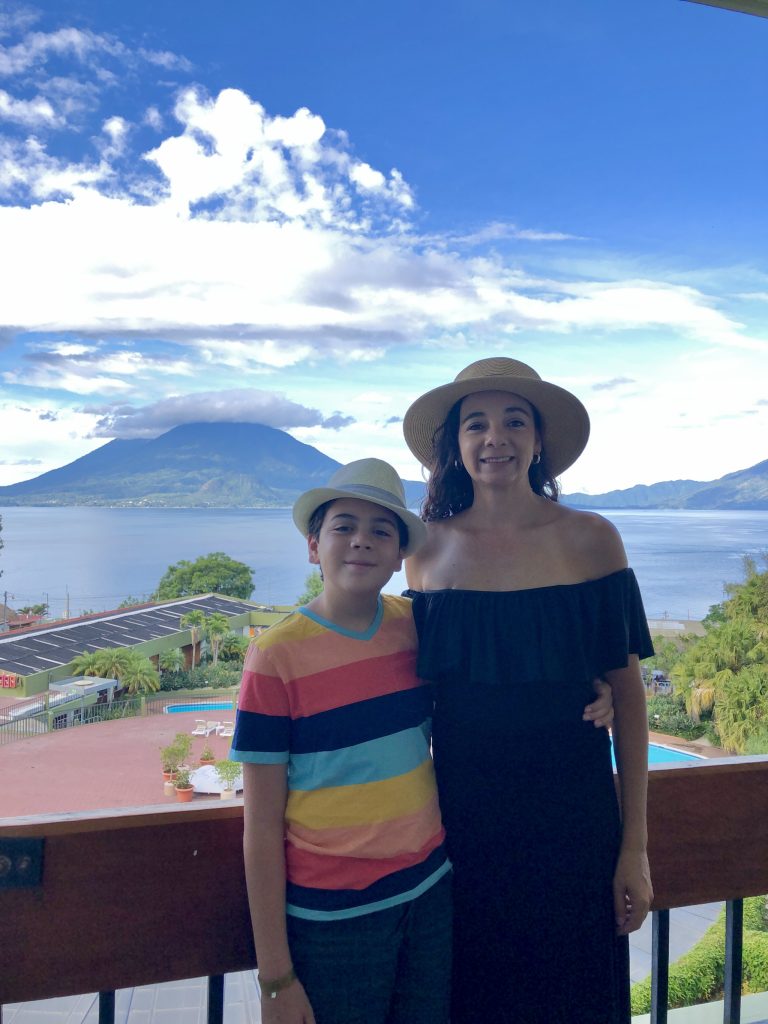
There is no single perfect Guatemala route. The right structure depends on who you are, when you arrive, and what matters most to you. Here’s how I think about it for different travelers.
|
👨👩👧 Families with Kids One night in Antigua first, regardless of flight time — gives the family a gentle, walkable start. Then to the lake via private shuttle (not shared). Stay in Panajachel the first night if arriving mid-afternoon; cross to a village in the morning. Avoid nighttime transfers and afternoon lake crossings at all costs. Skip Acatenango entirely. |
🧓 Older Travelers Private transportation for every leg — the comfort difference is significant. One night in Antigua to adjust to altitude before the longer transfer. Panajachel as a base (easier logistics) or a village with good amenities. Morning-only boat activity. Acatenango not recommended. |
|
🎒 Backpackers Lake first works very well and the shared shuttles are straightforward. Budget travelers can pick up chicken buses between Panajachel and Antigua via the Pan-American Highway. Good tolerance for longer travel days gives you maximum flexibility. Just still don’t attempt the airport-to-lake transfer if landing late. |
🏔 Serious Hikers Start in Antigua. Acclimatize one full day. Hike Acatenango. Then move to the lake for recovery — you’ll need it. Lake days post-Acatenango are gentler activities: boat rides, village exploring, good food. Then Antigua for your final days before the airport. |
|
💎 Luxury Travelers Private transportation changes everything. With a private driver and vehicle, the airport-to-lake transfer is significantly more comfortable, you can stop along the route, and you’re never tied to a shared shuttle schedule. DiscoverCars Guatemala or a local private driver arranged through my planning service gives you complete route flexibility. |
💑 Couples The lake-first route is perfect for couples — private shuttle cost splits well between two, and the romantic setting of the lake is best appreciated when you’re not exhausted from backtracking. Ending in Antigua gives you the best restaurant scene in Guatemala for the final nights of your trip. |
Plan It With Someone Who Knows
Your Trip Type Changes Everything — Let’s Find the Right Route for You Specifically
Family with a late flight, first time in Guatemala, not sure about Acatenango — these details change the route. I’ve built itineraries for every kind of traveler here. Tell me about your trip and I’ll give you a specific recommendation, not a generic one.
Quick Reference
The Most Common Guatemala Planning Mistakes (And How to Avoid Them)
| ❌ | Trusting Google Maps travel times The app accounts for road distance, not Guatemala City traffic, market days, the rainy season, or the reality of mountain roads. Add 60 to 90 minutes to any Google Maps estimate for the Antigua-Atitlán corridor. Plan for the real time, not the map time. |
| ❌ | Overpacking the itinerary The most common version: trying to fit Antigua, the lake, Tikal, Chichicastenango, and Acatenango into seven days. That’s three shuttle transfers plus a flight, with activities in between. Something gets rushed. Usually everything. Pick fewer destinations and go deeper. |
| ❌ | Too many hotel changes Every hotel change costs you: packing time, orientation time, the mental energy of figuring out a new place. A seven-day trip should have two or three bases — not five. Pick your base at the lake and explore by day trip. Don’t move accommodation every two nights. |
| ❌ | Crossing the lake in the afternoon The Xocomil makes afternoon boat crossings at Atitlán rough and sometimes genuinely unpleasant. Do your village crossings in the morning when the water is calm and the lake is at its most beautiful. Save the afternoon for land-based activities. |
| ❌ | Not building in Acatenango recovery time If you’re doing Acatenango, budget at minimum two full rest days afterward before any other strenuous activity. Hikers who try to squeeze in the lake, more hiking, or long shuttles immediately after the climb regret it without exception. |
| ❌ | Booking shared shuttles for the airport transfer Shared shuttles run on fixed schedules and often make multiple hotel pickup stops before leaving the city. On Day 1 with luggage and jet lag, waiting at a shared shuttle stop while it fills up is not how you want to start the trip. For the airport transfer specifically, go private. |
| ❌ | Routing through Guatemala City more than once Guatemala City is not a destination — it’s a transit point. Every time you’re routed through it adds traffic risk, time, and stress. Build your itinerary so that you pass through Guatemala City exactly twice: when you arrive and when you leave. That’s it. |
The Takeaway
The Difference Between a Stressful Guatemala Trip and an Unforgettable One
There is no single perfect Guatemala route. What I’ve laid out here is not a rigid formula — it’s a framework for thinking about the trip in a way that most guides don’t explain.
The destination choices — Antigua, Atitlán, Tikal, Acatenango — those are the things travel blogs spend all their time on. The route flow, the transfer timing, the Xocomil, the arrival window, the altitude acclimatization — those are the things that determine whether you actually enjoy the destinations you chose.
The smarter Guatemala itinerary means: get the hardest transfer out of the way first, understand how the lake conditions affect your plans, know when your flight arrival time changes the equation, be honest about what Acatenango actually asks of your body, and build a route that flows in one direction instead of zigzagging across the country.
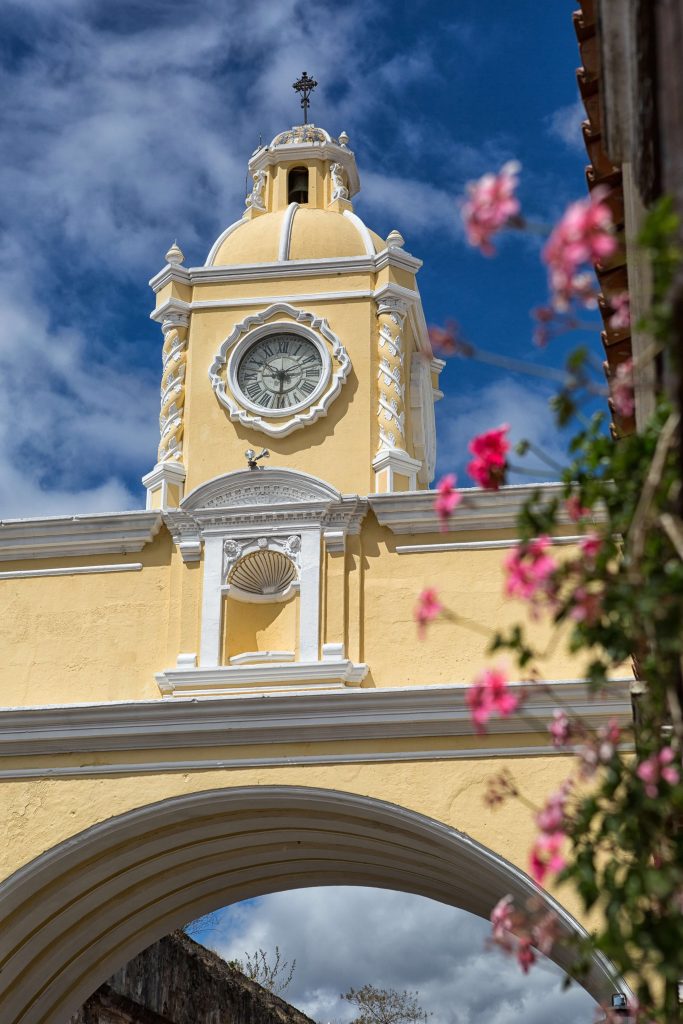
Less backtracking. Less time in shuttle windows. More time actually in Guatemala.
That’s the version most travelers wish they had planned from the beginning. Now you can plan it from the beginning.
Ready to Plan? Start Here
|
Most Popular 7-Day Guatemala Itinerary: Antigua, Atitlán + Tikal The complete day-by-day breakdown of the classic three-region route, with every hotel, restaurant, and honest skip. |
All Routes Guatemala Itinerary Hub: Every Route from 4 Days to 2 Weeks Pick your trip length and find the right itinerary for your travel style and timeline. |
|
Lake Atitlán Complete Guide to Lake Atitlán Boat Services Schedules, prices, village routes, and everything you need to navigate the lake without guesswork. |
Tikal Complete Guide to Visiting Tikal What the tour operators don’t tell you, the guide who changed how I see the site, and how to experience Tikal the right way. |
Skip the Guesswork
Route Flow Is What I Do
For Every Type of Guatemala Trip
Tell me your flight arrival time, your travel group, your trip length, and whether Acatenango is on your list. I’ll tell you exactly how to structure the route — and what to avoid booking before we talk. This is what the planning service is for.
Guatemala has been in my life for as long as I can remember — first as the country I grew up in, then as the place I kept coming back to, now as home again. The logistics that trip people up here are the things I learned by watching what goes wrong and figuring out what doesn’t. If this article saved you from one bad transfer or one exhausting backtrack, it did its job.

Through her writing, Paula helps travelers discover Guatemala beyond the typical tourist route with practical advice, local recommendations, and authentic experiences that connect visitors with the country’s people, culture, and traditions.
Planning a trip to Guatemala? Paula offers personalized Guatemala itinerary planning and trip consultation services tailored to your interests, travel style, and budget. Contact her at [email protected] to learn more.
- San Lucas Tolimán Guatemala: Lake Atitlán’s Best-Kept Secret - September 24, 2026
- Hotel Tolimán Lake Atitlán: A Special Stay in San Lucas Tolimán - September 24, 2026
- Guatemala Dreams in San Lucas Tolimán: A Boutique Stay on Lake Atitlán - September 23, 2026

