If you are planning Holy Week in Guatemala and trying to decide where to go, Semana Santa at Lake Atitlán offers something that no other destination in the country can match: twelve indigenous villages, each with its own Holy Week traditions, spread around one of the most beautiful lakes in the world. While most travelers head to Antigua for Semana Santa, Holy Week at Lake Atitlán draws those looking for something more intimate, more rooted in Maya tradition, and less crowded. You will find alfombras made of flowers and fruit rather than precision sawdust. Processions carried by men and women in traditional indigenous traje rather than matching purple robes. And in Santiago Atitlán, a Good Friday ceremony where a Maya spiritual figure joins the Catholic procession of Christ in a crossing of two cosmologies that has no equivalent anywhere else on earth.
This guide covers Semana Santa in every lake village worth knowing about: what happens where, how to plan your time, where to stay, and what to expect across the lake during Holy Week 2026.
I have spent Semana Santa in many corners of Guatemala over the years, and the lake always pulls me back. Each village does Holy Week differently. Each one rewards being there. The challenge is knowing which to prioritize and how to move between them. That is what this guide is for.
Semana Santa in Guatemala 2026 runs from Palm Sunday, March 29 through Easter Sunday, April 5.
For the history and traditions behind Holy Week across Guatemala: Semana Santa in Guatemala: Traditions and History. For Antigua planning: Holy Week in Guatemala 2026: Key Dates, Major Processions, and What to Expect.
Why Semana Santa at Lake Atitlán Is Different from Antigua
To understand what makes Holy Week at Atitlán distinct, you have to understand where you are. The lake is surrounded by twelve indigenous villages, most of them predominantly Tz’utujil or Kaqchikel Maya. These communities did not simply adopt Catholic traditions when the Spanish arrived in the 16th century. They wove them into an existing spiritual framework, and that syncretism, the blending of Maya cosmovision with Catholic faith, is visible and alive in everything that happens during Semana Santa here.
In Antigua, Good Friday is solemn and heavy. The processions last eighteen hours, the alfombras are architectural, the andas weigh tons. Guatemala City’s celebrations are massive in scale and draw enormous crowds. Atitlán is different from both. If Antigua gives you spectacle, Atitlán gives you depth.
Semana Santa in Santiago Atitlán: The Heart of Holy Week at the Lake
Semana Santa in Santiago Atitlán is the most important and most extraordinary Holy Week experience at the lake, and one of the most unique in all of Guatemala.
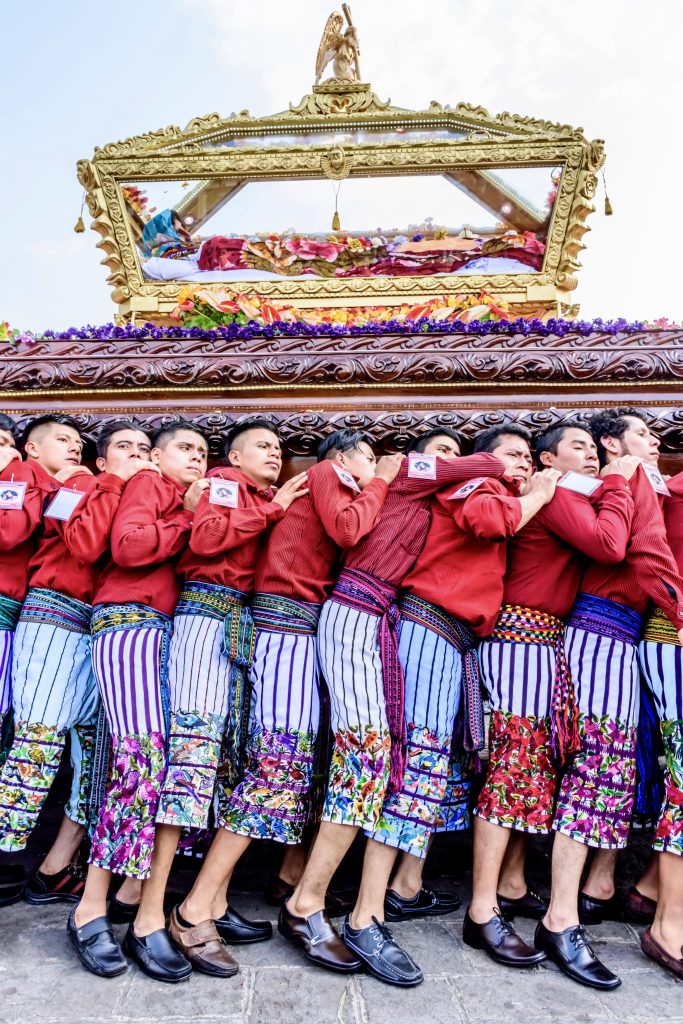
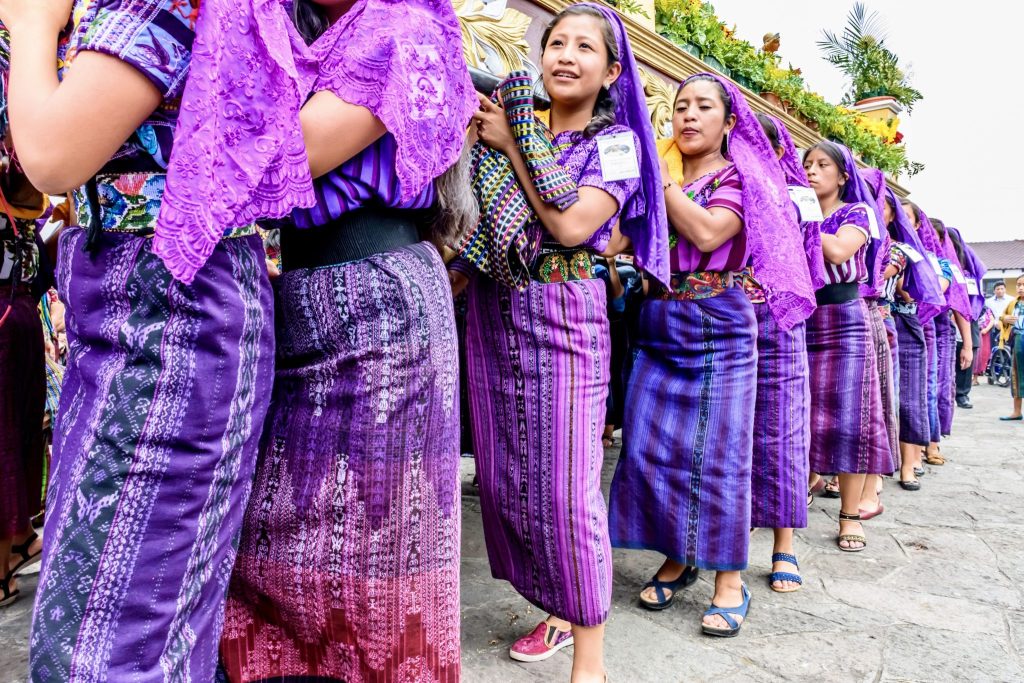
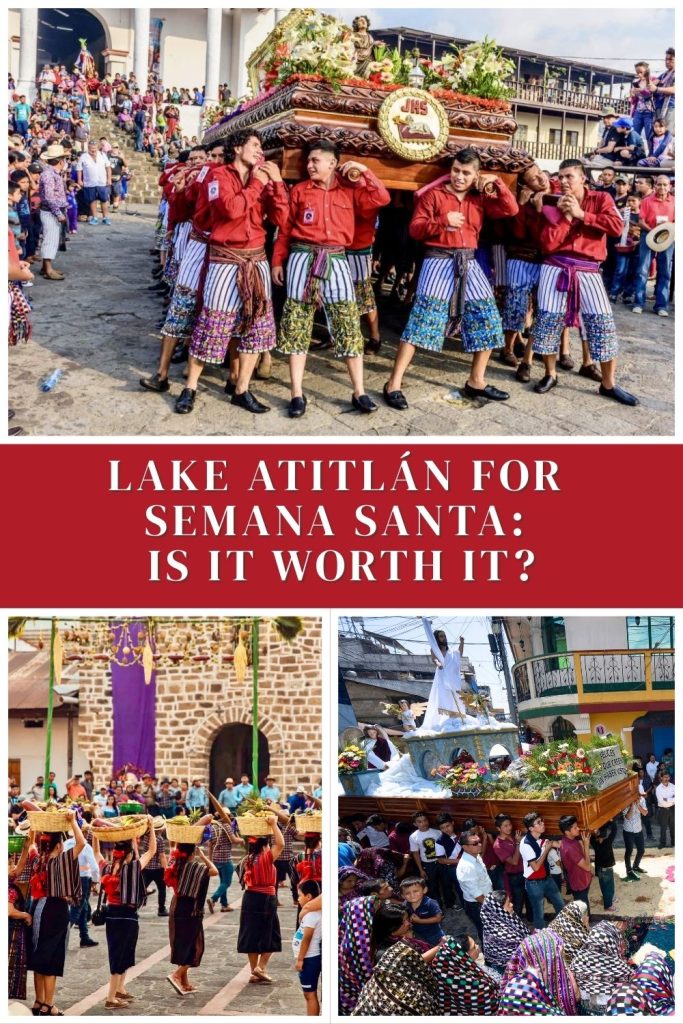
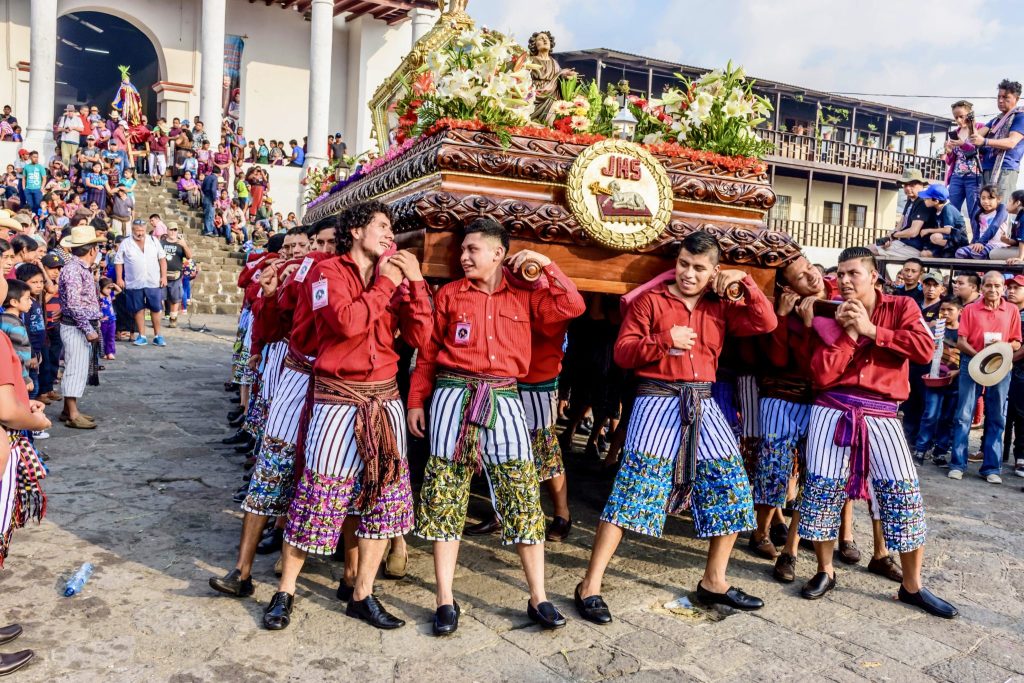
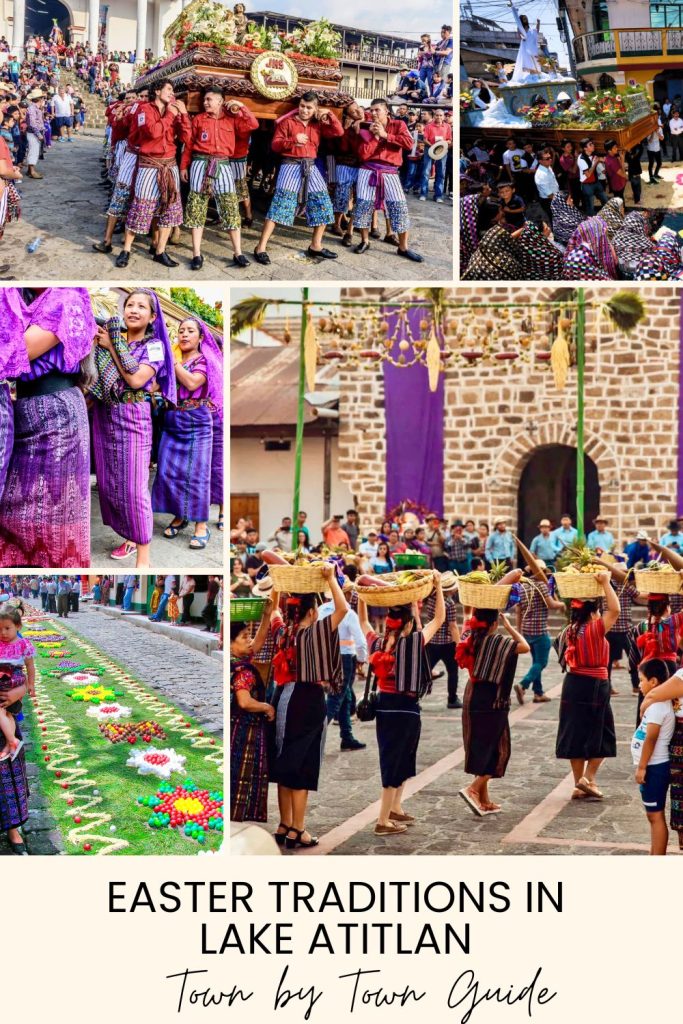
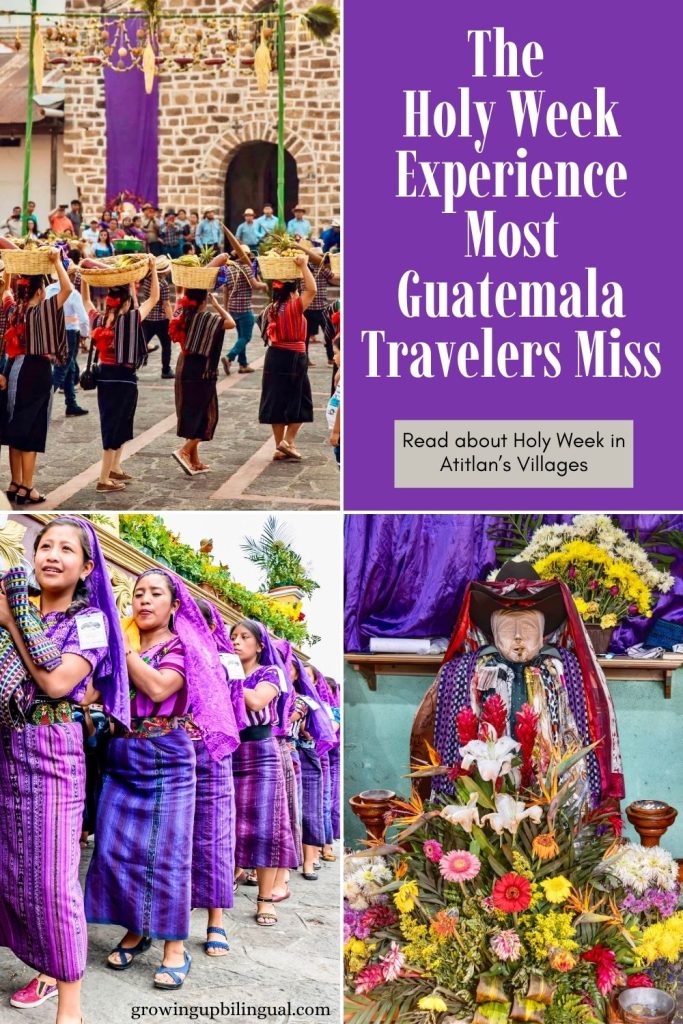
Santiago is a predominantly Tz’utujil Maya community on the southern shore, and during Holy Week it becomes the site of something that has no equivalent anywhere else in the country. The processions here are carried by men wearing traditional Tz’utujil traje: red shirts and the iconic short woven pants embroidered with birds and animals. The women who carry the Virgin’s anda wear their traditional cortes and huipiles in purples and blues, with purple lace mantillas. Nothing in Antigua prepares you for the visual of a centuries-old Catholic procession carried entirely in Maya dress. It is one of the most beautiful things I have ever seen during Semana Santa anywhere in Guatemala.
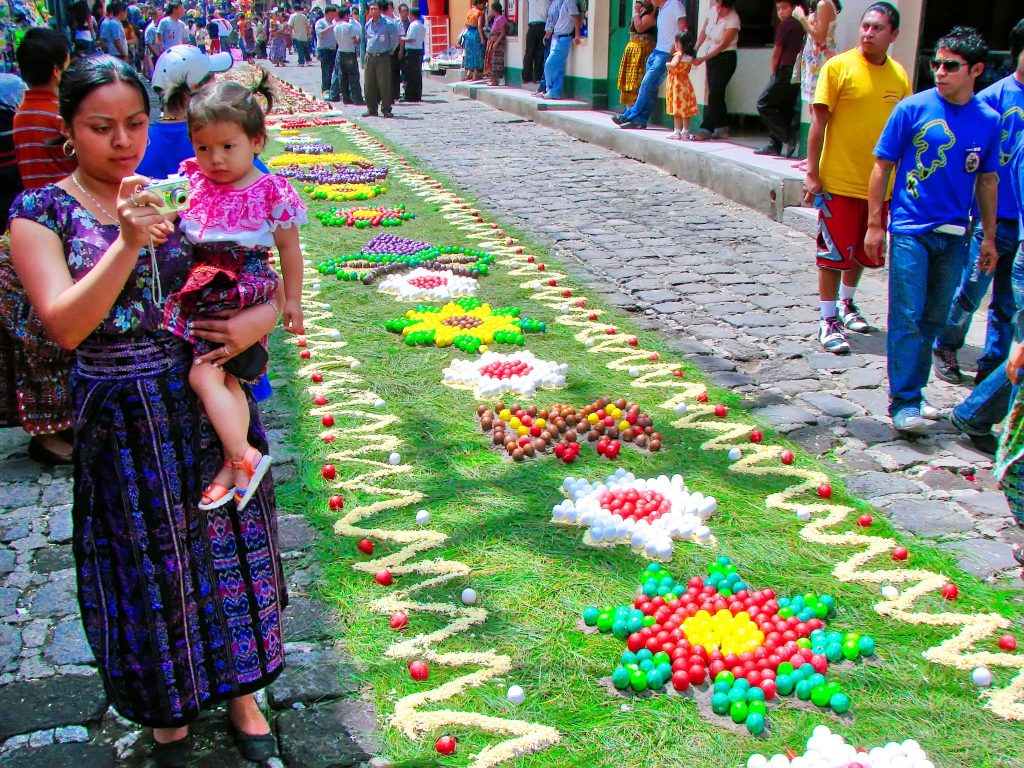
The andas are decorated differently too. Where Antigua’s floats are encased in silver and purple, Santiago’s andas are covered in bright flowers of every color. The alfombras are organic and community-made, using sawdust, fruit, and flowers in colorful designs that reflect the indigenous aesthetic of the village rather than the baroque tradition of the colonial city.
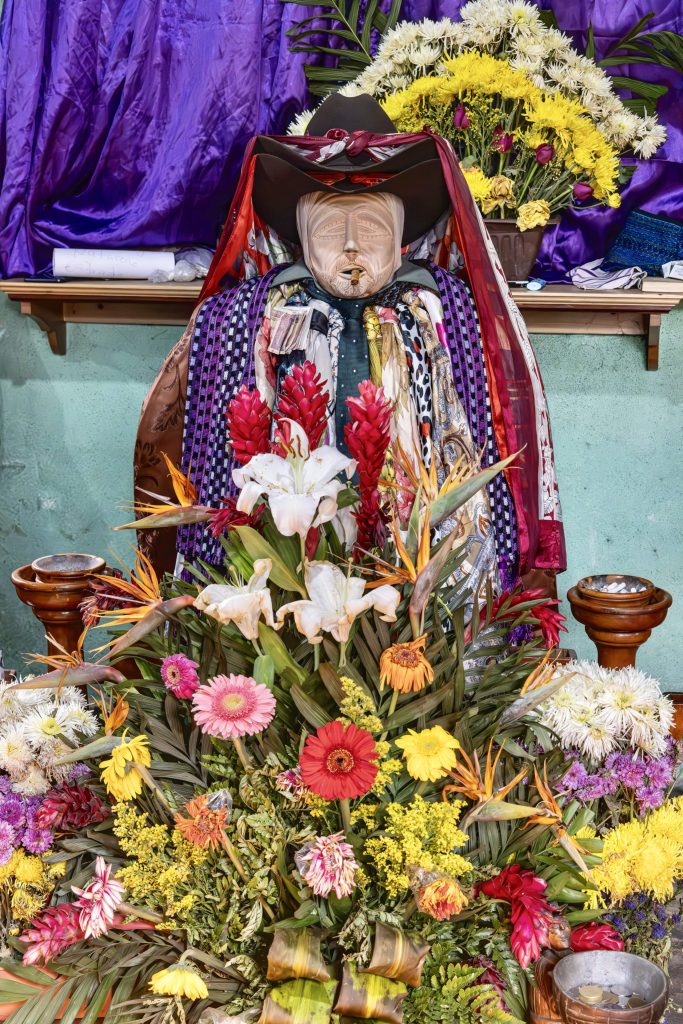
The centerpiece of Good Friday in Santiago Atitlán is the crossing of two processions: the Señor Sepultado and the figure of Maximón, the Maya spiritual figure also known as Rilaj Mam or the Gran Abuelo. On Good Friday, Maximón joins the Santo Entierro procession from behind, carried by the telinel of the Cofradía Santa Cruz to the rhythm of rattles and drums. In Antigua, Good Friday is solemn. In Santiago Atitlán, it is colorful, communal, and shot through with a spiritual logic that is distinctly Maya: not a day of grief but a ceremony of life. I was not prepared for this the first time I witnessed it. Nothing quite readies you for the moment those two processions cross paths.
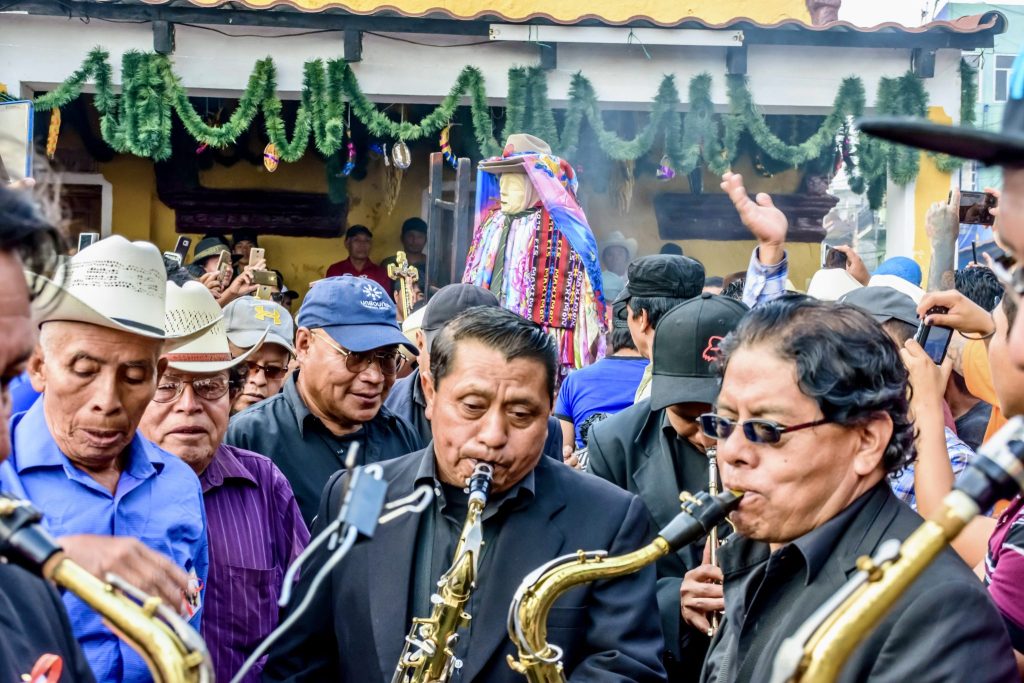
For the complete day-by-day account of Holy Week in Santiago Atitlán, see Holy Week in Santiago Atitlán: A Complete Guide to Semana Santa. For the full story of Maximón, see Maximón, Guatemala’s Most Mysterious Figure.
Where to stay in Santiago Atitlán
Hotel y Restaurante Bambu is my top pick, with lake views, pool, hot tub, sauna, and beautiful gardens. Hotel Tiosh Abaj has a private beach area and is excellent for families. Casa Josefa Hotel is smaller and more central with excellent breakfasts. Book two to three months ahead; everything fills for Holy Week.
Holy Week in San Pedro La Laguna: Authentic and Undervisited
Holy Week in San Pedro La Laguna is one of the most underappreciated Semana Santa experiences at the lake. San Pedro sits at the base of Volcán San Pedro on the southwestern shore and is better known among travelers for its Spanish schools and backpacker scene, but during Holy Week it has its own genuine and surprisingly rich tradition that most visitors completely miss.
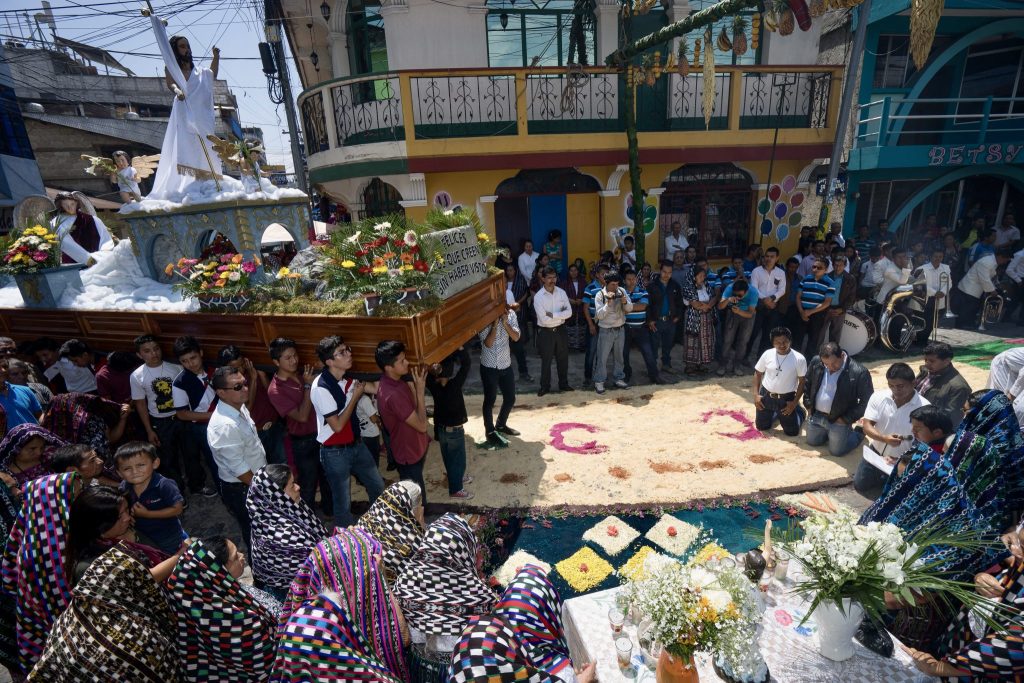
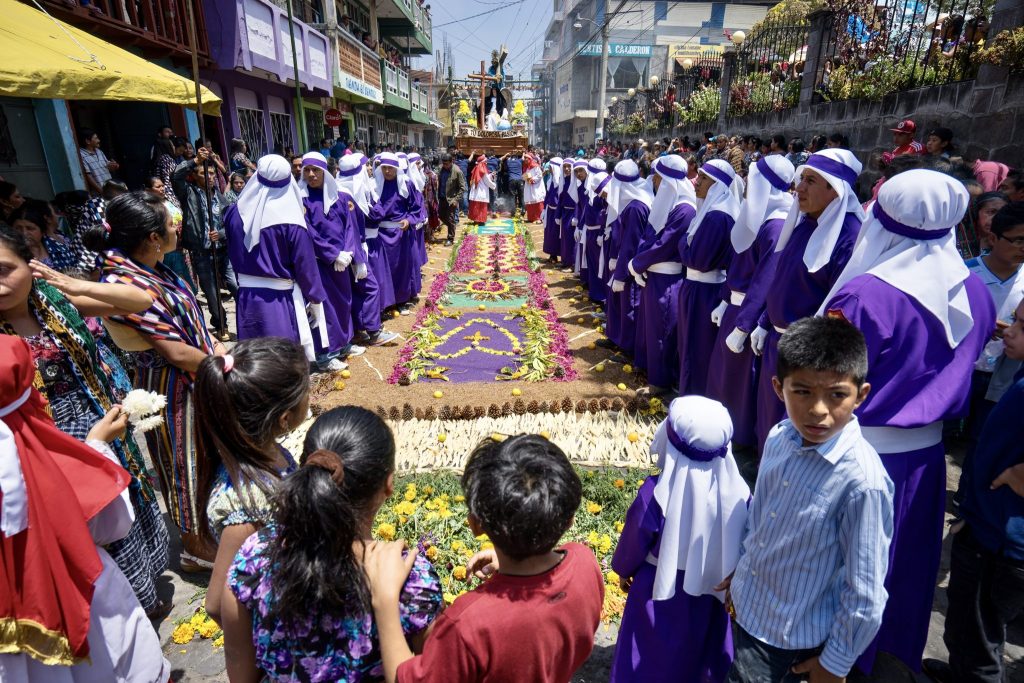
San Pedro has processions throughout the entire week: a children’s procession, processions of Christ on the cross and the Virgin Mary on Good Friday, a women’s daytime procession, and a night procession. On Good Friday, the largest procession of the village takes place in the evening with the Señor Sepultado. The processions here are small, community-organized, and carry none of the tourist overlay of Antigua. If you want to experience Guatemalan Holy Week at a human scale, with room to breathe and genuine access to the people participating, San Pedro is the place.
My honest recommendation: if you are basing yourself at the lake for Holy Week, San Pedro is a practical and genuinely rewarding home base. Go to Santiago Atitlán for Good Friday and spend the rest of the week here, exploring the lake by lancha.
Where to stay in San Pedro
Mikaso Hotel is a solid choice with lake views and a friendly atmosphere. San Pedro also has the widest range of Airbnb options at the lake, including beautiful private houses with terrace views of the volcanoes. During Holy Week this often provides better value than hotels and a more immersive experience. Search early because the good ones go quickly.
Semana Santa in San Marcos La Laguna: Small, Peaceful, and Contemplative
Semana Santa in San Marcos La Laguna has a character entirely its own. San Marcos is a small village on the northwestern shore known for its wellness retreats, yoga centers, and spiritual community, and Holy Week there carries a reflective quality that fits the village perfectly.
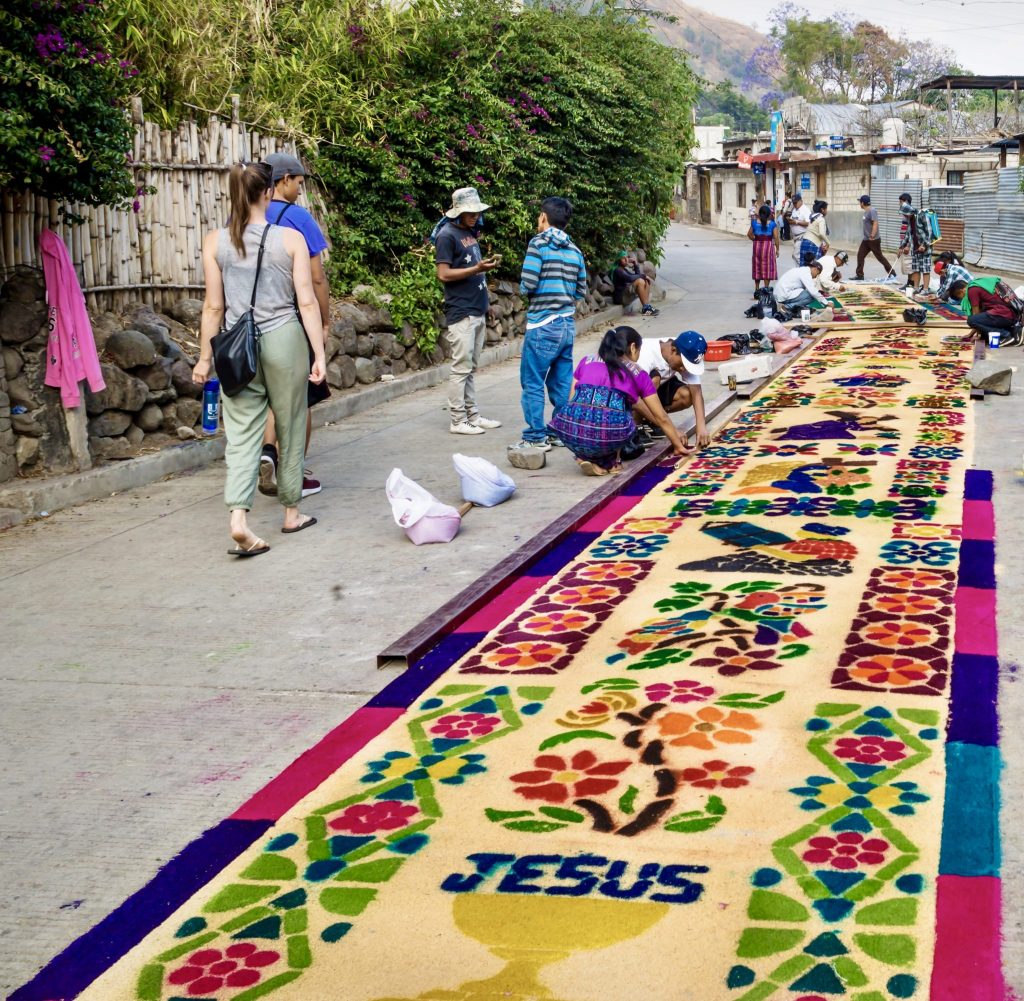
Alfombras appear in the village streets and smaller processions mark the key days of Holy Week. San Marcos draws a contemplative crowd year-round, and if you are looking for Semana Santa without the crowds of Santiago or the backpacker energy of San Pedro, it is a genuinely lovely place to spend part of the week.
Where to stay in San Marcos
La Casa del Mundo is a beautifully situated guesthouse perched on the lakeshore with stunning volcano views. It books out well in advance during Holy Week.
Holy Week in San Juan La Laguna: Colorful Alfombras and Artisan Tradition
Holy Week in San Juan La Laguna offers a quieter look at how smaller communities observe Semana Santa at the lake. San Juan is known for its textile cooperatives and its eco-focused community, and the alfombras here tend to be colorful and community-made, reflecting the village’s strong artisan tradition.
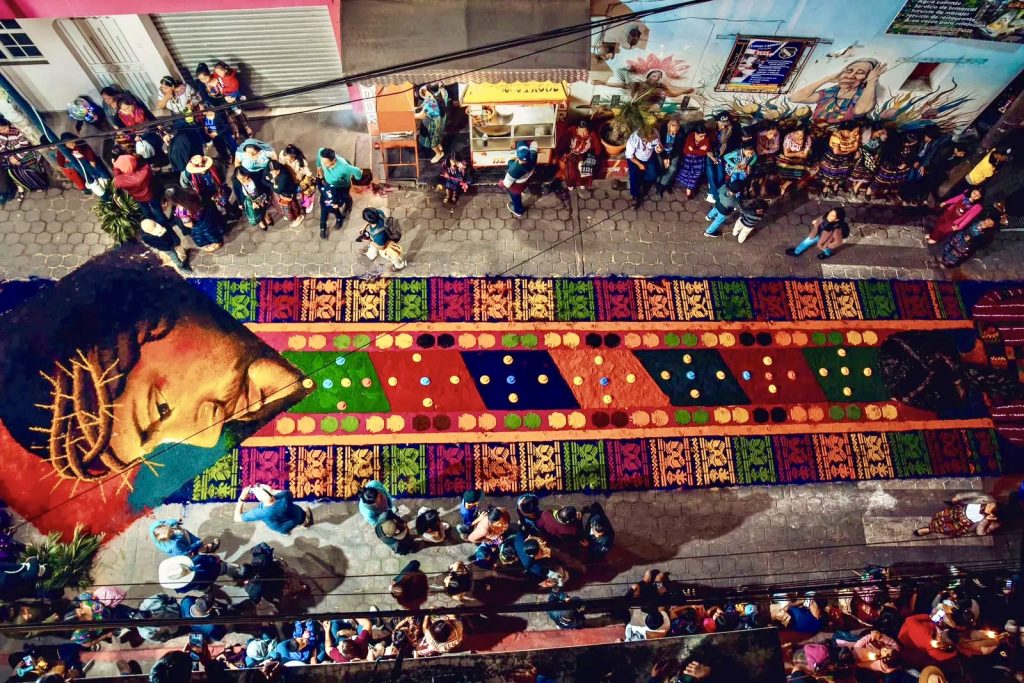
San Juan attracts fewer visitors than Santiago Atitlán or San Pedro during Holy Week, which makes it particularly rewarding if you want to experience the week at a genuinely unhurried pace. It is just a short lancha ride from San Pedro or a ten-minute tuk-tuk along the lakeshore road.
Holy Week in Panajachel: The Most Accessible Base at the Lake
Panajachel is where most travelers arrive at the lake and where the lanchas depart for the other villages, which makes it the most practical base for exploring Semana Santa across the lake. It has the widest selection of hotels and restaurants at any price point, the best transport connections, and its own genuine Holy Week traditions: alfombras appear on the main streets, processions move through the town center on the key days of the week, and the church holds masses throughout Semana Santa.
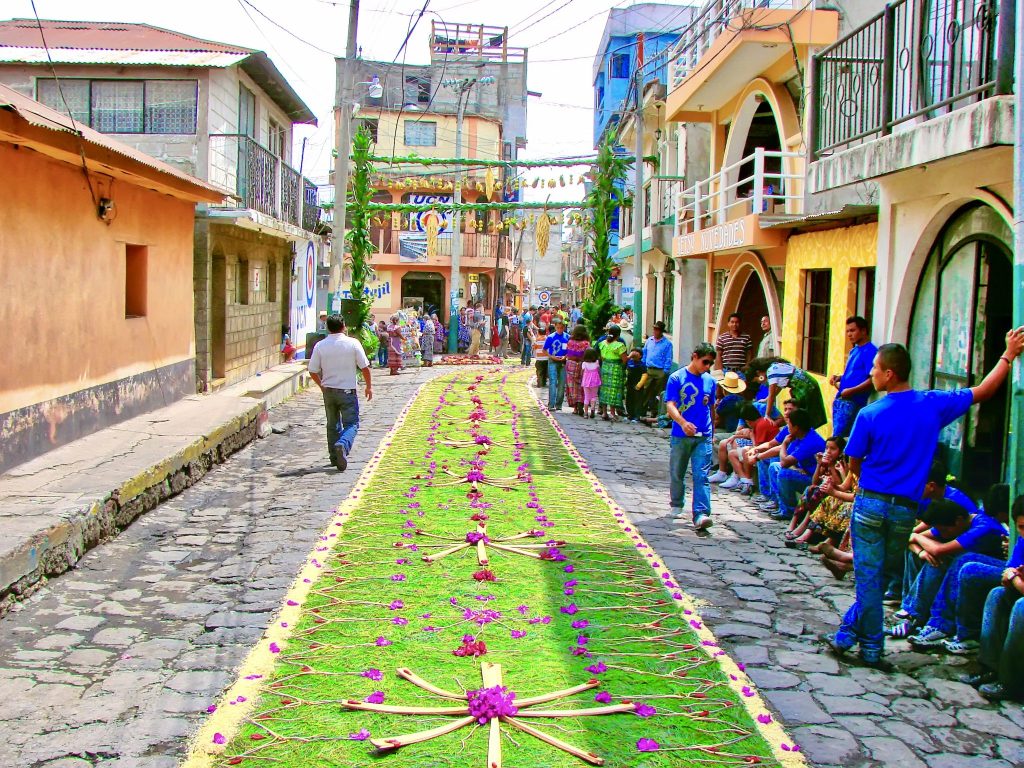
The honest caveat is that Panajachel during Holy Week is busy. It gets crowded with Guatemalan vacationers, international travelers, and day-trippers, and it has a more touristic character than the smaller villages. If you want to feel fully inside a community’s Holy Week rather than alongside it, one of the smaller villages will give you that more directly. But if you value having good accommodation options, easy access to all the lake villages each morning by lancha, and a comfortable base to return to each evening, Panajachel is a perfectly solid choice. Many travelers stay in Panajachel and take day trips to Santiago Atitlán, San Pedro, and San Juan throughout the week, which works well logistically.
One important note: Panajachel hotels and Airbnbs fill up fast for Holy Week, often faster than the smaller villages because demand is higher. Book two to three months ahead without exception.
Where to stay in Panajachel
Hotel Atitlán is a beautiful property with extraordinary gardens on the lakeshore and views across the lake to the three volcanoes. It books out completely during Semana Santa so reserve early. Posada de Don Rodrigo is a colonial-style hotel in the center of Panajachel, walking distance from the public dock, with a pool and restaurant. Hotel Dos Mundos is a reliable mid-range option with a pool and garden, good value during Holy Week.
La Traída de Fruta: A Holy Wednesday Tradition You Won’t Want to Miss
One of the most visually extraordinary and least-known Holy Week traditions at Lake Atitlán happens not on Good Friday but on Holy Wednesday, and most visitors miss it entirely because they have not arrived yet.
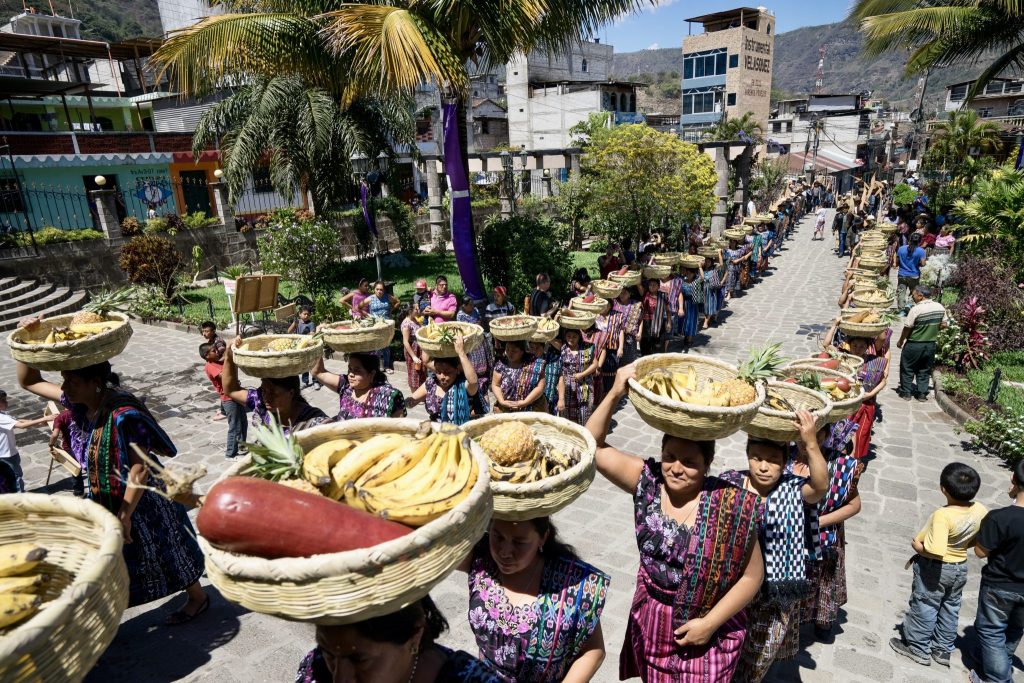
La traída de fruta, the bringing of the fruit, takes place in Santiago Atitlán and several other lake villages on Miércoles Santo. In Santiago, the tradition has its roots in an ancient overnight pilgrimage: young men from the cofradías walk to Chicacao on the Pacific coast lowlands, historically part of Tz’utujil territory, to bring back tropical fruit including cacao, pataxte, pineapples, and bananas. When the fruit arrives in the village it is examined as an augury for the year ahead, fresh and perfect means good things are coming, and then hung from enormous bowers constructed over the village streets, mixed with flowers, greenery, and palm fronds. The result is something that transforms the entire character of the village. Walking under those arches of tropical fruit with the lake and the volcanos in the background is genuinely unlike anything else you will see during Holy Week anywhere in Guatemala.
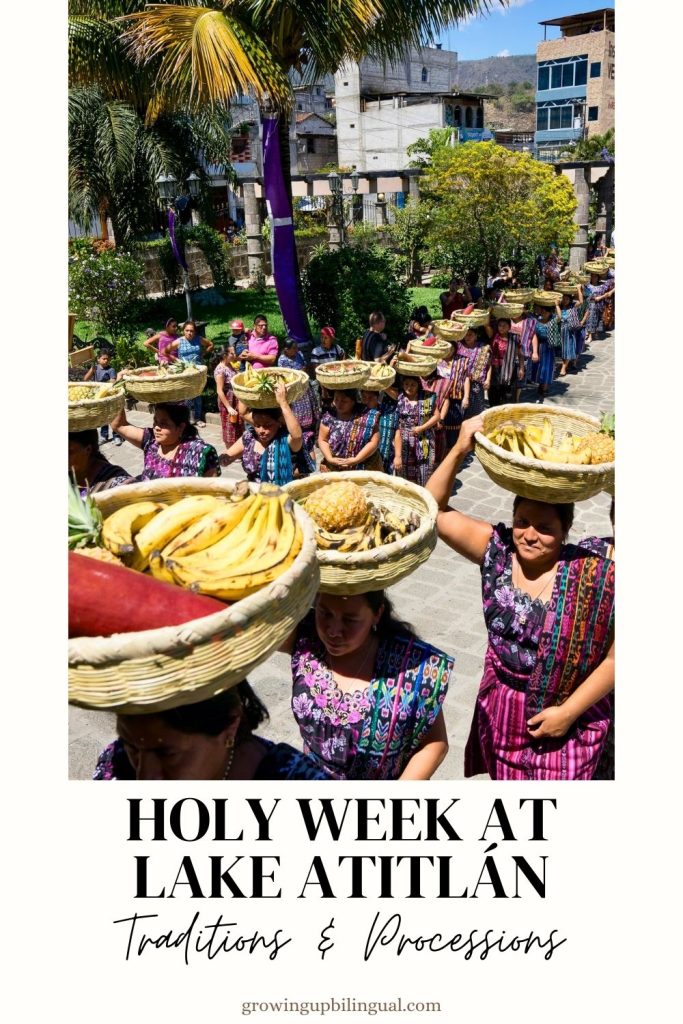
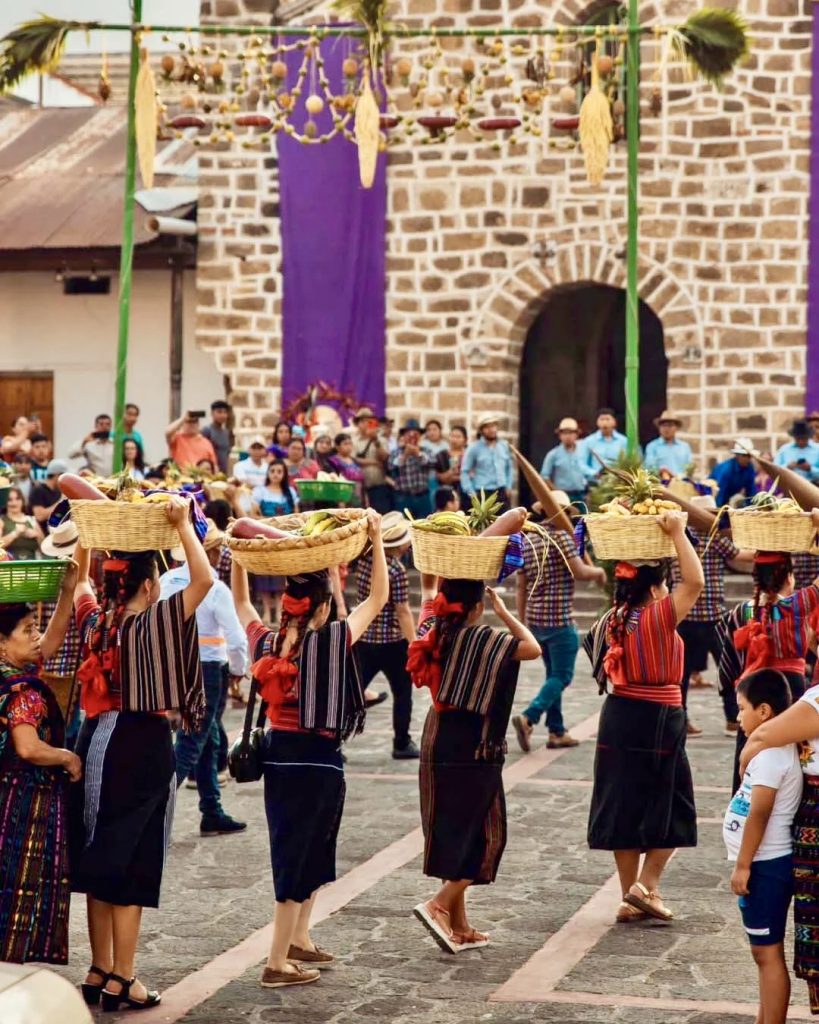
The tradition of processing with fruit on Holy Wednesday also takes place in other lake villages, where women carry large wicker baskets of tropical fruit on their heads through the village streets in a procession that is one of the most photographed and most beautiful sights of the entire week at the lake. The combination of traditional huipiles, the generous baskets of fruit balanced overhead, and the village streets lined with Holy Week decorations makes this one of those moments that rewards being at the lake for the full week rather than just arriving for Good Friday.
When and where to see it
In Santiago Atitlán, the fruit is formally presented at the municipal building around 10 AM on Holy Wednesday before Maximón’s afternoon procession through the streets. The fruit bowers over the streets are visible from Palm Saturday through the end of the week. In San Pedro La Laguna and other villages, the women’s fruit procession typically takes place on Holy Wednesday as well, though timing varies. Ask locally or check with your guide the day before.
This is one of the best arguments for arriving at the lake by Holy Tuesday at the latest rather than waiting until Good Friday.
Getting Around the Lake During Semana Santa
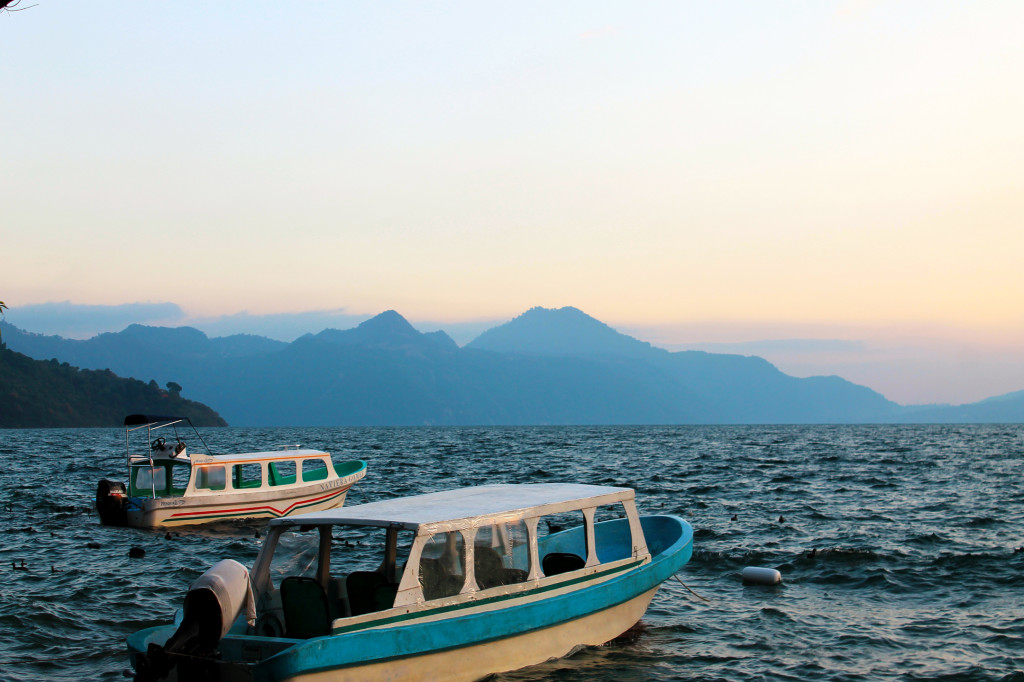
Most travelers arrive via Panajachel, roughly three hours from Antigua and three and a half from Guatemala City by shuttle. From Panajachel, lanchas run regularly to Santiago Atitlán, San Pedro, San Juan, San Marcos, and other villages. Lancha service generally runs from around 6:30 AM to 7:30 PM.
Do not plan to be crossing the lake after dark. Be aware that the Xocomil wind picks up most afternoons and can make crossings rough. On Good Friday morning, the lanchas to Santiago Atitlán fill up fast so be at the dock early.
For everything about navigating the lake: Complete Guide to Lake Atitlán Boat Services.
Practical Tips for Holy Week at Lake Atitlán
Book accommodation two to three months ahead — without exception. Prices spike 50 to 100 percent during Semana Santa and hotels enforce minimum stays of three to five nights. This applies across all the lake villages and especially in Panajachel, which fills fastest of all. Airbnbs go just as quickly. If you are reading this in January or February for an April Holy Week, book today.
Consider Airbnb across the lake villages. There are beautiful private houses and villas available, often with private terraces, volcano views, and full kitchens. During Holy Week this can be better value than hotels and a more immersive way to stay.
Arrive in Santiago Atitlán early on Good Friday. The village gets crowded by midday as day-trippers arrive from Panajachel and Antigua. Arriving by 8 or 9 AM gives you time to walk the village, see the alfombras while they are still intact, and find a good position before the main procession begins.
Hire a local guide in Santiago Atitlán. Especially for visits to Maximón and for making sense of the Maya ceremonial layer of the week. Atitlán Living lists trusted guides including Dolores Ratzan and Miguel Pablo Sicay. Contact them well in advance.
Bring layers. The lake sits at around 1,560 meters above sea level. Mornings and evenings can be genuinely cold in late March. Afternoons warm up considerably. Comfortable walking shoes matter because village streets are uneven and you will be on your feet for hours.
Dress modestly everywhere. Covered shoulders and no shorts at churches, near cofradías, and during processions. This is basic respect.
Do not walk on alfombras before a procession has passed over them. They are sacred offerings, not a photo backdrop.
Ask before photographing people, especially during spiritual ceremonies. The communities around the lake are welcoming but they are not a backdrop for travel content.
For tips on photographing Semana Santa respectfully and well: How to Photograph Semana Santa in Guatemala.
What to Eat During Holy Week at Lake Atitlán
Traditional Semana Santa foods show up across all the lake villages during Holy Week. Torrejas (sweet egg-and-bread fritters soaked in honey syrup and dusted with cinnamon), bacalao, atol de elote, and tamales appear at street vendors and family kitchens throughout the week. The food scene in San Pedro is particularly strong year-round, and during Holy Week the traditional options layer on top of the normal offerings.
For the full picture: Traditional Guatemalan Semana Santa Foods: A Complete Guide.
Key Dates: Semana Santa at Lake Atitlán 2026
| Day | Date | What Happens |
|---|---|---|
| Palm Sunday | March 29 | Opening processions across lake villages |
| Holy Monday | March 30 | Maximón’s garments washed in the lake, Santiago Atitlán |
| Holy Tuesday | March 31 | Ceremonial day for the cofradía in Santiago; quieter across other villages |
| Holy Wednesday | April 1 | Maximón transferred to his chapel in Santiago; alfombra making begins across villages |
| Holy Thursday | April 2 | Maximón in chapel receiving visitors; evening processions in Santiago and San Pedro |
| Good Friday | April 3 | Main day across the lake; Señor Sepultado procession in Santiago with Maximón; processions in San Pedro, San Marcos, San Juan |
| Holy Saturday | April 4 | Quieter observances; women’s procession in San Pedro |
| Easter Sunday | April 5 | Resurrection processions; celebratory mood across the lake |
For a day-by-day itinerary across the villages: Semana Santa Itinerary at Lake Atitlán: How to Plan Your Holy Week.
 Esta foto de San Pedro La Laguna es cortesía de Tripadvisor
Frequently Asked Questions
When is Holy Week at Lake Atitlán in 2026? Semana Santa runs from Palm Sunday, March 29 through Easter Sunday, April 5. The most important day at the lake is Good Friday, April 3, particularly in Santiago Atitlán.
How far in advance should I book accommodation for Holy Week at Lake Atitlán? Two to three months ahead at minimum, and earlier is better. This is one of the busiest travel periods in Guatemala and accommodation across all the lake villages fills completely. Hotels often enforce minimum stays of three to five nights during Semana Santa, and prices spike 50 to 100 percent above normal rates. Airbnbs across the lake villages are also worth searching early as the best private houses and villas go quickly. Do not leave this until the last month.
Is Panajachel a good base for Holy Week at Lake Atitlán? Yes, especially if you want accommodation flexibility and easy access to multiple villages. Panajachel has the most hotels at the widest range of price points, the best transport connections, and its own processions and alfombras during Semana Santa. The tradeoff is that it gets noticeably crowded during Holy Week with Guatemalan vacationers and international travelers, and it has a more touristic feel than the smaller villages. Many travelers stay in Panajachel and take day trips by lancha to Santiago Atitlán, San Pedro, and San Juan throughout the week, which works well logistically.
What makes Semana Santa at Lake Atitlán different from Antigua? Antigua’s Holy Week is elaborate, baroque, and Catholic in the Spanish colonial tradition. Atitlán’s celebrations are smaller, more indigenous, and shaped by centuries of Maya-Catholic syncretism. In Santiago Atitlán, the Maya figure of Maximón actively joins the Good Friday procession alongside the Catholic image of Christ. You will not see anything like this in Antigua or Guatemala City.
Which village should I visit for Semana Santa at Lake Atitlán? Santiago Atitlán is the priority, especially on Good Friday. San Pedro La Laguna is the best base for the full week given its accommodation options and its own genuine procession schedule. Panajachel works well if you want the most accommodation options and easy day trips to all the villages. San Juan La Laguna and San Marcos La Laguna are worth visits for quieter, more intimate looks at how smaller communities observe the week.
How do I get to Lake Atitlán during Holy Week? Most travelers take a shuttle to Panajachel from Antigua or Guatemala City (roughly three hours from Antigua), then take a lancha to their village of choice. During Holy Week, shuttles fill quickly so book ahead.
Is Lake Atitlán crowded during Semana Santa? Panajachel gets quite crowded during Holy Week. Santiago Atitlán gets noticeably busy on Good Friday by midday as day-trippers arrive. The smaller villages, San Pedro, San Juan, and San Marcos, remain relatively calm throughout the week, which is part of their appeal.
Should I combine Atitlán with Antigua during Holy Week? It depends on your time. If you have a full week, spending the early days in Antigua (Palm Sunday through Holy Wednesday) and then traveling to Atitlán for Holy Thursday through Easter Sunday gives you a beautiful contrast between the two very different experiences. If you only have a few days, choose one. Both are worth their own dedicated trip. For the Antigua side of planning: Holy Week in Antigua Guatemala: Best Tips and Hidden Gems.
Do I need to speak Spanish to enjoy Semana Santa at the lake? Not at all, but a few words are appreciated. In Santiago Atitlán, Tz’utujil is the primary language for many community members and Spanish is a second language. Kindness and respect travel further than vocabulary.

Paula studied architecture and now makes a living as a freelance writer,traveler and amateur photographer.She started her writing & publishing career as the editor of Bebé y Mamá, the first parenting magazine in Guatemala.She is the founder of www.GrowingUpBilingual.com and www.365thingsswfl.com and writes articles in Spanish and English for both magazines and the web on travel,food and bicultural and bilingual parenting .
When she is not on a plane or road trip she likes to create recipes inspired in the flavors of her native Guatemala.

