
Disclosure: This article contains affiliate links. If you book something through one of my links, I may earn a small commission at no extra cost to you. I only recommend places, experiences and services I have personally used or carefully vetted.
Mexico City’s enormous Día de los Muertos celebrations are spectacular. I absolutely understand why the Gran Desfile, the Catrinas on Reforma and the monumental alebrijes end up on everyone’s itinerary. But they’re only one part of the story
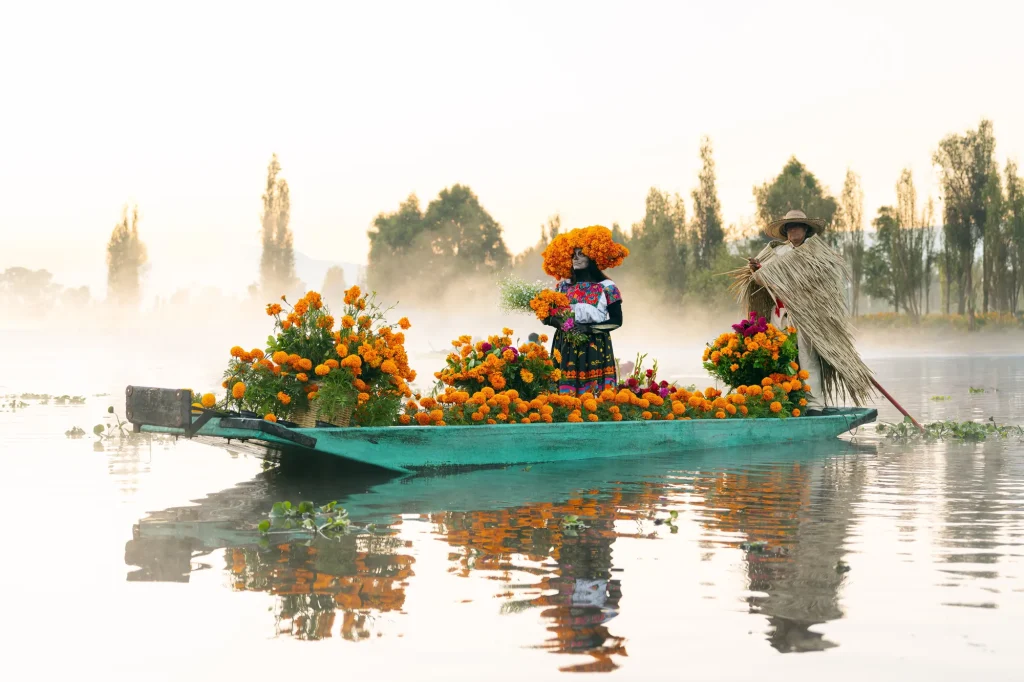
For me, the most meaningful part of Día de Muertos has always been quieter: the flowers, the food, the photographs on an altar and the stories we tell about people we love. That’s also how we celebrate at home. We make pan de muerto, add family photographs to our ofrenda and use the holiday as a reason to tell my kids stories about relatives they never got the chance to meet.
That is why, if I were planning a Día de los Muertos trip to Mexico City, I wouldn’t spend every day chasing another parade or giant public installation. I would leave room for the places where you can see where the flowers come from, how neighborhoods prepare and what the holiday looks like when it isn’t being staged for thousands of spectators.
These aren’t all “secret” places. Locals certainly know them. But most are easy to miss on a first Día de Muertos trip, and they add a completely different layer to the experience
Mercado de Jamaica at Dawn
If you want to understand why cempasúchil is everywhere in Mexico City during Día de Muertos, start here.
Mercado de Jamaica is one of Mexico City’s great flower markets, and although it operates year-round, late October changes it completely. Trucks arrive loaded with cempasúchil, deep-red terciopelo, chrysanthemums and other flowers destined for homes, businesses, cemeteries and ofrendas throughout the city.
This isn’t a Día de Muertos attraction created for visitors. It’s a working wholesale market at the busiest flower-buying time of the year, and that’s exactly what makes it so interesting.
I would go early, ideally around 6:00-8:00 AM during the final week of October. By then the market is fully awake, overnight deliveries are still being organized and you get that wonderful mix of flower sellers, buyers, carts, buckets and enormous piles of orange cempasúchil before the rest of your sightseeing day has even started.
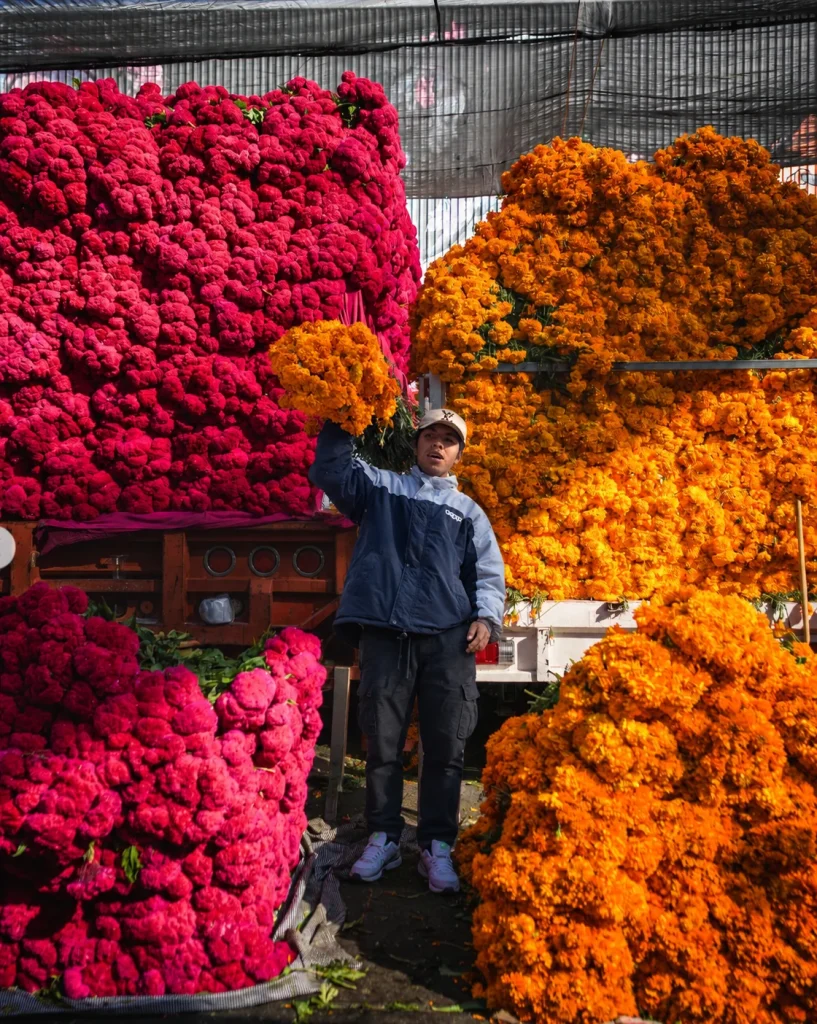
Don’t come expecting polished displays. Floors may be wet, people are working and you’re in their space. Wear comfortable shoes you don’t mind getting dirty, keep out of the way of carts and deliveries, and ask before taking close-up photographs of vendors. A camera-friendly market is still somebody else’s workplace.
And don’t leave right after taking photos. Wander farther inside. Around Día de Muertos you’ll also see papel picado, calaveritas, candles, incense, seasonal sweets and other things families use for their ofrendas. There are food stalls and small fondas too, which makes this a surprisingly good place for an early breakfast.
My tip: Don’t give Mercado de Jamaica half a day. Give it a really good early morning. An hour or two is enough to absorb the atmosphere, eat something and still have most of the day ahead of you.
Getting there: Mercado de Jamaica is at Guillermo Prieto 45 in Venustiano Carranza. Metro Jamaica on Lines 4 and 9 is just a short walk away. The flower area operates around the clock, but early morning is much more interesting than the middle of the night unless you specifically want to see wholesale activity.
Go Beyond the Party Trajineras: Xochimilco’s Chinampas and Cempasúchil Fields
Xochimilco is hardly a hidden gem. The version most travelers see, though, is only one tiny piece of it. The brightly painted party trajineras around the busiest embarcaderos are fun, and La Llorona is one of the special experiences I recommend during Día de Muertos. But beyond that entertainment side of Xochimilco is an agricultural landscape of canals and chinampas that has been feeding this part of Mexico for centuries.
Xochimilco and Mexico City’s historic center have been a UNESCO World Heritage Site since 1987. UNESCO specifically recognizes the area’s network of canals and human-made agricultural islands, or chinampas, as an exceptional surviving example of traditional pre-Hispanic land use.
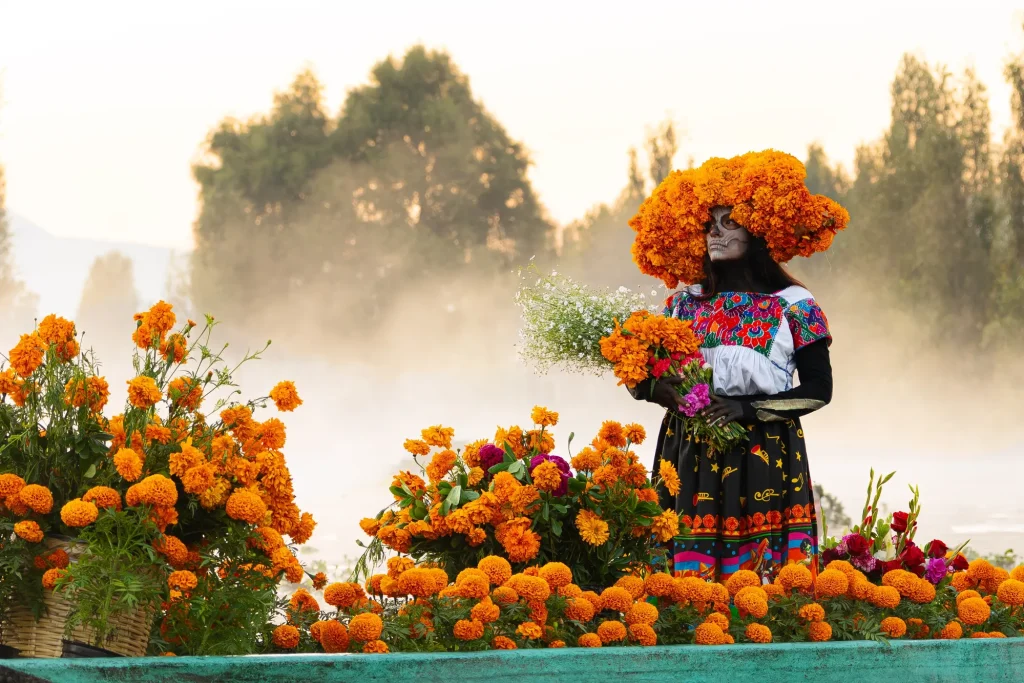
And in October, some of those agricultural areas turn orange.
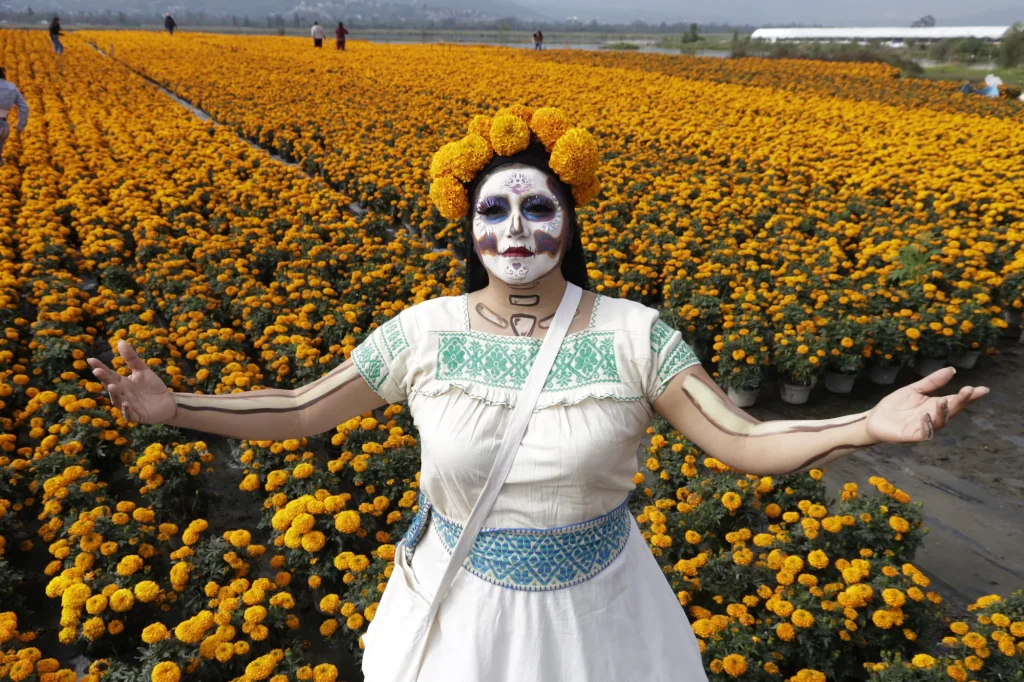
San Gregorio Atlapulco is one of Xochimilco’s historic chinampa communities and an important flower- and vegetable-growing area. During the weeks before Día de Muertos, cempasúchil growing in fields and greenhouses becomes part of the landscape instead of something you see already cut and arranged on an altar.
A Particularly Good 2026 Option: Ruta del Cempasúchil
There is an especially useful option for 2026 if you want to see this side of Xochimilco without trying to navigate the agricultural area on your own.
Explora Xochimilco has announced its seasonal Ruta del Cempasúchil from October 3 through November 9, 2026. The experience travels through the canals and includes stops connected to the cempasúchil-growing area, along with seasonal food and information about the flower and the chinampa landscape.
Morning departures are extremely early, around 4:30 AM, because they’re timed for sunrise, while afternoon departures are scheduled around 4:00 PM for sunset. The experience lasts roughly four hours and requires advance reservations.
This is the type of Xochimilco tour where I think paying for an organized experience makes sense. You’re not paying someone simply to put you on a trajinera. You’re getting access to an agricultural landscape that is much harder to understand or navigate by just arriving at a tourist embarcadero and hoping for the best.
Before booking any Xochimilco tour: Read the itinerary carefully. If seeing cempasúchil fields and chinampas is your priority, make sure the experience actually enters the agricultural/chinampera area and includes a flower-growing stop. A standard trajinera ride is not the same thing.
Also bring a jacket for sunrise or late afternoon, sunscreen for the open canals and mosquito repellent.
Want to compare Xochimilco experiences? The tours below are useful for seeing what’s available on your dates. I would prioritize experiences focused on chinampas, local food, agriculture, axolotl conservation or smaller canals over a generic party boat if you’re looking for this quieter side of Xochimilco.
Panteón Civil de Dolores and the Rotonda de las Personas Ilustres
A cemetery might sound like an obvious Día de Muertos stop. Panteón Civil de Dolores is different enough that it’s worth knowing about even if you aren’t specifically planning a cemetery visit.
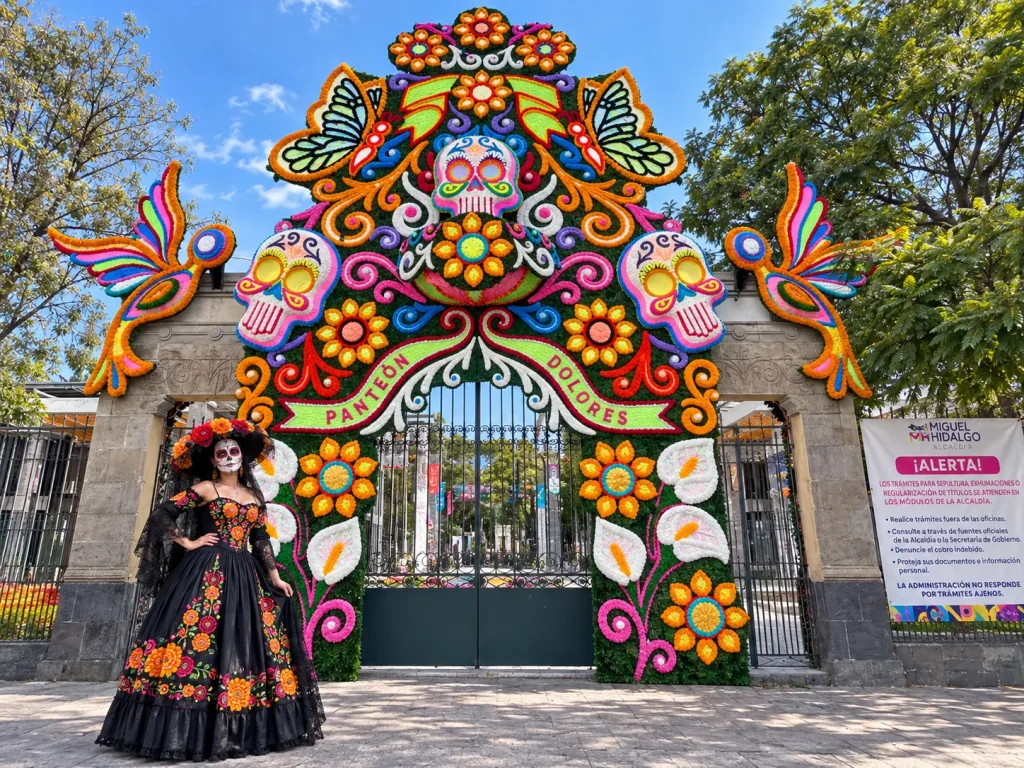
Set along the western side of Bosque de Chapultepec, it is the largest cemetery in Mexico and feels more like an enormous historic landscape than a single burial ground. Inside it is the Rotonda de las Personas Ilustres, created in the 19th century as a resting place for important figures in Mexican history and culture.
Among those buried here are muralists Diego Rivera, José Clemente Orozco and David Alfaro Siqueiros, along with poet Rosario Castellanos, composer Agustín Lara, actress Dolores del Río and many other writers, artists, musicians and public figures.
That history alone makes the Rotonda fascinating, but Día de Muertos adds another layer. Families throughout the cemetery may arrive with flowers, candles, food or music to spend time at relatives’ graves.
This is also the place on this list where visitor etiquette matters most.
Don’t treat a family decorating a grave as entertainment. Give people space. Avoid photographing mourners or private graves at close range unless you’ve asked permission. The cemetery can be beautiful and full of color while still being a very personal space.
Important for 2026: The regular published schedule for Panteón Civil de Dolores and the Rotonda is Thursday through Sunday, 10:00 AM-5:00 PM. November 1, 2026 falls on a Sunday, but November 2 falls on a Monday.
Do not assume the cemetery or Rotonda will follow normal hours on November 2. Special Día de Muertos access can change, so verify the holiday schedule shortly before your visit.
Getting there: The main entrance is on Avenida Constituyentes in Chapultepec’s Third Section. Metro Constituyentes and transportation toward the Panteón de Dolores area are options, but I would check your route the morning you go because holiday events can affect transportation.
Look Beyond the Main Plaza in Coyoacán
Coyoacán absolutely does not qualify as undiscovered during Día de Muertos. On November 1 and 2, the historic center can be packed. But I still think it belongs in a hidden-gems itinerary because the mistake is treating Jardín Hidalgo as the whole experience.
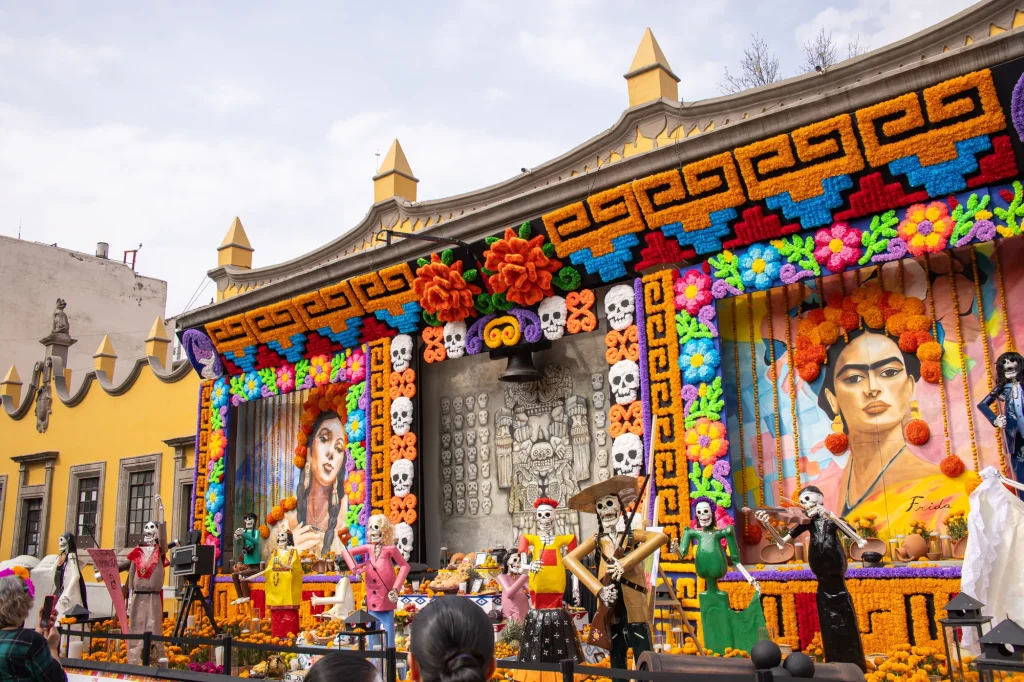
During the season, ofrendas and Día de Muertos programming appear in cultural spaces, museums, businesses and side streets throughout the neighborhood. The best strategy isn’t to arrive at the central plaza at 7 PM with thousands of other people and try to see everything. Go earlier and let Coyoacán become a neighborhood walk.
I would start in the morning, wander the streets around the historic center and pay attention to smaller altars before the biggest crowds arrive. Then combine the neighborhood with one or two places that already make sense geographically instead of treating every ofrenda as a separate destination.
If your trip falls between October 29 and November 1, 2026, Cacao Para Todos at Museo Anahuacalli fits naturally into this part of the city. And from October 31 through November 2, UNAM’s Megaofrenda is another excellent southern Mexico City experience.
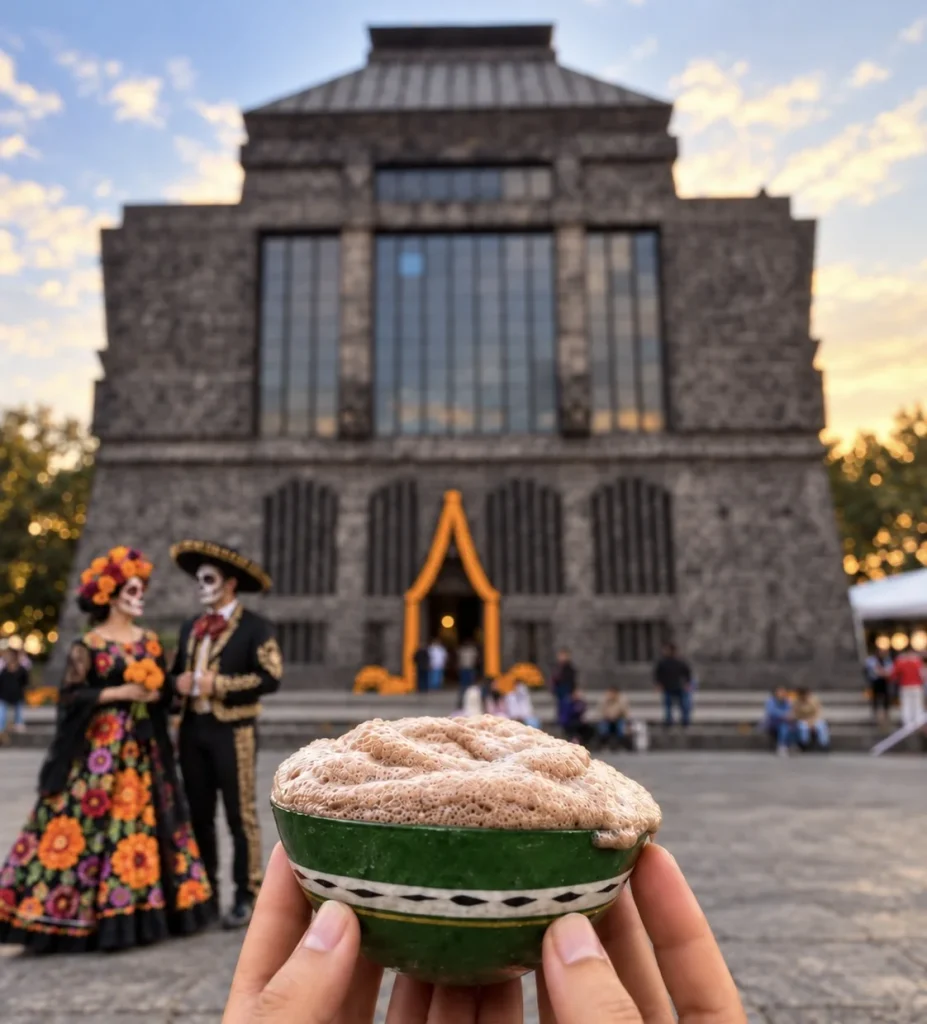
I wouldn’t try to do Coyoacán, UNAM, Xochimilco and a Reforma parade in one day just because they all appear on the same Día de Muertos list. Mexico City is enormous. The trip becomes much better once you stop treating the map like everything is close.
My Coyoacán strategy: Go early for the neighborhood itself. Stay for lunch. Then choose either UNAM/Anahuacalli or continue south toward Xochimilco later in the day.
If you want the big nighttime Coyoacán atmosphere too, return another evening rather than trying to make one day do everything.
Staying in Coyoacán Can Make a Southern Mexico City Itinerary Much Easier
If Xochimilco, Coyoacán, Anahuacalli and UNAM matter more to you than being next to Reforma, staying in this part of the city can save a surprising amount of transportation time.
H21 Hospedaje Boutique is my favorite small boutique option near central Coyoacán, while Agata Hotel Boutique & Spa is another intimate option in the neighborhood.
For travelers focused on the big Reforma parades, I would still stay in Roma, Condesa or Juárez instead. I break down the advantages of each area in my complete Mexico City Day of the Dead guide.
The Hidden Gem Isn’t Always a Place
This is probably my favorite tip in this entire article. Leave gaps in your itinerary.
Día de Muertos starts showing up around Mexico City long before November 1. Cempasúchil appears in neighborhood markets and flower stalls. Papel picado hangs over restaurant entrances. Small ofrendas appear in shops. Bakeries fill their windows with pan de muerto. People carry flowers home on the Metro.
Those things aren’t listed on an event calendar, which means they’re very easy to miss if every hour of your trip is spent racing from a scheduled attraction to a tour to another parade.
Make time to stop at a bakery for pan de muerto instead of only eating it at a festival. Walk through a neighborhood market. Look at the small altar in a restaurant entrance. Notice how the cempasúchil changes the streets even when nothing “official” is happening there.
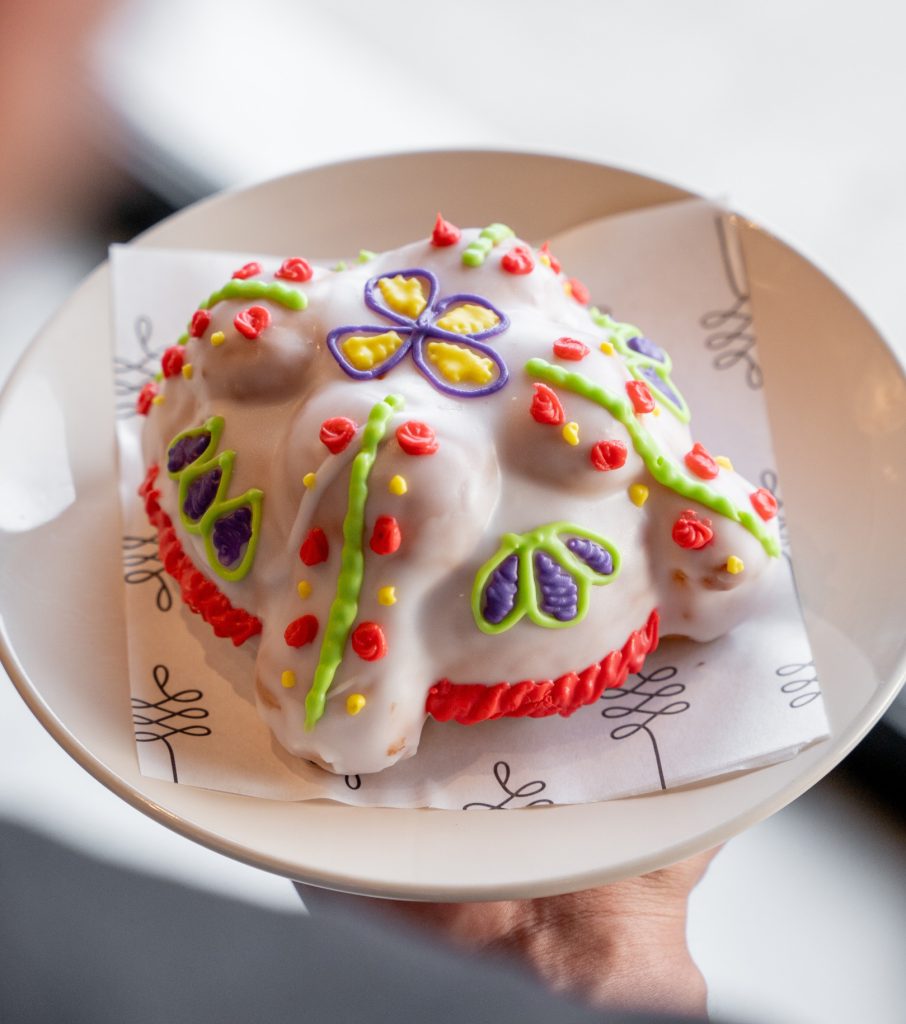
Food is an especially easy way to slow the trip down. If you want to know what else to look for while you’re there, I have a full guide to traditional Day of the Dead foods and their meaning. And if you fall in love with the bread, here’s my easy pan de muerto recipe for when you get home.
How I Would Fit These Hidden Gems Into a Día de Muertos Trip
I wouldn’t build five separate days around these. They’re much better when they fill the quieter spaces between the big events.
- Mercado de Jamaica: Early morning before a museum, food tour or afternoon Día de Muertos event.
- Cempasúchil fields and chinampas: Give this half a day. If you’re doing the 2026 Ruta del Cempasúchil, let it be the main experience of that morning or afternoon.
- Panteón de Dolores: Combine it with the western side of Chapultepec rather than crossing the entire city for a 45-minute stop.
- Coyoacán: Make it part of your southern Mexico City day with Anahuacalli or UNAM.
- Markets, bakeries and neighborhood ofrendas: Don’t schedule these. Leave enough empty space in the trip for them to happen naturally.
The big Día de Muertos events still deserve a place in your trip. The Gran Desfile, Mega Procesión de las Catrinas, monumental alebrijes, La Llorona and UNAM Megaofrenda are all incredible experiences for different reasons.
But I think the big celebrations become much more meaningful when you’ve also seen the flowers arriving at the market, learned where cempasúchil grows, eaten pan de muerto from a neighborhood bakery and watched a family carry a bundle of flowers home.
That’s the side of Día de Muertos I would make room for.
Tips for Experiencing the Quieter Side of Día de Muertos Respectfully
- Ask before photographing people. This matters especially in markets and cemeteries.
- Don’t step into flower fields for a photo unless your guide or the grower says it’s okay.
- Remember that cemeteries aren’t performances. Give families room around graves and ofrendas.
- Buy something when you can. Flowers, food, pan de muerto and locally made decorations directly support the people whose work you’re there to see.
- Learn what you’re looking at. Understanding why food, water, candles, photographs and cempasúchil appear on an ofrenda makes the entire trip richer.
If you’re traveling with children, this quieter side of the holiday is also where some of the best conversations happen. My guide to Day of the Dead activities for kids is a good way to introduce some of the symbolism before your trip.
Frequently Asked Questions About Hidden Día de Muertos Experiences in Mexico City
Is Mercado de Jamaica worth visiting during Day of the Dead?
Yes, especially in the last week of October. Mercado de Jamaica is a working flower market rather than a Día de Muertos attraction, which is exactly why I think it’s worthwhile. Go early in the morning when flowers are being delivered and organized, spend an hour or two exploring and then continue with the rest of your day.
When is the best time to see cempasúchil fields in Xochimilco?
October is the key month because growers are preparing flowers for Día de Muertos. The 2026 Ruta del Cempasúchil is scheduled from October 3 through November 9, although the most interesting time for seeing flowers before they’re cut and distributed is generally before November 1.
Can tourists visit cemeteries during Día de Muertos?
Yes, but visiting a cemetery is very different from attending a parade. Stay in public areas, follow posted rules, avoid interfering with families decorating or spending time at graves and ask permission before photographing people or personal ofrendas.
Do I need a tour to see the less touristy side of Xochimilco?
Not for every part of Xochimilco, but a good small-group or agricultural tour can be worthwhile if you specifically want to enter the chinampa zone, visit growers or learn about the canal ecosystem. Don’t book based only on the word “Xochimilco”; read the itinerary and make sure the experience actually includes the places you’re interested in.
Planning Día de Muertos in Mexico City?
Start with my complete Day of the Dead in Mexico City 2026 guide for confirmed dates, the Gran Desfile, Catrina procession, alebrijes, La Llorona, UNAM Megaofrenda, where to stay, transportation tips and what actually needs to be booked ahead.
Through her writing, Paula helps travelers discover Guatemala beyond the typical tourist route with practical advice, local recommendations, and authentic experiences that connect visitors with the country’s people, culture, and traditions.
Planning a trip to Guatemala? Paula offers personalized Guatemala itinerary planning and trip consultation services tailored to your interests, travel style, and budget. Contact her at [email protected] to learn more.
- San Lucas Tolimán Guatemala: Lake Atitlán’s Best-Kept Secret - September 24, 2026
- Hotel Tolimán Lake Atitlán: A Special Stay in San Lucas Tolimán - September 24, 2026
- Guatemala Dreams in San Lucas Tolimán: A Boutique Stay on Lake Atitlán - September 23, 2026

