This post is also available in:
If you’re planning Day of the Dead in Mexico City 2026, this guide will help you figure out which celebrations are worth building your trip around and which ones make more sense only if you’re already nearby. The Mexico City Day of the Dead season stretches across several weeks, with everything from the Gran Desfile and Mega Procesión de las Catrinas to nighttime performances in Xochimilco, monumental alebrijes, ofrendas and pan de muerto festivals. I’ve pulled together the confirmed 2026 dates, the events that offer the most memorable experiences, practical tips for dealing with crowds and transportation, where to stay for the easiest access, and the little planning details that can make the difference between an incredible trip and an exhausting one.
What makes Día de los Muertos in Mexico City so special is the contrast. One afternoon you can be surrounded by enormous fantastical alebrijes on Paseo de la Reforma and later find yourself sitting on a trajinera in the dark canals of Xochimilco watching La Llorona unfold on the water. There are huge public spectacles, but there are also flowers, food, family altars and quieter reminders that this celebration is rooted in remembering the people we love.
The best trip includes a little of both. See one of the spectacular parades, but leave room for an ofrenda, seasonal food and an experience that feels connected to the meaning behind the holiday instead of trying to check every event off a list.
I’ve included only events with confirmed 2026 dates as of September 10, 2026. For each one you’ll also find a link to the event or organizer page so you can double-check schedules before your trip, especially for street events where routes and start times may be released closer to the date.
Day of the Dead in Mexico City 2026 Dates at a Glance
If you’re still deciding when to travel, start with the confirmed 2026 calendar. You don’t need to attend all of these. The best dates depend on whether you’re most excited about the big parades, Catrinas, food, folk art or a more atmospheric cultural experience.
| Date | Event | Area | Best For |
|---|---|---|---|
| October 2-November 22 | La Llorona de Xochimilco | Xochimilco | Atmosphere and a unique nighttime experience |
| October 17 | Desfile de Alebrijes Monumentales | Centro and Reforma | Families, folk art and photography |
| October 17-November 8 | Monumental Alebrijes Exhibition | Paseo de la Reforma | Seeing the alebrijes without another huge parade crowd |
| October 17-18 | Festival Artesanal de Café, Chocolate y Más | Roma Norte | Pan de muerto and an easy addition to a neighborhood day |
| October 24-25 | Festival de Café, Chocolate y Pan de Muerto | Tlalpan | Food lovers and families |
| October 25 | Mega Procesión de las Catrinas | Paseo de la Reforma | Catrinas, costumes and one of the most photogenic nights |
| October 29-November 1 | Cacao Para Todos | Coyoacán | Food, Mexican culture and a break from giant crowds |
| October 30-November 3 | Open House CDMX Día de Muertos | Several neighborhoods | Architecture, design and contemporary ofrendas |
| October 31 | Gran Desfile de Día de Muertos | Central Mexico City | The huge Mexico City Day of the Dead spectacle |
| October 31-November 2 | Megaofrenda UNAM | Ciudad Universitaria | Ofrendas, storytelling and the meaning behind the celebration |
Which Day of the Dead Events in Mexico City Are Most Worth It?
If you’re short on time, the events aren’t interchangeable.
For a first trip, the Gran Desfile is the one to choose if you want the huge spectacle you’ve seen in photos. If Catrina makeup and costumes are what you’re most excited about, the Mega Procesión de las Catrinas is the better choice. For families and folk-art lovers, the monumental alebrijes are hard to beat, and you don’t even need to brave the parade because the figures remain on Reforma afterward.
La Llorona in Xochimilco is my pick for the most atmospheric experience because the canals, darkness and trajinera ride make it feel completely different from everything happening downtown. UNAM’s Megaofrenda offers a quieter counterpoint to the parades and brings the focus back to remembrance and the meaning behind an ofrenda.
For food, choose the festival that fits your location instead of crossing the city to attend several similar events. Cacao Para Todos stands out because Museo Anahuacalli and the connection between cacao, Mexican history and culture give it more depth than a food market alone.
When Is the Best Time to Visit Mexico City for Day of the Dead in 2026?
If this is your first Día de los Muertos trip and you want the biggest concentration of celebrations, October 29 through November 3 is the strongest window.
You can experience Cacao Para Todos, Open House CDMX, the Gran Desfile on October 31, UNAM’s Megaofrenda and the traditional November 1 and 2 observances. La Llorona is also running throughout this period.
This will be one of the busiest weekends of the season, so expect higher hotel demand, dense crowds and road closures.
If Catrinas are the main reason you’re coming, October 23-26 may be an even better fit. The Mega Procesión de las Catrinas takes place October 25, and the Festival de Café, Chocolate y Pan de Muerto happens the same weekend.
For families, art lovers or anyone who wants some of the Día de los Muertos atmosphere without the peak-weekend crowds, October 16-19 is worth considering. The Desfile de Alebrijes is on October 17, and the giant figures remain on Reforma afterward.
There is enough happening here for a completely separate itinerary, so I’m keeping this guide focused on choosing the best experiences. My upcoming Day of the Dead Mexico City itinerary will put these events into a realistic day-by-day plan, group attractions by neighborhood and show where Xochimilco and the more traditional November 1 and 2 experiences fit without spending half your trip crossing the city.
Best Day of the Dead Events in Mexico City 2026
There is no reason to cram every event into one trip. Some are worth changing your dates for. Others work best when they fit naturally into a neighborhood you’re already exploring.
These are the confirmed 2026 celebrations that stand out, along with what makes each one special and who will get the most out of it.
La Llorona de Xochimilco
La Llorona is one of the Día de los Muertos experiences worth booking ahead because nothing else on this list feels quite like it.
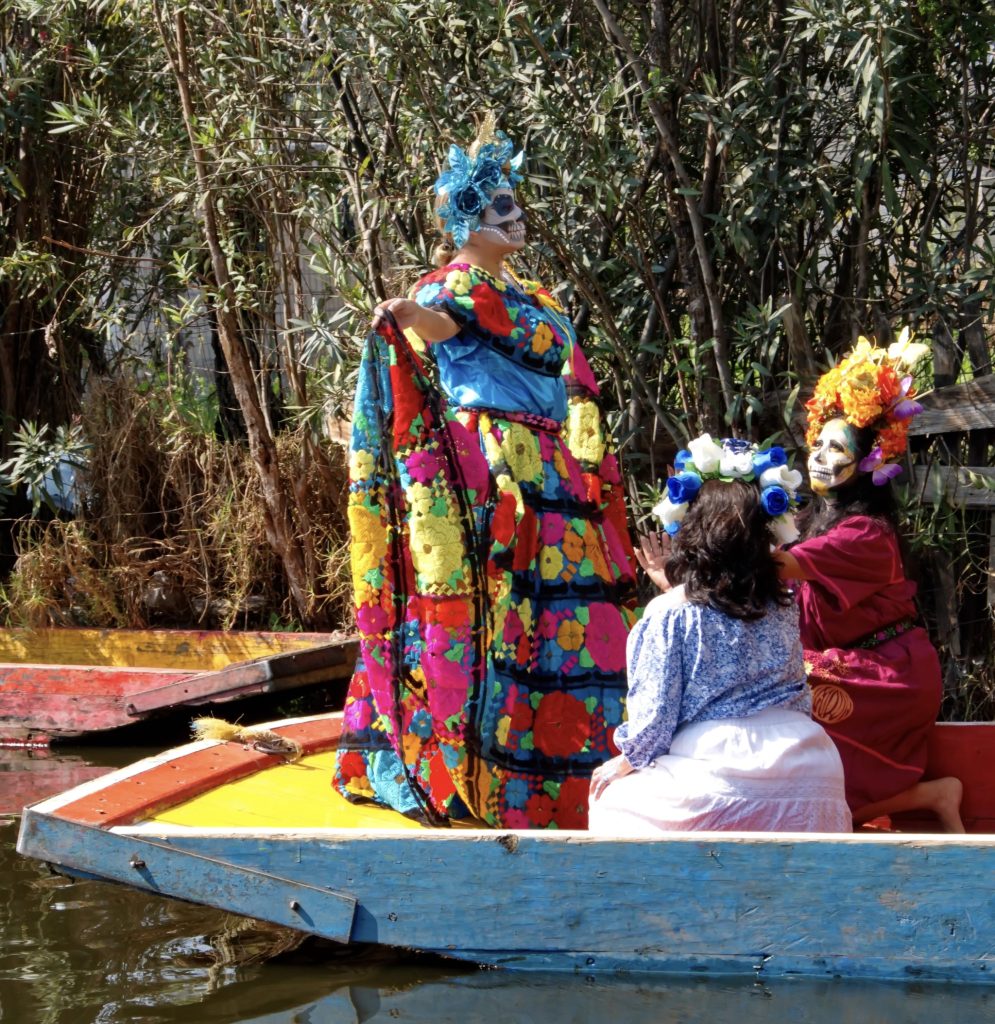
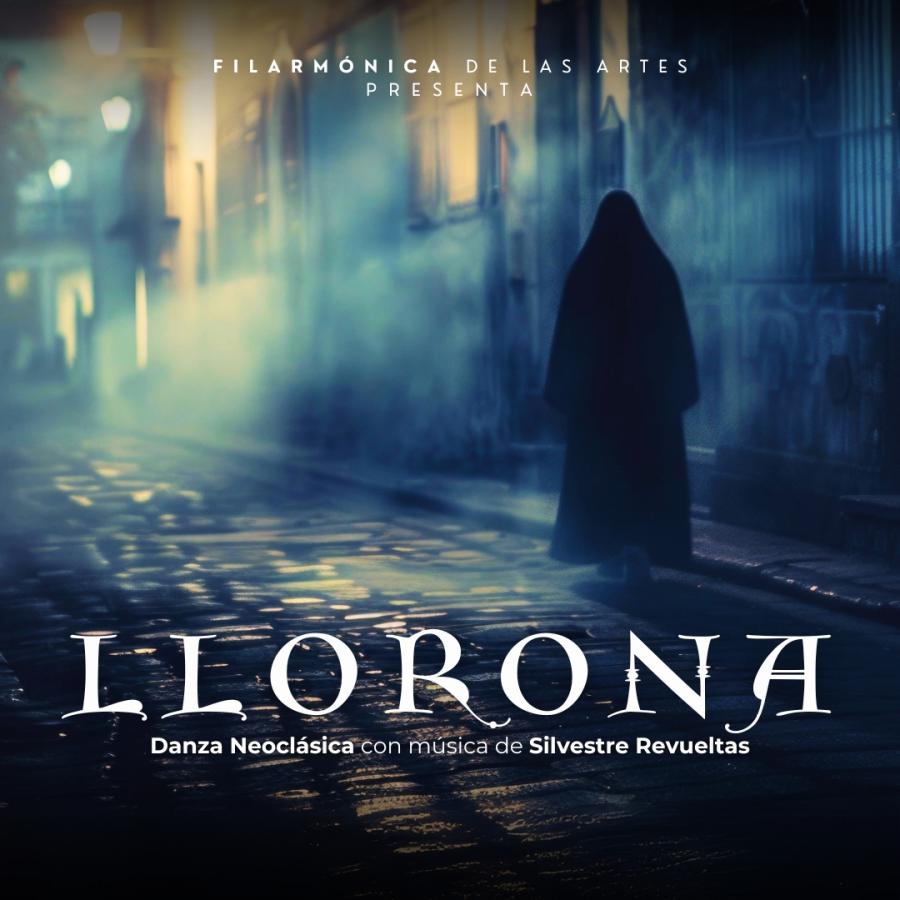
You board a trajinera at Embarcadero Cuemanco and head out onto the canals after dark, where the legend of La Llorona unfolds through theater, dance, live music, lighting and monumental scenery.
The setting is what makes this special. The water, darkness and canals of Xochimilco become part of the story instead of serving as a backdrop for another stage show.
The 2026 season runs from October 2 through November 22. Tickets are currently 750 MXN per person and include the trajinera ride and performance.
- Date: October 2-November 22, 2026
- Location: Embarcadero Cuemanco, Xochimilco
- Price: 750 MXN per person plus service fees
- Includes: Trajinera ride and live performance
This is one of the first things to reserve once your dates are set. For performance dates, tickets and current visitor information, check the official La Llorona de Xochimilco event page.
My tip: Bring a jacket and mosquito repellent. The temperature feels much cooler once you’re sitting on the canals after dark, and arriving early makes the whole experience more relaxed.
Desfile de Alebrijes Monumentales
If you’re traveling with kids or love Mexican folk art, this is one of the best events on the calendar.
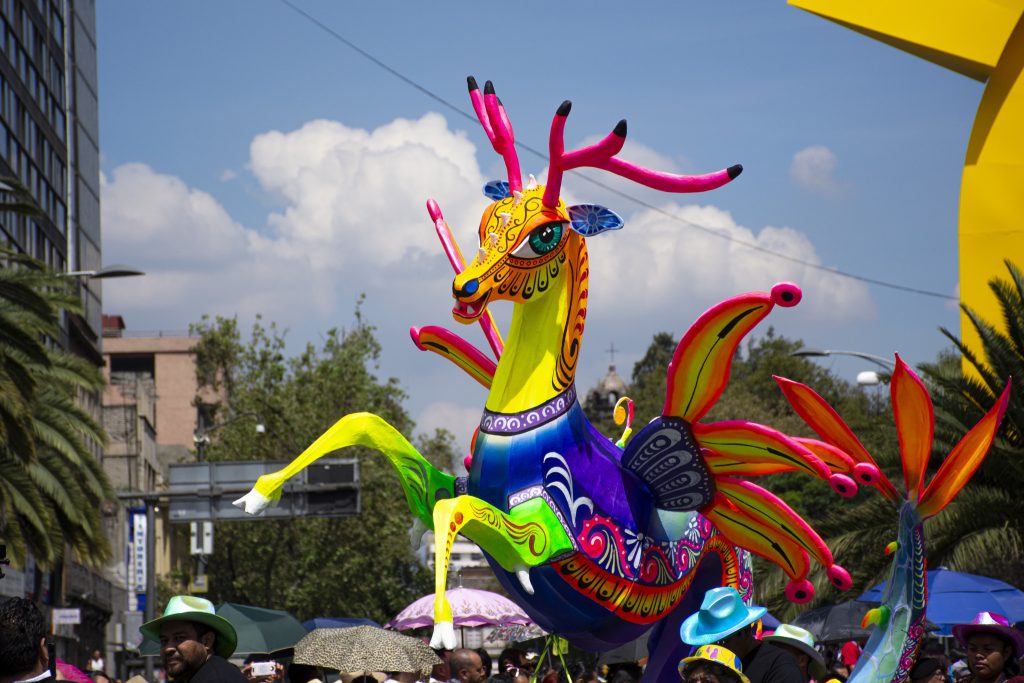
Giant alebrijes created by Mexican artists and artisans fill the streets with fantastical creatures covered in bright colors, patterns, wings, horns, claws and combinations of animals that seem to come straight out of someone’s imagination.
The 18th Desfile y Concurso de Alebrijes Monumentales takes place Saturday, October 17 at noon. The route begins at the Zócalo and continues through the historic center before following Paseo de la Reforma toward the Ángel de la Independencia.
- Date: Saturday, October 17, 2026
- Time: 12:00 PM
- Route: Zócalo, 5 de Mayo, Avenida Juárez and Paseo de la Reforma
- Cost: Free
The best part for anyone visiting later in the month is that you don’t need to see the parade to enjoy the alebrijes.
The monumental figures remain on Paseo de la Reforma through November 8. If your trip is packed with Día de los Muertos events, seeing the alebrijes on display is an excellent way to experience them without adding another enormous crowd to your schedule.
For current information from the organizers, check the Museo de Arte Popular’s alebrijes information.
Festival Artesanal de Café, Chocolate y Más
This is one of the easiest events to add without letting it take over your entire day.
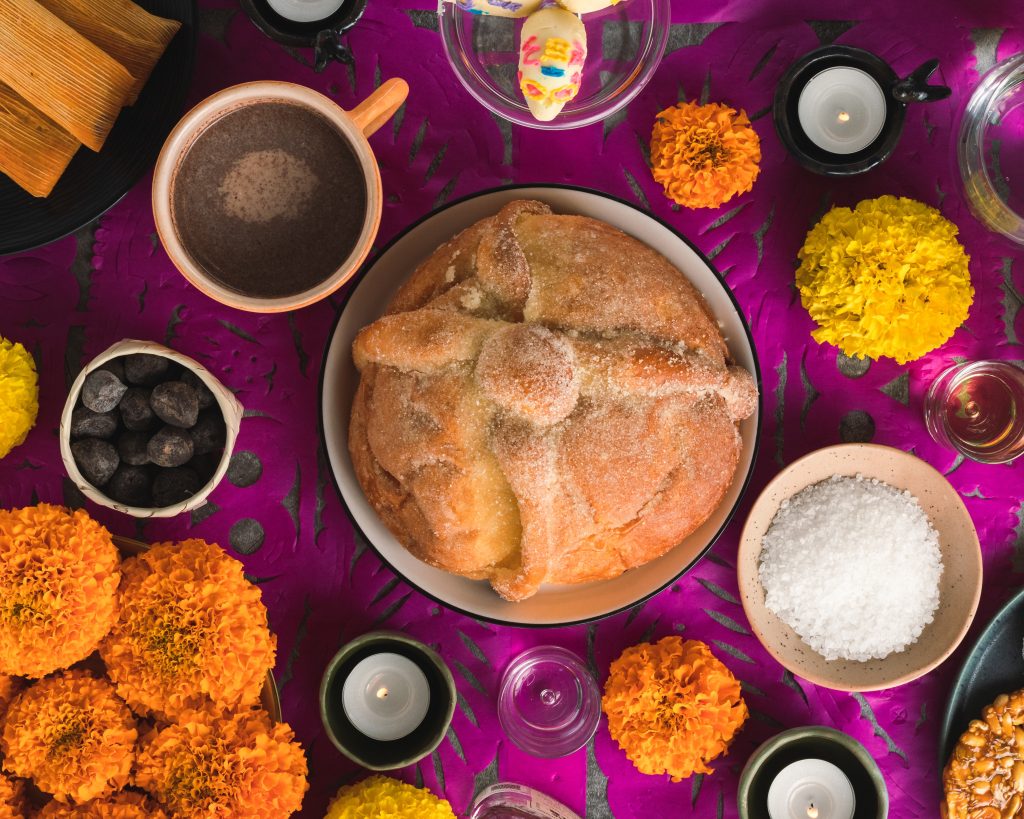
The festival takes place in Roma Norte, which makes it perfect for pairing with a day of walking, cafés, restaurants and exploring the neighborhood. Around 100 producers come together with artisanal coffee, chocolate, pan de muerto, desserts and other Mexican products.
- Dates: October 17-18, 2026
- Time: 10:00 AM-7:00 PM
- Location: Jalapa 38, Roma Norte
- Cost: Free entry
This is worth a stop if you’re already spending time in Roma or Condesa. With limited time in Mexico City, I wouldn’t cross the entire city solely for another food festival.
For the latest program and details, check the 2026 Festival Artesanal de Café, Chocolate y Más information.
If pan de muerto becomes one of your favorite parts of the trip, you can recreate it at home with my pan de muerto recipe or try this colorful sugar skull pan de muerto.
Festival de Café, Chocolate y Pan de Muerto
If food is one of the reasons you love traveling, this larger festival in Tlalpan is worth considering.
The Festival de Café, Chocolate y Pan de Muerto takes place October 24 and 25 at Tecnológico de Monterrey’s Mexico City campus and brings together more than 100 food and artisan proposals, along with workshops, talks, music and Día de los Muertos activities.
- Dates: October 24-25, 2026
- Time: 10:00 AM-7:00 PM
- Location: Tecnológico de Monterrey, Campus Ciudad de México
- Access: Entrance 19
- Cost: Free entry
Sunday, October 25 is also the Mega Procesión de las Catrinas, so the two can work together if you don’t mind a busier day. Visit the food festival earlier and leave plenty of time to reach Reforma before the evening crowds build.
For current schedules and festival information, check the Festival de Café, Chocolate y Pan de Muerto 2026 details.
For more things to look for while you’re eating your way through Mexico City, see my guide to traditional Day of the Dead foods.
Mega Procesión de las Catrinas
If those spectacular photos of Catrina makeup are what made you start dreaming about Día de los Muertos in Mexico City, this is the event to prioritize.
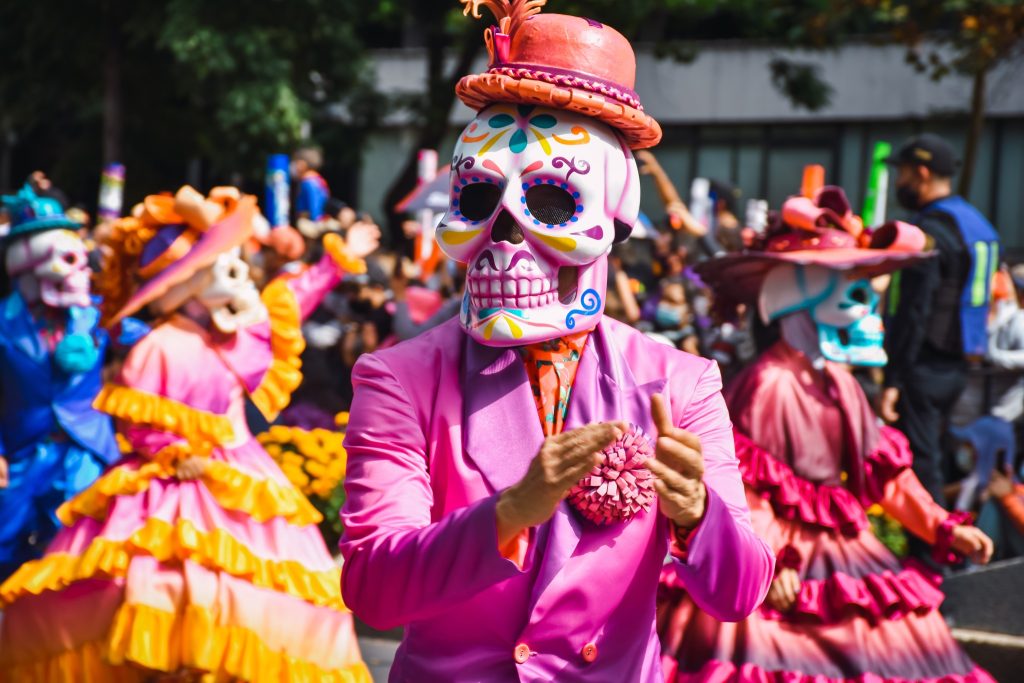
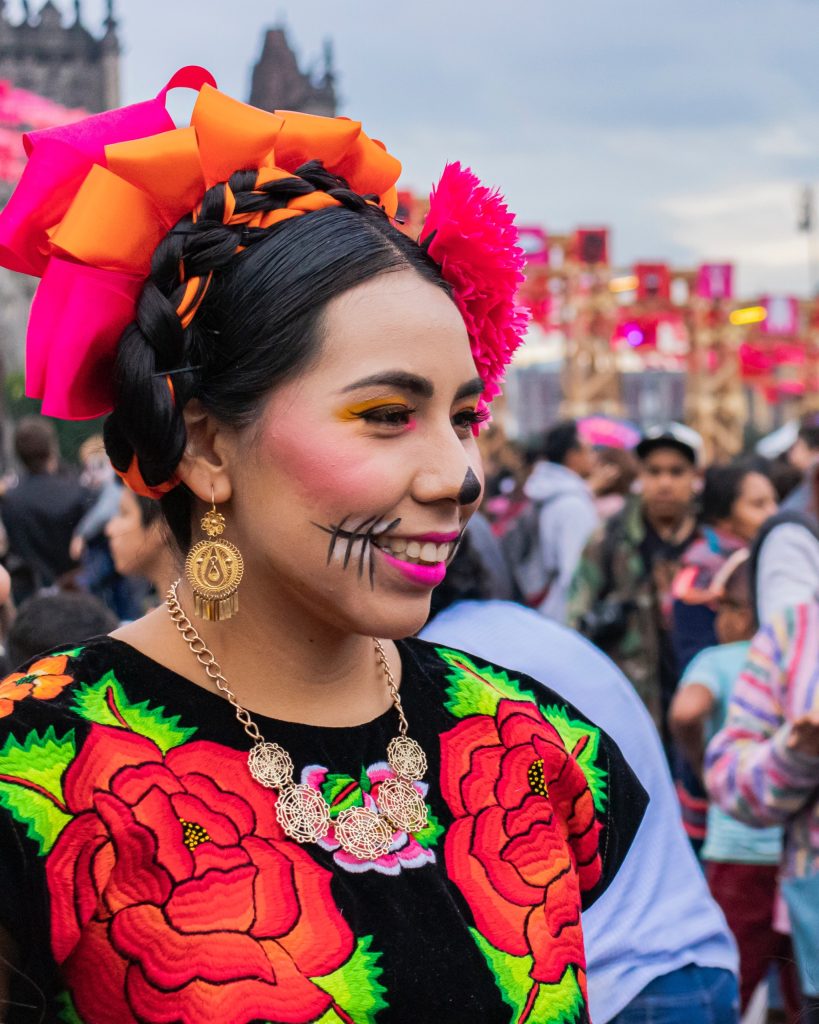
Unlike the Gran Desfile, where the floats and performances dominate the experience, the people are the spectacle here. Thousands of participants fill Reforma dressed as Catrinas and Catrines in traditional clothing, folkloric dress, pre-Hispanic-inspired designs, fantasy makeup and creative contemporary interpretations.
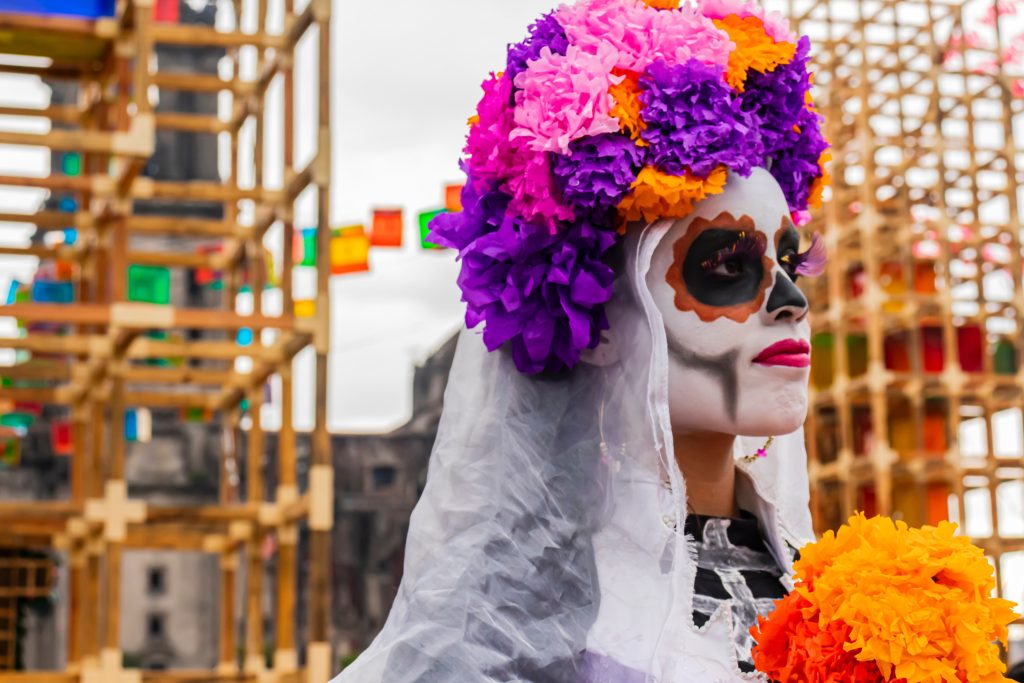
The 2026 Mega Procesión takes place Sunday, October 25 along Paseo de la Reforma, Avenida Juárez and 5 de Mayo. Activities and performances begin near the Ángel de la Independencia before the procession.
- Date: Sunday, October 25, 2026
- Area: Paseo de la Reforma toward the Centro Histórico
- Cost: Free to watch
- Activities: Performances and Catrina gatherings begin before the procession
You don’t need to dress up to enjoy it, but this is the event where having Catrina makeup done can become part of the fun rather than feeling like you’re wearing a costume to watch from the sidelines.
For current times, participant information and official 2026 updates, visit the official Mega Procesión de las Catrinas website.
Cacao Para Todos
Cacao Para Todos is one of my favorite additions to a Día de los Muertos trip because it gives you food, history and Mexican culture without another enormous street crowd.
The festival takes place at Museo Diego Rivera Anahuacalli in Coyoacán from October 29 through November 1 and brings together cacao producers, chocolatiers, artisans and food projects while exploring the history and cultural importance of cacao in Mexico.
The museum makes the experience even better. Anahuacalli was created by Diego Rivera to house his collection of pre-Hispanic art, and the dark volcanic-stone building is worth seeing on its own.
- Dates: October 29-November 1, 2026
- Time: 10:00 AM-7:00 PM
- Location: Museo Diego Rivera Anahuacalli, Coyoacán
- Cost: Free entry to the expo area; some activities may cost extra
This one makes the most sense as part of a Coyoacán day rather than a separate trip across the city.
For current programming and participating producers, check the official Cacao Para Todos 2026 page.
Open House CDMX Día de Muertos
If you love architecture, design and contemporary interpretations of tradition, Open House CDMX offers something you won’t get from the big parade.
From October 30 through November 3, five architecturally interesting spaces around Mexico City host contemporary ofrendas created by architects and designers.
The appeal here isn’t seeing all five. Choose the spaces near neighborhoods you already want to explore and let them become part of the day rather than turning them into another checklist.
- Dates: October 30-November 3, 2026
- Locations: Five venues around Mexico City
- General ticket: 190 MXN
- VIP ticket: 650 MXN
This is especially worth considering if you’re looking for something more intimate than Reforma but still want a creative Día de los Muertos experience.
For venue information, tickets and updated schedules, visit the official Open House CDMX Día de Muertos page.
Gran Desfile de Día de Muertos
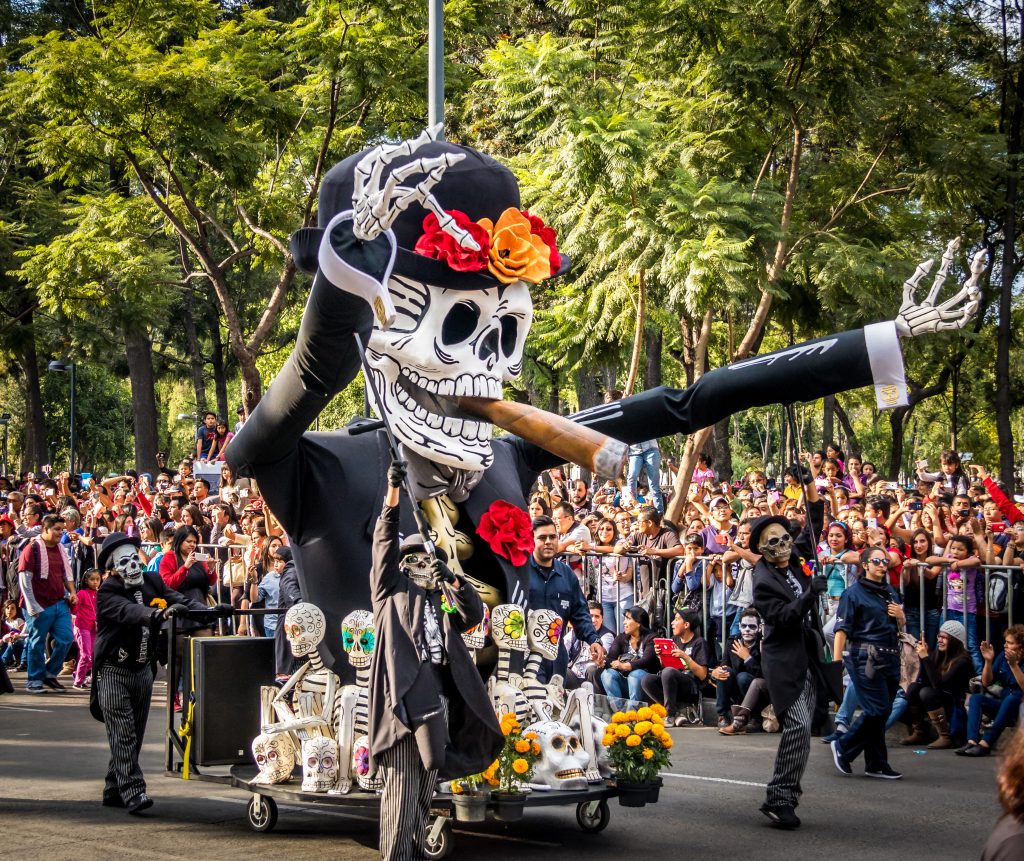
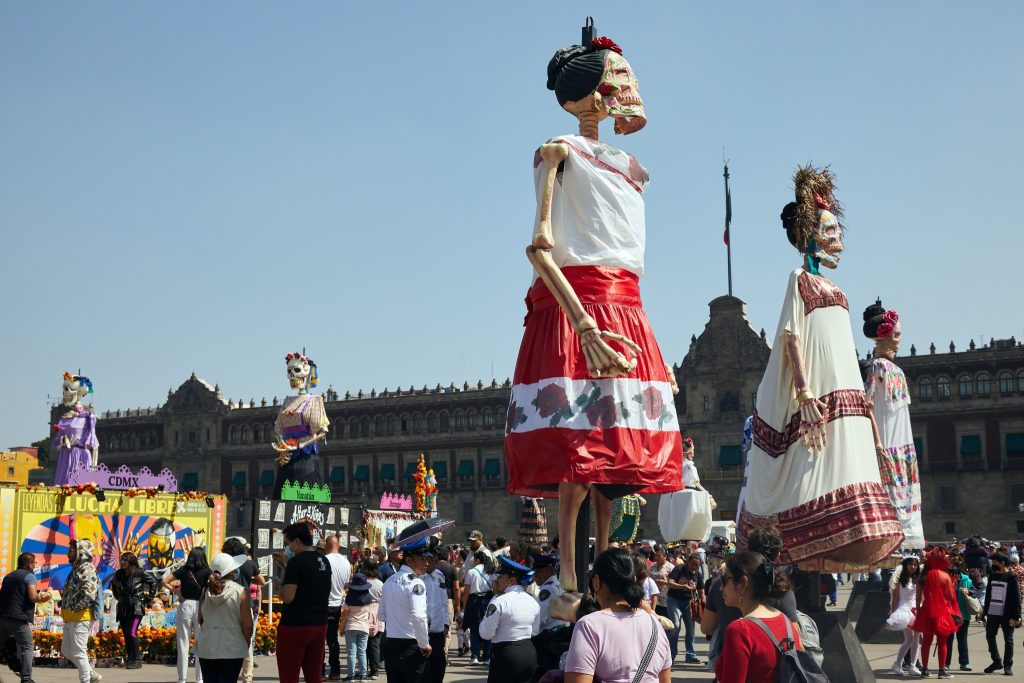
This is the big one: enormous floats, monumental Catrinas, music, dancers, elaborate costumes and massive crowds filling central Mexico City.
For a first Día de los Muertos trip, the Gran Desfile is worth experiencing once. It is spectacular, energetic and completely different from the quieter traditions you’ll encounter elsewhere in the city.
It’s also worth knowing where the parade comes from. The modern Gran Desfile began in 2016 after a fictional Día de los Muertos parade appeared in the opening sequence of the James Bond film Spectre. It has since grown into one of Mexico City’s signature public celebrations.
The 2026 Gran Desfile is confirmed for Saturday, October 31.
The final start time and route should be checked once the city releases the complete logistics. Don’t choose a viewing intersection based on an old route, and keep the rest of parade day flexible.
- Date: Saturday, October 31, 2026
- Cost: Free
- Time: Check the final 2026 schedule before your trip
- Route: Check the final route before choosing a viewing location
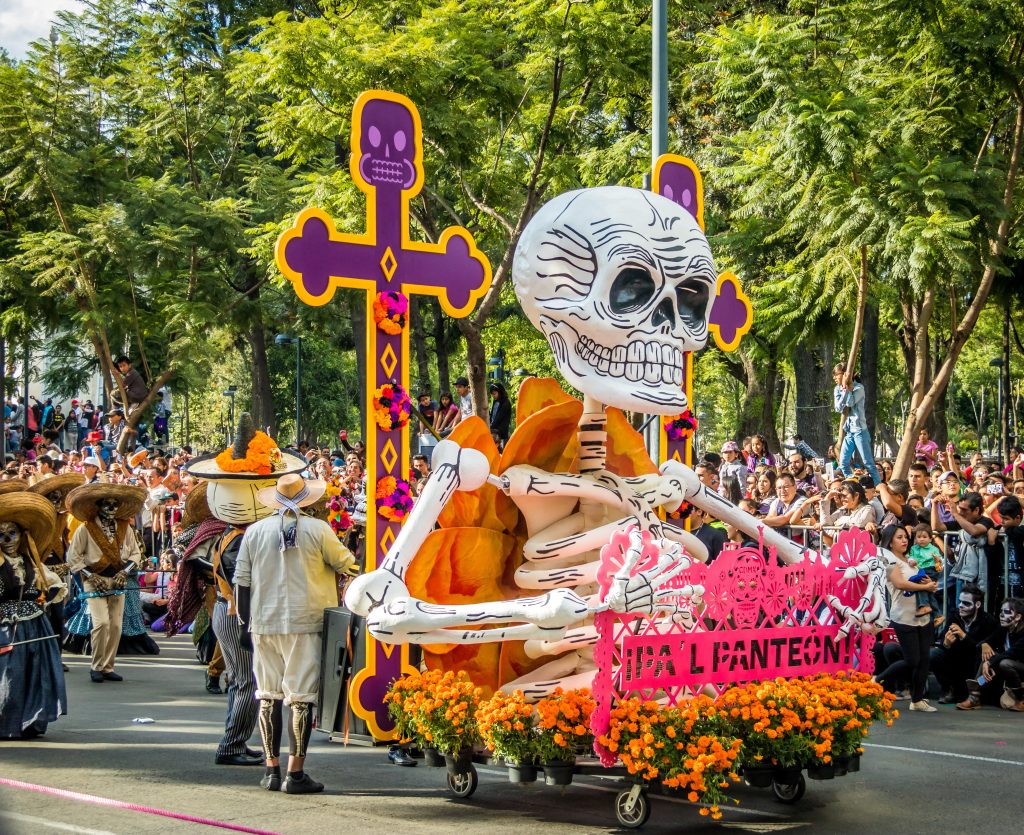
For updated route and timing information, check the current Gran Desfile Día de Muertos event page.
Is the Gran Desfile Worth the Crowds?
Yes, especially on a first trip, but treat it as the main event of the day.
Arrive early if getting a good view matters to you. Eat before heading toward the route, bring water and comfortable shoes, and expect it to take time to leave once the parade ends.
If standing in one place for hours to hold a front-row spot sounds miserable, don’t do it. You can still enjoy the atmosphere and see plenty without turning the entire day into a test of endurance.
Megaofrenda UNAM
If the Gran Desfile shows you the spectacular side of Día de los Muertos, UNAM’s Megaofrenda offers a welcome shift back toward the meaning of the celebration.
The Festival Universitario de Día de Muertos brings together altars created by different parts of the university community, with stories, photographs and installations centered on memory.
The 2026 Megaofrenda runs from October 31 through November 2 at Universum in Ciudad Universitaria and celebrates 475 years of UNAM’s history.
- Dates: October 31-November 2, 2026
- Location: Universum, Ciudad Universitaria
- Theme: 475+ Trayectorias que nos sustentan
This is one of the best events to pair with Xochimilco or Coyoacán because you’re already on the southern side of the city.
For program details and visitor information, check the official UNAM Megaofrenda website.
Should You Visit Mixquic During Day of the Dead?
Mixquic belongs in the conversation even though it isn’t part of the confirmed 2026 event calendar above.
San Andrés Mixquic is known for deeply rooted Día de los Muertos traditions centered around family ofrendas, cempasúchil, candles and remembrance at the cemetery. The best-known tradition is the Alumbrada on November 2, when graves are illuminated with candles as families gather to remember loved ones.
This can be one of the most meaningful experiences around Mexico City, but it deserves a different approach from the Gran Desfile.
Go because you’re interested in seeing how Día de los Muertos is lived within a community, not because you’re looking for another photo opportunity. Give families space around graves and be thoughtful about photographing people.
Mixquic is also far from central Mexico City, and transportation around November 1 and 2 can be slow. Give it a substantial part of the day instead of trying to combine it with several events downtown.
I’ll go deeper into timing, transportation and how to fit Mixquic into the trip in the separate Mexico City Día de los Muertos itinerary.
Where to Stay for Day of the Dead in Mexico City
Where you stay matters more during Día de los Muertos than on a normal Mexico City trip. Major street closures, enormous crowds around Reforma and long travel times between neighborhoods can turn what looks like a short ride on a map into a much bigger part of the day.
For most travelers, Roma Norte, Condesa or Juárez offer the best balance between easy access to the major events and great restaurants and neighborhoods when you’re not at a parade. Centro Histórico puts you in the middle of the action, while Coyoacán makes more sense if the southern experiences are a bigger priority.
Juárez and Reforma: Best for the Big Parades
If the Gran Desfile and Mega Procesión de las Catrinas are at the top of your list, staying near Paseo de la Reforma can save you a lot of frustration. Being able to walk part or all of the way back to your hotel is a huge advantage when streets close and thousands of people are leaving at once.
Sofitel Mexico City Reforma is the splurge pick here. It’s close to the Ángel de la Independencia and puts you right in the Reforma area while giving you a polished, luxurious place to escape the crowds afterward. Check rates and availability for Sofitel Mexico City Reforma on Expedia.
Galería Plaza Reforma is a more approachable alternative in the same general area. The location is the biggest selling point for this trip: you’re close to Reforma and the Ángel without paying Sofitel prices. Check rates and availability for Galería Plaza Reforma on Expedia.
Roma Norte and Condesa: Best All-Around Neighborhoods
Roma and Condesa are my favorite all-around choices for most travelers. They’re filled with restaurants, cafés and beautiful streets to explore, and they’re close enough to Reforma to make the big events manageable without making the entire trip revolve around them.
La Valise Mexico City is the boutique splurge for travelers who want the hotel itself to feel like part of the trip. It’s small, design-focused and right in Roma Norte, making it especially appealing for couples or anyone who prefers an intimate hotel over a big international property. Check rates and availability for La Valise Mexico City on Expedia.
Mondrian Mexico City Condesa is the stronger fit if you want a full-service hotel with the restaurants, cafés and walkability of Condesa around you. It also keeps you relatively close to Reforma for the major Día de los Muertos events. Check rates and availability for Mondrian Mexico City Condesa on Expedia.
Centro Histórico: Best for Being in the Middle of the Día de los Muertos Atmosphere
Centro Histórico puts you close to the Zócalo, historic architecture, museums and the constant energy of central Mexico City. It’s a great choice if atmosphere matters more than having quiet evenings.
Gran Hotel Ciudad de México is the standout here. Its famous stained-glass ceiling alone makes it memorable, and its location beside the Zócalo is hard to beat if you want to step outside and be in the heart of the historic center. During Día de los Muertos, that also means accepting noise and crowds as part of the experience. Check rates and availability for Gran Hotel Ciudad de México on Expedia.
Zócalo Central is the more practical Centro choice. You still get a prime location near the Zócalo, but the appeal is less about an iconic hotel building and more about having the historic center right outside your door. Check rates and availability for Zócalo Central on Expedia.
Coyoacán: Best for UNAM, Anahuacalli and Southern Mexico City
Coyoacán is the choice for travelers who care more about Cacao Para Todos, Anahuacalli, UNAM and easier access toward Xochimilco than being within walking distance of Reforma.
H21 Hospedaje Boutique is my favorite boutique choice in this area. It’s small and puts you close to Coyoacán’s plazas, restaurants and neighborhood atmosphere, making it a lovely base if you want the south of the city to be a bigger part of the trip. Check rates and availability for H21 Hospedaje Boutique on Expedia.
Agata Hotel Boutique is another intimate Coyoacán option and works well for travelers who want a smaller hotel with easy access to the neighborhood rather than a large property. Check rates and availability for Agata Hotel Boutique on Expedia.
How to Get Around Mexico City During Día de los Muertos
The biggest mistake you can make with a packed Día de los Muertos schedule is looking only at travel times on a map and assuming Mexico City will cooperate.
Street closures around Reforma and the Centro Histórico can change traffic patterns completely during major events. Metro and Metrobús are often easier than trying to reach a parade by car, and rideshares may have to drop you several blocks away once roads begin closing.
Grouping your days geographically makes a huge difference. Reforma, Juárez, Roma, Condesa and Centro work naturally together. Coyoacán, Anahuacalli and UNAM belong on another day. Xochimilco deserves its own evening, and Mixquic needs a generous block of time.
I’ll map those areas into a realistic day-by-day plan in the separate Day of the Dead Mexico City itinerary.
What to Book Ahead for Day of the Dead in Mexico City
Many of the biggest Día de los Muertos celebrations are free, so this isn’t a trip where every day needs a stack of reservations.
Book your hotel first, especially if you’re visiting October 29 through November 3. Location matters during the busiest days and the best-positioned hotels around Reforma, Roma and Centro can fill as the holiday gets closer.
La Llorona is the event ticket to prioritize once your dates are set. Open House CDMX is also worth reserving if it’s high on your list because individual venues have limited capacity.
For the free parades, good planning matters more than reservations. Check the final route close to your trip, decide how early you’re willing to arrive and avoid putting a tightly timed reservation immediately after the event.
Are Day of the Dead Tours in Mexico City Worth It?
Some are, especially when the tour solves a transportation problem or gives you cultural context you wouldn’t get by showing up on your own.
You don’t need a tour simply to watch a free parade on Reforma. Tours become more useful for Xochimilco, marigold-growing areas, more traditional Día de los Muertos experiences and places that are harder to navigate independently.
This is also where it pays to look beyond the title. Read the itinerary carefully and see whether you’re getting a guide, transportation, food, access to a smaller experience or little more than a ride to a public event.
If you’re looking for something more focused on Xochimilco, there are also seasonal experiences that combine the canals with marigold nurseries, axolotl conservation, food and music.
What to Pack for Day of the Dead in Mexico City
Late October and early November can mean warm afternoons and chilly evenings, and several of these events involve hours of walking or standing.
- Comfortable walking shoes
- A light jacket or sweater for evenings
- Water for long parade days
- Sunscreen
- A small crossbody bag for crowded events
- A portable phone battery
- Mosquito repellent for Xochimilco
Mexico City is also at high elevation. Give yourself an easier first day if you’re arriving from sea level rather than jumping straight into hours of walking, standing and navigating crowds.
Can You Dress as a Catrina?
Yes, especially for the Mega Procesión de las Catrinas.
Catrina makeup can be an incredible form of art, and the Mega Procesión is filled with elaborate interpretations. It’s also worth understanding that Día de los Muertos isn’t a Mexican version of Halloween. The imagery is connected to a celebration centered around death, memory and honoring people who have died.
If you’re traveling with kids, learning about some of that symbolism before the trip makes seeing all those Catrinas much more meaningful.
Day of the Dead in Mexico City With Kids
Día de los Muertos can be an incredible family trip, but the biggest events require some strategy.
The alebrijes are one of my top recommendations for families. They’re colorful, imaginative and easy for children to connect with visually. If parade crowds sound overwhelming, see the monumental alebrijes along Reforma afterward instead.
The food festivals are another easy choice because you can stay for an hour or several hours depending on everyone’s energy.
UNAM’s Megaofrenda gives families a chance to look at an altar closely and talk about what the photographs, food, candles and flowers represent instead of experiencing Día de los Muertos only through the large public spectacles.
For most families, one major parade is enough. Choose the one that matches what your kids are most excited about and save everyone’s energy for the rest of the trip.
You can introduce younger travelers to some of these traditions before you leave with my Day of the Dead activities for kids.
The Side of Día de los Muertos You Shouldn’t Miss
The giant Catrinas and alebrijes are spectacular. They deserve the photos they get.
But they shouldn’t be the only memories you bring home.
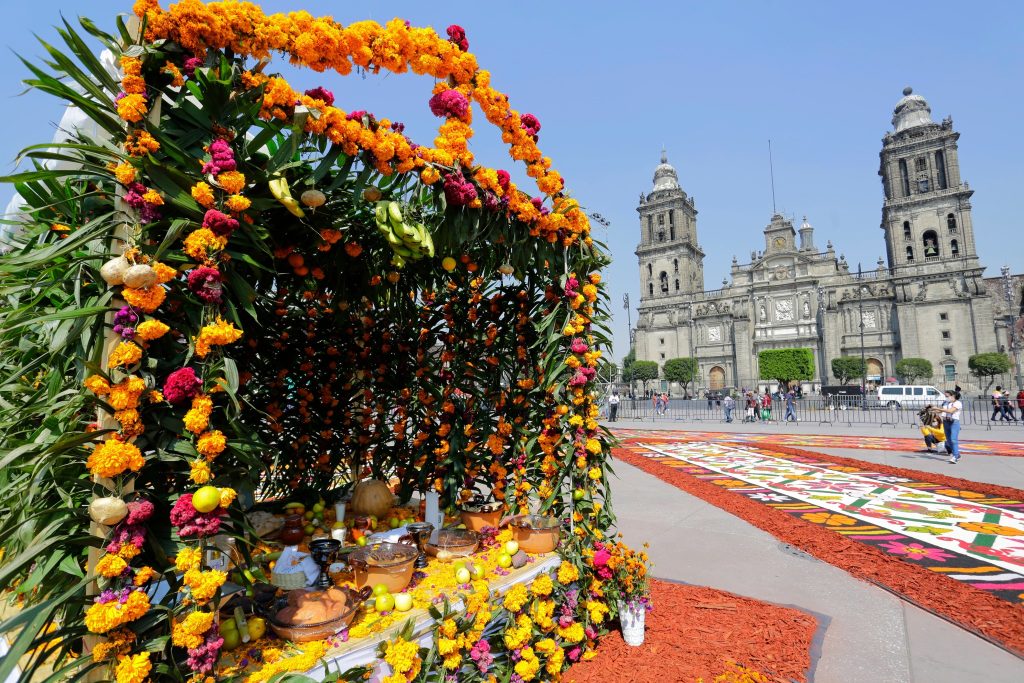
Look closely at the ofrendas. Notice the photographs, favorite foods, candles, glasses of water and flowers. Think about the individual people being remembered.
That is the part of Día de los Muertos I find most beautiful.
In our family, making pan de muerto, putting photographs on an altar and telling stories about family members my children never had the chance to meet is what gives the celebration meaning. Mexico City’s huge events are unforgettable, but making room for that quieter side of the holiday gives the trip much more depth.
Final Tips for Planning Day of the Dead in Mexico City
The best Día de los Muertos trip isn’t the one where you manage to attend the most events.
For a first visit, choose one major parade, see the alebrijes on Reforma, visit at least one meaningful ofrenda, make time for pan de muerto and add one experience that feels completely different from the crowds, such as an evening in Xochimilco.
Stay close to the events that matter most to you, group your days by neighborhood and leave more transportation time than you think you’ll need around major parade dates.
Book the experiences with limited capacity first, but don’t schedule every hour. Mexico City during Día de los Muertos is full of things that won’t appear on an official event calendar: cempasúchil spilling out of flower markets, neighborhood altars, bakeries filled with pan de muerto, families carrying flowers home and small details that remind you this is more than a festival season.
Those moments are part of what makes being in Mexico City at this time of year so special.
If you’re ready to turn these ideas into a trip, my next guide will be a detailed Day of the Dead Mexico City itinerary with realistic routes, neighborhood groupings, event combinations and enough breathing room to enjoy the city instead of racing across it.
Day of the Dead Celebrations in Other Mexican Cities
Mexico City is one of the best choices if you want to combine huge Día de los Muertos events with museums, food, art and different neighborhoods, but the celebration feels completely different depending on where you experience it in Mexico.
Mazatlán
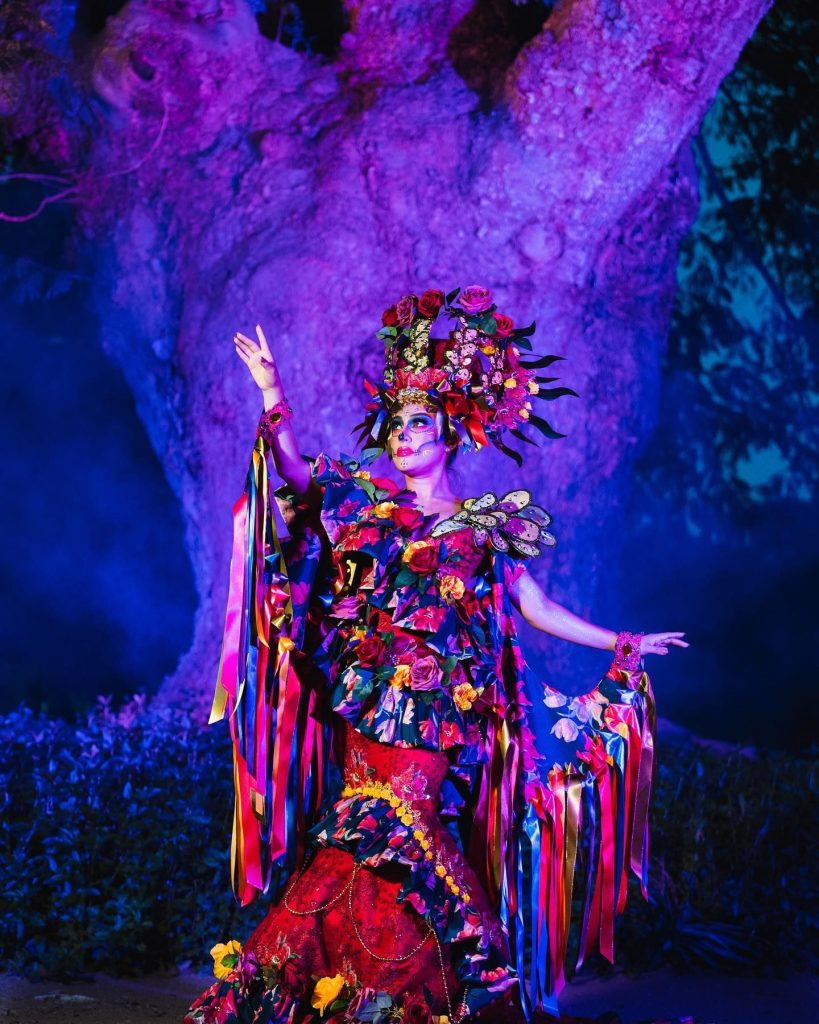
Mazatlán has a completely different energy, with its traditional Callejoneada moving through the historic center with music, Catrinas and altars. If you love the idea of combining Día de los Muertos with a coastal trip, read my complete guide to Día de los Muertos in Mazatlán.
Cabo San Lucas
Día de los Muertos in Cabo often combines local celebrations with seasonal hotel and resort programming. It works well for travelers who want cultural experiences while keeping beach time in the trip.
Oaxaca
Oaxaca offers a very different Día de los Muertos experience, with neighborhood comparsas, markets, cemeteries, sand tapestries and community traditions taking a much bigger role than enormous centrally organized parades.
Pátzcuaro and Lake Pátzcuaro
Around Lake Pátzcuaro, Día de los Muertos is deeply connected to Purépecha communities and cemetery traditions. It can be extraordinarily beautiful, but this is another place where remembering that you’re witnessing family and community traditions matters much more than getting the perfect photograph.
More Day of the Dead Traditions, Foods and Activities
If you’re planning your trip and want to understand more about Día de los Muertos before you go, I’ve been writing about the holiday, its food and our family’s traditions for years here on Growing Up Bilingual.
- Traditional Day of the Dead foods and their meaning
- Day of the Dead foods and recipes
- Easy pan de muerto recipe
- Sugar skull pan de muerto
- Day of the Dead activities for kids
- Day of the Dead crafts for kids
- Day of the Dead celebrations across Latin America
Through her writing, Paula helps travelers discover Guatemala beyond the typical tourist route with practical advice, local recommendations, and authentic experiences that connect visitors with the country’s people, culture, and traditions.
Planning a trip to Guatemala? Paula offers personalized Guatemala itinerary planning and trip consultation services tailored to your interests, travel style, and budget. Contact her at [email protected] to learn more.
- San Lucas Tolimán Guatemala: Lake Atitlán’s Best-Kept Secret - September 24, 2026
- Hotel Tolimán Lake Atitlán: A Special Stay in San Lucas Tolimán - September 24, 2026
- Guatemala Dreams in San Lucas Tolimán: A Boutique Stay on Lake Atitlán - September 23, 2026

