
This fresco de tiste recipe is one of the oldest traditional Guatemalan drinks you can make at home — a cold, dark, slightly thick cacao drink made from toasted cacao seeds and toasted corn, ground together with cinnamon and cloves and stirred into cold water. It’s been around since the Mayan people were drinking it in ceremonial vessels, long before anyone thought to put chocolate in a candy bar.
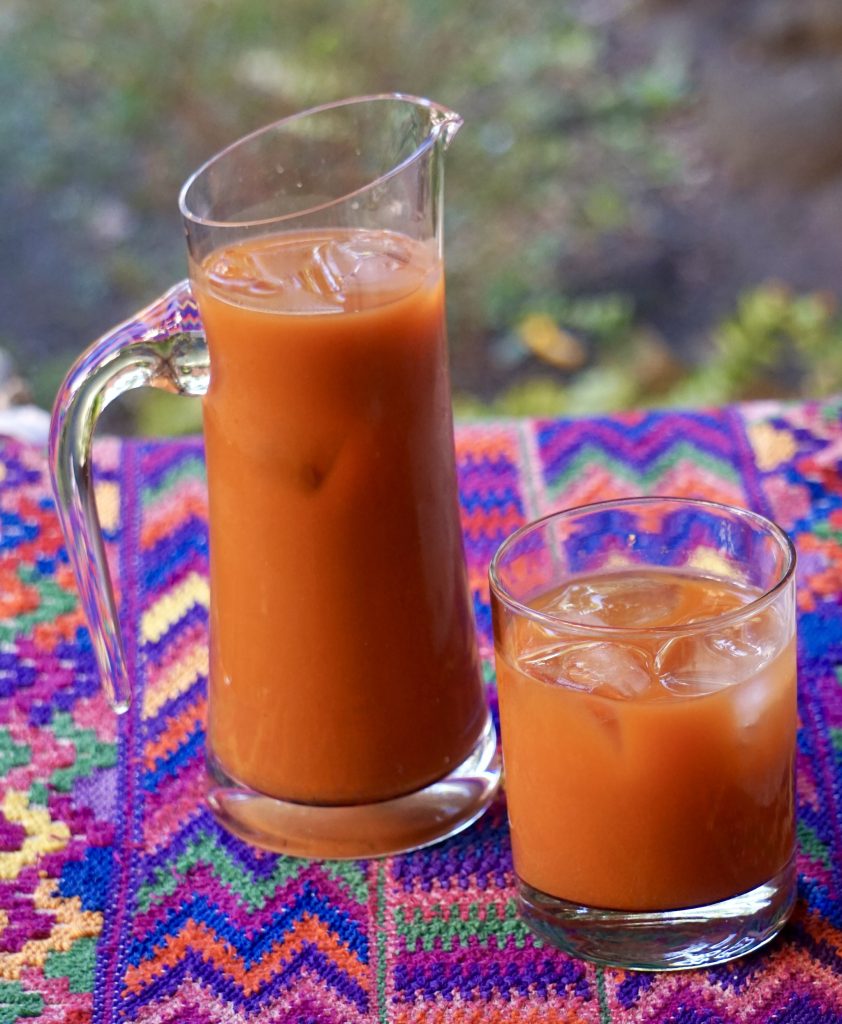
Most people outside of Guatemala have never heard of tiste. Even within the country, it’s more of an eastern Guatemala staple — beloved in Chiquimula, Escuintla, El Progreso — than something you’d find at every table. Growing up in the capital, I heard about it more than I tasted it. When I finally had a proper glass of it at a market in Chiquimula — dark brown, cold, poured out of a big clay pitcher into a plastic bag tied with a rubber band the way market drinks come — it genuinely surprised me. It tasted like chocolate before chocolate became a commercial thing. Earthy, a little bitter, deeply aromatic. It tasted like something real.
If you’ve never tried tiste, this recipe is your starting point. And if you grew up drinking it, you already know why it deserves a permanent spot in your kitchen.
Tiste: Guatemala’s Ancient Chocolate Drink
There’s something about a drink made from real cacao — not cocoa powder, not chocolate syrup, but actual toasted cacao seeds ground with corn — that tastes completely different from anything processed. Tiste is chocolate before it became dessert. Earthy, a little bitter, fragrant with cinnamon, and best served so cold that the glass fogs up.
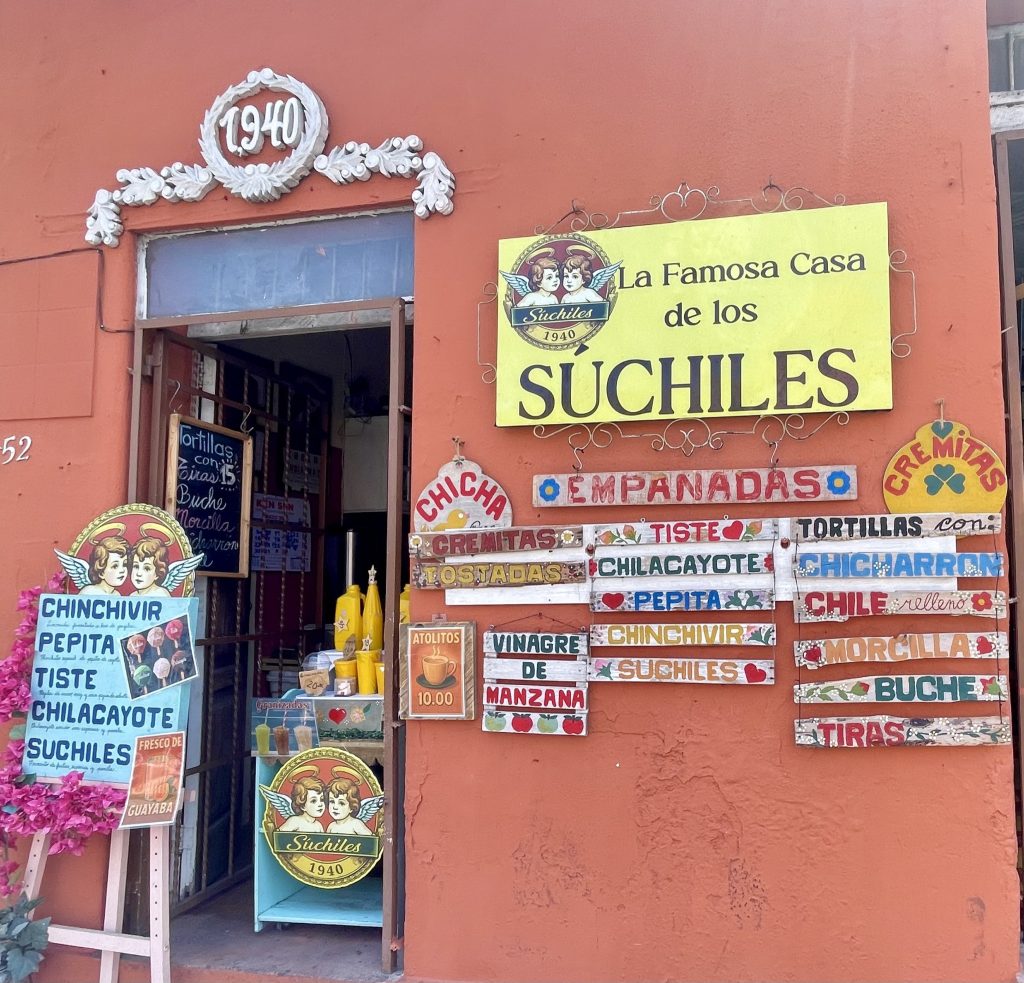
I came to tiste later than I should have. In Guatemala City, the drinks I knew growing up were horchata at birthday parties and tamarindo from the market. Tiste was something you heard about from people with family in the east, or something you’d see at the Casa de los Súchiles in the Zona 1 menu and wonder about but never order. It felt like someone else’s tradition. It wasn’t until I actually tried it that I understood what I’d been missing.
What Is Fresco de Tiste?
Tiste is a traditional Guatemalan drink made from toasted cacao and toasted corn, ground together into a powder, then stirred into cold sweetened water with cinnamon, cloves, and sometimes achiote. Some versions use rice instead of corn, and some families mix the powder with milk to make something closer to a batido. But the core of it — cacao and corn, ground together — is what makes tiste tiste.
The key thing to understand is that tiste is ground, not dissolved. You’re not stirring cocoa powder into water. The toasted cacao and corn get processed together until you have a coarse, fragrant powder that gives the drink both flavor and a little texture. Traditionally this was done on a piedra de moler, the stone grinding surface in traditional Guatemalan kitchens. Today most families either take the toasted ingredients to a local molino or just buy the tiste powder ready-made by the pound at market stalls, especially in the departments where it’s most popular.
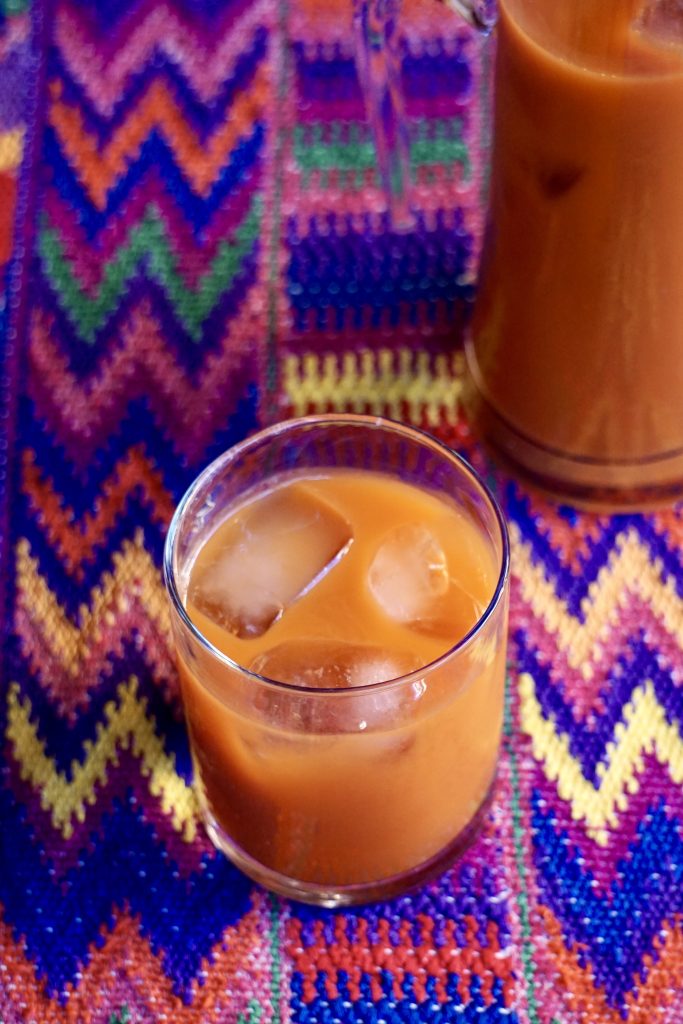
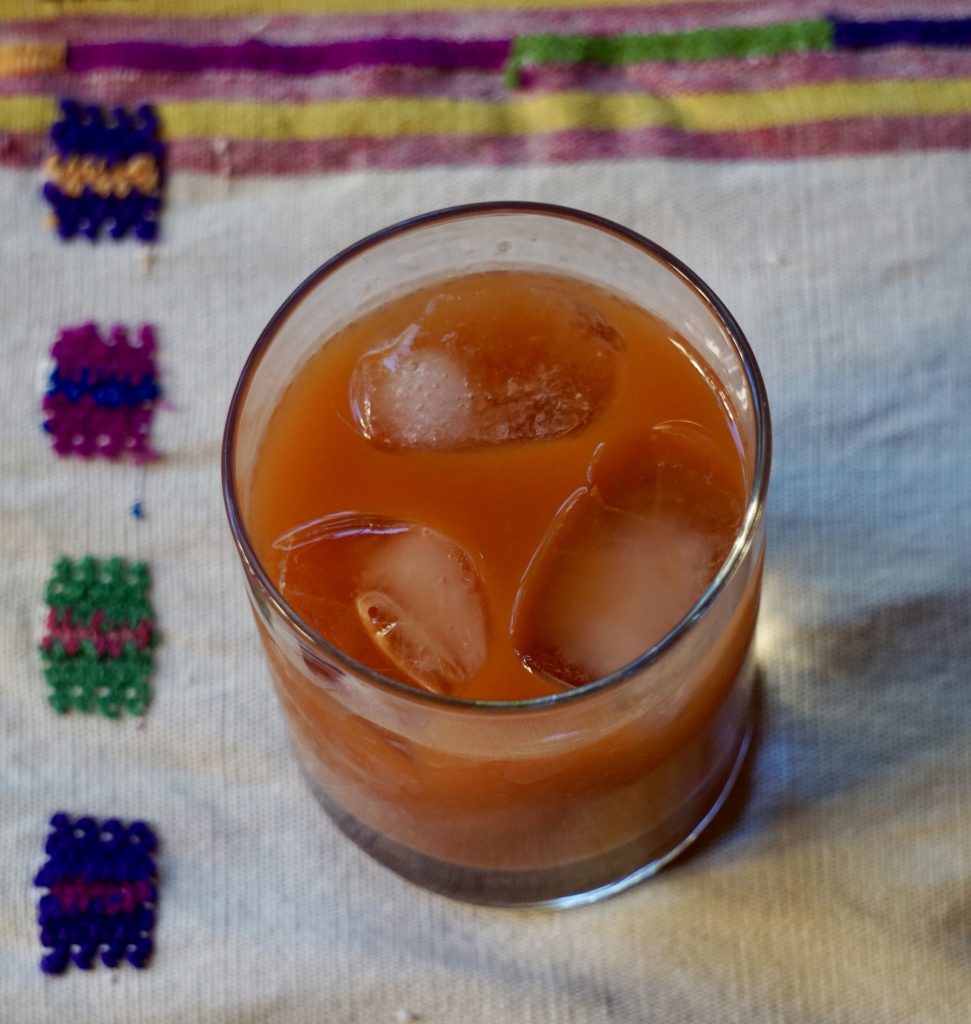
The result isn’t transparent like juice or smooth like horchata. It’s a little thick, a little rustic, and completely its own thing.
What Does Fresco de Tiste Taste Like?
The cacao flavor is right up front — not sweetened into the background, actually there in every sip. The toasted corn adds a subtle nuttiness underneath it that you wouldn’t be able to name on its own but would definitely miss if it were gone. The cinnamon and cloves make the whole thing smell and taste warm even though it’s served ice cold. And in versions that include achiote, you get a faintly earthy, peppery undertone and a deep reddish-brown color that makes the drink look as interesting as it tastes.
It’s sweet, but not candy sweet. Chocolatey, but not like a dessert. It sits somewhere between a drink and a light snack in terms of how satisfying it is. On a hot afternoon, it’s genuinely one of the best things you can pour over ice.
If you’ve ever had Mexican tejate or Oaxacan chocolate drinks made with cacao paste, you’re in the right territory — but tiste has its own flavor that’s worth discovering on its own terms.
The History and Origins of This Traditional Guatemalan Drink
Tiste goes back to the ancient Maya, for whom cacao wasn’t a sweet treat at all — it was a sacred ingredient used in ceremonies and rituals. The Maya were drinking cacao in liquid form long before Europeans arrived, and those early drinks looked a lot more like tiste than anything we’d recognize as chocolate today: ground cacao mixed with corn, spices, sometimes chili, always tied to something meaningful.
When the Spanish arrived in the sixteenth century, they encountered cacao drinks all across Mesoamerica and adapted rather than replaced them. The corn stayed. Cinnamon was added. The drink kept going, passed down through kitchens and market stalls for generations, carrying a lineage that stretches back over a thousand years.
In San Agustín Acasaguastlán in the department of El Progreso, families like the Nunfio Ortiz have been making tiste for over 150 years using a recipe handed down from parents to children without interruption. Their version uses cacao, rice, achiote, cinnamon, and sugar, ground on a stone the same way it’s always been done. That kind of continuity — an unbroken line from ancient practice to someone’s kitchen today — is what makes tiste more than just a drink. It’s a piece of living Guatemalan history.
Where in Guatemala Is Tiste Most Beloved?
Guatemala’s food culture is deeply regional. A drink that’s an everyday staple in one department can be completely unknown in the next one over, even if they’re only a couple of hours apart. Tiste is a perfect example.
It’s most associated with the eastern departments. Quetzaltepeque in Chiquimula is probably the most often-cited home of the traditional fresco de tiste — you can buy it ground and ready to mix at market stalls there. Escuintla has a strong tiste tradition too, especially during Semana Santa. San Agustín Acasaguastlán in El Progreso keeps one of the most artisanal versions alive, still made on stone by families who’ve never stopped doing it the old way. And it shows up in various forms across Alta Verapaz, where cacao cultivation has always been central to the region.
If you have family from any of these departments, there’s a real chance someone in your family made tiste at some point. Might be worth asking.
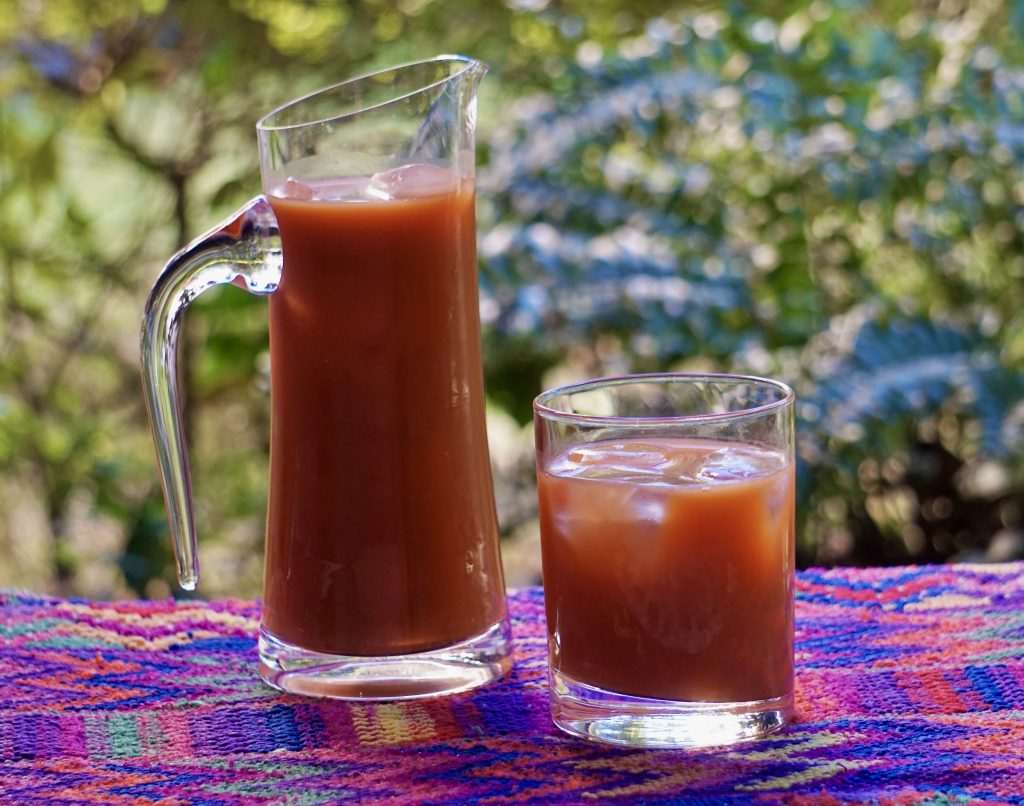
Fresco de Tiste During Semana Santa and Beyond
Semana Santa in Guatemala is when a whole category of traditional foods and drinks comes back into circulation. Tiste is one of them. In many families, making tiste for Holy Week is just what you do — it belongs to the heat of those days, to the long hours of fasting and standing along procession routes waiting for the anda to pass.
But tiste isn’t only for Semana Santa. It also shows up on Día de Todos los Santos in November, when food and memory are especially connected. And in the eastern departments where it’s never gone away, it’s just a regular market drink — poured cold into a bag or a glass and handed over the counter any time you want it.
Making it at home, wherever you live, is its own kind of small thing that matters. Every time you toast the cacao and corn and grind them together, you’re doing something that people in Guatemala have been doing for over a thousand years.
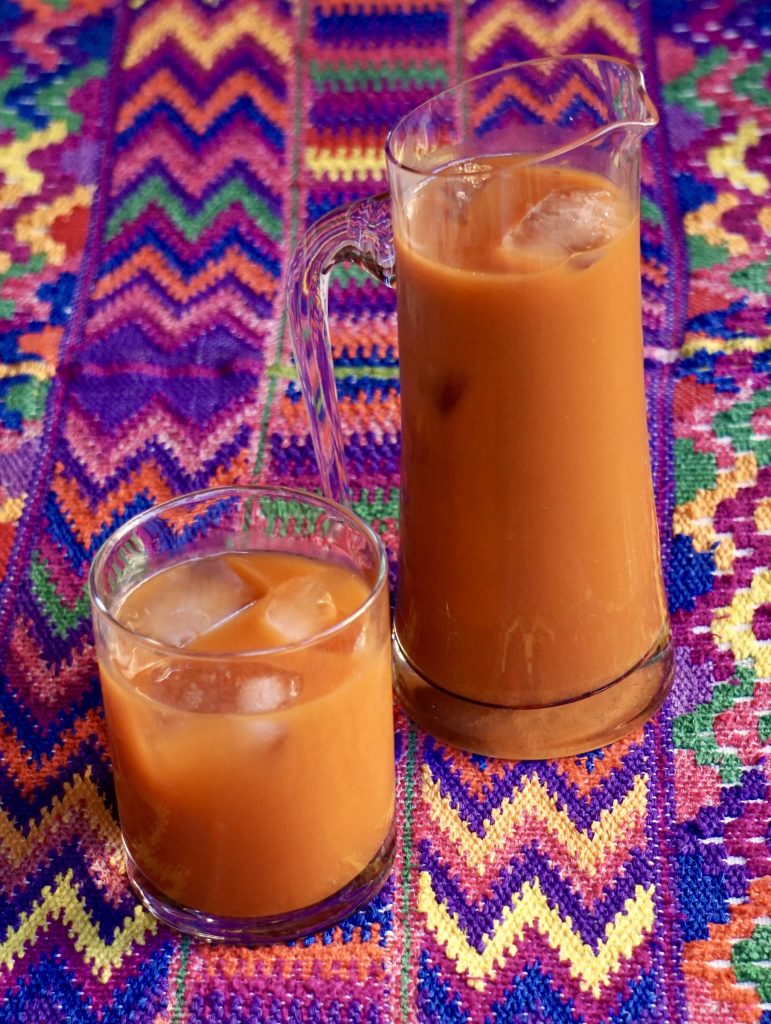
Ingredients for Making Fresco de Tiste
This recipe follows the traditional method of toasting and grinding cacao, corn, cinnamon, and cloves together — documented across multiple regional sources in Guatemala. It makes approximately 8 glasses.
For the tiste powder:
- ½ pound raw cacao seeds (not processed cocoa powder)
- ½ pound dried yellow corn (not masa)
- 2 cinnamon sticks
- 10 whole cloves
- 1 tablespoon achiote seeds or paste (optional but traditional in several regional versions)
To make the fresco:
- ½ cup tiste powder per liter of water
- Sugar to taste
- 1 liter cold water
- Plenty of ice
On sourcing: Raw cacao seeds and dried corn are available at Latin grocery stores and online. In Guatemala, the easiest option is to buy tiste powder already ground at a market stall — ask for polvo de tiste. In Antigua or Guatemala City, any market with a grain or spice vendor will have it.
On achiote: Not every recipe uses it, but the versions from El Progreso and Chiquimula often do. It adds both color and a subtle earthiness that really deepens the flavor. Use it if you can find it.
How to Make the Traditional Fresco de Tiste Recipe
Prep time: 15 minutes Cook time: 30 minutes Total time: 45 minutes, plus chilling time Yield: Approximately 8 glasses
Step 1: Toast the corn. In a dry skillet or comal over medium heat, toast the dried corn, stirring constantly, for about 20 minutes until it’s golden and nutty-smelling. Don’t leave it unattended — corn burns faster than you’d think. Once it’s done, let it cool completely, then rub the kernels between your hands to remove any loose husks.
Step 2: Toast the cacao. In a separate dry skillet over medium-low heat, toast the cacao seeds for about 10 minutes, stirring often. The shells will start to crack and the seeds inside will darken. Take them off the heat and let them cool, then peel away the shells. This step is worth doing properly — freshly toasted cacao smells incredible and tastes like nothing pre-packaged can match.
Step 3: Grind everything together. Combine the toasted corn, peeled cacao, cinnamon sticks, and cloves. Grind in a high-powered blender or grain mill until you have a fine, dark powder. If you have a local molino, bring your ingredients there — they’ll do a better job in less time. The goal is a powder fine enough to dissolve well into water but with enough texture to feel like the real thing.
Step 4: Mix the fresco. For each liter of cold water, add half a cup of tiste powder and sugar to taste. Stir well or blend briefly to fully incorporate. The drink will be a deep brown. Taste and adjust sweetness.
Step 5: Serve cold. Pour over plenty of ice and serve right away. The tiste powder settles at the bottom, so give it a stir before each glass. Some families blend it with ice for a granizada version, which is also really good.
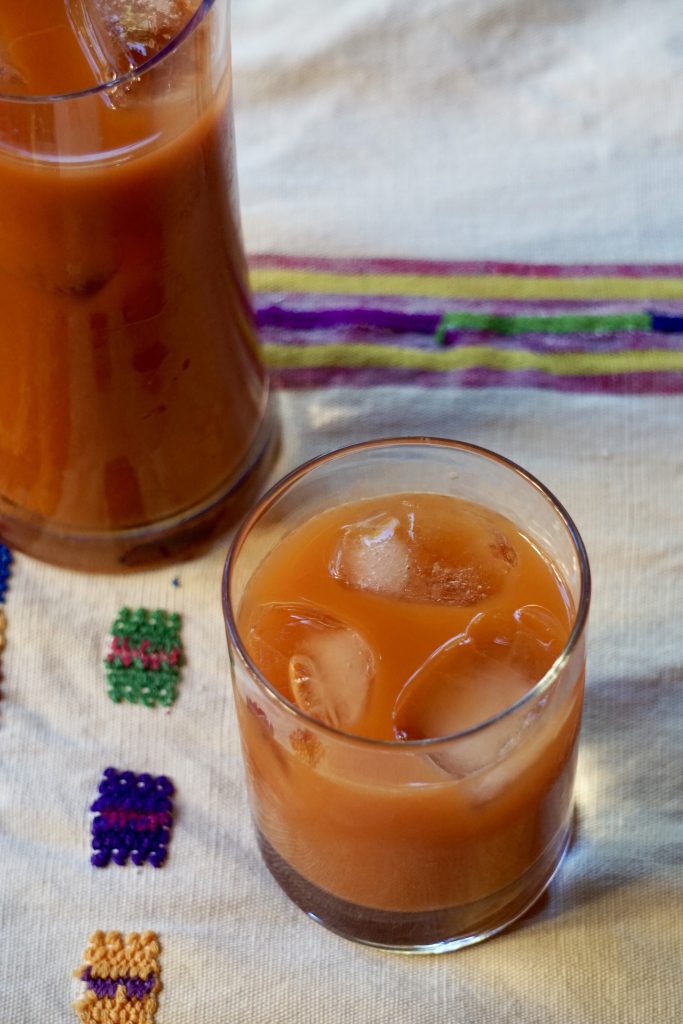
Tips for Making the Best Fresco de Tiste
Use real cacao seeds, not cocoa powder. The difference in flavor is not subtle. Processed cocoa powder has had most of the complexity removed. Raw cacao seeds, toasted fresh, give you the real thing. They’re available at Latin grocery stores and online.
Toast the corn and cacao separately. They have different toasting times and different burn points. If you toast them together, one will be overdone while the other is still raw.
Grind it as fine as you can. A coarser grind gives you more sediment and a slightly gritty texture. A finer grind makes a smoother drink. Both are traditional, but finer is easier to drink and dissolves better into cold water.
Use panela or piloncillo instead of white sugar. The molasses notes in unrefined cane sugar pair naturally with cacao and corn. It makes the whole drink taste deeper and more rounded.
Serve it very cold. Tiste at room temperature is a different drink — and not in a good way. It needs to be icy cold, which softens the bitterness of the cacao and makes the cinnamon come forward.
Make extra powder and keep it. The tiste powder keeps well in a sealed jar for several weeks. Make a bigger batch and you can have fresco de tiste whenever you want it without the full process every time.
More Traditional Guatemalan Drinks You’ll Love
Fresco de Suchiles: Guatemala City’s fermented Semana Santa drink — pineapple, toasted corn and barley, tamarind, panela, and medicinal roots. Ferments for five to eight days and tastes like nothing else.
Fresco de Pepita: Toasted squash seeds blended with water and sugar — the traditional drink of Zacapa and Chiquimula. Nutty, a little earthy, and really good over ice.
Fresco de Chilacayote: A gently spiced squash drink cooked with panela, cinnamon, cloves, and ginger. Golden amber and perfect cold.
Fresco de Chinchivir: Antigua’s traditional spiced lemon and ginger drink. Sharp, bright, and built for the heat.
Agua de Horchata: Guatemala’s cinnamon rice drink made distinctive by toasted pepitoria seeds. The drink of birthday parties and hot afternoons.
Rosa de Jamaica: Tart, ruby-red hibiscus agua fresca. Beautiful in a glass and refreshing any time of year.
Did you grow up drinking tiste? Did your family make it for Semana Santa, or did you discover it at a market somewhere? Leave a comment and tell me your story. And if you make this fresco de tiste recipe, come back and let me know how it turned out.
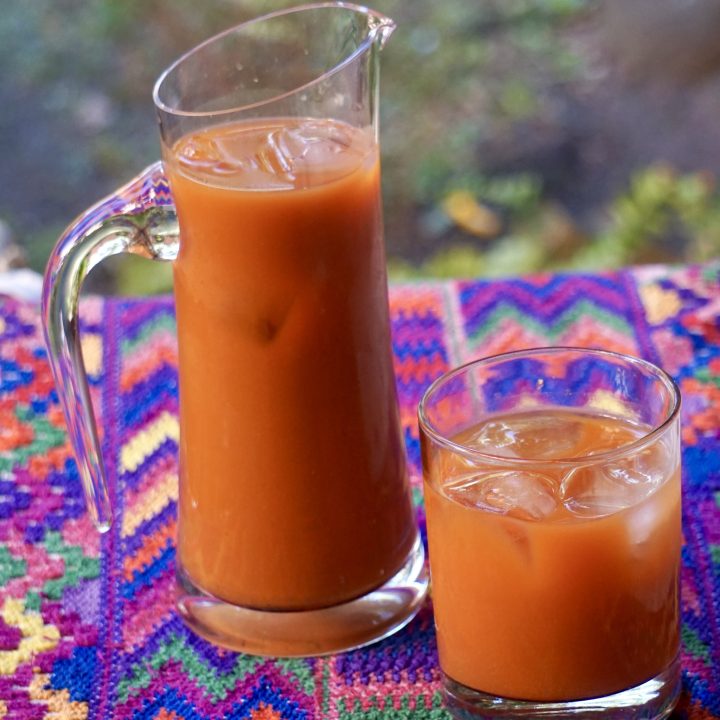
Guatemalan Fresco de Tiste Recipe
Fresco de tiste is one of Guatemala's oldest traditional drinks — a cold, dark cacao and corn drink made from toasted cacao seeds and toasted corn ground together with cinnamon and cloves, then stirred into cold sweetened water and served over ice. It goes back to the ancient Maya and is still made today in Chiquimula, Escuintla, El Progreso, and beyond. Not sweet like commercial chocolate — earthy, aromatic, deeply satisfying, and completely its own thing.
Ingredients
- For the tiste powder:
- ½ pound (225g) raw cacao seeds, hulled
- ½ pound (225g) dried yellow corn
- 2 cinnamon sticks
- 10 whole cloves
- 1 tablespoon achiote seeds or paste (optional)
- To make the fresco (per liter):
- ½ cup tiste powder
- 1 liter cold water
- Sugar or panela to taste
- Plenty of ice
Instructions
- In a dry skillet or comal over medium heat, toast the dried corn, stirring constantly, for about 20 minutes until golden and fragrant. Let cool. Rub kernels to remove loose husks.
- In a separate dry skillet over medium-low heat, toast the cacao seeds for about 10 minutes, stirring often, until shells crack and seeds darken. Let cool, then peel away the shells.
- Combine the toasted corn, peeled cacao, cinnamon sticks, and cloves. Grind in a high-powered blender or grain mill until you have a fine, dark powder. Add achiote now if using.
- For each liter of cold water, add ½ cup of tiste powder. Add sugar to taste. Stir or blend briefly until fully incorporated.
- Pour over plenty of ice. Stir before each glass as the powder settles. Serve immediately.
Nutrition Information:
Yield: 8Amount Per Serving: Calories: 120Total Fat: 4gSaturated Fat: 1.5gTrans Fat: 0gUnsaturated Fat: 2.5gSodium: 5mgCarbohydrates: 20gFiber: 2gSugar: 13gProtein: 3g
Compensated affiliate links may be used in this post. As an Amazon Associate and member of other affiliate programs, I earn from qualifying purchases.

Paula studied architecture and now makes a living as a freelance writer,traveler and amateur photographer.She started her writing & publishing career as the editor of Bebé y Mamá, the first parenting magazine in Guatemala.She is the founder of www.GrowingUpBilingual.com and www.365thingsswfl.com and writes articles in Spanish and English for both magazines and the web on travel,food and bicultural and bilingual parenting .
When she is not on a plane or road trip she likes to create recipes inspired in the flavors of her native Guatemala.

