
Getting a first phone for kids can feel like a huge parenting milestone. Suddenly you’re trying to decide whether your child is ready for a first cell phone, what makes a safe phone for kids, which parental controls for kids really matter, and what cell phone rules for kids you should put in place from day one. After going through this with both of my kids, there are definitely things I wish I had known. This guide shares what worked for our family, what didn’t, and the practical things I would consider before handing any tween or teen their first smartphone.
There’s no way around it, eventually, your kids will ask you for a cell phone and it will happen sooner than you thought. It’s probably happened already. However, there’s no need to panic, getting your kids their first smartphone can be an exciting and painless process for everyone. It’s very important to have a kid safe phone.
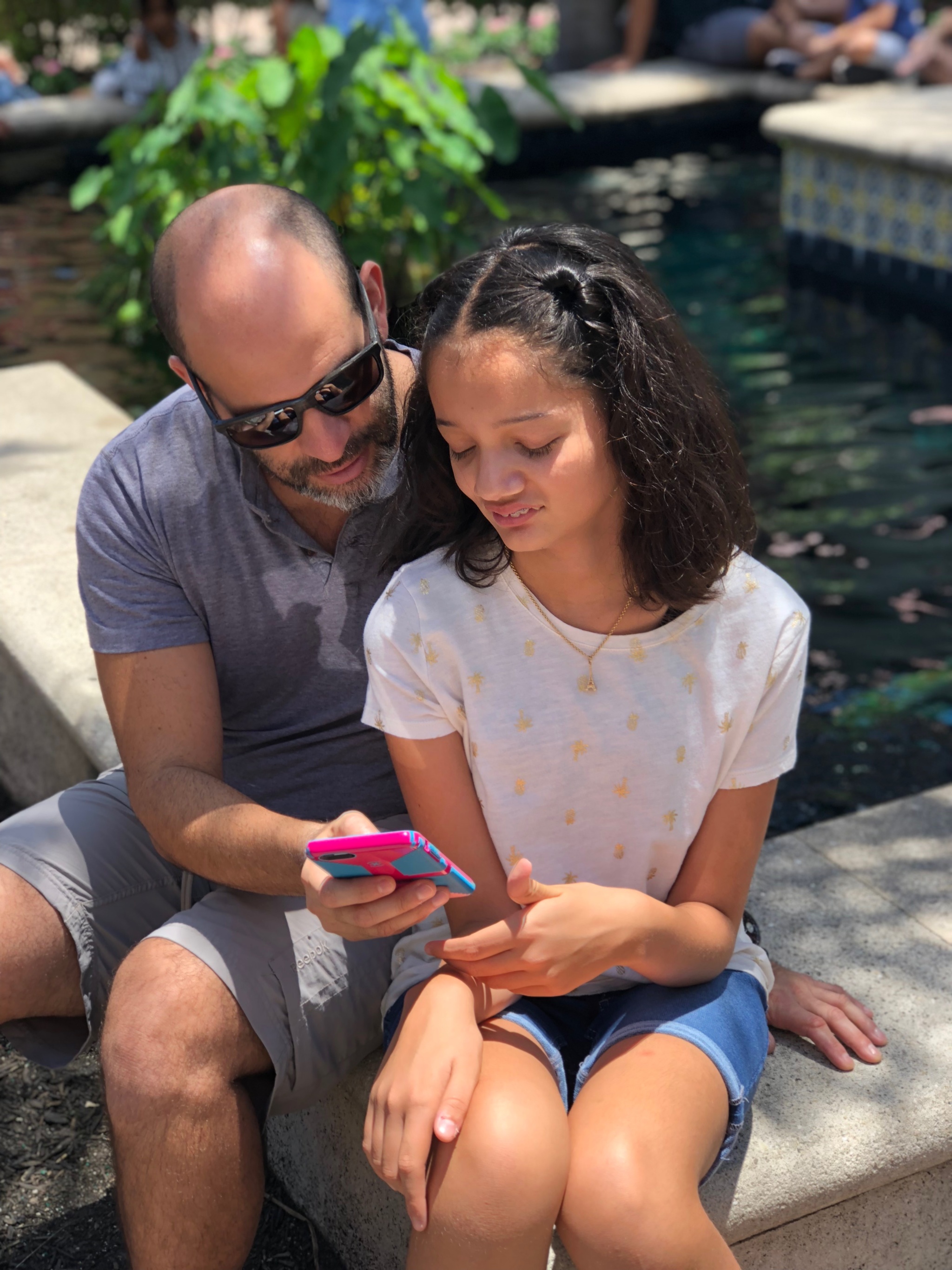
When we got our oldest child a phone, I worried that it would create more problems than it solved. Would I suddenly be fighting about screen time all day? Would the phone keep her up at night? What about social media, inappropriate content, strangers online and all the other things parents worry about the minute we give kids access to technology?
By the time we were ready to give our younger child a phone, I had learned something important: the phone itself isn’t usually the biggest issue. What matters much more is whether your child is ready, what access you’re giving them, and whether you’ve talked about expectations before the phone becomes part of everyday life.
How Do You Know When Your Child Is Ready for Their First Phone?
There isn’t one magic age when every child is suddenly ready for a phone. I think readiness matters much more than whether your child has reached a particular birthday.
Start with the reason you’re considering a phone. Does your child stay after school for activities? Are they spending more time away from you? Do they need to coordinate pickups, practices or transportation? Are they beginning to have more independence? Those were much more useful questions for us than simply asking whether other kids their age already had phones.
I also look at how a child handles other responsibilities. Do they usually keep track of their belongings? Can they follow basic family rules even when they’re not thrilled about them? Do they tell you when something goes wrong instead of hiding it?
I’ve shared more questions to think about in my article on things to consider before giving your child their first mobile phone. The biggest takeaway for me is still that every child is different. Two siblings may be ready for the same technology at completely different ages.
What Should You Do Before Giving a Kid Their First Cell Phone?
Talk about it before you buy it.
That sounds ridiculously simple, but it’s probably the thing I wish we had done more intentionally the first time around. Kids are usually focused on finally getting the phone. Parents are thinking about everything that could possibly go wrong. Those are two very different starting points.
Before handing over the phone, talk about why they are getting it, what you expect from them and what responsibilities come with having it. This isn’t one giant scary internet-safety lecture. I would rather have several normal conversations than one dramatic talk that makes technology sound terrifying.
We also learned that teenagers respond much better when they’re part of the conversation. They want more independence, and that’s appropriate. Giving them some ownership over the rules doesn’t mean giving up your role as a parent. It means explaining why the rules exist and listening to what matters to them too.

What Cell Phone Rules for Kids Actually Work?
One of the biggest lessons we learned is that balancing digital life and family life doesn’t have to become a constant battle.
Trying to control every minute your child spends on a phone can backfire, especially as kids get older. What worked better for us was establishing a few clear family expectations and then adjusting them as the kids matured.
Some rules applied to everyone, not just the kids. Phones didn’t need to be part of family meals. There were times when devices needed to be put away. And if I was telling my children that they shouldn’t be staring at their phones while someone was talking to them, I had to pay attention to whether I was doing the exact same thing.
That last part is harder than it sounds. I work online, so my phone is legitimately part of my workday. But “I’m working” isn’t very convincing when you’re simultaneously telling your child to put their phone away.
We’ve had family rules around technology and media since our kids were young, and those rules have changed as our children and the technology have changed. I think that’s important. Rules for a ten-year-old’s first phone shouldn’t automatically become the rules you’re still enforcing when that child is sixteen.
How Do You Choose a Safe First Phone for Kids?
I would start with access rather than brand.
What does your child actually need to be able to do with the phone? Call and text family? Use maps? Coordinate rides? Use school apps? Take photos? Listen to music? Does a younger child really need unrestricted web browsing, social media and the ability to download any app they want on day one?
Probably not.
One mistake I think parents can make is treating a first smartphone as an all-or-nothing decision. Giving a child a phone doesn’t mean you have to give them immediate access to everything that phone is capable of doing.
A safer first phone should let you match access to your child’s age and maturity. Look at whether you can control app downloads, filter web content, manage contacts, set downtime or screen limits and prevent purchases. For younger kids especially, I also want to understand exactly what they can access before the device lands in their hands.
You can always add more freedom later. Taking it away after a problem has already happened is much harder.
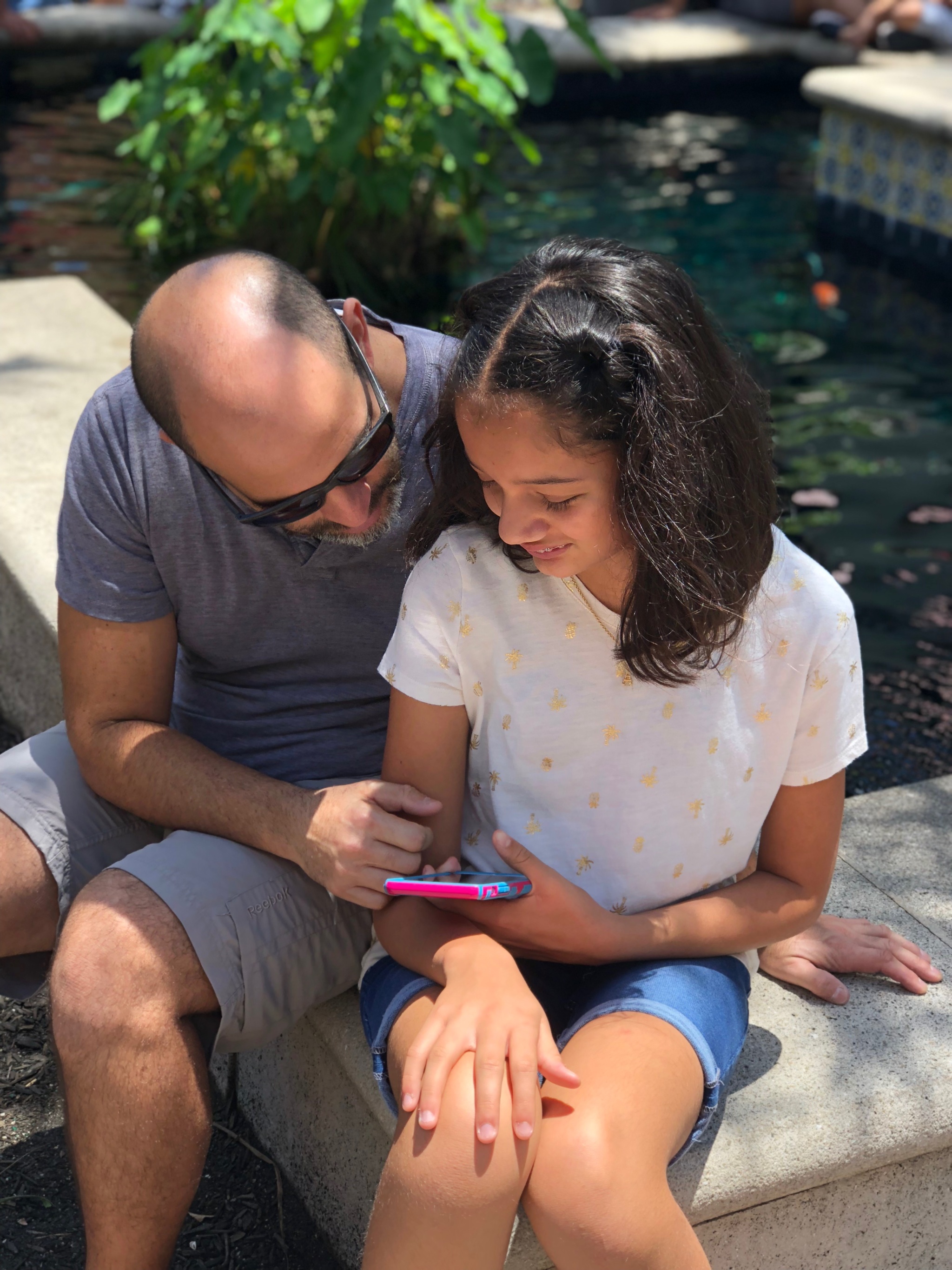
Which Parental Controls Matter Most on a Kids’ Phone?
Parental controls can be incredibly useful, but I don’t think they replace conversations about responsible technology use.
For a first phone, I want to know whether I can approve new apps, control purchases, limit inappropriate content, set downtime, manage who can contact my child and locate the device when necessary. Depending on the child’s age, you may also want tighter control over internet access or messaging.
But parental controls shouldn’t create a false sense of security. Kids need to know what to do when something uncomfortable happens online, because no filter catches everything.
That’s why I think learning how to talk to kids about online safety is just as important as learning how to change the safety settings on their phone. I want my kids to come to me when something doesn’t feel right rather than being afraid they’ll automatically lose their phone if they tell me.
How Do You Keep Kids Safe Online After They Get a Phone?
Online safety has to become an ongoing conversation once kids have their own devices.
Talk about what information should never be shared publicly, including their location, school, home address and other personal information. Talk about passwords and why they shouldn’t share them with friends. Discuss scams, suspicious links and the fact that people online are not always who they say they are.
Photos deserve their own conversation too. Our kids learned that taking a picture of someone doesn’t automatically give you permission to post or share it. I also want kids to understand that something sent privately can still be screenshotted or forwarded.
And safety isn’t only about protecting our kids from other people. We also have to teach them how they should behave online. Being behind a screen doesn’t make hurtful comments less hurtful. My article about teaching kids to be kind online has more ideas for turning digital citizenship into a normal part of family conversations.
How Much Screen Time Should Kids Have on Their First Smartphone?
This was one of the things I worried about most, and I learned fairly quickly that simply counting minutes wasn’t enough.
Not all screen time is the same. Twenty minutes video chatting with a grandparent, practicing Spanish, researching homework or drawing digitally is very different from twenty minutes of mindless scrolling.
I pay more attention to what the phone is replacing. Is it interfering with sleep? Homework? Family time? Exercise? Activities they usually enjoy? Are they constantly distracted by notifications? Does putting the phone down cause an enormous battle every single time?
Those are much more useful signals for me.
Having predictable phone-free times can also make things easier because you’re not renegotiating constantly. Meals, homework or bedtime may be natural places to create boundaries depending on your family.
Should Kids Have Their Phones in Their Bedrooms at Night?
This is one boundary I wish we had taken more seriously from the beginning.
A phone beside the bed makes it incredibly easy to answer one more message, watch one more video or check one more notification. Adults do this too, so I don’t expect kids to somehow have better self-control than we do.
For younger kids and tweens especially, creating a charging spot outside the bedroom can remove the argument altogether. The phone has a place to “sleep,” and everyone knows where it goes at night.
As kids get older, you can reevaluate. Again, I don’t think phone rules should be frozen forever. More responsibility should eventually come with more freedom.
Should Parents Track Their Child’s Phone?
Location sharing can be incredibly useful, especially when kids begin spending more time away from home. It can help with pickups, activities and those moments when a teenager tells you they’re “almost there” and you discover their definition of almost is very different from yours.
But I think it’s worth talking openly about location tracking rather than secretly treating it as surveillance.
Tell your child what you can see and why you want access to it. For us, the goal was safety and logistics, not constantly checking where our kids were every five minutes.
As children get older and become more independent, this is another area where families can revisit what feels appropriate.
What Should Be Included in a Family Cell Phone Contract?
A family phone agreement can be useful because it gets expectations out of everyone’s head and puts them somewhere everyone can see.
Before creating one, talk about the reasons behind the rules. A contract shouldn’t feel like a list of twenty ways your child can lose their phone.
Think about when phones need to be put away, whether devices stay out of bedrooms overnight, who can download apps, whether purchases require permission, expectations around photos and social media, what information is private, and what your child should do if they receive a message or see something that makes them uncomfortable.
I would also include what parents promise. Maybe that means you won’t read every conversation without a reason, embarrass your child by posting their private information online or take the phone away every time they come to you with a problem.
Making kids active participants in these conversations has worked much better for us than simply handing down rules.
Can a First Phone Actually Be Good for Kids?
Yes, and this surprised me.
I spent so much time thinking about everything that could go wrong that I underestimated how useful a phone could be.
My kids used their phones to keep track of schedules, set reminders and communicate about activities and pickups. As they got older, having their own phones also gave them another tool for managing more of their lives independently instead of depending on me to remember everything for them.
Phones can also be genuinely useful learning tools. We’ve used apps and online resources for everything from schoolwork to languages. If your family is bilingual or your child is learning Spanish, I’ve put together some of the best Spanish learning apps for kids, and a phone or tablet can make short periods of language practice much easier to fit into everyday life.
The key for me is remembering that technology is a tool. Sometimes it’s used well and sometimes it isn’t. Teaching our kids how to make those decisions is ultimately more useful than pretending phones aren’t going to be part of their lives.
What If Your Child Breaks the Phone Rules?
They probably will at some point.
That doesn’t automatically mean giving them a phone was a mistake.
Kids are learning, and phones introduce situations they’ve never had to manage before. Maybe they stay up too late texting. Maybe they download something they weren’t supposed to. Maybe they make a poor decision in a group chat.
The consequence should make sense for what happened. More importantly, talk about why it happened and what needs to change so it doesn’t happen again.
If every mistake immediately results in losing the phone indefinitely, kids may become very good at hiding mistakes instead of asking for help. I would much rather have my child say, “Mom, something weird happened in this group chat,” than delete everything because they’re terrified I’ll confiscate the phone.
Is a Smartphone Better Than a Basic Phone for a Child?
It depends entirely on what your child needs.
If the goal is simply to make calls and send texts, a child may not need a fully open smartphone. Younger kids may benefit from a device with more limited access and stronger built-in safety controls.
Older kids may genuinely need smartphone features for school, navigation, activities, communication and increasingly independent schedules.
I wouldn’t choose based on what their friends have. I’d choose based on what you want the phone to accomplish and how much access your child is ready to manage responsibly.
What Age Should Kids Get Their First Phone?
There isn’t a single right age for a first phone for kids. One child may genuinely need a phone earlier because of sports, transportation or time spent between households, while another child may not need one until much later.
Instead of asking only, “How old are they?” I would ask: Why do they need the phone? How responsible are they with other things? How do they respond to limits? What kind of phone access am I comfortable giving them right now?
Those answers tell me much more about readiness than a birthday does.
What Are the Most Important Rules for a Child’s First Phone?
If I had to narrow it down, I would make sure kids understand when the phone needs to be put away, what they can and cannot download, what personal information should never be shared, expectations around photos and social media, and what to do when something uncomfortable happens online.
I would also make sure they know that coming to you with a problem is always safer than trying to hide it.
The details will change as your child grows. The goal isn’t to create perfect rules on day one. It’s to create enough structure that kids can gradually learn to use technology responsibly.
What I Wish I Knew Before Giving My Kids Their First Phone
I wish I had worried a little less about the phone itself and focused earlier on the conversations surrounding it.
Giving my kids phones didn’t automatically create all the problems I had imagined. In many ways, their phones became genuinely useful tools. They made it easier to communicate, gave the kids more independence and helped them start taking responsibility for their own schedules.
There were challenges too, of course. We had to adjust rules, figure out boundaries and make mistakes along the way. That’s normal. We were parenting through technology that didn’t exist when we were kids, so there was no childhood experience we could simply copy.
If you’re considering a first phone for kids, start with what your child actually needs, choose a device and level of access that matches their maturity, put basic cell phone rules for kids in place, use appropriate parental controls, and keep talking about phone safety for kids long after the excitement of that first smartphone wears off.
Most importantly, remember that getting a first phone isn’t a one-time decision. It’s the beginning of teaching your child how to use technology responsibly, and you can keep adjusting the boundaries as they show you they’re ready for more independence.

- Keto Hot Dog and Egg Tacos - October 4, 2021
- Soccer Snack Board - April 8, 2021
- Cilantro Lime Butter Salmon Sheet Pan Fajitas - February 22, 2021


This Verizon initiative sounds like q good idea for families who want to get their child their first cell phone but making sure it is safe&they learn responsibility along the way! Great info thanks for sharing.
yeah I think these days while phone addiction is dangerous, we all did phones or we won’t be able to communicate. It’s good to know what are necessary for kids
There really is a lot of responsibilty on our part for their safety. Phones can be a gateway to all sorts of influences; good and bad.
Bookmarking this. So much to think about before giving kids their first phone
Verizon is often on the forefront of making things happen and meeting the needs of their consumers.
Sounds like a great initiative by Verizon, should visit their website to choose the plan! Kids safety is vital for every parent!
I don’t understand when parents complain about their kids always being on their phone at home. You are the parents, so make the rules of when phones and all devices should be put away. It’s actually a good thing for everyone because we all spend too much time on our tech these days.
This is some really great advice on setting your kids up with their first phones. I know when I was younger and got my first phone – I definitely went into a contract or something similar with my parents about when and how and what for I was supposed to be using my phone.
We are entering this time in our lives very soon. My son needs a phone this year for after school activities. I plan to put resistrictions on usage and have a serious talk up front.
So crazy how young kids are getting phones these days! Thanks for educating on this.
This is a very important topic especially for parents, how to handle this situation. Before I remembered the time I got my first phone, I was already graduating from high school! I’m so grateful that I got to enjoy my childhood more playing with friends and nature than being stuck up with a phone.
Oh this will help me SO much. I didn’t get my own cell phone until I was a teenager. My oldest son is just 4 and has his own tablet and I get the feeling that when he starts school he will be asking me for his own phone. Crazy how times have changed.
This is some really great advice for the parents while and before getting them phones.
In this day and age, I think Verizon is on point for what or kid, technologically speaking.
These are some great suggestions and would help many. Thanks for sharing and explaining it so well!