Disclosure: This article contains affiliate links. If you book or buy something through one of my links, I may earn a small commission at no extra cost to you. I only recommend places, experiences and services I have personally used or carefully vetted.
If you’re planning to experience Día de los Muertos in Mexico City with kids, my first piece of advice is probably not what you’re expecting: don’t build the family trip around the biggest parade.
The Gran Desfile is spectacular. So is the Mega Procesión de las Catrinas. But standing several people deep along Reforma for hours is rarely the part of the trip where kids actually connect with Día de Muertos.
With children, I would build the trip around the things they can do: make a cartonería mask, decorate something for an ofrenda, see enormous alebrijes up close, taste pan de muerto, learn what the flowers and photographs on an altar mean, and attend one of the wonderful cultural events Mexico City creates specifically for children.
I grew up in Guatemala, where our Día de Todos los Santos traditions are different from Mexico’s, and later Día de Muertos became something I explored with my own kids through food, crafts, movies, family photographs and stories about the grandparents they never had a chance to meet.
That has always felt more meaningful to me than simply showing kids another skeleton and telling them it isn’t scary. So this guide isn’t just about which Mexico City events allow children. It’s about which experiences are actually worth doing as a family in 2026, including several hands-on activities I think are much better family choices than spending the entire trip fighting parade crowds.
If I were planning Día de Muertos in Mexico City with kids, these would be my priorities:
- Feria de las Calacas for the best truly kid-centered Día de Muertos experience.
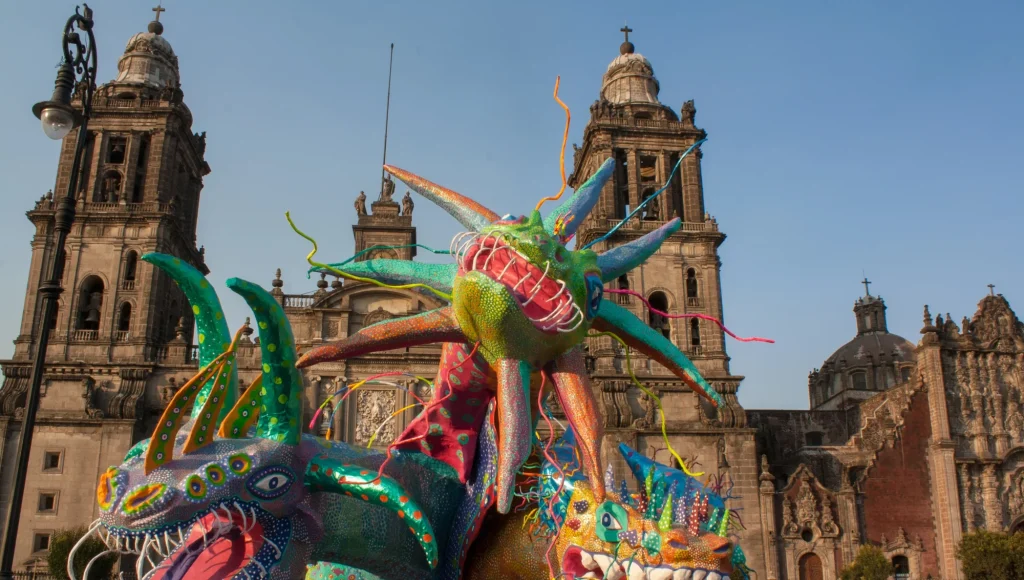
- The monumental alebrijes on Reforma, preferably after the parade when kids can actually see them.
- One hands-on workshop: cartonería, lantern-making, chocolate, an ofrenda activity or one of Universum’s workshops.
- One meaningful ofrenda, such as UNAM’s Megaofrenda.
- One big spectacle if your kids are excited about it. You do not need both major processions.
The Best Día de Muertos Event for Kids in 2026: Feria de las Calacas
If you’re traveling with children over the actual Día de Muertos weekend, this is the event I would put at the top of the list. The XXVI Feria de las Calacas takes place at Centro Nacional de las Artes (CENART) on October 31 and November 1, 2026, from 11:00 AM to 9:00 PM. Admission is free.
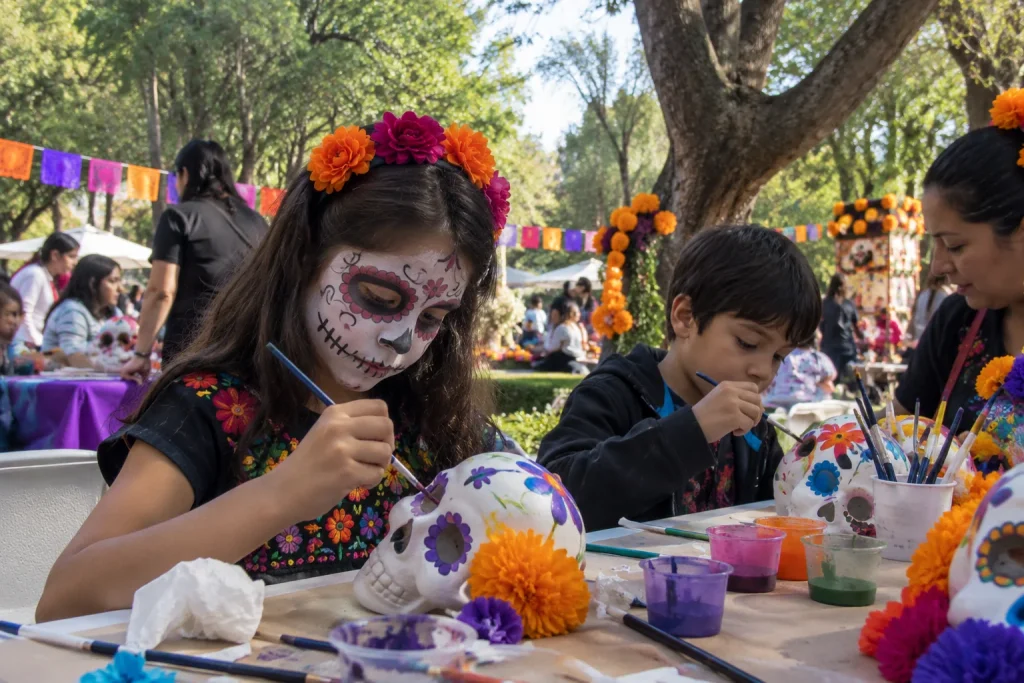
Unlike the giant parades, this celebration is actually designed around children and families. Feria de las Calacas is organized by Alas y Raíces, Mexico’s national children’s cultural program, and brings Día de Muertos to life through art, storytelling, music, ofrendas and participatory activities.
The complete 2026 activity schedule is still being released, so I would check the CENART calendar shortly before your trip. But the event itself and its dates are already confirmed, along with six new interactive ofrendas created specifically with children, teens and families in mind.
Previous editions have included everything from papel picado, clay, embroidery and art workshops to storytelling, performances, music and making traditional Día de Muertos foods. I would not assume every previous activity returns in 2026, but that’s a very good indication of what kind of event this is.
Why I like this better than a parade for families: children aren’t just looking at Día de Muertos from behind a barrier. They get to ask questions, create things, listen to stories and move from one activity to another when their attention shifts.
Family strategy: arrive near opening rather than late afternoon. Pick two or three activities that sound especially good once the final program is published and consider everything else a bonus. Trying to “do” the entire fair defeats the point.
Hands-On Day of the Dead Activities for Kids in Mexico City in 2026
This is the part I think makes a family trip really special. There are several small workshops happening in the days around Día de Muertos where kids can actually learn a traditional technique or make something themselves.
October 24: Make Traditional Día de Muertos Star Lanterns
The Centro Cultural de España en México is offering
Faroles Cihcitlaltin, a workshop based on the traditional star lanterns made in San Pedro Tláhuac for Día de Muertos.
Kids work with tissue paper to create the colorful star-shaped lanterns traditionally used to decorate homes and streets.
- Date: October 24, 2026
- Time: 11:00 AM-2:00 PM
- Age: 10+
- Capacity: only 15 children
- Registration closes: October 19
- Location: Centro Cultural de España en México, República de Guatemala 18, Centro Histórico
Because the group is so small, this is one I would register for ahead of time rather than treating as a walk-in activity. You can check registration through the Centro Cultural de España event page.
October 30: Misión Catrina and Hands-On Science at Universum
This is a fun one I almost wouldn’t have thought to look for.
On Friday, October 30, Universum — UNAM’s science museum — has a full Viernes de Ciencia program, and several activities work beautifully with a Día de Muertos trip.
Misión Catrina: sobrevive a la emergencia turns ofrenda safety into a game as kids help Catrina identify potential hazards when setting up an altar. There are also hands-on printmaking activities, experiments involving ghosts and monsters, and science activities for younger children.
It’s a clever way to give kids something completely participatory before the much busier weekend begins.
For younger kids: Universum also runs activities geared specifically toward preschool and elementary ages. Many have very small capacities, so register at the visitor-services module as soon as you arrive.
Universum is open Wednesday-Sunday, 10:00 AM-5:00 PM, and makes a great indoor break if you’ve already spent several days walking around Mexico City.
October 31: Make a Cartonería Calavera Mask
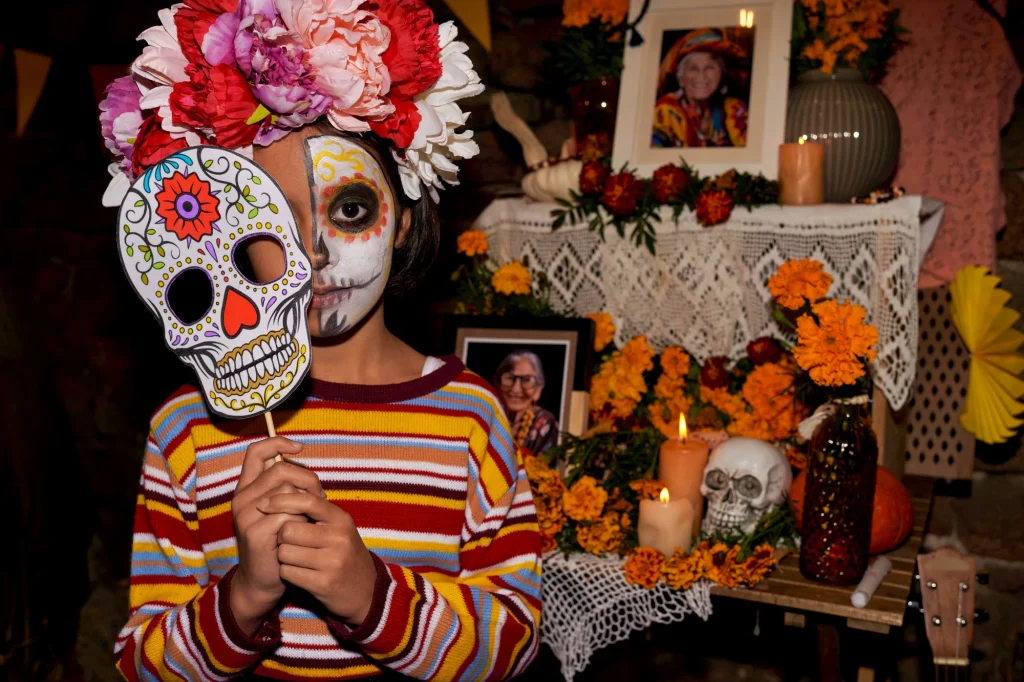
Another excellent Centro Cultural de España workshop is Mascalaveras, where children make and decorate a Día de Muertos mask using cartonería techniques.
- Date: October 31, 2026
- Time: 10:00 AM-1:00 PM
- Age: 7-12
- Capacity: 15 children
- Registration closes: October 24
I especially like this because you’re giving kids context for the incredible paper and cartonería work they’ll see throughout Mexico City instead of simply buying another souvenir
See current registration information on the Mascalaveras workshop page.
October 31 and November 1: Make a DinoAlebrije at Universum
If you have a dinosaur kid, this is such a fun detour.
Universum’s DinoAlebrijes workshop lets children combine dinosaurs with the fantastical imagination behind alebrijes while learning how dinosaurs differ from other animals.
It’s designed for ages 4-8, lasts about 40 minutes and takes only 10 children per session, each accompanied by an adult.
Other Peques en Universum activities on October 31 and November 1 include drawing insects, exploring animals and space-themed activities for preschool and early elementary ages.
This makes Universum one of my favorite places to pair with UNAM’s Megaofrenda because young kids get something made specifically for them instead of spending the entire afternoon looking at altars adults told them they should appreciate.
October 29-November 1: Cacao Para Todos
Cacao Para Todos returns to Museo Diego Rivera Anahuacalli from October 29 through November 1, 2026.
There will be cacao producers, chocolate, food, artisans, demonstrations, talks, music and workshops. The detailed 2026 workshop schedule is still being released, so I wouldn’t promise children a specific chocolate-making class yet. But this festival has a strong participatory component and is one I would keep an eye on once registration opens.
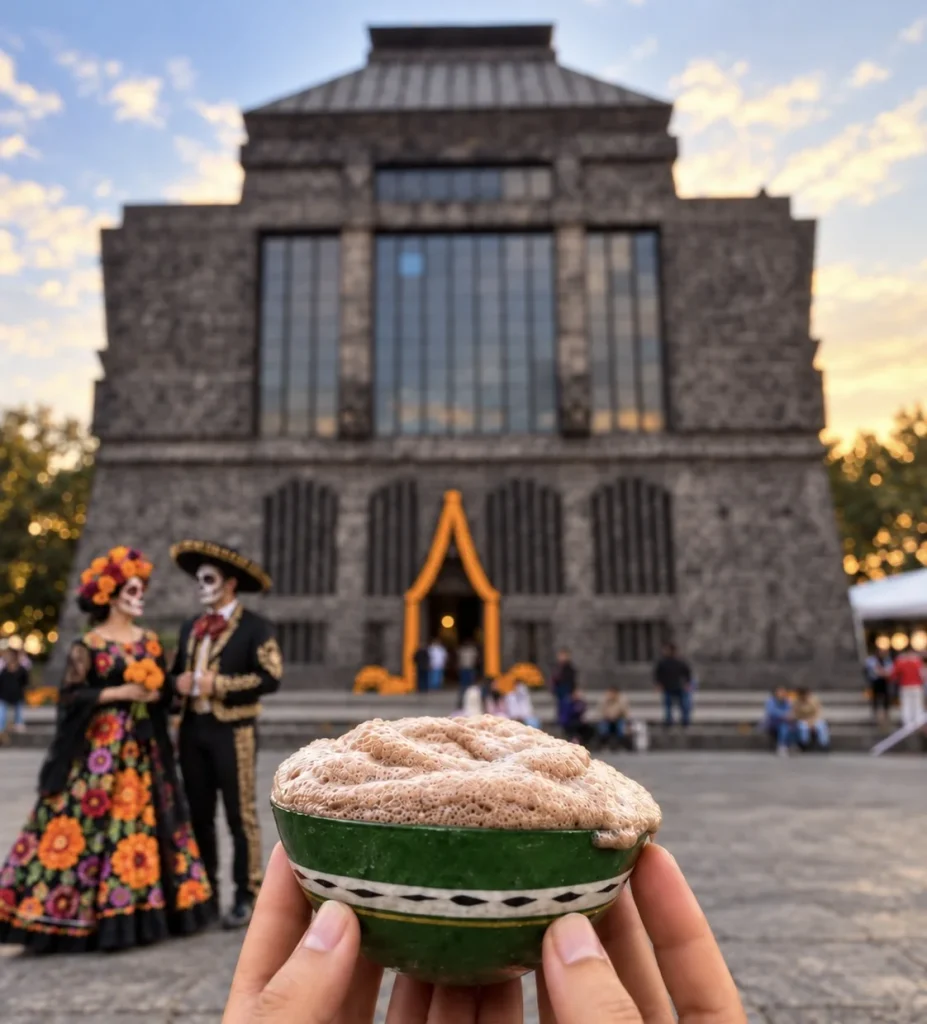
In previous editions there have been workshops around chocolate, pan de muerto, cacao and crafts, many with very limited space.
Even without a workshop reservation, tasting chocolate and seeing Anahuacalli makes this an easy family activity, particularly if you’re already spending the day in Coyoacán.
October 23-24: Make Calaveritas de Amaranto and Chocolate
Fundación Herdez in the Centro Histórico is offering a seasonal Calaveritas de Amaranto con Chocolate workshop on October 23 and 24.
The workshop teaches participants to make the traditional skull-shaped sweets using amaranth and chocolate. The current listing doesn’t specify a children’s age range, so I would confirm that your child’s age is accepted before booking, but this looks especially interesting for older kids and teens who enjoy cooking.
Fundación Herdez also offers a pan de muerto workshop earlier in October.
See the Monumental Alebrijes Without the Parade
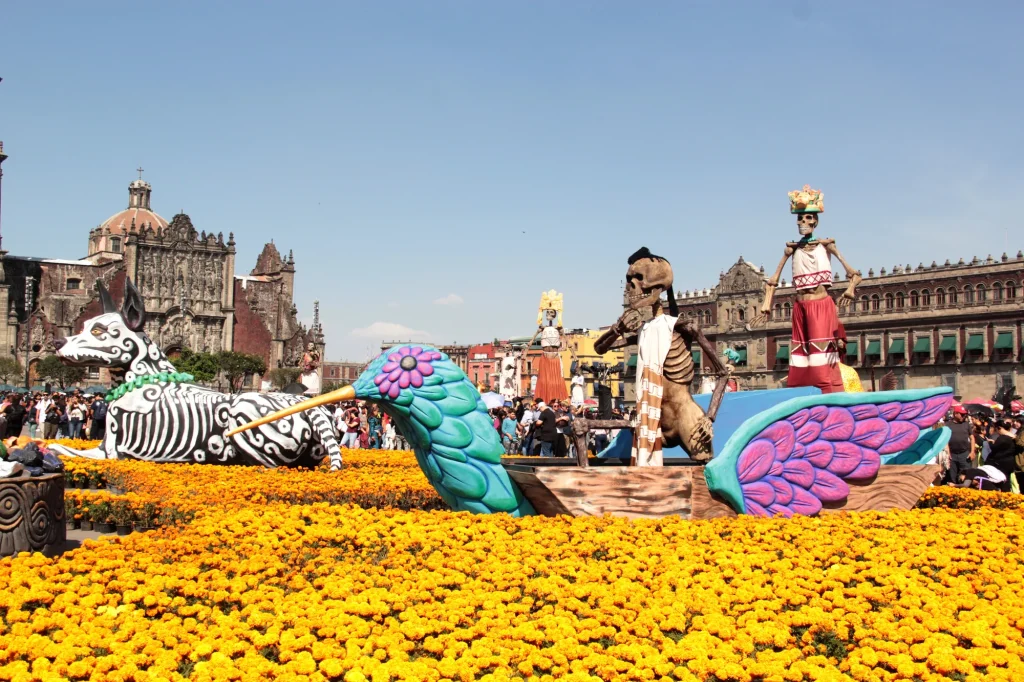
The Desfile de Alebrijes Monumentales on October 17 is probably the easiest major parade for children to connect with. Giant dragons, birds, jaguars and imaginary creatures covered in bright colors are pretty hard to compete with. But here’s my favorite family trick: you don’t actually need to attend the parade.
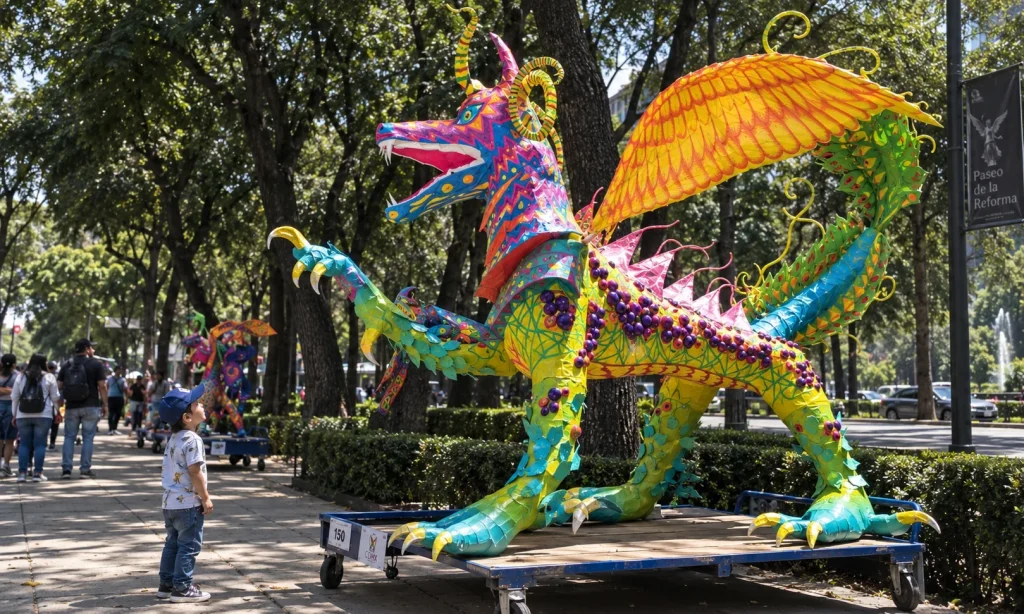
After the procession, the monumental alebrijes stay on display along Paseo de la Reforma through November 8.
That means your child can walk around them, look at the details, choose a favorite and take photos without trying to see over six rows of adults.
For toddlers, preschoolers or kids who dislike loud crowds, I think this is actually the better experience.
Sensory-friendly-ish strategy: see the alebrijes on a weekday morning. Reforma will still be busy — this is Mexico City — but it’s completely different from standing in a packed parade crowd with music, speakers and thousands of people around you.
Add the Museo de Arte Popular
If your kids fall in love with the alebrijes, take the idea one step further at the Museo de Arte Popular (MAP).
The museum has Mexican folk art, masks, toys, textiles, papel and cartonería, including the kind of fantastical art that makes the alebrijes so appealing to children. It also regularly runs children’s workshops and activities. Best of all for families, visitors under 18 are admitted free.
This isn’t a Día de Muertos-only stop, which is precisely why I like it. If everyone needs a quieter indoor morning after a huge event, MAP gives the kids cultural context without another crowd.
UNAM’s Megaofrenda With Kids: Don’t Just Walk Through It
The 2026 UNAM Megaofrenda runs October 31-November 2 at Universum in Ciudad Universitaria.
I like this event for school-age kids because it gives you something the parades don’t: time to actually look at what goes into an ofrenda. Instead of telling your child, “That’s an altar,” choose one and investigate it together.
Who is being remembered? What photographs do you see? Is there food? Water? Candles? Flowers? What objects might tell you something about the person’s life?
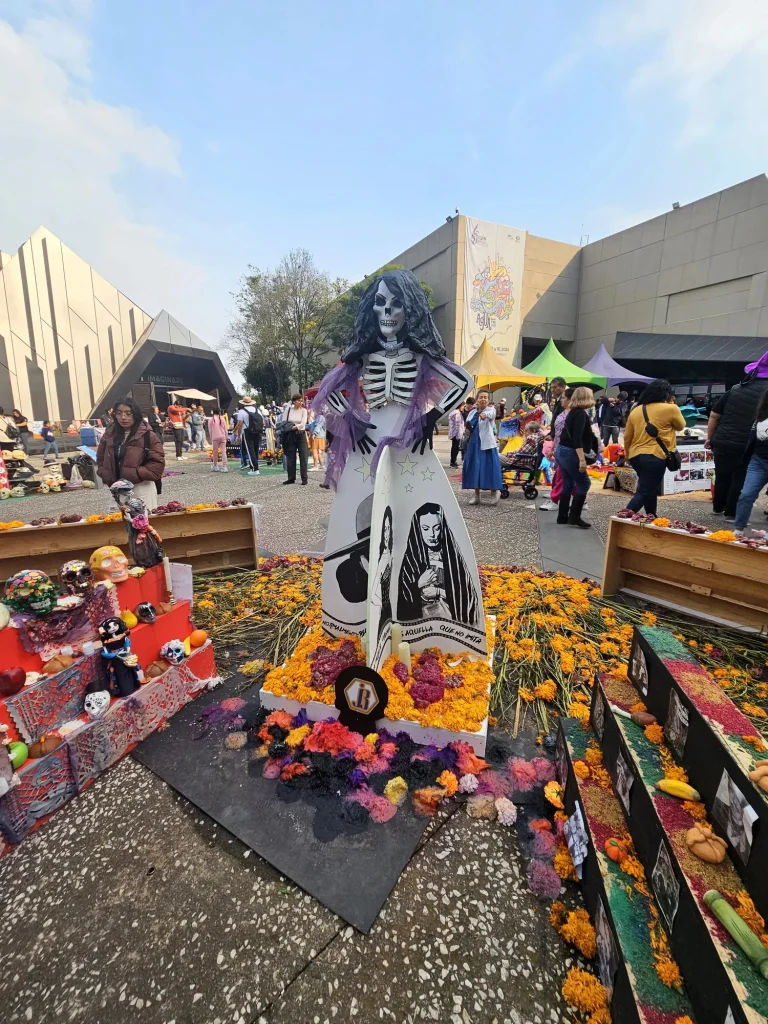
That turns an enormous installation into a scavenger hunt of meaning rather than another thing they’re expected to quietly admire.
For younger children, I would combine a short visit to the Megaofrenda with Universum itself rather than expecting them to spend hours looking at altars.
And remember that this is still a mass event. Go earlier rather than waiting for evening if your children handle crowds better when they’re rested.
A Hidden Gem for Families: Make Xochimilco a Daytime Experience Too
Families often think of Xochimilco only as party trajineras or the nighttime La Llorona performance. But if your children like nature, animals, flowers or boats, the quieter chinampa side of Xochimilco may be a much better family experience.
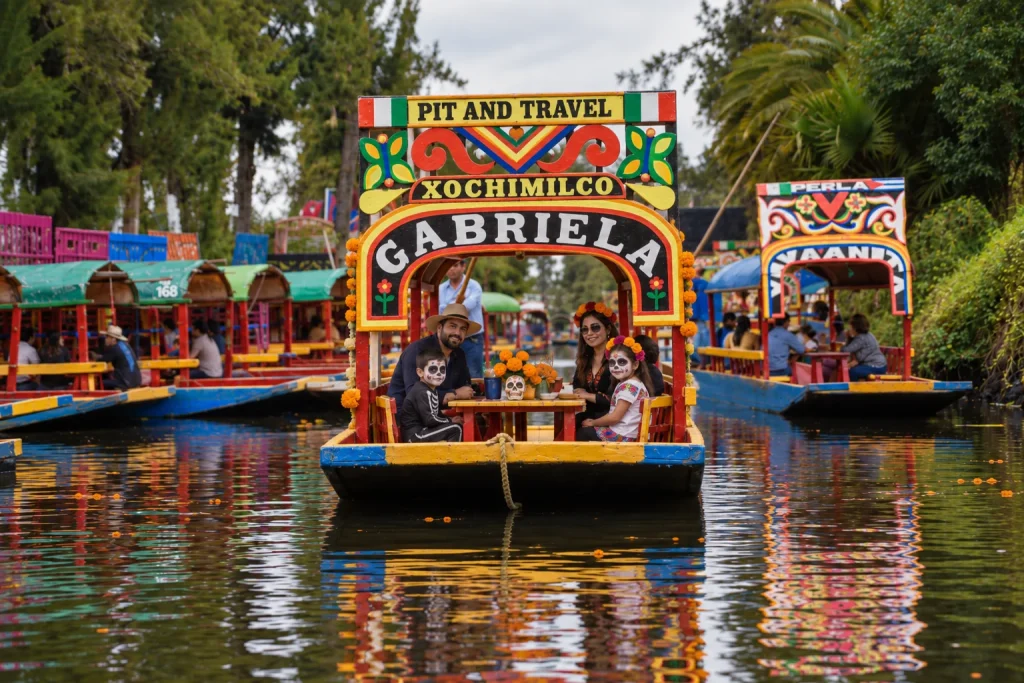
In October, some tours visit the agricultural canals and cempasúchil-growing areas rather than the party route. Depending on the experience, kids may see flower nurseries, farms, axolotl conservation projects and the smaller canals that give a much better sense of how Xochimilco actually works.
I go into the seasonal cempasúchil experiences in much more detail in my hidden gems for Día de Muertos in Mexico City guide.
For families, I would specifically look for small-group, ecological or chinampa-focused experiences rather than anything advertised primarily as a party boat.
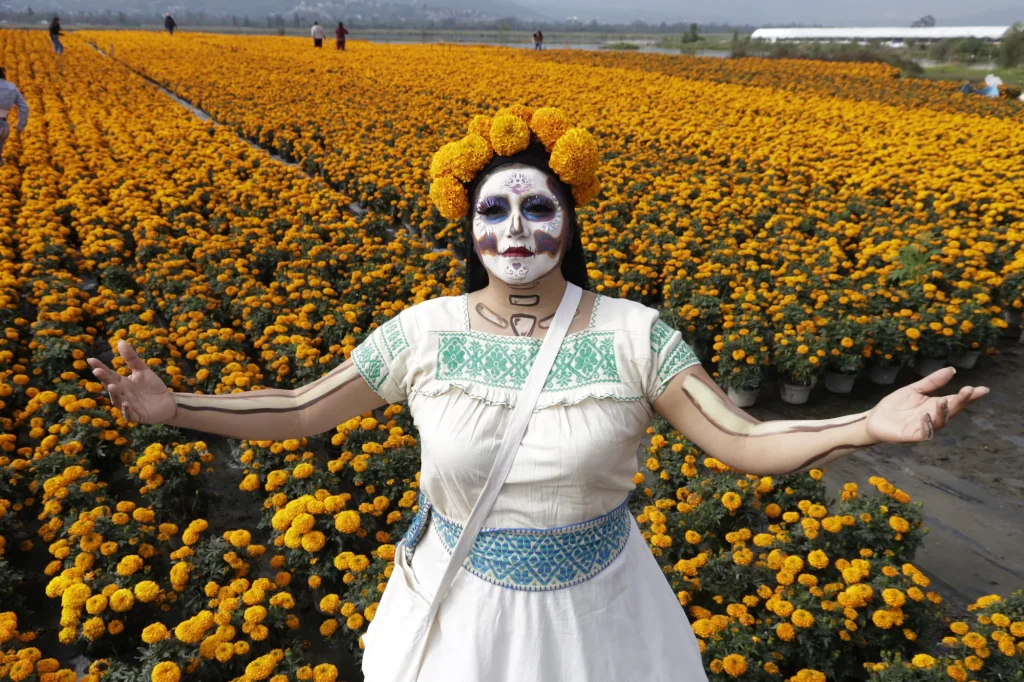
Important: ask the operator about minimum ages, bathroom access and how long you’ll actually be on the water before booking with younger children.
You can compare current Xochimilco tours below:
What About the Gran Desfile With Kids?
The Gran Desfile on October 31 is enormous, colorful and exciting.
It is also loud, extremely crowded and potentially a several-hour commitment. I wouldn’t tell families not to go. I would just be very clear about what you’re choosing. If your child is old enough to be genuinely excited about floats, performers and the atmosphere, choose this as your one huge parade experience and build the day around it.
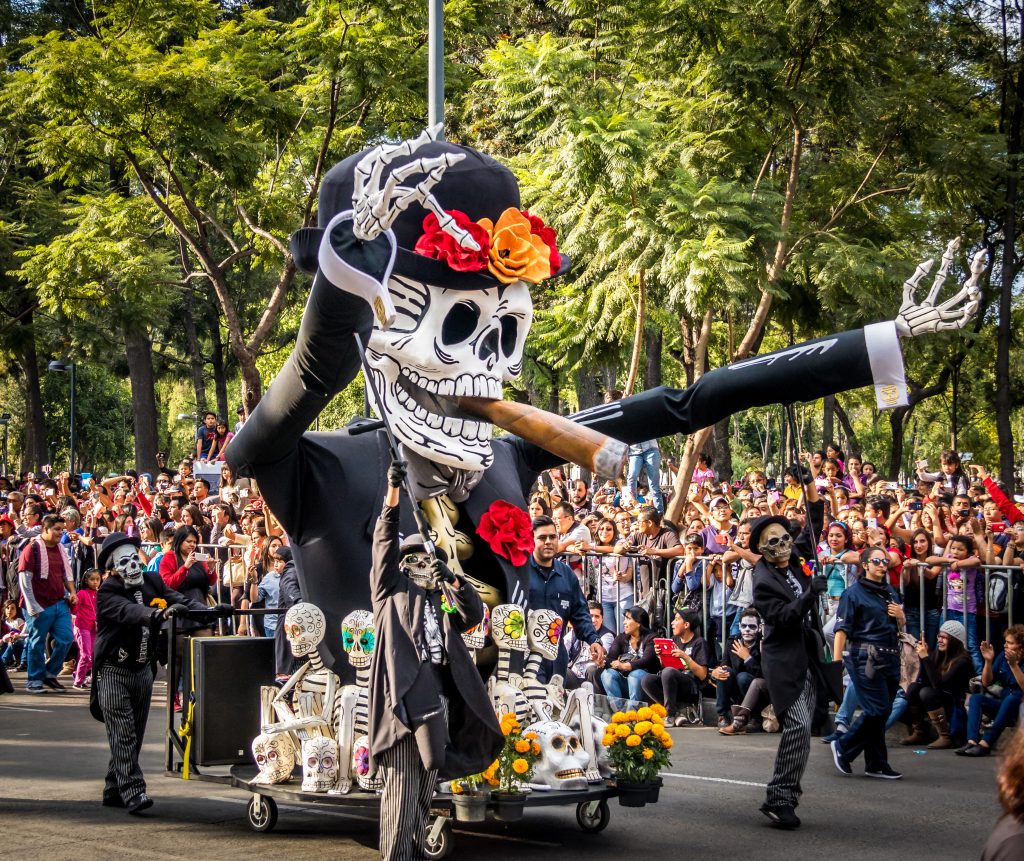
With younger kids, don’t make your goal “seeing the entire parade.” Pick a section of the route. Arrive with food and water. See enough for it to feel exciting. Then leave before everyone is exhausted.
My Family Crowd Rules
- Have a meeting point. Choose something specific before entering a crowd, not “near the Angel.”
- Put your phone number on younger children. An ID bracelet or card in a secure pocket works.
- Photograph your child that morning. If someone gets separated, you have an exact photo of what they’re wearing.
- Bring ear protection if your child is sensitive to sound. Speakers, cheering and music can be much louder than expected.
- Use the bathroom before committing to a viewing spot. Finding one and returning through the crowd can be difficult.
- Bring water and substantial snacks. “We’ll grab something there” is a much worse plan when thousands of other people have the same idea.
- Don’t bury your exit route. A slightly worse view near the edge of the crowd is often worth it with kids.
Should You Take a Stroller to the Día de Muertos Parades?
I would use a stroller for normal sightseeing, museums, Coyoacán and daytime neighborhood exploring.
I would not deliberately push one into the densest part of the Gran Desfile or Mega Procesión crowds.
Once people are shoulder-to-shoulder, a stroller becomes hard to maneuver and your child is sitting below adult waist level with almost no view anyway.
If you’re traveling with a baby or toddler and really want to see a parade, a comfortable carrier plus a strategic position near the edge of the route is usually much easier.
And this is another reason I love seeing the monumental alebrijes on Reforma after their parade: you can actually use the stroller and let the child see what you came to see.
Mega Procesión de las Catrinas With Kids
The Mega Procesión de las Catrinas on October 25 can be incredibly fun for older children, especially kids who are fascinated by costumes, art and face painting. But I wouldn’t make the first time a young child sees elaborate skull makeup be at night while surrounded by thousands of painted faces.
Show them photographs beforehand.
Explain who La Catrina is and why skull imagery doesn’t have the same frightening meaning here that kids may associate with Halloween.
If they think it’s amazing, great. If they think it’s creepy, listen to them. You don’t need to push through a huge nighttime procession to prove they’re culturally engaged.
Is La Llorona in Xochimilco Good for Kids?
This depends much more on the child than on a specific age.
La Llorona de Xochimilco takes place after dark on the canals and uses theater, music, dramatic lighting and the famous legend of La Llorona.
Tweens and teens who enjoy ghost stories may think this is one of the coolest things they do in Mexico City. For a younger child, I would think about three things: darkness, the story and the late night.
Also remember that you’re on a trajinera. If a child decides ten minutes into the experience that they’ve had enough, leaving isn’t as simple as walking out of a theater. For that reason alone, I would be more conservative with a child who is easily frightened or overwhelmed.
A Fun October 31 Alternative for Kids Who Actually Love Spooky Things
For ages 8-15, the Centro Cultural de España is offering Pijama de terror: ciencia, leyendas y sustos from 5:00-8:00 PM on October 31.
Kids hear legends from the Centro Histórico, make slime and use science experiments to create ghostly effects.
It’s decidedly more spooky-season than traditional Día de Muertos, so it wouldn’t be my cultural centerpiece. But for the kid who would be disappointed to spend October 31 without anything creepy, it’s a very fun alternative to dragging them through another huge procession.
Does Mixquic Work With Kids?
Mixquic is the one experience where I would think less about chronological age and more about maturity, stamina and why you’re going. The November 2 Alumbrada is not a theme-park version of Día de Muertos. Families gather at the cemetery, light candles and spend time remembering people they love.
For an older child or teenager who understands that context, it can be incredibly meaningful. For a tired four-year-old after several full days in Mexico City, a long trip to a crowded cemetery after dark may be a poor choice for everyone involved.
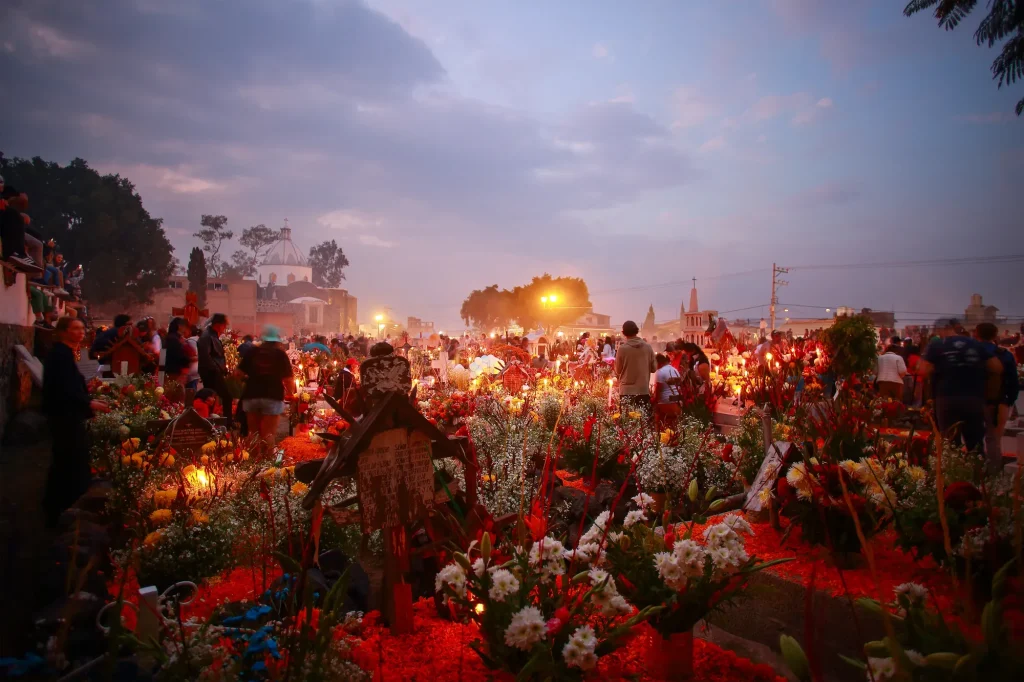
And children shouldn’t be expected to remain perfectly silent. They’re children. That’s exactly why I’d think carefully before putting a very young child into a situation where other families are entitled to space for remembrance.
If you do go, talk beforehand about cemetery etiquette: don’t walk over graves, don’t touch ofrendas, don’t photograph people closely without permission and give families space.
If that doesn’t feel realistic for your children this year, skip Mixquic. There are plenty of ways to experience the meaning of Día de Muertos without being present at someone else’s family observance.
How I Explain Día de Muertos to Kids
I wouldn’t begin with a history lesson. I would begin with someone they know.
In our family, we’ve made pan de muerto, put photographs of my grandparents on our altar and talked about who they were because my kids never had the opportunity to meet them. That’s something children understand: someone can be gone, and we can still tell their stories. Once that idea makes sense, all the things they’re about to see in Mexico City have a reason.
The photograph tells us who we remember. The person’s favorite food is something we remember about them. The flowers and candles guide the way. The altar isn’t supposed to be scary. It’s made because someone mattered.
And I also explain that Día de Muertos is not celebrated exactly the same way everywhere. The traditions I grew up with in Guatemala are different from the traditions they’ll encounter in Mexico. That’s part of what makes traveling such a powerful way to learn about culture: we get to notice those differences instead of flattening everything into one “Latin” holiday.
Before your trip, my Día de Muertos crafts for kids are a very easy way to start that conversation through something tangible.
You could also have a family movie night with one of these Day of the Dead movies for kids, then talk afterward about which parts are storytelling and which traditions you’ll actually see in Mexico.
Let Kids Experience Día de Muertos Through Food
One of the easiest ways to turn the trip from passive sightseeing into participation is to eat the season together.
Don’t simply buy pan de muerto and move on. Let everyone choose one from a bakery. Compare different versions. Look at why the pieces of dough on top resemble bones. Try chocolate or atole with it.
Food festivals like the Festival Artesanal de Café, Chocolate y Más on October 17-18 and the Festival de Café, Chocolate y Pan de Muerto on October 24-25 make this especially easy because you’re free to wander rather than follow a tour schedule.
And Cacao Para Todos from October 29-November 1 adds cacao and chocolate traditions to the mix.
You can learn more about what you’re tasting in my guide to traditional Día de Muertos foods.
If the kids become obsessed with pan de muerto — very possible — you can make my easy pan de muerto recipe together when you get home. My kids also love these pan de muerto cookies, which are much easier for little hands to shape.
The Best Día de Muertos Experiences by Age
Babies and Preschoolers
Keep the trip visual, flexible and short.
I would prioritize the alebrijes on Reforma after the parade, Museo de Arte Popular, a daytime visit to Feria de las Calacas, Cacao Para Todos and Universum.
I would not build the trip around standing through the Gran Desfile, a late-night Catrina procession or Mixquic.
Ages 6-10
This is a fantastic age for Día de Muertos because children are old enough to understand symbolism but still young enough to get completely excited about giant alebrijes and skeletons. Add Feria de las Calacas, the UNAM Megaofrenda, a cartonería or art workshop, Universum and one major parade if they want it.
Tweens
This may be the sweet spot. They can handle longer days, understand the cultural context and participate in many workshops. Catrina makeup, Megaofrenda, Feria de las Calacas, Xochimilco and possibly La Llorona all become realistic choices.
Teenagers
Let their interests drive the trip. An art-focused teen may prefer the Catrinas, Museo de Arte Popular and Open House CDMX. A photography-loving teen may enjoy the ofrendas and cempasúchil. A kid who loves theater may choose La Llorona. A teen interested in tradition and history may get far more from Mixquic than another parade.
Open House CDMX Día de Muertos, running October 30-November 3, is particularly interesting for creative teens because five spaces around the city will have contemporary ofrendas plus workshops, activations and architectural experiences.
Practical Mexico City Día de Muertos Tips for Families
Plan for the Altitude
Mexico City sits more than 2,200 meters above sea level. Don’t land and immediately plan an eight-hour parade day. Make your arrival day easy, drink plenty of water and expect everyone to tire faster than usual.
Build in One Quiet Block Every Day
This is probably more important than adding one more attraction.
A long lunch, an hour back at the hotel, a park or an afternoon with nothing scheduled can be what allows your kids to actually enjoy the big evening event.
Don’t Schedule Back-to-Back Mega Events
A Catrina procession followed by an early morning tour followed by another enormous event looks possible on paper.
With kids, that schedule usually catches up with you.
For most families, one high-energy crowd experience per day is plenty.
Carry Cash
Small food stalls, markets, crafts and seasonal vendors aren’t always card-friendly. Keep smaller peso bills rather than relying only on large notes.
Pack for Warm Afternoons and Chilly Nights
Bring layers. A child who was perfectly comfortable at 3 PM may be cold sitting outside after dark, especially around Xochimilco.
Where to Stay in Mexico City With Kids During Día de Muertos
Normally I choose hotels based heavily on the neighborhood experience. During Día de Muertos, I care even more about how easily the family can get back to the hotel when everyone is done.
Reforma/Juárez: Best for Parade Days
If you’re attending the Gran Desfile or Catrina procession, being able to walk away from the event instead of finding a rideshare through closed streets is a huge advantage.
Check Galería Plaza Reforma rates and room options on Expedia.
Centro Histórico: Best for Families Who Want to Be in the Middle of Everything
The Centro puts you near the Zócalo, Museo de Arte Popular, Centro Cultural de España, Fundación Herdez and many seasonal events.
It is lively rather than quiet, so I would choose this for families who value location more than peaceful evenings.
Check family room options at Zócalo Central on Expedia.
Coyoacán: Best for a Slower Family Trip
Coyoacán makes a lot of sense if your priorities are Cacao Para Todos, Anahuacalli, UNAM, Universum and easier access toward Xochimilco rather than attending every Reforma event.
Check rates at H21 Hospedaje Boutique on Expedia.
Always check the room’s actual occupancy rather than assuming a hotel room will accommodate two adults and two children. Mexico City has many wonderful boutique hotels with rooms designed primarily for two guests.
A Family-Friendly Día de Muertos Itinerary
If I were doing the strongest 2026 weekend with kids, I would modify my regular 5-day Día de Muertos Mexico City itinerary quite a bit.
October 29: arrive, keep the day easy, explore Coyoacán and stop at Cacao Para Todos if everyone still has energy.
October 30: Universum’s hands-on science activities, Coyoacán or Anahuacalli, then an easy evening.
October 31: make Feria de las Calacas the main family experience. Add the Gran Desfile only if the kids genuinely want the huge parade atmosphere. I would not try to do absolutely everything.
November 1: UNAM Megaofrenda + Universum, or return to Feria de las Calacas for workshops you missed.
November 2: choose between a meaningful traditional experience for older children or a much easier day exploring smaller ofrendas, markets and neighborhoods.
And somewhere in there, walk Reforma to see the monumental alebrijes without a parade crowd.
For quieter alternatives, flower markets, cempasúchil fields and some of the less obvious places around the city, use my hidden gems for Day of the Dead in Mexico City guide.
Frequently Asked Questions About Día de Muertos in Mexico City With Kids
Is Day of the Dead in Mexico City kid-friendly?
Absolutely, but not every event is equally family-friendly. Feria de las Calacas, the monumental alebrijes, museums, food festivals, workshops and daytime ofrendas are especially good with children. The biggest parades require much more crowd planning.
Will children be scared by Día de Muertos?
Some children may initially interpret skulls or Catrina makeup as scary because that’s the context they already know. Showing them pictures and explaining the meaning of the celebration before the trip usually makes everything they see much easier to understand.
What is the best Day of the Dead event in Mexico City for kids?
For 2026, my first choice is Feria de las Calacas at CENART on October 31 and November 1 because the event is specifically created for children, teens and families and focuses on participation rather than simply watching a procession.
What is the best Día de Muertos activity for toddlers?
Skip the huge evening crowds and see the monumental alebrijes along Reforma during the day. Add Museo de Arte Popular, a short visit to Feria de las Calacas and a relaxed bakery or neighborhood stop for pan de muerto.
Are there Day of the Dead workshops for kids in Mexico City in 2026?
Yes. Confirmed options include a traditional star-lantern workshop for ages 10+ on October 24, the Mascalaveras cartonería workshop for ages 7-12 on October 31, family programming at Feria de las Calacas, and several hands-on Universum activities on October 30, October 31 and November 1.
Should we take kids to both the Gran Desfile and Mega Procesión de las Catrinas?
I wouldn’t feel any need to. For most families, one enormous procession is enough. Use the other time for a workshop, ofrenda, food experience or smaller event where children can actually participate.
Is Mixquic appropriate for children?
It can be appropriate for older children who understand that they’re visiting a living community and a cemetery where families are remembering loved ones. The transportation, late hours and crowds make it less appealing with very young children.
The thing I hope kids take home from this trip
Día de Muertos is visually extraordinary. Kids are going to remember giant alebrijes, mountains of orange cempasúchil and people transformed into incredible Catrinas.
But I hope they also remember why all of those things are there.
A photograph on an altar represents a real person. The pan de muerto, flowers, candles and favorite foods aren’t simply decorations. They’re ways people keep memories alive.
If your children come home knowing the story behind even a few of those things, they got far more from Día de Muertos than they would have from seeing every parade on the calendar.
For all confirmed 2026 dates, parade information, transportation tips and hotel recommendations, start with my complete Day of the Dead in Mexico City 2026 guide. Then use my 5-day itinerary to put everything into a realistic schedule.
Through her writing, Paula helps travelers discover Guatemala beyond the typical tourist route with practical advice, local recommendations, and authentic experiences that connect visitors with the country’s people, culture, and traditions.
Planning a trip to Guatemala? Paula offers personalized Guatemala itinerary planning and trip consultation services tailored to your interests, travel style, and budget. Contact her at [email protected] to learn more.
- San Lucas Tolimán Guatemala: Lake Atitlán’s Best-Kept Secret - September 24, 2026
- Hotel Tolimán Lake Atitlán: A Special Stay in San Lucas Tolimán - September 24, 2026
- Guatemala Dreams in San Lucas Tolimán: A Boutique Stay on Lake Atitlán - September 23, 2026

