
This fresco de chilacayote recipe is one of those traditional Guatemalan drinks that’s been on Semana Santa tables for generations but somehow never makes it into the conversation outside of Guatemala. It’s made by simmering chilacayote squash with panela, cinnamon, cloves, fresh ginger, and allspice until the water turns a beautiful golden amber — then serving it ice cold. Simple, ancient, and completely delicious.
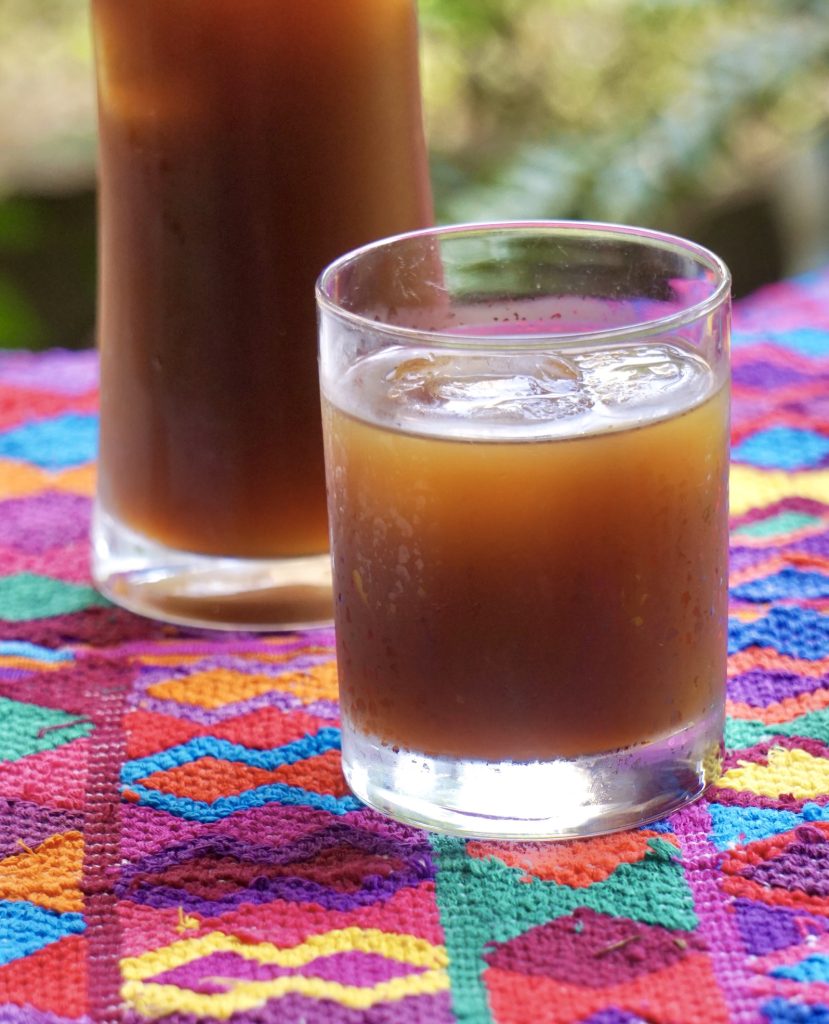
Fresco de chilacayote is one of those drinks that doesn’t try to impress you. It just shows up on the table during Holy Week the way it always has — cold, gently sweet, warmly spiced — and you drink it without thinking too much about it. It was only years later, when I was far from Guatemala during Semana Santa and craving something I couldn’t quite name, that I realized how much it had meant to me. That warm, spiced sweetness. That particular amber color. It’s one of those flavors that turns out to be more tied to a place and a time than you knew.
If you grew up Guatemalan and are living abroad, this one’s worth making. And if you’ve never tried it, you’re in for a treat.
Fresco de Chilacayote: Guatemala’s Quiet Semana Santa Staple
Not every traditional Guatemalan drink gets a spotlight. Some of them just quietly exist — made every year by grandmothers and market vendors and tías who never stopped making them because it never occurred to anyone to stop. Fresco de chilacayote is that kind of drink.
It’s not flashy. It doesn’t have the deep fermented complexity of fresco de suchiles or the chocolate intensity of fresco de tiste. What it has is a warm, clear, golden-amber color and a flavor that’s hard to put down once you start drinking it — lightly sweet, gently spiced, the kind of thing that actually quenches your thirst on a hot Semana Santa afternoon instead of just adding more sugar to it.
It’s also genuinely easy to make at home, which is part of why it’s been a staple of Guatemalan kitchens for so long.
What Is Chilacayote? The Squash Behind the Fresco
If you didn’t grow up in Guatemala or Central America, you might not have come across chilacayote before. It’s a type of squash — same botanical family as calabaza, zucchini, and pumpkin — with the scientific name Cucurbita ficifolia. It grows in Guatemala’s cool highland regions, and Huehuetenango is one of the main growing areas, particularly the municipality of San Pedro Necta where it’s harvested specifically for Semana Santa. The fruit is large and elongated, with a dark green skin and a white, fibrous interior with seeds at the center.
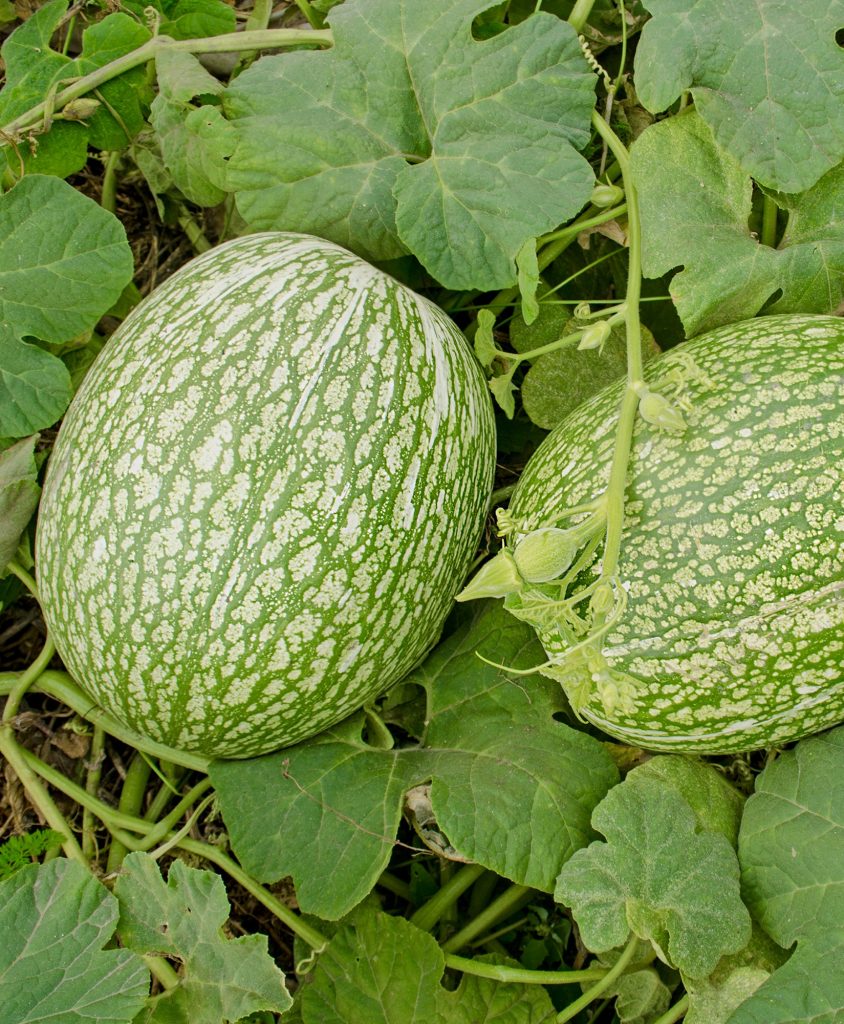
On its own, chilacayote has a very mild, almost neutral flavor. That’s actually the whole point — it’s a great base for everything else going into this fresco. It absorbs the panela, the cinnamon, the cloves, and the ginger, and what you get in the end is a drink that tastes like all of those things working together, with a natural sweetness underneath that could only come from the squash itself.
Guatemala’s Ministry of Culture recognizes chilacayote as an ancestral ingredient that the Maya have been growing and eating since pre-Hispanic times. So when you make this fresco, you’re working with something that’s been part of Guatemalan cooking for over a thousand years — which is pretty remarkable for something you can pick up at a Latin grocery store.
Outside Guatemala, you can find chilacayote at Latin grocery stores that serve Central American communities, especially in cities with large Guatemalan populations like Los Angeles, Houston, and the D.C. area. Fresh is always better, but some stores carry it frozen if that’s what’s available.
What Does Fresco de Chilacayote Taste Like?
It’s lightly sweet from the panela — and panela matters here, please don’t swap it for white sugar. That molasses depth is a big part of what makes this taste the way it does. The cinnamon is warm and noticeable but not overwhelming. The cloves and allspice are more of a background thing — you feel them more than you taste them. And the ginger gives it a clean little brightness that keeps it from being too sweet or too flat.
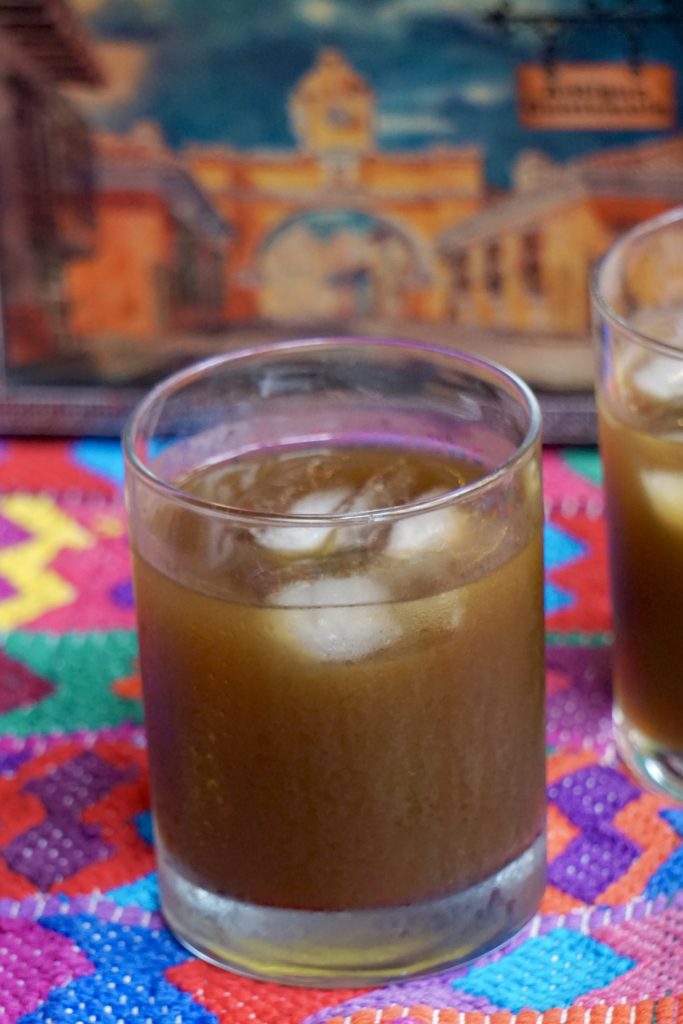
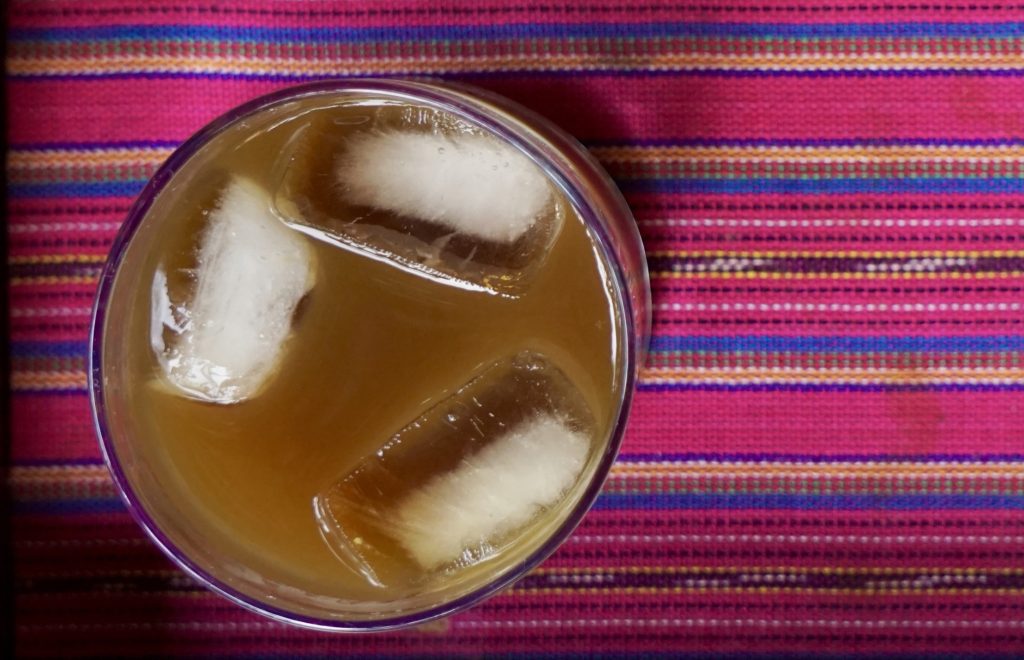
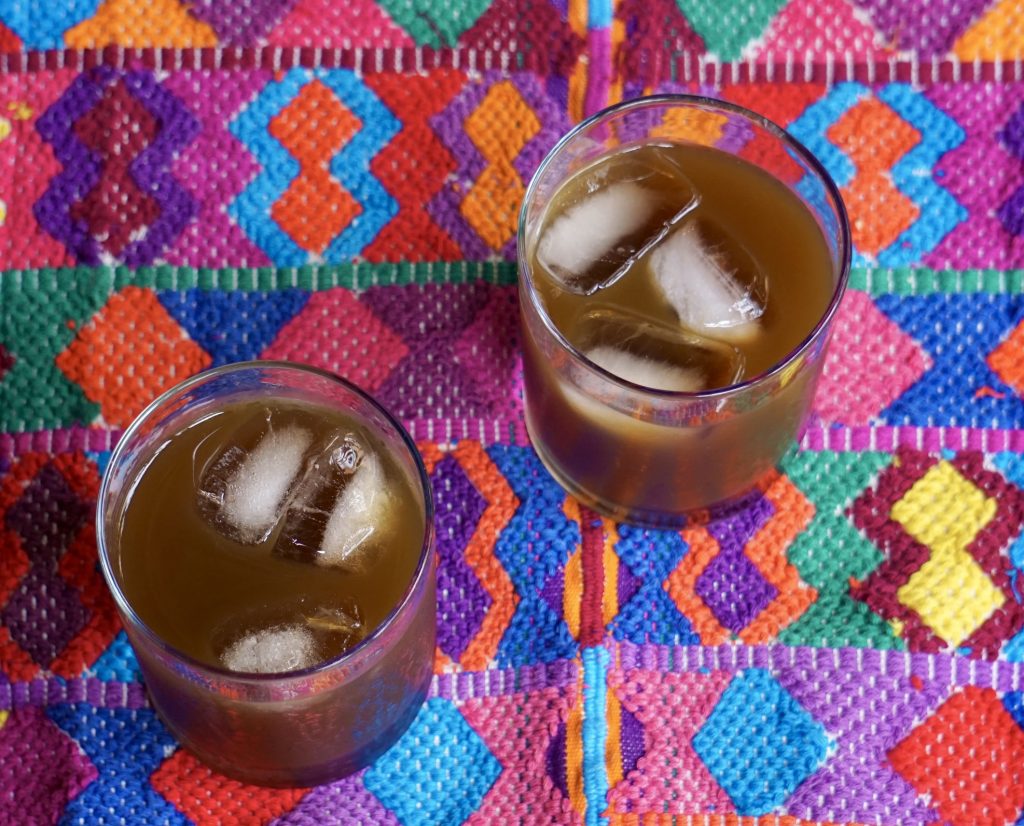
The color is a beautiful clear amber-gold when it’s done, almost like iced tea but warmer in tone. Once it’s strained and served over ice, it looks as good as it tastes.
It’s the kind of drink that’s refreshing and comforting at the same time, which is a combination that’s harder to pull off than it sounds. Perfect for the Semana Santa heat.
The History and Origins of This Traditional Guatemalan Drink
The story of this fresco really starts with the chilacayote itself. Squashes have been part of Mesoamerican agriculture for thousands of years — they were one of the foundational crops of the Maya, along with corn and beans. Chilacayote was particularly valued because of how well it keeps. A whole chilacayote can last for months without refrigeration, which was a huge deal before cold storage existed. People cooked it, ate the seeds, used the flesh in all kinds of ways — and naturally, the cooking liquid became something to drink too.
When the Spanish arrived, they brought cinnamon, cloves, and sugarcane with them, and those ingredients got folded into existing indigenous cooking rather than replacing it. The chilacayote was already being simmered and its water consumed. Adding panela and warm spices made it what we know today.
Guatemala’s Ministry of Culture documents fresco de chilacayote as an ancestral drink with pre-Hispanic roots. The official recipe in their Sistema de Información Cultural was contributed by Ruth Ixcopal, a recognized keeper of Guatemalan gastronomic tradition, and it’s the foundation for the recipe in this article.
What I find remarkable about this history is just how unbroken the line is. The chilacayote in Huehuetenango’s markets today is the same squash the Maya were growing a thousand years ago, and the basic act of cooking it in water with spices and serving it cold on a hot afternoon hasn’t changed that much. Food is one of the few places where that kind of continuity is still visible.
Fresco de Chilacayote During Semana Santa and Día de Todos los Santos
In Guatemala, Semana Santa is the primary season for fresco de chilacayote. It’s particularly associated with Jueves Santo and Viernes Santo — Holy Thursday and Good Friday — the days when people fast from meat and the dry-season heat is usually at its worst. A cold, lightly sweet fresco is exactly what you want when you’ve been standing along a procession route for hours in the afternoon sun. Markets and street vendors sell it throughout Holy Week, and in homes it shows up on the table alongside the meatless foods of the season: pescado en amarillo, sopa de frijoles, torrejas.
It also shows up again on November 1st, Día de Todos los Santos, when families gather to remember the dead and the table fills with the foods that are most tied to memory and tradition. On that day it’s often served alongside fiambre — Guatemala’s extraordinary cold salad that only appears once a year. It’s a good pairing. Fiambre is rich and complex; the fresco is clean and simple. They balance each other well.
If you’re making this outside Guatemala, Holy Week is the time to do it. Make a batch the week before Easter. The smell of cinnamon and cloves cooking on your stove will do more for the Semana Santa feeling than you’d expect.
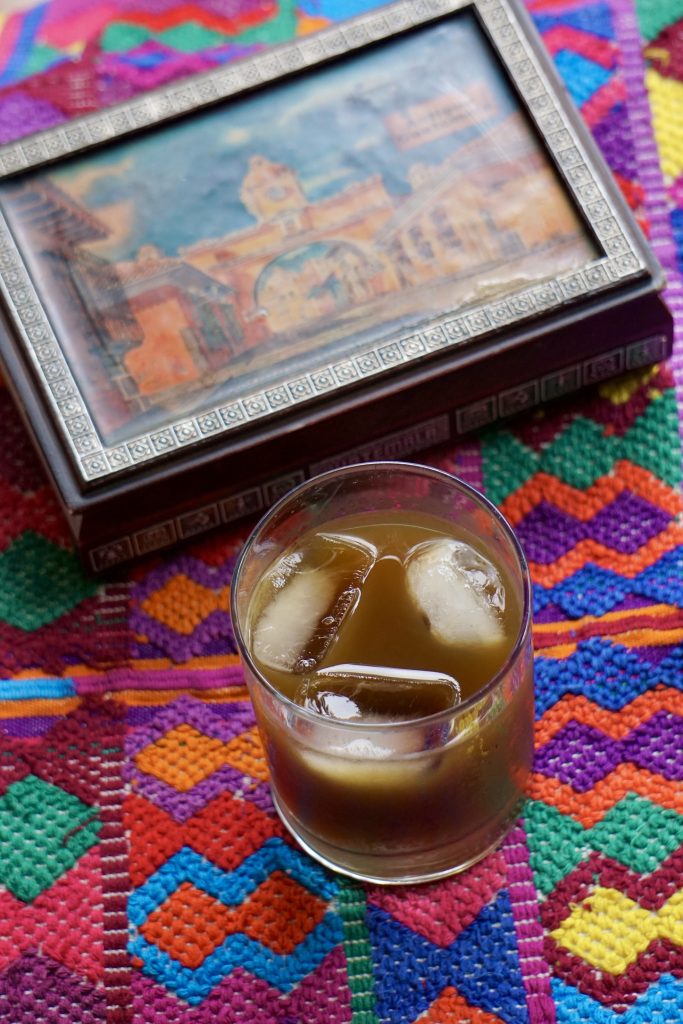
Ingredients for Making Fresco de Chilacayote
The recipe below is based on the traditional version documented by Guatemala’s Sistema de Información Cultural (SIC), attributed to Ruth Ixcopal. The full traditional recipe makes about 40 glasses — this is a communal drink and it’s always made in big batches. I’ve included a scaled-down home version too.
Full traditional recipe (yields approximately 40 glasses):
- 1 chilacayote, approximately 20 pounds
- 1 block panela (piloncillo), whole or broken into pieces
- 1 large cinnamon stick
- 5 whole cloves
- 1 ounce fresh ginger, in a chunk
- 5 allspice berries (pimienta gorda)
- 10 liters of water
Scaled-down home recipe (yields approximately 8 to 10 glasses):
- 1 small chilacayote or half a medium one (3 to 4 pounds)
- Half a block of panela, or to taste
- 1 cinnamon stick
- 2 whole cloves
- A thumb-sized piece of fresh ginger
- 2 allspice berries
- 2 liters of water
Optional: Peel of 2 to 3 limes, steeped in the strained liquid for brightness — used in some regional versions.
On finding chilacayote: Any Guatemalan market will have it during Cuaresma. In the US, check Latin grocery stores serving Central American communities in cities like Los Angeles, Houston, and the D.C. metro area. If you don’t see it, ask — vendors can sometimes order it.
On panela: Don’t use white sugar if you can avoid it. The molasses warmth of panela is what gives this drink its depth. You’ll find it as piloncillo at any Latin grocery store.
How to Make the Traditional Fresco de Chilacayote Recipe
Prep time: 20 minutes Cook time: 1 hour Total time: 1 hour 20 minutes, plus chilling time Yield: 8 to 10 glasses
Step 1: Prepare the chilacayote. Wash it well. Cut into large pieces — quarters or sixths works fine. Remove the yellow fibrous center but leave the seeds in, they’ll add flavor to the water. Don’t peel it yet.
Step 2: Cook it. Bring 2 liters of water to a boil in a large pot. Add the chilacayote pieces, panela, cinnamon stick, cloves, ginger, and allspice. Reduce to a gentle boil and cook for about an hour, until the chilacayote is completely tender and the water has turned a warm amber color and smells of cinnamon and spice. The panela dissolves on its own as it cooks.
Step 3: Cool and strain. Take the pot off the heat and let it cool to room temperature. Remove the chilacayote pieces — you can eat the cooked pulp separately, it’s delicious on its own or as a dessert with a little extra panela. Strain the liquid through a fine mesh strainer to remove the spices and seeds. You’ll be left with a clear, golden-amber fresco.
Step 4: Serve. If you’re using the lime peel variation, steep the peel in the strained liquid for about 15 minutes then remove. Taste and adjust sweetness if needed. Serve very cold over plenty of ice.
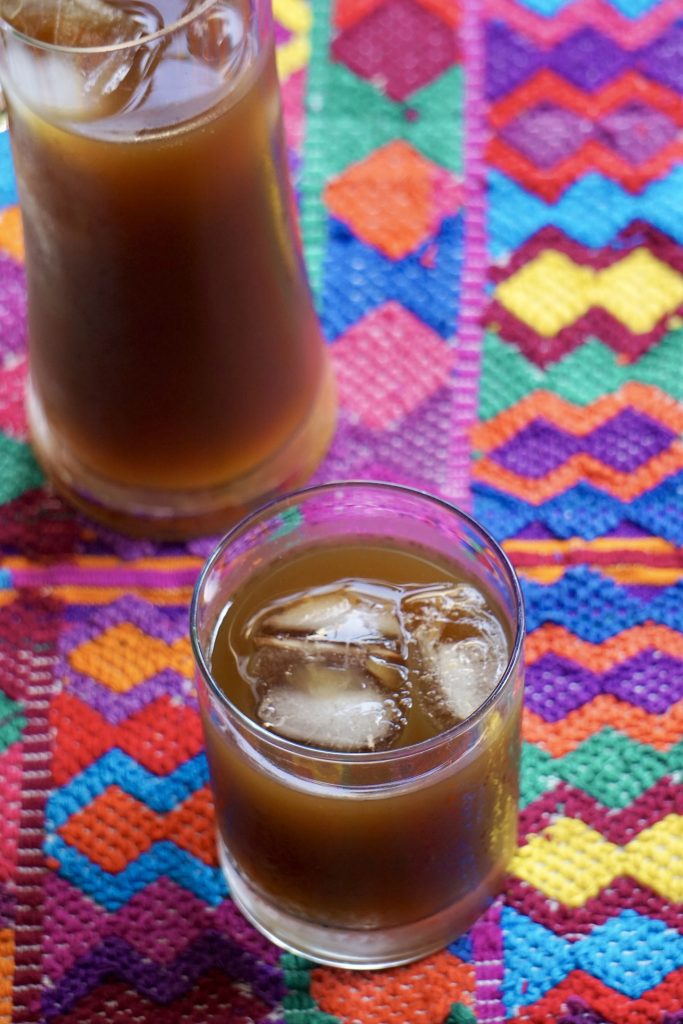
Tips for Making the Best Fresco de Chilacayote
Use panela, not white sugar. I know I keep saying this, but it genuinely makes a difference. The molasses warmth in panela is what gives this fresco its character. Piloncillo at any Latin grocery store, usually very cheap.
Don’t rush the cooking. Give it the full hour. The chilacayote needs that time to release its flavor into the water, and the spices need it too. A shorter cook gives you a thinner, less flavorful fresco.
Fresh ginger only. Powdered ginger will give you heat but none of the brightness that makes this drink work. A small chunk of fresh ginger is worth it.
Strain it well. You want a clear, clean liquid — that beautiful amber color is part of what makes this drink so appealing. A fine mesh strainer or a piece of cheesecloth does the job.
Make it the day before. It genuinely tastes better the next day. The flavors settle and deepen overnight in the refrigerator.
Scale up for gatherings. This is a communal drink by tradition. If you’re serving it at a family Semana Santa lunch, make the full batch and keep it in a big clay pot or pitcher on the table.
More Traditional Guatemalan Drinks You’ll Love
If you enjoyed this fresco, here are a few more worth trying:
Fresco de Suchiles: Guatemala City’s iconic fermented Semana Santa drink — pineapple, toasted corn and barley, tamarind, panela, and medicinal roots. Ancient and complex and unlike anything else.
Fresco de Chinchivir: Antigua’s spiced lemon and ginger drink. Sharp, bright, and incredibly refreshing on a hot day.
Fresco de Tiste: Guatemala’s ancestral chocolate drink made from toasted cacao and corn. Pre-Columbian and unlike any chocolate drink you’ve had before.
Agua de Horchata: Guatemala’s creamy cinnamon rice drink, made unique by toasted pepitoria seeds. My forever favorite for hot afternoons.
Agua de Tamarindo: Tangy, bright, and refreshing. One of the most loved everyday drinks in Guatemala.
Rosa de Jamaica: The vivid ruby hibiscus drink — tart, floral, and beautiful in a glass any time of year.
Have you made fresco de chilacayote before? Is it part of your family’s Semana Santa tradition, or are you trying it for the first time? Leave a comment — I’d love to hear. And if you make this recipe, come back and tell me how it went.
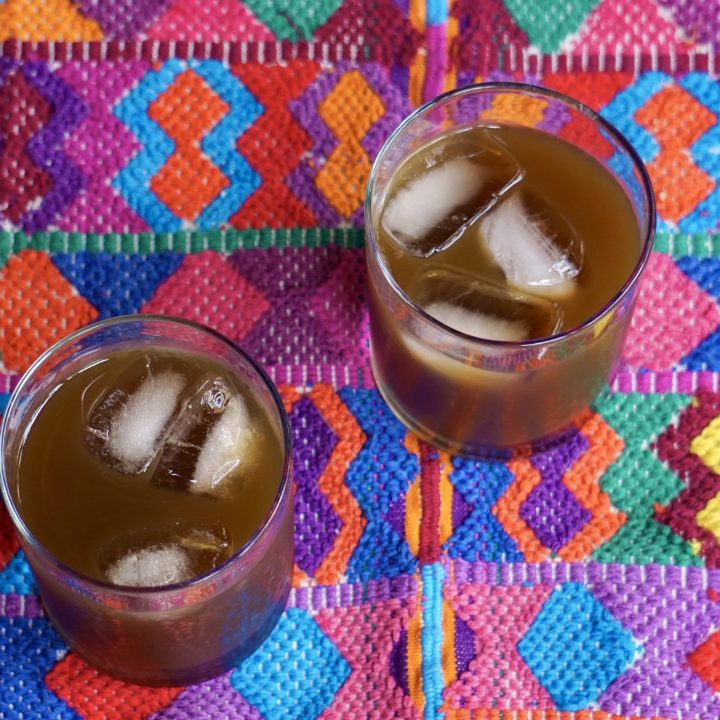
Guatemalan Fresco de Chilacayote Recipe
Fresco de chilacayote is a traditional Guatemalan Semana Santa drink made by simmering chilacayote squash with panela, cinnamon, cloves, fresh ginger, and allspice until the water turns a beautiful golden amber. It's been part of Guatemalan Holy Week tables for generations and is recognized by Guatemala's Ministry of Culture as an ancestral beverage with pre-Hispanic Maya roots. Simple to make, naturally sweet, warmly spiced, and best served ice cold.
Ingredients
- 1 small chilacayote or half a medium one (3 to 4 pounds / 1.4 to 1.8 kg)
- ½ block panela (piloncillo), or to taste
- 1 cinnamon stick
- 2 whole cloves
- 1 thumb-sized piece of fresh ginger
- 2 allspice berries (pimienta gorda)
- 2 liters water
- Optional: peel of 2 to 3 limes for brightness
Instructions
- Wash the chilacayote well. Cut into large pieces — quarters or sixths. Remove and discard the yellow fibrous center but leave the seeds in. Do not peel yet.
- Bring 2 liters of water to a boil in a large pot. Add the chilacayote pieces, panela, cinnamon stick, cloves, ginger, and allspice berries.
- Reduce to a gentle boil and cook for about 1 hour, until the chilacayote is completely tender and the water has turned a warm golden amber color and smells of cinnamon and spice. The panela will dissolve on its own as it cooks.
- Remove from heat and let cool to room temperature. Remove the chilacayote pieces. Strain the liquid through a fine mesh strainer to remove the spices and seeds, leaving a clear amber fresco.
- Optional: steep lime peel in the strained liquid for 15 minutes, then remove. Taste and adjust sweetness if needed.
- Serve very cold over plenty of ice.
Notes
Use panela, not white sugar. The molasses warmth of panela is what gives this fresco its depth and character. You'll find it as piloncillo at any Latin grocery store.
Don't rush the cooking. Give it the full hour. The chilacayote and spices need that time to fully release their flavors into the water.
Fresh ginger only. Powdered ginger gives you heat but not the clean brightness that makes this drink work.
Strain it well. You want a clear, clean amber liquid. A fine mesh strainer or cheesecloth works perfectly.
Make it the day before. It tastes better the next day — the flavors deepen and settle overnight in the refrigerator.
Storage: Keeps refrigerated for up to 4 days.
Scaling up: The full traditional recipe (attributed to Ruth Ixcopal, documented by Guatemala's SIC) uses a 20-pound chilacayote, 1 full block of panela, 5 whole cloves, 5 allspice berries, 1 large cinnamon stick, 1 ounce fresh ginger, and 10 liters of water — yielding approximately 40 glasses. Perfect for a family Semana Santa gathering.
Nutrition Information:
Yield: 8 Serving Size: 1Amount Per Serving: Calories: 70Total Fat: 0gSaturated Fat: 0gUnsaturated Fat: 0gSodium: 8mgCarbohydrates: 17gFiber: .5gSugar: 15gProtein: .5g
Compensated affiliate links may be used in this post. As an Amazon Associate and member of other affiliate programs, I earn from qualifying purchases.

Paula studied architecture and now makes a living as a freelance writer,traveler and amateur photographer.She started her writing & publishing career as the editor of Bebé y Mamá, the first parenting magazine in Guatemala.She is the founder of www.GrowingUpBilingual.com and www.365thingsswfl.com and writes articles in Spanish and English for both magazines and the web on travel,food and bicultural and bilingual parenting .
When she is not on a plane or road trip she likes to create recipes inspired in the flavors of her native Guatemala.

