There are many benefits of playing a musical instrument, from developing concentration and coordination to encouraging creativity, confidence and perseverance. For children, learning music can also provide a meaningful way to express emotions, connect with other kids and experience the satisfaction that comes from gradually mastering something that once felt difficult.
But the benefits of music aren’t limited to childhood. Playing an instrument can become a lifelong creative outlet, a social activity and simply something enjoyable to return to throughout your life. Music can also connect us with our families, our heritage and cultures around the world through the instruments, rhythms and traditions that make each place unique.
Music has always been important in my family. I grew up going to art galleries and classical music concerts from an early age because my parents and grandparents had many friends who were artists and musicians. I tried several instruments myself, including the cello and flute. I never continued with either one, and that’s something I’ve always wished I had followed through on.
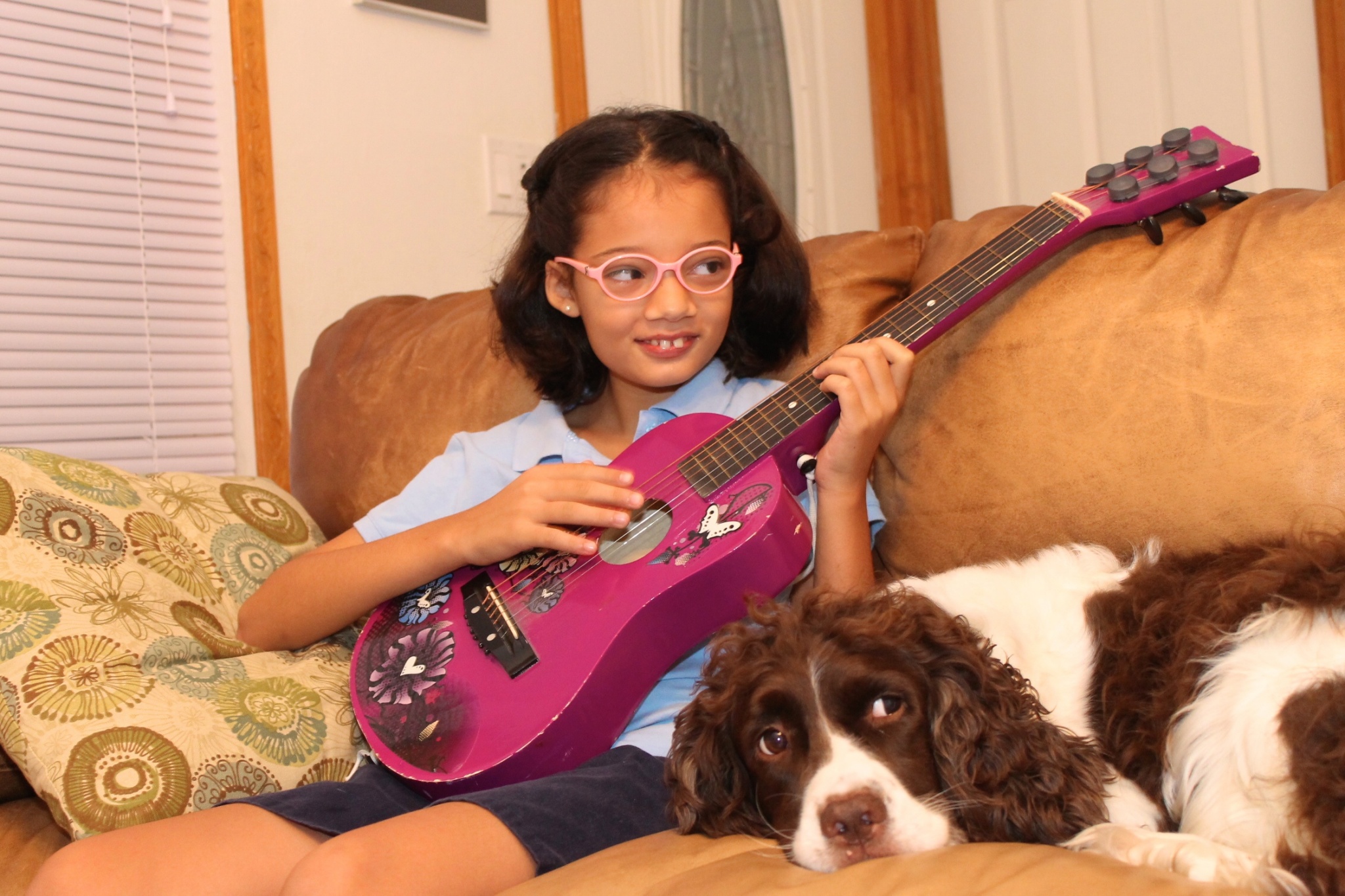
When my own kids became interested in music, I wanted them to have the opportunity to explore it without feeling that they had to become accomplished musicians. I think that’s an important distinction. A child doesn’t have to perform onstage or become exceptionally good at an instrument for learning music to be worthwhile.
Benefits of Playing a Musical Instrument for Children
One of the biggest benefits of playing a musical instrument as a child is that learning music combines so many different skills at once. A child may be listening carefully, remembering a sequence, reading music, coordinating hand movements and adjusting what they’re doing based on what they hear, all within the same few minutes of practice.
Music also gives children a creative way to express themselves. Kids don’t always have the vocabulary to explain what they’re feeling, and creative activities can give them another outlet. Sometimes playing music is about working toward a goal, but sometimes it can simply be something that feels good after a long day.
Learning an instrument also requires patience. Progress tends to happen gradually. A song that sounds impossible the first time a child tries it may become recognizable after a week and comfortable after a month. Experiencing that process teaches kids something valuable about persistence: not being able to do something yet doesn’t mean they won’t eventually be able to do it.
There is also a very tangible sense of accomplishment that comes with music. Kids can hear themselves getting better. Learning a new chord, finally playing a difficult passage or making it all the way through a song gives them clear evidence that their effort has paid off.
What Does Playing a Musical Instrument Do to Your Brain?
This is one of the questions parents often ask when they hear about the benefits of learning music. Playing an instrument is mentally demanding because the brain is processing several kinds of information simultaneously.
A musician has to listen to sound, recognize patterns and timing, remember what comes next and coordinate physical movements. Depending on the instrument, that may mean using both hands independently, controlling breathing or moving fingers very precisely while listening for whether the resulting note sounds right.
Music also creates a constant feedback loop. You play something, listen to what happened, recognize whether it sounded the way you intended and make an adjustment. That repeated process gives kids practice with attention, memory, listening and problem solving.
That doesn’t mean learning an instrument magically transforms a child’s brain or guarantees better grades. I think the more useful way to look at it is that music gives children an engaging environment in which they repeatedly use many of the same skills that are valuable for learning.
Does Playing a Musical Instrument Improve Concentration?
Concentration is an important part of learning an instrument because music requires attention to details that are easy to miss when you’re distracted.
Children may have to listen for changes in pitch, rhythm, volume and tempo while keeping track of where they are in a song. When playing with other musicians, they also have to listen to what everyone else is doing instead of focusing only on themselves.
Practice provides repeated opportunities to focus on one activity and notice small improvements. For some children, that may feel much more engaging than practicing concentration through a traditional academic task because the feedback is immediate: they can hear the difference.
Playing an Instrument Builds Coordination
The physical side of playing music is easy to overlook, but most instruments require a surprising amount of coordination.
A guitarist uses one hand to form chords or notes while the other strums or picks. Pianists often use both hands to play completely different patterns. A drummer may coordinate both hands and both feet. Wind and brass players combine finger movements with breath control and mouth position.
At first those movements can feel almost impossible to coordinate. With repetition, the body gradually learns the patterns and movements become more natural.
Social Benefits of Playing a Musical Instrument
Music can be a very personal activity, but it can also be incredibly social. Children who participate in bands, orchestras, ensembles or informal music groups learn that making music together requires listening and cooperation.
You can’t simply play your own part without paying attention to everyone else. Musicians have to follow cues, match timing and volume, know when to lead and when to support someone else.
Being involved in music can also give children another way to find people who share their interests. For a child who doesn’t connect easily through sports or other traditional extracurricular activities, music may provide an entirely different community.

Emotional Benefits of Playing Music
Music can also provide something that is increasingly important for both kids and adults: an activity that doesn’t necessarily have to be productive.
There can be real satisfaction in playing a song simply because you enjoy it. Practicing alone can provide quiet time, while playing with other people can be energizing and social.
Music can also give kids another way to communicate emotions. The songs they choose, the way they play them and even the kind of music they are drawn to can become another form of self-expression.
For children who enjoy performing, recitals or concerts can also build confidence. Not every child wants to be onstage, and I don’t think performing should be treated as the ultimate goal of learning music. But for kids who do enjoy it, sharing something they’ve practiced can be incredibly rewarding.
Do People Who Play Musical Instruments Have a Higher IQ?
There are studies that have found associations between musical training and certain cognitive skills, which is probably where the idea that musicians have higher IQs comes from. But it’s much too simplistic to say that playing an instrument automatically makes someone smarter.
Children who take music lessons may differ in many other ways, including educational opportunities, family resources and the activities they’re exposed to. All of those things can affect academic performance and cognitive development.
For me, this is also not the most compelling reason to encourage a child to learn music. Music already has plenty of value without promising a higher IQ. Learning to focus, practice patiently, recognize patterns, solve problems, express yourself and create something beautiful are meaningful benefits on their own.
Musical Instruments Can Connect Kids With Culture and Heritage
One of my favorite things about music is how strongly it connects us with culture. Traditional instruments carry stories with them. They can tell us something about where people come from, what materials were available to them, how communities celebrated and even how different cultures influenced one another.
This connection has always been especially meaningful in our family. Raising bilingual and bicultural kids has meant intentionally finding ways for our children to experience our culture instead of simply telling them about it. I’ve shared more about that in my article on raising bilingual and bicultural children.
Music is particularly good at making culture feel alive. You can hear a rhythm, dance to it, learn the words to a traditional song or discover the instruments that create a particular sound. In fact, one of the activities I’ve always recommended for helping kids connect with their native language and culture is playing music and singing songs from home.
The Marimba and Guatemala
For me, the marimba is one of the best examples of the connection between an instrument and cultural identity. Its sound immediately takes me back to Guatemala. I associate it with celebrations, plazas, family gatherings and the traditional music I grew up hearing.
Sharing sounds like these with children can give them a connection to their heritage that feels completely different from reading about culture in a book. Music creates memories, and those memories often stay with us for years.
The Bodhrán and Traditional Irish Music
Traditional instruments can provide the same kind of connection in cultures around the world. The bodhrán, for example, is a frame drum closely associated with Irish traditional music. It is played by striking the drumhead, often with a small beater, to create the rhythm that supports other musicians.
For families exploring Irish music or for kids who are especially drawn to percussion, learning about the bodhrán can become a starting point for discovering Irish musical traditions. Families who want to explore the instrument itself can also find a bodhran for sale along with information about different styles and sizes.
Bagpipes and Scottish Music
Highland bagpipes are another instrument that is almost impossible to separate from the culture most people associate them with. Hearing bagpipes can open the door to learning about Scottish music, ceremonies, dance and history.
The point isn’t that children should only play instruments connected with their own heritage. Learning about instruments from other places can be just as valuable. It encourages curiosity and shows kids that music can be a way to experience another culture.
Music as Part of a Bicultural Childhood
In our family, music has been one of many ways we’ve tried to keep culture present in everyday life. Language, food, traditions and travel all matter, but music has the advantage of being easy to incorporate naturally.
You can play music from your family’s country while cooking dinner or driving in the car. You can teach kids the songs you remember from childhood or introduce them to artists whose music blends cultures in interesting ways.
I’ve written before about the role Latin music has played in my own life, and I think this is one of music’s most powerful qualities. A song can bring back a place, a person or an entire period of your life within seconds.
That emotional connection is one reason music can be such an effective way to keep culture and language alive for children growing up between cultures.
How to Help a Child Start Playing a Musical Instrument
If your child is interested in learning music, I’d start by letting their curiosity guide the process. Children are much more likely to stay interested in an instrument they chose themselves than one an adult chose for them.
Pay attention to what they naturally gravitate toward. A child who is constantly tapping rhythms on the table may love percussion. Another child may be fascinated by guitar or piano. Someone else may fall in love with a violin after hearing one for the first time.
It’s also completely normal for kids to change their minds. A child’s first instrument doesn’t have to become their forever instrument. Trying one instrument may simply help them discover what they like and don’t like about making music.
Finding the Right Teacher Matters
A teacher’s personality can be just as important as their musical ability, especially for younger children.
A great musician isn’t automatically a great teacher for every child. Kids need someone who can recognize how they learn, keep lessons engaging and challenge them without making every mistake feel like failure.
If a child suddenly seems to hate an instrument they were excited about a few months earlier, I would consider whether the problem is really the instrument before assuming they should quit. Sometimes a different teaching style can make a huge difference.
Keep Practice From Becoming a Battle
Practice matters when you’re learning music, but I also think it’s easy for adults to accidentally turn music into another chore.
A short period of focused practice can be more useful than forcing a frustrated child to sit with an instrument for a long time. The appropriate amount will vary depending on the child’s age, experience and goals.
It also helps when kids have opportunities to play music they genuinely enjoy. Technique is important, but learning a favorite song can provide the motivation needed to keep working through the less exciting parts.
Benefits of Playing a Musical Instrument for Adults
One thing I wish I’d understood when I stopped playing the cello and flute is that music doesn’t belong only to children or professional musicians.
Adults can learn an instrument at any age. Playing music can provide a creative challenge, an enjoyable hobby and a reason to keep learning something completely different from whatever you spend most of your day doing.
It can also be social. Community bands, orchestras, choirs, jam sessions and informal groups give adults opportunities to connect with other people through music.
You don’t have to be exceptionally talented for any of this to count. There is plenty of value in learning enough guitar to play songs you love or sitting down at a piano simply because it makes you happy.
Is Playing a Musical Instrument Good for You?
For most people, playing music can be a positive addition to everyday life because it combines creativity, mental challenge and physical coordination. Depending on how you play music, it can also provide opportunities for social connection and relaxation.
But I don’t think we need to justify music entirely in terms of health or academic benefits. Sometimes doing something because it is interesting, meaningful or enjoyable is enough.
That’s ultimately what I wanted for my own kids. Whether they became serious musicians was never as important to me as giving them the chance to experience music and decide what place they wanted it to have in their lives.
Frequently Asked Questions About the Benefits of Playing a Musical Instrument
What are the main benefits of playing a musical instrument?
Playing a musical instrument can help develop concentration, listening skills, coordination, patience and perseverance while providing a creative form of self-expression. Playing music with other people can also encourage teamwork and social connection, while traditional music can help children learn about culture and heritage.
What does playing an instrument do to your brain?
Playing an instrument requires the brain to process sound, timing, patterns and movement at the same time. Musicians frequently use memory, attention, auditory processing and motor coordination while playing, making music a mentally complex activity.
Do people who play instruments have a higher IQ?
Some research has found relationships between musical training and certain cognitive abilities, but that doesn’t mean playing an instrument automatically increases IQ. Many factors influence intelligence and academic performance. The clearer benefit is that learning music gives people regular practice with concentration, memory, patterns, problem solving and persistence.
What are the social benefits of playing an instrument?
Playing in a band, orchestra or other musical group requires listening, cooperation and awareness of what other musicians are doing. Music can also help children and adults meet people who share similar interests and provide a sense of belonging within a group.
Are there benefits of playing a musical instrument as an adult?
Yes. Adults can enjoy many of the same benefits as children, including mental challenge, creativity, coordination and social connection. Learning an instrument can also become an enjoyable lifelong hobby, and there is no age when it is too late to begin.
Is playing a musical instrument good for your heart?
Playing music may be relaxing and can be part of a lifestyle that helps manage everyday stress, but playing an instrument shouldn’t be considered a replacement for cardiovascular exercise. Its strongest benefits are related to creativity, mental engagement, coordination, enjoyment and social connection.
Can playing a musical instrument have disadvantages?
Like many repetitive activities, playing an instrument with poor posture or technique can sometimes lead to discomfort or overuse injuries. Very loud music can also affect hearing over time. Good instruction, proper technique, reasonable practice sessions and appropriate hearing protection when needed can help reduce those risks.
Why Learning to Play Music Is Worth It
When I look back, I still wish I had continued with one of the instruments I tried when I was young. But that experience also shaped the way I approached music with my own children.
I wanted them to have opportunities to explore without making music another measure of achievement. The benefits of playing a musical instrument aren’t limited to becoming more accomplished at music. They’re also in the process: listening closely, practicing something difficult, making mistakes, trying again and eventually hearing yourself do something you couldn’t do before.
And perhaps the most lasting benefit is simply developing a relationship with music. Whether that leads to performing, playing with friends, connecting with your culture or picking up a guitar after a long day, music can remain part of your life long after the lessons end.

Through her writing, Paula helps travelers discover Guatemala beyond the typical tourist route with practical advice, local recommendations, and authentic experiences that connect visitors with the country’s people, culture, and traditions.
Planning a trip to Guatemala? Paula offers personalized Guatemala itinerary planning and trip consultation services tailored to your interests, travel style, and budget. Contact her at [email protected] to learn more.
- San Lucas Tolimán Guatemala: Lake Atitlán’s Best-Kept Secret - September 24, 2026
- Hotel Tolimán Lake Atitlán: A Special Stay in San Lucas Tolimán - September 24, 2026
- Guatemala Dreams in San Lucas Tolimán: A Boutique Stay on Lake Atitlán - September 23, 2026


How cute is your daughter! I am on the fence with putting my boys into music I know the benefits because I played BUT I did not take it very seriously. You are changing my mind.
What a great post! 🙂 i love music, only played the trumpet for a couple of years when i was a pre teen. Gabriel on the other hand, plays several instrumentos. We have started With little play instrumentos to get Luna interested too 🙂
Que bella! La musica es un gran beneficio, mi hija toca la guitarra eléctrica!
My kids are a bit young to formal classes yet, but they have all kind of instruments to play with. They LOVE them.
Que bueno es inculcarles la música en su crecimiento y desarrollo, gracias por compartirlo, saludos y
¡FELIZ DÍA!ॐ
http://mamaholistica.com
My boys have always loved music and are now each finding their own instrument to learn. There are so many benefits and I am happy that they can embrace the challenge.
My husband comes from a musical family, and my one year old has to stop and dance every time she hears anything with a beat so I think she’ll be following in his footsteps. I love this list of benefits musical instruments have for kids. The idea that playing music can actually improve creativity makes me excited to introduce her to as many instruments as we can so that she can choose what she wants to try.
My mom made me play and practice piano growing up and I always hated it. We had early morning practices on Saturdays. She always told me I would thank her one day, and she was right. I am super grateful I stuck with it and really appreciate and enjoy it now.
I like your tip to help your child choose the right instrument they want to learn. You don’t want to force your child to play the instrument you want them to play, only for them to lose interest soon after. Like you said, renting an instrument may be a good idea when your child is still deciding what they really want to learn. Thanks for the article!
Very good tips. I wish I had learned when I was a kid. Now, I’ll have to invest in my own kids.
I loved Band in high school and am trying to get my kids into it. Thanks for the advice about how music helps relieve stress. Hopefully, I can interest my kids so that we can rent them instruments.
very beautiful to see children touch and learn, and reveal their talents from an early age, with maoir Chaces to succeed!
Great.. thaks for sharing valuable article
As a music lover and a father to little two littles girls I really appreciate this article. . I believe learning through music and play has long been recognized as an important component of child development, so me and my wife always encourage music in our home weather it be singing or playing music instrument
Its very very useful Article. You are rightly guided us . Teaching Our Kid Is Nowadays are Very Challenging…So we have to teach them and keep them updated.Piano is a wonderful instrument to start with, and yes, I think you’ll notice some similarities if you play the violin later on. I took piano lessons as a kid, and then went on to play the guitar. Keep it up!
Thanks for the advice about how music helps relieve stress. Hopefully,
Maybe… I can interest my kids so that we can rent them instruments. I think that the Piano is a wonderful instrument to start.
I have said and repeated how important it is to teach children to learn the power that music has, to transform lives .. I love this site.
That’s a good point that music stimulates the brain. Like you said, this encourages creativity. I want my daughter to pick up an instrument because colleges value well rounded students like that, as well.
It is best if you let your child pick the instruments they want to play. It helps them to be more confident, and playing with them is just great for them too. Nice article! 🙂