

Yes, there are manatees in Guatemala, but the best way to plan a manatee trip here is not to think of it as a guaranteed wildlife sighting. Think of it as a quiet boat trip through some of Guatemala’s most fragile and beautiful Caribbean wetlands, with the chance of seeing an Antillean manatee if the timing, guide, weather, and luck line up. This guide covers where manatees live in Guatemala, how Chocón Machacas and Bocas del Polochic compare, what a responsible manatee habitat boat trip really looks like, and how to add this experience to a Río Dulce, Lake Izabal, or El Estor itinerary without overpromising the sighting.
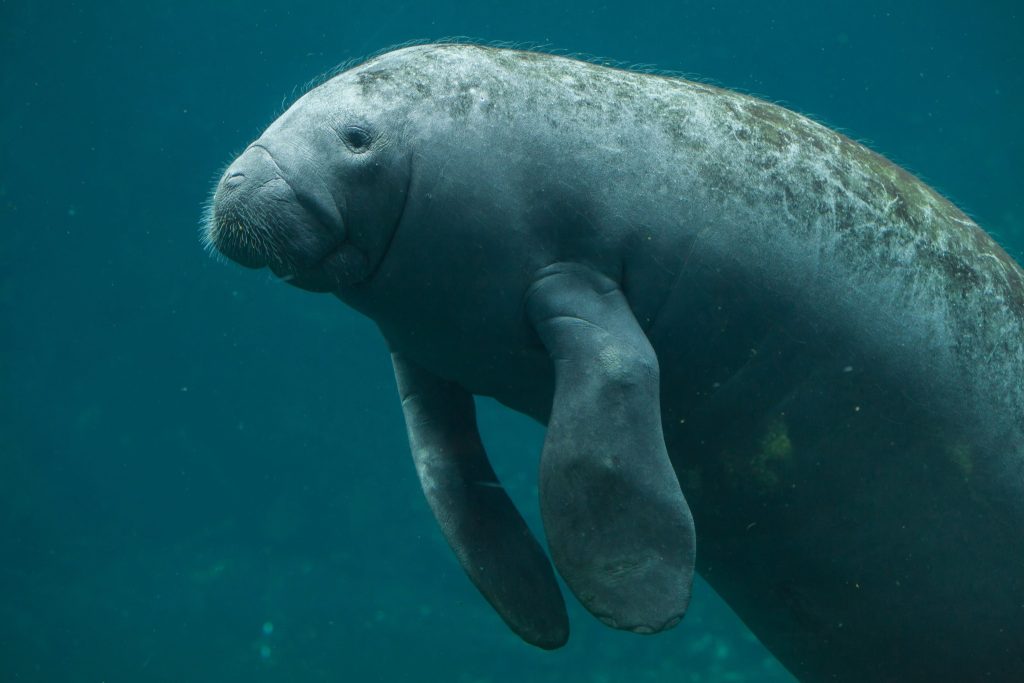
That last part matters. Manatees do live here. They are also rare, shy, slow-moving, and very hard to spot. I would much rather tell you that upfront than let you book a “manatee tour” thinking you are about to see a wildlife documentary unfold in front of your boat.
I live in Guatemala, and I have made the boat trip through El Golfete and Río Dulce more than once. I have also talked with people who have lived on this water their whole lives, and their answer is usually the same: if you are lucky, you may see a snout, a tail, or a dark shape just under the surface. Some days you see nothing at all. That does not mean the trip is not worth doing. It just means you should go for the river, the habitat, the birds, the stillness, and the chance of seeing a manatee, not with the expectation that one will pose for you.
If you are already planning Río Dulce, Livingston, Lake Izabal, or El Estor, a manatee habitat boat trip can be a meaningful part of the route. The key is to build the day around the whole ecosystem, not just the hope of one animal surfacing. If you want help deciding whether Chocón Machacas or Bocas del Polochic makes more sense for your trip, that is exactly the kind of planning I help travelers with directly.
This guide is for
✓ Wildlife travelers who want the real odds before booking ✓ Anyone planning Río Dulce, Lake Izabal, Livingston, or El Estor ✓ Travelers who care about manatees, wetlands, birds, and responsible nature experiences in Guatemala
THE HABITAT
Where to See Manatees in Guatemala: Lake Izabal, Río Dulce, and Caribbean Wetlands
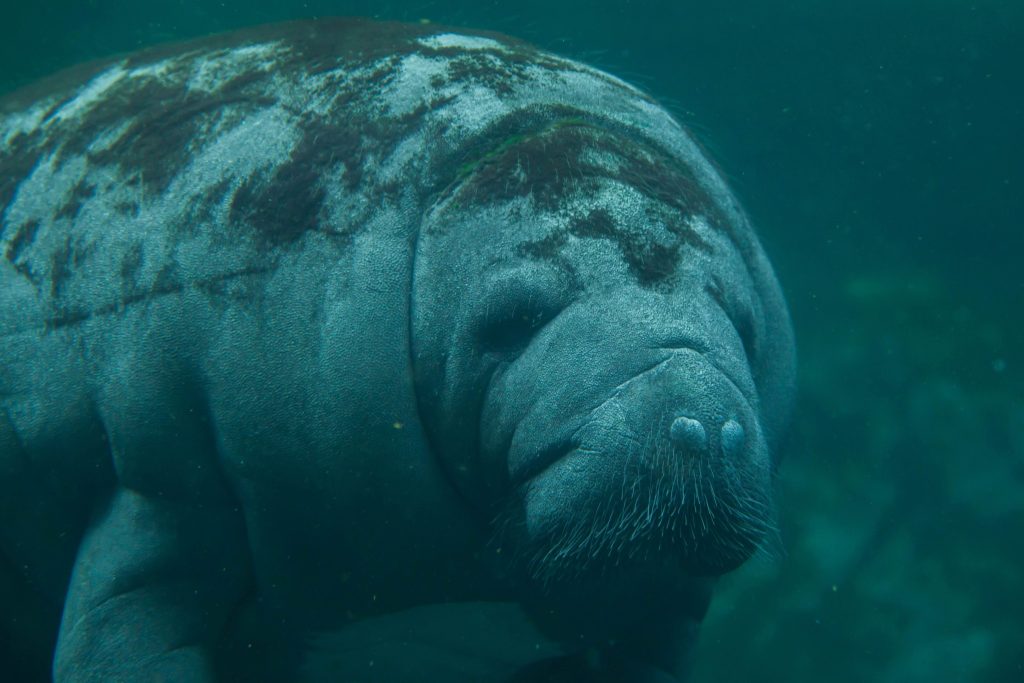
The manatee found in Guatemala is the Antillean manatee (Trichechus manatus manatus), a subspecies of the West Indian manatee. Locally, especially in Q’eqchi’ communities around Izabal, it is known as wakax ha’, often translated as “water cow.” The name makes sense once you understand how they live. Manatees graze on aquatic plants and seagrasses, move slowly, surface quietly, and spend much of their time in places where the water is calm, shallow, and full of vegetation.
In Guatemala, that habitat is concentrated in the Caribbean watershed: Lake Izabal, Río Dulce, El Golfete, the Río Chocón Machacas area, Bocas del Polochic, Río Sarstún, Punta de Manabique, and nearby coastal wetlands. For most travelers, though, the two names that matter most are Biotopo Chocón Machacas and Bocas del Polochic.
Chocón Machacas is the easier one to add if you are already staying in Río Dulce or traveling by boat toward Livingston. Bocas del Polochic is farther off the standard tourist route, near El Estor, but local conservation sources describe it as one of the most important manatee areas in Guatemala. That is the tradeoff: easier logistics on the Río Dulce side, better habitat odds if you are willing to go deeper toward Lake Izabal and El Estor.
✨ LOCAL REALITY CHECK
Do not choose a manatee trip in Guatemala only because you want the photo. Choose it because you care about the habitat. Some of the best moments on these boat rides are not the manatee sightings themselves, but the still water, mangroves, birds, and feeling of being inside one of the country’s most fragile ecosystems.
WHY GO
Why a Manatee Habitat Boat Trip in Guatemala Is Still Worth Doing
This is where I think the trip becomes more interesting, not less. If you only go because you want a manatee photo, you may leave disappointed. But if you go because you want to understand the habitat where Guatemala’s manatees still survive, the boat ride itself becomes the experience.
You are moving through calm water, mangrove edges, flooded forest, lagoons, bird habitat, and quiet corners of Izabal that most travelers never slow down enough to notice. You may see herons, kingfishers, cormorants, egrets, raptors, turtles, fish breaking the surface, and the kind of still water that makes you understand why manatees would live here in the first place.
That is the way I would plan it: not as a “come see a manatee” tour, but as a Río Dulce or Lake Izabal nature day through manatee habitat, with a possible sighting as the bonus.
💡 The better way to think about it: A manatee sighting is the bonus. The real experience is the boat ride through the habitat: the birds, the mangroves, the flooded forest, the quiet water, and the conservation story behind this part of Izabal.
MANAGING EXPECTATIONS
How Likely Are You to See Manatees in Guatemala?
This is where I want to be very honest: seeing a manatee in Guatemala is possible, but it is never guaranteed. Recent reports do not even agree on how many are left. One conservation warning in 2024 estimated fewer than 60 manatees in Guatemala, while a later report described the population as not exceeding about 150. That range alone tells you what you need to know: this is a very small, very difficult-to-count population.
Manatees are hard to count because they do not gather in obvious groups near the surface. They are often underwater, they avoid disturbance, and they may only come up briefly to breathe. From a boat, a sighting may be nothing more than a nostril, a gray back, or a tail disappearing before everyone has time to react.
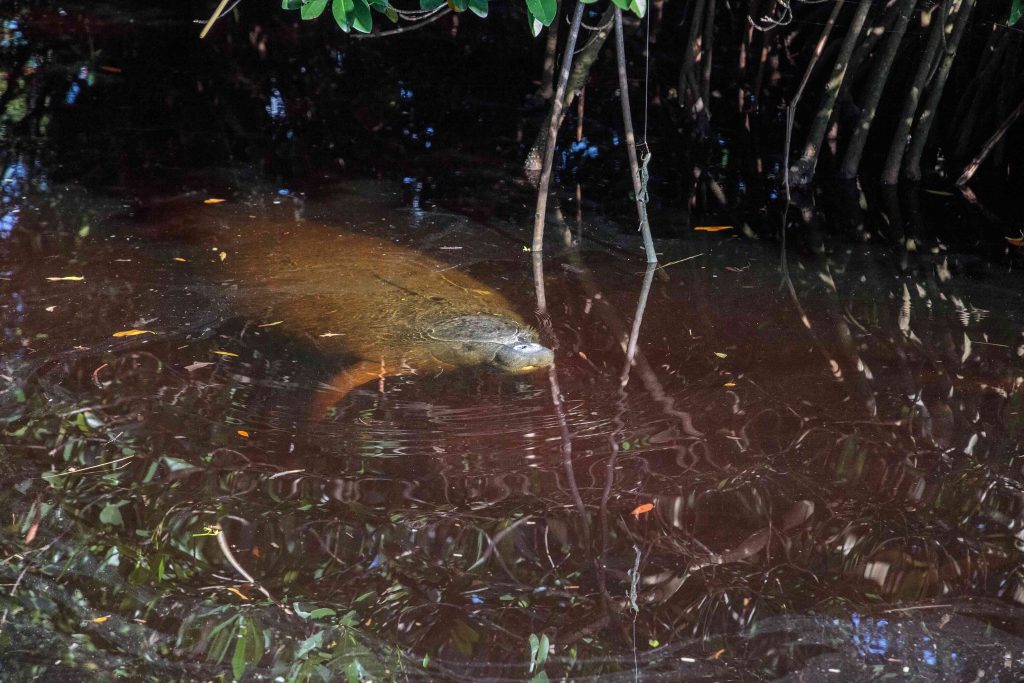
The main threats are human-caused: illegal hunting, accidental entanglement in fishing nets, boat strikes, pollution, sedimentation, and habitat degradation. Their biology also works against them. Manatees reproduce slowly, usually with one calf at a time, so a small population does not recover quickly when it loses animals.
So when someone sells you a “manatee tour,” I would translate that as “a boat trip through manatee habitat with a chance of seeing one.” A good guide will never promise a sighting. A good guide will slow down, cut the engine when needed, keep distance, and protect the animal even if that means you do not get the perfect view.
⚠ RESPONSIBLE VIEWING MATTERS
If you see a manatee, do not ask the boat driver to chase it. Do not shout, splash, or try to get closer for a better photo. The best manatee guides in Guatemala are the ones who stay quiet, slow down, and let the animal decide whether it surfaces again.
RÍO DULCE SIDE
Biotopo Chocón Machacas: The Easiest Manatee Habitat to Visit From Río Dulce
Biotopo Chocón Machacas is the manatee habitat most travelers are likely to visit because it sits on the Río Dulce side of the region. It was created to help protect the manatee and the fluvial system around Lake Izabal, Río Dulce, the Río Chocón, forest, wildlife, and water bodies. If you are already based in Río Dulce town, this is the easiest place to build into a boat day.
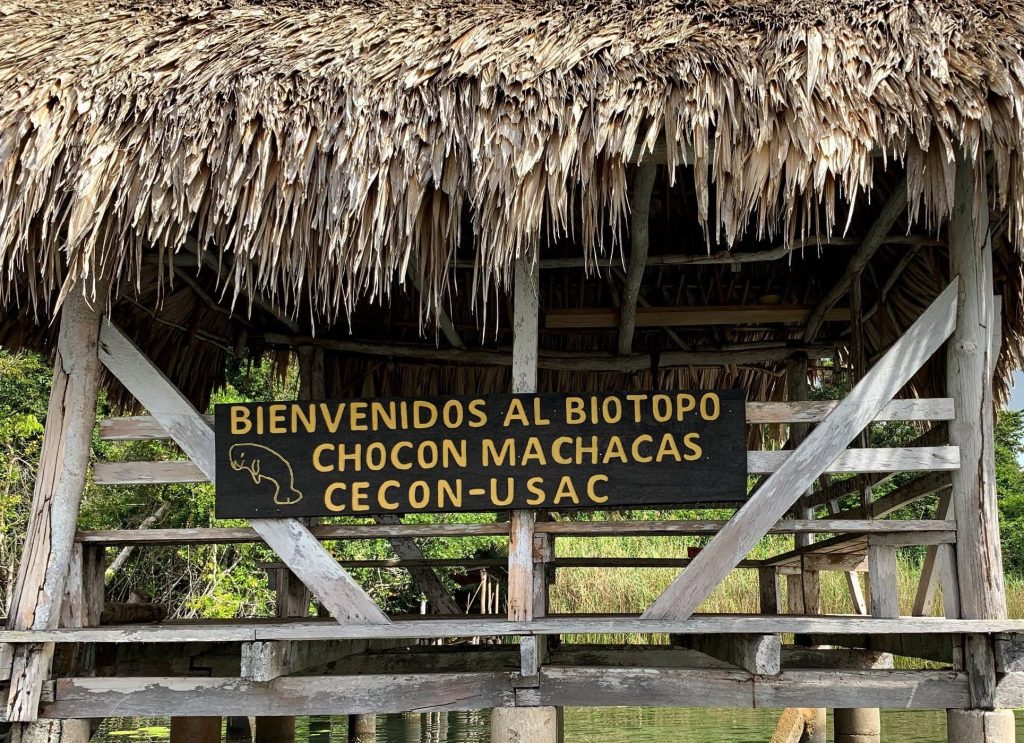
The biotope is in the municipality of Livingston, along the northern side of El Golfete, the wide, lake-like stretch of Río Dulce between Fronteras and the canyon route toward Livingston. You reach it by water, usually by arranging a lancha from Río Dulce, Livingston, or one of the river lodges. If you are planning your whole route from scratch, start with my complete Río Dulce Guatemala guide first, because it explains how the river, lake, canyon, and Livingston route fit together.
Inside the biotope, the landscape is a mix of slow water, faster-flowing channels, flooded forest, lagoons, and rainforest. CECON describes four interior lagoons — Salvador, Cálix, Negra, and Larga — along with channels and the old river course that connect them. This is exactly the kind of quiet, protected water manatees need, but it is also why you should not expect an easy sighting from the main river.
Even if you do not see a manatee, Chocón Machacas can still be worth visiting. You can explore by boat or cayuco, walk forest trails, watch birds, and visit the Lagunitas-Salvador community area. For travelers who want nature without adding a major detour to El Estor, this is the most realistic manatee-related stop from Río Dulce.
📌 Planning note: Local listings do not always agree on entrance fees or how they describe the size of the protected area. I would use Chocón Machacas as a flexible boat-day stop, confirm current hours and pricing before you go, and ask your hotel or boat operator whether the biotope is being included as a real stop or just passed from the water.
Chocón Machacas also fits naturally into a broader nature-focused trip, especially if you are already interested in national parks and nature reserves in Guatemala, birdwatching, or community-based travel along the river.
EL ESTOR SIDE
Bocas del Polochic: The Best Place to Look for Manatees in Guatemala
If your main goal is the best chance of seeing a manatee in Guatemala, Bocas del Polochic is the place I would look at first. It is farther from the standard Río Dulce-to-Livingston route, but local conservation sources describe it as the area with the largest number of manatees in the country and one of the best observation areas for the species in the Gulf of Honduras.
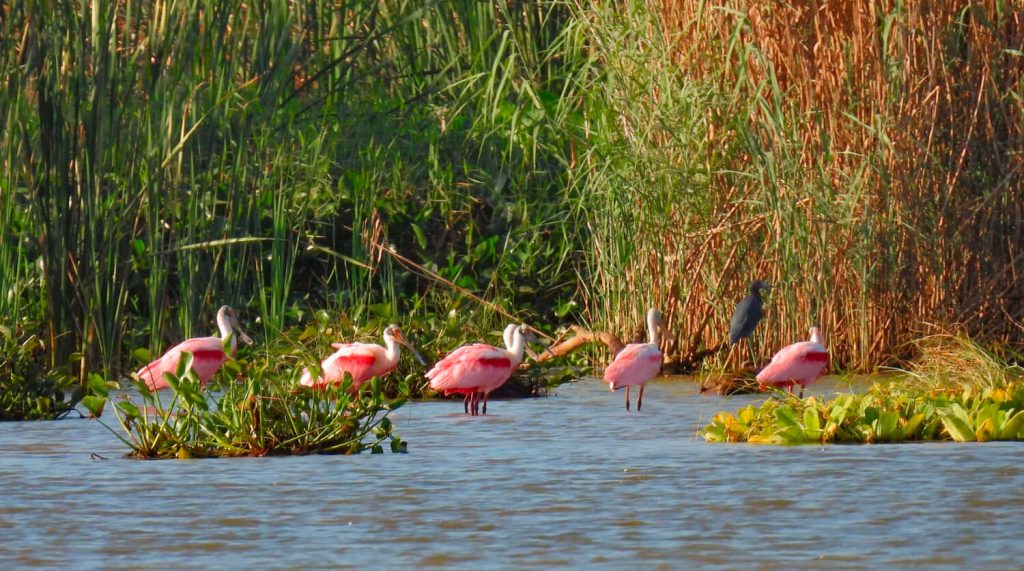
The refuge sits where the Polochic River flows into Lake Izabal, near El Estor. It is a Ramsar wetland of international importance, co-managed by Fundación Defensores de la Naturaleza and CONAP, and covers more than 20,000 hectares of flooded forest, wetlands, river channels, and aquatic habitat. This is not just a manatee place. It is one of the most important wetland ecosystems in Guatemala.
SIC describes Bocas del Polochic as a key feeding and resting area for the manatee, with conditions that support calves as well. The refuge also has birds, howler monkeys, river otters, flooded forest, and a completely different wetland feel from the main Río Dulce route. Again, I would not promise sightings, but if a traveler asked me where the odds are best, this is the answer I would give.
The tradeoff is logistics. You usually need to base yourself near El Estor or add a longer day from Río Dulce, then continue by boat into the refuge. This is not the easiest option if you only have one quick day on the river. But if you care about wildlife and are already planning Lake Izabal, El Estor, Finca El Paraíso, El Boquerón, or Cañón de Seacacar, Bocas del Polochic can make much more sense.
✨ WHAT I WOULD CHOOSE
If you only have a Río Dulce boat day, choose Chocón Machacas because it fits the route more easily. If seeing a manatee is a real priority and you have time to go toward El Estor, I would choose Bocas del Polochic. It is less convenient, but it is the stronger wildlife habitat choice.
Bocas del Polochic also connects beautifully with community tourism. Some visits involve local boatmen and communities around the refuge, which means your spending can stay closer to the people who live beside this wetland. That is the kind of travel decision I care about, and it is one reason I would consider Bocas del Polochic for travelers who want more than the easiest route.
CHOOSING THE RIGHT TRIP
Chocón Machacas vs Bocas del Polochic: Which Manatee Habitat Boat Trip Should You Choose?
This is the real planning question. If you are already staying in Río Dulce and only have one boat day, Chocón Machacas is the easier option. It fits naturally into the Río Dulce route, especially if you are also visiting Livingston, the river canyon, hot springs, or jungle lodges along the water.
If seeing a manatee is one of your main wildlife goals in Guatemala, Bocas del Polochic is the place I would take more seriously. It requires more effort because you need to go toward El Estor and then continue by boat into the refuge, but it is the stronger habitat choice and the one local conservation sources describe as the most important manatee area in Guatemala.
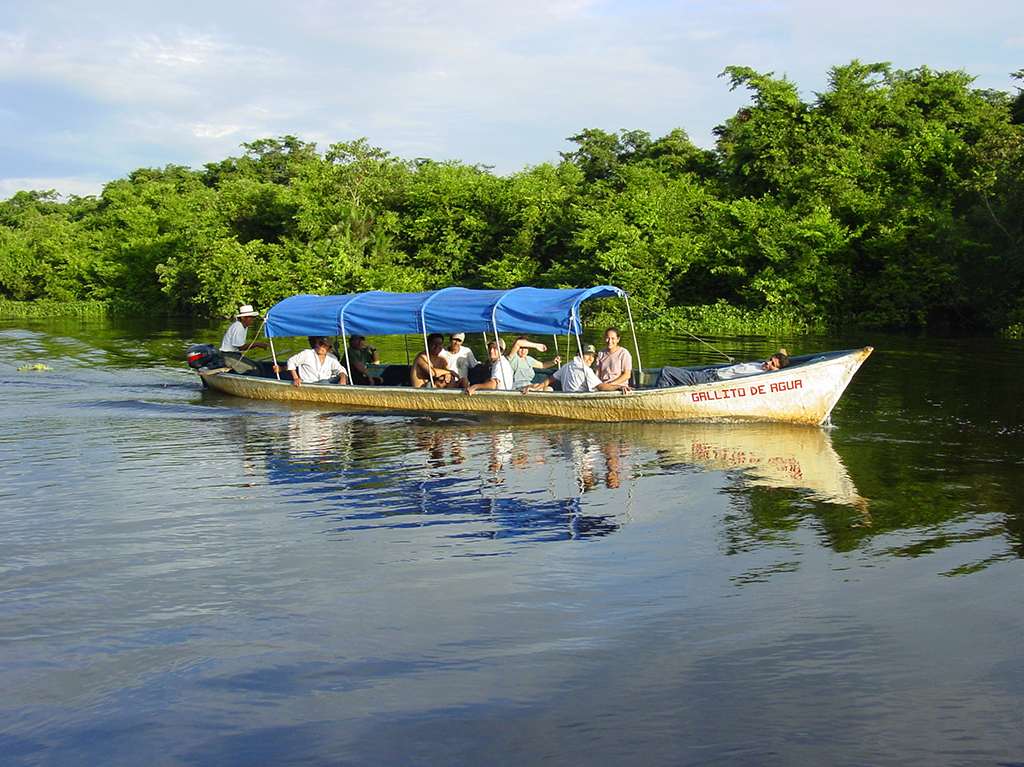
I would not choose between them only by looking at a map. I would choose based on your route. If you are already doing Río Dulce and Livingston, choose Chocón Machacas unless you have extra time. If you are adding Lake Izabal, El Estor, Finca El Paraíso, El Boquerón, or Cañón de Seacacar, then Bocas del Polochic starts to make much more sense.
✨ WHAT I WOULD DO
For most first-time Izabal trips, I would keep Chocón Machacas as part of a Río Dulce boat day. For travelers who really care about wildlife, birds, wetlands, and conservation, I would build a separate El Estor day around Bocas del Polochic instead.
BOOKING THIS
How to Book a Responsible Manatee Habitat Boat Trip in Río Dulce or Bocas del Polochic
Most manatee trips in Guatemala are not packaged like big wildlife tours in Costa Rica or Belize. They are usually arranged through river hotels, local boat captains, community contacts, conservation partners, or small Guatemalan operators. That can feel confusing when you are planning from abroad, but it is also why choosing the right guide matters so much.
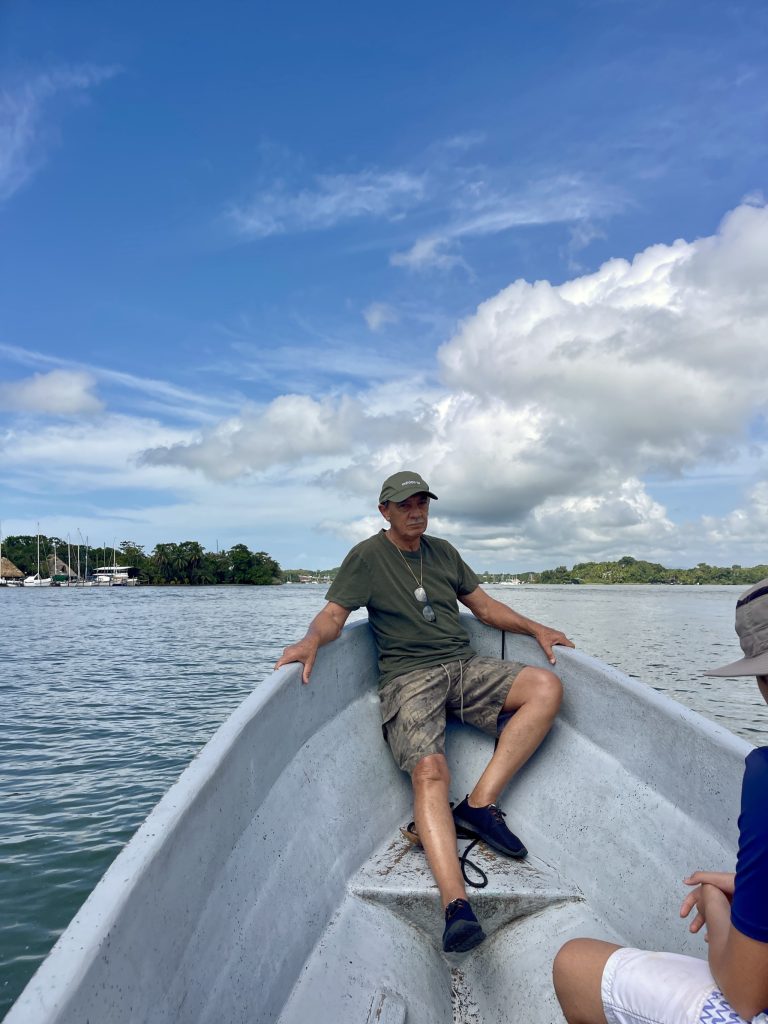
For Chocón Machacas, ask your Río Dulce hotel whether the boat trip includes an actual stop inside or near the biotope, or whether the boat only passes through the general area. Those are not the same thing. A real manatee habitat visit should move slowly, avoid loud music, respect distance, and give time to watch the water quietly.
Hacienda Tijax is one of the more practical Río Dulce bases for arranging boat trips because it has its own marina and works with guests and outside visitors. Finca Tatín is another good option if you want to stay deeper along the river and closer to the Chocón Machacas side of the route. If you are already staying at a river lodge, ask them directly before booking a generic online tour.
For Bocas del Polochic, I would plan more carefully. This is not the trip I would leave for the last minute. You usually need to base yourself near El Estor, coordinate a boat into the refuge, and ask whether the visit involves local boatmen or community partners. In this part of Guatemala, the best wildlife day is often the one that is arranged quietly and locally, not the one with the most dramatic sales copy online.
💡 If you only remember one tip: go early, stay quiet, and do not ask the boat driver to chase anything. Manatees that feel pursued usually dive and disappear. The guides who give you the best chance are the ones who cut the engine, drift, and let the animal decide whether to surface again.
Want This Done Right?
Let’s Plan the Nature Day, Not Just the Sighting
A manatee sighting in Guatemala is never guaranteed, but the wetlands, river, birds, lagoons, and nearby stops can still make this one of the most meaningful nature days in Izabal. I can help you decide whether Chocón Machacas or Bocas del Polochic fits your route, and how to build the day around more than just luck.
BASE YOURSELF HERE
Where to Stay for Manatee Habitat Boat Trips in Río Dulce, Chocón Machacas, and Bocas del Polochic
Where you stay depends on which manatee habitat you are trying to visit. If you are focusing on Chocón Machacas, stay along Río Dulce or deeper on the river. If Bocas del Polochic is the goal, stay closer to El Estor or build it into a longer Lake Izabal day.
|
⭐ CLOSE TO CHOCÓN MACHACAS Hotel Finca Tatín A boat-access jungle lodge between Río Dulce and Livingston, useful if you want to stay closer to the quieter middle stretch of the river and the Chocón Machacas side of the route. |
⭐ EASY RÍO DULCE LOGISTICS Hacienda Tijax A practical Río Dulce base near Fronteras with marina access, jungle trails, and boat logistics that make it easier to arrange a Chocón Machacas or Río Dulce nature day. |
For Bocas del Polochic, I would not automatically stay on the Río Dulce side unless you are comfortable with a longer day. El Estor is the more logical base if your main goal is the Polochic wetland. From there, you can coordinate a boat into the refuge and combine the trip with Finca El Paraíso, El Boquerón, or Cañón de Seacacar if you have enough time.
There is also a biological station in the Bocas del Polochic refuge area, but I would treat that as something to arrange directly through conservation or local contacts rather than as a normal hotel booking. If you want that kind of deeper wildlife stay, plan it ahead and be flexible.
A rental car can make sense for reaching Río Dulce, El Estor, Finca El Paraíso, El Boquerón, Cañón de Seacacar, Castillo de San Felipe, or Quiriguá if you are building this into a larger Izabal route. But it will not help once the manatee habitat trip starts. The actual wildlife experience happens by boat, so think of the car as transportation to the starting point, not the tour itself.

Already Planning Río Dulce or El Estor?
Let’s Fit the Wetlands Into the Right Day
Between Chocón Machacas, Bocas del Polochic, Finca El Paraíso, El Boquerón, Seacacar, Castillo de San Felipe, and Quiriguá, there is a smarter order to see this part of Guatemala without wasting time backtracking.
QUESTIONS PEOPLE ASK
Manatees in Guatemala: Common Questions
Are there manatees in Guatemala?
Yes. Guatemala has Antillean manatees, a subspecies of the West Indian manatee, in the Caribbean watershed around Lake Izabal, Río Dulce, Chocón Machacas, Bocas del Polochic, Río Sarstún, Punta de Manabique, and nearby coastal wetlands. They are rare and difficult to see, but they are still present in Guatemala.
Where is the best place to see manatees in Guatemala?
Bocas del Polochic, near El Estor on Lake Izabal, is the best place to look if manatees are your main goal. Chocón Machacas is easier to visit from Río Dulce and works better for travelers who want a more convenient boat-day stop through manatee habitat.
Can you guarantee a manatee sighting in Guatemala?
No. Any tour that promises guaranteed manatee sightings in Guatemala is overpromising. A responsible manatee trip should be described as a boat tour through manatee habitat with a chance of seeing one, not a guaranteed encounter.
Is a manatee habitat boat trip worth it if you do not see manatees?
Yes, if you go with the right expectations. The value is not only the possible manatee sighting. It is the quiet water, wetlands, birds, mangroves, flooded forest, local boatmen, and the chance to understand one of Guatemala’s most fragile Caribbean ecosystems.
Is Chocón Machacas worth visiting if you do not see manatees?
Yes, if you enjoy quiet water, rainforest, birds, cayuco routes, and protected wetland habitat. I would not visit only for a guaranteed manatee photo, but I do think Chocón Machacas can be worthwhile as part of a Río Dulce nature day.
Can you swim in Río Dulce?
In some places, yes, but water quality and current vary a lot from one stretch to another. The calmer lagoons and protected areas can feel very different from the open river near town. Ask your boat captain or hotel where they would personally swim that day instead of assuming the whole river is the same.
Why are Guatemala’s manatees endangered?
Guatemala’s manatees are threatened by illegal hunting, accidental entanglement in fishing nets, collisions with boats, habitat loss, pollution, sedimentation, and their naturally slow reproduction rate. A small population like this cannot recover quickly when animals are lost.
What should a responsible manatee tour look like?
A responsible manatee tour should move slowly, keep distance, avoid chasing animals, turn down noise, and give the manatee space to surface or disappear. The best guides do not force a sighting. They read the water, protect the animal, and manage expectations honestly.
RELATED READING
Keep Exploring Río Dulce, Lake Izabal, and Izabal Travel
Guatemala’s Quietest Conservation Story
Let’s Plan the Real Version of Izabal
I plan Guatemala trips for travelers who want the honest version of a place, including fragile wildlife experiences like this one. Tell me your dates, how much time you have, and what matters most, and I’ll help you build a route that feels realistic, respectful, and worth the effort.
Nobody can promise you a manatee in Guatemala. But the quiet water where they still live is worth protecting, and worth seeing with the right expectations.
Through her writing, Paula helps travelers discover Guatemala beyond the typical tourist route with practical advice, local recommendations, and authentic experiences that connect visitors with the country’s people, culture, and traditions.
Planning a trip to Guatemala? Paula offers personalized Guatemala itinerary planning and trip consultation services tailored to your interests, travel style, and budget. Contact her at [email protected] to learn more.
- San Lucas Tolimán Guatemala: Lake Atitlán’s Best-Kept Secret - September 24, 2026
- Hotel Tolimán Lake Atitlán: A Special Stay in San Lucas Tolimán - September 24, 2026
- Guatemala Dreams in San Lucas Tolimán: A Boutique Stay on Lake Atitlán - September 23, 2026

