
Disclosure: This article contains affiliate links. If you book or buy something through one of my links, I may earn a small commission at no extra cost to you. I only recommend places and services I have personally used or vetted.
Castillo de San Felipe de Lara is a Spanish colonial fort on Río Dulce, Guatemala, right where Lake Izabal narrows into the river. This guide covers the history of Castillo de San Felipe, what to see inside the fort, current hours and entrance fees, how to get there from Río Dulce by car, colectivo, or boat, and how to add it to a longer Izabal itinerary with Livingston, Finca El Paraíso, or the Río Dulce canyon.
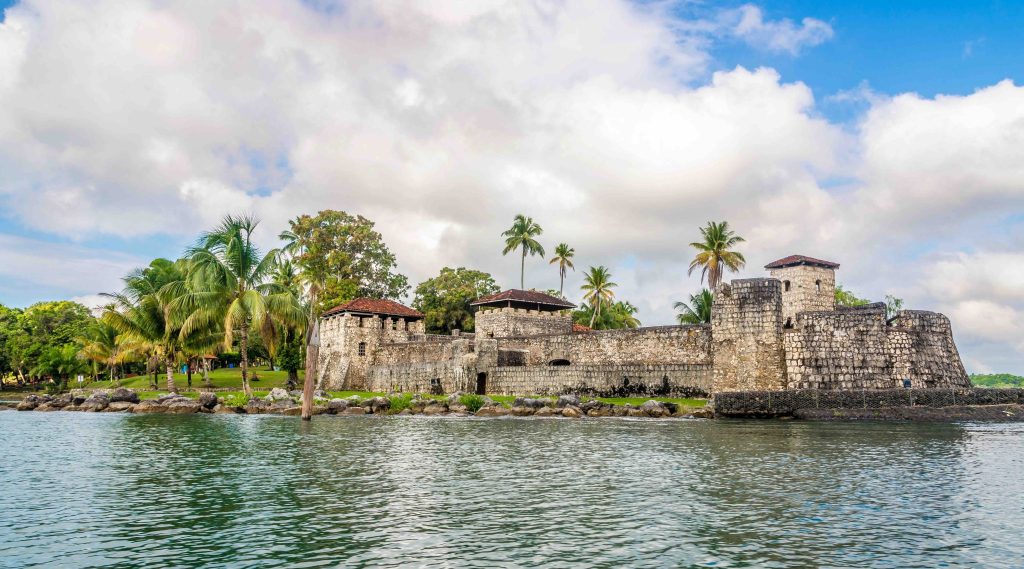
Most travelers see Castillo de San Felipe for a few minutes from a moving boat on their way to Livingston. I get why that happens. The river ride is beautiful, the boat slows down, everyone takes a photo, and then the trip continues. But I think the fort deserves more than a drive-by moment, especially if you are already spending time in Río Dulce.
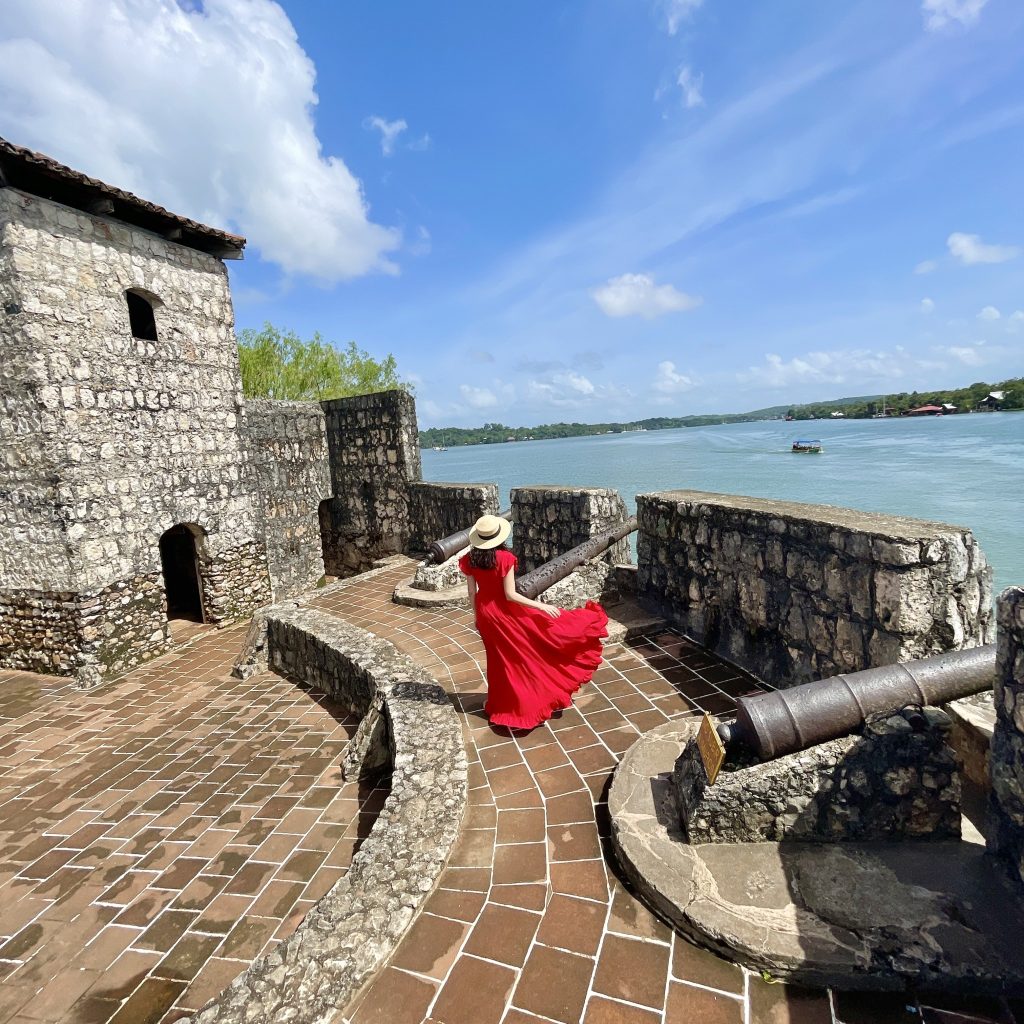
My family stops here almost every time we pass through this part of Izabal, and I still notice something different each time: the cannons facing the water, the narrow passages, the view toward the lake, or some small detail that makes the whole pirate-defense story feel less like a schoolbook paragraph and more like something that actually happened right here.
I would not plan your entire Río Dulce day around the Castillo alone, but I would absolutely include it if you like history, are traveling with kids, or want an easy stop that helps you understand why this river mattered so much during colonial times. If you want help fitting the fort into a fuller Izabal route, that is the kind of planning I help travelers with directly.
This guide is for
✓ Travelers visiting Río Dulce who want more than a quick boat photo
✓ Families and history lovers looking for an easy stop in Izabal
✓ Anyone curious why there is a Spanish fort in the middle of this jungle-and-river landscape
HISTORY
Why There Is a Spanish Fort on the Río Dulce
The short version is this: the Río Dulce was once one of the most important routes for moving goods between Guatemala and Spain. Merchandise came through the Caribbean, moved into Lake Izabal, and then continued inland. That made this narrow point between the lake and river valuable, and anything valuable on the Caribbean coast during colonial times attracted pirates.
Spanish authorities had been worried about attacks in the old Golfo Dulce area since the late 1500s. Early defenses were much simpler than the stone fort you see today. There was a tower or early fortification here before pirates destroyed it in 1604, and Captain Pedro de Bustamante later rebuilt the site, which is why older references sometimes call it Fuerte Bustamante.
The Castillo took a more recognizable form in the mid-1600s, when the defenses were expanded and redesigned. Antonio de Lara y Mogrovejo was connected to the new design and to the name we still use today: Castillo de San Felipe de Lara. The “San Felipe” part honors the Spanish king, and “de Lara” keeps the name of the official tied to the fort’s redesign.
One detail I always find fascinating is how practical the fort was. This was not built to look romantic in photos. It was built to control the river. At night, a heavy chain could be stretched across the water to stop boats from passing. The fort also served as a military post, a customs point, storage space for goods, and later as a prison, which explains why walking through it feels more like moving through a small defensive maze than visiting a single building.
Pirates attacked again and again. In 1686, they burned the fort, which still had palm-thatched roofing in parts, and the structure had to be rebuilt under Andrés Ortiz de Urbina. Later, in the late 1600s and 1700s, the defenses were improved again with stronger walls, artillery, and additional batteries. By the 19th century, the fort had lost much of its strategic importance. Trade routes changed, other ports became more important, and the Castillo eventually fell into ruin.
What you walk through today is a restored version of the colonial fort. In 1955, architect Francisco Ferrús Roig led a reconstruction using historical research and plans from Spain’s Archivo General de Indias. So yes, the fort is restored, not untouched. But for me, that does not make it less interesting. It makes it easier to understand the shape and purpose of a place that could easily have disappeared into the jungle.
💡 Local timing tip: If your dates line up, ask locally about the Feria de San Felipe, usually celebrated from April 30 to May 4. I would not plan an entire trip around it unless you confirm the year’s schedule, but if you are already in Río Dulce during those dates, it can add a very local layer to the visit.
WHAT TO SEE
What to See Inside Castillo de San Felipe
Castillo de San Felipe is not huge, and that is part of what makes it such an easy stop. You can walk through the main fort in under an hour, but I would not rush it too much. The fun is in the small details: the thick stone walls, the narrow passages, the cannons facing the water, the raised viewpoints, and the way the whole structure is positioned to watch the river.
The layout can feel a little confusing at first, but in a good way. Hallways open into small rooms, stairs lead to lookout points, and the views keep reminding you why the Spanish chose this exact spot. From the walls, you can see the water, the vegetation, and the narrow route boats still use today between Lake Izabal and Río Dulce.
If local guides are available at the entrance, I think it is worth hiring one, especially if you are visiting with kids or you like history. Without context, it is easy to walk through, take a few photos, and leave. With someone pointing things out, the fort makes more sense: where prisoners were kept, how the cannons were positioned, how goods moved through the area, and why this river was worth defending.
The grounds around the fort are also part of the appeal. There are open-air areas, walking paths, picnic spots, shady places to rest, and views toward the water. Recent local coverage also mentions new photo spots and recreational areas, which makes the Castillo feel more family-friendly than it used to. I would treat it as a short historical stop that can easily stretch into a relaxed couple of hours if you are not in a hurry.
✨ WHAT I WOULD DO
I would visit early in the day or later in the afternoon if you can. The fort has open areas with sun, and Izabal is hot and humid. Give yourself time to walk the walls, take photos from the water-facing side, and then sit for a few minutes instead of treating it like a quick checklist stop.
PLANNING
How to Visit Castillo de San Felipe
Castillo de San Felipe is usually listed as open daily from 8:00 AM to 4:00 PM, though some visitor information still shows slightly different closing times. I would confirm the current schedule before building your whole day around it, especially during holidays, local events, or rainy weather.
Entrance fees also vary depending on the source and year. Older official listings show lower prices, while more recent visitor information has shown higher rates for foreign visitors. I would bring cash, ask clearly at the entrance, and not be surprised if the price has changed from what you saw online. Card payment may be available, but this is Izabal, so I would still have cash as a backup.
By Car
By car, the Castillo is an easy stop from Río Dulce town, usually around 10 to 15 minutes depending on traffic and where you are staying. There is parking near the entrance, and this is the simplest option if you are already road-tripping through Izabal or combining the fort with Finca El Paraíso, El Boquerón, or other stops around Lake Izabal.
By Colectivo or Tuk-Tuk
If you are staying in Río Dulce town and do not have a car, ask locally about colectivos or tuk-tuks heading toward the Castillo. It is a short ride and usually inexpensive, but I would confirm the price before getting in. This is one of the easiest ways to visit if you only want to see the fort and return to town.
By Boat
You can also see Castillo de San Felipe by boat, and many Río Dulce to Livingston lancha routes pass right by it. This is the most scenic way to understand where the fort sits, because from the water you can see exactly why this narrow point mattered so much. The only downside is that many shared boats slow down for photos but do not always give you enough time to actually go inside.
If you want the full river experience, ask about organized collective boats from the Castillo dock or through ASOLCAST, which may combine the fort area with Isla de Aves, mangroves, hot spring stops, the canyon, and Livingston. Schedules and prices can change, so I would message ahead instead of assuming the last rate you found online is still current. The contact information I have for ASOLCAST is WhatsApp 5909-8198 and email [email protected].
For families or small groups, a private lancha can make more sense if you want to stop where you want, take your time at the Castillo, and not feel like you are being moved along by the schedule. It costs more, but in this part of Guatemala, flexibility can make the day feel much easier.
📌 Worth knowing: If you are only passing through Río Dulce, the Castillo can be a quick stop. If you have more time, it pairs naturally with a boat ride through the canyon, lunch by the water, or a longer Izabal day that includes Finca El Paraíso, El Boquerón, or Livingston.

Building a Río Dulce Day?
The Castillo Is Easy to Add When the Route Makes Sense
Castillo de San Felipe can be a quick history stop, part of a river day, or the beginning of a bigger Izabal route. I help travelers decide what is worth adding, what to skip, and how to keep the day from feeling rushed.
QUESTIONS PEOPLE ASK
Castillo de San Felipe: Common Questions
Is Castillo de San Felipe worth visiting?
Yes, especially if you are already in Río Dulce or traveling through Izabal. I would not drive across Guatemala only for the fort, but as part of a Río Dulce itinerary, it is an easy, interesting stop with history, water views, and enough space for families to slow down for a bit.
How much does admission to Castillo de San Felipe cost?
Admission prices vary depending on the source and year. Older listings show lower rates, while more recent visitor information has shown higher prices for foreign visitors. I would confirm the current entrance fee at the ticket office and bring cash just in case.
What are the hours for Castillo de San Felipe?
Current local listings commonly show Castillo de San Felipe open daily from 8:00 AM to 4:00 PM, though some older travel pages list different closing times. I would confirm before going, especially if you plan to arrive late in the afternoon.
What is the history of Castillo de San Felipe?
Castillo de San Felipe was built and expanded during the Spanish colonial period to protect the route between Lake Izabal and Río Dulce from pirate attacks. It later served as a military post, customs point, storage site, and prison before falling into ruin and being reconstructed in the 1950s.
Where is Castillo de San Felipe located?
Castillo de San Felipe is located in Izabal, Guatemala, at the point where Lake Izabal narrows into the Río Dulce. It is only a short drive from Río Dulce town and is also visible from many boat routes heading toward Livingston.
How do you get to Castillo de San Felipe from Río Dulce?
You can get there by car, tuk-tuk, colectivo, or boat. Driving from Río Dulce town usually takes around 10 to 15 minutes. Many boats traveling the Río Dulce route also pass by the Castillo, but not all give you time to go inside.
Can you swim at Castillo de San Felipe?
There is a recreational area around the grounds where visitors sometimes swim or cool off, but I would check current conditions before getting in the water. I would come mainly for the fort, the history, and the views, and treat swimming as a bonus if it feels safe and allowed that day.
KEEP READING
More Río Dulce and Izabal Travel Guides
|
COMMUNITY TOURISM Cañón de Seacacar Natural Reserve in Guatemala: A Complete Guide |
|
More Guatemala Travel Guides
|
MAYA RUINS |
|
Want Help With the Rest of Izabal?
There Is a Lot Worth Slowing Down For Out Here
Between the fort, the river, the hot springs, the canyon, and the coast, this part of Guatemala rewards travelers who do not rush through it. I can help you put the stops in an order that feels natural.
Most people pass the Castillo from the water. I think it is worth stepping inside and giving the walls a little time to tell the story.

Through her writing, Paula helps travelers discover Guatemala beyond the typical tourist route with practical advice, local recommendations, and authentic experiences that connect visitors with the country’s people, culture, and traditions.
Planning a trip to Guatemala? Paula offers personalized Guatemala itinerary planning and trip consultation services tailored to your interests, travel style, and budget. Contact her at [email protected] to learn more.
- San Lucas Tolimán Guatemala: Lake Atitlán’s Best-Kept Secret - September 24, 2026
- Hotel Tolimán Lake Atitlán: A Special Stay in San Lucas Tolimán - September 24, 2026
- Guatemala Dreams in San Lucas Tolimán: A Boutique Stay on Lake Atitlán - September 23, 2026

