
Disclosure: This article contains affiliate links. If you book or buy something through one of my links, I may earn a small commission at no extra cost to you. I only recommend places and services I have personally used or vetted.
Reserva Natural Cañón Seacacar is a Q’eqchi’ Maya community-run nature reserve near El Estor, Izabal, where you can hike through the Sierra de Santa Cruz, float down the Río Sauce on a tubing tour, visit natural pools and miradores, explore a ceremonial cave, take a cayuco route from Tío Polo, and stay overnight in simple cabins, dorms, or camping areas. This guide covers what to do at Cañón Seacacar, how to get there from Río Dulce or El Estor, what it costs, where to stay, what to expect from the restaurant, and how this community tourism project supports education and conservation in Seacacar.
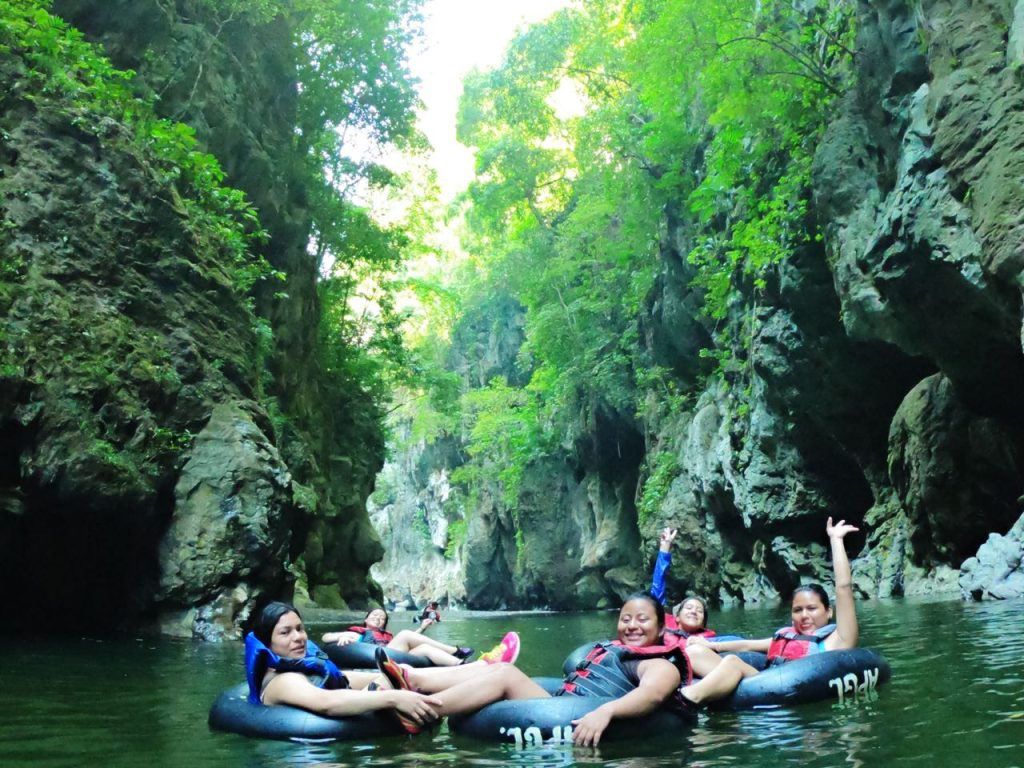
This is exactly the kind of place I wish more travelers knew about before they planned Izabal. Most people hear about El Boquerón first, because it is easier to explain: canyon, cayuco, quick stop. Finca El Paraíso is also easier to understand: hot spring waterfall, lake, restaurant. Seacacar takes a little more effort, but that is also what makes it special.
You come for the canyon, the river, the tubing, the hiking, and those views over Lake Izabal and the Sierra de Santa Cruz. But the reason I think Seacacar deserves more attention is because of who runs it. This is not just a pretty nature stop beside a village. It is a tourism project tied to the Q’eqchi’ Maya community of Seacacar, with profits connected to education, local jobs, reforestation, and long-term community development.
I would not treat Seacacar like a quick roadside photo stop. If you only have an hour, go to El Boquerón. If you have time for a real nature experience, want your money to support a community-run project, and do not mind a little extra planning, Seacacar is the place I would make room for. If you want help fitting it into a longer Izabal route with Río Dulce, El Boquerón, Finca El Paraíso, or Livingston, that is exactly the kind of planning I help travelers with directly.
This guide is for
✓ Travelers looking for community tourism in Guatemala
✓ Anyone adding El Boquerón or Finca El Paraíso to an Izabal itinerary
✓ Hikers, families, and tubing fans who want a more local nature experience near El Estor
ORIENTATION
Reserva Natural Cañón Seacacar: Community Tourism Near El Estor, Izabal
Reserva Natural Cañón Seacacar sits in the Sierra de Santa Cruz area of Izabal, near El Estor and close to El Boquerón. The reserve is reached from the road between Río Dulce and El Estor, with the main vehicle access turning off near the Finca Recreo crossing around kilometer 312. From that turnoff, you continue about 4.3 kilometers on a dirt road to reach the tourist center.
There is also a separate access point at Balneario Boquerón “Tío Polo,” where you can enter by trail or coordinate a cayuco route toward the reserve. This is important because Seacacar is not one of those places where you just show up without thinking about logistics. There is no cell signal or internet once you are inside the forest, the property runs on solar power, and reservations really do matter.
What makes Seacacar different from nearby attractions is the model behind it. The Q’eqchi’ Maya community of Seacacar implements and supervises the project through a registered nonprofit called Asociación Civil No Lucrativa Aaqakar, with major initiatives presented to a locally elected Comité before moving forward. That is very different from visiting a private attraction where the community may be nearby but not really part of the decisions.
✨ LOCAL TIP
I would decide first what kind of day you want. If you want a quick canyon stop with very little planning, El Boquerón is easier. If you want more time in nature and want your visit to support a community-run project, Seacacar is the one I would build more time around.
COMMUNITY TOURISM
How Cañón Seacacar Supports the Q’eqchi’ Maya Community
This is the part of Seacacar that makes me pay attention. By written agreement, tourism income is used for community priorities, especially education. That includes teacher salaries and food for boarding students from other villages along the Río Sauce watershed. So your entrance fee, tubing tour, meal, or overnight stay is connected to something much bigger than a nice afternoon in the forest.
The project’s story goes back to Paul Heesaker, a kayaker who first saw this stretch of the Río Sauce during an exploratory kayaking trip in 1995 and later returned to Guatemala with his wife Catherine. The original tourism center was funded through that outside support, but the project is tied to the Seacacar community, with local people working at the center, participating through their association, and using tourism as one way to create income while protecting the forest and watershed around them.
Ak’ Tenamit also provides technical and administrative support behind the scenes, which makes sense if you know this part of Guatemala. Ak’ Tenamit has long worked with Q’eqchi’ Maya communities along the Río Dulce area, especially around education, tourism, and community development.
That is why I would not describe Seacacar as just another “hidden gem.” It is more useful, and more honest, to call it what it is: a community tourism project in Izabal where the canyon is beautiful, but the model behind the canyon is just as important.
💡 Why this matters: Guatemala has many beautiful nature stops, but not all of them keep tourism income close to the people who live there. Seacacar is worth considering because the canyon is beautiful and because the project gives the community a stronger reason to protect the river, forest, and future around it.
THE SCHOOL
Where the Tourism Money Goes: Education in Seacacar
In 2014, the community opened its first basic-level school in Seacacar, modeled on the Ak’ Tenamit curriculum. The school serves young people from Seacacar and nearby communities, including boarding students from villages too far away to commute every day. That matters in rural Guatemala, where distance can be one of the biggest barriers to continuing school.
Once students finish there, they can continue at Ak’ Tenamit and choose a path connected to sustainable tourism or community development. I love this piece of the story because it means tourism is not just something happening around the community. It can become something young people from the community are trained to lead, manage, and shape themselves.
WHAT TO DO
Things to Do at Cañón Seacacar: Tubing, Hiking, Cayuco Tours, and Natural Pools
The activity most people hear about first is tubing on the Río Sauce. You float through the canyon on an inner tube, moving through a river carved by stone walls and surrounded by dense forest. The tubing package is listed at Q100 and includes a life jacket, tube, waterproof bag, and a local guide. I would not skip the guide here; this is a real river, not a lazy river at a water park.
Hiking is the other reason I would come. The trails pass through warm subtropical forest, natural springs that run strongest in winter, and a Maya ceremonial cave where Mayejak is still practiced. The miradores are the payoff, with views toward Lake Izabal, the Sierra de Santa Cruz, and the dramatic rock walls of the Río Sauce canyon.
There are also natural pools where you can cool off, rest areas, and a cayuco route that starts from Balneario Boquerón “Tío Polo” and ends with a one-kilometer walk into the tourist center. That cayuco tour needs to be coordinated ahead of time, which is exactly the kind of detail I would not leave for the last minute in this part of Izabal.
The Sierra de Santa Cruz also has real biodiversity behind the scenery. The reserve’s own information lists 43 identified mammal species in the area, including howler monkeys, kinkajous, jaguar, puma, margay, white-tailed deer, and white-lipped peccary, plus 178 recorded bird species and 20 amphibian species. I would not promise wildlife sightings, but it gives you a sense of how important this forest is.
⚠ SEASONAL WATER SAFETY NOTE
During rainy season, when the Río Sauce is high, tubing and cayuco tours may be suspended for safety. If tubing is the main reason you want to visit Cañón Seacacar, contact the reserve before you go and ask what is possible that week.
✨ WHAT I WOULD DO
I would not squeeze Seacacar into the same kind of quick stop as El Boquerón. Give yourself enough time for at least one real activity, a meal, and some breathing room. If you only have an hour, you will probably leave feeling like you missed the point.
FOOD
Where to Eat at Cañón Seacacar: The Slow Food Restaurant by the River
The on-site restaurant overlooks the river and describes itself as a slow food restaurant, and they mean that very literally. Food is prepared when you order it. They do not keep meals pre-made, they do not use a microwave to reheat food, and they try to avoid packaged or canned ingredients with preservatives.
On busy days, the wait can be at least 40 minutes. I actually like that they are honest about it. This is not the place to arrive starving and impatient. Order early, sit by the river, ask for a cold drink, and let the kitchen work at its own pace. That is part of the experience here.
Because the property runs on solar power, the kitchen cannot store large amounts of refrigerated food for long periods. If you are coming with a group, reserve a day ahead so they can prepare properly. It is a small thing to do, but it makes a big difference for the people receiving you.
🍽️ Food tip: Do not treat lunch at Seacacar like a quick stop between activities. Order before you are desperate, build in time, and enjoy the fact that this is a community-run restaurant beside the river, not a fast-food counter.
WHERE TO STAY
Where to Stay at Reserva Cañón Seacacar: Cabins, Dorms, and Camping
You can visit Seacacar as a day trip, but staying overnight changes the feeling of the place. This is not a polished hotel with identical rooms and a front desk that feels separate from the community. It is a small, solar-powered nature stay with distinct rooms, river views, simple comforts, and immediate access to trails, natural pools, and the forest.
Mico León is a wooden cabin with a private bathroom and its own furnished deck, best for two people but able to stretch up to four. It is listed at Q280 for a couple, Q75 for each extra person, or Q200 for one person.
Mono and Tucán are two second-floor rooms with a shared bathroom and views toward the Río Sauce. These are listed at Q250 for a couple, Q75 per extra person up to four people, or Q200 for one person.
Guacamaya and Iguana are the step up, each with a private bathroom and river view. Guacamaya is upstairs with a small reading or resting area nearby, while Iguana is on the ground floor. Both are listed at Q325 for a couple only, or Q250 for one person.
For groups, Dormitorio Jabalí is a furnished bunkhouse with space for up to 10 people and three shared bathrooms. It is listed at Q100 per person if sharing the space with other guests, or Q500 to reserve the whole bungalow privately.
Camping is also available. You can bring your own tent for Q25 per person or rent one of theirs for Q50 per person. The reserve lists three large tents with capacity for up to 18 people total, along with separate bathrooms and showers for men and women. Camping guests can still use the pools, trails, and miradores, though some activities have an extra cost.
📌 Worth knowing: Seacacar also hosts weddings, retreats, birthdays, quinceañeras, and photo sessions, but those need more planning. The reserve recommends reaching out well in advance, especially if you are hoping to use the space for a special event rather than a normal visit.
PLANNING
How to Get to Reserva Natural Cañón Seacacar From Río Dulce or El Estor
There are two main ways to reach Reserva Natural Cañón Seacacar, and this is one of the most important things to understand before you go. You can drive directly to the tourist center through the Finca Recreo turnoff, or you can enter from Balneario Boquerón “Tío Polo” by trail or cayuco. Both routes are valid, but they feel very different.
Direct by Vehicle Through the Finca Recreo Turnoff
If you are driving from Río Dulce, cross the Río Dulce bridge and continue toward El Estor. Around kilometer 312, before reaching El Estor’s town center, look for the Finca Recreo crossing and the signs for Reserva Natural Cañón Seacacar. From that turnoff, the reserve is about 4.3 kilometers away, usually around 15 minutes on a dirt road.
The road has improved over the years, and the reserve says regular cars can usually make it without four-wheel drive. Still, I would remember that this is Izabal, and dirt roads can change quickly after heavy rain. If you are in a very low car or traveling during rainy season, I would ask the reserve about current road conditions before committing to that route.
By Public Transport Between Río Dulce and El Estor
If you are not driving, public transport runs between Río Dulce and El Estor during the day. Ask to be dropped near the Finca Recreo crossing or confirm with the reserve which drop-off point makes the most sense for the route you want to take. I would not assume the driver knows exactly where you are going unless you say “Reserva Cañón Seacacar” clearly and show the location on your phone before you lose signal.
By Trail or Cayuco From Balneario Boquerón “Tío Polo”
The second option is to enter through the Tío Polo reception area near El Boquerón. From there, you can walk into Seacacar on a 2.5-kilometer trail or arrange the cayuco route. The trail is not extremely long, but the reserve is clear that you should be in decent health to enjoy it. This is not the option I would choose if someone in your group struggles with heat, uneven ground, or carrying bags.
One detail I love because it is exactly the kind of thing that matters on the ground: if you are coming from Río Dulce, you cross the bridge at El Boquerón to reach the Tío Polo entrance. If you are coming from El Estor, the entrance is before that bridge. If you are arriving with luggage, the reserve can help arrange a guide to carry bags on the trail for a Q50 tip.
The cayuco option is especially useful if you want the arrival itself to feel like part of the experience, not just transportation. But I would coordinate it ahead of time. River conditions, staffing, and timing matter here, and this is not the place where I would show up late in the day hoping everything just works out.
📌 Worth knowing: Once you are inside the forest, do not count on cell signal or internet. Make your reservation before you go, screenshot directions, and confirm your route, arrival time, meals, and activities in advance. The reserve asks for time to respond, so I would not leave this for the night before if you can avoid it.
COSTS
Reserva Cañón Seacacar Prices: Entrance, Tubing, Cayuco, Parking, and Discounts
General day entrance is listed at Q30 per person and includes access to the natural pools, trails, miradores, ceremonial cave, and rest areas. Tubing costs Q100 per person and includes the tube, life jacket, waterproof bag, and local guide. Since prices can change, I would still confirm the current rate when you book, but these are the published prices I would use for planning.
There are also combined route packages if you want to enter and exit in different ways. The reserve lists trail entry with tubing exit at Q120, entry from Tío Polo with a cayuco exit at Q100, and cayuco entry with tubing exit at Q140. I like that they offer these combinations because it lets you make the day feel more like a route through the landscape instead of just arriving, doing one activity, and leaving the same way.
Parking at the main reserve entrance is listed as free. If you use the Tío Polo entrance, parking is usually Q10, or Q50 for 24 hours if you are staying overnight, which includes vehicle security. Again, I would confirm when you reserve, especially if you are leaving a car overnight.
💡 Discounts worth knowing about: Visitors from El Estor may get a local discount, groups of 10 or more may qualify for a promotional rate, and children ages 0 to 9 get 50% off activities. When you book, include your group size, ages, arrival date and time, how you are getting there, and whether you need help arranging transport from El Estor.
You can reach the reserve directly through their official website, by WhatsApp at +502 3824 4481, or by email at [email protected]. I would book directly whenever possible, especially if you want meals, lodging, tubing, the cayuco route, or help with transport.
LOOKING AHEAD
Why Visiting Cañón Seacacar Helps Support Conservation in Izabal
One reason I like Seacacar is that it still feels like a young project with a future, not a finished attraction that exists only to sell tickets. The community has talked about growing the protected area, expanding trails, reforesting degraded land, supporting sustainable agriculture for nearby families, and bringing back wildlife that historically lived in this part of the forest.
That does not mean visitors should romanticize it. It is still a small community-run reserve with simple infrastructure, real logistics, and a setting that requires patience. But that is also what makes it feel meaningful. You are visiting a place that is still being shaped by the people who live there, not a polished attraction dropped into the landscape from the outside.
If you are pairing this with El Boquerón, which sits nearby, or want the honest contrast with the privately owned Finca El Paraíso, I would read those guides too. Together, these three stops tell a much fuller story of this corner of Izabal: canyon, river, hot springs, community tourism, and the very real question of who benefits when travelers show up.

Planning This Part of Izabal?
Seacacar, El Boquerón, and Finca El Paraíso Fit Together Well
This area can be a beautiful full day or an easy overnight if you plan it right. I can help you decide what to combine, when to slow down, and how to make the route feel realistic instead of rushed.
QUESTIONS PEOPLE ASK
Reserva Natural Cañón Seacacar: Common Questions
Where is Cañón Seacacar located?
Reserva Natural Cañón Seacacar is located near El Estor, Izabal, in the Sierra de Santa Cruz area along the Río Sauce. The main vehicle entrance is reached from the road between Río Dulce and El Estor, with a dirt-road turnoff near the Finca Recreo crossing.
Is Cañón Seacacar the same as El Boquerón?
No. They are close to each other and both involve the Río Sauce area, but they are different experiences. El Boquerón is a quicker canyon stop usually done by cayuco, while Seacacar is a community-run reserve with hiking, tubing, natural pools, lodging, restaurant service, and a stronger community tourism focus.
Who runs Reserva Natural Cañón Seacacar?
Reserva Natural Cañón Seacacar is tied to the Q’eqchi’ Maya community of Seacacar and is supervised through Asociación Civil No Lucrativa Aaqakar, with local decision-making and support from partners connected to community tourism and education in the Río Dulce region.
How much does it cost to visit Cañón Seacacar?
General day entrance is listed at Q30 per person and includes natural pools, trails, miradores, the ceremonial cave, and rest areas. Tubing is listed at Q100 per person, and combined route packages are usually listed between Q100 and Q140. Confirm current prices when you book.
How do you get to Cañón Seacacar?
You can drive directly to the reserve through the Finca Recreo turnoff on the highway between Río Dulce and El Estor, then continue about 4.3 kilometers on a dirt road. You can also enter from Balneario Boquerón “Tío Polo” by trail or cayuco, but that route should be coordinated ahead of time.
Can you stay overnight at Cañón Seacacar?
Yes. Seacacar has private rooms, a shared dorm-style bungalow, and camping. Room prices vary by option, and camping is listed at Q25 per person if you bring your own tent or Q50 per person if you rent one from the reserve.
Can you go tubing at Cañón Seacacar year-round?
Not always. During rainy season or when the Río Sauce is running high, tubing and cayuco tours may be suspended for safety. If tubing is the reason you want to visit, contact the reserve before you go and ask about current river conditions.
Is Cañón Seacacar worth visiting?
Yes, if you want more than a quick roadside attraction. I think Seacacar is worth visiting if you care about community tourism, want time in nature, and are willing to plan ahead. If you only want a very short canyon stop, El Boquerón is easier. If you want the deeper experience, Seacacar is the one I would choose.
KEEP READING
More Río Dulce and Izabal Travel Guides
More Guatemala Planning Guides
|
MAYA RUINS |
|
Want Help Finding Places Like This?
Seacacar Is the Kind of Stop Most Travelers Miss
If you want a Guatemala trip that includes community-run places, local nature stops, and routes that make sense on the ground, I can help you build that without turning your itinerary into a rushed checklist.
A canyon is beautiful on its own. A canyon that helps support the village beside it is worth paying attention to.
Through her writing, Paula helps travelers discover Guatemala beyond the typical tourist route with practical advice, local recommendations, and authentic experiences that connect visitors with the country’s people, culture, and traditions.
Planning a trip to Guatemala? Paula offers personalized Guatemala itinerary planning and trip consultation services tailored to your interests, travel style, and budget. Contact her at [email protected] to learn more.
- San Lucas Tolimán Guatemala: Lake Atitlán’s Best-Kept Secret - September 24, 2026
- Hotel Tolimán Lake Atitlán: A Special Stay in San Lucas Tolimán - September 24, 2026
- Guatemala Dreams in San Lucas Tolimán: A Boutique Stay on Lake Atitlán - September 23, 2026

