
The best eco lodges in Guatemala are the ones where sustainability is the whole reason the place exists, not a word added to the website later. I’m talking about private cloud forest reserves that protect quetzal habitat, lodges built by hand from local stone by the community that lives there, and working coffee and cacao farms where you sleep on the land that feeds you. This is my pick of the sustainable hotels and eco lodges across Guatemala that earn the label, sorted by what actually makes them special.
I’m Guatemalan, and “eco” gets stamped on a lot of properties here that have done little more than put a recycling bin in the lobby. So I held this list to a real standard. Every place below does at least one thing that truly matters: protects land, funds a community, runs on clean energy, or feeds you from its own soil. Most do several. These are the places I’d send my own family.
If you’d like me to build a whole trip around stays like these, that’s what I do. Fill out my Guatemala travel planning form and tell me how you like to travel.
This guide is for
✓ Travelers who want their hotel choice to do some good ✓ Nature lovers, birders, and families looking for real immersion ✓ Anyone tired of “eco” that turns out to be just a paint color
✨ HOW I CHOSE THESE
I scored every property on six things: conservation impact, benefit to the local community, local sourcing, cultural respect, real sustainable operations, and whether you actually learn something by staying there. A place didn’t need a perfect score to make the list, but it needed a real, verifiable story behind at least one of them. If a property’s only claim was “eco-friendly” with nothing to back it, it isn’t here.
Accommodations that protect nature
Conservation Lodges: Where Your Stay Protects the Land
These are the eco lodges in Guatemala where the lodging exists to fund the protection of a real piece of wilderness. Book one of these and your room rate becomes a conservation budget. There’s nothing greener than that.
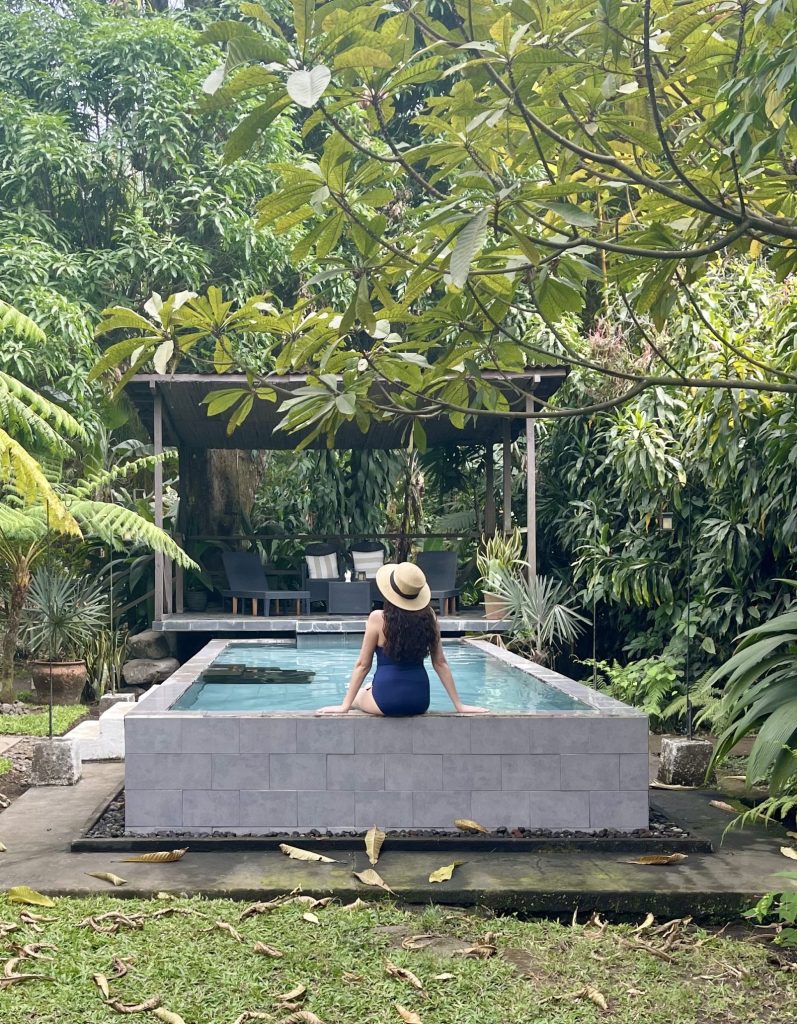
Los Tarrales Natural Reserve (Suchitepéquez)
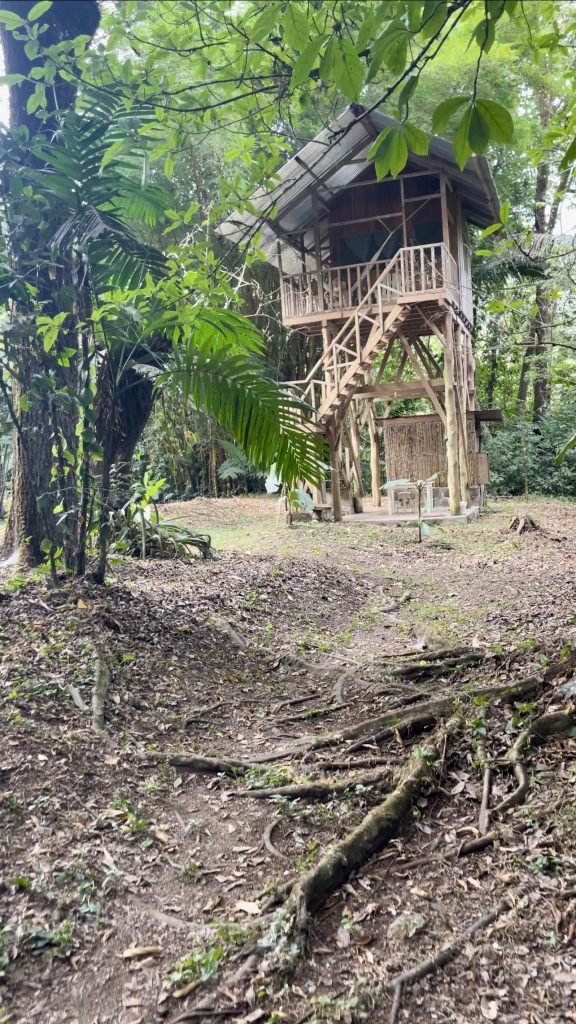
If I had to name the single strongest conservation-lodging property in the country, this would be it. Los Tarrales is a 1,300-hectare private reserve on the slopes of Volcán Atitlán, declared protected by CONAP in 2001 and part of BirdLife International’s Atitlán Important Bird Area. Stay here and you’re inside a place where hunting has been banned for four generations, the electricity comes from the reserve’s own hydroelectric turbine, and the coffee is shade-grown in a way that keeps the forest standing. You can sleep in a treehouse set right in the coffee or in one of the rooms in the plantation house, wake up to more than 300 bird species including the horned guan and the resplendent quetzal, and watch your visit fund the bird-guide training and research that keep the whole thing alive. I write more about it in my full Los Tarrales guide. Book directly at tarralesreserve.com.
✨ GUIDED BIRDWATCHING AT LOS TARRALES
If you want a guided day visit before committing to an overnight, the birdwatching day trip to Los Tarrales is the most straightforward way to experience the reserve with a guide who knows which trail and which hour gives you the best shot at the rarest birds.
Ranchitos del Quetzal (Baja Verapaz)
Up in the cloud forest at km 160.5 on the road to Cobán, this family-run reserve is one of the most reliable places on earth to see a wild quetzal, and one of my favorite examples of conservation done at a human scale. The Álvarez family has protected and reforested this land since the 1970s, and they deliberately keep the lodging to just four rooms so the number of overnight guests never exceeds what the forest can hold. You wake up, walk down to breakfast, and the resplendent quetzal is often right there in the trees. Your entrance fee, your stay, and your tree-planting contribution fund the protection directly. My Ranchitos del Quetzal guide has everything you need to plan a visit.
Chelemhá Cloud Forest Lodge (Alta Verapaz)
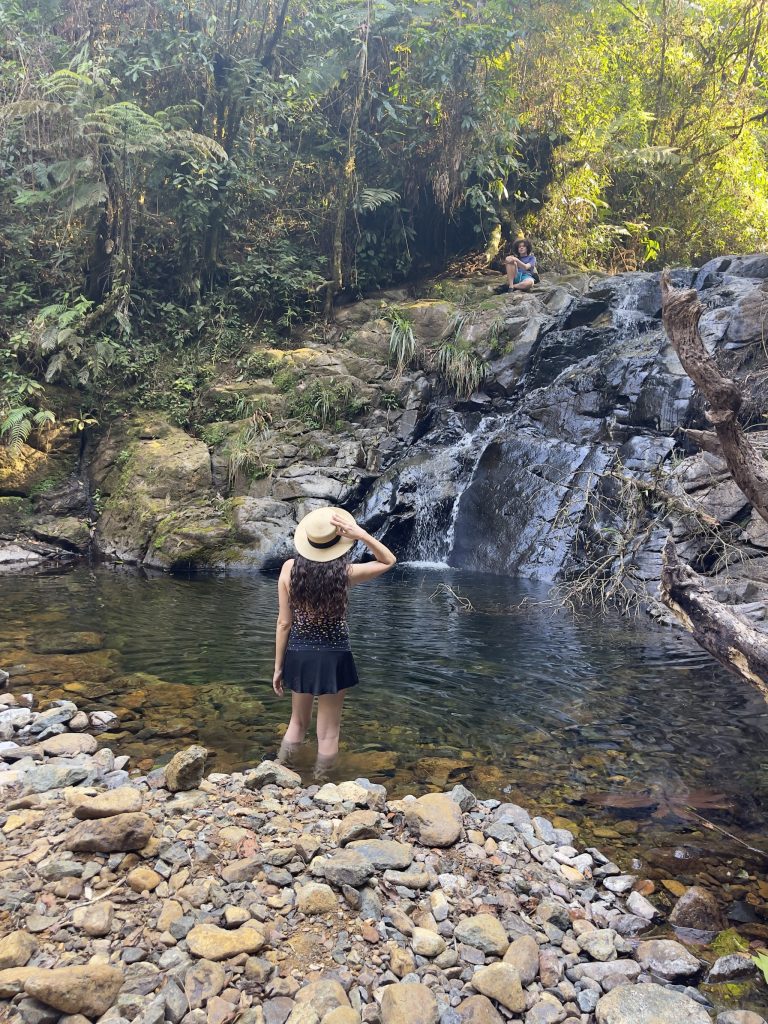
This one is for travelers who want to get truly far from everything. Chelemhá protects around 320 hectares of primary cloud forest in the remote Sierra Yalijux, and the lodge exists to fund that protection. You’ll need a sturdy vehicle and a sense of adventure to reach it, but what waits is a hand-built wooden lodge heated by a wood stove, meals grown on the adjacent organic farm, hummingbird feeders on every corner of the deck, and some of the best quetzal hiking in the country with local Q’eqchi’ guides. The owners also use their organic farm to teach sustainable agriculture to the surrounding community. Reserve through chelemha.org.
Las Lagunas Boutique Hotel (Petén)
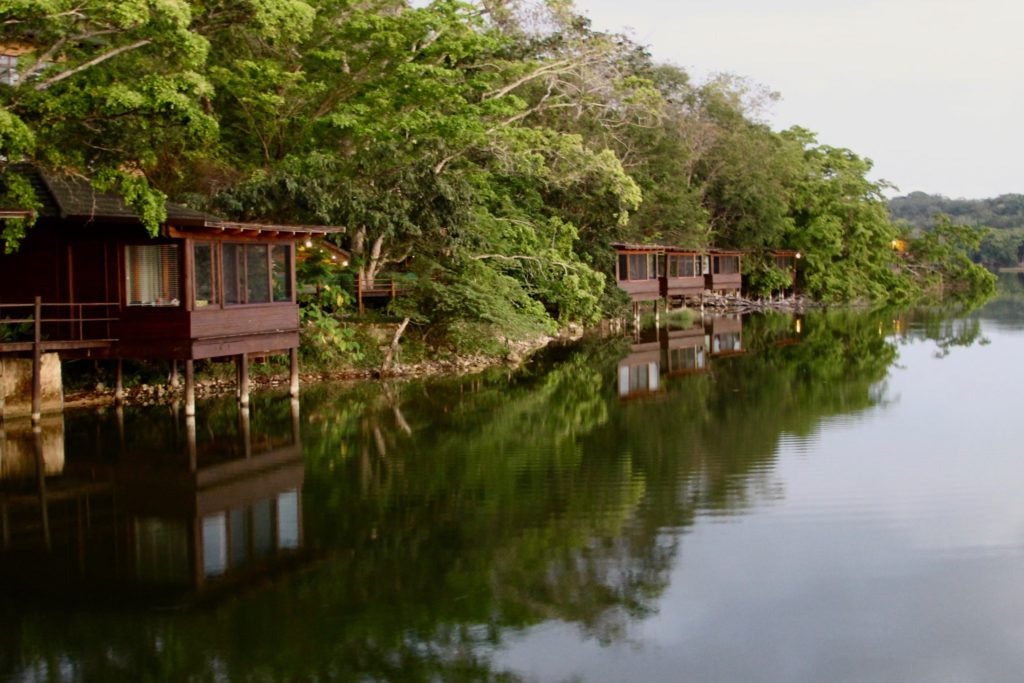
If you want the conservation story with real luxury attached, this is your Petén base for visiting Tikal and Yaxhá. Las Lagunas sits inside a private reserve on the edge of a lagoon, with wooden bungalows raised on stilts over the water, a small natural history museum, and a property that works with CONAP on educating guests about the local flora and fauna. You can kayak the lagoon at dawn and watch water birds from your own deck. It’s high-end and priced accordingly, but the private-reserve setting is genuine. Book on Expedia here.
Hotel Villa Maya (Petén)
I’ve stayed at Villa Maya twice, and it’s a lovely, peaceful base for Tikal that sits inside a large private nature reserve between two lagoons, Petenchel and Monifata, with walking and biking trails threading through real jungle full of birds. Let me be straight with you about one thing, because I believe in being honest: the reserve includes a small enclosure with a few captive animals like white-tailed deer and a couple of birds. It’s a minor part of an otherwise wild and beautifully kept property, not a roadside zoo, but if captive wildlife bothers you, you’ll want to know that going in. The bungalows are comfortable, the lagoon views from the restaurant deck are wonderful, and it’s only 15 minutes from the airport. Book through Expedia here.
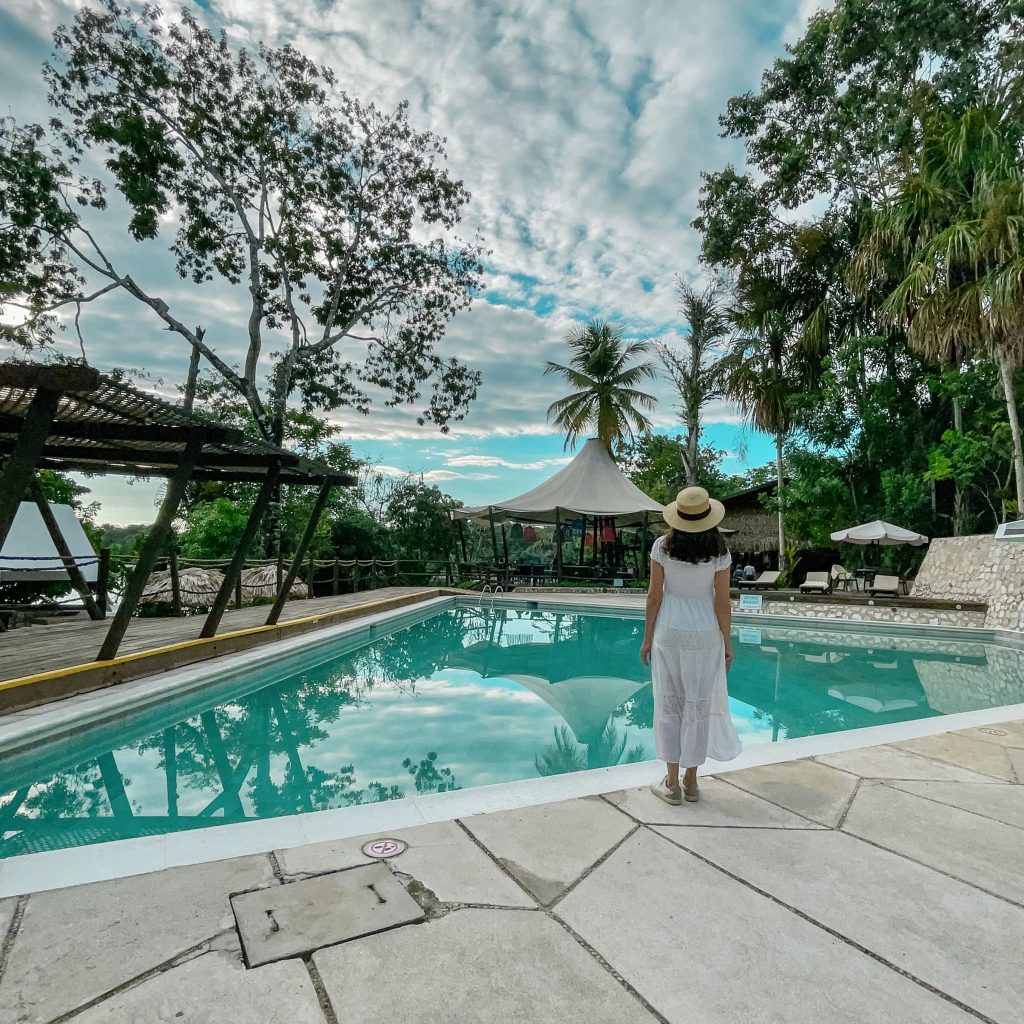
Not Sure Which Fits Your Trip?
I’ll Match the Lodge to the Trip
A remote cloud forest lodge and a luxury reserve near Tikal are very different trips. I know which of these places suits a family with young kids, which suits serious birders, and which is worth the rough road to reach. Tell me what you’re planning and I’ll point you right.
BUILT BY AND FOR COMMUNITIES
Community-Benefit Eco Lodges Around Atitlán, Antigua, and Río Dulce
These sustainable hotels put your money straight into the local economy, through construction by community crews, local employment, and real community programs. They’re also some of the most beautiful places to wake up in Guatemala.
Earth Lodge (near Antigua)
When people search for “Earth Lodge Guatemala” by name, this is why. Perched on an avocado farm in the mountains above Antigua, Earth Lodge runs entirely on solar power, builds from recycled and natural materials, serves farm-to-table meals, and employs people from the village of El Hato while funding the local school breakfast program. You can sleep in a treehouse with a volcano view and walk to Antigua’s overlook in the morning. It’s the easiest eco lodge to reach on this whole list, which makes it a perfect first or last night of any trip. Check availability on Expedia.
Hacienda Tijax Jungle Ecolodge (Río Dulce, Izabal)
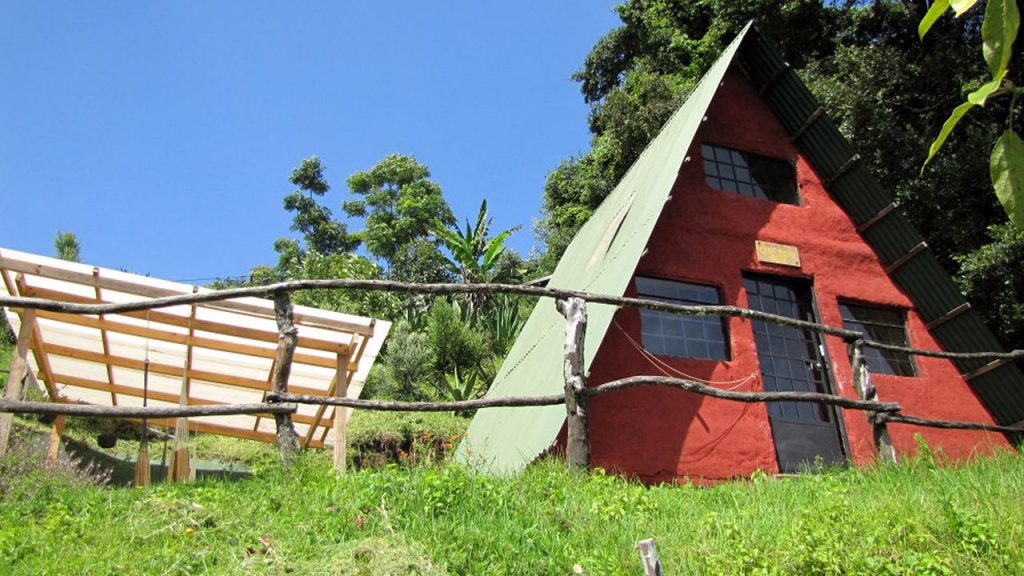
If you’re heading to Río Dulce and Livingston, this is the eco lodge version of that trip. Tijax has been operating since 1990 on what used to be a cattle farm and has since grown into a private nature reserve of more than 200 hectares, with mangrove walks, a rubber and teak plantation, a bird sanctuary, miles of jungle trails, and a lookout tower with views over the river. You access it by boat from the main highway, which immediately puts you in a different headspace. The cabins are rustic, raised on stilts, connected by boardwalks through the jungle. Go at sunrise in a kayak if howler monkeys are on your list. My Río Dulce guide has more on the wider area. Book directly at tijax.com.
Laguna Lodge Eco-Resort (Santa Cruz La Laguna, Lake Atitlán)
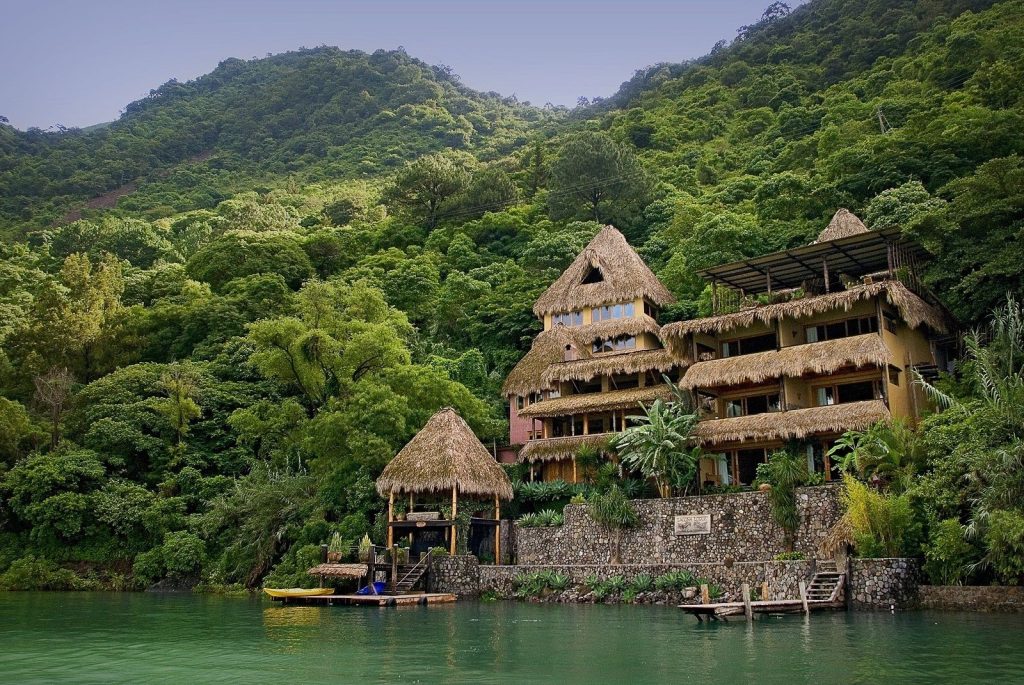
The gold standard for responsible luxury at the lake. Laguna Lodge was built entirely of local volcanic stone, adobe, and palm by an indigenous crew, runs on solar power, is reachable only by boat, and sits in its own nature reserve. It’s been recognized by the Center for Responsible Travel, and once you’re there, the no-roads, no-cars quiet tells you everything about why that matters. Check availability on Expedia.
Fuego Atitlán (San Marcos La Laguna)
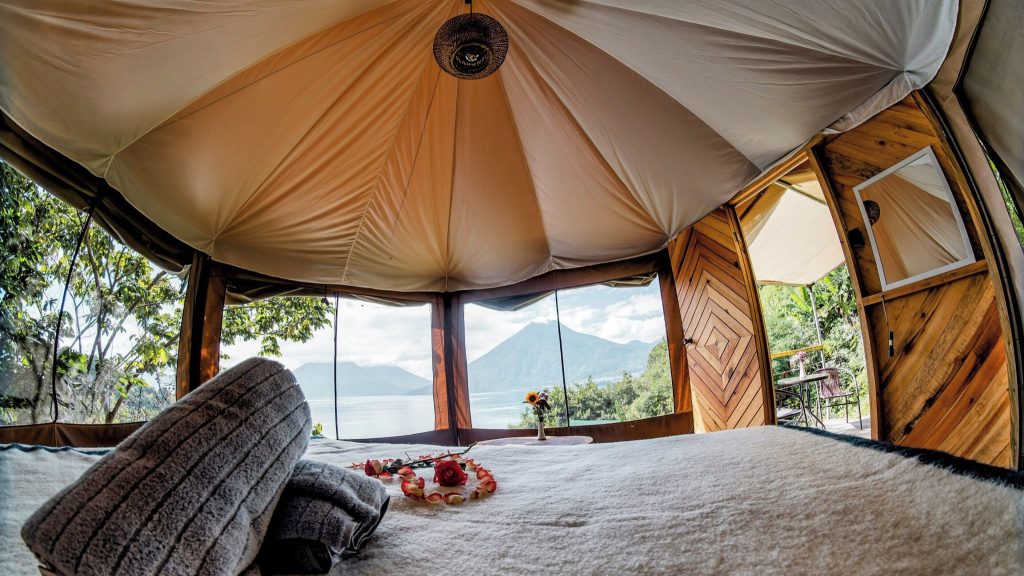
If you want to sleep right on the water, Fuego Atitlán built its yurts, loft, and floating cabin with about 90% less concrete than conventional construction, using local materials and Maya community members from nearby San Pablo. Dry-composting toilets, solar-heated showers, no single-use plastics, and the lake lapping a few feet from your bed. Book on Expedia here.
Eco Hotel MayAchik (San Juan La Laguna)
In my favorite village at the lake, MayAchik gets the details right: solar power, composting toilets, a vegetarian kitchen with Guatemalan flavors, a temazcal, garden cabins, and real investment in community projects across the Tz’utujil villages around the lake. It’s relaxed and affordable and a short walk from San Juan’s weaving cooperatives, which makes it a natural home base if you want to spend a few days with the community tourism experiences San Juan is known for. The authentic art and culture tour in San Juan La Laguna is the best-guided half-day complement to a stay here. Book at mayachik.com or on Expedia.
Eco Hotel Uxlabil Atitlán (San Juan La Laguna)
Also in San Juan, Uxlabil is a small lakeshore eco hotel closely tied to the Tz’utujil community, with a lake view from every room, its own garden, and a quiet, off-the-beaten-path feel that travelers consistently love. It’s a gentle, unfussy place to land, and staying here keeps your money in a village that has built its tourism on its own terms. Book direct at atitlan.uxlabil.com or on Expedia.
✨ LAKE ATITLÁN BIRDWATCHING
If birding is part of your reason for being at the lake, the birdwatching tour in San Juan La Laguna is one of the best guided mornings you can spend in the villages, and it pairs well with a base at MayAchik or Uxlabil. For something more immersive around the lake, the Lake Atitlán Mayan ceremony at the sacred caves is one of the most culturally meaningful experiences the lake offers.
Reserva Natural Atitlán (Panajachel)
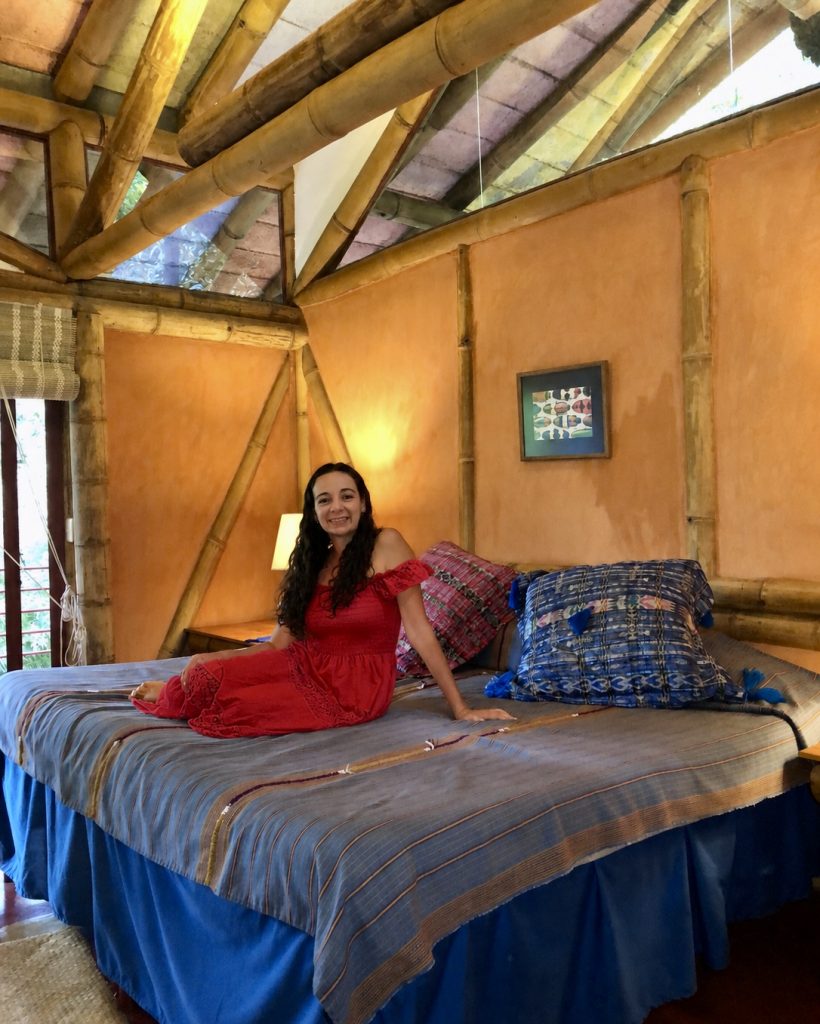
The easiest reserve stay to reach at the lake, a short walk from the center of Panajachel. Ninety-four percent of its 117 hectares is protected native forest, and every night you stay funds that protection. You get bamboo-structure rooms with lake views, a private beach, forest trails, and a butterfly dome right outside your door. My full guide to the Reserva Natural de Atitlán covers it all. For a comfortable Panajachel base with a real conservation program nearby, Hotel Atitlán is also Sello Q certified for sustainability.
SLEEP ON THE FARM
Agrotourism Lodges and Working Farms
This is the category nobody writes about, and it might be my favorite. These are working farms where you sleep on the land, eat what it grows, and learn how Guatemala’s most famous crops actually get made.
Utopia Eco Hotel and Cacao Farm (Lanquín, near Semuc Champey)
If you’re heading to Semuc Champey, this is where I’d have you stay. Utopia is a jungle eco hotel and working cacao farm on the Cahabón River, where you can take a chocolate-making class using cacao grown right on the property, Maya style, and fall asleep to the sound of the river. The food is mostly organic and homemade, and the setting is hard to leave. One honest note: it’s a budget, backpacker-friendly place, and part of its model relies on volunteers who work in exchange for room and board, so set your expectations for rustic comfort rather than polish. Book direct at utopiaecohotel.com.
Finca El Barretal (Escuintla, 45 minutes from Antigua)
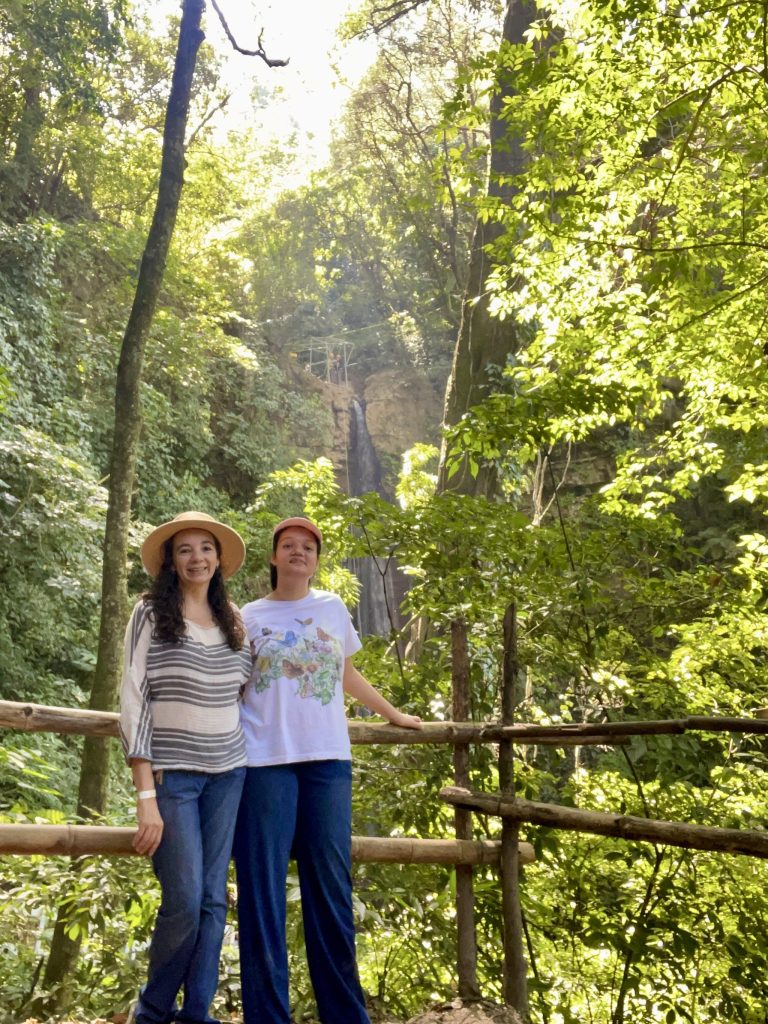
One of the first coffee farms in Guatemala to open its doors to visitors, El Barretal is a family-owned, 180-manzana finca on the slopes of Volcán Pacaya, and it’s an easy 45 minutes from both Guatemala City and Antigua. You can take a coffee tour from seed to cup, rappel a 40-meter waterfall, hike the trails, and stay overnight in a cabin with a private bath and hot water. It’s a lovely, low-key introduction to Guatemalan coffee country without going far. Cabins run roughly Q950 to Q1,350 a night. Details at elbarretal.com.
✨ COFFEE AND FARM TOURS NEAR ANTIGUA
For a guided farm experience directly from Antigua, the Eco Tour: Organic Coffee, Avocado and Honey Farm covers this kind of working agricultural landscape well. If coffee specifically is the focus, the Bean to Brew coffee tour in Antigua Guatemala goes deep into the process, from seed through cup.
Finca Paseo de las Nubes (San Mateo Milpas Altas, near Antigua)
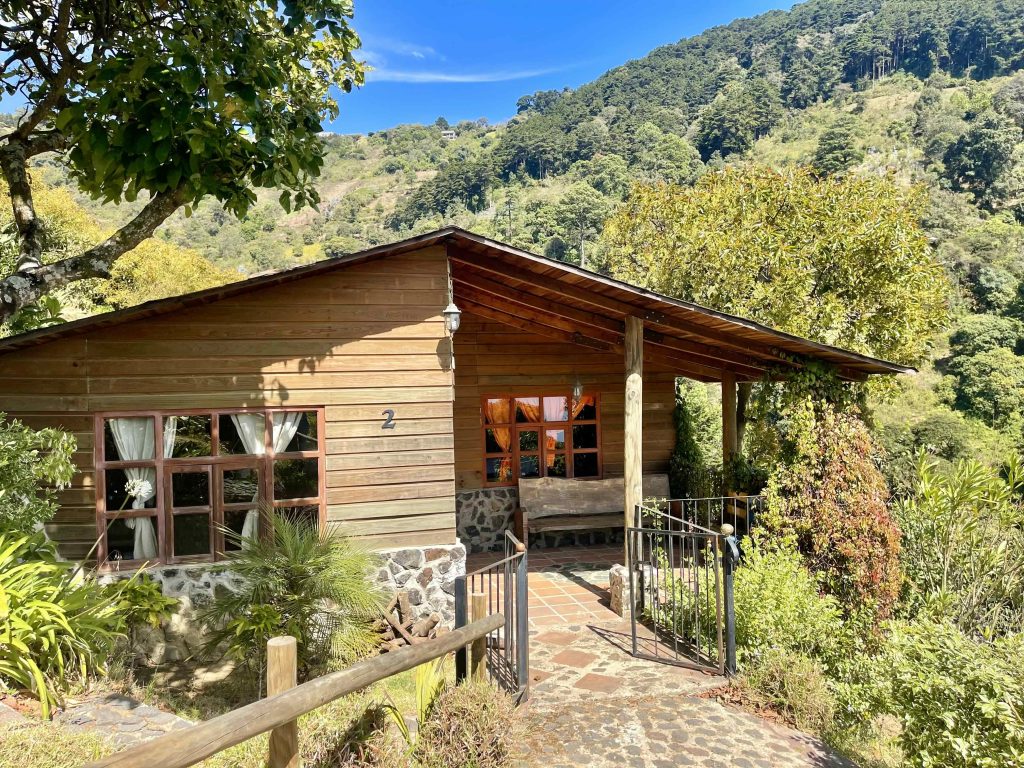
I’ve been to this finca and it’s one of those places that surprises you. It sits in San Mateo Milpas Altas, above Antigua, dedicated to organic Hass avocado cultivation, and the tour they run through the groves and hanging bridges with views out to the volcanoes is genuinely good. You can stay overnight in wooden cabins, eat meals built around avocado at the on-site restaurant, do canopy, use the spa, and walk trails that feel very different from the Antigua cobblestone experience below. Open Thursday to Sunday. For stays and direct info, book through their Facebook page or at fincapaseodelasnubes.com.
📌 GETTING THERE
Most of these lodges sit on highways and remote roads that shuttle services don’t reach on your schedule. A rental car is the practical answer for Los Tarrales, Ranchitos, Chelemhá, El Barretal, Utopia, Country Delights, Candelaria Lodge, Patrocinio, and Villas del Pacaya. The lake lodges are boat access. Before you rent, read my complete guide to renting a car in Guatemala so you know what to expect on the roads and what insurance you actually need.
📌 BEFORE YOU GO
Two things I tell everyone traveling to Guatemala: get travel insurance and sort your data before you land. For insurance, TravelInsurance.com lets you compare plans side by side so you’re not guessing. For data, I use HolaFly eSIM — it works the moment your plane lands and you never deal with a local SIM. Use code PAULAGUB for 5% off.
Build the Whole Trip
An Eco-Minded Guatemala Itinerary, Planned by a Local
These lodges are scattered across the country, and stringing them into one smooth trip takes knowing the roads, the boats, and the right order to visit. That’s exactly what I do. Tell me how long you have and what you care about, and I’ll build it around stays like these.
MORE ACROSS THE COUNTRY
More Eco Lodges in Guatemala Worth Knowing
These lodges don’t fit neatly into one category, but they belong on any honest list of nature-based stays in Guatemala. Some are community-run. Some sit inside or right next to protected reserves. A few are close enough to Guatemala City to be a quick escape.
Country Delights Hotel (Purulhá, Baja Verapaz)
Sitting at km 166.5 on the road to Cobán, Country Delights is a small, family-run eco hotel about ten minutes from the Biotopo del Quetzal nature reserve in Baja Verapaz. It’s the kind of place Guatemalans stop at when they’re heading up to the Verapaces and want something better than a roadside hostal. The grounds are well-kept, breakfast is included, and its location makes it an easy base for early-morning quetzal watching at the biotopo. Simple, clean, genuine, and on Expedia if you want to book there. If you’re combining this with Ranchitos up the road, it makes a logical overnight before continuing to Cobán.
✨ BIRDING NEAR HERE
If quetzal watching is the reason you’re in this area, the Quetzal Birdwatching Tour with overnight in a Mayan Village from Quetzaltenango is one of the best ways to combine the bird and real community access in a single trip. For birding directly near the lake, the birdwatching tour in San Juan La Laguna is an excellent guided morning option.
Posada Rural y Ecuestre Unicornio Azul (Chiantla, Huehuetenango)
This one is for travelers who want to go deep into the Cuchumatanes mountains. Unicornio Azul sits at 3,000 meters above sea level in Chiantla, Huehuetenango, and it’s the classic jumping-off point for exploring the Laguna Magdalena, the Todos Santos area, and the highland landscapes that most Guatemala trips never reach. You can ride horses through long mountain trails here and wake up to views that remind you how big this country is. Simple, rustic, and completely honest about what it is. If you’ve already done Atitlán and Antigua and you want something that has nothing to do with tourist infrastructure, this is a logical destination. More at unicornioazul.com.
Candelaria Lodge (km 319, Cobán to Flores road, Alta Verapaz)
If you’re on the Cobán to Flores route and you haven’t built in a stop at the Cuevas de Candelaria, rethink the itinerary. The Candelaria caves are one of the most remarkable geological and cultural sites in Guatemala, a sacred Maya river system underground, and the lodge sits directly on the property. Rooms are surrounded by tropical gardens scented with ylang-ylang, and the whole experience is tied to the cave system outside your door. My full guide to visiting the Candelaria Caves covers what to expect. Book through candelarialodge.com.
Reserva Patrocinio Lodge (El Palmar, Quetzaltenango)
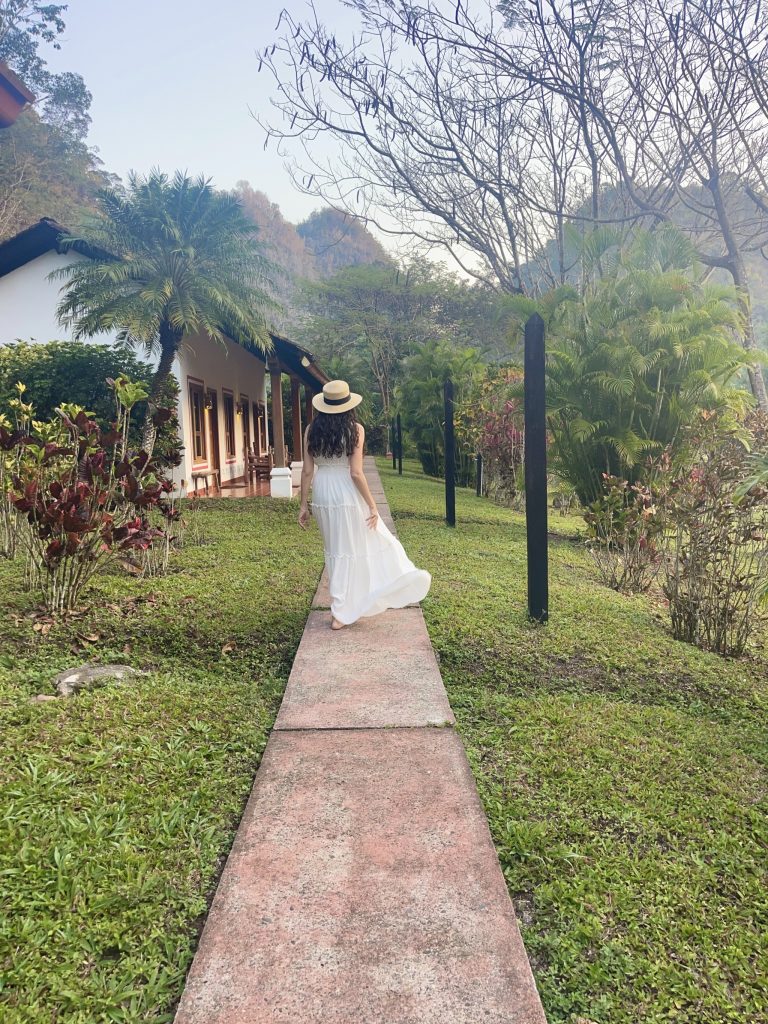
I spent two nights at Reserva Patrocinio with my kids, and this turned out to be one of those nature stays that stays with you long after you leave. The lodge sits inside a working finca and private reserve below Santa María and Santiaguito, surrounded by tropical forest, coffee, cacao, avocado, bananas, rambutan and other crops. But what made it magical for me were the mornings. I would walk the stone trails shortly after dawn, when everything was still damp and quiet, and suddenly see Santa María rising between the trees. I have seen my share of volcanoes in Guatemala and those views still stopped me in my tracks.
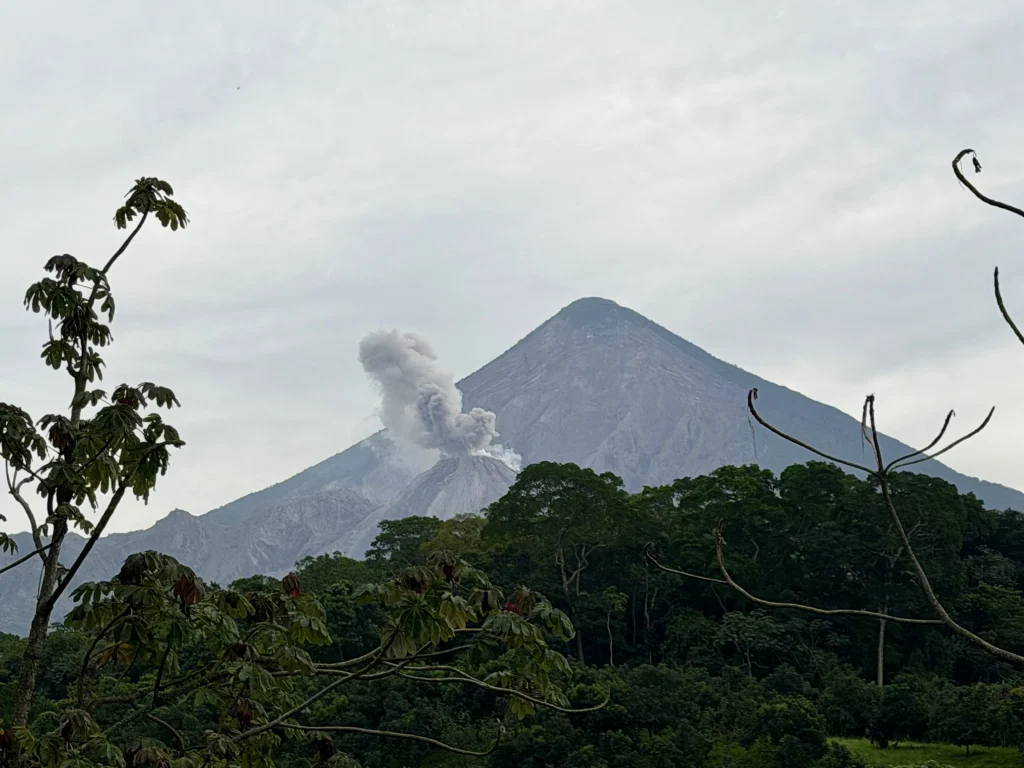
Our room had three comfortable beds, a spacious private bathroom with a good hot shower, and a covered outdoor living area with a dining table, couch and hammock. It was simple in the way a good nature lodge should be, but very comfortable. There is no WiFi or AC, and I would not come here expecting a resort. Come because you want to wake up to birds, spend your morning on the trails, swim in a little waterfall ten minutes from your room and actually disconnect for a couple of days.
The open-air restaurant, Cafetería El Mirador, may have one of my favorite breakfast settings in Guatemala. Santa María and Santiaguito fill the background while birds come to a fruit feeder beside the dining area. The menu is small and meals need to be ordered ahead, but everything we ate was incredibly fresh and beautifully presented, often incorporating produce from the finca and finished with flowers or leaves from the property.
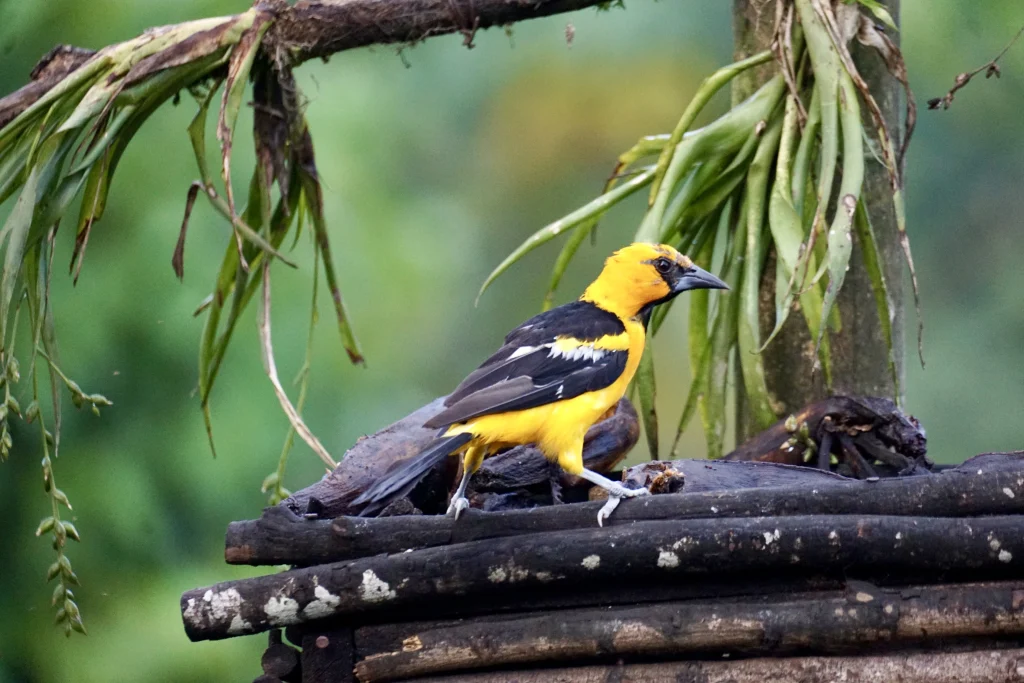
Birders should give Patrocinio at least two nights. We booked a private birding tour, spent our own mornings birding around the reserve and also did the guided night walk, where we found Morelet’s tree frogs, other amphibians, spiders and two armadillos. The night tour was my son’s favorite part of the stay. For me, it was those quiet walks just after sunrise that made Patrocinio unforgettable.
Reserva Natural Corazón del Bosque (Santa Lucía Utatlán, Sololá)
This is one of the most interesting community conservation stories in the country. In 1990, a group of community leaders in Santa Lucía Utatlán in Sololá started protecting 40 hectares of mixed forest. They called it Corazón del Bosque, “heart of the forest,” and they’ve been managing it as an eco and community tourism project for over three decades. The reserve is now a recognized hotspot for endemic birds including the pink-headed warbler. You can stay in ecological cabins, use a temazcal, walk forest trails, visit the Maya altar, eat at the community restaurant, and camp. Find them on Facebook or at parquecorazondelbosque.weebly.com.
Villas del Pacaya (Laguna de Calderas, Amatitlán)
If you want a nature escape within an hour of Guatemala City, Villas del Pacaya is the answer most people don’t know about. The cabins sit inside the Laguna de Calderas natural reserve in Amatitlán, six kilometers south of the lake and three kilometers north of the mouth of Volcán Pacaya. Pine cabins on the edge of a lagoon, canoe access, real quiet. It’s the kind of place Guatemalans use for a weekend reset. Contact them at 5511-8103.
La Ruta del Yalú (km 43.5 Interamerican Highway, Sumpango)
Less than an hour from Guatemala City on the Interamerican Highway, La Ruta del Yalú is a vintage-feeling natural reserve with wooden cabins, guided farm tours where you can roast coffee and fish your own lunch, and enough outdoor space to actually feel like you’ve left the city behind. It’s a practical option for a first or last night of a Guatemala trip without going far from the airport, and it’s a strong choice if you’re traveling with kids who need something hands-on after long flights. Open every day. Details at elyalu.com.
Hun Nal Ye (km 259.5, San Pedro Carchá, Alta Verapaz)
Up in Alta Verapaz on the road to Chisec, Hun Nal Ye is a nature park and lodge built around a lagoon at the edge of the Q’eqchi’ Maya highlands. The name comes from the Mayan corn deity, and the setting lives up to it: horses, jungle trails, a museum, tubing on the river, a garrucha zip line, lanchas on the lagoon, and a hotel with a restaurant on the property. It’s a full-day or multi-night destination that most international travelers never hear about, which is the best reason to go. Book through hunalye.com.
Hotel Lachuá (Laguna Lachuá, Alta Verapaz)
Laguna Lachuá is one of the most isolated and stunning natural areas in Guatemala, a protected biosphere reserve in the lowland jungle of northern Alta Verapaz near Playa Grande Ixcán. The lagoon itself is perfectly circular and astonishing. The lodge there is simple, with a limited number of rooms, and it exists primarily because you need somewhere to sleep after the drive in. Call ahead to confirm availability before committing to the journey. This is not a luxury experience, but for the traveler who wants to stand at a pristine jungle lake that sees very few visitors, it’s worth every bump in the road. Contact them at 4084-1706 or 5362-5538.
Hotel Bahía Taitzá (San José, Petén)
Most people who visit Tikal stay in Flores, which is pleasant but touristy. The better alternative for anyone who wants the lake experience without the crowds is Bahía Taitzá on the quieter, deeper side of Lago Petén Itzá in San José. The property sits right on the water, with wooden-furnished rooms, a beachfront restaurant serving wood-fired pizza and fresh fish, kayaks, a pool, and a playground for kids. You can arrive by boat directly from Flores, which is the best introduction to any hotel I can think of. The owner-manager Mauricio knows the region well and can arrange good guides for Tikal, Yaxhá, and the surrounding jungle sites. My guide to visiting Tikal and my Yaxhá guide both cover the logistics of doing these sites from Petén. Book through taitza.com.
✨ PETÉN TOURS FROM A LAKE BASE
From a Petén base like Bahía Taitzá or Las Lagunas, the most worthwhile day trips are the private Tikal day tour from Flores, the Yaxhá and Nakum adventure tour, or the Ixpanpajul jungle trekking and canopy tour for something closer to Flores. For something extraordinary, the helicopter tour to El Mirador and La Danta is one of the most extraordinary things you can do in Guatemala.
QUESTIONS PEOPLE ASK
Eco Lodges in Guatemala: FAQ
How do you know if a hotel is truly sustainable?
Look past the word “eco” and ask what the property actually does. Real sustainability shows up in specifics: where the energy comes from, how waste and water are handled, who built the place and who works there, whether food is sourced locally, and whether any conservation or community program is funded by your stay. In Guatemala, the INGUAT Sello Q Verde certification is one signal, but the clearest test is whether a property can name concrete things it does rather than just calling itself green. Every lodge in this guide can.
What are the best eco lodges in Guatemala?
For pure conservation impact, Los Tarrales and Chelemhá are hard to beat, both private reserves where your stay funds real habitat protection. For responsible luxury, Laguna Lodge at Lake Atitlán and Las Lagunas in Petén stand out. For the easiest and most beloved option near Antigua, Earth Lodge wins. The best one for you depends on where your trip goes and what you want from it, which is the whole reason this list is sorted by what each place does rather than ranked one through twenty.
How much do eco lodges in Guatemala cost?
The range is wide. Budget jungle eco hotels like Utopia near Semuc Champey can run well under $40 a night, and community eco hotels at Lake Atitlán are very affordable. Mid-range farm and reserve stays like El Barretal sit around Q950 to Q1,350 for a cabin. At the luxury end, private-reserve boutique hotels like Las Lagunas and Laguna Lodge run several hundred dollars a night. There’s a genuine eco lodge in Guatemala at almost every budget, which is one of the best things about traveling here.
Is there an eco lodge near Tikal?
Yes. In Petén, both Las Lagunas Boutique Hotel and Hotel Villa Maya sit inside private nature reserves a short drive from the airport and within reach of Tikal and Yaxhá. Both put you in real jungle with lagoon settings, with Las Lagunas at the luxury end and Villa Maya offering comfortable bungalows at a more moderate price. Hotel Bahía Taitzá in San José offers a quieter, more personal Petén experience right on Lago Petén Itzá.
Is there an eco lodge near Lake Atitlán?
Several. Laguna Lodge in Santa Cruz La Laguna is the most celebrated, built of volcanic stone and palm with solar power and no road access. Fuego Atitlán in San Marcos offers a lakeside yurt and floating cabin experience with minimal concrete construction. MayAchik and Uxlabil in San Juan La Laguna are community-rooted eco hotels that keep your money inside a Tz’utujil village. And the Reserva Natural Atitlán in Panajachel has its own overnight accommodation inside the protected forest. My full Lake Atitlán guide covers the villages and how to move between them.
KEEP READING
Related Guides
|
🌎 NATURE RESERVES National Parks and Nature Reserves in Guatemala The full guide to every protected area worth visiting, from cloud forest to jungle to Pacific coast. |
🤝 COMMUNITY TOURISM Community Tourism in Guatemala Who to book and where to stay so your money reaches the community. |
|
🐦 BIRDING The best birding destinations, several of them lodges on this very list. |
🌄 LAS VERAPACES Guide to Cobán and Las Verapaces Cloud forest country, home to Chelemhá, Ranchitos, and Semuc Champey. |
|
🏔 TIKAL Complete Guide to Visiting Tikal Plan your Petén base right and you’ll see the jungle and the temples together. |
This Is My Country
Let Me Help You Sleep Somewhere That Matters
Every lodge on this list protects something, funds something, or grows something. I’d love to help you build a trip around places like these, with the routing and the local knowledge that make it all work. Get in touch and tell me what you’re dreaming up.
The best souvenir you can bring home from Guatemala is the knowledge that the place you slept is still standing, still wild, still feeding the people who built it. Choose your lodge well, and your trip leaves the country a little better than it found it.
TOURS AND EXPERIENCES
Guided Experiences Near These Lodges
If you want a guided experience that complements one of these stays, these are the tours worth looking at. The birding tours pair well with the reserve lodges. The farm tours go well with the agrotourism section. The Petén tours are built for a base at Bahía Taitzá or Las Lagunas.
Through her writing, Paula helps travelers discover Guatemala beyond the typical tourist route with practical advice, local recommendations, and authentic experiences that connect visitors with the country’s people, culture, and traditions.
Planning a trip to Guatemala? Paula offers personalized Guatemala itinerary planning and trip consultation services tailored to your interests, travel style, and budget. Contact her at [email protected] to learn more.
- San Lucas Tolimán Guatemala: Lake Atitlán’s Best-Kept Secret - September 24, 2026
- Hotel Tolimán Lake Atitlán: A Special Stay in San Lucas Tolimán - September 24, 2026
- Guatemala Dreams in San Lucas Tolimán: A Boutique Stay on Lake Atitlán - September 23, 2026

