This article contains affiliate links. If you book or buy something through one of my links, I may earn a small commission at no extra cost to you. I only recommend places and services I have personally used or vetted.
In 2024, I took my dad to the Sumpango Kite Festival before sunrise because I thought arriving as early as possible would give us the best experience. Instead, we stood in a cold, mostly empty field for almost two hours waiting for things to get moving. Even the private parking lots were not open yet.
That morning changed the advice I give people now: go early, but not that early. Around 8 AM is my sweet spot. You are there in time to watch the enormous barriletes gigantes being assembled and raised, take photos before the field gets packed, and see the part of the festival many visitors miss without standing around in the dark wondering why you got out of bed at 5 AM.
And honestly, that behind-the-scenes hour is the part I love most.
Every year on November 1, the town of Sumpango hosts the Festival de Barriletes Gigantes, one of Guatemala’s most extraordinary All Saints Day traditions. In 2024, UNESCO inscribed the giant-kite-making tradition of Sumpango and Santiago Sacatepéquez on its Representative List of the Intangible Cultural Heritage of Humanity. In 2026, November 1 falls on a Sunday, so I would plan for a very busy field.
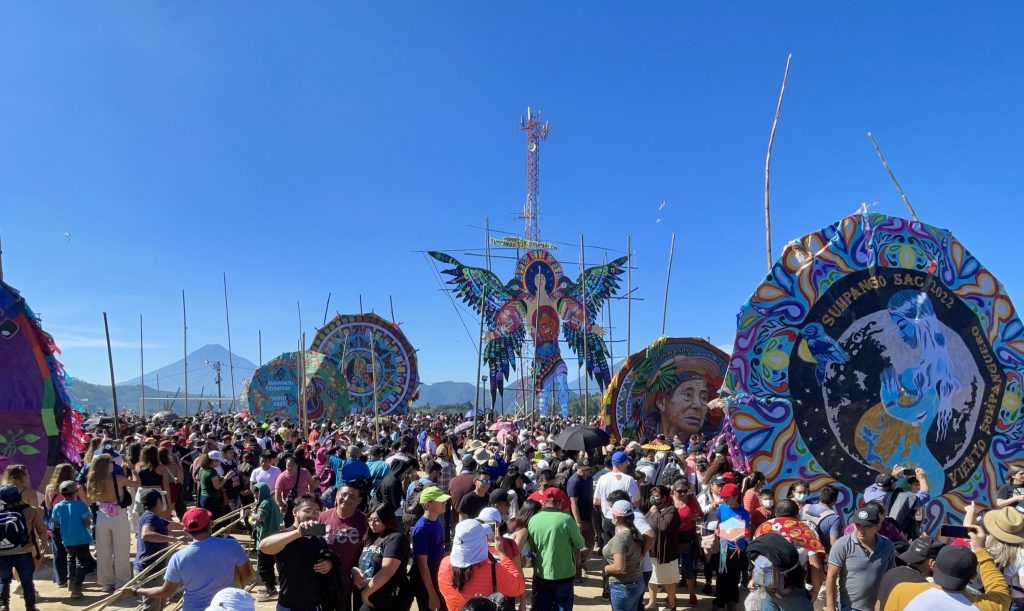
As a Guatemalan, I grew up hearing stories about the barriletes gigantes, seeing their photos in the newspaper, and watching them on the evening news. I have now attended the festival several times, and each visit shows me something new: the teamwork behind the kites, the messages hidden in the designs, the way the field changes hour by hour, and the energy of families arriving from all over Guatemala and the world.
Sharing it with my dad in 2024 made it even more meaningful. Once the work finally began, the chill of the morning mixed with the smell of tamales and hot atole as teams started building the enormous bamboo frames. Photos show you the finished kites. They do not show you the sound of bamboo poles being tied together, the months of work being unfolded on the ground, or that moment when an entire crowd seems to stop as one giant kite is finally lifted upright.
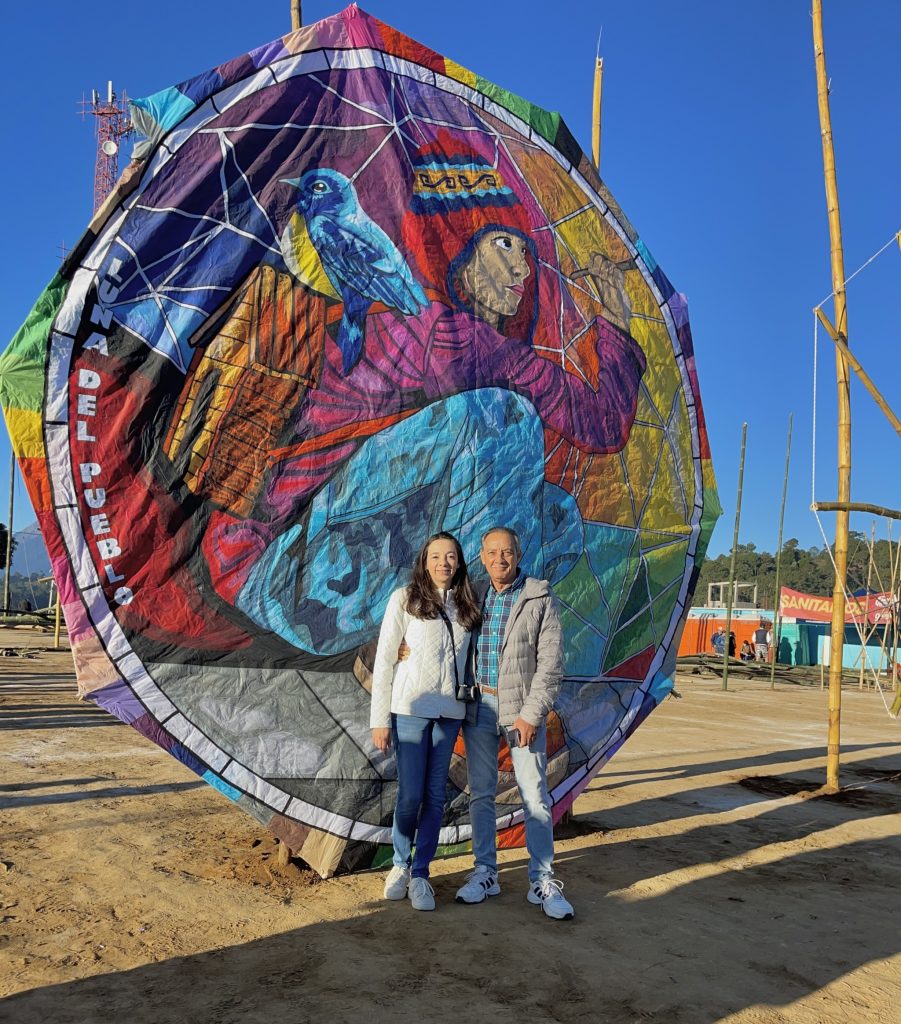
This guide includes the practical things I wish more visitors knew before going: when I would arrive, what parking is really like, how bad the traffic gets, what to eat, where to stay when there are no practical tourist hotels near the festival grounds, which kites actually fly, and what most visitors miss. I will also explain the history and meaning behind the tradition, because this is much more than a beautiful November festival. If you are deciding between the two giant kite festivals, my Sumpango vs. Santiago Sacatepéquez comparison will help you choose.
📌 SUMPANGO KITE FESTIVAL 2026 AT A GLANCE
Date: Sunday, November 1, 2026 (All Saints Day)
Where: The municipal soccer field beside Sumpango’s cemetery
Cost: Entry is free. Bring small bills for parking and food
From Antigua: About 45 minutes on a normal day; allow more time on festival day
Best arrival based on my visits: Around 8 AM. I would leave Antigua at about 7 AM
Why not 6 AM? I tried it. We spent almost two hours waiting, and the private parking lots were not even open yet
Late morning: Expect much heavier crowds, farther parking, and worse traffic
Afternoon: In past years, smaller competition kites have flown while the biggest kites remain upright
The exact 2026 program and traffic plan can change, so check the festival’s official information close to November 1.
Book a Sumpango Kite Festival Tour for November 1
If you would rather leave the driving and the parking to someone else, these tours cover both Sumpango and Santiago Sacatepéquez. Compare departure times and pick the earliest one that fits your plans.
💡 Ask before you book: what time does the tour reach the field? Many day trips arrive between 9 and 11 AM, when the kites already stand and the field is packed. A tour that reaches the field around 8 AM lets you watch the kites go up.
What Is the Giant Kite Festival in Guatemala?
The Giant Kite Festival in Guatemala takes place every year on November 1 in the highland towns of Sumpango and Santiago Sacatepéquez, both in the department of Sacatepéquez, just outside Antigua. In 2024, UNESCO inscribed the technique of making the giant kites of these two towns on its Representative List of the Intangible Cultural Heritage of Humanity. That recognition honors generations of families who keep the craft alive.
The festival belongs to Guatemala’s All Saints Day and Day of the Dead traditions, when families remember the people they have lost. They clean and decorate graves in the cemetery, and the day fills with color, music, food, and above all, giant kites. To see how the whole country marks the holiday, read my guide to Day of the Dead traditions in Guatemala. If other celebrations catch your interest, my guide to festivals in Antigua Guatemala covers the calendar.
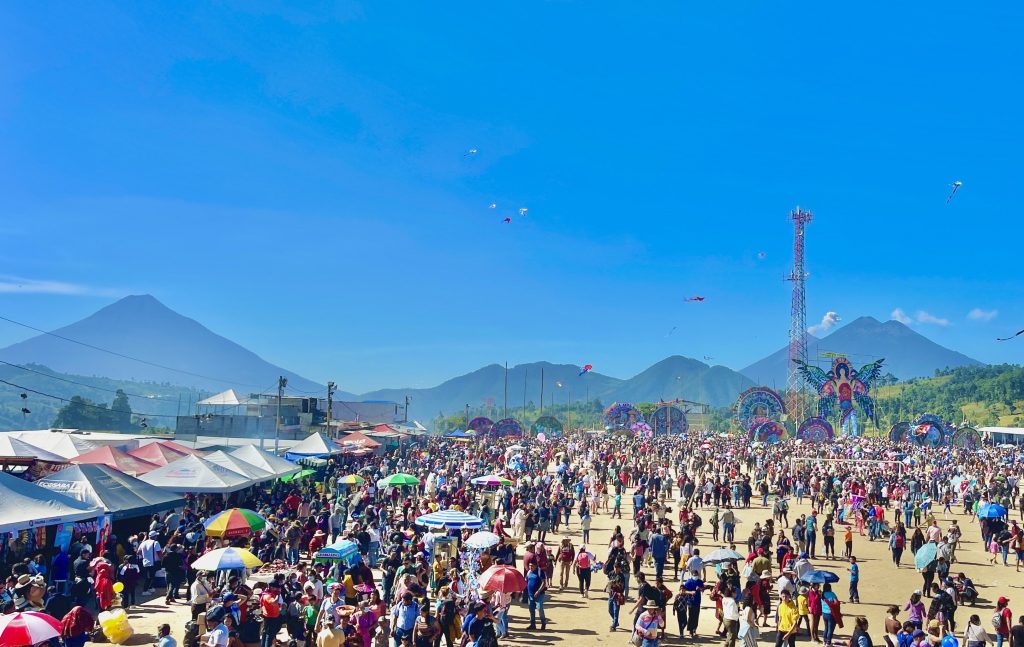
Kite flying at the cemetery goes back to the late 1800s and early 1900s, according to UNESCO. The festival you can visit today has a more recent start. In 1978, a local group in Sumpango noticed the kite tradition fading and organized the first contest on the soccer field beside the cemetery, and that contest grew into a festival. You can read that story on the festival’s own site.
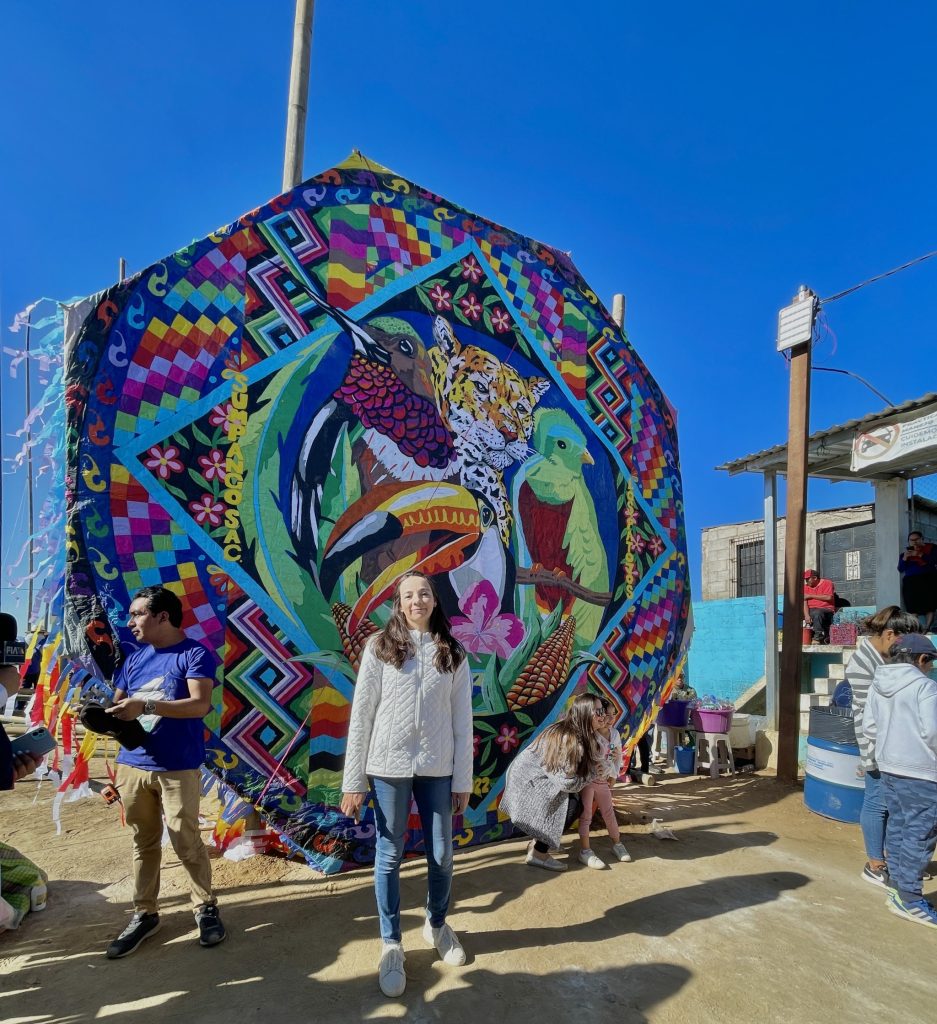
Visitors from across Guatemala and around the world gather to see kites that stretch over 15 meters across. The biggest ones stand upright to show hand-cut tissue paper designs that take months to finish, and smaller ones fly in the afternoon. The atmosphere mixes celebration, remembrance, and pride, rooted in both Maya and Catholic traditions.
What Are the Barriletes Gigantes? The Meaning Behind Guatemala’s Giant Kites
In Sumpango and Santiago Sacatepéquez, the barriletes gigantes carry meaning that goes well beyond art. The oldest oral tradition collected in Sumpango says the kites join the world of the living with the world below. A local legend says that on November 1, evil spirits came to the cemetery to disturb the souls at rest, and villagers raised kites to chase them away.
In Maya Kaqchikel tradition, the kites also help loved ones who have passed visit their families. Over time, they have grown in size, complexity, and purpose into multi-meter canvases of tissue paper and bamboo, each one telling a story.
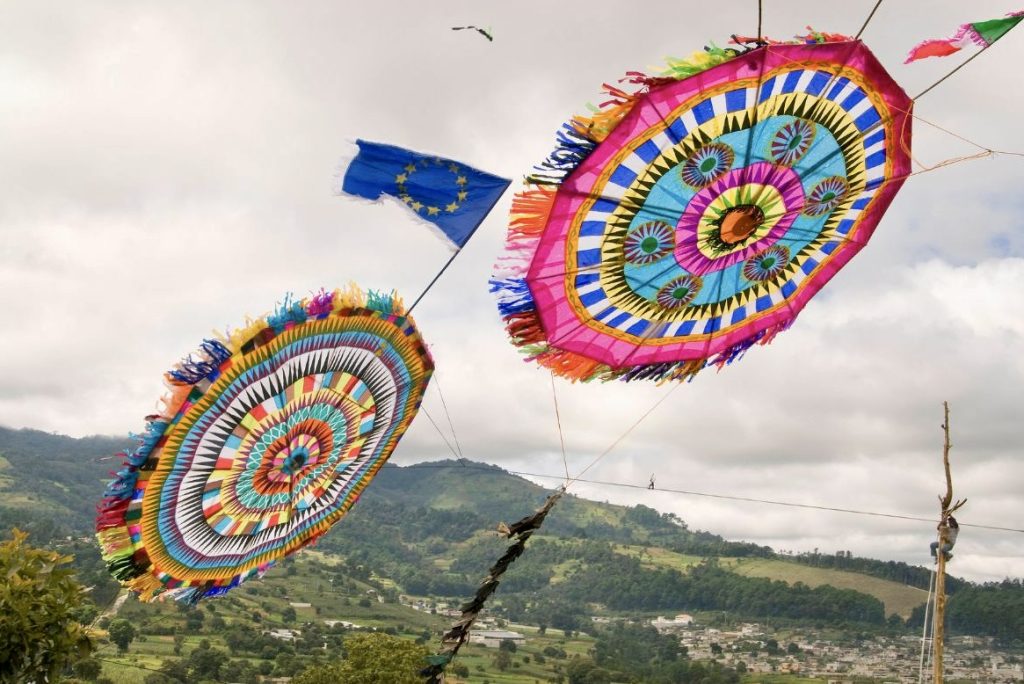
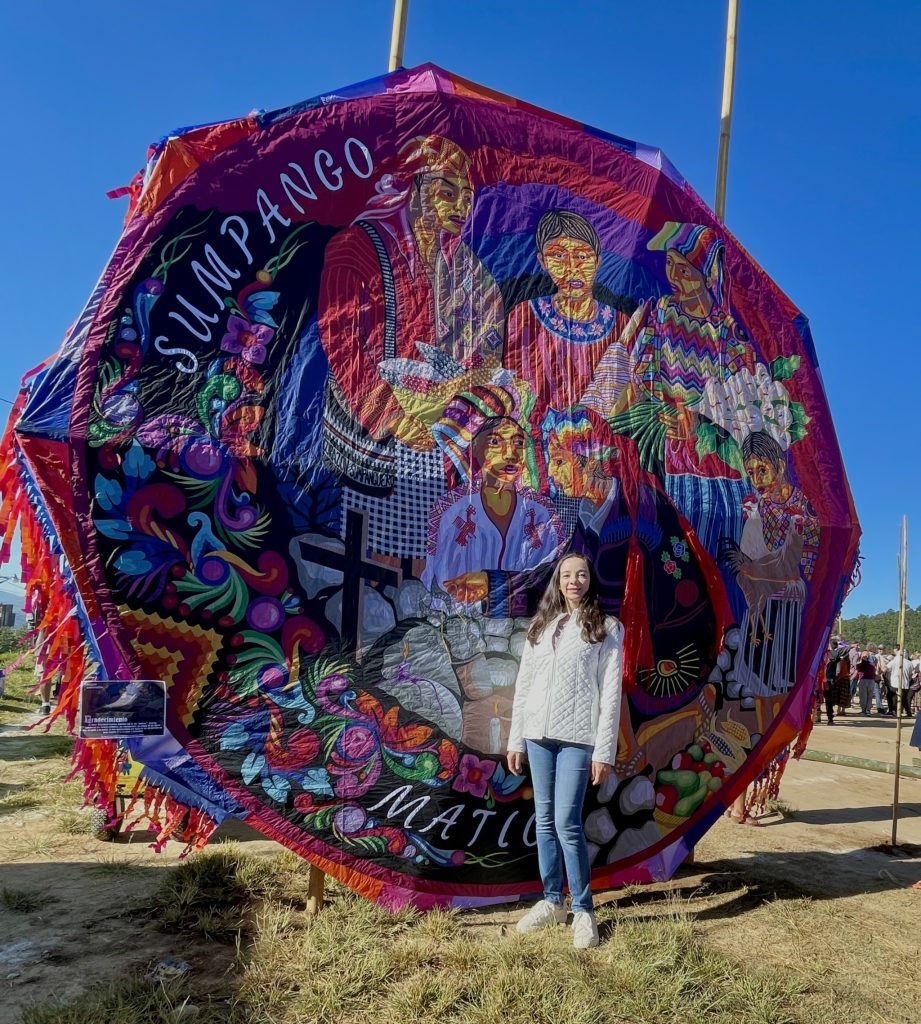
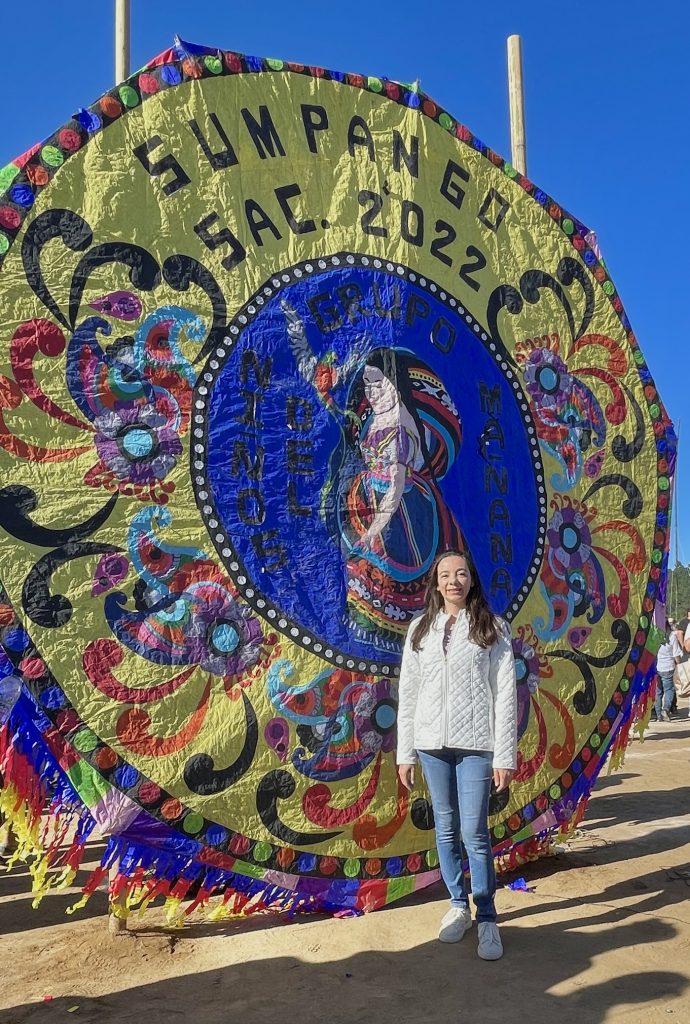
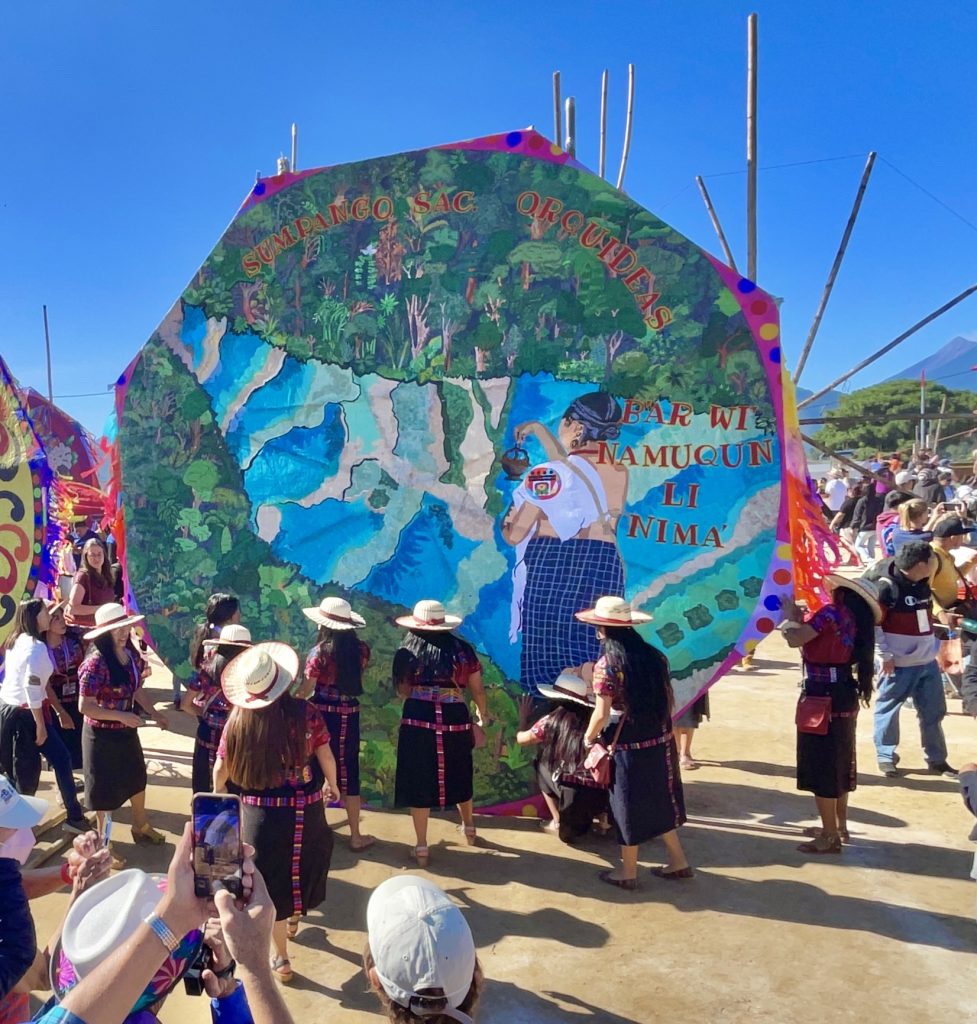
Some of the largest kites reach 15 or even 20 meters (over 65 feet) across and tower above the crowd. A few groups build kites to fly, but most kites stand upright for people to admire their design and message. Massive wooden structures hold them, and entire teams work together to lift and secure them.
What makes the barriletes gigantes so meaningful today is how they carry cultural and political expression. Many still honor ancestors or spiritual themes, and others speak about social justice, environmental protection, and the struggles of Guatemala’s Indigenous and Mayan communities. UNESCO’s description of the tradition points to themes like the environment, the fight against violence, and human rights. Some designs are hauntingly beautiful, others boldly defiant, and each one asks for your attention.
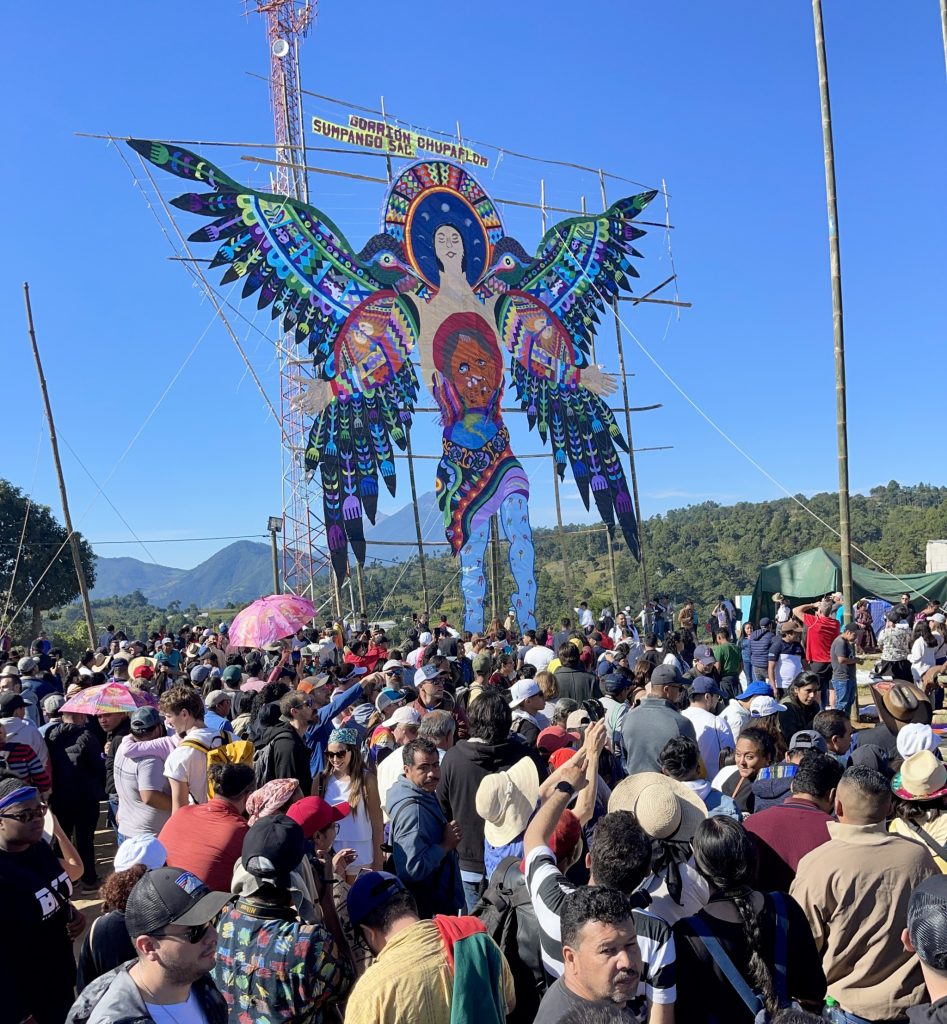
Seeing them up close, with their color and detail, is nothing like flipping through photos or watching a documentary. Something deeply emotional happens when the final piece, months in the making, attaches to its bamboo frame and a team of kite makers slowly lifts it into place.
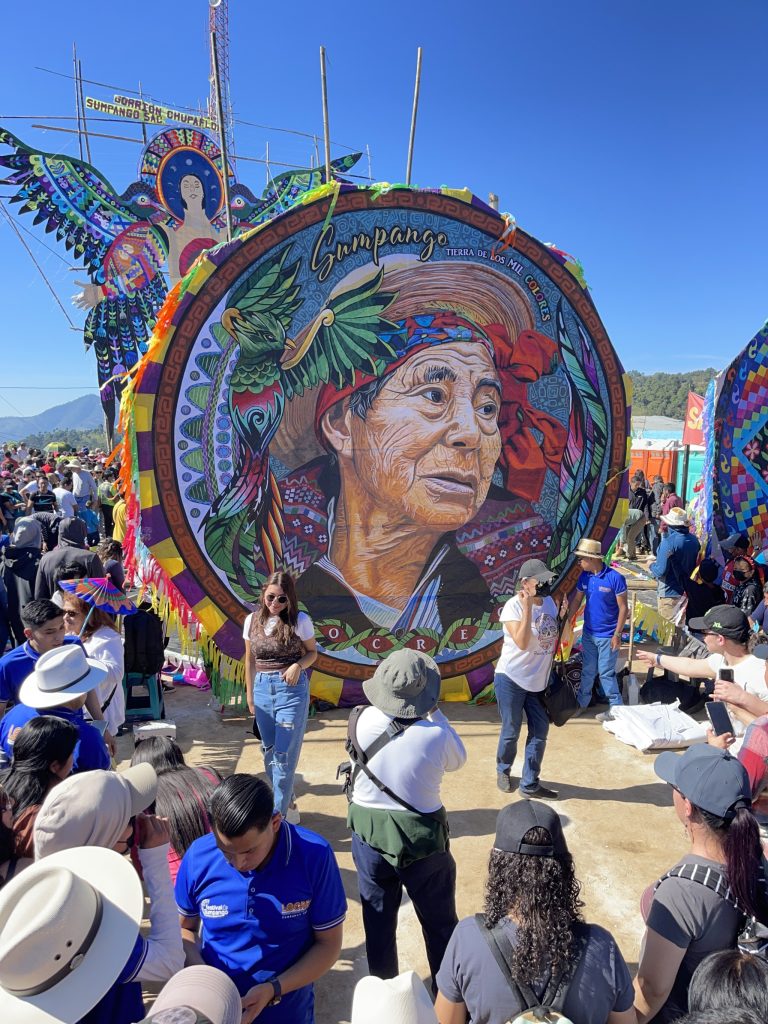
As a Guatemalan, it fills me with pride to watch these kites evolve, honoring ancestral beliefs while giving voice to the present. They show the resilience, artistry, and spirit of the people who create them. For the full story of their symbolism, colors, and shapes, read my guide to the barriletes of Guatemala.
✨ GO DEEPER INTO KAQCHIKEL HISTORY
Sumpango sits in Kaqchikel territory. If this history draws you in, Iximché, the old Kaqchikel capital near Tecpán, is worth a day. Read my Iximché guide, or visit with a guide on this Iximché ruins tour from Antigua.
Sumpango Kite Festival: When, Where, and What to Expect
The Sumpango Kite Festival takes place every year on November 1, in honor of All Saints Day. It happens on the municipal soccer field next to the cemetery, on the edge of Sumpango in Sacatepéquez, about an hour from Guatemala City or 45 minutes from Antigua by car, depending on traffic. Aim for around 8 AM, so you catch the build without waiting in an empty field or landing in the 10 AM crush.
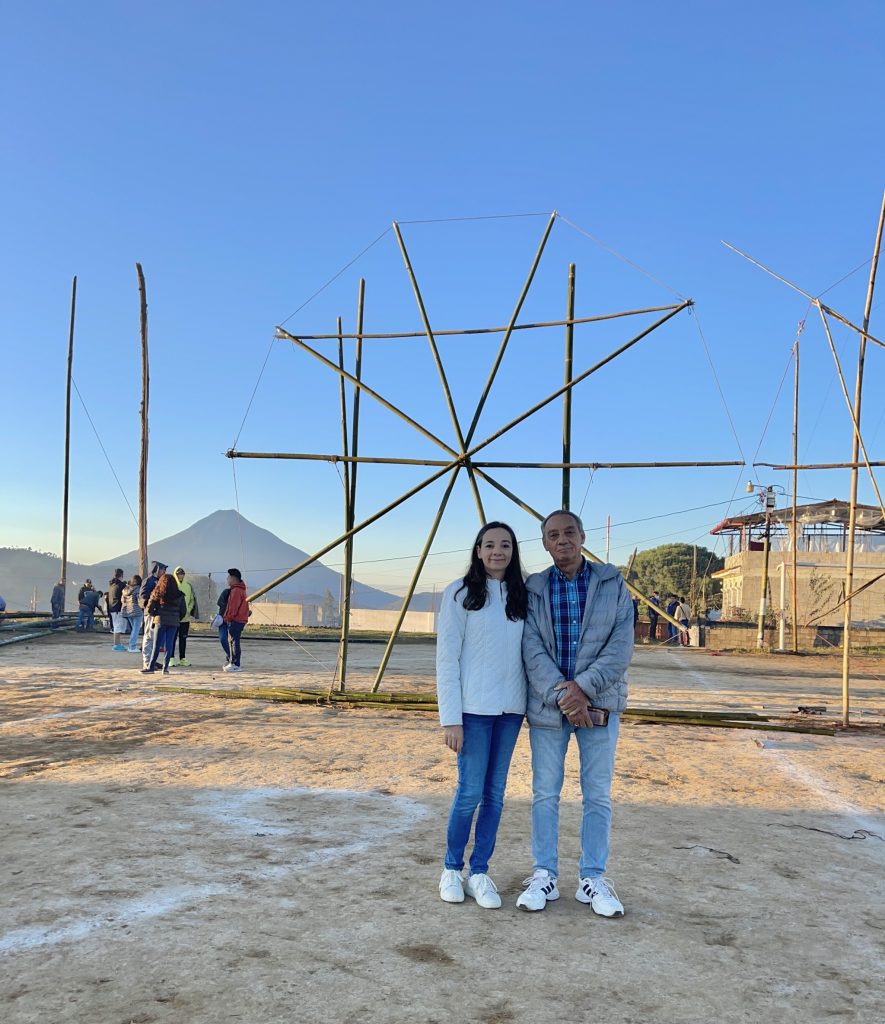
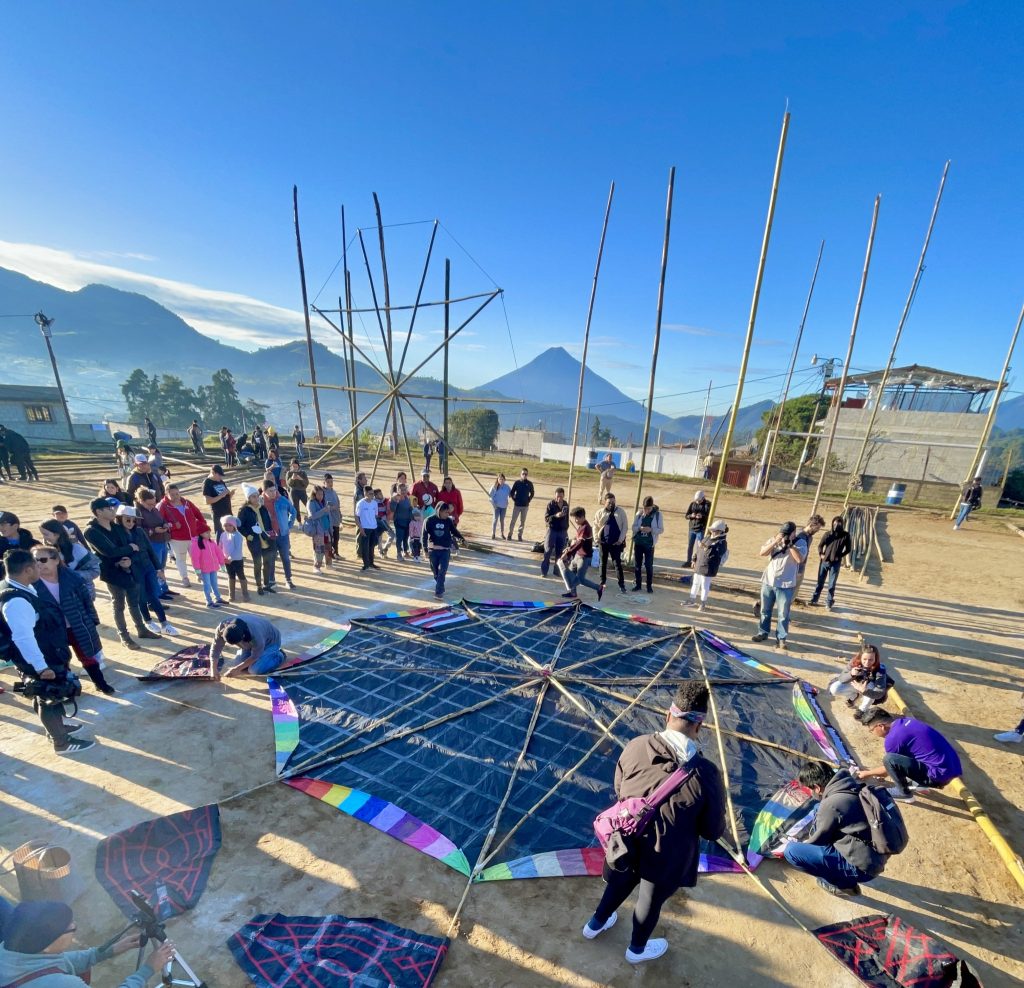
On my early-morning visit, the field was surprisingly quiet at first light. Instead of rows of giant kites, we saw piles of bamboo poles, groups in matching T-shirts, and just a handful of people warming up with tamales and hot atole. The real transformation started closer to 8 AM.
By around 8 AM, the teams are assembling their structures. Each group builds a wooden framework with long poles and rope, then attaches the paper design they have spent months perfecting. Many visitors miss this part because they arrive after the kites stand, and for me it is the most emotional and meaningful hour of the day. The care and teamwork behind each barrilete gigante move me every time.
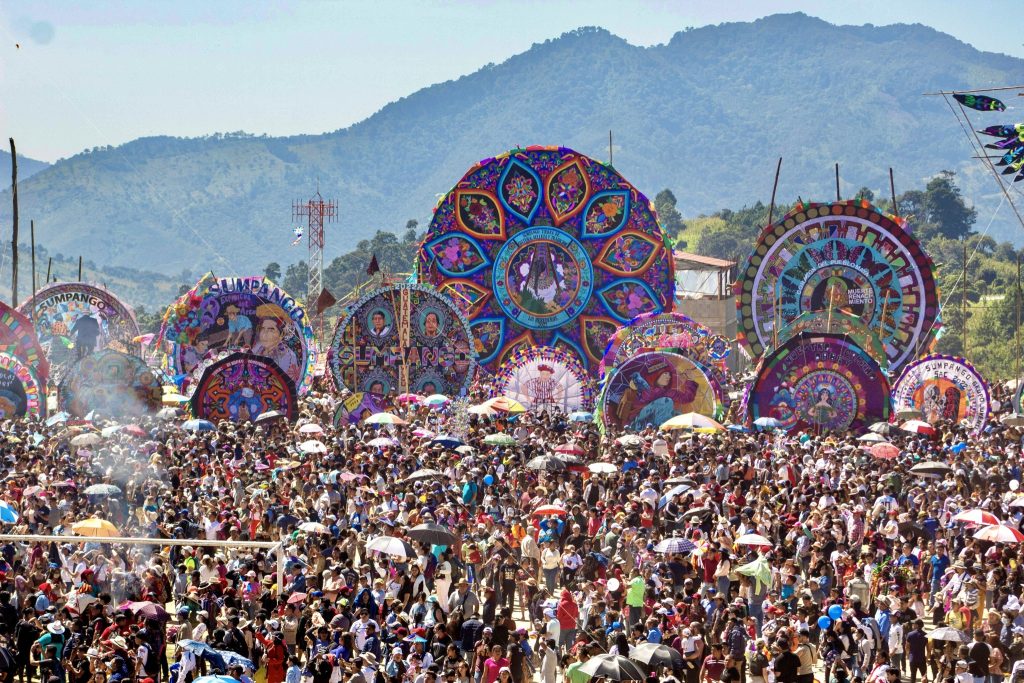
By mid-morning, the field fills with people and the kites rise one by one. An emcee announces the names of the kite-making teams and invites the crowd to shout out where they come from. You hear towns from every region of Guatemala and countries from around the world, and it feels like everyone gathered in this one small town to witness something extraordinary.
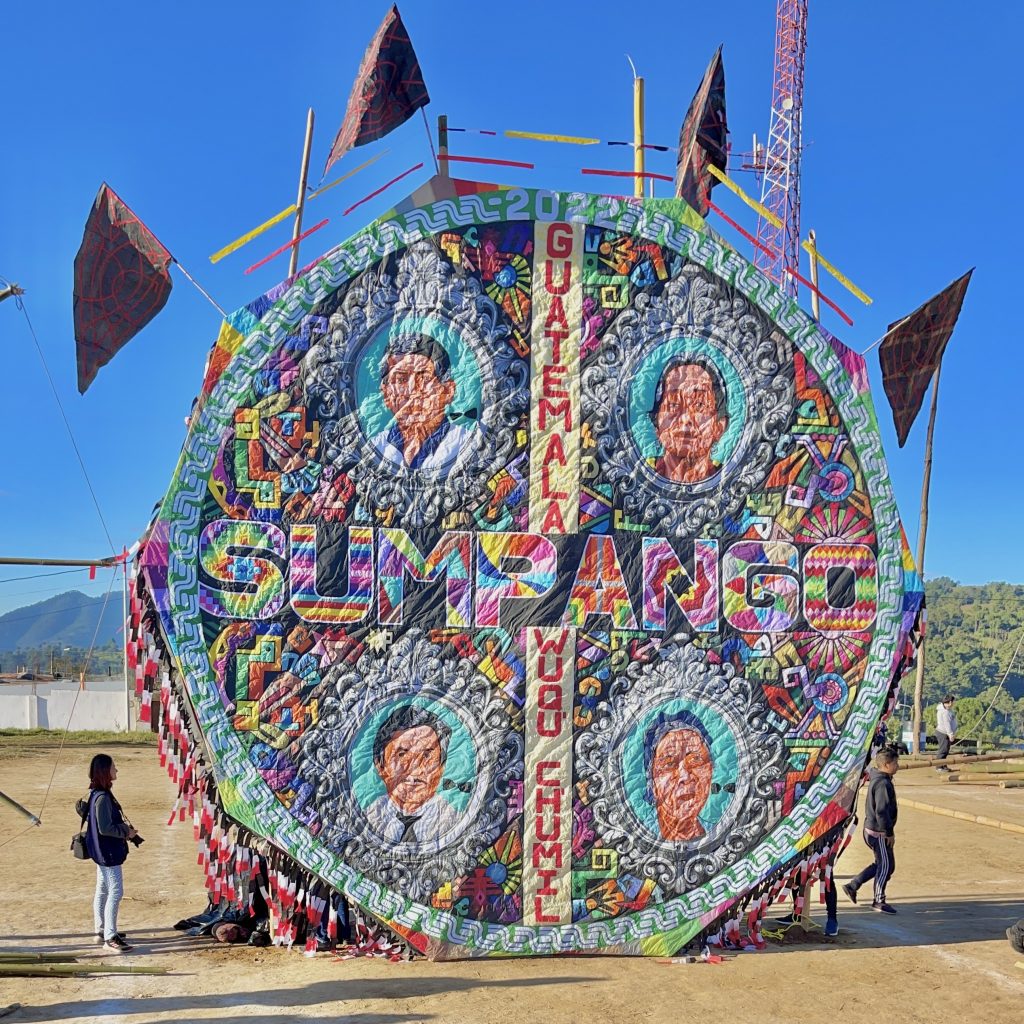
The festival continues into the afternoon with contests, music, traditional foods, and an atmosphere that blends celebration, remembrance, and pride. Whether you watch the first kite rise or weave through the crowd to see each design up close, the day stays with you long after it ends.
Best Tips for the Sumpango Kite Festival: What to Know and What to Skip
If you want to experience the Sumpango Kite Festival, not just see it, time your arrival well. Around 8 AM, the teams are building. By mid-morning the giant kites already stand and the crowds are in full swing, and the most intimate moments of the day have passed.
My favorite time to arrive is around 8 AM. Before then, only a handful of locals sip atole and warm up with tamales while the teams get ready. Around 8 AM you see the teams at work, many of them young people and community groups who worked for months on their design. Watching them build the bamboo frames by hand and glue their tissue paper artwork onto the structure is teamwork, art, and ceremony all at once.
Here are a few more tips to help you make the most of your visit:
- Dress in layers. Early mornings in Sumpango are chilly, and the sun is strong by midday. Bring a hat, sunscreen, and something warm for the first hours.
- Pack light but smart. Water, snacks, tissues, and hand sanitizer help. Food stalls are on site, but the lines grow longer later in the day.
- Bring cash. Most food vendors and local artisans do not take cards, and there are no ATMs on site.
- Take your photos early. Once the field fills, it is almost impossible to get a clear shot with a kite in the background.
- Prepare for crowds. By mid-morning, thousands of people arrive. Keep your bag in front of you, stay patient, and take breaks on the edges of the field when you need space.
- Be respectful. This is not only a tourist event. It is a spiritual, emotional, and cultural day for the people who make these kites and for the families remembering their loved ones at the cemetery next door. Ask before taking close-up photos of artisans or families.
The scale and energy of the festival can surprise you, and the mix of reverence, artistry, and joy makes it special. It shows how Guatemala blends ancient tradition with present-day expression.
What Not to Do at the Sumpango Kite Festival
- Skip the pre-dawn arrival. The field stays quiet until around 8 AM, so there is no need to rush out in the dark.
- Skip the late-morning arrival. After 10 AM the field is packed, parking is far, and the traffic on the way out backs up for miles.
- Do not count on cards or ATMs. Bring cash in small bills.
- Do not wait for the giant kites to fly. They stand upright as art, and smaller kites fly in the afternoon.
- Do not plan Sumpango and Santiago Sacatepéquez in one day. Traffic and crowds make it too much. Pick one and see the other another year.
- Do not photograph artisans or families up close without asking. Many people around you are remembering loved ones.
Getting to the Sumpango Kite Festival From Antigua and Guatemala City
Location
The festival takes place on the municipal soccer field beside Sumpango’s cemetery, in the department of Sacatepéquez. On a normal day, it sits about 45 minutes from Antigua and 1 to 1.5 hours from Guatemala City. Festival traffic adds time, so build in extra.
Best Time to Arrive
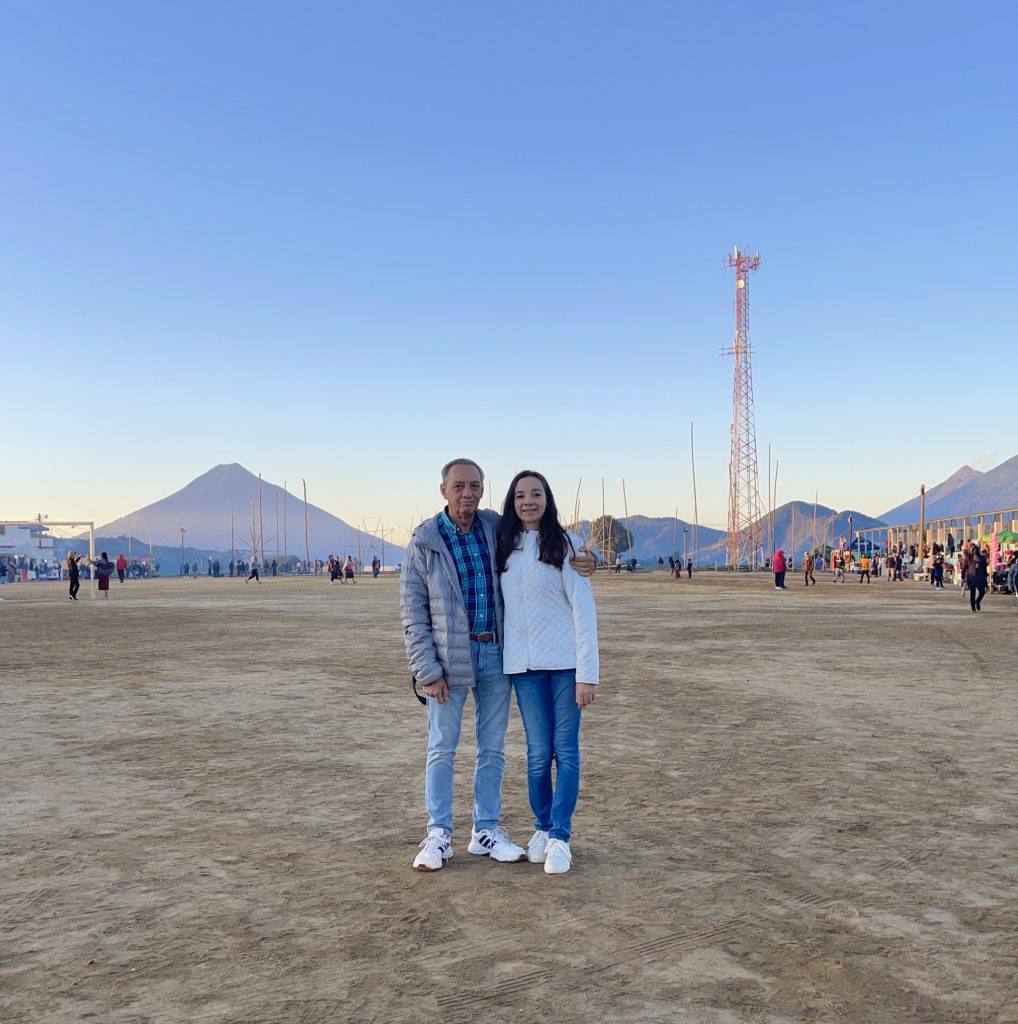
Based on my visits, I would plan to be on the field around 8:00 AM. From Antigua, that means leaving at about 7:00 AM. I have done the before-sunrise arrival, and I would not do it again: we spent almost two hours waiting for the field to come alive, and even the private parking lots were still closed. By late morning, the opposite problem starts: the kites are already standing, the field is crowded, and traffic gets much worse.
Driving or Taking a Shuttle
- Driving yourself: Aim to reach the field around 8 AM. When we arrived before sunrise, we did park close, but the trade-off was nearly two hours with very little happening and no private parking lots open yet. By the time we left, cars were backed up for miles trying to get into Sumpango. That experience is exactly why I now recommend 8 AM instead of 6 AM.
- By shuttle or tour: Many companies run day trips from Antigua and Guatemala City. Confirm departure and return times, and ask when the group reaches the field.
These tours go straight to the Sumpango festival:
Parking Tips
- Do not count on the private parking fields before dawn. When we arrived around 6 AM, they were still closed and roadside parking was the main option. More private lots open as the morning gets going.
- Bring small bills (Q20 to Q30) for parking, since locals open their land later in the morning.
- Wear comfortable shoes. Even with good parking, the walk to the field can be long and uneven.
- If you arrive late, expect to park much farther away and walk through crowds and traffic to reach the entrance.
📌 NAVIGATION TIP
Use Waze or Google Maps, and expect delays if you leave later in the morning. Some roads close for the event, and traffic control is limited. Arriving before the late-morning rush and leaving early is the best way to skip the worst of the traffic.
Planning November 1?
Sumpango or Santiago? I Can Help You Choose.
I have watched these kites rise with my dad, and I know how much a good plan changes the day: which festival fits your group, when to leave Antigua, and where to stand. Tell me about your trip and I will help you build it around November 1.
How Guatemala’s Giant Kites Are Made at the Sumpango Kite Festival
One of the most moving parts of the Sumpango Kite Festival happens before the giant kites go up. If you arrive in time, you see the effort that goes into building these works of art right there in the field, on the morning of the festival.
The barriletes gigantes come almost entirely from bamboo, rope, and tissue paper. Teams cut the tissue paper by hand into intricate designs, then glue it into massive sheets that form the front of the kite. The designs take months to plan, sketch, cut, and assemble. Most come from local youth groups, artist collectives, or community organizations, often with a spiritual, political, environmental, or cultural message.
On the morning of November 1, the real test begins. The teams lay out the long bamboo poles that form the frame, and by around 8 AM you can watch them measure, tie, and adjust. Some structures measure over 15 meters across, and assembling one in an open field, with the crowd watching, is no small feat.

I will never forget watching a team carry the finished paper design, align it with the frame, and glue it into place. Everyone holds their breath as the kite goes upright. The whole crowd seems to pause, and when it stands, a cheer rises. Then the teams move on to the next one.
Most of the giant kites are built to stand, supported by huge wooden posts and layers of rope. Smaller kites fly in the afternoon, and seeing them spin and tug in the wind adds another layer of beauty and symbolism to the day.
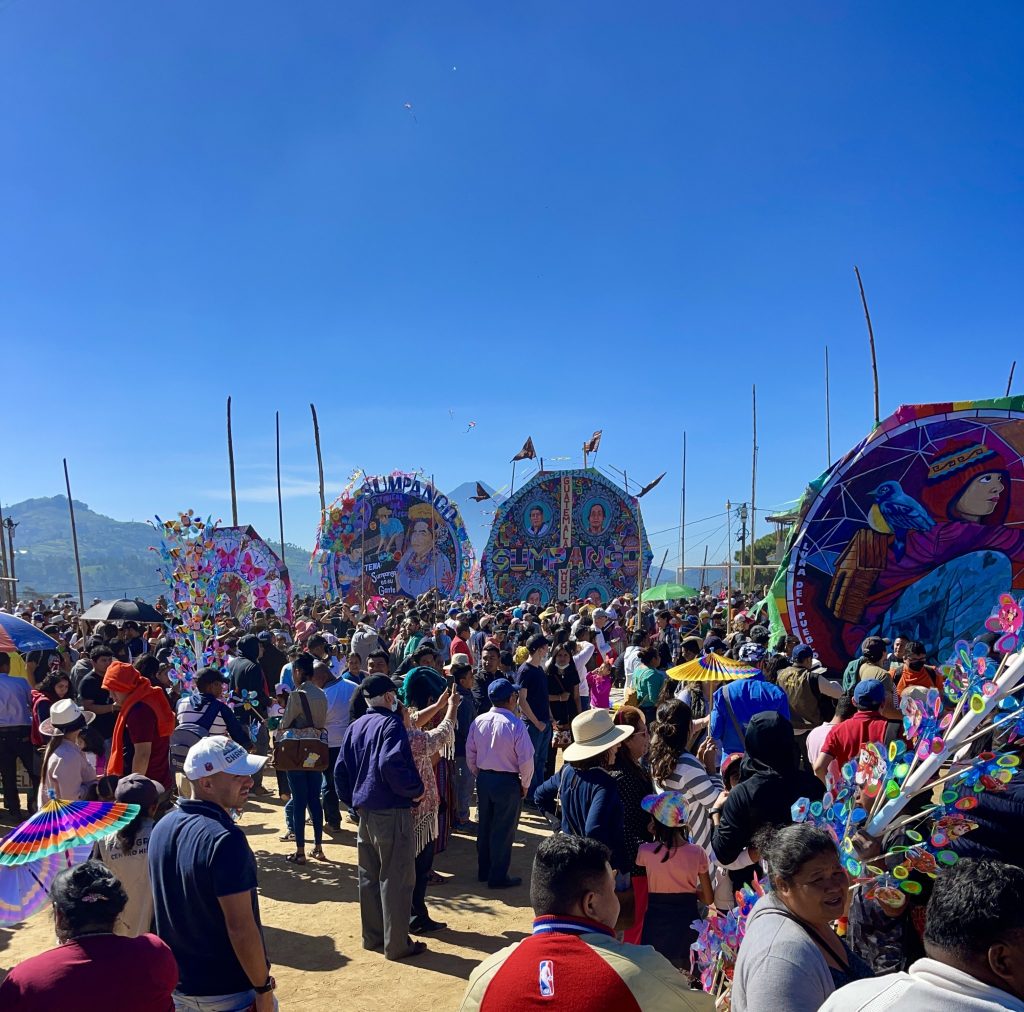
Pride and passion go into every step. This is memory, identity, and community, and it is one of the most rewarding parts of the entire Giant Kite Festival in Guatemala.
How the Giant Kite Festival in Guatemala Connects to Day of the Dead
The Giant Kite Festival in Sumpango ties closely to Guatemala’s Day of the Dead traditions, and it blends Kaqchikel spirituality, Catholic ritual, and contemporary art into something all its own.
Day of the Dead celebrations across Latin America often feature candles, marigolds, and altars filled with offerings. In Guatemala, families spend November 1 at the cemetery, where they repaint graves, bring flowers, and sit with their loved ones. Many families also share fiambre, a cold salad with dozens of ingredients that we make once a year for the occasion. In Sumpango and Santiago Sacatepéquez, the celebration also looks skyward, and the barriletes gigantes act as messengers between the living and the dead.

The idea is that by raising these kites, families send prayers, messages, and love into the sky. In Kaqchikel tradition, the kites also clear the sky of evil spirits so the souls of the departed can visit in peace. They protect and they invite, and together they open a path between worlds.
Over time, the tradition has grown to include much more than spiritual messages. Many kites now speak to what is happening in Guatemala today: migration, deforestation, political struggles, and the preservation of Indigenous culture. At its core, the day is still about remembrance. Even as thousands gather, eat, laugh, and take photos, a shared reverence runs through the field.
If you have never spent All Saints Day in Guatemala, the kite festival is a powerful place to start. It is a living tradition, carried forward by young hands and old hearts, and it connects past and present in one of the most visual and heartfelt ways I know. When the giant kites rise slowly into the blue, you feel that connection too.
Where to Eat Near the Sumpango Kite Festival
Sumpango is a small town without major restaurants, and on festival day the community fills the field with food stands, homemade meals, and temporary vendors. The experience is rustic and very local, which reflects the heart of the Giant Kite Festival in Guatemala.
What to Eat at the Festival
Food is a big part of the celebration. You will find:
- Atole: A thick, sweet corn-based drink, perfect while you wait for the sun to rise. Try my recipe for atol de elote.
- Chuchitos: Small tamales wrapped in a corn husk, easy to eat on the go and one of my favorite Guatemalan foods.
- Elotes: Grilled corn, an easy Guatemalan street food to carry as you walk the grounds. I like mine with lime and salt only, but you can add mayonnaise, cheese, and hot sauce.
- Pepián: Guatemala’s national dish. This hearty stew is perfect when the day is cold.
Bring small bills and coins, because vendors rarely have change for large denominations. Most stalls take cash only.
Fiambre is the dish that defines November 1 in Guatemala, and families usually eat it at home or at the cemetery with their relatives. It is best at a Guatemalan table, so if a local family or a tour invites you to share it, say yes. To understand what goes into it, read my guide to fiambre and its history, or make it at home with my fiambre recipe.

Where to Stay for the Sumpango Kite Festival: Antigua Is the Best Base
There are no practical tourist hotels right by the Sumpango festival grounds, and I would not plan on finding convenient accommodation in town for this event. Stay in Antigua Guatemala instead. It gives you far more hotel choices, restaurants for the night before and after the festival, and a much easier start than coming from Guatemala City, Lake Atitlán, or farther away on the morning of November 1.
From Antigua, Sumpango is about 45 minutes away on a normal day, although festival traffic can stretch that considerably. If the kite festival is a priority, I would sleep in Antigua on October 31, leave around 7 AM, and aim to reach the field at about 8 AM. Guatemala City can work, but I would choose it only if you already have another reason to stay there.
If you arrive a day early, this Antigua cultural Mayan walking tour is a nice way to settle into the area before festival day. My Antigua travel guide has more ideas for your stay.
Luxury: Hotel Museo Casa Santo Domingo
If you want the splurge, this is the hotel I would choose. Hotel Museo Casa Santo Domingo is in Antigua proper, has parking, and the hotel itself feels like part of the trip, with historic ruins, gardens, museums, a pool, restaurants, and spa facilities on site. Standard rooms are typically priced well above the other options in this list, so I would treat this as the top-tier choice rather than the default festival hotel.
See rooms at Hotel Museo Casa Santo Domingo →
Mid-Range: Porta Hotel Antigua — My Pick for Families
For most families, Porta Hotel Antigua is the sweet spot. It is central, comfortable, has pools and gardens, and it gives you an easy base for combining the kite festival with a few days in Antigua. The hotel has private guest parking, and I have stayed here myself, so this is the option I can speak about most personally. Read my full review of Porta Hotel Antigua for families before you book.
Affordable Hotel: Hotel Las Farolas
You do not need to stay in a hostel to keep the Antigua portion of this trip affordable. Hotel Las Farolas is a traditional hotel in Antigua with a garden setting, 24-hour reception, and parking, and it is usually positioned below the luxury and boutique properties above. For festival weekend, rates can jump anywhere in Antigua, so I would still book October 31 and November 1 as early as possible.
Check Hotel Las Farolas rates and availability →
More Boutique Options in Antigua
If your budget sits between Porta and Casa Santo Domingo, these are two more central options worth comparing:
- El Convento Boutique Hotel: a quieter boutique stay in central Antigua and an uncomplicated departure in the morning. Check El Convento prices and availability on Expedia →
- Mesón Panza Verde: a boutique hotel with a well-known restaurant, which is especially nice if you want an easy dinner after a long festival day. Check Mesón Panza Verde prices and availability on Expedia →
My festival-night strategy: book Antigua for October 31 and at least November 1, especially if you want to enjoy dinner and a shower instead of getting straight back on the road after the festival. November 1 is one of those dates when I would not leave the hotel decision until the last minute.
A rental car gives you control over your arrival time, and that matters here because timing shapes your whole day. If you would rather avoid driving and parking, use a shuttle or tour instead. My guide to renting a car in Guatemala covers what to know if you decide to drive.

This Is My Country
This Is My Country. Let Me Share It With You the Right Way.
I was born in Guatemala, and I plan trips the way I would plan them for my own family. I build personalized itineraries around what is worth your time, from the kite festival to Antigua, Lake Atitlán, and beyond.
Frequently Asked Questions About the Sumpango Kite Festival
Is the Sumpango Kite Festival free to attend?
Yes, entry to the festival is free. Bring cash for parking, food, souvenirs, and small purchases at local vendor stands. The event takes place in an open field on the edge of Sumpango.
Can visitors fly kites at the festival?
The giant kites on display belong to the local teams, and they handle them. In the afternoon, smaller competition kites take to the air. You can fly a small kite of your own in the areas around the main field, and hand-crafted kites are usually for sale at the festival if you want to join in.
Are all the giant kites flown?
No. The largest barriletes gigantes are built to be seen, so teams mount them upright on wooden frames for display and competition. Some of the smaller kites fly later in the day.
How accessible is the festival for people with mobility challenges?
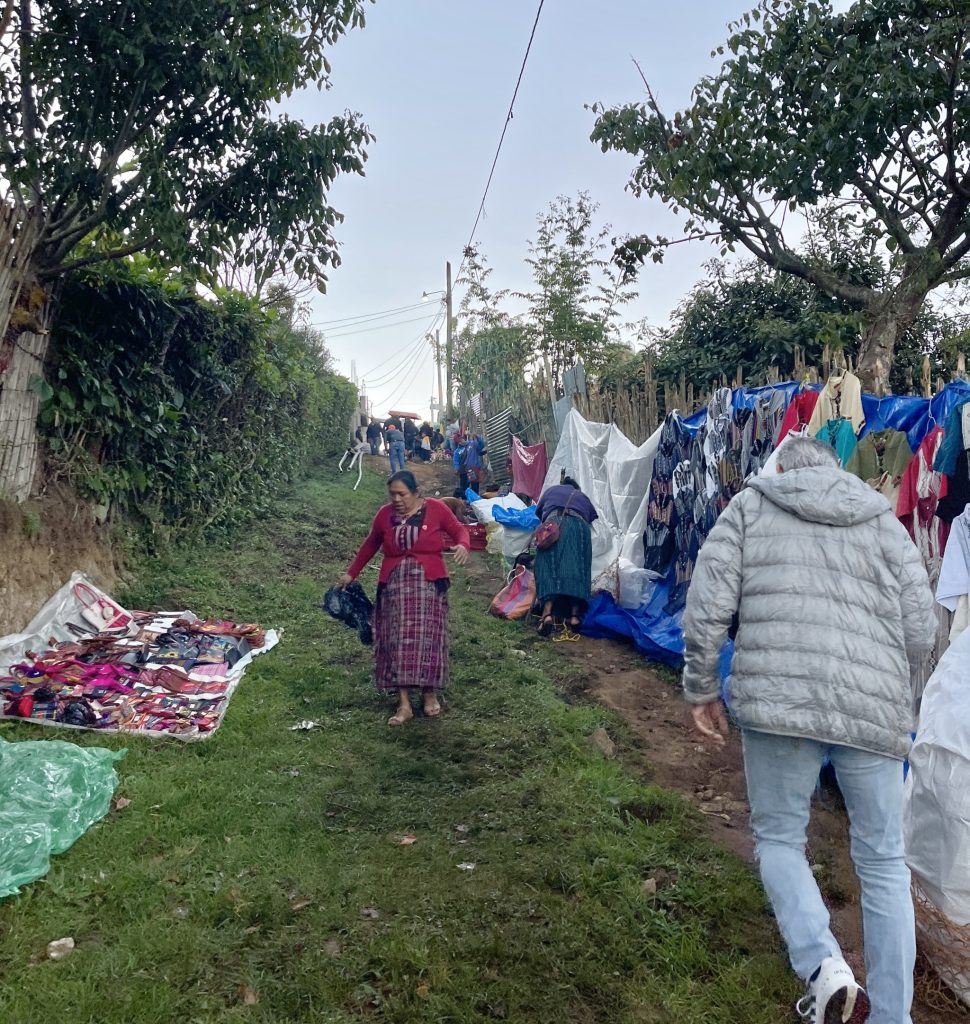
The terrain is uneven and mostly dirt, with few formal paths, and if you park on the side of the road, the climb to the field is steep. The festival has no designated accessibility areas, and the crowds can get dense. If mobility is a concern, come early and stay along the outer edges of the field, where it is easier to move around.
Is it safe to attend with kids?
Yes, with a few precautions. The morning hours are calmer and more family-friendly. Later in the day the field gets extremely crowded, and it is easy for kids to feel overwhelmed or lose track of you. Arrive around 8 AM, keep children close, and plan breaks. My guide to things to do in Antigua with kids helps fill the days around it.
Can I attend both Sumpango and Santiago Sacatepéquez in the same day?
It is possible, but I do not recommend it. The two towns sit close together, but traffic and the scale of each event make it hard to enjoy both in one day. Sumpango is easier to reach and draws more international visitors, while Santiago Sacatepéquez feels smaller and more intimate. If you are curious about both, visit them in different years, and use my Sumpango vs. Santiago comparison to pick your first.
What makes the Giant Kite Festival in Guatemala different from other Day of the Dead traditions?
Cemetery visits and altars are common in many Day of the Dead traditions. The Giant Kite Festival in Guatemala adds art and sky as a way to connect with ancestors. The kites carry prayers and clear away bad spirits, blending Maya Kaqchikel beliefs with modern messages and community storytelling.
Experiencing the Giant Kite Festival in Guatemala
The Sumpango Kite Festival is not just a cultural event. It is something you feel in your chest, in your skin, in your bones: the sound of bamboo poles being tied together in the morning chill, the colors of the barriletes gigantes rising slowly above the field, and the voices calling out hometowns from every corner of Guatemala and beyond.
For me, it is more than tradition. It is memory. It is connection. Sharing this experience with my dad in 2024, after growing up seeing the kites in newspapers and on TV, reminded me why this celebration means so much to us as Guatemalans. It honors our past while giving people a way to speak to the present. These kites do not just honor the dead. They carry messages for the living too.
If you plan a trip to Guatemala in the fall, make time for this festival, and reach the field around 8 AM. Watch the teams build. Walk the field before the crowds fill it. Listen, feel, and let it unfold. When that first giant kite rises, you will understand why people from across the globe travel here to witness a tradition so alive and so rooted in history that it could only belong to the Giant Kite Festival in Guatemala.
More Guatemala Guides for Planning Your Trip
- Sumpango vs. Santiago Sacatepéquez — which giant kite festival fits your group, schedule, and tolerance for crowds.
- Giant Kite Festival in Santiago Sacatepéquez — the smaller, more intimate celebration centered around the cemetery.
- The Barriletes de Guatemala — the history, symbolism, colors, and craft behind Guatemala’s giant kites.
- Day of the Dead Traditions in Guatemala — how Guatemalan families remember their dead at the cemetery and at the table.
- Day of the Dead Across Latin America — how Guatemala’s celebration compares with traditions around the region.
- Fiambre: History and Culture — the once-a-year dish that defines November 1 in Guatemala.
- Antigua Guatemala Travel Guide — where to walk, eat, and stay in the city that makes the best base for the festival.
- Festivals in Antigua Guatemala — celebrations and important dates throughout the year.
Your Guatemala Trip
Plan Guatemala Around the Moments That Matter
I grew up with these traditions, and I love helping visitors experience them at the right hour, in the right place, with the context that makes them mean something. If November 1 is on your calendar, let’s build your trip around it.

Through her writing, Paula helps travelers discover Guatemala beyond the typical tourist route with practical advice, local recommendations, and authentic experiences that connect visitors with the country’s people, culture, and traditions.
Planning a trip to Guatemala? Paula offers personalized Guatemala itinerary planning and trip consultation services tailored to your interests, travel style, and budget. Contact her at [email protected] to learn more.
- San Lucas Tolimán Guatemala: Lake Atitlán’s Best-Kept Secret - September 24, 2026
- Hotel Tolimán Lake Atitlán: A Special Stay in San Lucas Tolimán - September 24, 2026
- Guatemala Dreams in San Lucas Tolimán: A Boutique Stay on Lake Atitlán - September 23, 2026

