Guatemalan drinks are some of the most diverse, deeply rooted, and least-known traditional beverages in all of Latin America — from fermented frescos served at Semana Santa processions to thick, spiced atoles ladled out before sunrise at highland markets. Some of them go back to the Maya. Some arrived with the Spanish. Most of them are a combination of both. Whether you’re talking about the cold aguas frescas sold from big glass barriles at market stalls, the ancestral cacao drinks of eastern Guatemala, or the warming hot drinks that get you through a cold morning in the highlands, Guatemalan beverages tell you something real about the place they come from. This guide covers all of it.
I grew up in Guatemala City drinking horchata at birthday parties and tamarindo from the market, and I thought I knew traditional Guatemalan drinks pretty well. It took years of traveling around the country — and later, living away from Guatemala and craving things I couldn’t easily find — to realize how much I had missed. There’s a whole universe of Guatemalan beverages out there, from the fermented fresco de suchiles of the capital to the toasted cacao tiste of the east to the earthy atol blanco of the highlands, and most of it rarely travels beyond the communities where it’s made.
That’s what this guide is for. Think of it as your map to everything Guatemala has to offer in a glass.
More Than Just Coffee: The World of Guatemalan Drinks
Before getting into all the traditional Guatemalan drinks on this list, it’s worth starting with the obvious one. Guatemala produces some of the best coffee in the world — Antigua, Huehuetenango, Cobán — these regions are internationally recognized for their exceptional beans, and for most Guatemalans, coffee is part of daily life in a way that goes well beyond just getting caffeine. It’s how you start a conversation, how you warm up on a cold morning, how you end a comida corriente at a local comedor.
But coffee is just the starting point. Guatemala’s drink tradition is one of the most diverse in Latin America, shaped by thousands of years of indigenous Maya culture, Spanish colonial influence, and the very specific geography of each region. The traditional Guatemalan drinks you find in Chiquimula are completely different from what they pour in Antigua, which is different again from what you’d find in Cobán or Petén. That regional specificity is exactly what makes exploring Guatemalan drinks so interesting.
Traditional Guatemalan Cold Drinks and Aguas Frescas
The cold drinks and aguas frescas are the everyday Guatemalan drinks — the ones sold at market stalls in those big glass barriles de vidrio lined up on the counter, the ones you ask for at a comedor to go with your lunch. These are the frescos you grew up with, the ones that taste like an ordinary Tuesday in Guatemala but become something you deeply miss when you’re far from home. Most of them take just a few minutes to make and use ingredients you can find at any Latin grocery store if you’re living outside the country.
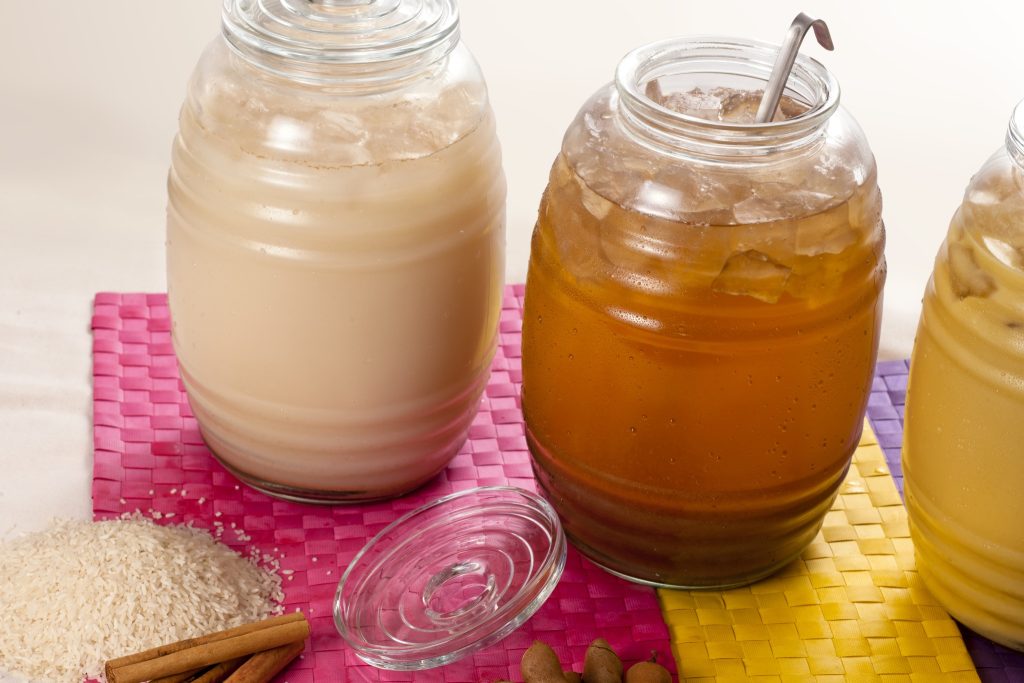
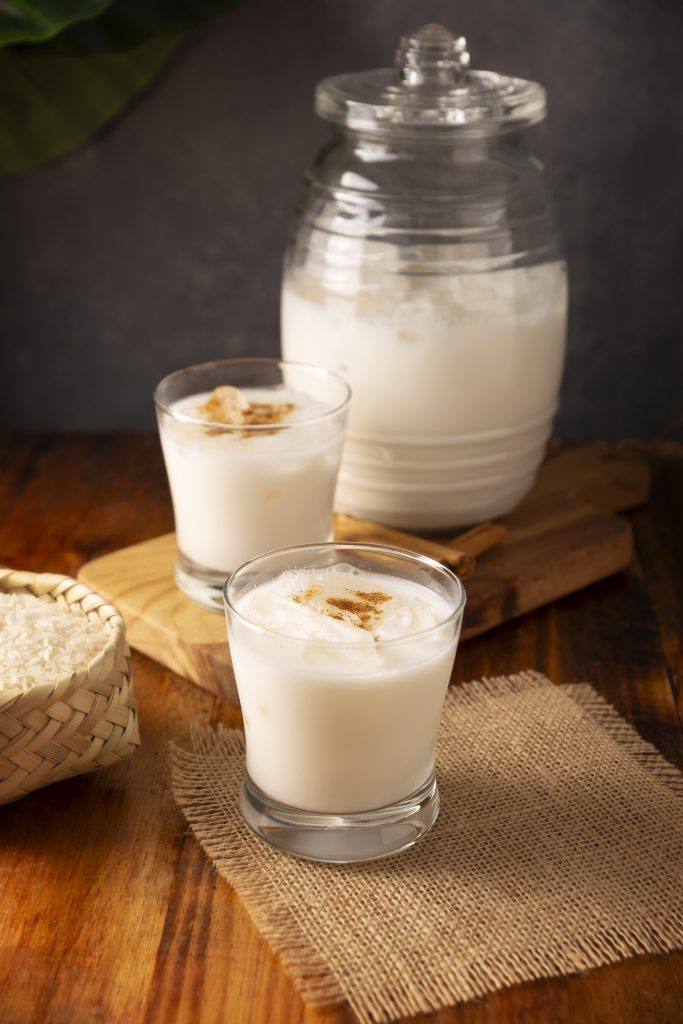
Horchata
Guatemala’s most beloved cold drink is a cinnamon-scented agua fresca made from rice, almonds, and toasted pepitoria seeds. The pepitoria is what sets Guatemalan horchata apart from the Mexican version — it adds a nutty depth that’s completely its own. Sweet, refreshing, and best served ice cold, this is the drink of birthday parties, piñatas, and hot summer afternoons. If there’s one traditional Guatemalan drink that almost every Guatemalan knows and loves, it’s this one.
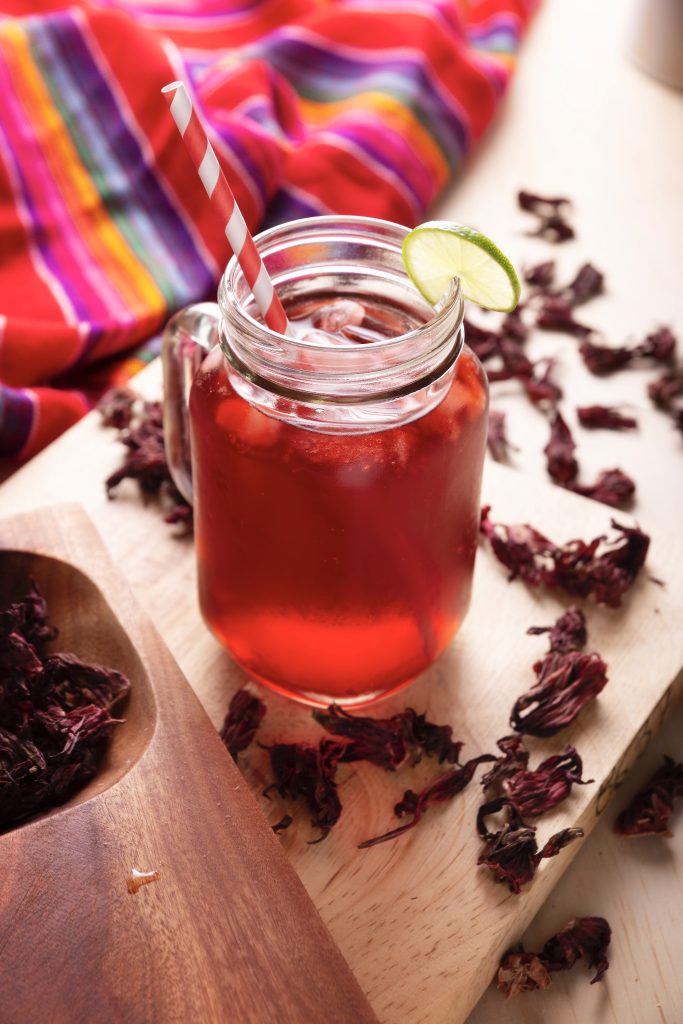
Rosa de Jamaica
The vivid ruby-red hibiscus drink that belongs on every Guatemalan table. Made by simmering dried hibiscus flowers with cinnamon and sugar, then chilling and serving over ice — tart, slightly floral, and beautiful in a glass. Retalhuleu is particularly known for its jamaica production, but you’ll find this fresco everywhere in Guatemala year-round. Simple to make and completely delicious.
Get the rosa de jamaica recipe →
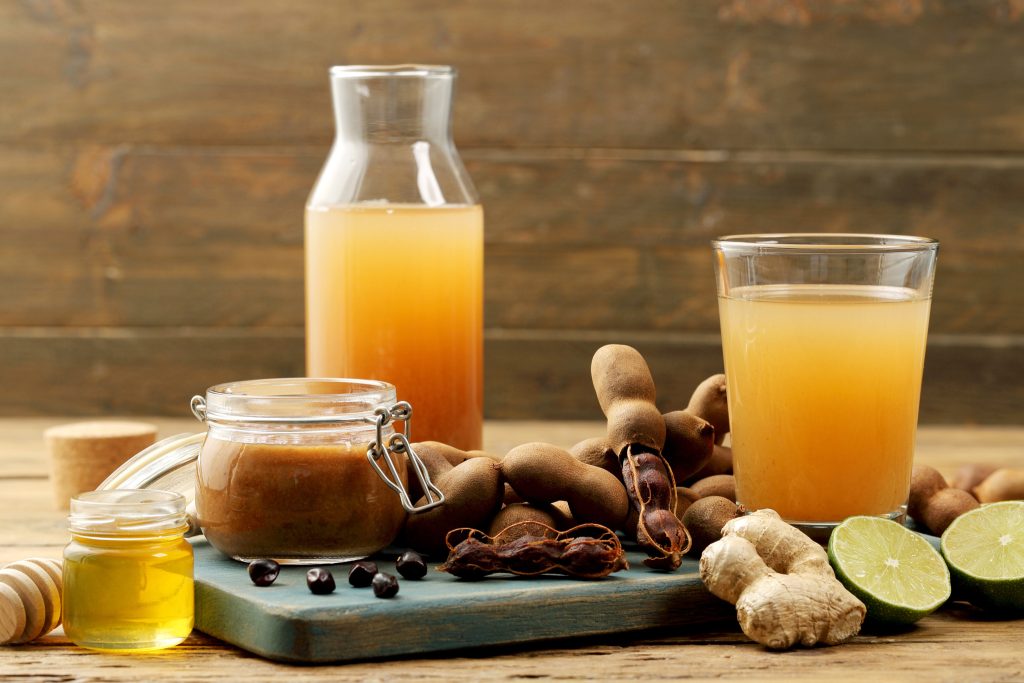
Agua de Tamarindo
Tangy, bright, and made from the pulp of the tamarind fruit — one of the most popular everyday aguas frescas in Guatemala. It’s the same tamarind that shows up in fresco de suchiles and in countless Guatemalan sauces. Cold, refreshing, and deeply familiar.
Get the agua de tamarindo recipe →
Fresco de Chan
One of the oldest Guatemalan drinks still being made today. You make it by simply soaking chan seeds — the same thing sold as chia everywhere now — in water until they swell and the liquid gets slightly thick. The Maya used chan as a travel drink because it’s light, hydrating, and filling. Today it’s usually served with lemon juice and sugar, which were added during the colonial period. Very popular in Huehuetenango, Quiché, and the Verapaces.
Fresco de Carambola
Made from the star fruit (carambola), which grows in the lowland and coastal departments of Guatemala. The fruit is blended or juiced with water and sugar for a refreshing, slightly tart fresco. The star-shaped cross-section makes carambola one of the most visually striking fruits in the market, and the drink is just as good as it looks.
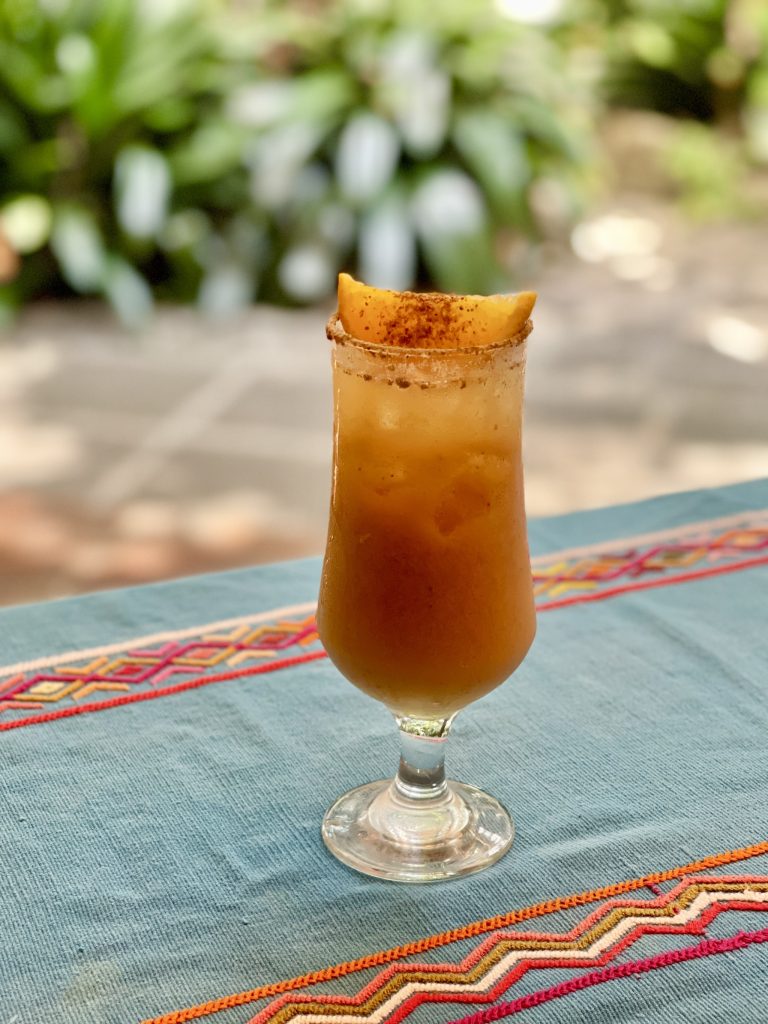
Fresco de Pepita
One of the most interesting traditional Guatemalan cold drinks — a toasted squash seed drink from Zacapa and Chiquimula. Toast the pepita de ayote, blend it smooth with water and sugar, and serve cold over ice. Nutty, lightly earthy, and satisfying in a way most cold drinks aren’t. Dress it up with a spiced rim of ground pepita and tajín and a slice of orange — very Guatemalan and very good.
Get the fresco de pepita recipe →
Limonada
Guatemala’s lemonade uses the large yellow limones reales rather than small limes, giving it a tartness and brightness all its own. Simple, cold, and exactly what you want on a hot afternoon. The chinchivir of Antigua is essentially a spiced-up version of this same idea.
Guatemalan Drinks of Semana Santa and Cuaresma
Semana Santa in Guatemala comes with its own food and drink calendar, and these Guatemalan drinks are some of the most culturally specific in the country. Some of them only appear for a few weeks a year — sold along procession routes, made at home the week before Holy Week, or served alongside the specific meatless foods of the season. The fact that they’re seasonal is part of what makes them so tied to memory. If you grew up in Guatemala, these drinks don’t just taste good. They taste like Semana Santa.
Fresco de Suchiles
The most iconic of all the Guatemalan drinks associated with Holy Week — a lightly fermented fresco made over five to eight days with pineapple, toasted corn and barley, tamarind, ginger, panela, and medicinal roots including cordoncillo, cañafístula, and zarzaparrilla. Earthy, aromatic, slightly fizzy from the natural fermentation, and completely unlike anything else you can drink. The famous Casa de los Súchiles in Guatemala City’s Zona 1 has been serving it since 1940, and Guatemala’s Ministry of Culture recognizes it as intangible cultural heritage.
Get the fresco de suchiles recipe →
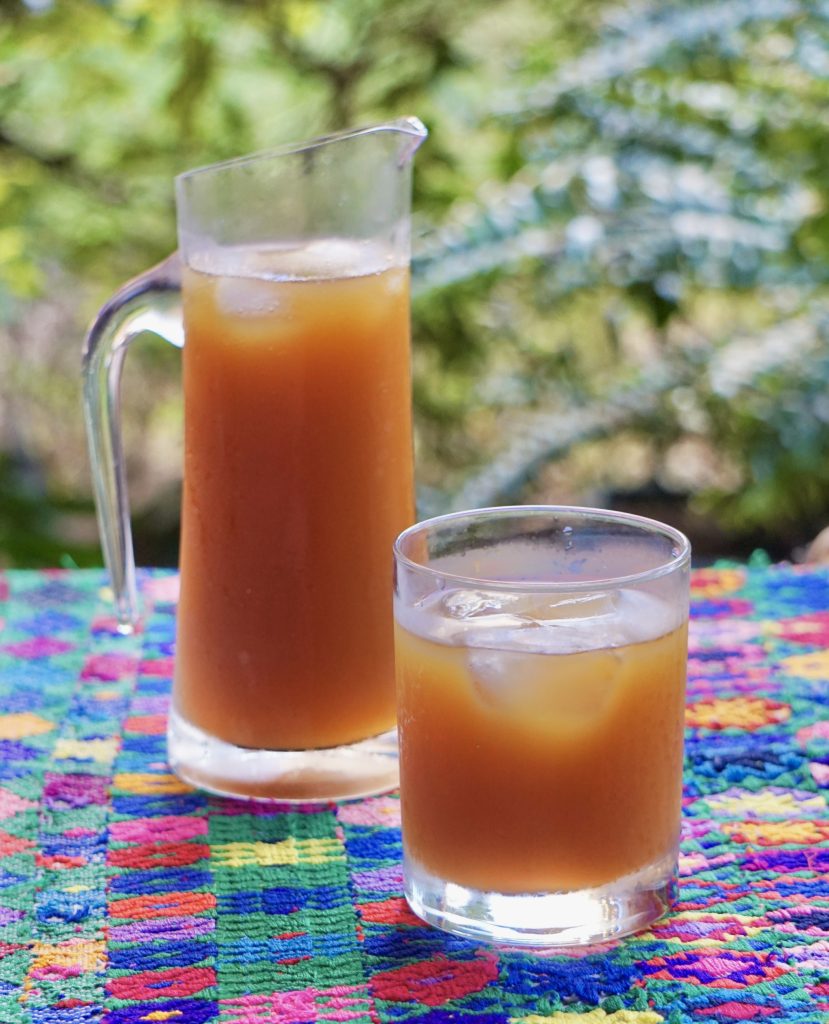
Fresco de Chilacayote
A gently spiced, golden-amber fresco made by simmering chilacayote squash with panela, cinnamon, cloves, fresh ginger, and allspice, then serving it cold over ice. Sweet, warmly spiced, and genuinely thirst-quenching on a hot Jueves Santo afternoon. One of the ancestral Guatemalan drinks with Maya roots, documented by the Ministry of Culture. It also shows up on Día de Todos los Santos in November alongside fiambre.
Get the fresco de chilacayote recipe →
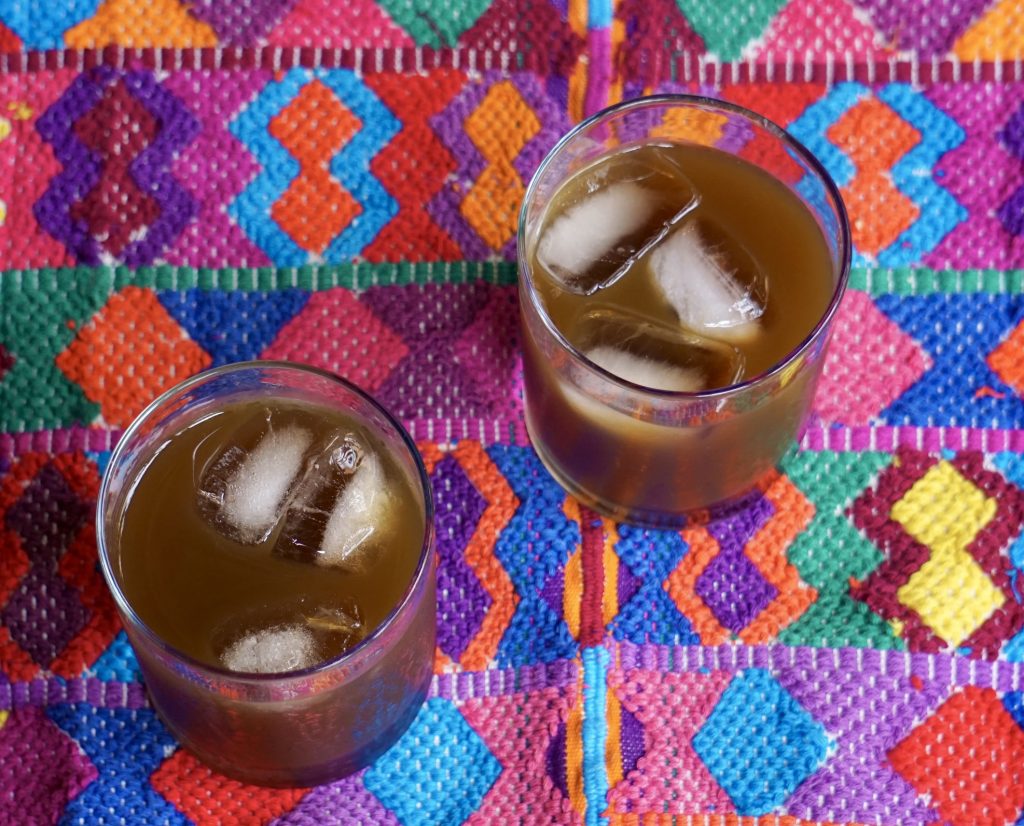
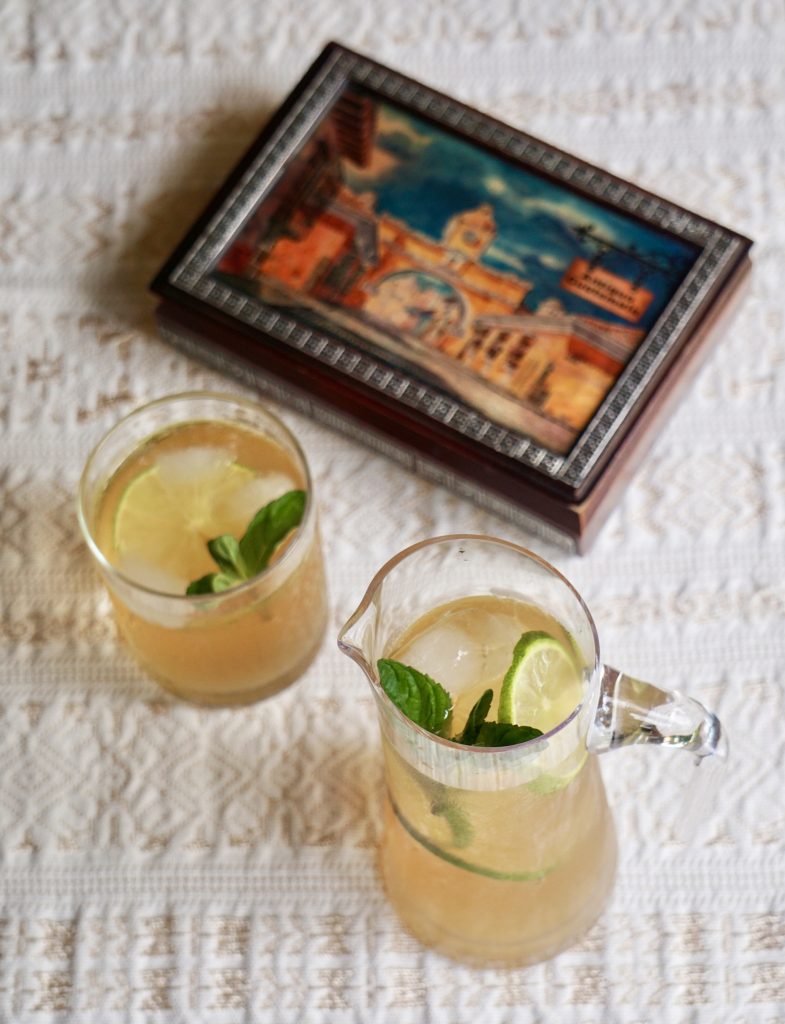
Fresco de Chinchivir
Antigua Guatemala’s traditional lemon and ginger drink — fresh lemon juice simmered with cinnamon, allspice, cloves, and ginger, then chilled and served over ice. Sharp, bright, and built for the dry-season heat. The Armas family on the 7th Avenida Norte in Antigua has been making and selling it since 1936. Despite its strong Semana Santa association, it’s actually a year-round hot-weather drink — the connection to Holy Week comes simply from the fact that Semana Santa falls during Guatemala’s hottest weeks.
Get the resco de chinchivir recipe →
Fresco de Tiste
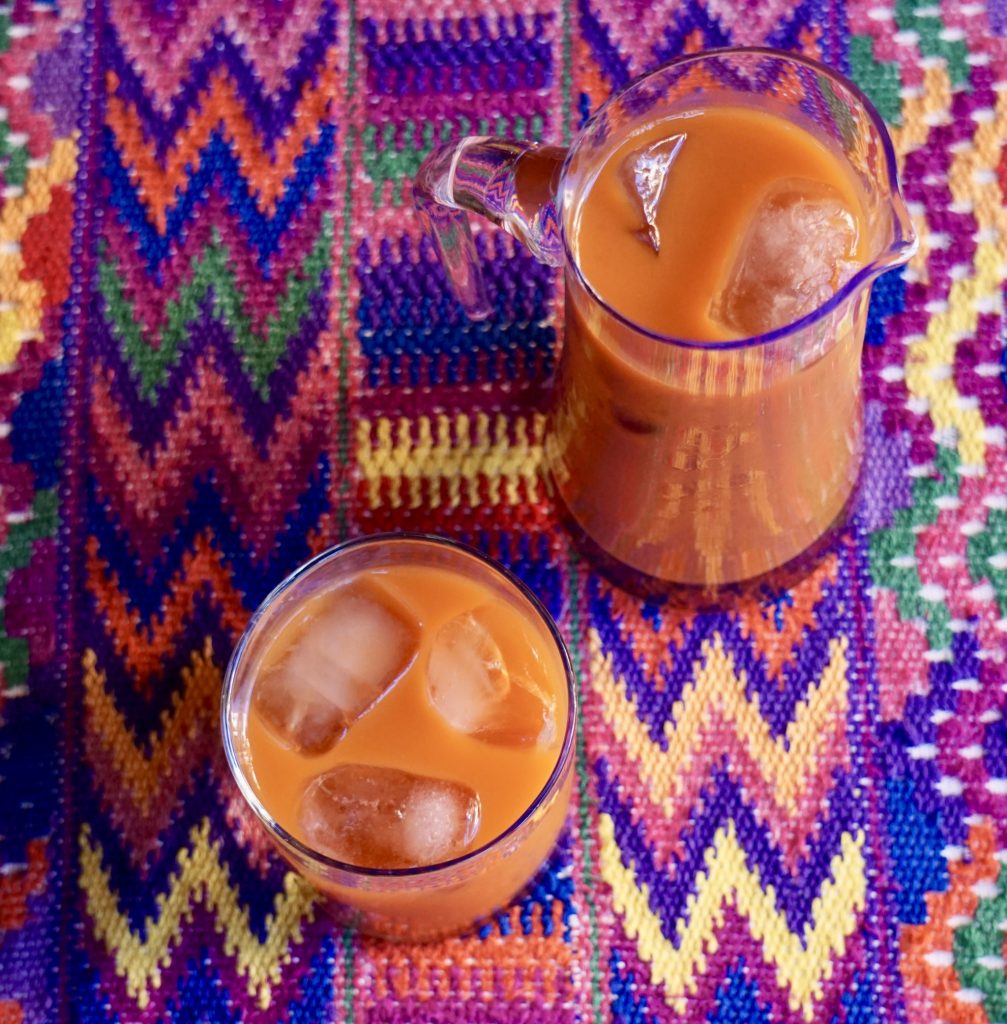
An ancient drink from eastern Guatemala — Chiquimula, El Progreso, Escuintla — made from toasted cacao seeds and toasted corn ground with cinnamon and cloves, then stirred into cold sweetened water. Some versions include achiote, which gives it a deep reddish-orange color. This is one of the oldest Guatemalan drinks still being made today, going back to the Maya, and it’s strongly associated with Semana Santa in the eastern departments.
Get the fresco de tiste recipe →
Fermented and Ancestral Guatemalan Drinks
This category covers the Guatemalan drinks with the deepest roots — beverages that go back to pre-Columbian traditions and have survived centuries of change. Some of them are ceremonial. Some are simply community drinks that never made it into the commercial food system. All of them are worth knowing about, even if you’re unlikely to make them at home.
Chicha
A fermented corn or fruit drink made across Mesoamerica since ancient times. In Guatemala, chicha is particularly associated with the municipality of Mixco, where it’s prepared for the celebration of the Virgen de los Morenos in May. Mildly alcoholic with a slightly sour, earthy flavor — closer to a very light beer than to anything sweet.
Atol Shuco
A fermented corn drink where the maize is soaked for two days to develop a natural fermentation before being ground and cooked. The word shuco means roughly “sour” or “dirty” — a nod to the fermentation process. This isn’t a sweet drink at all. It’s served with lime, chile cobanero, beans, and salt, making it closer to a savory soup than anything you’d think of as a beverage. Found primarily in western highlands and Cobán, deeply rooted in indigenous community life.
Cacao Ceremonial de Alta Verapaz
Cacao is toasted on a comal, peeled, ground with cinnamon and allspice, and beaten in a guacal de morro until the natural fat rises. A small amount of the paste is dissolved in hot sweetened water. The Maya considered this the drink of the gods, and drinking it this way — from real cacao, ground by hand — it’s easy to understand why. Nothing like commercial chocolate. This is cacao before it became dessert.
Guatemalan Atoles: The Hot Corn Drinks
Atoles are the great warming Guatemalan drinks of the cold seasons — thick, filling, made primarily from corn in various forms. They’re the drinks of cold highland mornings, of market refections at seven in the morning, of Día de Todos los Santos and fiestas patronales. Walk through any highland market early enough and you’ll find someone selling atol from a big clay pot, the steam rising in the cold air, the smell of cinnamon or corn or chile drifting across the stalls.
Most of these Guatemalan atoles are based on some form of maíz, which tells you everything about how central corn is to Guatemalan culture. But the variations are enormous — sweet, savory, fermented, fruity, ceremonial, everyday. Each one is tied to a specific region or season, and together they represent one of the richest single categories in all of Guatemalan food and drink tradition.
Atol Blanco
The most fundamental of all Guatemalan atoles — white corn masa dissolved in water and cooked until thick. This is a pre-Hispanic drink mentioned in the Popol Vuh. On its own it has almost no flavor, which is the point. You add your own accompaniments: lime juice, chile cobanero, frijoles parados, and ground pepitoria are the classic combination. It’s both a drink and a light meal. Common throughout the country and especially in Jutiapa and indigenous highland communities.
Atol de Elote
Made from fresh tender corn — the kernels are ground raw, strained through a fine cloth, and cooked with milk, sugar, cinnamon, and a pinch of salt. Naturally sweet with the fresh flavor of young corn. One of the most popular Guatemalan drinks period, not just among atoles. The corn can separate during cooking if you don’t stir constantly — that’s the one thing to watch. Can be served hot or cold. Very popular in Chimaltenango.
Get the recipe for atol de elote →
Atol de Masa
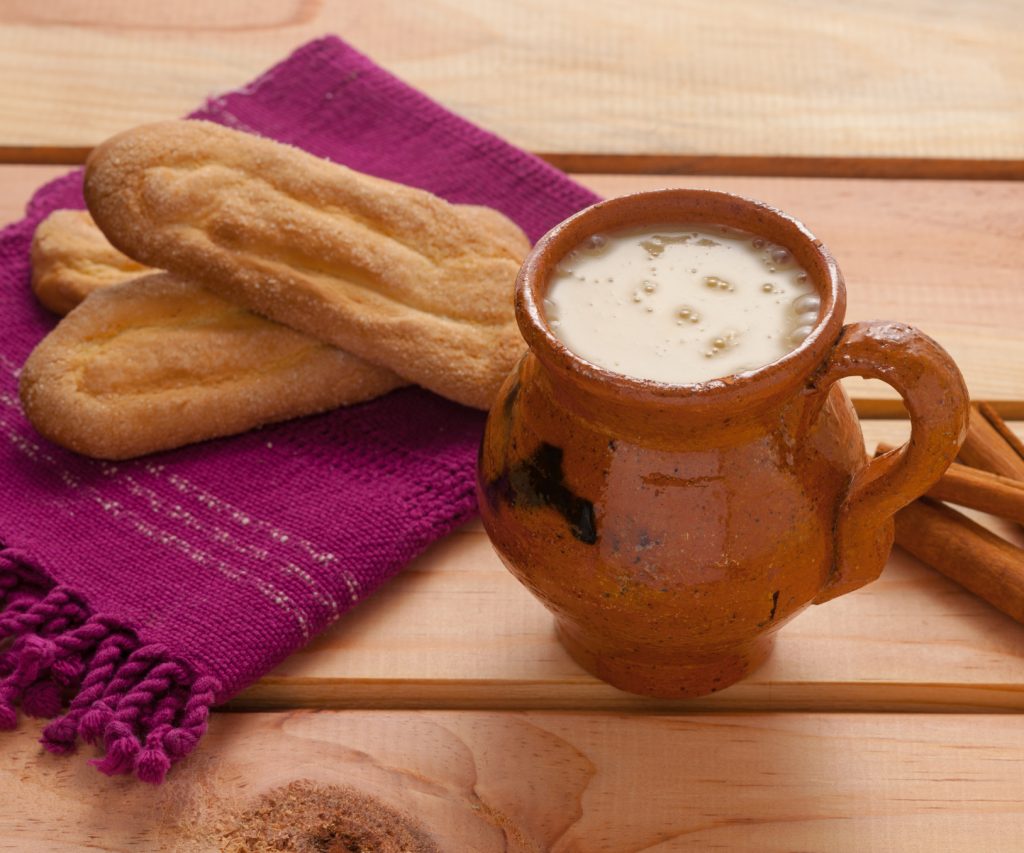
Made from nixtamalized corn masa dissolved in water and brought to a boil. Richer and more corn-forward than atol blanco, with a flavor that tastes like the essence of tortillas and tamales. Often served with savory accompaniments.
Atol de Haba
Made from dried fava beans soaked, cooked, ground into a paste, and cooked with cinnamon and sweetener. Less common than the corn-based atoles but valued in the highland departments where habas grow. Slightly beany and nutty, with a thick consistency that fills you up fast.
Atol de Manía
A toasted peanut atol — the peanuts are ground into a paste and cooked in water or milk with cinnamon and sugar. Rich, nutty, and warming. Has a following in Huehuetenango and surrounding areas. The peanut flavor is front and center when this is made well.
Atol de Arroz
Rice cooked in milk with cinnamon, sugar, vanilla, and a pinch of salt until thick and creamy. This one sits right on the line between a drink and a dessert — often served in a bowl with a spoon. Found everywhere in Guatemala, from corner comedores to family Sunday lunches. One of those Guatemalan drinks that shows up every week in most households.
Atol de Arroz con Chocolate
The chocolate version of arroz con leche — milk is replaced with chocolate, and the cinnamon is left out since the chocolate already contains it. Darker, richer, and more intense. Popular in the capital and surrounding areas.
Atol de Plátano
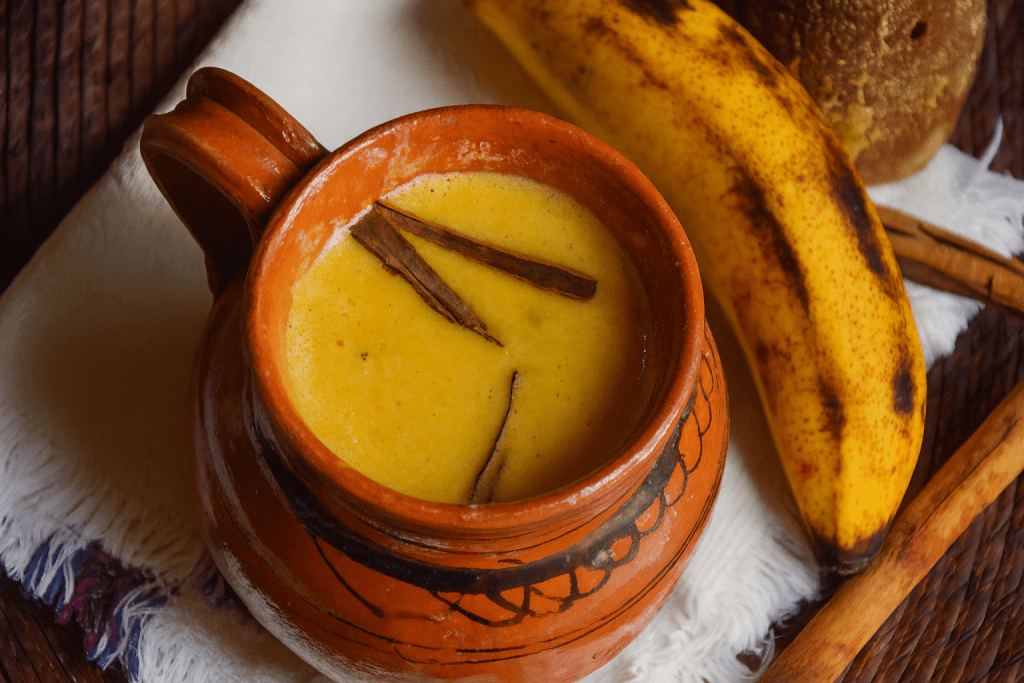
Made from ripe plantains cooked in water with cinnamon and sugar, then blended smooth and simmered until thick. It’s naturally sweet from the plantain itself — the riper the fruit, the sweeter the atol — with a mild, comforting flavor that sits somewhere between a drink and a light meal. You see it at street food stands in the morning, at school entrances in the afternoon, and at ferias patronales where someone always has a pot going. One of those atoles that feels warm and filling in the best possible way, especially on a cold afternoon.
Get the atol de plátano recipe →
Atol de Pericón
An atol flavored with pericón (Tagetes lucida), an aromatic herb with a flavor somewhere between anise and tarragon that’s been used in Maya cooking and ritual since ancient times. Particularly popular in Sololá and other towns around Lake Atitlán. One of those regional Guatemalan drinks that feels completely distinct from anything else on this list.
Atol de Durazno
Made with peaches (duraznos) from Santa Cruz Comitancillo in San Marcos, where the fruit grows abundantly. Fresh peaches are cooked into the corn-based atol, giving it a fruity sweetness that’s unlike the standard versions. A regional specialty worth seeking out.
Atol de Ixpasá
Petén’s ceremonial atol, made from black corn soaked for a couple of days before being ground and cooked. Traditionally consumed on Día de los Muertos — one of the few Guatemalan atoles with a specific ceremonial calendar outside of everyday use. The black corn gives it a purple-gray color and a deeper flavor than white corn versions.
Atol de Piñuela
Made from the piñuela fruit — a wild bromeliad that grows in Guatemala’s hot lowlands — cooked with fresh fruit juice or pulp for a tart, tropical flavor. More common in the lowland and coastal departments.
Chilate
An atol from Baja Verapaz made from white corn masa with chile added. Savory, warming, and one of the atoles that most clearly shows the pre-Columbian roots of this drink tradition. Chile and corn together is as Maya as it gets.
Pinol
Made from toasted ground corn — sometimes with cacao, cinnamon, or other spices — dissolved in hot water. One of the most ancient drink preparations in Guatemala, historically used as a travel and work drink because it keeps well and gives quick energy. Can be sweet or savory depending on the region.
Jox
A lesser-known atol from Totonicapán made with chian seeds, maicillo (sorghum), roughly ground rice, ginger, and panela. One of those hyper-regional Guatemalan drinks that most people from outside the area have never heard of, but locals consider essential. Can be served hot or cold.
Hot Guatemalan Drinks
Beyond the atoles, there are a handful of other hot Guatemalan drinks worth knowing about — particularly the ones that show up during the cold rainy season, the holiday months, or in the specific regional traditions of indigenous communities.
Chocolate Caliente
Guatemala grows world-class cacao, and hot chocolate made from real cacao tablets or paste is in a completely different category from anything made with cocoa powder. Traditional Guatemalan hot chocolate is made by dissolving cacao tablets in hot milk or water with a cinnamon stick, then beating it frothy with a molinillo. Rich, aromatic, and not overly sweet. A staple of the morning refacción and cold highland evenings throughout the country.
Café de Olla
Coffee brewed in a clay pot with cinnamon and panela — spiced, lightly sweet, with an earthiness no drip machine can replicate. The panela and cinnamon balance the bitterness of the coffee naturally and beautifully. Found at market stalls and comedores throughout the country, especially in coffee-producing regions like Antigua, Huehuetenango, and Cobán.
Café de Tortilla
An indigenous community drink made by toasting a tortilla until completely charred, grinding it into fine powder, and brewing it like coffee with hot water. The result has a smoky, slightly bitter flavor that’s surprisingly close to actual coffee but made entirely from corn. Gastronomy researcher Luis Villar has documented this as one of the oldest beverages still made in Guatemalan indigenous communities. Not something you’ll find in restaurants or comedores — this one lives in homes and communities that have never stopped making it.
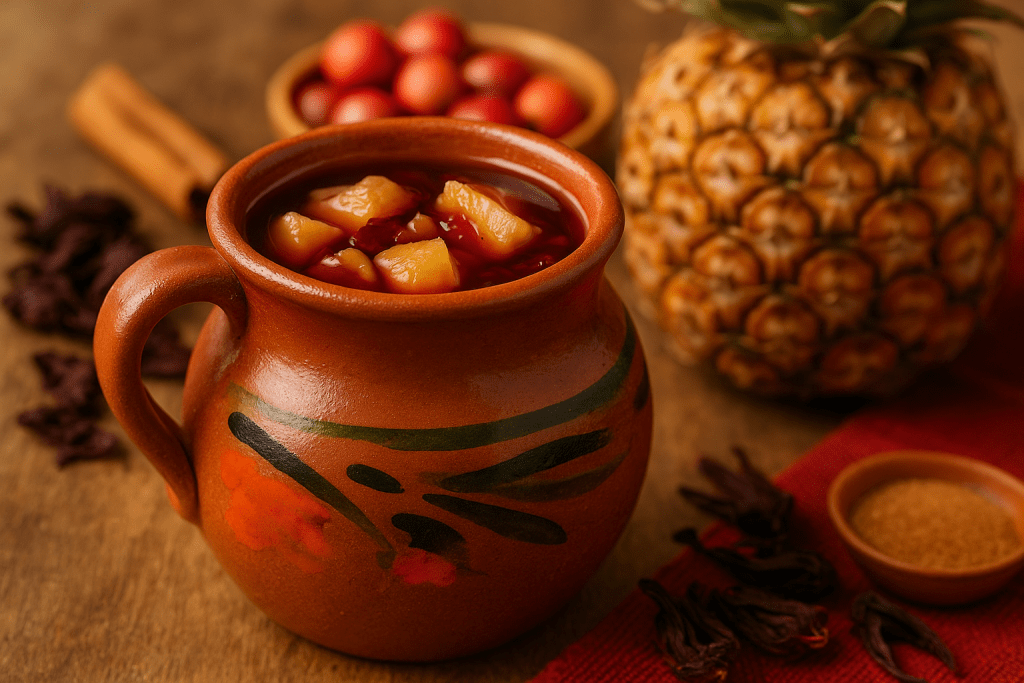
Caliente de Piña
A warming hot drink made from pineapple — the peel and core simmered with panela, cinnamon, cloves, and allspice until the liquid is deeply fragrant and sweet-tart. Popular during the rainy season and around the holidays. The pineapple peel gives it a tartness and aroma that straight pineapple juice doesn’t have.
Get the recipe for caliente de piña →
Festive and Seasonal Guatemalan Drinks
Some Guatemalan drinks only come out for specific times of year, and that seasonality is a big part of what makes them special. The drinks in this category are tied to the holiday calendar — Christmas, the rainy season, end-of-year celebrations — and pulling them out at the right moment is part of the tradition. →
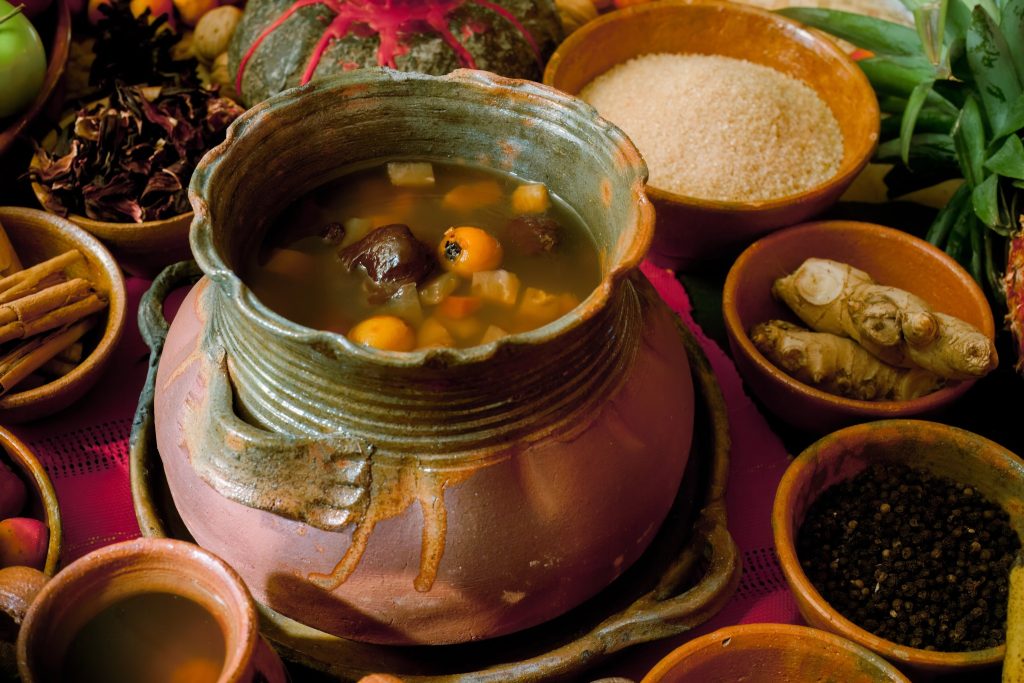
Ponche de Frutas
Guatemala’s holiday punch, served hot and deeply associated with the Christmas season and end-of-year gatherings. Made by simmering a mix of fruits — pineapple, apples, plums, raisins, tejocotes, membrillo — with panela, cinnamon, cloves, and allspice until everything is soft and the liquid is fragrant and rich. Every family has its own version and its own fruit combination. Some add rum. Served in cups with fruit pieces to eat with a spoon. One of those Guatemalan drinks that fills the house with a smell that means only one thing: the holidays are here.
Get the recipe for ponche de frutas →
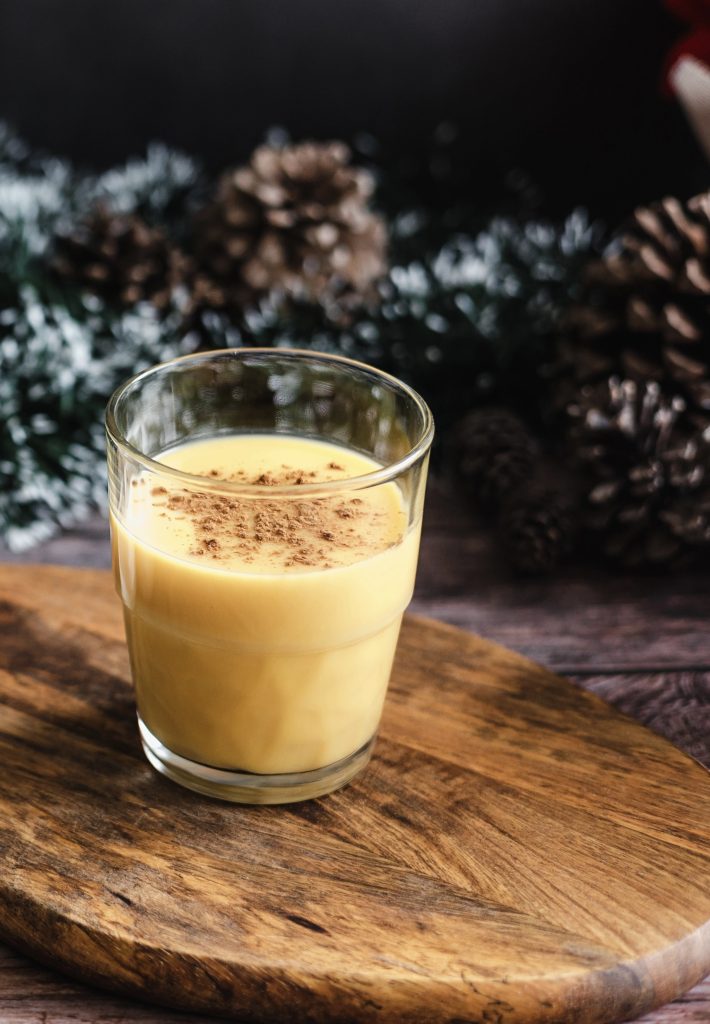
Rompope (Rompopo)
Guatemala’s version of eggnog, from Salcajá in Quetzaltenango, made with milk, egg yolks, sugar, cinnamon, and a touch of liquor. Rich, sweet, and strongly associated with Christmas. The Salcajá rompope tradition is famous enough that bottles from that region are considered the gold standard.
Caldo de Frutas de Salcajá
An aged fruit punch from Salcajá, Quetzaltenango, made from aguardiente blended with quince, apple, nance, and peach, then left to age for a minimum of one year in the solera method — influenced by the sherry barrel tradition the Spanish brought from Jerez. One of the most remarkable traditional Guatemalan drinks, deeply regional, and unlike anything else in the country. The Alvarado and Manrique families have been making it for over 116 years.
Guatemalan Beer: Gallo, Dorada, and Guatemalan Beer Cocktails
No guide to Guatemalan drinks is complete without talking about beer — specifically the beers that Guatemalans actually drink, which are as much a part of the culture as any fresco or atol. These aren’t craft beers or imports. They’re the bottles you find at every tienda, every cena navideña, every feria patronal, every table at a Sunday comida corriente. If you grew up in Guatemala, these labels are as familiar as anything in your kitchen.
Gallo
The national beer of Guatemala, full stop. The rooster on the label is one of the most recognizable images in the country, and Gallo has been brewed since 1896. It’s a light lager — not complicated, not trying to be — and it goes with everything. Rice and beans, pepián, carne asada at a Sunday asado, fried fish on the coast. Gallo is the default answer to “what are you drinking?” at pretty much any Guatemalan gathering. Saying you don’t like Gallo in Guatemala is like saying you don’t like football.
Dorada
Cervecería Centro Americana’s golden lager, a step lighter and more refreshing than Gallo. Dorada is what you reach for on a very hot afternoon when you want something that goes down easy. It has a slightly sweeter profile and a clean finish that makes it ideal for the dry-season heat. Popular at the beach, at family gatherings, and anywhere the sun is doing too much.
Monte Carlo
A slightly darker, fuller-bodied beer by Guatemalan standards — malty, smooth, and a little richer than Gallo or Dorada. Monte Carlo has its loyal following, particularly among people who want something with a bit more character. It’s not as ubiquitous as Gallo but you’ll find it at most places that stock a variety.
Brahva
A more recent addition to the Guatemalan market, Brahva is a very light, easy-drinking lager that’s become popular especially with younger drinkers. Less complex than Gallo, very cold and refreshing, widely available across the country.
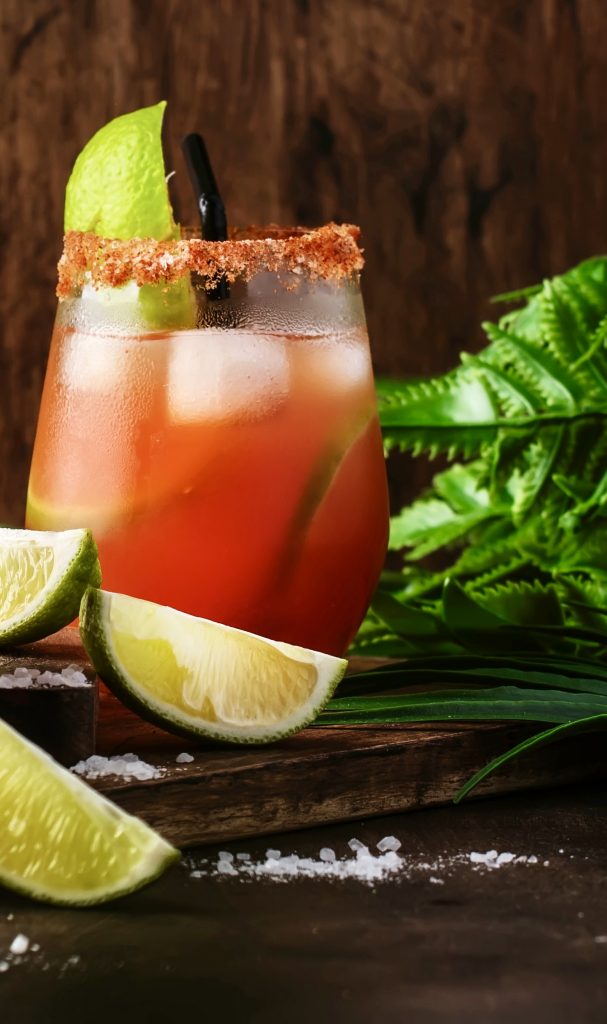
Michelada
Technically not a beer on its own but the way Guatemalans — and much of Latin America — most love to drink it. A michelada is beer served in a salt-rimmed glass with lime juice, Worcestershire sauce, soy sauce, hot sauce, and Maggi seasoning, over ice. It’s tangy, savory, a little spicy, and completely satisfying. In Guatemala you’ll often see it made with Gallo and served at comedores, at the beach, at Sunday morning breakfasts. Every person who makes one has their own specific ratio of ingredients, and they will defend it vigorously.
Get the recipe for Michelada →
Chelada
The simpler version of the michelada — just beer with lime juice and salt, over ice. No sauces, no Worcestershire. Lighter and more refreshing than a full michelada, and sometimes exactly what the moment calls for. Great with ceviche, with tostadas, with anything fried. The chelada is the gateway version that gets people into the whole cold-beer-with-citrus tradition.
Traditional Alcoholic Guatemalan Drinks
Beyond commercial beer and spirits, Guatemala has a world of traditional alcoholic drinks that exist mostly outside the commercial food system — fermented community beverages tied to specific celebrations, artisanal spirits from specific regions, and ancient fermentation traditions that have survived for centuries. Most of these you won’t find in a store. They exist in communities, at fiestas, in the hands of families who have been making them the same way for generations.
Quetzalteca
Guatemala’s most popular local spirit — a sugarcane-based aguardiente from Quetzaltenango. The original version is strong and unaged; it also comes in tamarind and hibiscus flavors. The small bottles are iconic in Guatemala and deeply tied to fiestas patronales and working-class culture.
Boj
A fermented drink from Alta Verapaz made from sugarcane juice and corn, fermented for three days. Artisanal, lightly alcoholic, and deeply tied to Q’eqchi’ traditions. Made in communities for community occasions — you won’t find it in a supermarket.
Chicha Fermentada
The broader category of fermented corn and fruit Guatemalan drinks, with regional variations across the country. In Mixco, chicha for the Virgen de los Morenos celebration in May has its own specific preparation. The fermentation process is considered sacred in some communities.
Cusha
An artisanal distilled spirit made from fermented fruits and aguardiente. Technically unregulated and high in alcohol content, deeply embedded in rural food culture in several regions. Not something to approach casually.
Guarapo
A fermented drink made from fresh sugarcane juice, found in the lowland and coastal regions. Left to ferment naturally, fresh guarapo becomes mildly alcoholic with a sweet, grassy flavor — somewhere between fresh juice and a very light beer.
Caldo de Frutas de Salcajá
Worth mentioning again here because of how unique it is among Guatemalan drinks with alcohol — an aged fruit punch from Salcajá, Quetzaltenango, made from aguardiente blended with quince, apple, nance, and peach, then left to age for a minimum of one year in the solera method, influenced by the sherry barrel tradition the Spanish brought from Jerez. The Alvarado and Manrique families have been making it for over 116 years. Nothing else like it in Guatemala.
More Guatemalan Food Guides You’ll Love
Now that you know what Guatemala has to offer in a glass, here are some deeper dives into Guatemalan food culture on the blog:
The Complete Guide to Guatemalan Food →: Everything you need to know about traditional Guatemalan cuisine — the dishes, the ingredients, the regional variations, and where to start if you’re cooking it at home for the first time.
The Best Guatemalan Desserts →: Rellenitos, buñuelos, bocado de reina, torta de elote — a complete guide to Guatemala’s sweetest traditions.
Traditional Guatemalan Candy and Sweets →: The candied fruits, the ayote en dulce, the jocotes en miel — the sugar-based traditions that show up at markets and fiestas across the country.
Antigua Guatemala Street Food Guide →: Everything you should eat while walking the cobblestone streets of Antigua — from garnachas to shucos to the snacks you didn’t know you needed.
Guatemala’s Most Unusual Foods →: The dishes that surprise even Guatemalans sometimes — a guide to the more adventurous end of the culinary tradition.
Guatemalan Semana Santa Food Guide →: The complete guide to the foods and drinks of Holy Week in Guatemala — everything that appears on the table during Cuaresma and the specific dishes tied to each day of the week.
Guatemalan Pan Dulce or Sweet Bread Guide →: Pan de yemas, champurradas, semitas, pan de muerto — Guatemala’s baking traditions are as rich and regional as its drink culture.
Did I miss a traditional Guatemalan drink you grew up with? Guatemala’s beverage tradition is so regional that there are certainly things I haven’t covered here. Leave a comment and tell me what you drink where you’re from — I’d love to keep building this list.
Compensated affiliate links may be used in this post. As an Amazon Associate and member of other affiliate programs, I earn from qualifying purchases.

Paula studied architecture and now makes a living as a freelance writer,traveler and amateur photographer.She started her writing & publishing career as the editor of Bebé y Mamá, the first parenting magazine in Guatemala.She is the founder of www.GrowingUpBilingual.com and www.365thingsswfl.com and writes articles in Spanish and English for both magazines and the web on travel,food and bicultural and bilingual parenting .
When she is not on a plane or road trip she likes to create recipes inspired in the flavors of her native Guatemala.

