
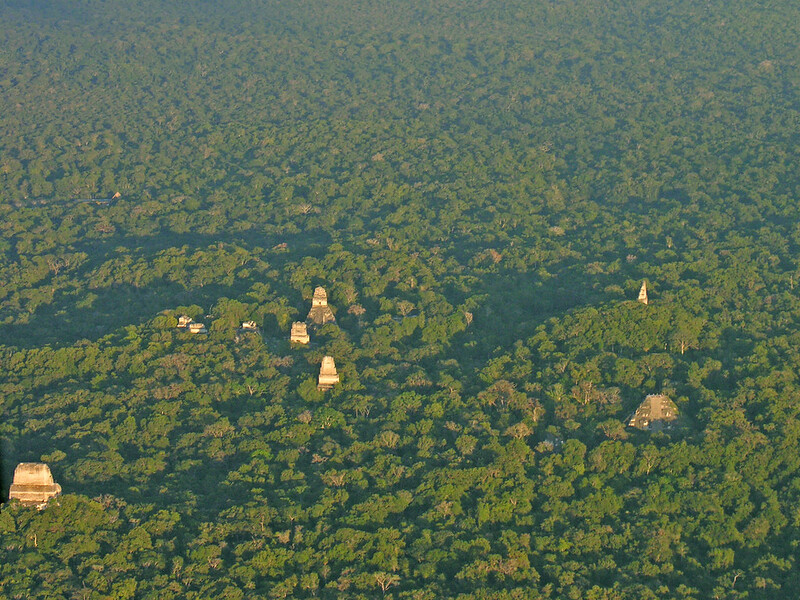
Guatemala’s national parks and nature reserves are where I go when I want to remember just how wild and beautiful my country still is. Cloud forests where the quetzal still flies. Jungle that has slowly reclaimed ancient Maya cities. A Caribbean lagoon where manatees drift through the mangroves. Pacific beaches where sea turtles come ashore by the thousands. Some are famous for good reason, others remain surprisingly overlooked, and the difference between them is rarely the one you’d expect. This is my guide to the protected places worth your time, the places I return to myself and the ones I recommend most often..
I’m Guatemalan, and I’ve spent years exploring these places, from the cloud forests of the Verapaces to the jungle of Petén to the black sand coast. What I want to give you here isn’t a dry list of protected areas. It’s a feel for which ones reward the trip, what you’ll actually see when you get there, and how to choose between them. I’ve mixed the big national parks with small private reserves on purpose, because some of the most memorable mornings I’ve had were in places you’ve never heard of.
If you want help weaving a few of these into one trip, that’s exactly what I do. Fill out my Guatemala travel planning form and tell me what you’re hoping to see.
This guide is for
✓ Nature lovers and birders drawn to Guatemala’s forests, wildlife, and protected landscapes
✓ Families who want their kids to see real rainforest and cloud forest
✓ Travelers ready to go past the famous spots into the quiet ones
CLOUD FOREST COUNTRY
The Quetzal Reserves of the Verapaces
If you came to Guatemala hoping to see the resplendent quetzal, our national bird, this is where you go. The cloud forests of Baja and Alta Verapaz are damp, green, impossibly alive, and they hold the best quetzal habitat in the country. These reserves are close enough together that you can string them into one wonderful few days, and I cover the whole region in my guide to Cobán and Las Verapaces.
Ranchitos del Quetzal (Baja Verapaz)
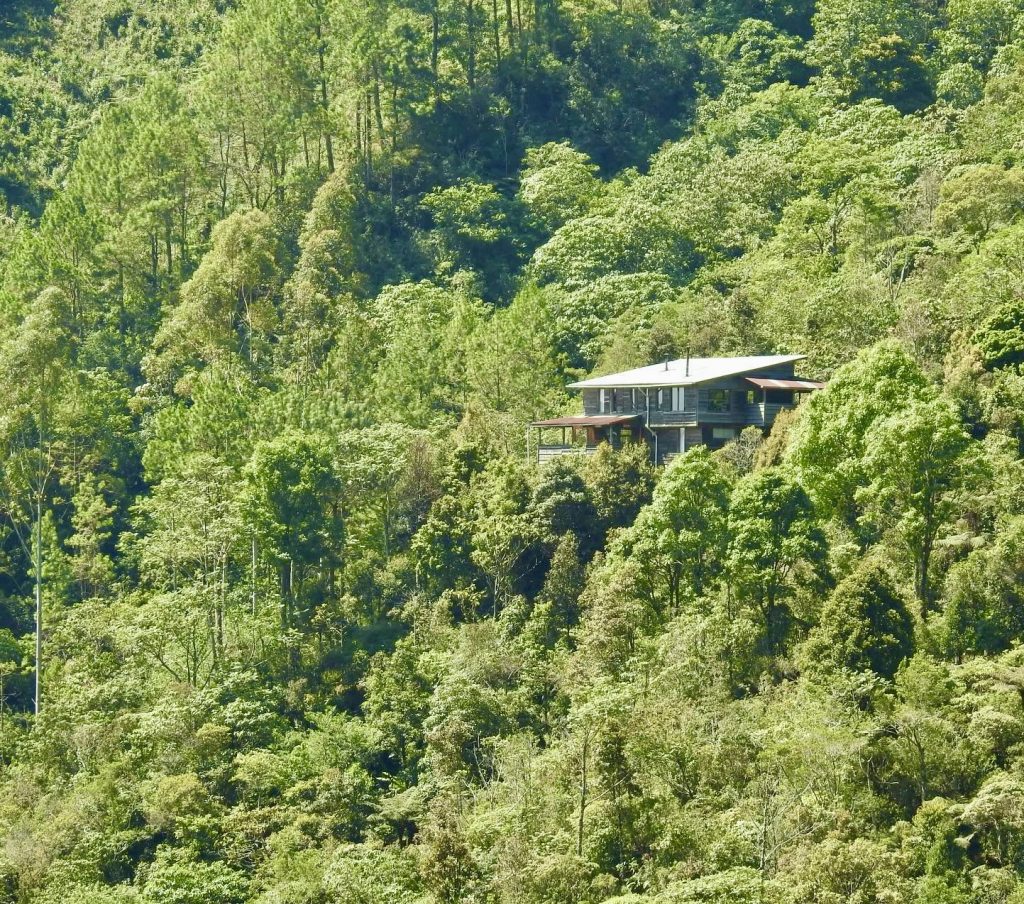
I’ll start here because it’s the one where I’ve actually watched a quetzal eat breakfast while I ate mine. Ranchitos is a small family reserve in the cloud forest near Purulhá, and what makes it special is that you can stay the night and be out on the trails at dawn, which is when the forest is at its liveliest. and the birds come out to feed. The Álvarez family has protected and replanted this land since the 1970s, and your visit pays for that work directly. My full Ranchitos del Quetzal guide tells you everything about timing a visit for the birds.
Biotopo del Quetzal “Mario Dary Rivera” (Baja Verapaz)
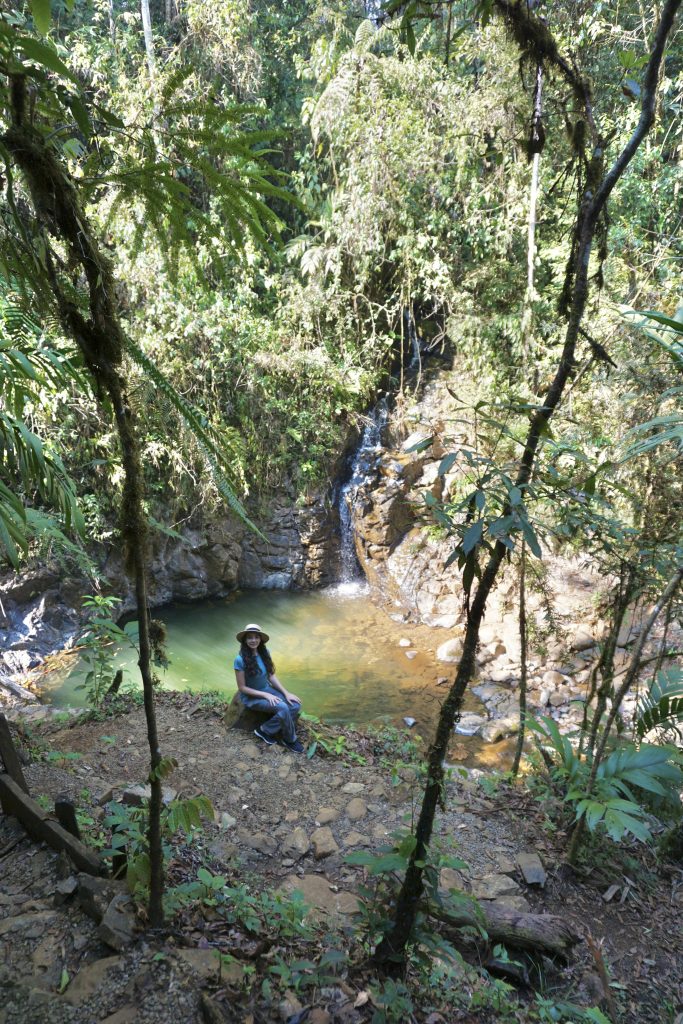
This is the famous one, and for good reason. The Biotopo del Quetzal was Guatemala’s first protected area created specifically to save the quetzal, named for the conservationist who fought for it, and it sits right off the road to Cobán so it’s easy to reach. Two well-marked loop trails climb through dense cloud forest past waterfalls and mossy pools, with the chance of a quetzal sighting if you come early and quiet. Even if the bird stays hidden, the forest itself, dripping and ancient and loud with life, is worth the stop. It’s managed by the University of San Carlos, and a small entrance fee keeps it protected.
Ram Tzul (Baja Verapaz)
Ram Tzul means “Spirit of the Mountain” in Q’eqchi’, and it’s the most surprising reserve on this list. You walk in expecting cloud forest and quetzals, which you get, and then the trail leads you into a bamboo forest so dense and otherworldly which feels completely unexpected in Guatemala. The path winds past four waterfalls, the tallest dropping around sixty meters, down to cold clear rivers and back up to a lookout. The lodge at the center is built almost entirely of bamboo, one of the largest bamboo structures in Central America.. Day entry runs about Q50, and you can stay overnight in cabins. It’s at km 158 on the road to Cobán, practically next door to the Biotopo. Details at ramtzul.com.
Chelemhá Cloud Forest Reserve (Alta Verapaz)
For the traveler who wants to go deep, Chelemhá protects some of the most pristine cloud forest left in the country, high in the remote Sierra Yalijux. It’s hard to reach and largely unknown outside the birding world, which is exactly its gift: you may have the trails and the quetzals and the toucanets and the swarms of hummingbirds almost entirely to yourself. There’s a hand-built lodge if you want to stay, which I cover in my guide to eco lodges in Guatemala. Reserve through chelemha.org.
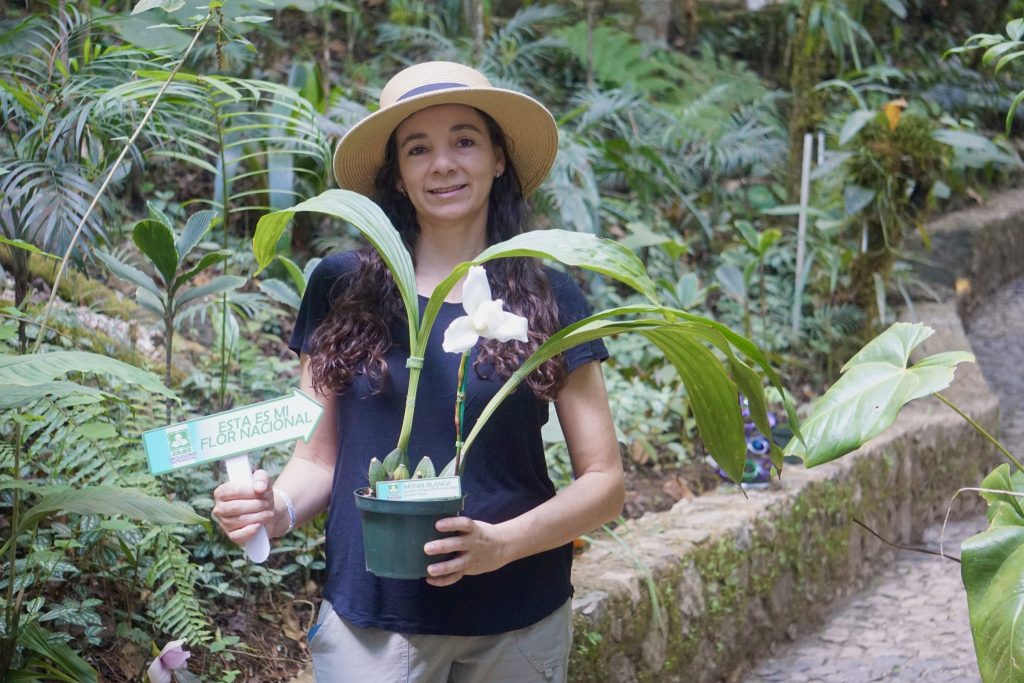
Orquigonia (Alta Verapaz)
Just fifteen minutes from Cobán, Orquigonia is one of those small places that stays with you. It’s a private orchid sanctuary, art orchid sanctuary, part rescue center, that protects more than six hundred species of orchids along a stone path with nine learning stations. A man named Oscar Archila spent his life collecting orchids he found in these forests, and now his grandchildren run the place in his honor. A guided walk takes about two hours, there’s a bird-watching tower, and the whole thing costs around Q50. Bring your camera and your patience.
Laguna Lachuá National Park (Alta Verapaz)
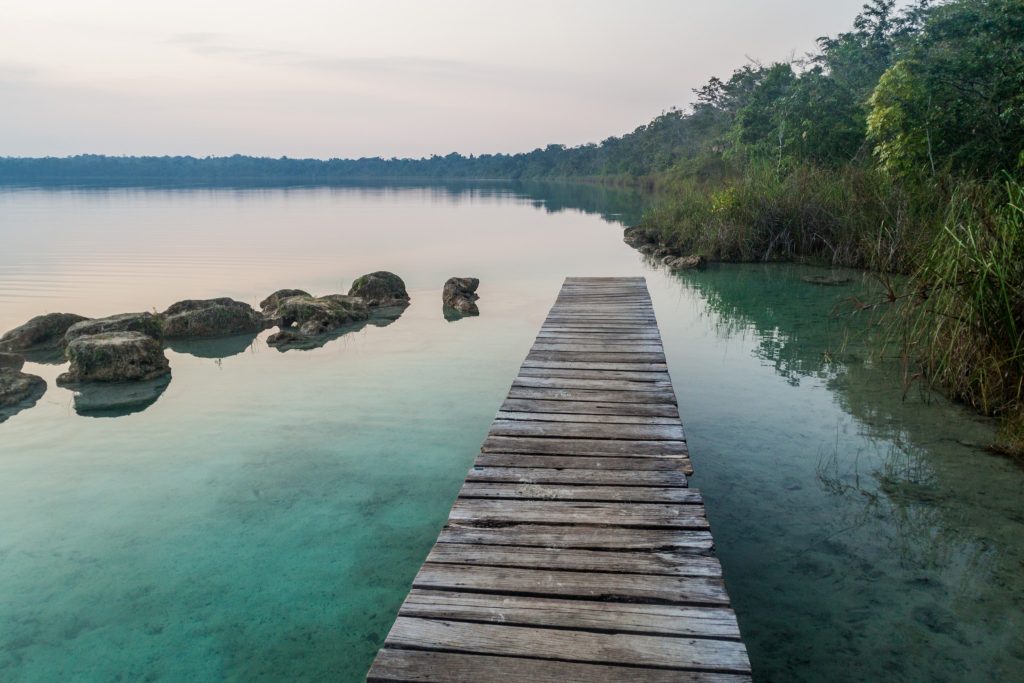
Many Guatemalans consider Lachuá one of the most beautiful lakes in the country, and the photos make the case: a near-perfect circle of turquoise water dropped into the middle of the rainforest, so still it mirrors the sky. The color comes from the lake’s sulfur content, which is also where its name comes from, the Q’eqchi’ words for “fetid water,” though there’s nothing unpleasant about floating in that clear blue once you’re in it. This is a national park and a protected wetland of international importance, deep in the lowlands of Alta Verapaz, and because it’s so far from everything, the jungle around it still holds jaguars, tapirs, howler monkeys, and crocodiles. Reaching it takes real commitment: roughly eight hours from Guatemala City, three or more from Cobán, with the last stretch unpaved, and then a flat four-kilometer walk in from the visitor center to the shore. But travelers who make the trip swim in that quiet water and remember it for the rest of their lives. There’s a campground with basic facilities, latrines, showers, and a simple comedor, and rustic cabins that come and go, so check ahead and bring your own food, water, and cash, since cards aren’t reliable out here. Day visitors enter in the morning, and entrance runs about Q50 for foreign adults.
✨ GUIDED QUETZAL BIRDING
If you want a guided overnight in the western quetzal forests, the Quetzal Birdwatching Tour with overnight in a Mayan Village from Quetzaltenango combines cloud forest birding with real community access. And for the lake area, the birdwatching tour in San Juan La Laguna is one of the best guided morning options near the lake.
Chasing the Quetzal?
Want to See a Wild Quetzal?
Seeing a wild quetzal is partly luck and partly knowing exactly where to stand and when. I’ve spent years learning these forests, and I love helping people plan the trip that gives them the best chance to see our national bird. Tell me when you’re coming and what you most want to see.
AROUND THE LAKE AND THE VOLCANOES
Reserves You Can Reach From Atitlán and Antigua
Reserva Natural de Atitlán (Panajachel)
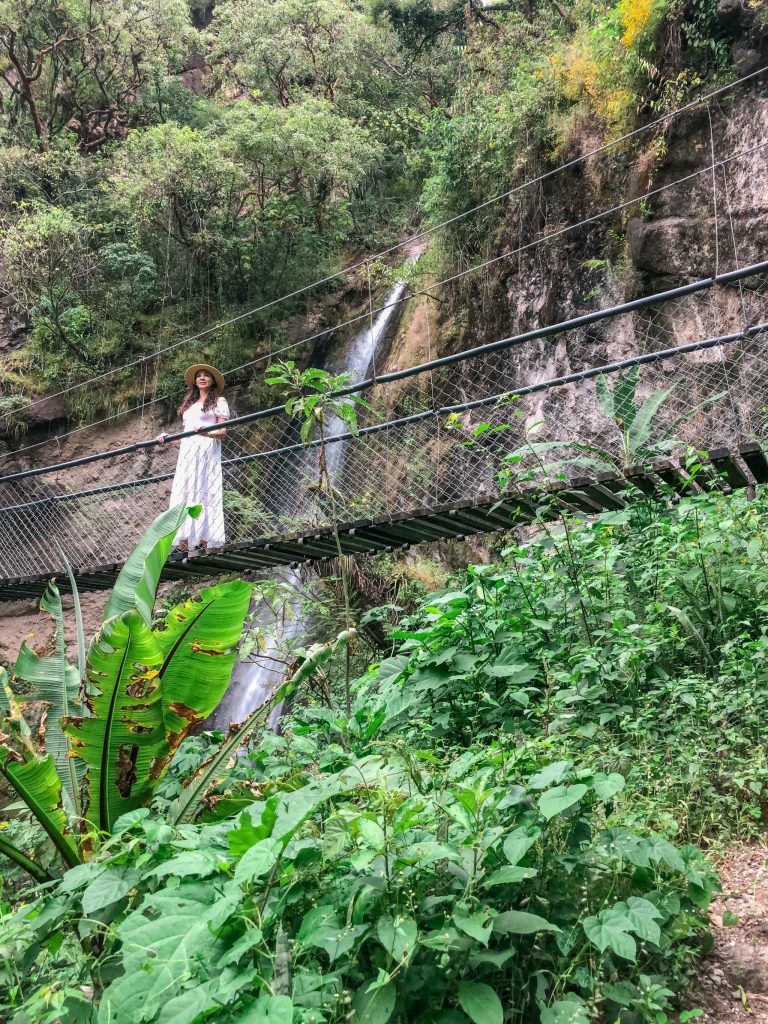
Here’s the one almost everyone walks right past. Travelers pour into Panajachel chasing the lake and the villages, and most never realize there’s a whole nature reserve a short walk from the center of town. Reserva Natural Atitlán protects more than a hundred hectares of forest, and inside you’ll find hanging bridges over a river gorge, a waterfall, forest trails, a private beach on the lake, and a butterfly dome alive with morphos. It’s easy, it’s family-friendly, and every visit funds the protection. I wrote a full guide to the Reserva Natural de Atitlán with everything you need.
Los Tarrales Natural Reserve (Suchitepéquez)
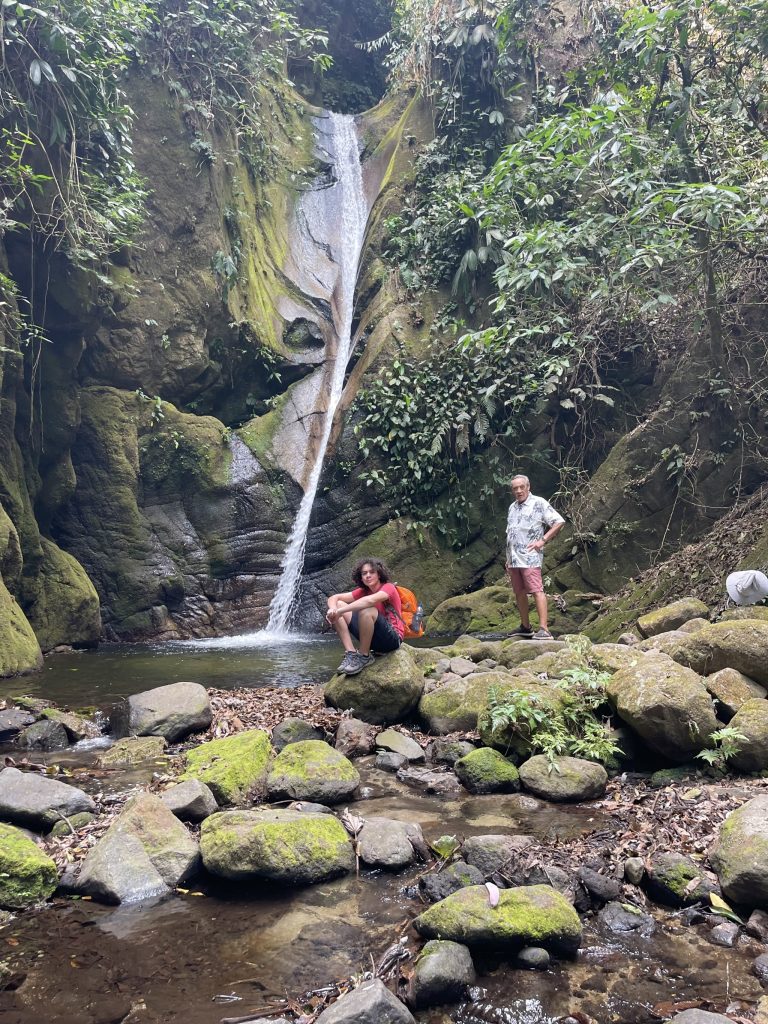
Los Tarrales is the reserve I always end up talking about for too long. More than a thousand hectares of forest running up the slopes of Volcán Atitlán, over 350 bird species, waterfalls, a working shade-grown coffee farm, and trails that climb from warm lowland into cool cloud forest as you walk. It’s one of the top birding destinations in the country and one of the most rewarding day trips or overnights near the lake. The birdwatching day trip to Los Tarrales is the most straightforward way to get there on a guided visit. My Los Tarrales guide has the full picture, and pair it with my guide to birding in Guatemala if birds are your reason for traveling.
Parque Regional Mirador Rey Tepepul (Santiago Atitlán)
Here’s a quetzal you can chase without driving all the way to the Verapaces. High on the slopes of Volcán Atitlán above Santiago, Rey Tepepul protects more than 3,500 hectares of cloud and pine forest, and it’s one of the most reliable places near the lake to see the resplendent quetzal, along with the rare horned guan and, if you’re very lucky, the wine-throated hummingbird that shows itself just once a year. What I love about this one is who keeps it: Tz’utujil forest rangers from Santiago walk these trails every day, guarding the birds against hunting and logging, and the quetzal tours are led by local community guides who know exactly where to stand and wait. It’s about twenty minutes from the center of town, and the lookout gives you the lake, the volcanoes, and the Pacific coast all at once. If you’re spending time around Lake Atitlán and hoping to see a quetzal, this is one of the first places I would look.
Cerro Tzankujil (San Marcos La Laguna)
Most people come to San Marcos for the jumping rock and never realize the whole headland is a protected nature reserve. Cerro Tzankujil has gentle trails through native trees, lakeside viewpoints, and old Maya ceremonial sites, plus that platform over the deep blue water if you’re feeling brave. It’s small, cheap, and a lovely hour or two away from the village bustle. If you’re exploring the lake villages, my Lake Atitlán guide ties it all together.
Volcán de Pacaya National Park (Escuintla)
The most accessible active volcano in the country, and a national park in its own right, Pacaya is close enough to Antigua and Guatemala City to climb in a morning. The hike rewards you with lava fields, steam vents, and on a clear day a view across to the smoking cone of Fuego. One of the most unusual things about Pacaya is being able to roast marshmallows over hot volcanic rock. Go with a licensed local guide, and know that there’s a reason this one fills up on weekends.
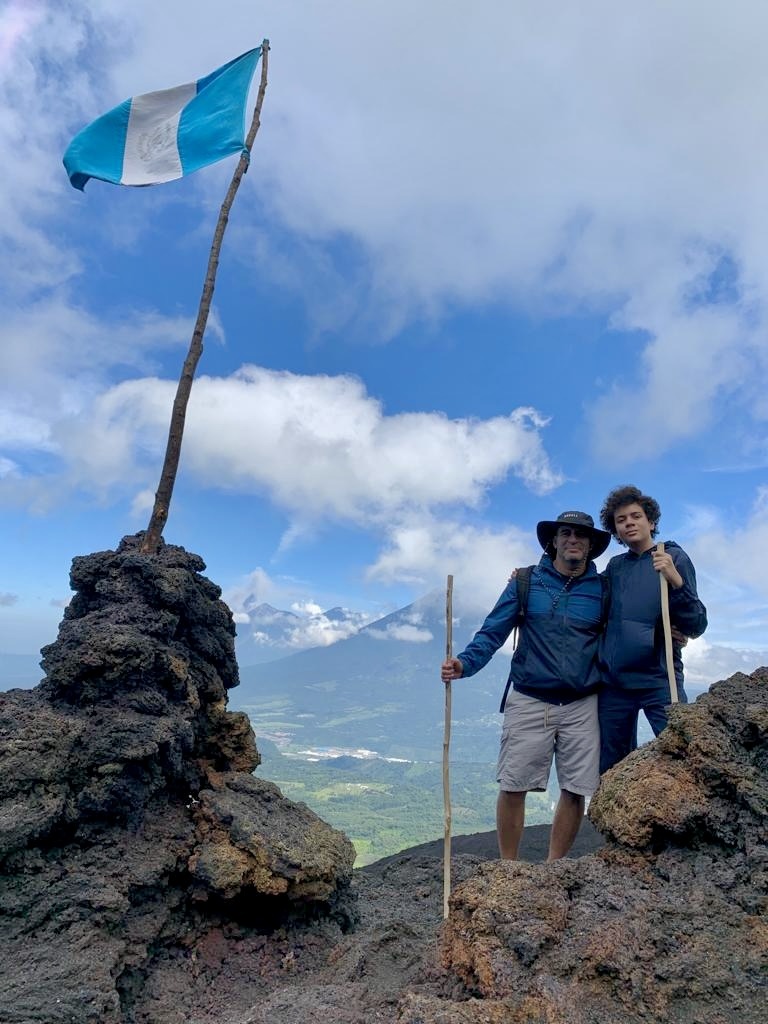
La Montaña de Utiw (San Bartolomé Milpas Altas, Sacatepéquez)
Twenty minutes from Antigua in San Bartolomé Milpas Altas, Utiw means “coyote” in Kaqchikel, and the Montaña de Utiw is a private ecological reserve with forest trails, a mirador that looks out over five volcanoes (Pacaya, Agua, Fuego, Acatenango, and Santiaguito on a clear day), giant swings, and a small restaurant. It opens only on weekends, entry is Q25 including transport from the car park, and it’s a perfect half-day from Antigua when you want forest and altitude without committing to a full volcanic hike. Find them on Facebook.
✨ NEAR ANTIGUA
For a guided cloud forest and hummingbird morning without a full-day commitment, the Antigua Cloud Forest Tour with hummingbird viewing is one of the best half-day nature options in the area. Also worth knowing: the nature and birding adventure from Antigua covers more ground for serious birdwatchers.
THE WESTERN HIGHLANDS
Sacred Craters and Community Forests Near Quetzaltenango
Reserva Natural Volcán y Laguna Chicabal (San Martín Sacatepéquez, Quetzaltenango)
Laguna Chicabal is one of the most sacred places in Guatemala, and I want to say that clearly before saying anything else about the hike. The Mam Maya people have worshipped at this crater lake for centuries. Forty days after Semana Santa each year, ceremonies take place here that belong entirely to them, and when those ceremonies are happening, the laguna closes to tourists. That isn’t an inconvenience. It’s the correct priority.
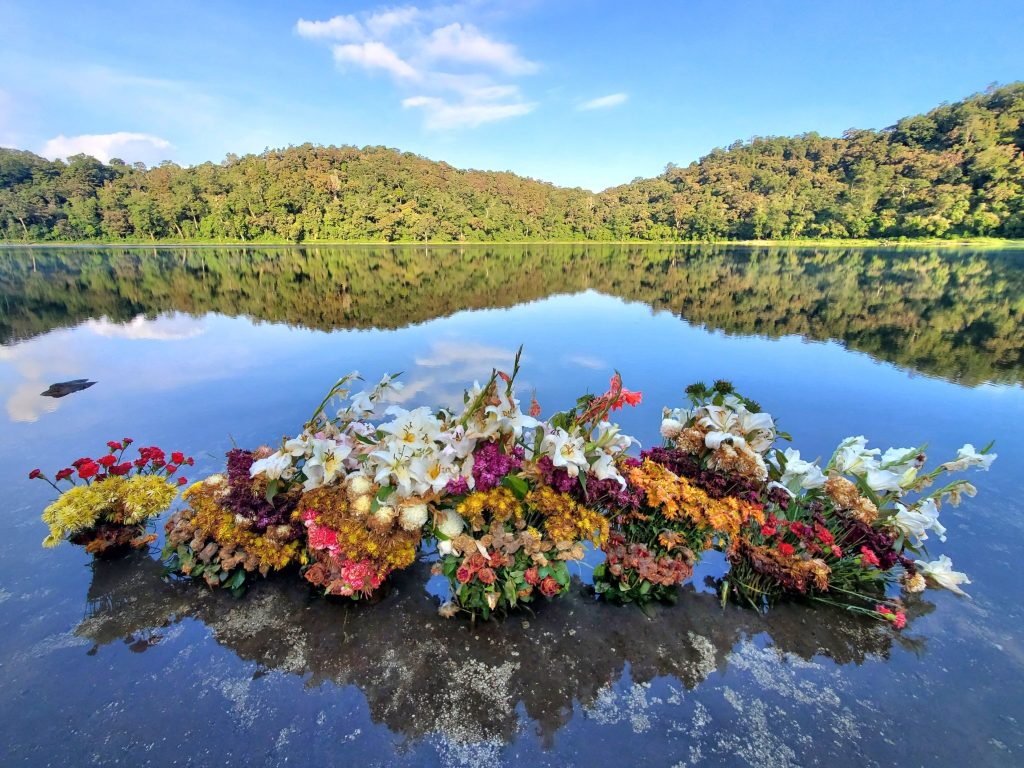
Outside those times, you hike from San Martín Sacatepéquez, descend more than 500 steps into the crater, and find a perfectly round emerald lake ringed by cloud forest at 2,712 meters, often cloaked in mist, with Mayan altars at the water’s edge. The reserve protects 935 hectares sheltering over 130 bird species including the quetzal. Bathing in the lake is prohibited out of respect and to protect the water source. Visit quietly and remember you’re a guest. The guided trek to Volcán Chicabal and its lagoon from Quetzaltenango is the most responsible way to do this.
⚠ IMPORTANT
The laguna closes annually for Mayan ceremonies, typically 40 days after Semana Santa. Confirm with CONAP or local guides before planning your visit. Bathing in the lake is strictly prohibited.
Reserva Natural Corazón del Bosque (Santa Lucía Utatlán, Sololá)
In 1990, a group of community leaders in Santa Lucía Utatlán decided to protect 40 hectares of mixed cloud forest they named Corazón del Bosque. More than thirty years later, the forest is still standing, still managed by the community that built it, and still full of birds including the endemic pink-headed warbler (Cardellina versicolor). You can walk the trails, use the Maya altar, join a temazcal, camp, and eat at the community restaurant. This is on km 145 of the Interamerican Highway in Sololá, manageable from the Lake Atitlán area. The community tourism model here is one of the most consistent in the western highlands. Find them on Facebook.
THE PACIFIC COAST
Sea Turtles and Mangroves on the Black Sand Coast
Guatemala’s Pacific coast doesn’t get the attention it deserves from international travelers, but if sea turtles matter to you, it should be on your list. The black sand beaches here are among the most important nesting grounds in the Western Hemisphere.
Biotopo Monterrico-Hawaii (Santa Rosa)
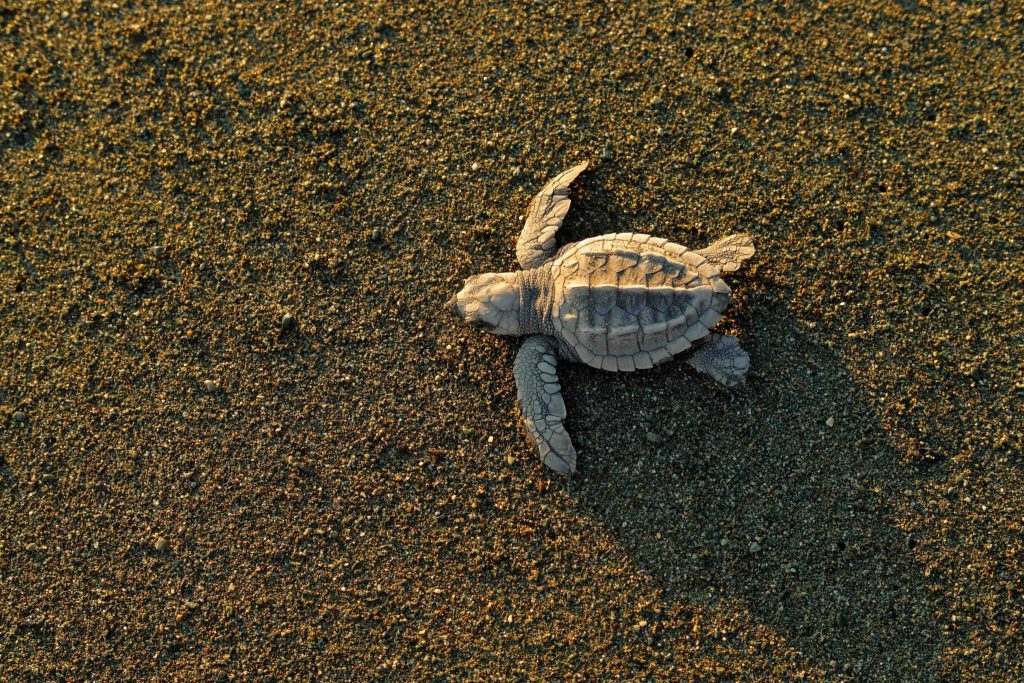
The town of Monterrico sits inside the Biotopo Monterrico-Hawaii, a 20-kilometer protected coastal strip that covers beach and mangrove habitat. Three species of sea turtle come ashore here to nest: the olive ridley, the leatherback, and the green turtle. The nesting season runs June through December, and if you time it right, you can participate in a hatchling release at the CECON tortugario, managed by the University of San Carlos.
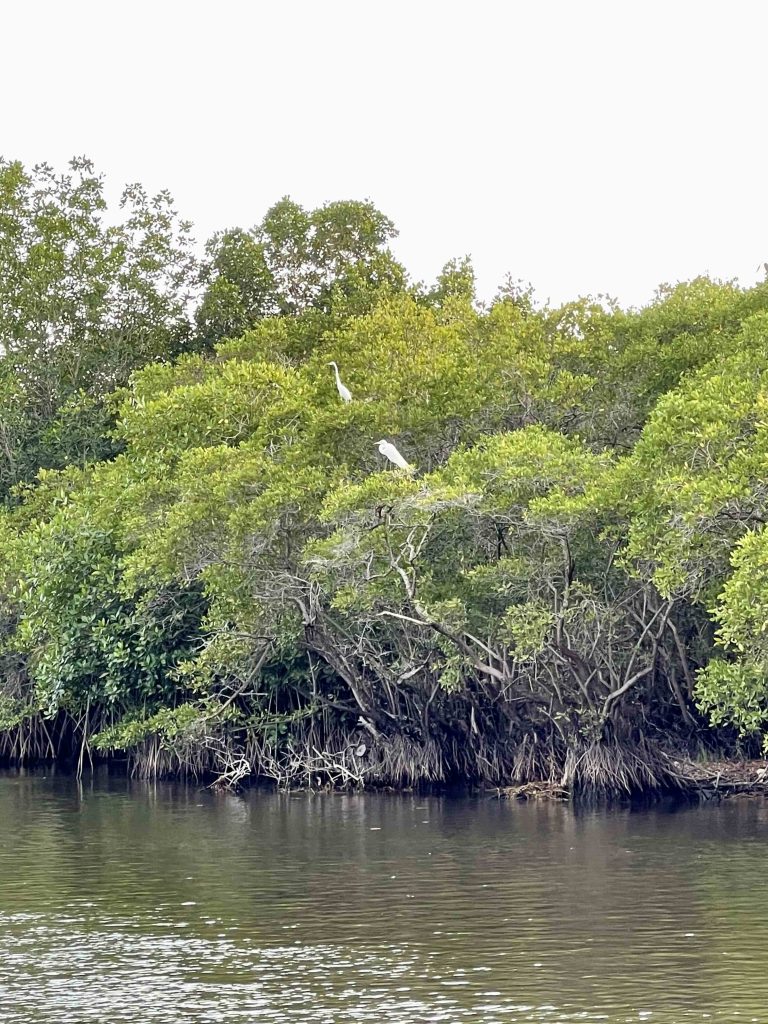
The mangrove canals behind the beach are a world of their own, full of birds and reptiles, best toured by small boat with a local guide. A few honest things to know: this is Guatemala’s Pacific coast, not a resort beach. The waves are powerful, the undertow is real, and the black volcanic sand gets intensely hot in the midday sun. There are no lifeguards on most beaches. Come for the wildlife, not the swimming. For a day trip from Antigua, the Monterrico beach day trip from Antigua is the easiest way to do it. My guide to Guatemala’s volcanic black sand beaches covers what the coast actually looks like.
THE JUNGLE NORTH
The Great Parks of Petén and the Maya Biosphere
Petén is Guatemala at its most remote and awe-inspiring. The Maya Biosphere Reserve sprawls across the north in a vast green expanse. The Maya Biosphere Reserve is the largest protected tropical forest in Central America, and tucked inside it are ancient cities, howler monkeys, and jaguars that most people only hear about. This is the part of the country where nature and the Maya past are tangled together so completely you can’t see one without the other.
Tikal National Park
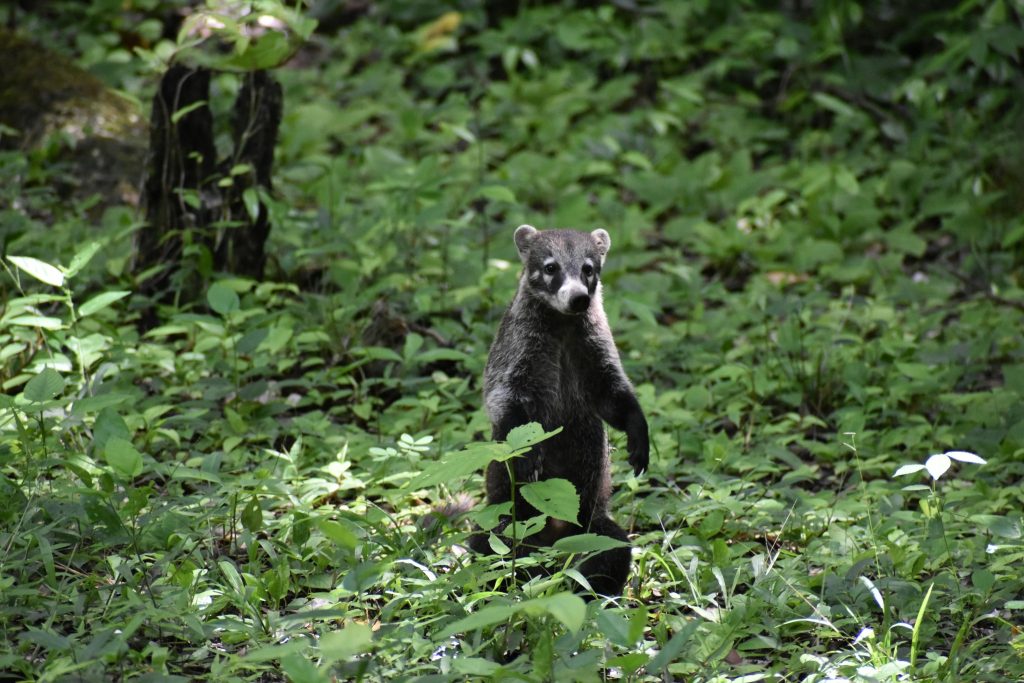
Everyone comes for the pyramids, and they should, but Tikal is a national park and a UNESCO site protected for both its ruins and its wildlife, and the nature is half the magic. Climb above the canopy at dawn and you’ll hear howler monkeys roaring through the mist before you see a single temple, with toucans and parrots crossing the gaps between trees. Spider monkeys, coatis, and ocellated turkeys move through the ruins like they own them, which, fair enough, they do. My complete guide to visiting Tikal covers how to do it right. A private Tikal day tour from Flores is the most comfortable way to do it if you want a guide who knows the forest as well as the temples.
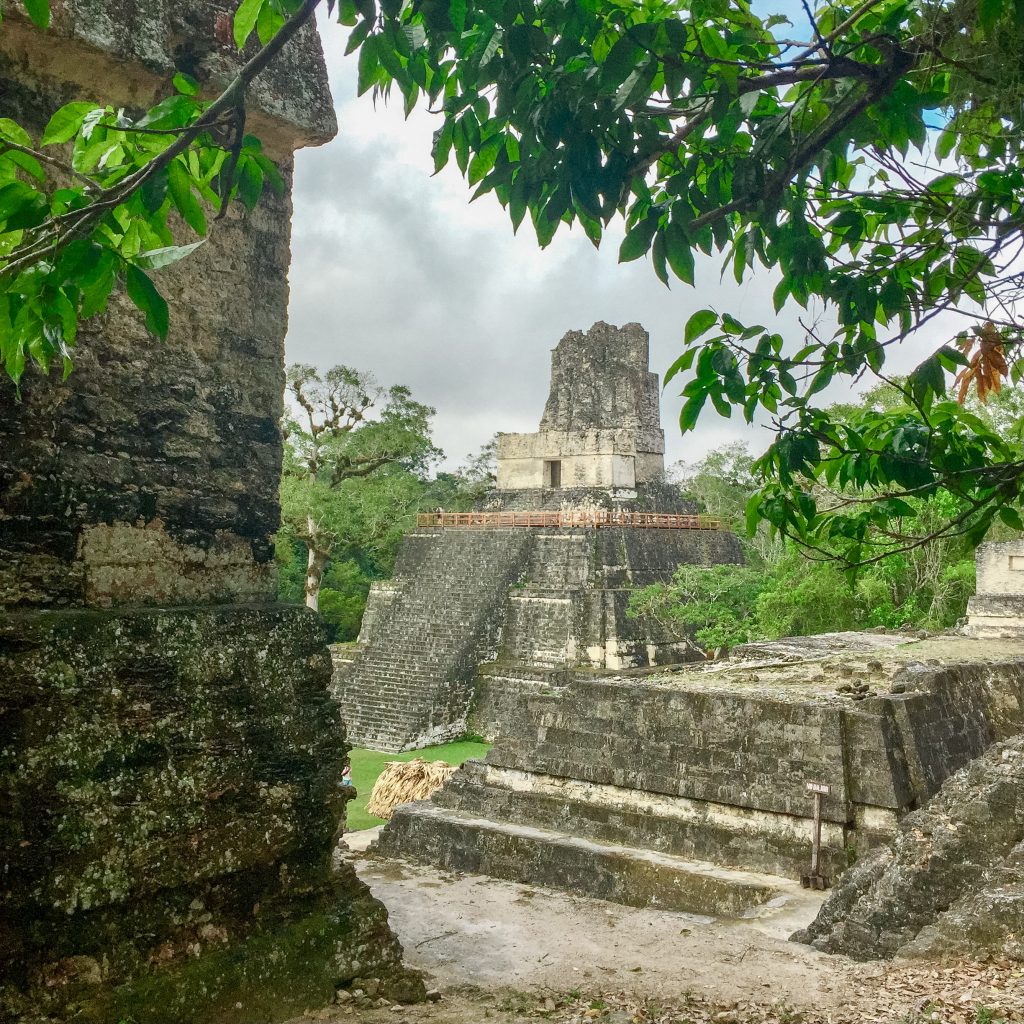
Yaxhá-Nakum-Naranjo National Park
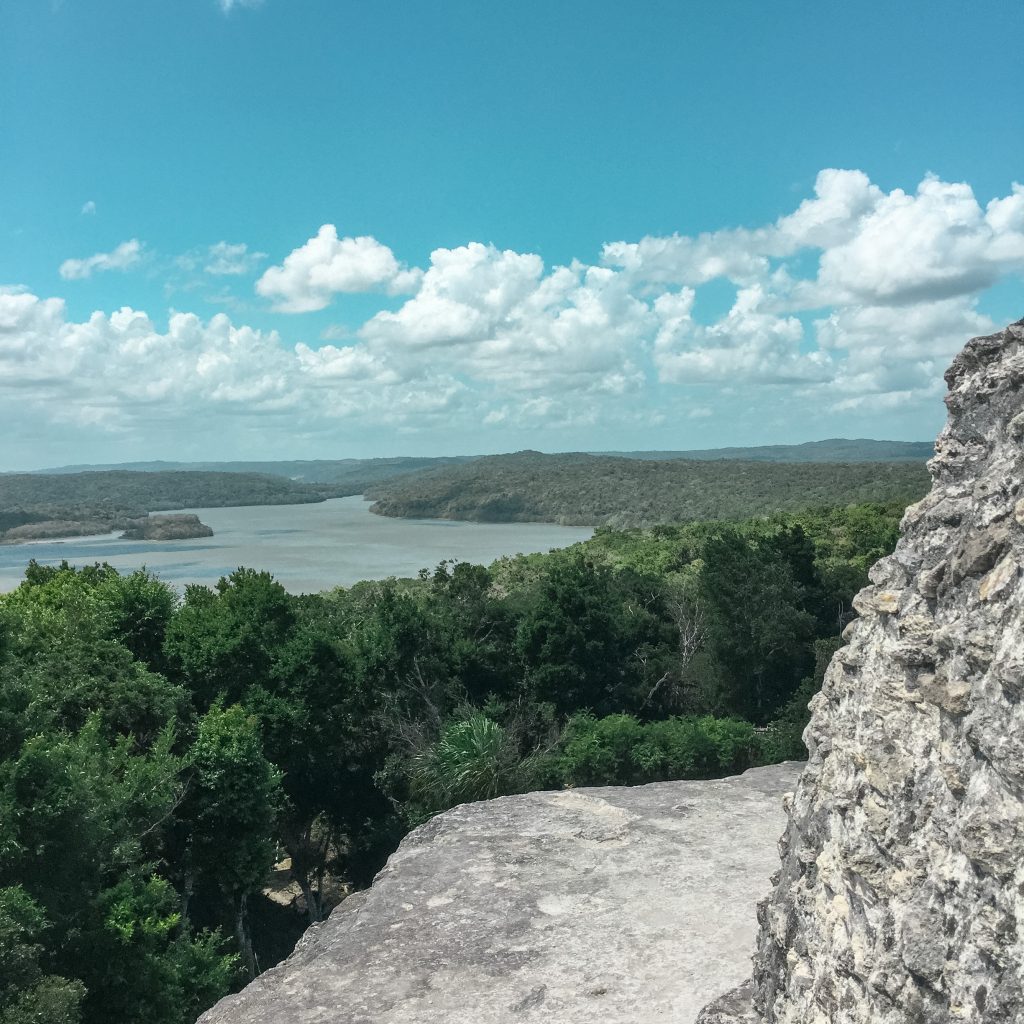
If Tikal is the headline, Yaxhá is the place I wish more travelers knew about. This national park combines real rainforest with spectacular, far quieter ruins, and the sunset from the top of its temples, looking out over two lagoons as the birds come in to roost, is one of the most beautiful things I’ve seen in my own country. You’ll share it with a fraction of Tikal’s crowds. My complete guide to Yaxhá has everything. The Yaxhá and Nakum Maya adventure tour covers both sites in one guided day.
Uaxactún Community Forest
North of Tikal, the community of Uaxactún manages its own stretch of the biosphere, and it’s one of the most inspiring conservation stories in Guatemala. Tourism here funds community forestry that keeps the jungle standing while creating local jobs, and the village guides know the forest and its birds the way only people raised in it can. It’s a quieter and more community-centered way to experience Petén.
Ixpanpajul Nature Park
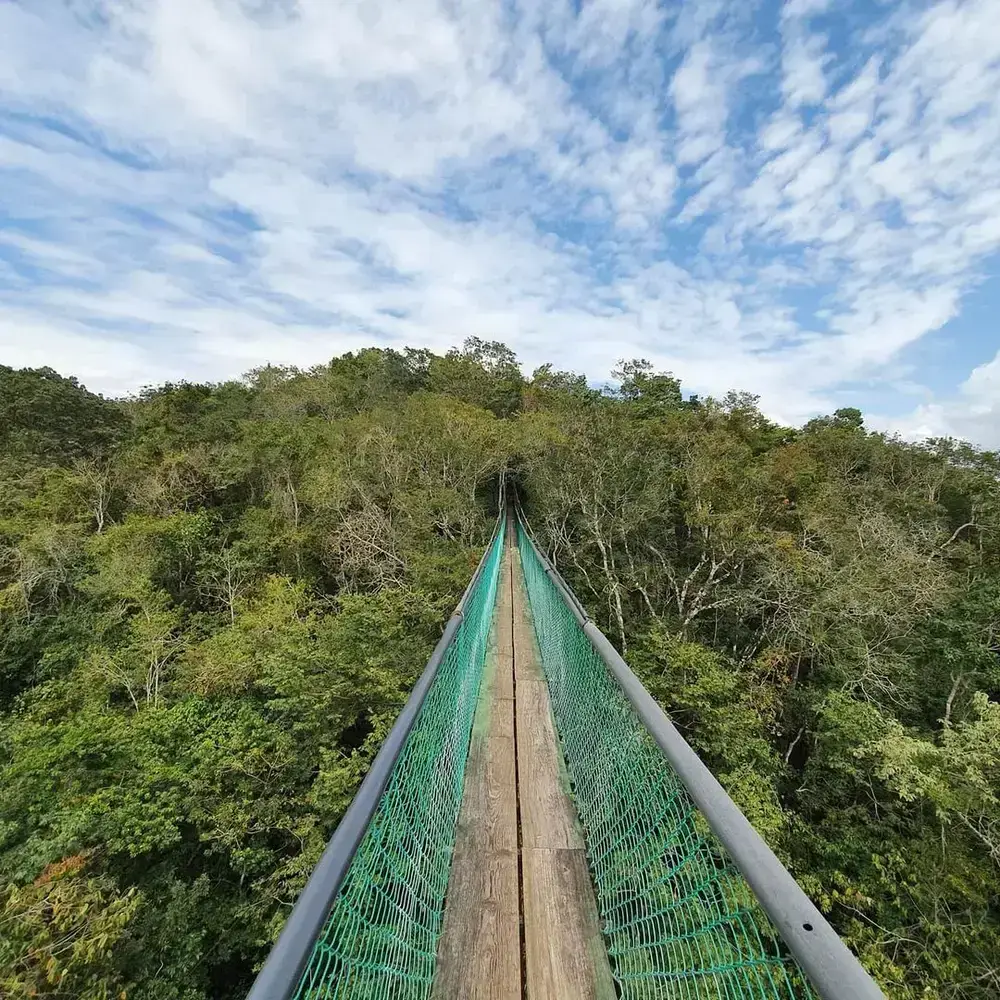
For families or anyone short on time near Flores, Ixpanpajul is an easy, fun taste of the Petén jungle: canopy suspension bridges strung between the treetops, trails, horseback riding, and night safaris to spot the nocturnal animals that the daytime hides. It’s not wilderness the way Uaxactún is, but it’s a genuine slice of rainforest right beside the road, and kids love it. The Ixpanpajul jungle trekking, hanging bridges, and canopy tour is the guided version.
Cráter Azul, Refugio de Vida Silvestre El Pucté (Las Cruces, Petén)
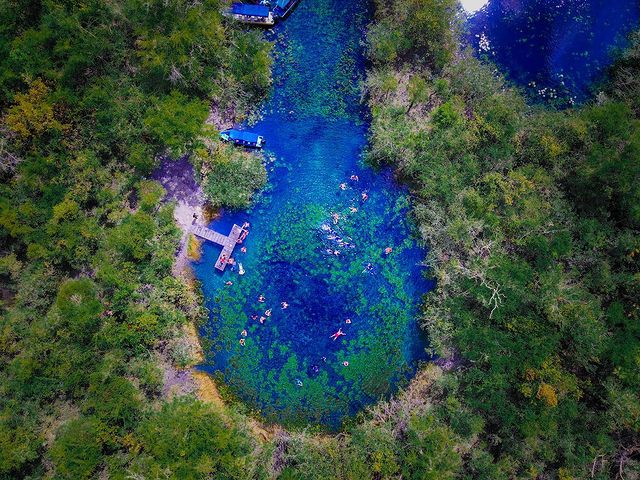
In the remote south of Petén, near Las Cruces, the Refugio de Vida Silvestre El Pucté protects a lowland wetland system that most travelers in Guatemala have never heard of. Inside it, the Cráter Azul is one of the most extraordinary swimming holes in the country: a spring-fed pool the color of turquoise glass, 5 to 7 meters deep in the center, ringed by jungle, so clear you can see the underwater garden all the way to the bottom. You arrive only by lancha, about 80 kilometers from Flores, and the whole river journey is part of the experience. The Cráter Azul full-day tour from Flores is the practical way to get there.
El Mirador and the Remote Biosphere
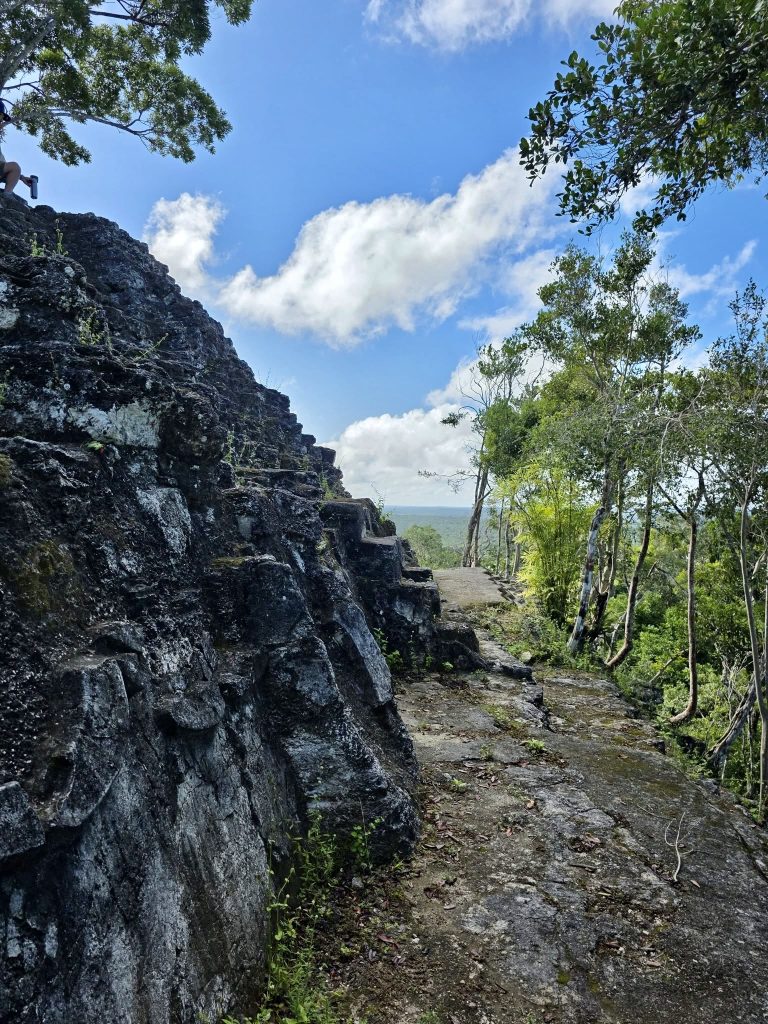
Deep in the heart of the biosphere lies El Mirador, the largest ancient Maya city, reachable only by a multi-day jungle trek with the community cooperative of Carmelita. This is one of the most remote corners of Guatemala, real adventure for travelers who want to earn it. For those who want the El Mirador experience without the five-day trek, the helicopter tour to El Mirador and La Danta from Flores is one of the most extraordinary things you can do in Guatemala.
From Cloud Forest to Jungle
Let Me Build the Route That Connects Them
These reserves are spread from the Caribbean to the Pacific, and fitting the right ones into your days, in the right order, is the whole art of it. That’s what I do. Tell me how long you have and what you’re longing to see, and I’ll shape a trip around it.
THE CARIBBEAN SIDE
Wetlands, Manatees, and Remote Mountains in Izabal
Biotopo Chocón Machacas (Río Dulce, Izabal)
On the Golfete of the Río Dulce sits a watery reserve created to protect the manatee, that shy, gentle giant of the mangroves. You reach Chocón Machacas only by boat, gliding through channels where the jungle leans low over still lagoons, and even if the manatees stay hidden, which they usually do, the place is pure peace. Forest trails like Los Helechos let you stretch your legs among the ferns. It’s managed by the University of San Carlos, and the nearby community offers food and lodging. Pair it with my Río Dulce guide, since the boat ride down the river is half the joy.
Cerro San Gil (Izabal)
Rising between the mountains and the Caribbean, Cerro San Gil protects one of the most biodiverse rainforests in the country, soaked by some of the heaviest rainfall in Guatemala and alive with birds, frogs, and dense green everything. It’s less developed for tourism than the other places on this list, which means it rewards travelers who like their nature raw and their trails quiet.
Sierra de las Minas Biosphere Reserve
Running along a chain of mountain ranges between the Motagua Valley and the Caribbean lowlands, the Sierra de las Minas is Guatemala’s largest cloud forest reserve and one of its most important biodiversity areas. It shelters jaguars, tapirs, kinkajous, and hundreds of bird species across a mosaic of ecosystems from dry forest to cloud forest. What makes it remarkable is that it’s also the water source for much of eastern Guatemala: those peaks collect rain and feed the rivers that sustain communities for hundreds of kilometers. The NGO Defensores de la Naturaleza manages it and provides guided access. It’s not set up for casual drop-in tourism, but for serious naturalists or birders, it’s the kind of place that changes your understanding of what Guatemala holds.
Heloderma Natural Reserve (Motagua Valley, Zacapa)
This one is for a very specific kind of traveler, the kind who gets genuinely excited about a critically endangered lizard. The Guatemalan beaded lizard (Heloderma charlesbogerti) is endemic to the dry thorn forests of the Motagua Valley in eastern Guatemala and fewer than 500 remain in the wild. The Heloderma Natural Reserve, managed by the local NGO Zootropic near the town of Cabañas, is 58 hectares of one of the best-preserved dry forests in Central America, created specifically to protect this lizard and the equally endangered Guatemalan spiny-tailed iguana. Scientific tourism is offered for people who want the chance to explore one of Guatemala’s most unusual ecosystems with experts who have dedicated their careers to keeping it alive. Reserve forest guard Gilberto Salazar won a Disney Conservation Hero award in 2010 for this work. Contact Zootropic directly to arrange a visit.
MORE PROTECTED AREAS
Other Natural Reserves Worth Visiting
Guatemala has hundreds of protected areas in its national system. What follows are the ones that come up when you talk to people who travel the country seriously: places travelers don’t hear about until someone who knows points them toward it.
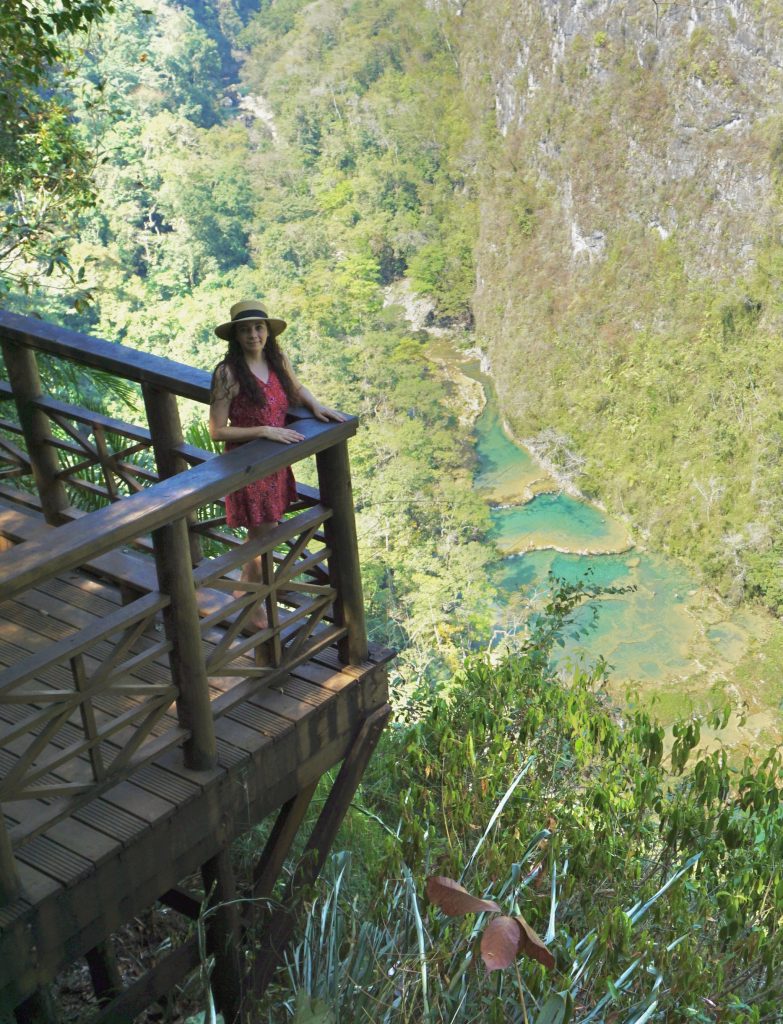
Monumento Natural Semuc Champey (Lanquín, Alta Verapaz)
Semuc Champey is the one that makes people go quiet when they see it for the first time. The Cahabón River plunges underground through a limestone arch, and on top of that arch, fed by springs and smaller tributaries, pools in impossible shades of turquoise and emerald. Declared a Natural Monument in 1999, it protects about 17 square kilometers of subtropical forest around the pools: more than 100 bird species, 34 mammals, and a geological formation with no real equivalent in Central America. The name comes from Q’eqchi’ Maya and means roughly “where the river hides under the earth.” Since 2025, the access road from Lanquín is fully paved, which makes the trip significantly easier than it used to be. I cover how to visit in my complete guide to Semuc Champey.
Hu Nal Ye Nature Park (San Pedro Carchá, Alta Verapaz)
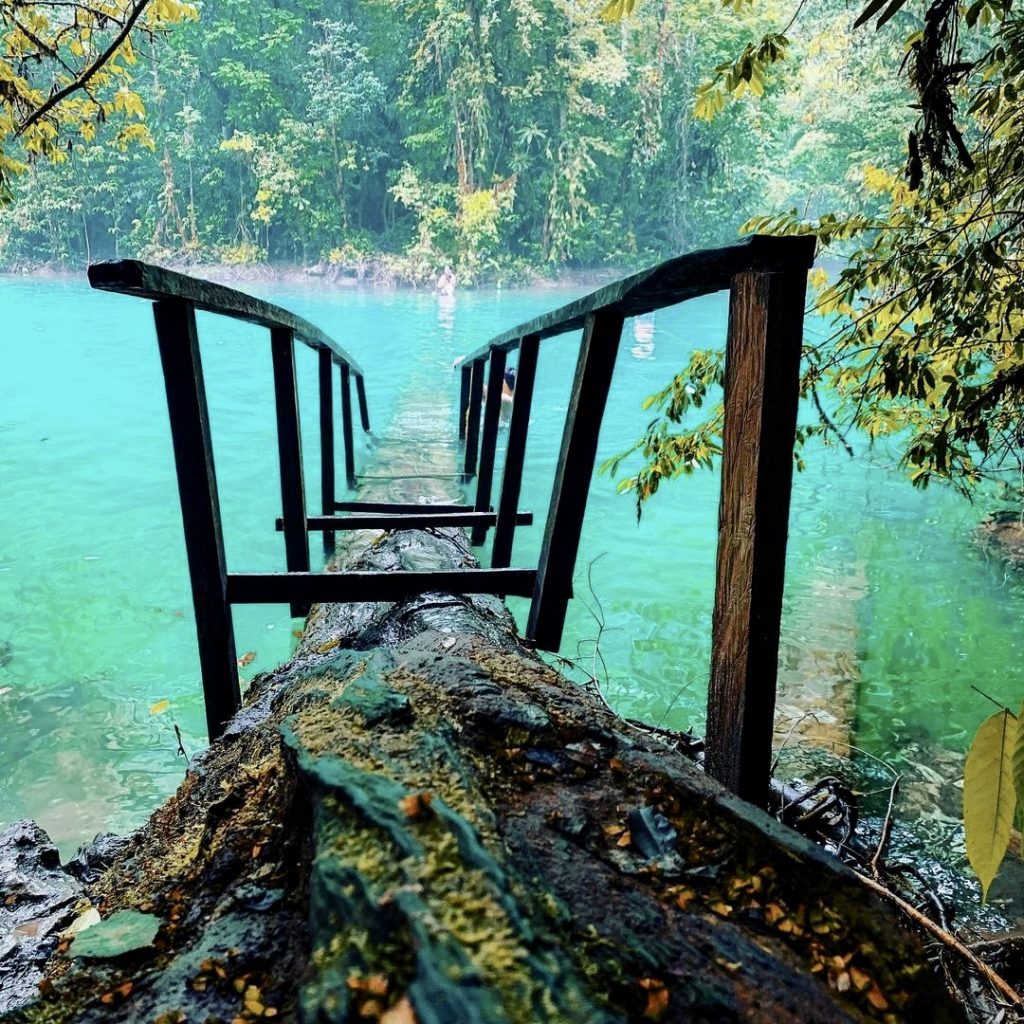
At km 259.5 on the road to Chisec, Hu Nal Ye (“One Ear of Corn” in Q’eqchi’ Maya) is a full-day or multi-day nature destination built around a lagoon and cenote in the Q’eqchi’ highlands. You can swim and snorkel in the turquoise cenote, kayak the lagoon, ride horses through jungle trails, do tubing on the river, and visit the small Maya museum on the property. It’s the kind of place most international itineraries skip entirely. Open Wednesday to Sunday; entry about Q100 for adults. Details at hunalye.com.
Reserva Natural Privada Patrocinio (El Palmar, Quetzaltenango)
After spending two nights at Reserva Patrocinio, I would put this much higher on my list than I did before visiting. This private reserve and working finca sits below Santa María and Santiaguito in an incredibly lush part of Guatemala’s bocacosta. The combination of tropical forest, birds and those volcano views is extraordinary. I am Guatemalan and have seen plenty of volcanoes, but walking the trails just after dawn and seeing Santa María appear between the trees honestly brought tears to my eyes.
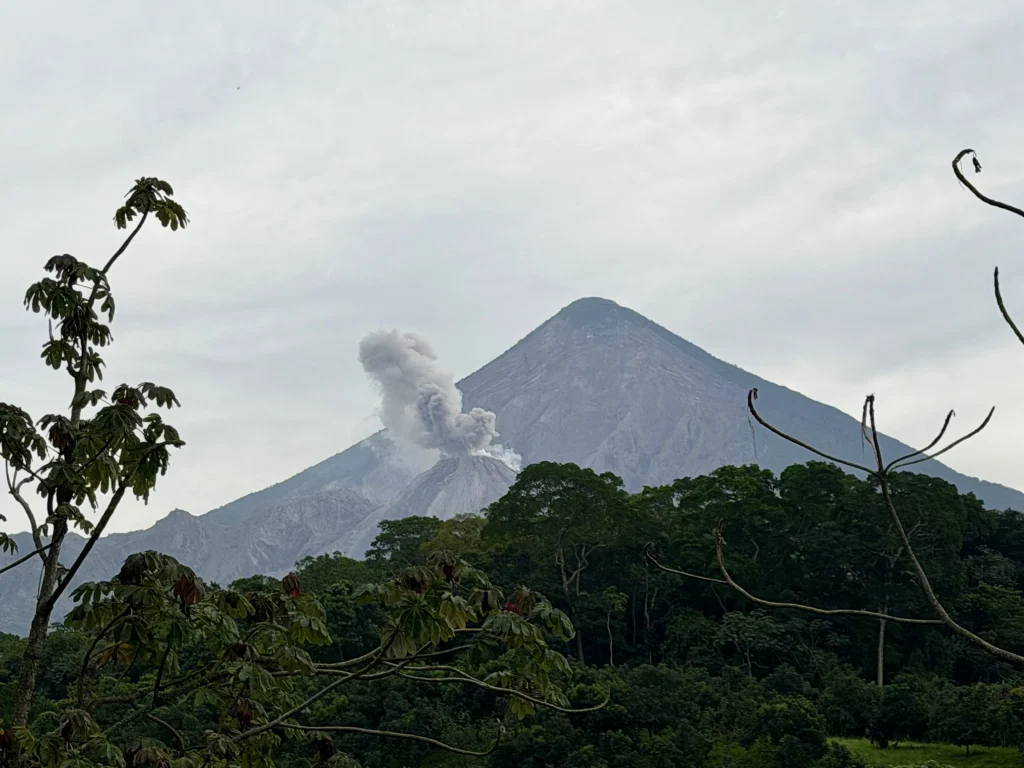
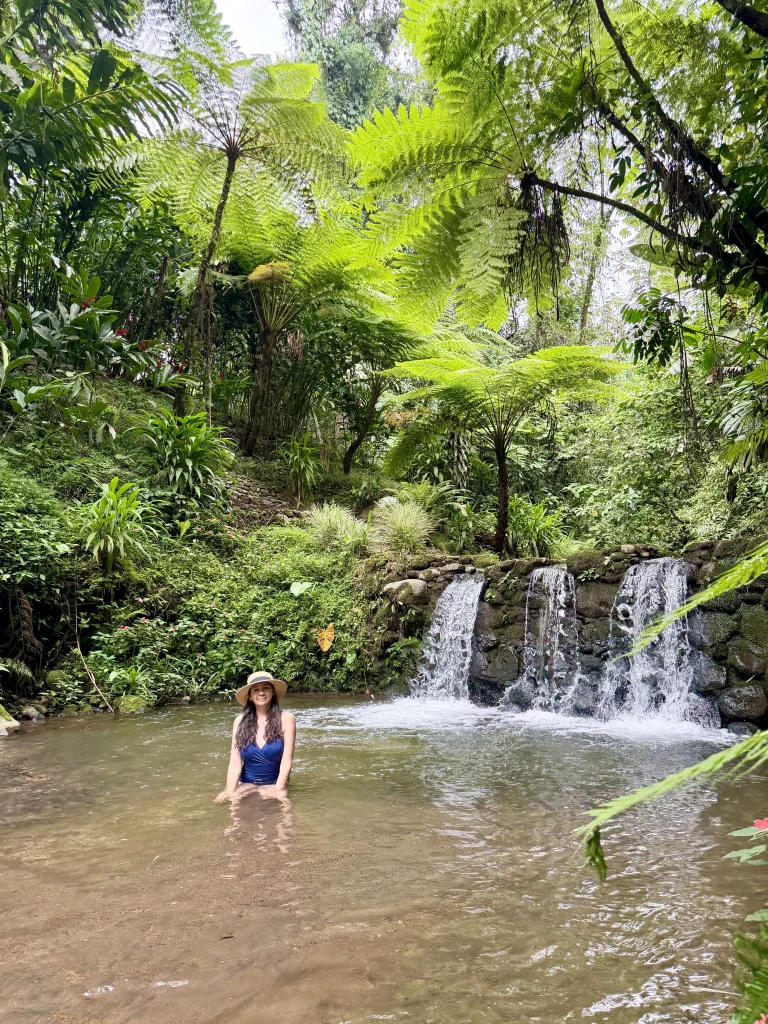
The reserve has beautiful stone and forest trails, a birdwatching observation tower, canopy, working coffee and cacao areas and a small waterfall with a natural pool only about a ten-minute walk from the lodge. The waterfall is perfect for cooling off on a hot afternoon. Birding is excellent throughout the property, and we also booked a private guided birding tour. Even breakfast became a birdwatching session thanks to the fruit feeder beside the open-air restaurant, where chachalacas, orioles, wrens and other birds came in while Santiaguito smoked in the background.
If you stay overnight, do the night walk. We went into the forest looking for Morelet’s tree frogs and found many of them, along with other frogs, toads, spiders and two armadillos. It was my son’s favorite experience of our stay. There is no WiFi or air conditioning at the lodge, which is worth knowing before you book, but for me that made Patrocinio even better as a place to disconnect and immerse yourself in nature.
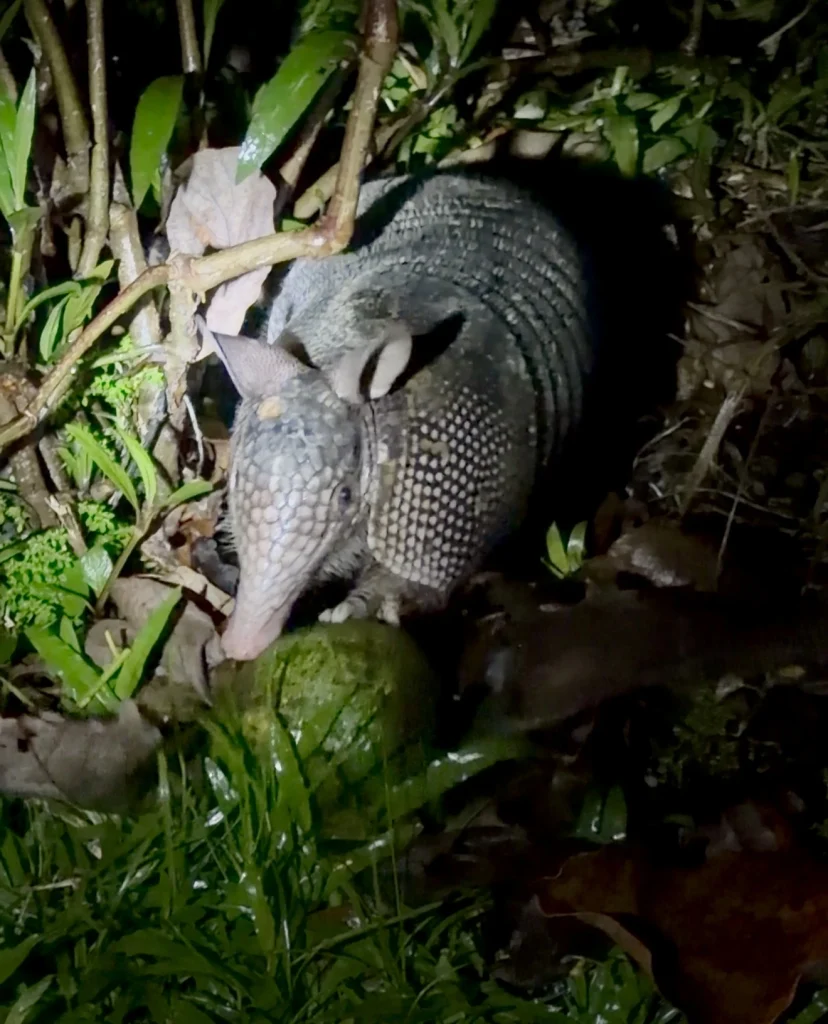
One important planning detail: although Patrocinio is in the municipality of El Palmar, Quetzaltenango, you reach it by road through Retalhuleu. The final few kilometers are unpaved, but the terracería was very well maintained when we visited and we had no trouble driving in with a regular car. Read my complete Reserva Patrocinio guide and lodge review →
Cascadas de Tatasirire (Jalapa)
Two hours from Guatemala City in the Jalapa highlands, Tatasirire is a private eco reserve inside the cloud forest of Cerro Miramundo at 2,300 meters. Six cascades, a centenarian broadleaf forest, canopy and rappel on the waterfalls, extreme swings hung from old-growth trees, mountain biking, and overnight cabins. What makes it worth noting here isn’t the adventure gear but the forest itself: a legitimate conservation reserve with habitat for the endemic Abronia meledona lizard found only on this mountain. Best waterfall season is June through January. Visit at alonatural.com.
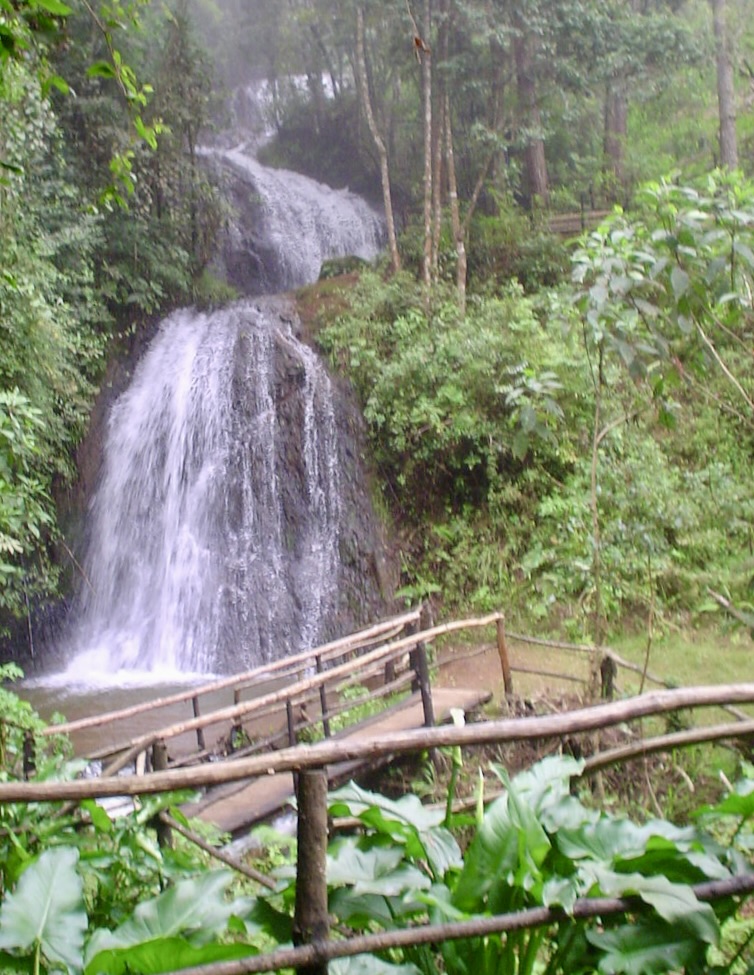
Reserva Natural El Vergel (San Marcos)
In the highlands of San Marcos, El Vergel is a private ecological reserve with forest trails, a waterfall, and overnight cabins at around 2,700 meters. It sits in a part of Guatemala that most international travelers pass through without stopping. If you’re already heading toward Quetzaltenango and want an off-route forest day, it fits naturally. Current prices and hours at guatemala.com.
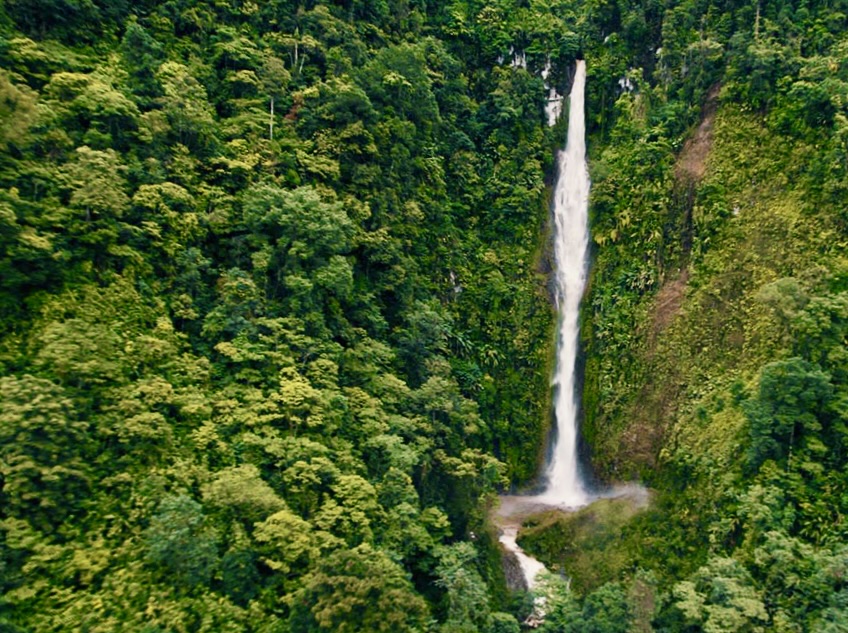
Reserva Sachichaj (Alta Verapaz)
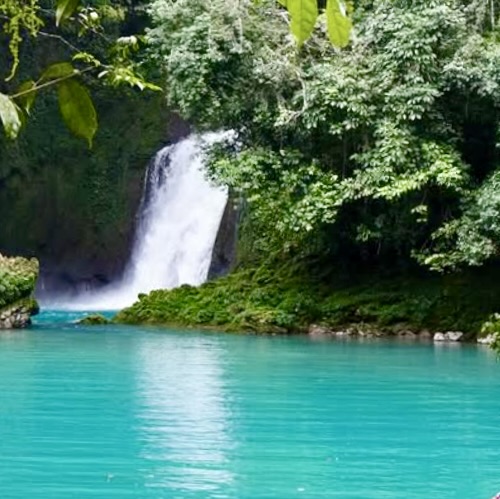
In Alta Verapaz, Sachichaj protects a natural river system with crystalline turquoise pools that have become one of the swimming destinations locals travel hours to reach. It’s a community-managed eco-tourism reserve where your entry fee goes directly back to the Q’eqchi’ Maya community managing it. The pools are beautiful, the forest is quiet, and it’s still largely unknown to international travelers, which is part of what makes it special.. Contact Alta Verapaz tourism offices for current access information.
How To Get There
Most of these reserves, especially the Verapaces cloud forests, Tatasirire, Los Tarrales, and El Patrocinio, sit on highways far from shuttle routes, and a rental car is the realistic way to reach them on your own schedule. The Petén and Izabal parks are easier with local boats and tours. Before you rent, my guide to renting a car in Guatemala covers what to know about roads, insurance, and what to expect at the borders of these reserves.

📌 BEFORE YOU GO
Two things I tell everyone traveling to Guatemala: get travel insurance and sort your data before you land. For insurance, TravelInsurance.com lets you compare plans side by side so you’re not guessing. For data, I use HolaFly eSIM — it works the moment your plane lands and you never deal with a local SIM. Use code PAULAGUB for 5% off.
QUESTIONS PEOPLE ASK
National Parks and Nature Reserves in Guatemala: FAQ
Are there national parks in Guatemala?
Yes, many. Guatemala has a national protected areas system called SIGAP that includes national parks, biotopes, private nature reserves, biosphere reserves, and wildlife refuges. Well-known national parks include Tikal, Yaxhá-Nakum-Naranjo, Laguna Lachuá, and Volcán de Pacaya, alongside dozens of biotopes and private reserves protecting everything from cloud forest to wetlands to Pacific mangroves.
What are the nature reserves of Guatemala?
Guatemala’s reserves range from large public parks to small community-run ones. Some of the best to visit are Los Tarrales and the Reserva Natural Atitlán near Lake Atitlán; the quetzal reserves of the Verapaces including Ranchitos del Quetzal, the Biotopo del Quetzal, Ram Tzul, Chelemhá, and Orquigonia; the Biotopo Monterrico-Hawaii on the Pacific coast; the manatee biotope at Chocón Machacas on the Río Dulce; the sacred Laguna Chicabal in Quetzaltenango; and the great jungle parks of Petén like Tikal and Yaxhá.
Where can you see wildlife in Guatemala?
For the resplendent quetzal, head to the cloud forests of the Verapaces. For monkeys, toucans, and jungle wildlife, Tikal and Yaxhá in Petén are unbeatable, with howler and spider monkeys, coatis, and ocellated turkeys easy to spot. For manatees and water birds, the Chocón Machacas biotope on the Río Dulce. For sea turtles, the Biotopo Monterrico-Hawaii on the Pacific coast from June through December. And for sheer bird diversity, Los Tarrales on the slopes of Volcán Atitlán records more than 350 species. Early morning is almost always the best time to see animals active.
Where can you see jaguars and monkeys in Guatemala?
Monkeys are easy: howler and spider monkeys are common and often loud at Tikal, Yaxhá, and throughout the Petén jungle, usually heard at dawn. Jaguars are a different story. They live in the remote core of the Maya Biosphere Reserve, but they are shy and rarely seen even by people who spend their lives in that forest. Travelers on the multi-day El Mirador trek are in real jaguar country, though a sighting is a rare gift rather than something you can plan on.
What is the largest nature reserve in Guatemala?
The Maya Biosphere Reserve in Petén is by far the largest protected area in Guatemala, covering roughly a fifth of the country and forming the largest tropical forest in Central America after the Amazon. It contains several national parks and biotopes within it, including Tikal and the remote El Mirador-Río Azul area.
Can you see sea turtles in Guatemala?
Yes. Guatemala’s Pacific coast is one of the most important sea turtle nesting sites in the Western Hemisphere. Three species nest at the Biotopo Monterrico-Hawaii: the olive ridley, the leatherback, and the green turtle. The nesting and hatching season runs roughly June through December. The CECON tortugario in Monterrico offers hatchling release experiences during peak season.
Is Laguna Chicabal open to tourists?
Most of the year, yes. Laguna Chicabal is a protected reserve near Quetzaltenango with a marked hiking trail and an entrance fee. However, it closes annually for Mayan ceremonies held by the Mam Maya community, typically around 40 days after Semana Santa. During those days, the site belongs to them and is not open to visitors. Always confirm with local guides or CONAP before planning a visit. And bathing in the lake is permanently prohibited out of respect for its sacred status.
KEEP READING
Related Guides
|
🌿 ECO LODGES Where to sleep inside these reserves, from cloud forest to jungle. |
|
|
🌄 LAS VERAPACES Guide to Cobán and Las Verapaces Cloud forest country and the heart of quetzal territory. |
🏛 TIKAL Complete Guide to Visiting Tikal The jungle, the wildlife, and the greatest Maya city, done right. |
|
🏆 BEST THINGS TO DO Best Things to Do in Guatemala The main pillar for planning what to do and where to go. |
|
|
🌊 PACIFIC COAST Guatemala’s Black Sand Beaches What the Pacific coast actually looks like and when to go. |
🏔 SEMUC CHAMPEY The turquoise pools, the caves, and how to visit the natural monument. |
This Is My Country
Let Me Show You Its Wild Heart
I grew up wandering these forests and lagoons, and there is nothing I love more than helping someone fall for the wild side of Guatemala the way I did. Tell me what moves you, the birds, the jungle, the quiet, and I’ll build a trip around it.
These forests have outlasted empires, and they are still here, still full of quetzals and howler monkeys and the slow drift of a manatee through the mangroves. Walk into one quietly, and Guatemala will show you something it keeps just out of sight of everyone in a hurry.
Through her writing, Paula helps travelers discover Guatemala beyond the typical tourist route with practical advice, local recommendations, and authentic experiences that connect visitors with the country’s people, culture, and traditions.
Planning a trip to Guatemala? Paula offers personalized Guatemala itinerary planning and trip consultation services tailored to your interests, travel style, and budget. Contact her at [email protected] to learn more.
- San Lucas Tolimán Guatemala: Lake Atitlán’s Best-Kept Secret - September 24, 2026
- Hotel Tolimán Lake Atitlán: A Special Stay in San Lucas Tolimán - September 24, 2026
- Guatemala Dreams in San Lucas Tolimán: A Boutique Stay on Lake Atitlán - September 23, 2026

