

Inside the weaving cooperatives of San Juan La Laguna, Tz’utujil women sit at backstrap looms and explain what they’re doing in ways that make you understand, maybe for the first time, what this tradition actually is. Which plant made the blue. Which insect made the red. How long her grandmother spent teaching her. I’ve sat with weavers here more times than I can count and I still learn something every time. The colorful umbrella streets San Juan is famous for are worth seeing. But this is the real reason to come.
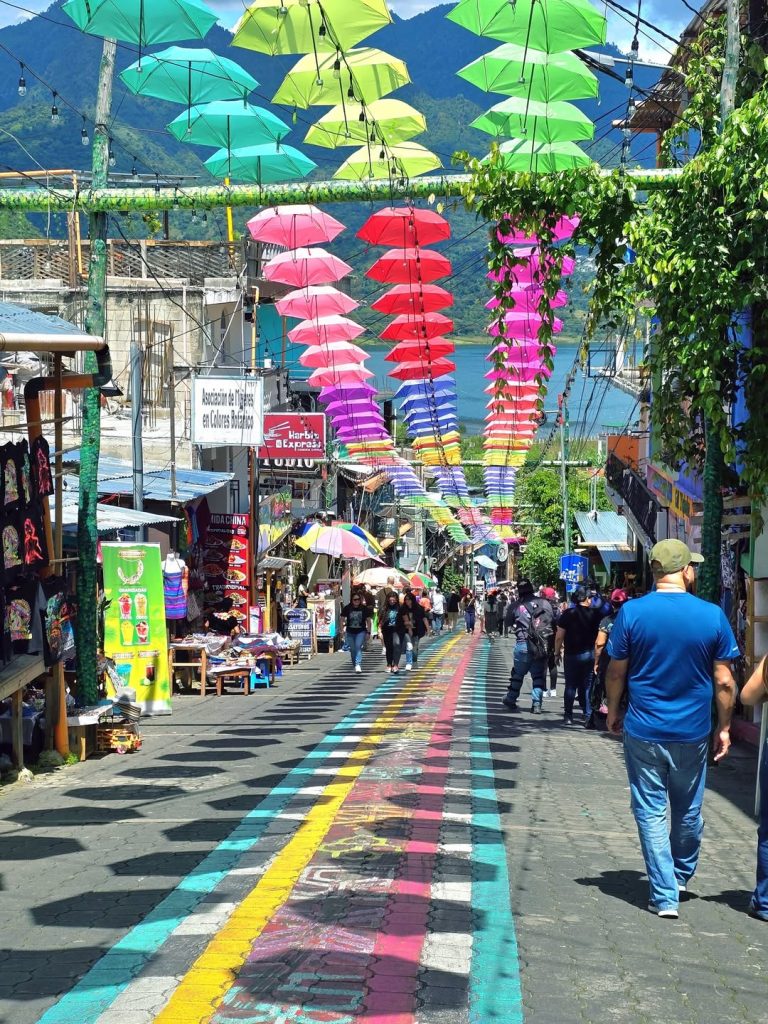
I bring my kids here. When my American friends visit and ask where to find something real at the lake, I send them here too. The weaving tradition, the La Voz coffee cooperative, the murals painted by local artists documenting their own cosmology — none of this was built for tourism. Tourism found it. That’s the difference.
Most people visit San Juan as a morning from San Pedro or Panajachel. Some stay a night or two and get the quieter, slower version of the western shore. A few make it their base for the whole lake. This guide covers all three: how to get there, what to do in a morning, what you gain by staying, and how to make sure the experiences you choose actually reach the people who built them.
This guide is for
✓ Day trippers from San Pedro or Panajachel wanting to know what’s actually worth their morning
✓ Travelers staying in San Juan for one or more nights
✓ Anyone interested in natural dye weaving, coffee, and genuine cooperative culture
✓ Hikers tackling Indian Nose (El Rostro Maya)
✓ Families looking for a quieter, more relaxed base than San Pedro
WHAT SAN JUAN ACTUALLY IS
What San Juan La Laguna Is Known For — and What That Label Actually Means
San Juan La Laguna sits on the southwest shore of Lake Atitlán, right next to San Pedro La Laguna. It’s a Tz’utujil Maya municipality — the same Maya group as Santiago Atitlán, which is the largest and most culturally rooted Tz’utujil community at the lake. San Juan is smaller, and its relationship with tourism has developed differently.
About twenty-five years ago, a group of women here began formalizing what had always been part of Tz’utujil tradition: growing their own cotton, extracting dye from plants and insects, weaving on backstrap looms using ancestral patterns. They organized into cooperatives. They welcomed visitors. And they built something remarkable — a living textile tradition that has not just survived tourism but used it to sustain itself on community terms. That is the real San Juan La Laguna, and it’s worth going to find.

What has grown up around it is the question. The main tourist street — decorated with murals, lined with shops, animated with tour guides — is real in its own way, but a significant portion of the textiles sold on that street didn’t originate in San Juan. They were brought in from elsewhere. The honest approach when you’re buying is to ask: who made it? Where? Can I see the process? At the actual cooperatives, those questions get real answers. At the tourist shops along the main drag, they often don’t.
✨ HOW TO TELL THE DIFFERENCE
At Casa Flor Ixcaco and the other genuine cooperatives, every product has a tag with the name and photo of the woman who made it and the natural ingredients used to dye it. The thread is organic cotton grown on-site. You can watch the process. At shops along the main tourist street, you usually cannot. That’s the difference, and it matters for where your money goes.
GETTING THERE
How to Get to San Juan La Laguna
Getting to San Juan is simpler than getting to Santiago Atitlán because it’s on the main western shore lancha circuit — but there are still things worth knowing before you show up at the wrong dock.
From Antigua
Take a shared tourist shuttle from Antigua to Panajachel — hotel pickup, about 2.5 to 3 hours, $20-25 USD per person. Book through your hotel the night before. Departure times are typically 8 AM, 12:30 PM, and 4 PM depending on the operator. From Panajachel you take the lancha. Total time from Antigua to the San Juan dock: plan for roughly 3.5 to 4 hours.
From Guatemala City
Guatemala City to Panajachel is 3-4 hours by shuttle or car. Leave early — traffic leaving the city is unpredictable, especially on weekends. If San Juan is part of a longer trip, the standard routing is Antigua first, then the lake. My 7-day Guatemala itinerary lays out exactly how to sequence this.
The Lancha from Panajachel
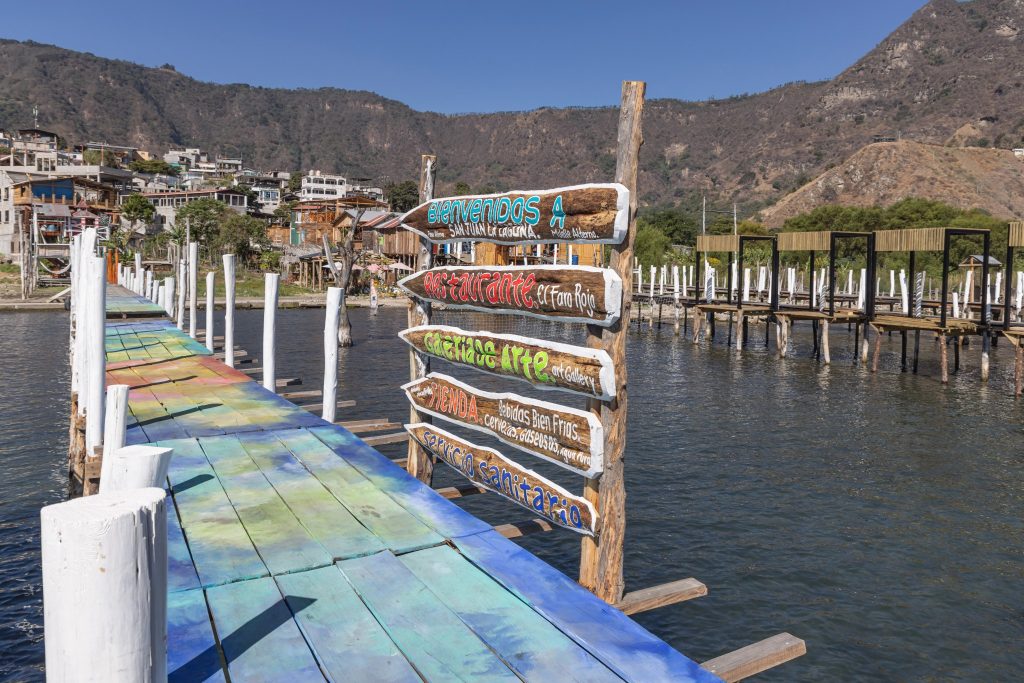
San Juan is on the main western shore lancha route — use the main Muelle Tzanjuyú dock at the end of Calle Santander in Panajachel (note: this is different from Santiago Atitlán, which uses a separate dock). Lanchas to the western shore run frequently throughout the day, around Q25-30 each way, and stop at several villages including San Juan before continuing to San Pedro. San Juan comes before San Pedro on the route, so you’ll arrive in roughly 30-40 minutes. My complete Lake Atitlán boat guide has every dock, route, and timing detail.
From San Pedro La Laguna
San Juan and San Pedro are neighboring towns separated by about 2 kilometers. You can walk between them (20-25 minutes on a hilly path), take a tuk-tuk (Q10-15), or grab the short lancha hop. If you’re basing yourself in San Pedro, San Juan is a natural half-day outing that doesn’t require any advance planning.
⚠ THE AFTERNOON WIND
The Xocomil wind picks up every afternoon, typically after noon or 1 PM. Plan to be back at the dock before it arrives — the crossing gets rough once it’s blowing. This applies to every village on the lake.
💡 Cash and ATMs: San Juan has limited ATM access — it’s not reliable. Bring cash from Panajachel or San Pedro before crossing. The cooperatives and most restaurants are cash-only. Q200-300 covers a comfortable day of food, cooperative visits, and mirador entrance fee.
PLANNING YOUR VISIT
Should You Stay in San Juan or Day Trip?
San Juan works well as both a day trip destination and a base for exploring the western shore. The choice depends on what you want from your time at the lake.
💡 My recommendation: If you’re at the lake for more than two days, give San Juan one overnight. The experience of actually being in a western shore village after the boats stop running is worth it. If you’re on a tighter schedule, a dedicated morning from San Pedro is the right call.
COMMUNITY AND CULTURE
The Tz’utujil Maya Community of San Juan
San Juan La Laguna is a predominantly Tz’utujil Maya municipality — the same indigenous group as Santiago Atitlán, though the two communities have developed along different paths. San Juan’s population is smaller, around 12,000 people in the municipality, and the town center is compact enough to walk across in twenty minutes.
What distinguishes San Juan within the lake’s constellation of villages is the cooperative model. Starting in the mid-1990s, the community organized a series of artisan cooperatives — weaving, coffee, medicinal plants, honey, chocolate — that gave community members an economic stake in tourism on their own terms. These aren’t tourist attractions that happen to have local people in them. They’re community enterprises that have welcomed visitors as part of their economic model while keeping the tradition at the center.
The town also has a genuine artistic tradition — more than forty murals cover walls throughout the village, painted by local Tz’utujil artists documenting their cosmology, history, and worldview. Several of San Juan’s painters have gained recognition beyond Guatemala. This isn’t a mural district created for Instagram. It’s a community using walls as a canvas for its own story.
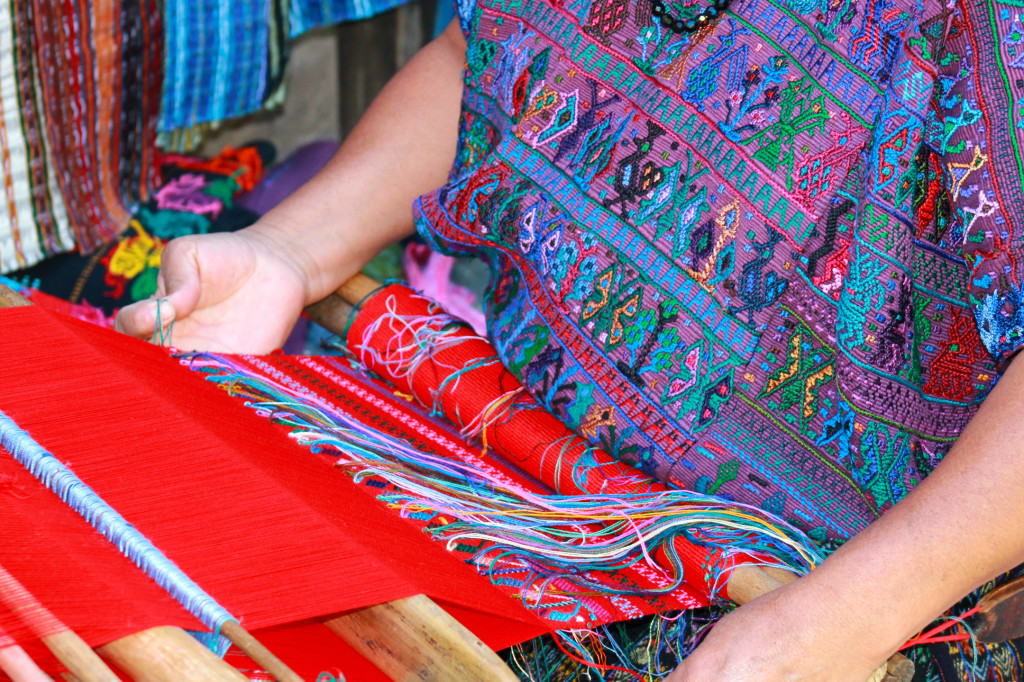
Tz’utujil Maya woman weaving with natural dyed cotton on backstrap loom San Juan La Laguna Guatemala
THINGS TO DO IN SAN JUAN LA LAGUNA
What to Do in San Juan La Laguna
The Natural Dye Weaving Cooperatives: The Real Reason to Come
The natural dye weaving tradition in San Juan is not found anywhere else on this lake. At cooperatives like Casa Flor Ixcaco — founded in 1996 by Doña Teresa, a Tz’utujil weaver who has been doing this work her entire life — the women grow their own organic cotton, extract dyes from plants (indigo, avocado, carrots, basil, cinnamon), insects (cochineal), and other natural sources, then weave the finished textiles on backstrap looms using ancestral patterns.
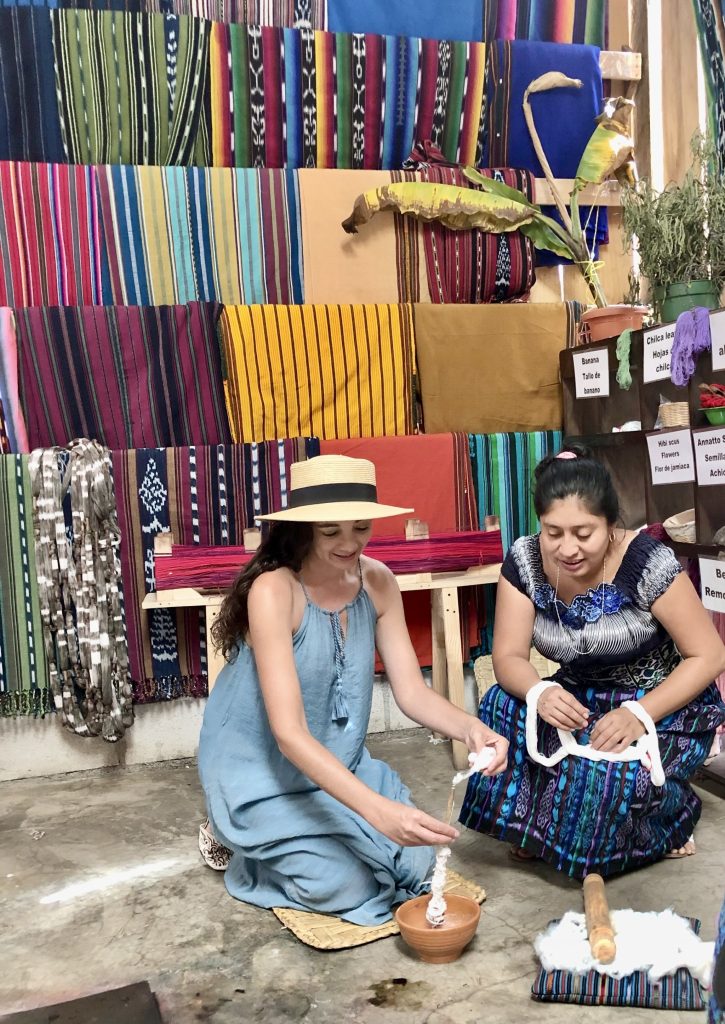
What makes Casa Flor Ixcaco particularly worth your time is that every product is tagged with the photo and name of the woman who made it and the natural ingredients used to create the dye. You are not buying a souvenir. You are buying a piece of work from a specific person, made with documented materials, produced through a process you can watch happen. That is not something you’ll find at a shop on the tourist street — and the difference matters. Other cooperatives worth visiting include TinteMaya, Batz’ Textiles, and the Lema Association — each slightly different in style and approach.
For an immersive weaving and natural dye workshop, the San Juan La Laguna guided walking tour visits the women’s weaving cooperative with a demonstration, alongside the chocolate shop, honey cooperative, art galleries, and the iconic mural streets — all in three hours with a local guide who explains the cultural context behind each stop.
✨ WHEN YOU BUY AT A COOPERATIVE
Ask to see the weaving process. Ask which plants created which colors. Leave a tip for the weaver doing the demonstration. Ask before photographing anyone at work. These are real craftswomen, not performers. The respect you bring to the interaction is part of the experience.
La Voz Coffee Tour: One of the Best Coffee Experiences in Guatemala
La Voz que Clama en el Desierto is a community coffee cooperative operating on the slopes above San Juan La Laguna. It is one of the most highly praised tour experiences at the lake — not because it was designed to be impressive for visitors, but because it was designed to be honest. The tour walks you through every stage of the process: picking coffee cherries from the farm, fermentation, drying, roasting your own beans on-site, and a hands-on cupping session at the end.
The coffee from this cooperative grows in volcanic soil with a lake-influenced microclimate — conditions that slow cherry ripening and develop flavor complexity that distinguishes Atitlán coffee from highland coffee grown elsewhere in Guatemala. Angel and his family run the tour and are consistently described by visitors as the kind of guides who love what they’re explaining. The three Mayan villages from Antigua tour includes San Juan and gives you La Voz in the context of a broader lake visit.
💡 Book in advance: The La Voz coffee tour fills quickly, especially during the main harvest season (October through February). Contact them directly at La Voz Café in San Juan or book through the cooperative’s own channels. Also look for the Coffee, Chocolate and Textile Tour option that combines all three cooperative experiences in one morning.
The Murals: More Than a Photo Backdrop
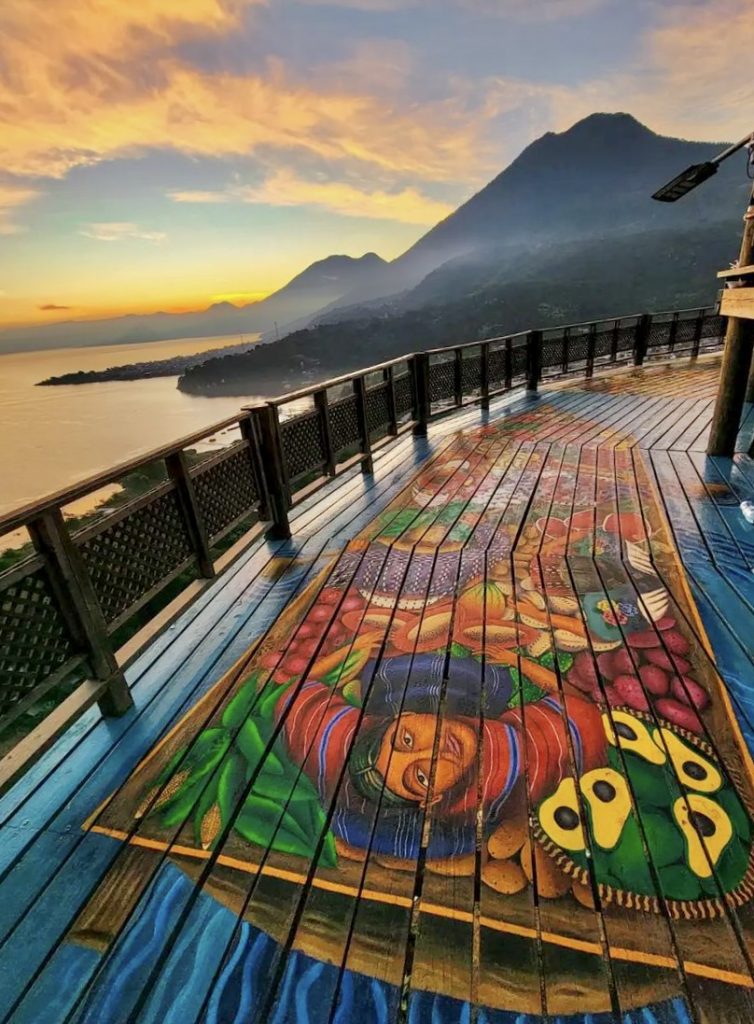
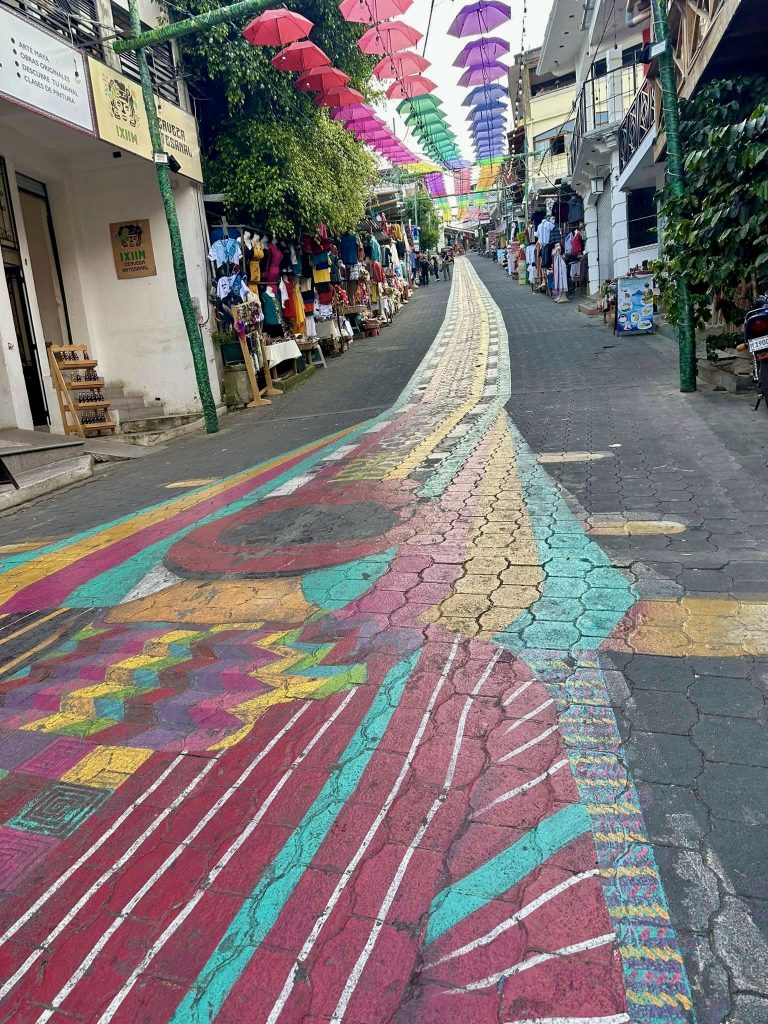
More than forty murals cover the walls of San Juan La Laguna’s main streets — Calle de las Sombrillas, Calle del Café, Calle de los Sombreros. They depict the Mayan story of creation, the development of mathematics, the 5,000-year Mayan calendar, community life, and Tz’utujil cosmology. They were painted by local artists, not by an outside design agency or a municipal beautification program.

Yes, these streets have become a tourist attraction, and yes, a lot of the foot traffic on them is people taking photographs. But the murals themselves are a real artistic tradition — San Juan has produced recognized painters including a 14-year-old girl named Delmy Yesenia Cholotio Leja who runs her own gallery, Ventanas del Lago. Walk slowly through these streets. Read what the murals are actually depicting. There is more information here than most visitors stop long enough to absorb.
Mirador Kaqasiiwaan: The Best View on the Western Shore
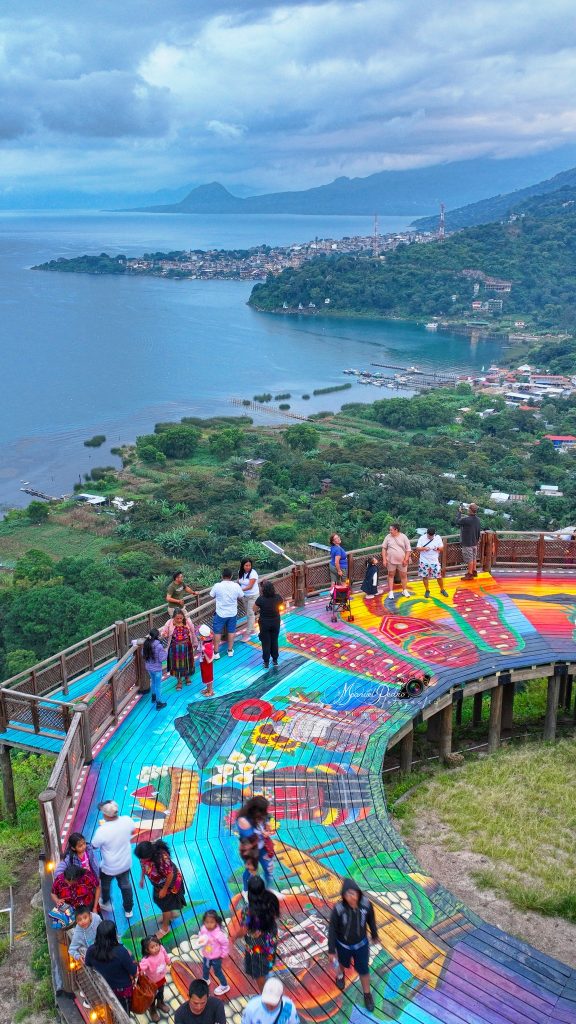
Mirador Kaqasiiwaan — also called Mirador Cerro de la Cruz — sits above the town and offers one of the most complete panoramic views on the western shore: San Juan below, San Pedro to one side, all three volcanoes across the lake, and the blue water stretching toward the eastern shore. The entrance fee is Q20, paid at a small booth near the trailhead. Paved stairs lead to the top; it takes about 20-30 minutes to climb. The viewing platform is large enough to sit comfortably and take it in properly. Go early in the morning before clouds settle on the volcanoes.
💡 Practical: Q20 entrance fee. Start the climb before 9 AM to beat cloud cover and the midday heat. The trailhead is clearly signposted in town — any local can point you toward it. Wear shoes with grip. The stairs are steep in places.
The Medicinal Plant Cooperative: San Juan’s Most Overlooked Experience
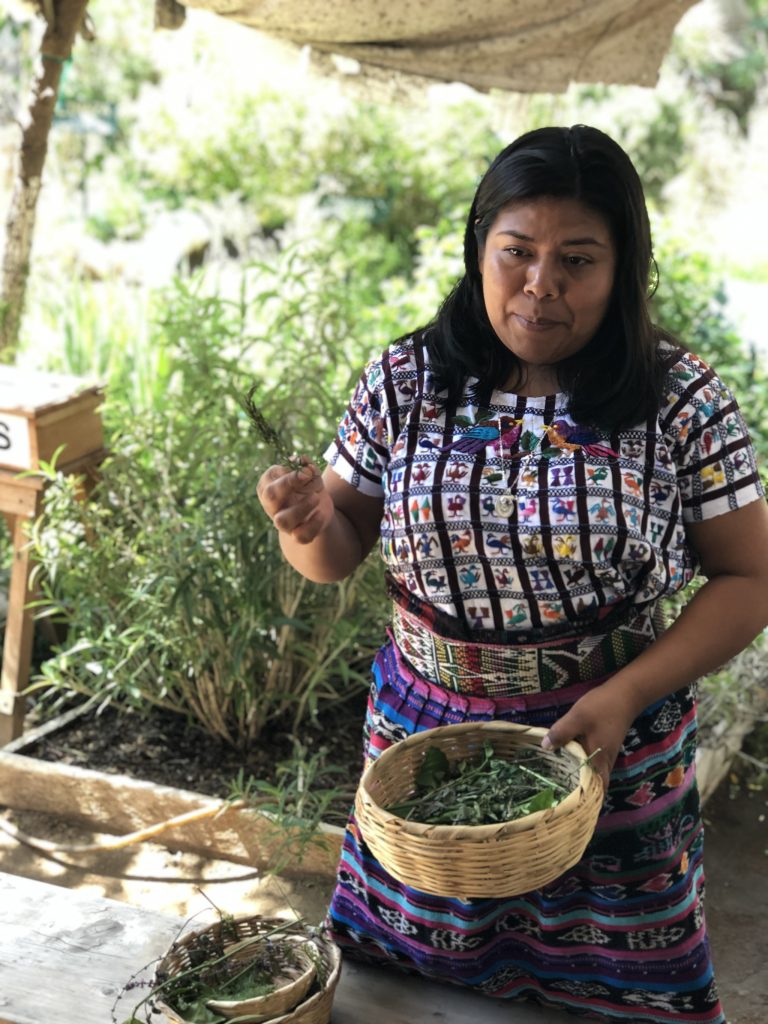
The comadronas — Mayan midwives — of San Juan La Laguna operate a medicinal plant garden cooperative that is consistently one of the least-visited but most interesting experiences in town. The comadronas have maintained generational knowledge of the plants that grow on these hillsides and their healing applications. Visiting the garden means spending time with women who are both practitioners and knowledge keepers — people for whom this tradition is not a performance but a livelihood and a responsibility. Ask to meet a comadrona during your visit. It is a conversation worth having.
Chocolate and Honey: Two More Cooperatives Worth Visiting
Xocolatl — the artisanal chocolate cooperative — offers tastings and demonstrations of traditional cacao processing, including the connection between cacao and Mayan ritual history. The combination of chocolate and rum tastings is consistently well-reviewed. Mundo de Abejas Mayas (the Worker Bees cooperative, also called Xunah Kaab Honey Farm) is a youth-run apiary with honey tastings of three different varieties produced sustainably. Both are compact visits — thirty to forty-five minutes each — and both are run by community members, not outside operators.
Art Galleries: San Juan’s Painters
San Juan has a small community of painters working in the naïve Maya style — similar to what you find in Santiago Atitlán, documenting lake life and Tz’utujil tradition. Galeria Imox, Galeria de Arte Chiya, Jovenarte, and Ventanas del Lago are among the galleries in town. Some are one-room operations attached to artists’ homes. The work inside is actual fine art, not mass-produced reproductions. If you are interested in collecting, this is the right place to look seriously.

El Rostro Maya (Indian Nose) Sunrise Hike
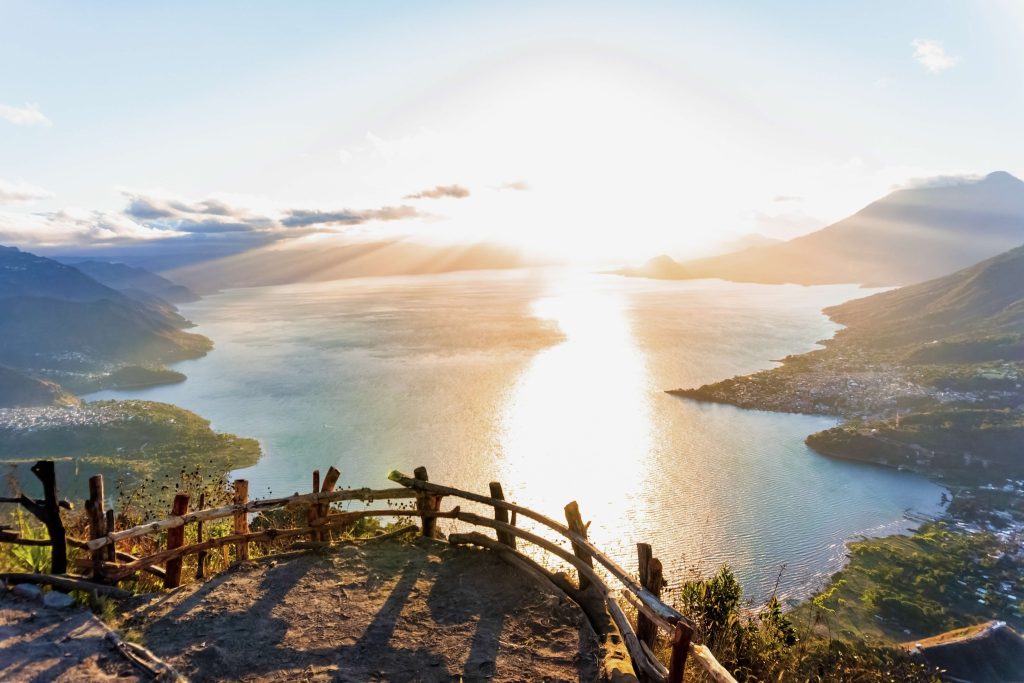
The long version of the Indian Nose hike — officially renamed El Rostro Maya — starts from San Juan La Laguna. The route climbs the ridge above the western shore for a panoramic sunrise view of the lake, the three volcanoes, and the village spread below. The hike takes about 4-5 hours round trip and should start no later than 4 AM to reach the summit before the sun. A local guide is required. Book the evening before through your hotel or a local operator. My Lake Atitlán hiking guide covers the full route and what to expect.
ATV Tour Through the Western Shore Villages
The San Juan ATV tour covers San Juan, San Pedro, and San Marcos on mountain roads above the lake, with viewpoints, a visit to the stingless bee cooperative, a chocolate factory stop, and lookouts above San Pedro where you can see the Indian Nose ridge and all three volcanoes. It runs 4-5 hours and has consistent high ratings. Good for travelers who want to cover the western shore from a different angle and don’t mind getting muddy.
Birdwatching in San Juan La Laguna
The Rey Tepepul Municipal Nature Reserve above San Juan is one of the better-documented birdwatching sites on the western shore, with access to cloud forest habitat that supports resplendent quetzal sightings alongside more than 100 other species. The 5-hour private birdwatching experience in San Juan La Laguna is run by local guides with proper equipment and early-morning timing. Book in advance — quetzal sightings are not guaranteed but the route itself is worth it regardless.
Kayaking on the Lake
Eco Hotel Uxlabil Atitlán provides free kayaks to guests, with direct lake access from the property. The western shore between San Juan and San Pedro offers a calm, relatively quiet stretch of lake for paddling in the morning before the wind picks up. If you’re not staying at Uxlabil, several operators in town rent kayaks by the hour. Go in the morning — the Xocomil wind makes afternoon paddling considerably less enjoyable.
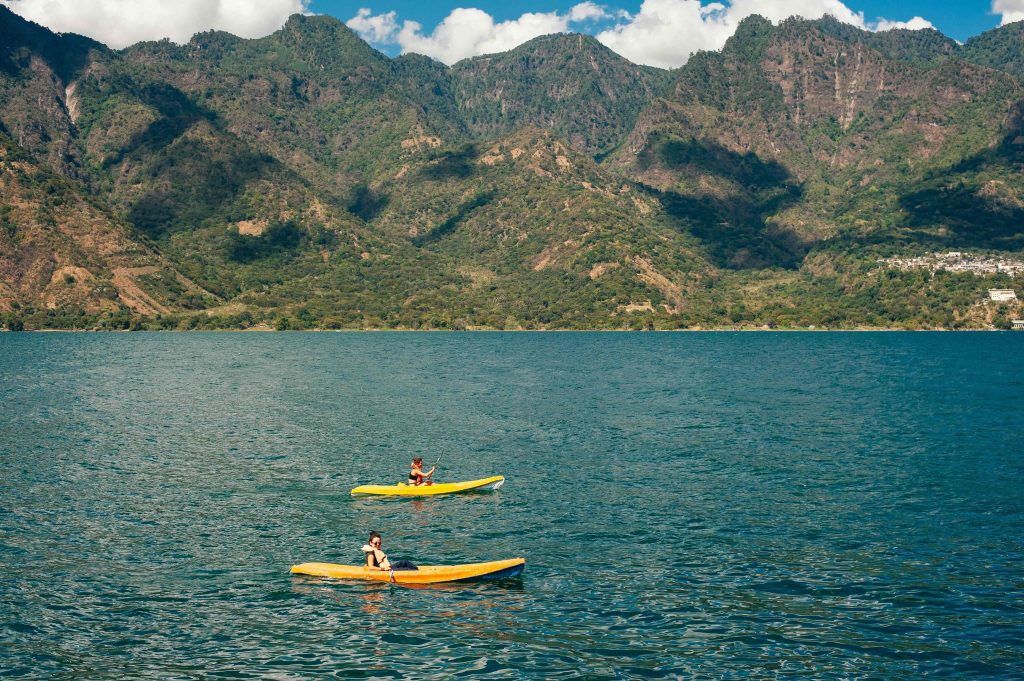
Cooking with a Local Family: The Hidden Gem Nobody Books Online
Some of the most meaningful experiences in San Juan don’t appear on any booking platform. Local women like Petrona — an artisan whose home and kitchen have welcomed visitors for an afternoon of cooking, learning, and sharing — offer something that no organized tour can replicate. You cook together. You eat together. It is not a lesson and it is not a show. The food you make together is good, and what stays with you is the feeling of being in someone’s home rather than in a curated experience. This is the kind of access I share with planning clients. Reach out if this is what you’re looking for.
FOR DAY VISITORS
How to Spend a Morning in San Juan La Laguna
This sequence works. Follow it in order and you’ll be back at the dock by 12:30 PM, ahead of the Xocomil wind.
8:00 AM — Coffee at Café San Juan and walk the mural streets
Café San Juan is steps from the main pier and serves excellent locally grown coffee. Buy a cup, then walk slowly through Calle de las Sombrillas, Calle del Café, and Calle de los Sombreros. Read what you’re looking at. The murals have meaning beyond the visual.
8:45 AM — Casa Flor Ixcaco weaving cooperative
Watch the demonstration, understand what distinguishes natural dye weaving from the products sold on the tourist street, and buy something if you’re buying textiles anywhere in Guatemala. This is the right place to do it.
9:30 AM — Mirador Kaqasiiwaan
Q20 entrance fee. Bring water and a hat. Spend at least 20 minutes at the top — this is a view that earns sitting with.
10:30 AM — Chocolate and honey cooperatives
Xocolatl for the chocolate and rum tasting, Mundo de Abejas Mayas for the honey. Both are compact visits. Both involve actual food, which is a good sign.
11:30 AM — Lunch and back to the dock by 12:30 PM
La Farfalla for a proper sit-down lunch, or Alma de Colores for something lighter. Be on the dock before 12:30 to catch the lancha before the Xocomil wind makes the crossing unpleasant.
FOOD AND DRINK
What to Eat in San Juan La Laguna
San Juan’s food scene is small and good in places, without the international restaurant sprawl of San Pedro. The best eating here leans local — market comedores, family-run spots, and the coffee culture that’s built up around La Voz’s beans. For a broader look at Guatemalan food traditions, my guide to Guatemalan food covers the regional context.
The coffee here is the obvious starting point. La Voz Café sells the cooperative’s beans directly, and a cup brewed from locally grown and roasted organic coffee — at the source, surrounded by the farm where it was grown — is an experience that justifies going to San Juan on its own. Order a cup when you visit. Buy a bag to take home.
Fresh lake fish appears on menus here — mojarra grilled whole with rice and tortillas is the standard preparation and the right thing to order if you want something connected to the lake itself. Market comedores near the central square serve eggs, beans, tortillas, and whatever was fresh that morning. Prices are Q20-35 per plate and the food is honest.
WHERE TO EAT
Best Restaurants in San Juan La Laguna
📌 FOR AN EVENING DRINK
El Artesano Queso y Vino has outdoor seating and specializes in charcuterie, cheese boards, and wine — an unusual offering for a lake village and pleasant for an early evening aperitivo if you’re staying overnight in San Juan. Also worth knowing: El Gato Perdido, the acclaimed San Pedro bistro with a sister deli in San Juan, serves artisanal products and well-prepared food if you want something more substantial in the evening.
EVENINGS IN SAN JUAN
Nightlife in San Juan La Laguna
San Juan is quiet at night. There are a few bars and spots with evening energy — some live marimba music during market days or festivals — but this is not a nightlife town. The place closes early, and the streets after 9 PM belong mostly to locals heading home.
If you want bars, live music, and a social circuit, San Pedro La Laguna is 10 minutes away by tuk-tuk or lancha and has exactly that — Soundgarden Bar, Anafres gastropub, and several other spots that run late. Many travelers who stay in San Juan spend their evenings in San Pedro and return for the night. That combination — quiet base, active neighboring town — is actually one of the better setups at the western shore for travelers who want both.
TIMING YOUR VISIT
Best Time to Visit San Juan La Laguna
By Season
November through April — the dry season — offers clearer mornings, better volcano views from the mirador, and more reliable conditions for the Indian Nose sunrise hike. The rainy season (May through October) brings lush vegetation and fewer visitors, but cloud cover frequently obscures the summit views and makes the hike less rewarding. For the coffee tour, October through February covers the main harvest season when you can pick cherries alongside the cooperative workers. That’s the most complete version of the experience. My guide to the best time to visit Guatemala covers the full seasonal picture across the country.
Festivals and Key Dates
📌 DATES WORTH PLANNING AROUND
December 24-27 — Feria Patronal de San Juan Evangelista. The town’s main annual festival honoring its patron saint, San Juan Evangelista. Traditional dances, food, processions, and community events that bring the town to life in ways visitors rarely see.
Holy Week (March or April, variable) — Semana Santa. San Juan observes Semana Santa with its own traditions. My broader guide to Holy Week at Lake Atitlán covers how each village on the lake celebrates differently.
October through February — Coffee harvest season. The La Voz cooperative tour is most complete during harvest when you can pick cherries alongside the farmers and participate in every stage of processing the same-day harvest.
Every morning, any day — The cooperatives. The weaving cooperatives are open daily and the demonstrations happen throughout the morning. No special date required — just arrive before 11 AM when the energy is freshest.
💡 Time of day matters: Arrive by 8 AM. The cooperatives are most active in the morning, the mirador views are clearest early, and you need to be back at the dock before noon to beat the Xocomil wind. Everything in San Juan rewards an early start.
Before You Plan Your Day in San Juan
I Know Who to Call for Quetzals on the Western Shore
Diego has been my go-to birding guide for the Rey Tepepul area above San Juan for years. He knows where the quetzals are because he’s spent a lot of early mornings in that forest, not because he read a field guide. I don’t post his contact publicly but I share it with everyone who asks. Get in touch.
ACCOMMODATION
Where to Stay in San Juan La Laguna
San Juan’s accommodation range is small but well-curated. The lakefront options are quieter than anything in Panajachel and significantly more culturally connected — you’re staying in a working village, not a tourist hub. The vacation rental options in nearby San Pedro are worth considering if you want more space, a kitchen, and a pool while still using San Juan as your base for the cooperatives and coffee tour.
HOTELS IN SAN JUAN LA LAGUNA
|
⭐ BEST FOR LAKE VIEWS — BREAKFAST INCLUDED Hotel Casa Ki’iil Lakefront in San Juan with a private dock, kayaks for guests, and lake view rooms that look out over the garden and the water. Free full breakfast included. Off the main road so it stays quiet, but a 7-minute walk to Calle de las Sombrillas and a short tuk-tuk to everything else. Staff will help you arrange lancha pickup directly from the dock. The right base for anyone spending serious time in San Juan. |
⭐ ECO STAY — LOCALLY OWNED Eco Hotel MayAchik A locally owned eco hotel in San Juan La Laguna with lake views and the kind of low-footprint, community-rooted approach that fits the village. Closer to the cooperative experience than any hotel in Panajachel or San Pedro. For travelers who want their accommodation choice to reflect the same values as their visit to the village cooperatives. |
|
⭐ BEST VALUE — BETWEEN SAN JUAN AND SAN PEDRO Eco Hotel Uxlabil Atitlán Directly on the lakeshore between San Juan and San Pedro — walkable to both villages. Every room has a lake-view balcony. Free kayaks, private dock, bird-filled gardens, solar-heated water, a temazcal on site, and breakfast included. One of the best-value hotel experiences at the entire lake. Ideal for anyone splitting time between the two villages and wanting a base that doesn’t belong to the tourist strip of either. |
|
VACATION RENTALS — SAN PEDRO LA LAGUNA (10 MINUTES BY LANCHA)
If you want a kitchen, a pool, and more space — particularly for families or groups spending several nights at the lake — the Luxury Atitlán properties in San Pedro are the strongest self-catering option on the western shore. San Pedro is a ten-minute lancha ride from San Juan, so using one as a base for the other is straightforward.
|
⭐ VACATION RENTAL — POOL AND SPA Luxury Atitlán Suites, San Pedro Aparthotel units with private terraces and lake or mountain views, outdoor pool, hot tub and spa, free WiFi, and a two-minute walk to the lake. Named suites with full amenities, good for couples or small groups wanting more than a standard hotel room. Sublime and Sababa restaurants are a short walk. Rated 7.8/10 Good on Expedia. A strong option for anyone wanting self-catering flexibility without sacrificing location. |
⭐ VACATION RENTAL — BEST FOR GROUPS Luxury Atitlán Apartamentos, San Pedro Self-contained apartments from the same Luxury Atitlán operator — the better option for groups or families who need multiple bedrooms and a full kitchen setup. Shared pool with views, central San Pedro location within easy walking distance of restaurants and the dock. The right choice if you want apartment-style independence while staying within the most active village on the western shore. |
BASING YOURSELF ON THE WIDER LAKE
If you want more accommodation variety, easier shuttle connections to Antigua, or access to both the eastern and western shores without committing to one base, these options give you flexibility.
|
⭐ EASTERN SHORE Beautiful lakefront hotel in Santa Catarina Palopó with pool, volcano views, and direct lancha access to the western shore villages. I’ve stayed here more times than I can count. A strong base for exploring the whole lake. |
⭐ PANAJACHEL Hotel Atitlán Classic lakefront hotel in Panajachel with grounds, a pool, and easy lancha access to the western shore. Good shuttle connections to Antigua. The most comfortable option in Panajachel if you want to be near the water. |
|
⭐ LAKESIDE VILLAS Private villas on the lake with lush gardens, pool, and a quiet setting away from Panajachel. For families or couples who want space and quiet as their base while exploring the whole lake by lancha. |
⭐ BOUTIQUE PERCH Casa Palopó Boutique hotel above the lake near Santa Catarina Palopó with views of all three volcanoes and beautifully appointed rooms. One of the most visually striking places to stay at the lake. The on-site restaurant Palopó 6.8 is one of the best at the lake. |
A rental car makes the most sense for the Antigua-to-Panajachel leg of your journey. Once you’re at the lake, the lanchas and tuk-tuks handle everything — the car stays parked in Panajachel or at your hotel. Renting gives you flexibility on arrival and departure without depending on shuttle schedules.

Planning a Hike from San Juan?
The Private Hiking Contacts I Share With Clients
The El Rostro Maya long route from San Juan and the trail to Santa Clara are both best done with someone who actually knows the western shore. The guide I use for private hikes here isn’t on any booking platform. Get in touch and I’ll connect you.
QUESTIONS PEOPLE ASK
San Juan La Laguna: Your Questions Answered
Is San Juan La Laguna worth visiting?
Yes — for the right reasons. The natural dye weaving cooperatives, the La Voz coffee tour, the medicinal plant garden, the mirador, and the chocolate and honey cooperatives are all worth your time. If you go expecting the most authentic village on the lake in a general sense, you’ll find a tourist infrastructure that complicates that label. If you go knowing specifically what San Juan does exceptionally well, you’ll have a rewarding visit.
What is San Juan La Laguna known for?
San Juan is known primarily for its natural dye weaving cooperatives — a tradition specific to this village where organic cotton is grown on-site and dyed using plants, insects, and other natural materials before being woven on backstrap looms by Tz’utujil Maya women. It’s also known for the La Voz coffee cooperative and coffee tour, the 40+ murals along the Paseo de las Artes, the Mirador Kaqasiiwaan viewpoint, and a network of community cooperatives covering medicinal plants, chocolate, and honey.
How do I get to San Juan La Laguna?
From Panajachel, take the main lancha from Muelle Tzanjuyú (at the end of Calle Santander) toward the western shore. San Juan is on this route and takes about 30-40 minutes to reach. From San Pedro La Laguna, San Juan is a 10-minute tuk-tuk ride, a 20-minute walk, or a short lancha hop. From Antigua, take a shared shuttle to Panajachel (about 3 hours, $20-25 USD) and then the lancha.
How long does it take to get from Panajachel to San Juan?
About 30-40 minutes by lancha from the main Panajachel dock. Lanchas run throughout the day and leave when they have enough passengers — usually a wait of 15-30 minutes. The fare is approximately Q25-30 each way.
Where to stay in San Juan Lake Atitlan?
Eco Hotel Uxlabil Atitlán is the standout choice — lakefront, free kayaks, breakfast included, bird-filled gardens, between San Juan and San Pedro. Hotel Taa’ Tiin is the best option inside the village center for travelers who want to be in the heart of the community. Eco-Hotel MayAchik is the best budget eco option. All three are reliable and well-reviewed.
Why can’t you swim in Lake Atitlan?
Swimming at Lake Atitlán has been affected in some areas by periodic cyanobacteria (blue-green algae) blooms linked to agricultural runoff and wastewater entering the lake. These blooms can be toxic and vary by area and season. The lake’s depth and cold temperatures also make open-water swimming risky regardless of water quality. Check current local conditions before entering the water anywhere on the lake.
Is San Juan La Laguna safe?
Yes. San Juan is a safe destination for travelers who apply normal common sense — keep valuables out of sight, don’t walk unfamiliar areas alone after dark, and be aware of your surroundings. The town center, the cooperative streets, and the mirador route are all well-traveled and fine. The small size of the village makes it easy to orient yourself quickly.
KEEP EXPLORING
More From Lake Atitlán and Guatemala
|
THE CULTURAL CENTER OF THE LAKE Santiago Atitlán: A Local’s Complete Guide The most historically significant town on the lake — Maximón, the church, the 1990 massacre, and the most culturally rooted Tz’utujil community. |
LAKE ATITLÁN Lake Atitlán Guatemala: Complete Guide to Every Village The complete picture of the lake — what it is, what each village offers, and how to understand it before you arrive. |
|
HIKING The Best Hiking Trails in Lake Atitlán Indian Nose (El Rostro Maya), Volcán San Pedro, Volcán Atitlán and lots of waterfall hikes — every trail worth knowing at the lake. |
BOAT SERVICES Complete Guide to Lake Atitlán Boat Services Routes, prices, docks, and timing for every village — including why San Juan uses a different dock than Santiago. |
|
MAYAN CEREMONIES Mayan Ceremonies in Guatemala: A Complete Guide Understanding the broader ceremonial tradition that connects San Juan’s cooperatives and medicinal plant knowledge to living Maya culture. |
WITH KIDS Best Things to Do at Lake Atitlán With Kids San Juan’s cooperatives, chocolate, and honey workshops are among the best kid-friendly experiences at the lake. |
|
HOLY WEEK Holy Week at Lake Atitlán: Every Town’s Traditions How Semana Santa is observed across the lake villages, including San Juan’s traditions. |
GUATEMALA ITINERARY 7 Days in Guatemala: A Local’s Complete Itinerary How San Juan fits into the broader Guatemala trip — sequencing the lake with Antigua and beyond. |
This Is My Country
Let Me Help You Find the Real San Juan
Every person I’ve brought to one of the cooperatives here has spent longer than they planned. You sit down with a weaver for what you think will be twenty minutes and an hour later you’re still there, still learning. That’s San Juan when you’re in the right hands. Tell me about your trip.
The women at Casa Flor Ixcaco have been growing their own cotton since 1996. They know which plants produce blue and which produce gold. They can show you. That is not a tourist experience — that is a woman sharing what she knows. San Juan La Laguna is worth visiting because of people like her. Go find her.
Through her writing, Paula helps travelers discover Guatemala beyond the typical tourist route with practical advice, local recommendations, and authentic experiences that connect visitors with the country’s people, culture, and traditions.
Planning a trip to Guatemala? Paula offers personalized Guatemala itinerary planning and trip consultation services tailored to your interests, travel style, and budget. Contact her at [email protected] to learn more.
- San Lucas Tolimán Guatemala: Lake Atitlán’s Best-Kept Secret - September 24, 2026
- Hotel Tolimán Lake Atitlán: A Special Stay in San Lucas Tolimán - September 24, 2026
- Guatemala Dreams in San Lucas Tolimán: A Boutique Stay on Lake Atitlán - September 23, 2026

