People ask me this more than almost anything else: when is the best time to visit Guatemala? I never give a one-word answer because the honest answer depends on the kind of trip you want. Some travelers fall in love with Antigua in the rain. Others get disappointed by one cloudy afternoon in December. So instead of telling you there is one perfect month, I want to walk you through what each season really feels like here.
I was born in Guatemala, left for many years, came back every summer with my kids, and eventually moved home again. So when I talk about what a month feels like, I am not only looking at weather charts. I am thinking about packing for it, planning around it, getting caught in it, and learning which parts of the country behave completely differently from each other. I did still check real weather data for every region in this guide, and when the numbers disagree, I will say that too.
Below you will find the real dry and rainy season patterns, when crowds and prices actually spike, how weather changes by region, and a full month-by-month index linking to my complete guide for each month. If you would rather tell me what you are hoping to see and let me match it to the right dates, reach out here and I will help you figure it out.
This guide is for
✓ You are trying to decide which month actually fits your trip ✓ You have read several guides that all say something different ✓ You want the real weather, crowd, and pricing picture, not just a generic “best time” answer
THE TWO SEASONS
Guatemala’s Dry Season and Rainy Season, Explained Properly
Guatemala has two main seasons, not four, and we call them verano and invierno. Verano is dry season, roughly November through April. Invierno is rainy season, roughly May through October. Those words do not translate perfectly to “summer” and “winter” the way you might expect from Spanish class, so it helps to think of them as dry months and rainy months instead. Weather, packing, pricing, festivals, and hiking conditions all build from that basic split.
Dry Season: November Through April
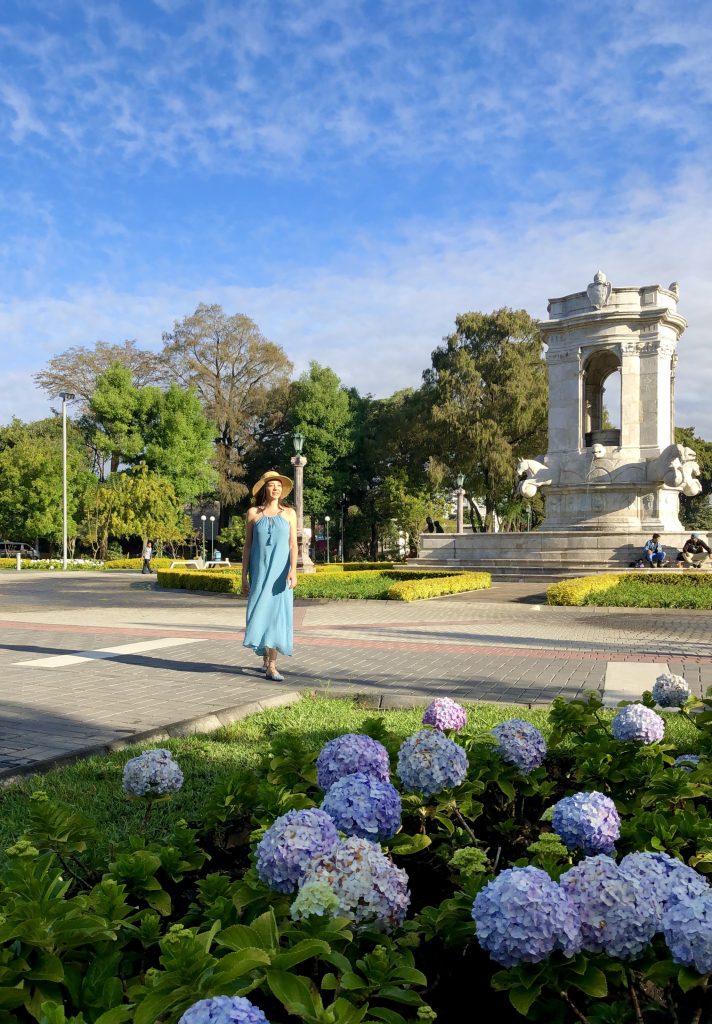
This is the Guatemala most travelers picture before they arrive: clear skies, dry trails, and volcano views that make you want your camera out all the time. In Antigua, Lake Atitlán, and Guatemala City, daytime highs generally sit in the mid-70s to low-80s Fahrenheit, with cooler nights, especially in December and January. March and April feel warmer, and once you drop into Petén or the Pacific lowlands, the heat becomes much more intense.
This is also the window when I usually tell people to plan volcano hikes, ruins, coffee farm visits, and longer outdoor days. Trails are drier, footing is easier, and the views are more likely to reward the early wake-up call.
Rainy Season: May Through October
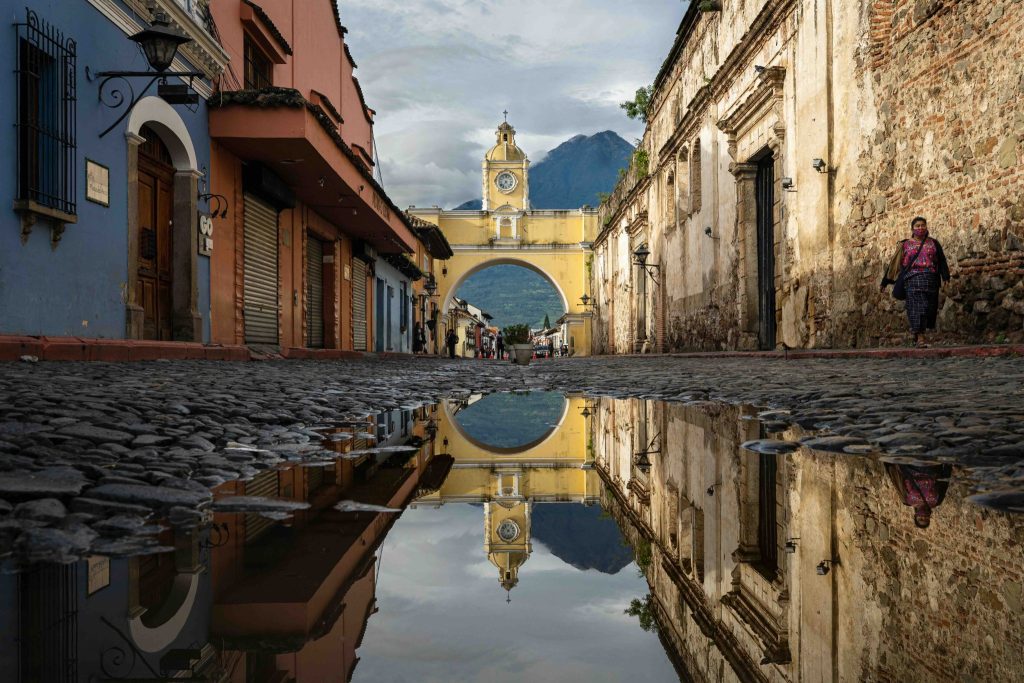
The thing most visitors misunderstand about rainy season is that it usually does not mean rain all day. In many parts of the highlands, mornings can still be clear or partly cloudy. Then clouds build, rain comes in the afternoon or evening, and the day resets. I plan around that rhythm constantly, and it is the single most useful rainy-season habit to copy.
As for which month is technically the rainiest, the answer depends on the region and the source. Some data shows June as one of the heaviest months by raw rainfall because rainy season can open with a strong burst. Other sources, especially for Antigua and Guatemala City, point to September as the peak by rainy days, humidity, and how consistently wet the month feels. October usually follows close behind. From living here, September and October are the months when I stop making plans without a backup.
📌 LA CANÍCULA
Even in rainy season, Guatemala often gets a short dry spell called la canícula, usually sometime in July or August. Some years it feels like a real break. Other years it barely shows up. I would not plan an entire trip around catching it, but it is good to know that mid-summer does not always mean nonstop rain.
CROWDS & PRICING
High Season, Low Season, and Why They Do Not Match the Weather Exactly
A common mistake is treating “dry season” and “high season” like they are the same thing. They overlap, but they are not identical. That matters because you can get great dry-season weather without always paying the absolute highest prices, as long as you avoid the biggest holiday windows.
The Real Crowd Calendar
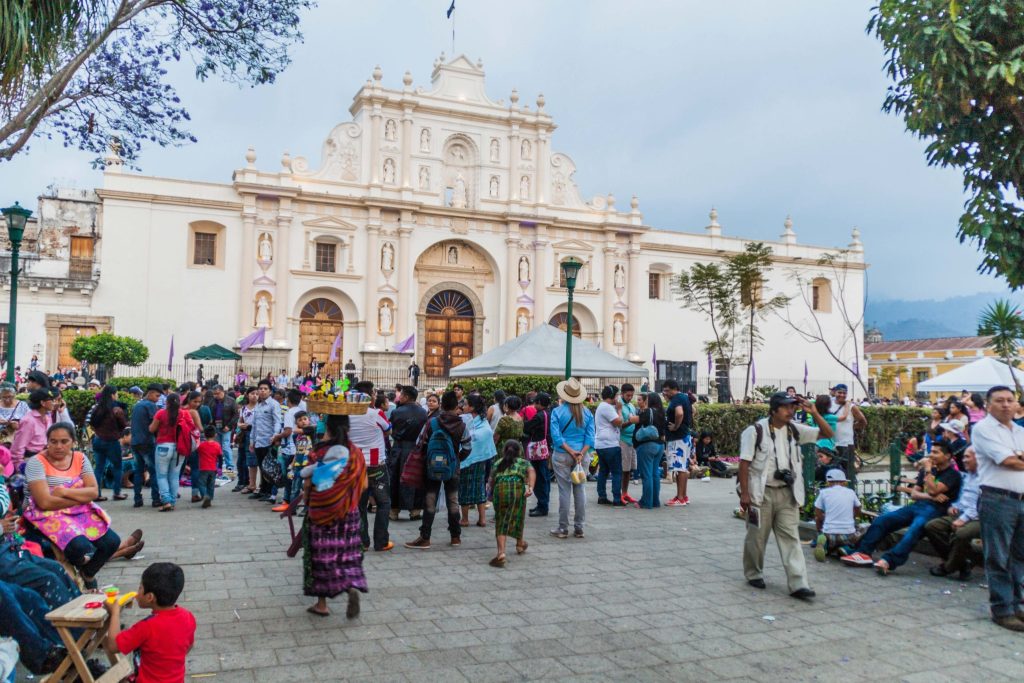
Crowds and prices spike at two specific moments, not evenly across the whole dry season. The first is Christmas and New Year, roughly mid-December through early January, when international visitors and Guatemalan families traveling for the holidays fill Antigua, Lake Atitlán, and other popular routes. The second, and often bigger, is Semana Santa. Holy Week moves every year and can fall anywhere from late March to late April. Antigua during Holy Week is the busiest and most expensive I have ever seen it, often more intense than Christmas. Outside those two windows, the rest of dry season, especially February and the early weeks of March before Holy Week, can feel calmer while still giving you excellent weather.
Low Season Can Be a Real Budget Advantage
Rainy season, especially September and October, often brings some of the lowest prices of the year in places like Antigua and Lake Atitlán. This is not just a tiny discount. If you are flexible with weather and willing to plan around rain, these months can stretch your budget much further than a quieter dry-season month.
Shoulder Season: My Personal Favorite
For the best middle ground, I usually look at two windows: late October into November, once the heaviest rains are easing but before December crowds arrive, and February into early March, when the weather is dry and warm but Semana Santa has not taken over yet. Neither window has a perfectly fixed start and end date because weather and holiday timing shift year to year, but both tend to give you a strong balance of good conditions, better prices, and fewer crowds.
Still Not Sure What Fits You?
Tell Me What You Are Hoping For and I Will Help You Choose the Month
This is the question I get asked most often, and it is much easier to answer when I know what matters most to you: weather, budget, hiking, food, a specific festival, or a slower trip. Tell me what you are hoping for and I will help you narrow it down.
REGIONAL DIFFERENCES
Weather Looks Different Depending on Where You Are
One thing I explain to almost every visitor is that altitude shapes Guatemala’s weather as much as the calendar does. You can be sweating in Petén and reaching for a sweater in Antigua on the same day. So instead of thinking about “Guatemala weather” as one single thing, it helps to break the country down by region.
The Highlands: Antigua, Lake Atitlán, Guatemala City, Quetzaltenango
The highlands sit high enough to stay mild most of the year. Antigua, Lake Atitlán, Guatemala City, and Quetzaltenango usually have warm days, cooler evenings, and very different temperatures from Petén or the coast. This is the region where the dry-season-versus-rainy-season split matters most: the highlands genuinely dry out from November through April and become much wetter from May through October.
Petén: Tikal and Flores
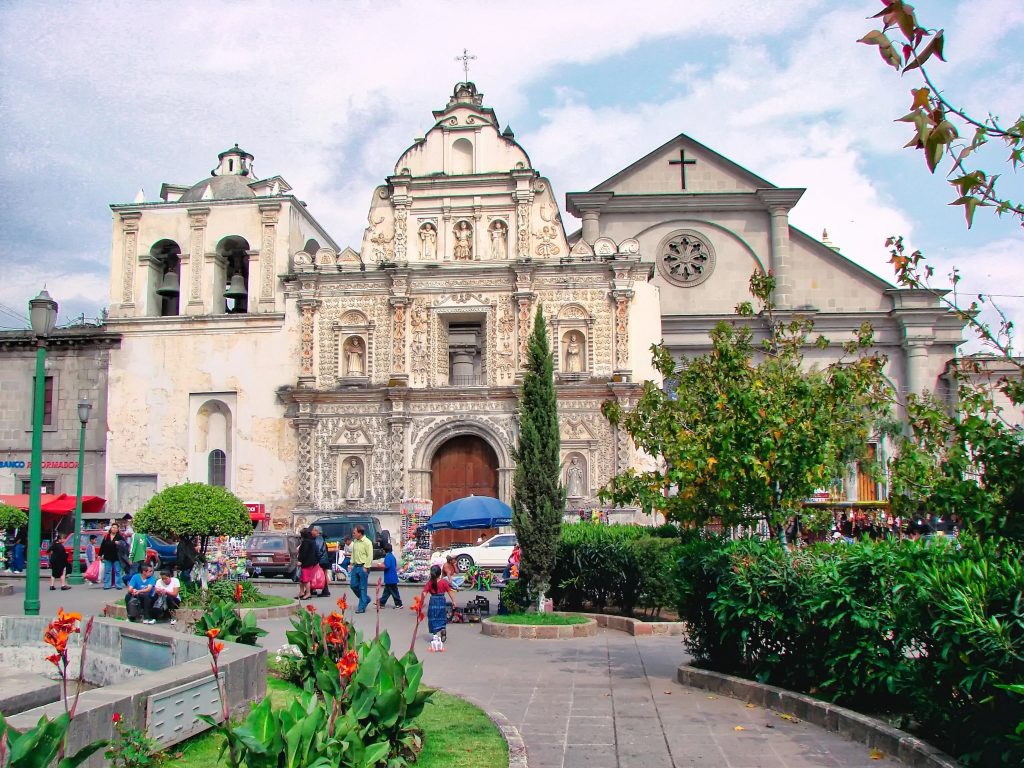
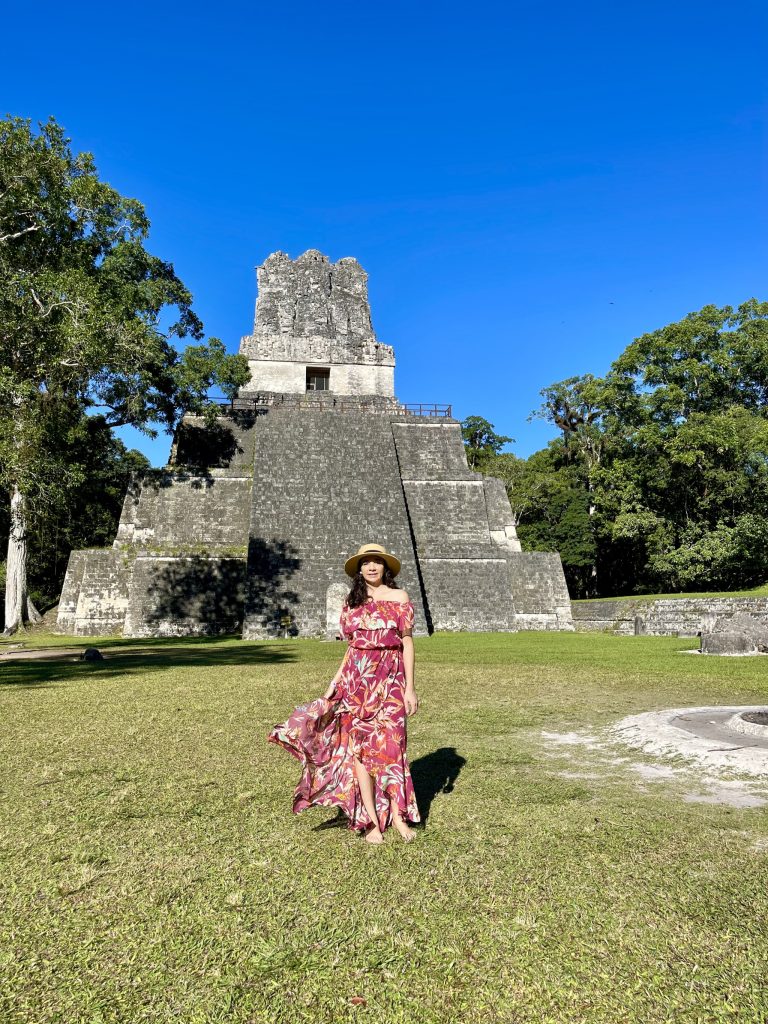
Petén is hot all year, with daytime highs often in the high 80s and low 90s, and even more heat in March and April. If you are headed to Tikal, I would usually point you toward December through April, with February and March especially strong for dry trail conditions. Rainy season matters more here than it does for a casual Antigua walking day because mud, insects, humidity, and trail conditions all affect the experience.
Pacific Coast
The Pacific Coast is hot and humid almost all year, with November through April giving you the most reliable beach weather. If you want Monterrico, El Paredón, black sand beaches, seafood, and sunsets, this is the easiest weather window. Sea turtle nesting and hatchling releases depend on local conservation programs and do not follow the exact same calendar as beach weather, so check locally if turtles are a priority for your trip.
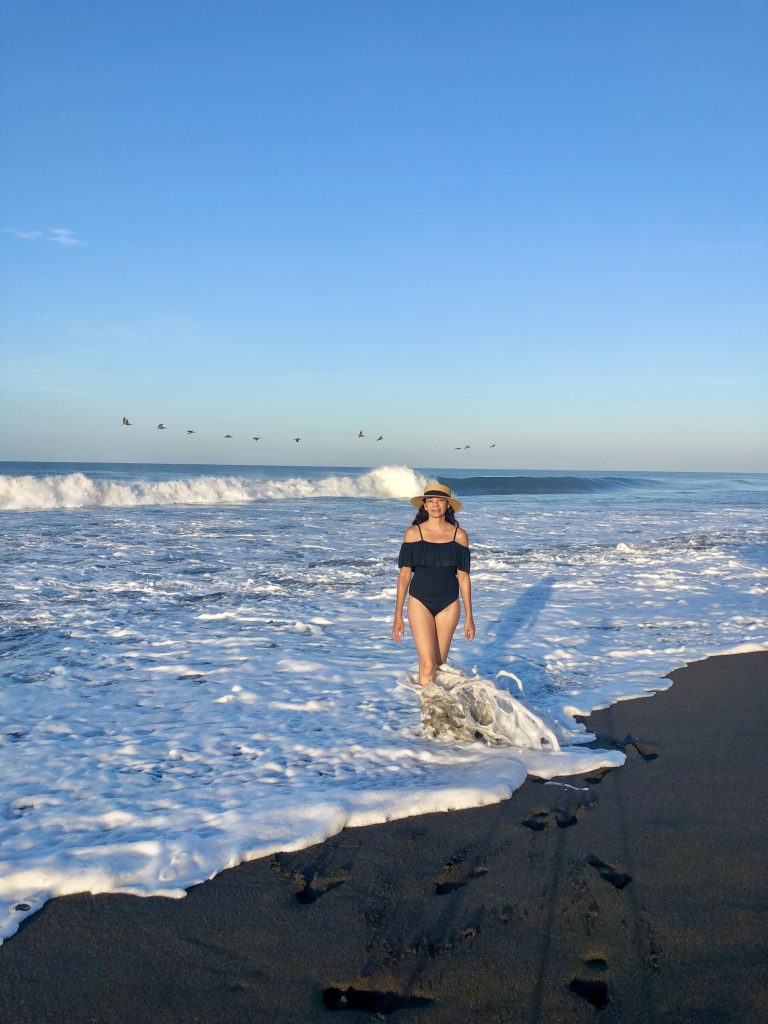
Caribbean Coast and Izabal
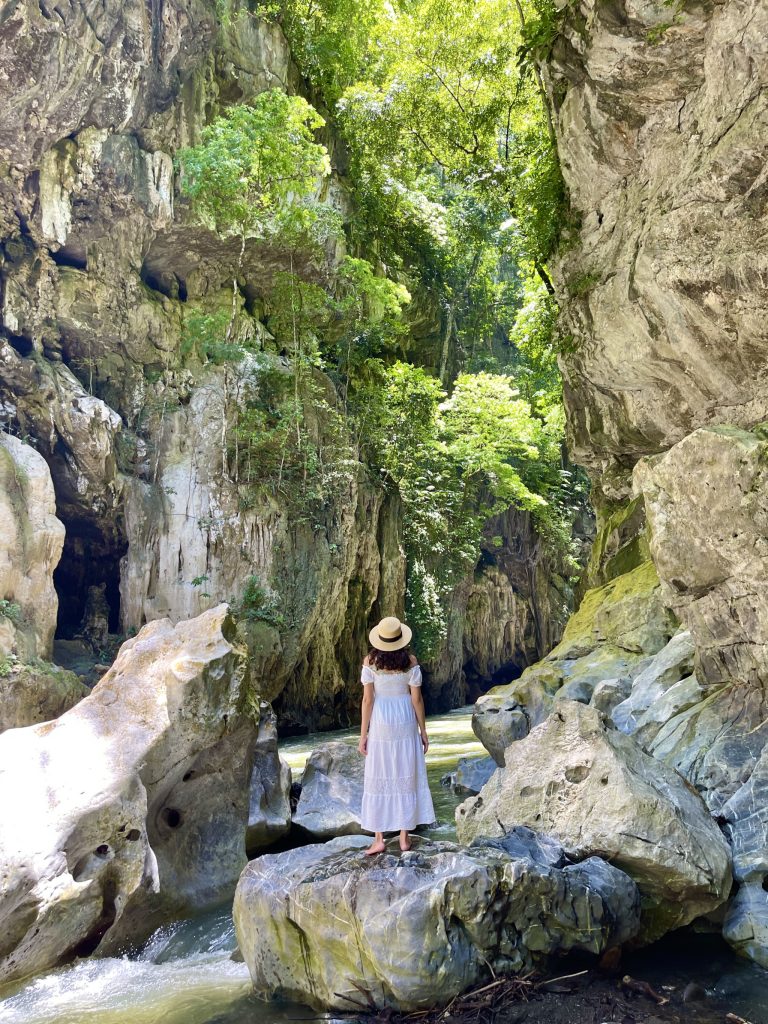
Livingston, Río Dulce, and the Caribbean side do not follow the highland dry-season pattern as neatly. This is one of the wetter parts of the country overall, and even months that feel dry in Antigua or Lake Atitlán can surprise you here. If your trip includes Izabal, build in flexibility no matter when you travel. My Río Dulce guide covers logistics for that route.
✨ HOW I WOULD PLAN AROUND THIS
If your trip includes more than one region, choose your dates around the most weather-sensitive part first. A muddy Acatenango trail or difficult Tikal conditions can affect a trip more than a passing shower in Antigua. Plan the weather-sensitive piece first, then build the rest of the route around it.
HOLY WEEK
Semana Santa Moves Every Year, and It Changes Everything
If there is one thing I want you to check before booking a spring trip to Guatemala, it is this: when does Semana Santa fall that year? Holy Week is tied to the lunar calendar, so it shifts every year and can land anywhere from late March to late April. That one detail can completely change your trip.
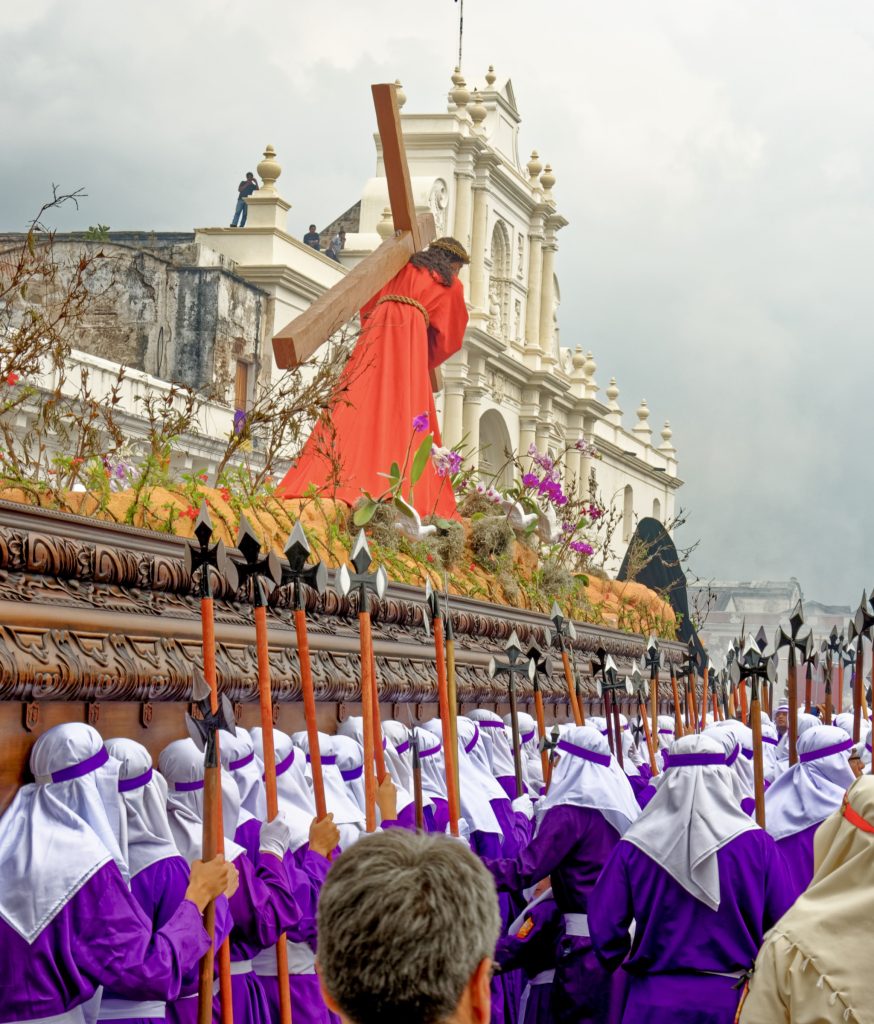
Semana Santa is one of the biggest travel moments in Guatemala, especially in Antigua. The city fills with processions, alfombras, visitors, street closures, and hotel prices that can jump dramatically. It can be one of the most unforgettable times to be here, but it is not a casual dry-season visit. It needs planning.
I have a full set of guides for this, starting with my Semana Santa traditions and history guide. The main thing to remember here is simple: look up the exact Holy Week dates for your travel year before you book flights, hotels, or transfers.
MONTH BY MONTH
The Full Year, Month by Month
Every month in Guatemala has its own personality beyond “wet” or “dry.” Some months are better for volcano views. Some are better for lower prices. Some are all about food, flowers, processions, kites, or local fairs. I have written a full guide to each month, with weather, events, food, and where I would personally go. Here is the quick version, with links to the full guides.
January →
Peak dry season, clear skies, cooler highland nights, and holiday crowds easing off as the month goes on.
February →
One of the driest and calmest months of the year, with good weather before Semana Santa crowds and prices start building.
March →
Dry, warm, and great for volcano views, with the Huelga de Dolores parade in Guatemala City. Some years Holy Week lands in March, so always check before booking.
April →
One of the hottest months of the year, and often the month when Semana Santa falls. Do not assume either way until you check the dates.
May →
The shoulder month when dry season starts tipping into rainy season. It is still warm, with the first real rains usually arriving by the end of the month.
June →
Rainy season is fully underway, but mornings can still work beautifully. Lake Atitlán gets very green and the rain becomes part of the daily rhythm.
July →
Often brings la canícula, a short mid-rainy-season break that can make travel easier, plus Rabin Ajaw in Cobán.
August →
Rainy, green, and local, with the Feria de Jocotenango in Guatemala City honoring the Virgen de la Asunción around August 15.
September →
Independence Day month, Xelafer in Quetzaltenango, and one of the wettest stretches of the year. It can also bring some of the lowest prices on the calendar.
October →
Still rainy and usually quieter, with Día de la Revolución, the Virgen del Rosario celebration in Xela, and local patron saint fairs around Lake Atitlán.
November →
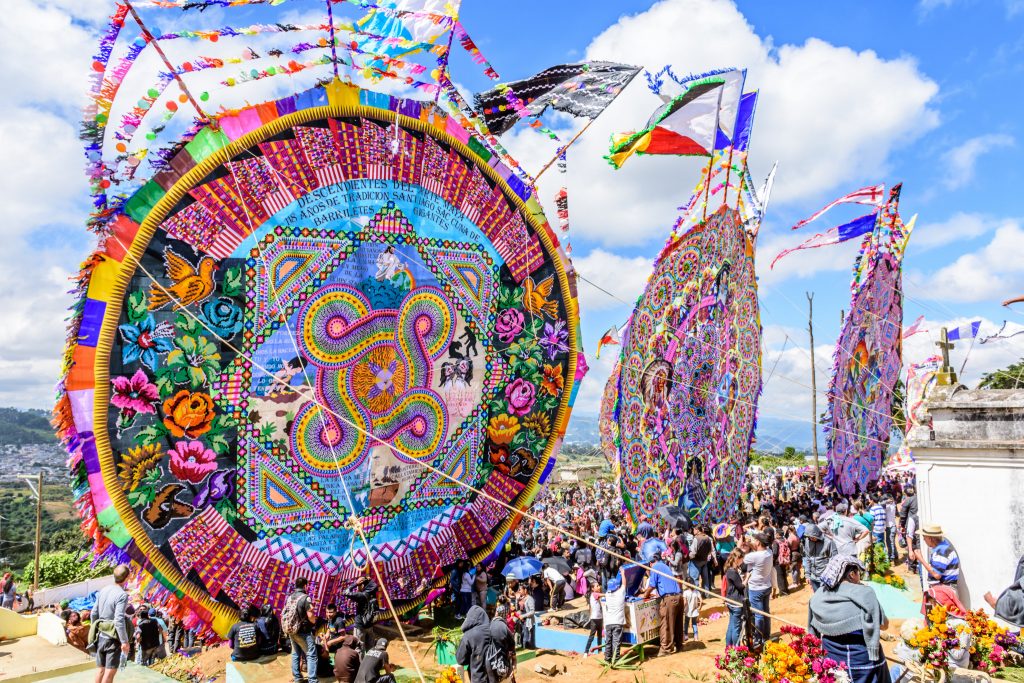
Dry season begins, the Barriletes Gigantes fill the sky for Día de Todos los Santos, and the Festival de las Flores brightens Antigua.
December →
Quema del Diablo, Christmas, cooler nights, clear skies, and the start of one of the busiest and priciest travel stretches of the year.
Already Have a Month in Mind?
Let’s Figure Out What to Actually Do With It
Choosing the month is only half the puzzle. The other half is building a route that fits the weather, the crowds, the pace, and whatever festival or experience you are hoping to catch.
QUESTIONS PEOPLE ASK
Questions People Ask About the Best Time to Visit Guatemala
What is the best month to visit Guatemala?
There is not one best month for everyone. For the most reliable weather, November through April is the easiest window. For lower prices and fewer crowds, September and October can be worth considering if you are comfortable with rain. For cultural events, the best month depends on what you want to see: Semana Santa, giant kites, Independence Day, the Festival de las Flores, or Christmas traditions.
What is the rainiest month in Guatemala?
It depends on the region and the source. Some data shows June as one of the heaviest months by raw rainfall, while other sources point to September as the peak for rainy days and humidity in places like Antigua and Guatemala City. In practical travel terms, September and October together are usually the wettest and hardest stretch to plan around.
Does Guatemala have a dry season?
Yes. Guatemala’s dry season, or verano, runs roughly from November through April. Rainy season, or invierno, runs roughly from May through October. The Caribbean side can be wetter and less predictable than the highlands, even during months that are dry elsewhere.
What is high season in Guatemala?
High season overlaps with dry season, but the biggest crowd and price spikes happen around two windows: Christmas and New Year, from about mid-December through early January, and Semana Santa, which changes dates every year and can fall from late March to late April.
What is the cheapest month to visit Guatemala?
September and October often bring some of the lowest prices of the year in popular places like Antigua and Lake Atitlán. The tradeoff is rain, so these months work best for travelers who are flexible and do not need every day to be sunny.
When should I avoid visiting Guatemala?
I would not say there is a month you must avoid completely. But if clear volcano views, dry trails, and easy lake crossings matter most, be careful with June through October, especially September and October. If you want to avoid peak crowds and prices, avoid Christmas and New Year, and check the Semana Santa dates before booking March or April.
Is it safe to visit Guatemala right now?
The well-traveled routes between Antigua, Lake Atitlán, Tikal, Guatemala City, and the Pacific Coast are set up for tourism and can work well when you use trusted transportation and stick to established routes. Check the current U.S. State Department travel advisory before booking, because specific guidance can change.
What are the coldest months in Guatemala City?
December and January are usually the coolest months in Guatemala City and the highlands. It does not get truly cold by winter standards, but nights can dip into the 50s Fahrenheit, so a light jacket or sweater is worth packing.
Related Reading
PLANNING & ITINERARIES
| Best Things to Do in Guatemala → | Best Guatemala Itinerary → |
| Renting a Car in Guatemala → | Semana Santa Traditions and History → |
DESTINATIONS
| Antigua Guatemala Travel Guide → | Lake Atitlán Bucket List → |
| Complete Guide to Visiting Tikal → | Quick Guide to Río Dulce → |
This Is My Country
Let Me Help You Find Your Guatemala
There is no single perfect month here. There are different versions of the country depending on when you come, what you want to feel, and how you want to travel. I can help you find the version that fits you best.
Guatemala does not really have a wrong season. It has twelve different versions of itself, and each one gives you something different if you know how to plan for it.
Through her writing, Paula helps travelers discover Guatemala beyond the typical tourist route with practical advice, local recommendations, and authentic experiences that connect visitors with the country’s people, culture, and traditions.
Planning a trip to Guatemala? Paula offers personalized Guatemala itinerary planning and trip consultation services tailored to your interests, travel style, and budget. Contact her at [email protected] to learn more.
- San Lucas Tolimán Guatemala: Lake Atitlán’s Best-Kept Secret - September 24, 2026
- Hotel Tolimán Lake Atitlán: A Special Stay in San Lucas Tolimán - September 24, 2026
- Guatemala Dreams in San Lucas Tolimán: A Boutique Stay on Lake Atitlán - September 23, 2026


what boring photos! You pay money for those?
I think most of us would rather see Guatemalans in the pics, Guatemalans who look like Guatemalans, NOT fashion models!!
I find your comment funny. I don’ know if you are trying to be ironic or if I should feel flattered, but the photos are of myself. I am Guatemalan, I visited these places and I am certainly not a model. But thanks!