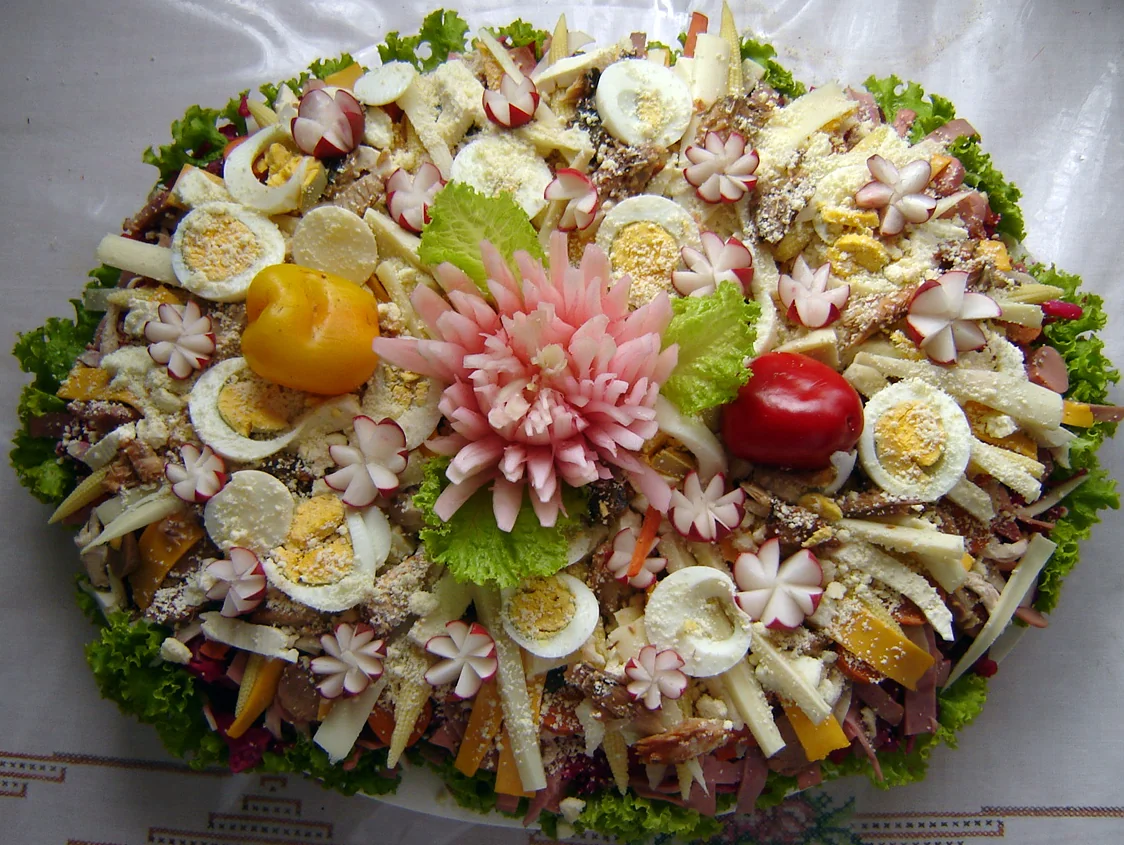
In Guatemala, Day of the Dead, Día de Todos los Santos, is above all a food holiday. On November 1st, families gather around one dish that only appears once a year: fiambre, a cold salad of more than 50 ingredients. There are no home altars here, the way there are in Mexico; the day is about the table, the cemetery, and being together. Growing up in Guatemala, I never found this a spooky holiday. It is the day we make fiambre as a family, and that is what this page is about: the food, the sweets, and where it all comes from.
This article contains affiliate links. If you buy something or book through one of my links, I may earn a small commission at no extra cost to you.
Food, Family, and the Cemetery on Day of the Dead
In many cultures, food is prepared to share with the dead on special days, usually at the cemetery. The ritual brings living family members together, reunites them with their ancestors, and honors the dead by sharing their favorite foods. It is a way of showing that the living and the dead still coexist.
I’ll be honest: I don’t like cemeteries, and the idea of having a picnic at a loved one’s gravesite has always felt strange and a little uncomfortable to me. Even when I lived in Guatemala, I never visited the cemetery on Día de los Muertos. I remember my aunt bringing flowers and cleaning my grandmother’s grave, but I never went with her. For me, Día de los Muertos was a day to spend time with family and, yes, to share the traditional Guatemalan fiambre.
The kites, the cemetery gatherings, and the horse race in the highlands are their own experience. I cover the Day of the Dead traditions in Guatemala in detail in a separate guide. This page stays with the food.
What Do Guatemalans Eat on Day of the Dead?
The table on November 1st is built around one dish, with a handful of sweets and warm drinks that show up year after year.
Fiambre, the Main Dish
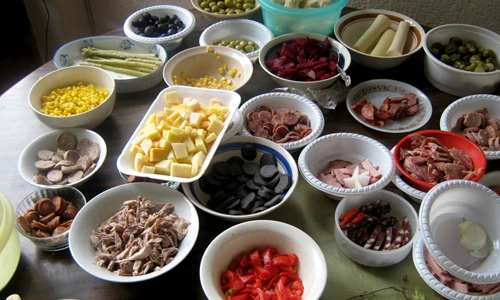
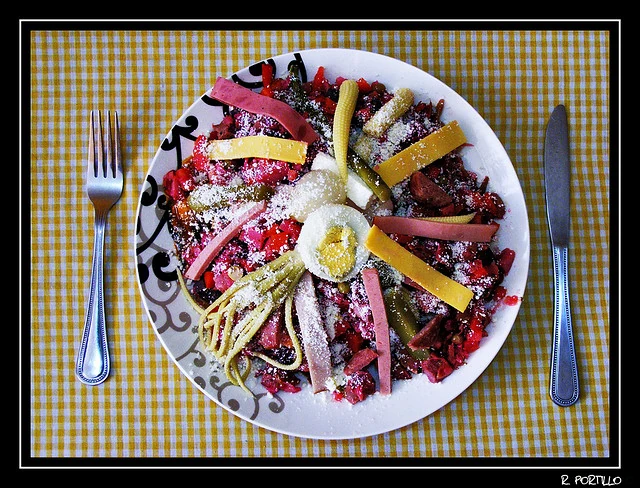
Fiambre is a cold salad of more than 50 ingredients, eaten only on November 1st. It layers pickled and boiled vegetables, cured meats and cold cuts, cheeses, and hard-boiled eggs, all marinated in a vinegar dressing called caldillo. Fiambre is a traditional Guatemalan dish you prepare once a year on November 1st for the Day of the Dead, or Día de los Muertos (also called Día de los Difuntos).
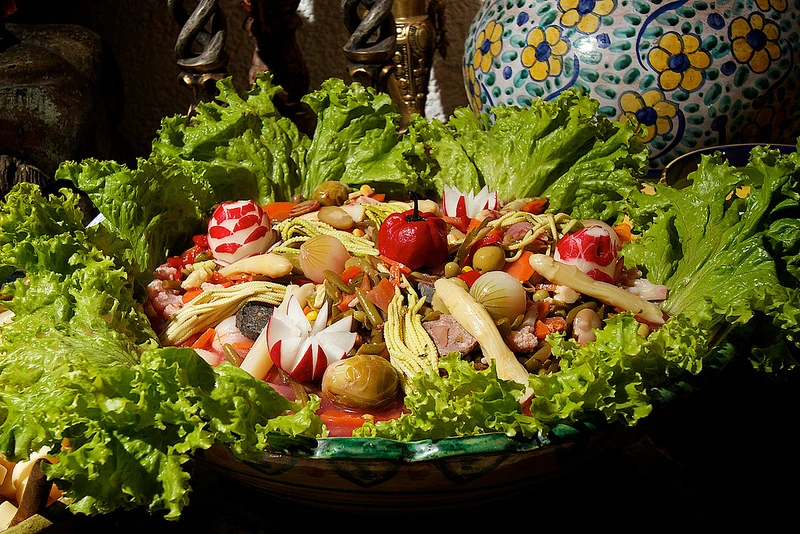
- Fiambre Rojo (Red Fiambre, with beets)
- Fiambre Blanco (White Fiambre, without beets)
- Fiambre Desarmado or Divorciado (Deconstructed Fiambre, from the department of Jalapa, where the ingredients are served separately)
- Fiambre Verde (Green Fiambre, vegetarian and no cold cuts)
Traditional Sweets and Drinks
After the fiambre comes the sweets, and most of them are cooked down slowly in panela syrup. Jocotes en miel are hog plums in spiced syrup, while ayote en miel is squash simmered with cinnamon and cloves until it turns deep and glossy. Molletes are sweet bread halves filled with custard, battered, and fried.
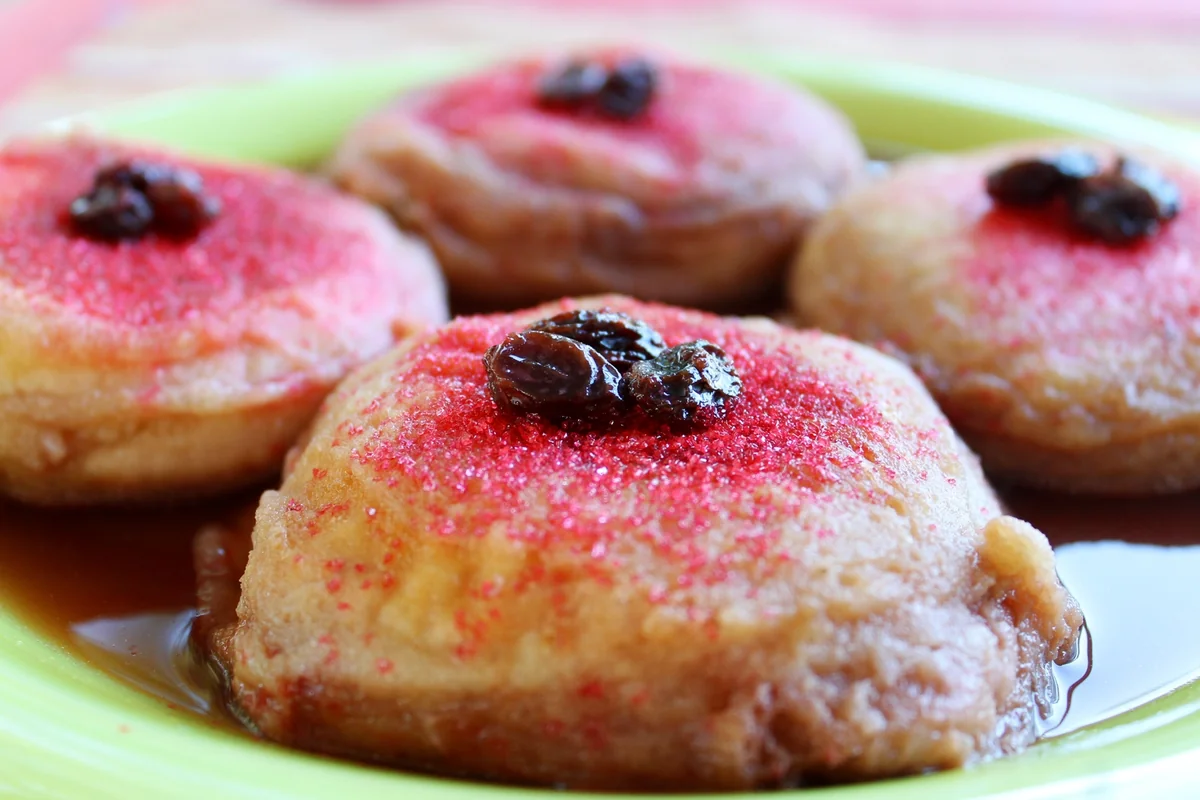
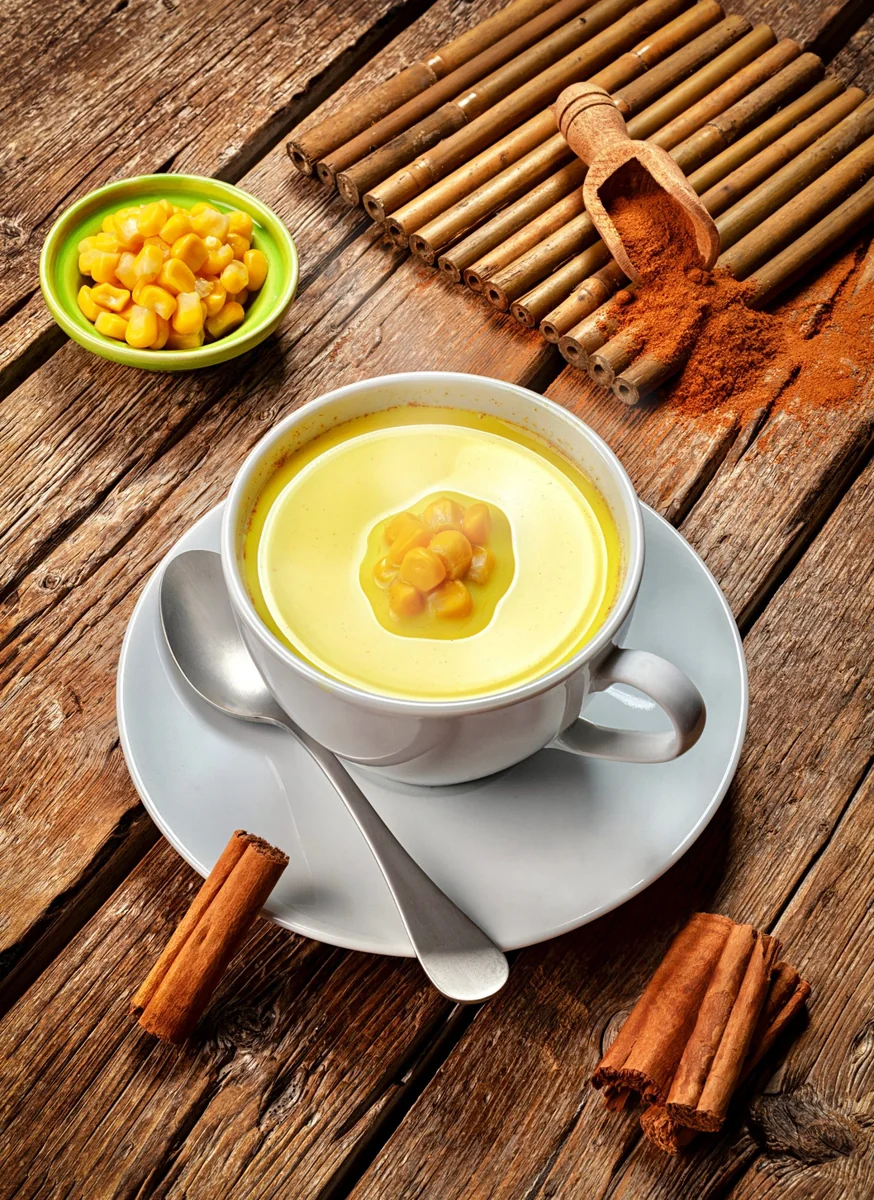
To drink, families reach for warm, rich atol de elote and hot chocolate that balance the cold, sharp fiambre. It is a lot of sweetness after a very savory plate, and that contrast is the whole point.
Where Does Fiambre Come From?
There are a few popular stories about how fiambre began. As the story goes, one version says a household cook had no time to make a proper meal and threw many ingredients together; another says fiambre was born when families combined the different foods they had brought to the cemetery.
Historically, sharing food with ancestors at burial sites was a practice observed by pre-Columbian cultures. When the Spanish arrived, the Catholic holidays of All Saints’ and All Souls’ were adopted, and the two traditions blended. The Spanish also brought their own foods and recipes, which mixed with local flavors to create new dishes that families adopted as their own.
The word fiambre is Spanish for cold cuts. The dish itself is a fusion of the cultures that shaped Guatemala:
- Pre-Columbian heritage: the vegetables and the caldillo dressing.
- Spanish heritage: the cured meats and cold cuts.
- Arab heritage: the capers, olives, and spices, which reached Guatemala through Spain.
What to Know About Guatemalan Day of the Dead Food
Is fiambre served hot or cold?
Fiambre is always served cold. The ingredients are marinated in a tangy dressing called caldillo and chilled before serving. Many Guatemalans believe it tastes even better the next day, after the flavors have had more time to blend.
Why are there so many versions of fiambre?
There is no official recipe. Families often pass their recipes down through generations, adding or removing ingredients based on regional traditions and personal preferences. That’s why every fiambre tastes a little different.
Why is fiambre eaten only once a year?
Preparing fiambre takes several days and dozens of ingredients, making it too labor-intensive for everyday meals. Because it is closely tied to Día de Todos los Santos on November 1, families traditionally make it only once a year.
How long does fiambre last in the fridge?
Stored in an airtight container, fiambre keeps for three to four days in the refrigerator. Many Guatemalans think it tastes even better on the second day, once the flavors have fully blended.
Do Guatemalans build Day of the Dead altars?
Not in the same way as Mexico. Instead of creating home altars, Guatemalan families honor loved ones at the cemetery by decorating graves with flowers, sharing food, and spending time together. For many families, the cemetery is the heart of the November 1 celebration.
Making Fiambre, Wherever You Are
Making fiambre is my way of being home for Día de Todos los Santos, even when I am not. If you ever get the chance to be in Guatemala for it, take it: November 1st here is unlike anything else, from the food to the kites
If you want to experience it for yourself, I plan custom Guatemala trips and can build the days around fiambre, the cemeteries in bloom, and places most visitors never find.
More Day of the Dead Recipes From My Kitchen
Whenever you wish to bring a little of this celebration to your own table, wherever you are, these are good places to start.
Ayote en Miel
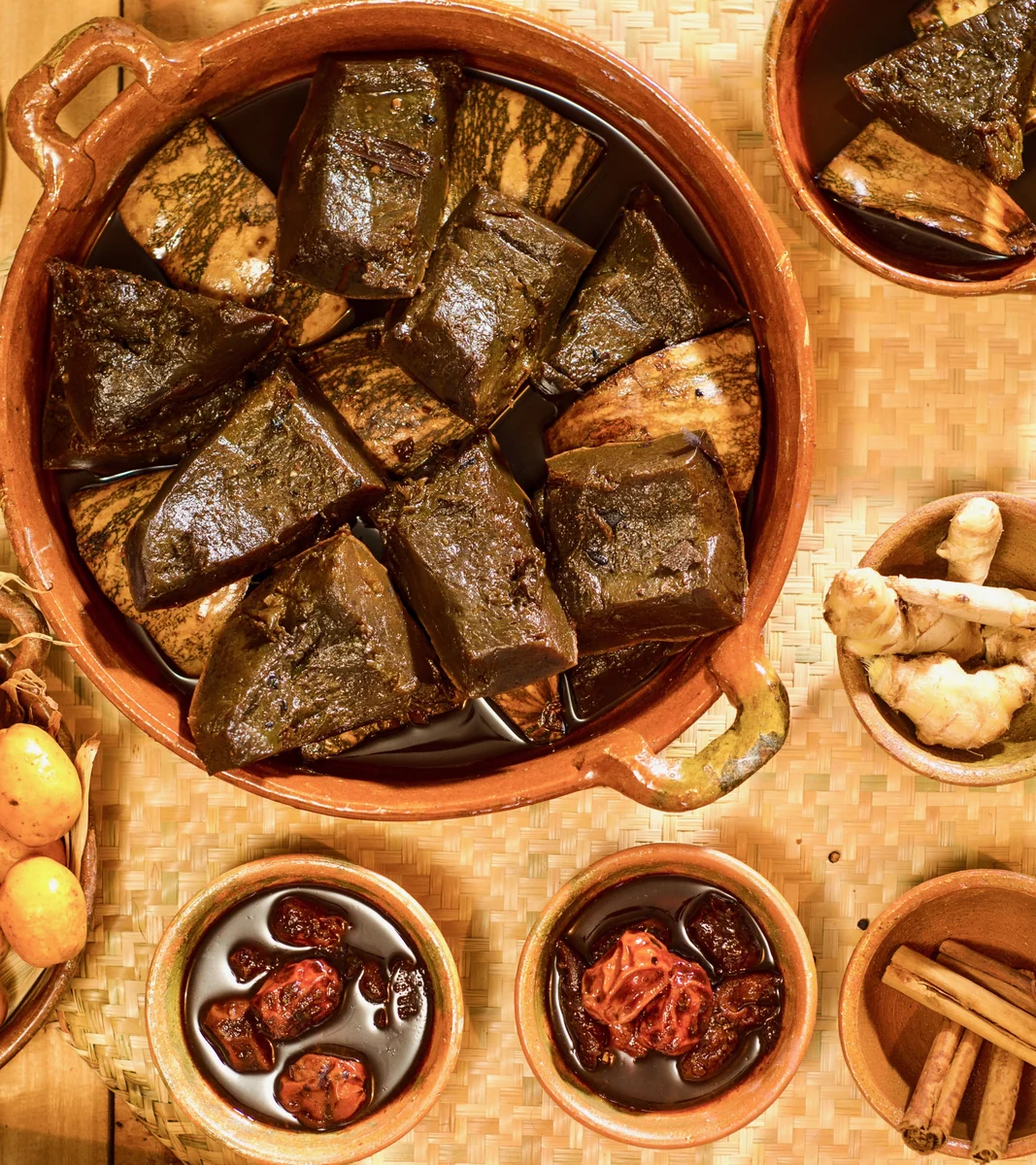
This Guatemalan dish is simple, yet so delicious: squash simmered slowly in panela syrup with cinnamon and cloves until it turns deep and glossy. Ayotes en miel is one of the most traditional Day of the Dead desserts and the kind of thing that makes the whole house smell like the season.
Jocotes en Miel
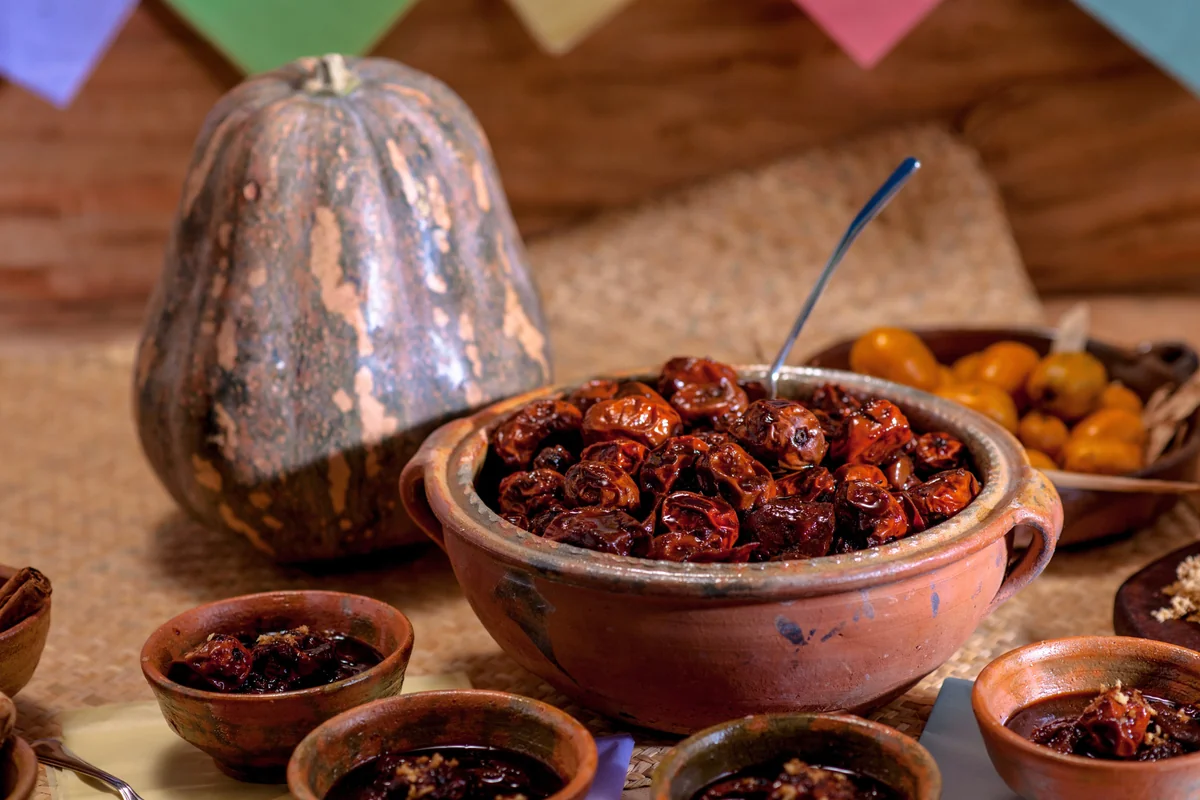
Jocotes en miel are hog plums you cook down in a sweet, spiced syrup until they are soft and have a little glaze. They show up all over Guatemala around this time of year, usually right next to the ayote.
Best Day of the Dead Recipes for Kids
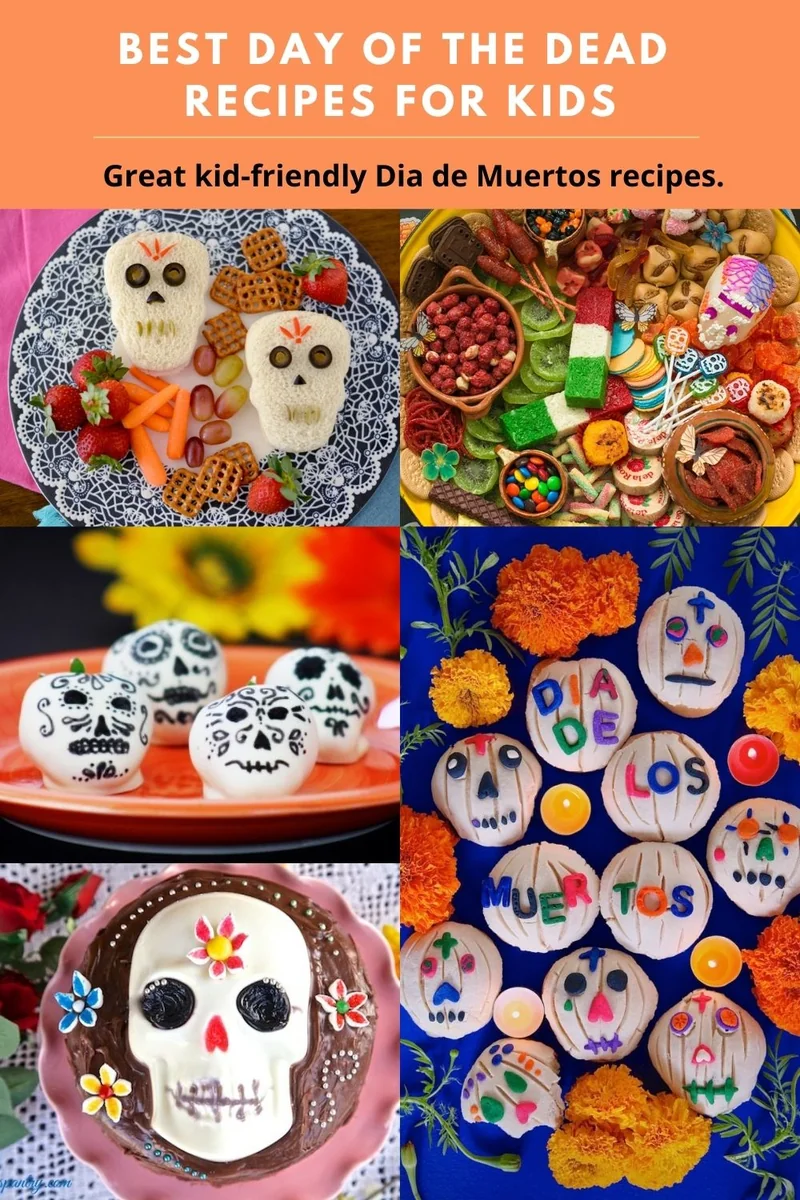
Simple, hands-on ideas for celebrating the Day of the Dead with little ones, from easy sweets to crafts they can help with. A good way to pass on the traditions to our kids.
Pan de Muerto Cookies
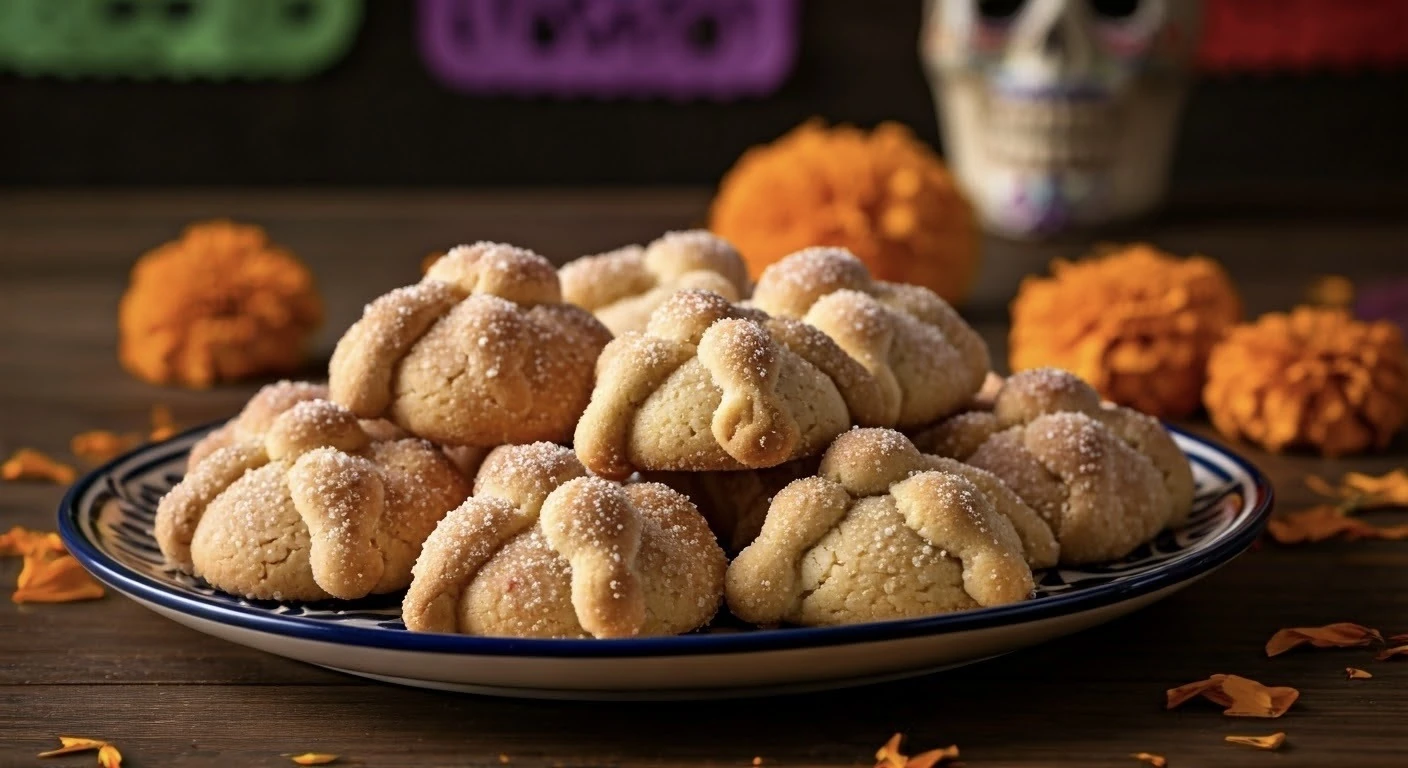
A cookie take on the classic bread of the dead, soft and lightly sweet. This recipe is easier than baking the full loaf and is fun to make with kids.
25 Day of the Dead Food and Recipes to Die For!
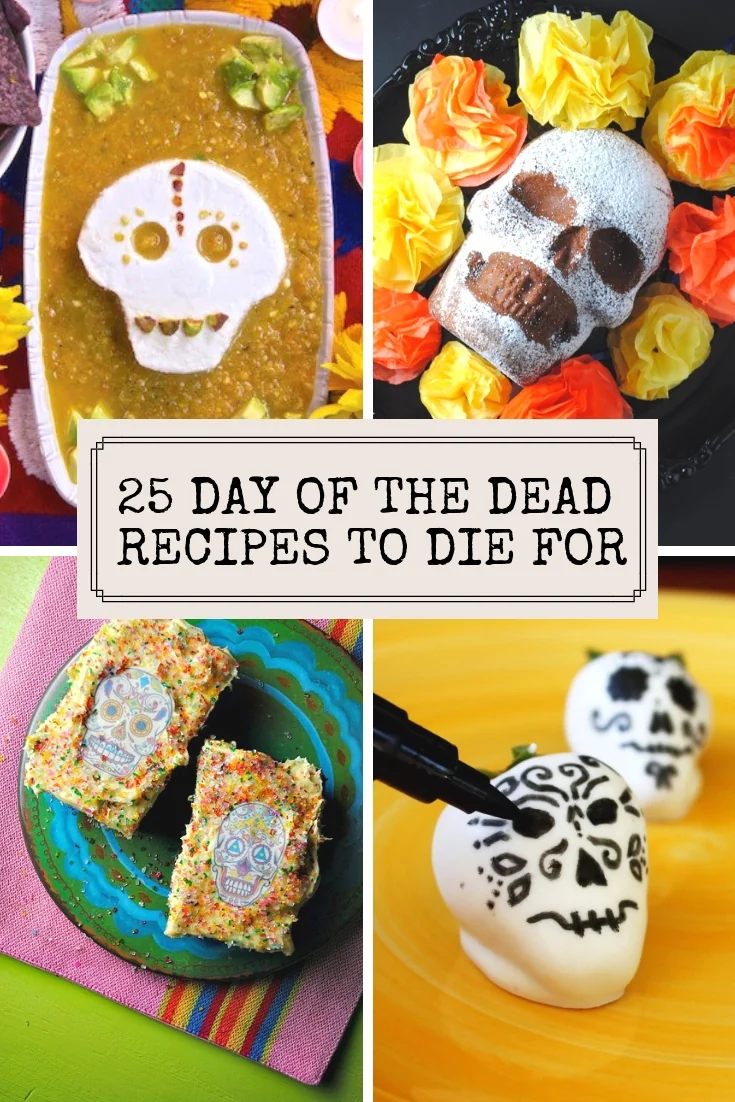
These Day of the Dead recipes include traditional dishes, festive desserts, and colorful treats inspired by Día de los Muertos. Whether you’re planning a celebration or simply exploring the holiday’s flavors, this roundup has plenty of delicious ideas.
How Does Your Family Remember?
Every family marks this day a little differently, whether that is fiambre at the cemetery, flowers at home, or just telling stories about the people you miss. If your family has its own Day of the Dead tradition, Guatemalan or not, tell me about it in the comments. Those stories are the whole point of this holiday.
Check out more ideas for Day of the Dead celebrations on my Pinterest board below!

Through her writing, Paula helps travelers discover Guatemala beyond the typical tourist route with practical advice, local recommendations, and authentic experiences that connect visitors with the country’s people, culture, and traditions.
Planning a trip to Guatemala? Paula offers personalized Guatemala itinerary planning and trip consultation services tailored to your interests, travel style, and budget. Contact her at [email protected] to learn more.
- Day of the Dead in Mexico City With Kids 2026: Family Events & Hands-On Activities - September 19, 2026
- Hidden Gems for Day of the Dead in Mexico City 2026 - September 18, 2026
- 5-Day Day of the Dead Mexico City Itinerary 2026 - September 18, 2026


Hi. Could you recommend a town or region of Guatemala that would be interesting to visit to observe the Day of the Dead celebrations? Thanks.
Hi dDawn. To see the giant kites on November 1st there are only two places and they get quite crowded so you need to arrive really early. You can see the kite flying festival in Sumpango or in Santiago Sacatepequez.