
Community tourism in Guatemala means experiences that are designed, run, and owned by the communities themselves: the coffee tour led by the farmer who grew the coffee, the weaving class taught by the cooperative that owns the workshop, the restaurant where your lunch pays for a town’s nutrition program. This guide is my list of the real ones. Who to book, where to stay, where to eat, and where to buy, all chosen by one measure: the money stays in the community.
I’m Guatemalan, and I’ve watched the phrase “community tourism” get stretched to cover everything from real cooperatives to packaged tours that hand the community almost nothing. The difference matters, and from the outside it can be hard to see. That’s why this article names names. Every place on this list has a model you can verify, and most of them I’ve visited myself or send people to regularly.
If you’d rather have someone build this trip for you, that’s literally what I do. Reach out through Magical Guatemala and tell me what kind of traveler you are. The itineraries I build are full of places like the ones below, plus the ones I don’t publish.
This guide is for
✓ Travelers who want their money to reach the people who earn it
✓ Families looking for experiences with real human connection
✓ Anyone building a Guatemala trip around culture instead of checklists
FIRST, THE TEST
What Counts as Community Tourism, and What’s Just Marketing
A community-run experience and a commercially packaged “community experience” can look identical in photos. The difference is in who controls it and where the money flows, and I wrote about that distinction at length in my guide to responsible travel in Guatemala. For this article, you only need the short version.
✨ THE THREE QUESTIONS
Before booking anything sold as a community experience, ask: Who designed it? Who runs it day to day? And who gets paid? When the answer to all three is the community, you’ve found the real thing. When the answers get vague, you’ve found a middleman. Every place in this article passes the test.
THE EASIEST WAY IN
Hiring a Local Guide Is Community Tourism
Here’s something most articles about community tourism never tell you, and it might be the most useful thing in this one. You don’t have to sleep in a rural posada or restructure your whole trip to practice community tourism. The most direct way to do it is also the simplest: hire local guides, and hire them directly.
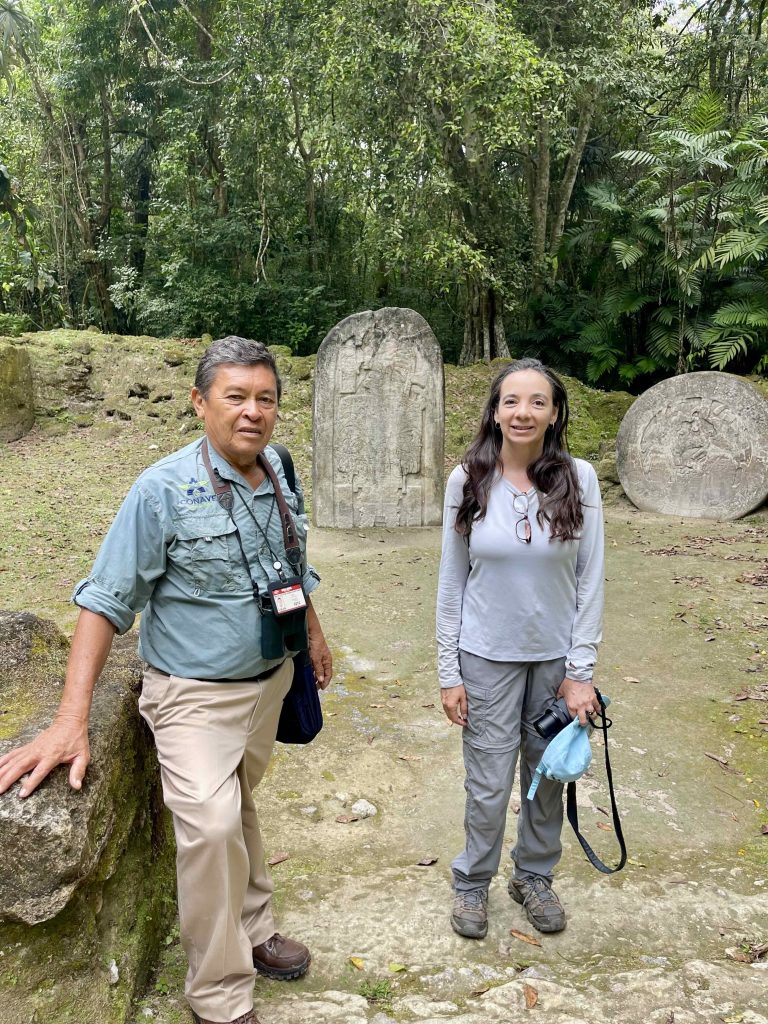
INGUAT, Guatemala’s tourism institute, formally recognizes several categories of guides: general guides, specialized guides, local guides, and community guides. A community guide works within their own community. A local guide works within their own municipality or region. When you hire either one, your money stays exactly where you’re standing, and it pays for someone to keep doing the work of interpreting their own culture, nature, and history. Nobody can tell you about a place the way someone who grew up in it can.
Some of the best examples in the country: in San Juan La Laguna, the association Rupalaj K’istalin has been organizing Tz’utujil community guides since 2003, leading routes through the village’s culture, Maya medicine traditions, art, and textiles. In Petén, the community guides of Uaxactún interpret both the archaeological site and the forest their families have managed for generations. In Rabinal, Baja Verapaz, community tourism has grown around something heavier and braver: young guides trained to share the historical memory of Río Negro, so that what happened there is told by the community itself, on its own terms. And twenty minutes from my house, the guides of Senderos del Alto are doing it in the hills above Antigua, which I’ll get to below.
If you remember one thing from this article, make it this: you’re already going to these places. The only thing that changes is who you hire when you get there.
EXPERIENCES TO BOOK
Community-Run Tours and Experiences in Guatemala
The De La Gente Coffee Tour (San Miguel Escobar, near Antigua)
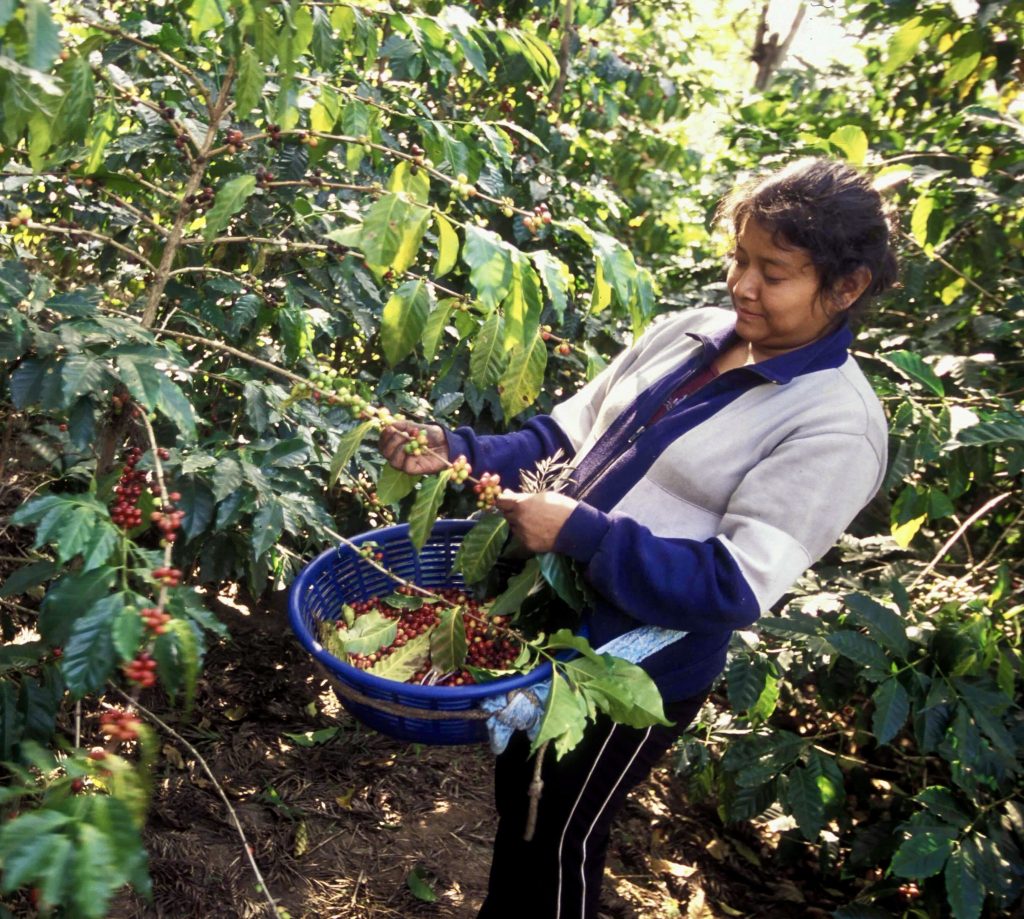
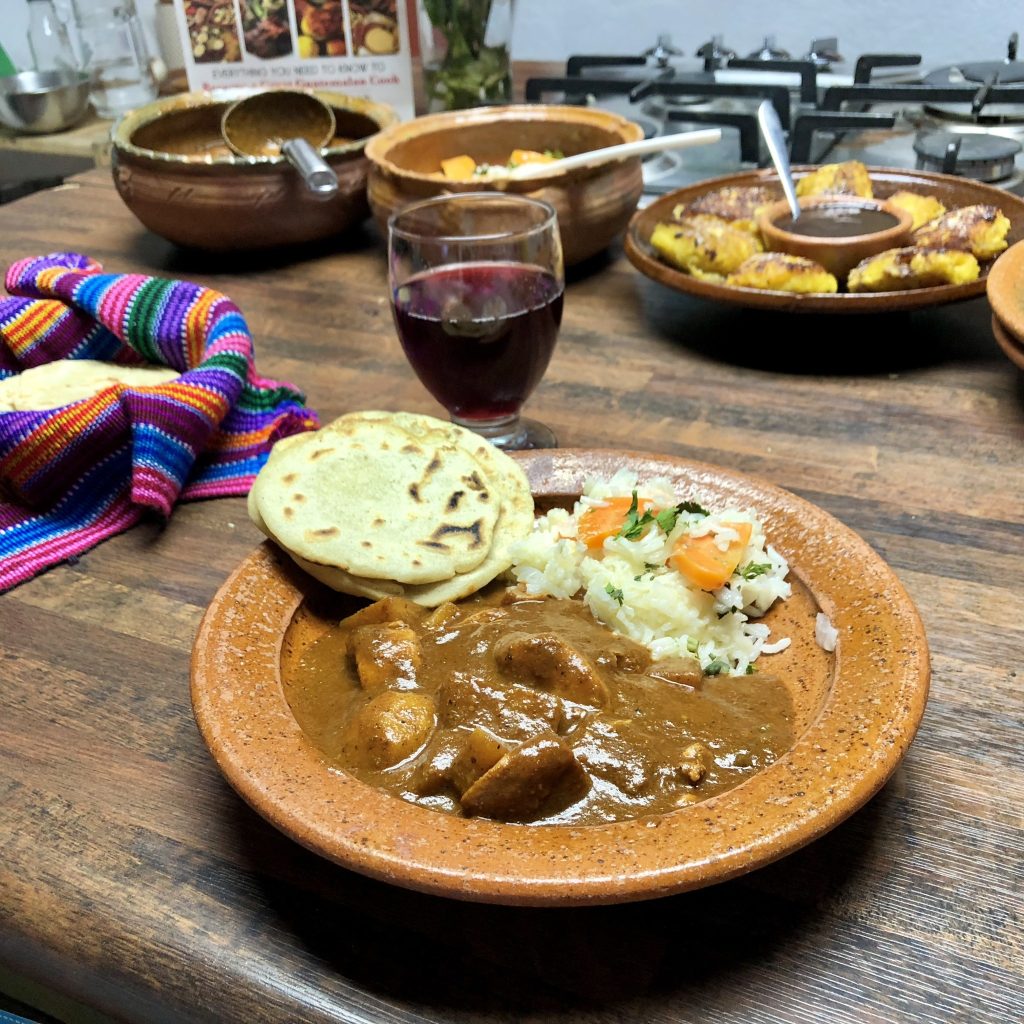
If you only do one coffee tour in Guatemala, make it this one. De La Gente is a nonprofit that connects visitors directly with small coffee producers in San Miguel Escobar, a town at the base of Volcán de Agua about 15 minutes from Antigua. The tour is led by the coffee growers themselves. You walk their fields, work through every step from bean to brew, and finish with a cup of coffee in the farmer’s own home, sitting at his table, asking whatever you want to ask. The fee goes to the cooperative families, and it’s structured to guarantee fair pay.
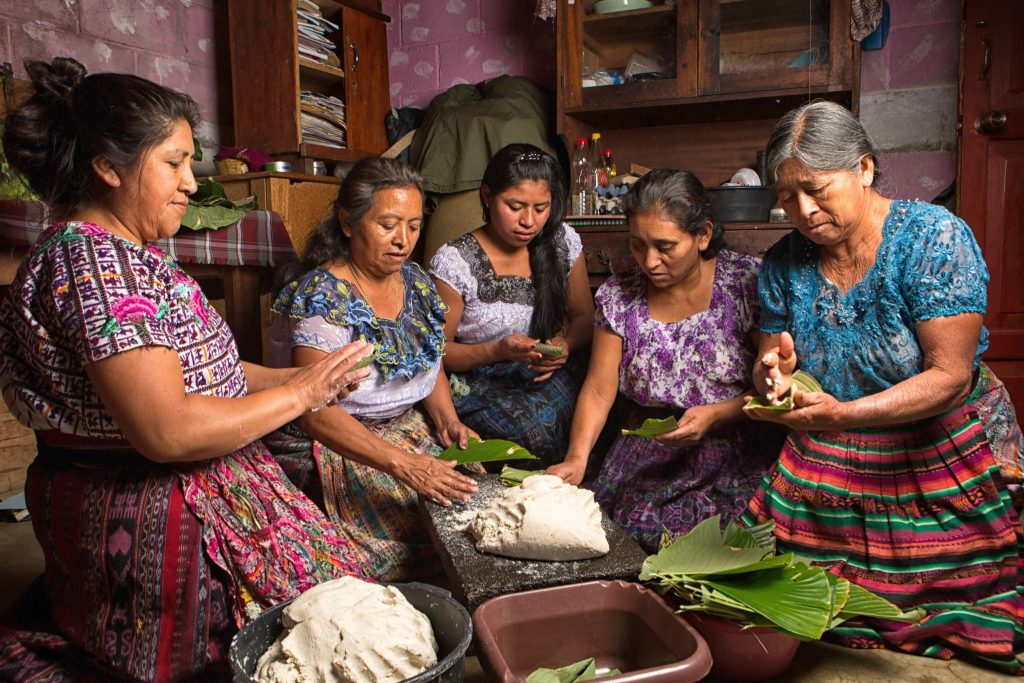
They also run a pepián cooking class taught by women from the community and even a peanut butter workshop, both designed so that community members beyond the coffee growers benefit from tourism too. Book directly at dlgcoffee.org. No platform, no commission, no middleman.
Cooking, Weaving, and Beading Classes at CECAP (Santa Cruz La Laguna)
Santa Cruz is one of the quieter villages at the lake, and its vocational training center, CECAP, run with the nonprofit Amigos de Santa Cruz, offers something most visitors never find: cooking, weaving, and beading classes taught by locals from the village. You can learn to make a proper pepián with Claudia, a graduate of the center’s culinary program, then eat what you cooked on a rooftop overlooking the lake. Book through Amigos de Santa Cruz.
Weaving and Natural Dye Cooperatives (San Juan La Laguna, Lake Atitlán)
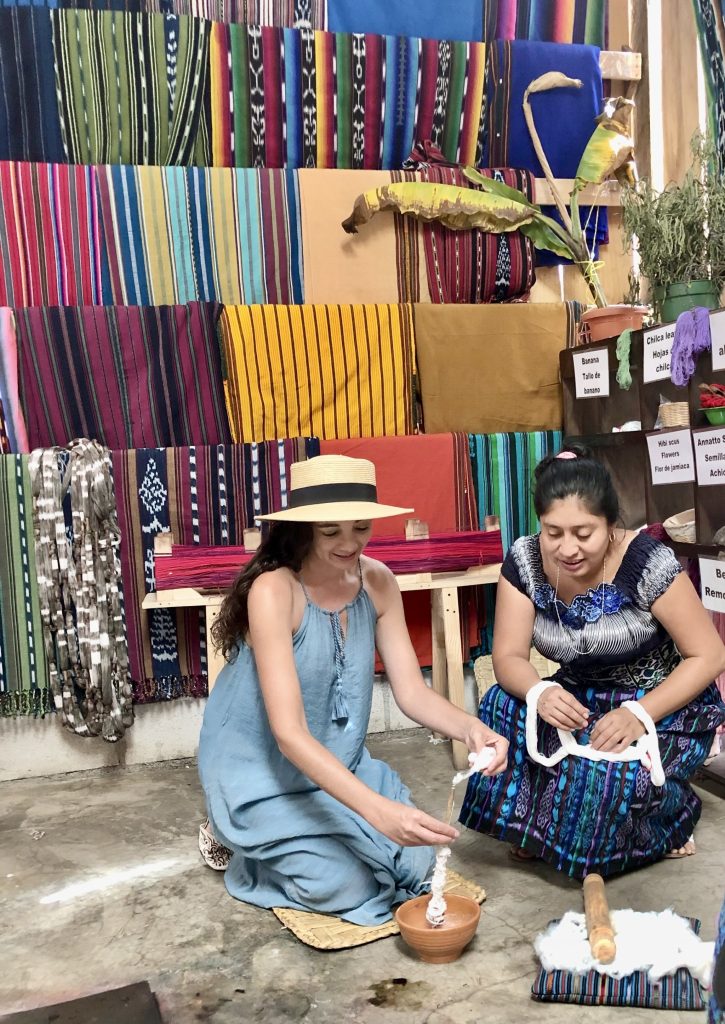
San Juan La Laguna has the strongest cooperative culture of any village at Lake Atitlán, and a morning in its weaving and natural dye workshops will change how you look at every textile you see for the rest of your trip. These are working cooperatives run by Tz’utujil women who weave, process plants into dyes, and sell directly, and watching a piece come together on a backstrap loom is worth more than any souvenir. The San Juan La Laguna art and culture tour gives you guided context, or you can simply take the boat and walk in. The cooperatives are clearly marked and they welcome visitors warmly.
Backstrap Weaving School at Trama Textiles (Quetzaltenango)
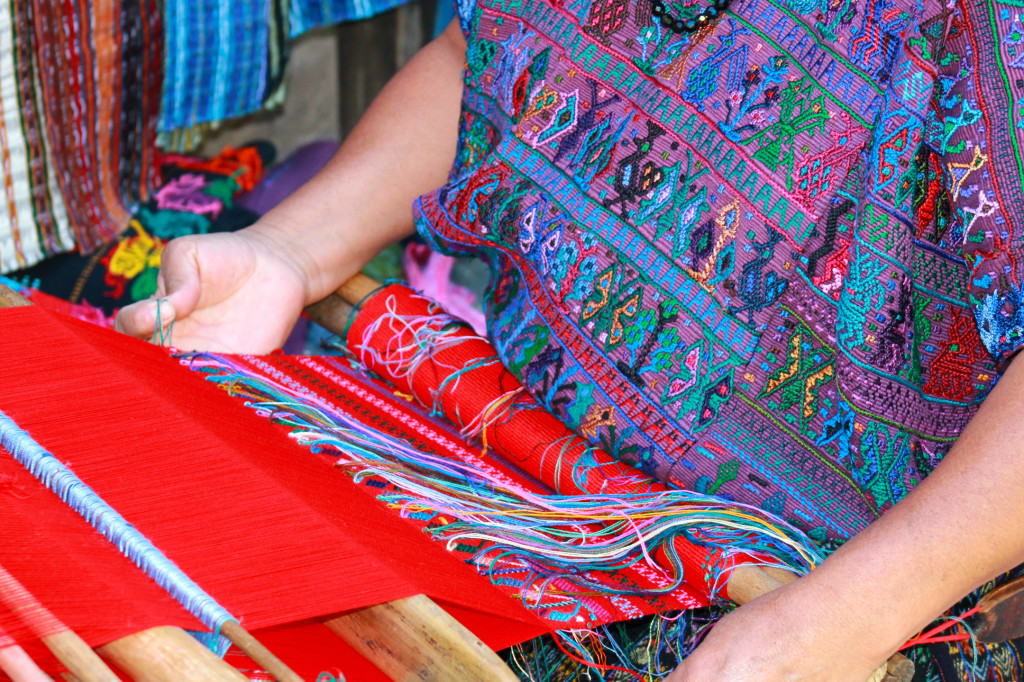
In Xela, Trama Textiles is a 100% worker-owned cooperative of around 400 Maya weavers from 17 weaving groups across the western highlands, founded in 1988 by women widowed during the armed conflict. Their weaving school in Zona 1 teaches the backstrap loom the way it has been taught for centuries, from a one-hour introduction to a full project where you weave your own scarf over about ten hours. The teachers are cooperative members, the prices are set by the weavers, and the store sells work at prices the women themselves decided. Details at tramatextiles.org.
The El Mirador Trek with Cooperativa Carmelita (Petén)
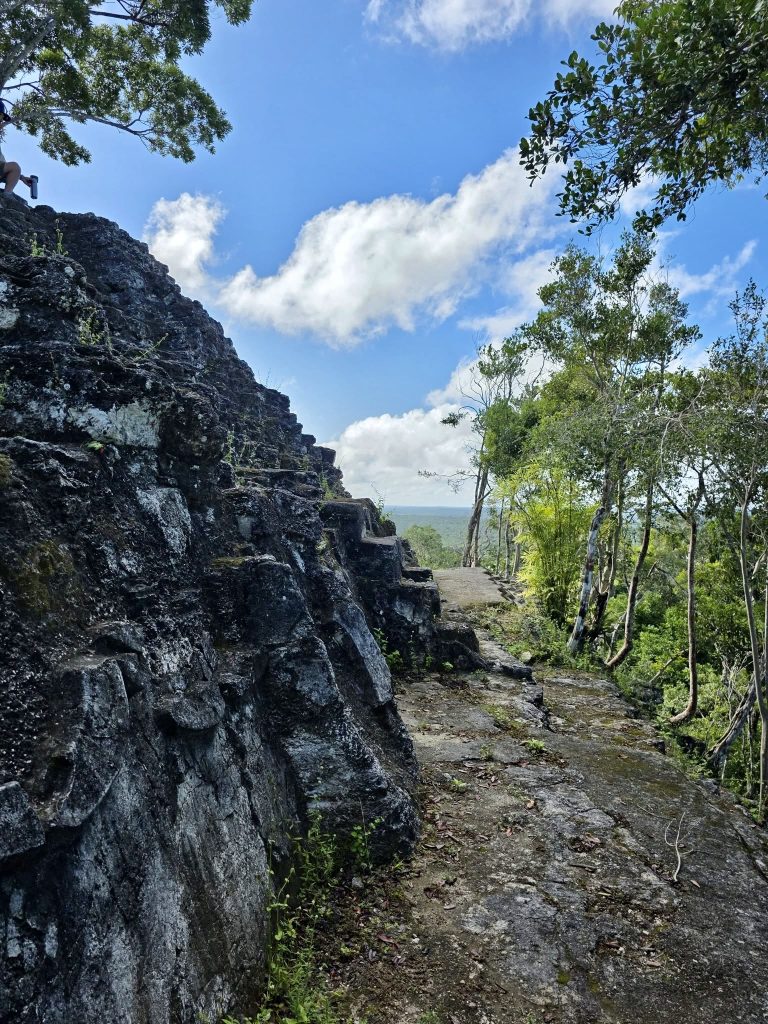
The deepest community tourism experience in the country: five or six days through the Petén jungle to El Mirador with guides, cooks, and logistics all from the community of Carmelita, the only operation authorized by the government to run this route. I cover it fully in my responsible travel guide, and you can book directly with Cooperativa Carmelita through their office in Flores.
Senderos del Alto (San Cristóbal El Alto, near Antigua)
Just above Antigua, almost in my backyard, sits San Cristóbal El Alto, a village that has quietly built one of the best community tourism projects in the country. Go up for Senderos del Alto and community guides will lead you on hikes to lookouts over the valley, along birding trails, and through visits tied to the village’s education and recycling projects. The recognition has followed; San Cristóbal El Alto was named one of the UN’s Best Tourism Villages in 2025. It’s the easiest community tourism experience to add to any Antigua stay, and the villages around it, San Juan del Obispo and San Miguel Escobar, reward the same curiosity. Paseos con Encanto runs free walks that take visitors beyond Antigua’s city center and into these aldeas.
Birding With Petén’s Community Guides
This one deserves its own section, because it breaks the stereotype that community tourism means crafts and rustic lodging. Petén has one of the most respected communities of birding guides in Central America, organized through the Asociación de Guías de Observación de Aves de Petén. Many of these guides come from the forest communities of the Reserva de la Biosfera Maya, places like Uaxactún, Carmelita, and Cruce Dos Aguadas, and they’ve built a specialization that international birders pay well for: deep knowledge of species, behavior, and habitat across Tikal, Yaxhá, El Zotz, and the Las Guacamayas biological station. This is high-value tourism where the income is tied directly to keeping the forest standing. If birds are part of why you travel, start with my guide to birding in Guatemala, then read my guides to Tikal and Yaxhá.
Community-Managed Nature Across the Country
Two places most travelers have never heard of, both managed by the communities that live there. The Reserva Natural Cañón Seacacar, in the protected area of El Estor in Izabal, is run as community tourism: natural pools, river tubing, trails, simple lodging, and a restaurant, with local residents working as guides and hosts. And in Totonicapán, the Parque Ecológico Sendero El Aprisco sits in communal forest, with trails, bungalows, and camping managed by the community itself. Neither is on the standard tourist circuit, which is exactly why they’re worth your time. If you’re heading toward Izabal anyway, Seacacar pairs naturally with my Río Dulce route.
And then there’s the western highlands, where community-managed parks are everywhere once you know to look for them. Corazón del Bosque, in Santa Lucía Utatlán near the lake, is run as community ecotourism with cabins, trails, birding, a restaurant, a Mayan ceremonial altar, and a temazcal (the real kind, which I explain in my temazcal guide). In Totonicapán, K’iche’ communities and parcialidades manage Chajil Siwan, with its canopy lines over communal forest that protects the area’s water springs, along with KYAQ K’IX at 3,200 meters and the Caballo Blanco ecological park. In Todos Santos Cuchumatán, the Sendero Ecológico La Maceta winds through cloud forest and potato fields. Around Quetzaltenango, the community guides of Ajaw Be’ work the Zunil municipal regional park, and in the Valle de Palajunoj young guides from ASOGTURC lead visits built around reforestation, medicinal plants, chocolate, and ancestral knowledge. In San Marcos, the Refugio del Quetzal and the community initiatives around Sibinal extend the same model toward the border highlands, and in Quiché, the community-run tubing on the river at Chicamán adds pure adventure to the list. None of these places need you. All of them welcome you. That’s a good combination.
Operators That Specialize in Community Tourism
If you want a company to organize community-focused travel for you, two stand out. Guate4you is a Guatemalan social enterprise that helps indigenous communities develop and manage their own tourism, then connects you to them directly. Mayaexplor, an INGUAT-recognized operator based here for three decades, builds tailor-made itineraries with a dedicated community tourism focus. Both are good answers to “I want this kind of trip but I don’t want to plan it alone.” So am I, for what it’s worth.
Beyond This List
Unique Experiences That Build Connections
Some of the best community experiences in Guatemala have no website, no booking page, and no interest in appearing on one. I connect my planning clients with them directly, the way these things have always worked here: through trust.
WHERE TO STAY
Stay Where the Profit Goes Back to the Community
Good Hotel Antigua. Steps from the Santa Catalina arch, this is a hotel built around one structural idea: 100% of net profits go to Fundación Niños de Guatemala, which provides quality education to children from low-income families in the communities around Antigua. You sleep in a beautifully designed room in the center of town, and the margin on your stay becomes school for a kid down the road. That’s not a marketing line. It’s the business model. Find it at goodhotel.co or on Expedia.
Bambu Guest House (Tzununá, Lake Atitlán). Stay here and you wake up in one of the lake’s quietest Maya villages, in a naturally built guesthouse connected to the Atitlán Organics permaculture farm up the road. The solar power and zero-waste kitchen are lovely, but what earns them my recommendation is the service initiative: as a guest you can help plant heirloom avocado varieties and other food crops in family-owned coffee plots around Tzununá, a project built with and for local farming families. You leave having put something in the ground. Details at bambuguesthouse.com.
Posada Rural Finca Chaculá (Nentón, Huehuetenango). This one’s for you if you have time and a sense of adventure. It’s a rural posada owned and run by a community of 210 families in one of the most remote, beautiful corners of the country, up near the Mexican border. When you stay, the community opens up excursions you’d never find on your own: archaeological sites, a sacred cave, rivers, cenotes, and lagoons that almost no international traveler ever sees, all guided by people who live there. Go with an open schedule and let them show you around.
Corazón del Bosque (Santa Lucía Utatlán, Sololá) and Unicornio Azul (Chiantla, Huehuetenango). Two more I’d point you toward: book a cabin in the communal forest at Corazón del Bosque, an easy add-on to any Atitlán trip, or head up to the rural horseback posada Unicornio Azul in the Cuchumatanes, where riding across the high plateau is the whole reason you go.
For the full list of eco-lodges and certified sustainable hotels across the country, including Laguna Lodge, Fuego Atitlan, and Earth Lodge, see the lodging section of my responsible travel guide.
WHERE TO EAT
Restaurants Where Your Meal Funds Something Bigger
This is my favorite section of this article, because eating well and doing good are supposed to be opposites and in Guatemala they are not. Every place here serves food worth going for on its own. The impact is the second helping.
La Cocina de la Señora Pu (Guatemala City, Zona 1). Rosa Pu is an anthropologist who spent years researching pre-Columbian Maya cooking, then rebuilt a menu around what she found: duck in k’axob, dishes in sikil sauce, drinks made from cacao and white corn. The restaurant is tiny, the seats wrap around an open kitchen, she cooks everything to order in front of you, and it’s cash only, so bring quetzales and patience. There is nothing else like it in Guatemala. If you have one dinner in the capital, this is where I’d send you, and you’ll find more of my picks in my guide to things to do in Guatemala City.
Caoba Farms (Antigua). A farm-to-table restaurant on the southern edge of Antigua that works more like a community hub: organic gardens you can walk through, weekend farmers markets that give small local producers a place to sell, and steady employment for people from the surrounding area. Go hungry, stay for the live music when there is some, and walk out with vegetables.
Serve Hope Café (Antigua). Bring your laptop here for the morning and you’re funding clean water filters and housing for vulnerable Guatemalan families, because this specialty coffee shop, roastery, and coworking space is run by the NGO Serve Hope. They buy from small producers across Guatemala’s coffee regions and train and employ local baristas and roasters. Their slogan says it best: drink coffee, give water.
Alma de Colores (San Juan La Laguna). Sit down here and you’re eating vegetables from the garden out back and bread from the bakery next door, served by a café born from a labor inclusion program for people with disabilities around Lake Atitlán. In 2021 it became the first social enterprise in Guatemala legally owned by shareholders with disabilities, which still moves me every time I think about it. The food is fresh and simple and changes daily, and the project behind it deserves every quetzal you spend. Find them at almadecolores.org.
Konojel (San Marcos La Laguna). Have lunch here and your bill helps fund a daily nutrition program that has served more than 75,000 meals to at-risk children, mothers, and elders in San Marcos, plus an after-school program and a free community computer lab. It’s woman-led and indigenous-run, the menu is fresh and plant-forward and made daily, and if you take one piece of advice from me: eat the pupusas.
Café Sabor Cruceño (Santa Cruz La Laguna). On the rooftop of the CECAP building with one of the better lake views you’ll ever eat in front of, staffed entirely by graduates of the culinary training program. Since 2012 it has employed more than a hundred young chefs from Santa Cruz, and all proceeds stay in the community. Pair it with a class downstairs and you’ve built one of the best half-days at the lake. And in Livingston, the Buga Mama restaurant plays the same role for the Q’eqchi’-led organization Ak’ Tenamit, staffed by its vocational tourism students.
WHERE TO BUY
Shops and Cooperatives Worth Seeking Out
The rule I gave in my responsible travel guide holds here: buy closer to the source. These are places where the source is the shop.
Manos Cruceñas (Santa Cruz La Laguna). The artisan store inside the CECAP building, supporting more than 100 Maya women artisans from Santa Cruz who trained at the vocational center and earn a fair wage for everything sold. Same building as Sabor Cruceño, so you can do the class, the lunch, and the shopping in one visit.
The Trama Textiles store (Quetzaltenango). Every piece is handwoven by cooperative members, and each weaving group sets its own prices, which the association honors without negotiation. If you take the weaving class, you’ll never look at the price of a huipil the same way again, and that’s the point.
The cooperatives of San Juan La Laguna and the potters of San Antonio Palopó. Both covered in their own guides on this site, and both places where the person selling you the piece is the person who made it, or a member of the same cooperative. Start with my guide to San Antonio Palopó.
💡 A full guide to ethical shopping in Guatemala is coming, covering how to tell handmade from imported, what fair prices look like, and where to buy region by region. This section is just the places I’d take you first.
THE SHORT VERSION
Four Ways to Support Community Tourism in Guatemala
If this article feels like a lot, here’s how I’d compress it for a friend with a napkin and two minutes.
Stay at community-run lodging when your route allows it: Carmelita in Petén, Finca Chaculá in Huehuetenango, Corazón del Bosque near the lake, or the village stays around Senderos del Alto. Hire local and community guides wherever you already are: San Juan La Laguna, Uaxactún, Rabinal, Totonicapán, Quetzaltenango. Hire specialized community guides for what you love, like the birding guides of Petén, where your passion directly funds conservation. And buy directly from cooperatives and associations: the weavers of San Juan, the forest cooperatives of Petén, the artisans of Totonicapán, the community coffee and cacao producers.
For most visitors, hiring a local guide is the easiest first step, because it asks nothing of your itinerary. Same places, same days, different hands receiving the money. Start there.
PUTTING IT TOGETHER
A Community Tourism Itinerary for Guatemala
Here’s how the pieces fit into a week, because they fit beautifully. Base yourself in Antigua for the first days: the De La Gente coffee tour one morning, Caoba Farms for a long lunch, coffee at Serve Hope while you plan the rest. Then move to the lake for three or four nights. San Juan’s cooperatives one day, Santa Cruz for a CECAP cooking class with lunch at Sabor Cruceño the next, a quiet day in Tzununá or San Marcos with dinner at Konojel. On your way to or from the airport, one dinner at La Cocina de la Señora Pu in the capital. With more days, extend to Xela for Trama Textiles and the highland community parks, or go the other direction entirely: Río Dulce, Seacacar, and Livingston. From Antigua, an afternoon with the Senderos del Alto guides in San Cristóbal El Alto fits into even the tightest schedule, and if you’re a birder, Petén with the community guides of the biosphere is its own trip.
The routing between these places is where trips fall apart: boat schedules, the Xocomil wind on the lake in the afternoon, road times that maps lie about. My Guatemala itinerary guide covers route structure for every trip length, and if you want a car for the highland stretches, read my guide to renting a car in Guatemala first.

Or Let Me Build It For You
A Community Tourism Itinerary, Planned by a Guatemalan
I build trips around exactly these kinds of experiences: the cooperatives, the family-run tours, the routing that makes it all actually work, and the contacts that never appear on a booking platform. Tell me how long you have and what matters to you.
QUESTIONS PEOPLE ASK
Community Tourism in Guatemala: FAQ
What is community tourism in Guatemala?
Community tourism in Guatemala means tourism that is designed, managed, and owned by local communities rather than outside operators. The community decides what to offer, runs the experience day to day, and receives the income directly. In Guatemala this includes coffee cooperatives leading their own tours, women’s weaving collectives teaching classes, community-managed nature reserves, and social enterprise restaurants whose profits fund local programs.
What are some examples of community tourism?
In Guatemala, clear examples include the De La Gente coffee tours led by growers in San Miguel Escobar, the weaving cooperatives of San Juan La Laguna, the El Mirador trek run by Cooperativa Carmelita in Petén, the community-managed Candelaria Caves in Alta Verapaz, the Reserva Natural Cañón Seacacar in Izabal, restaurants like Konojel and Café Sabor Cruceño at Lake Atitlán whose profits fund community programs, the guide associations of San Juan La Laguna and Senderos del Alto in San Cristóbal El Alto, and the community-managed forest parks of Totonicapán.
What types of tourism exist in Guatemala?
Guatemala’s tourism spans cultural tourism (Mayan sites, colonial cities, living traditions), nature and ecotourism (volcanoes, cloud forests, reserves, birding), adventure tourism (hiking, caving, river travel), spiritual tourism, food tourism, and community tourism, where local communities run the experiences themselves. The best trips here usually combine several. A single week can hold a volcano, a weaving cooperative, a colonial city, and a meal that funds a school.
What are the pillars of community tourism?
Community tourism rests on local ownership and control, direct economic benefit to the community, respect for culture and traditions on the community’s own terms, environmental care of the places the community depends on, and a real exchange between visitor and host rather than a performance. The simplest test covers most of it: who designed the experience, who runs it, and who gets paid.
KEEP READING
Related Guides
|
🌎 THE PILLAR Responsible Travel in Guatemala The full picture: the volcanoes, the communities, the ceremonies, and what every visitor should know first. |
🌊 LAKE ATITLÁN The villages, the boats, and the communities behind the views. |
|
🏛 ANTIGUA Antigua Guatemala Travel Guide Everything you need before arriving in Antigua, from someone who lives here. |
|
|
🌄 LAS VERAPACES Guide to Cobán and Las Verapaces Cloud forest, Semuc Champey, and the community-managed Candelaria Caves. |
This Is My Country
Travel It in a Way That Leaves Something Behind
Every place in this article exists because a community decided to build something. The trips I plan are built around them, plus the ones that never make it onto a list. If that’s the Guatemala you want to meet, I’d love to introduce you.
In Guatemala, the most memorable table is the one in the farmer’s kitchen, set with the coffee you just helped roast. Community tourism isn’t a category of travel here. It’s the country, finally getting paid for what it has always given away.
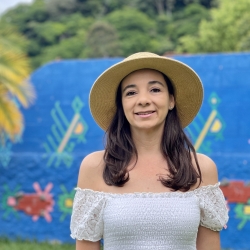
Through her writing, Paula helps travelers discover Guatemala beyond the typical tourist route with practical advice, local recommendations, and authentic experiences that connect visitors with the country’s people, culture, and traditions.
Planning a trip to Guatemala? Paula offers personalized Guatemala itinerary planning and trip consultation services tailored to your interests, travel style, and budget. Contact her at [email protected] to learn more.
- San Lucas Tolimán Guatemala: Lake Atitlán’s Best-Kept Secret - September 24, 2026
- Hotel Tolimán Lake Atitlán: A Special Stay in San Lucas Tolimán - September 24, 2026
- Guatemala Dreams in San Lucas Tolimán: A Boutique Stay on Lake Atitlán - September 23, 2026

