
Responsible travel in Guatemala starts with knowing what your visit costs and what it can give back. This guide covers what ethical travel actually looks like here: what’s happening on the volcanoes, how tourism is changing the Maya communities around Lake Atitlán, how to tell real ceremonies from commercial packages, where to stay and shop so your money reaches the people who earn it, and the community tourism experiences worth building a trip around.
I write this as a Guatemalan. I was born here, grew up here and spent 17 years in the United States while coming back every summer with my children. My grandmother used to say that a guest who doesn’t notice the house is worse than one who breaks something. I think about that a lot watching Guatemala become a destination. The people arriving are mostly curious and well-meaning. But the volcanoes where people line up now were quiet when I was young, the villages on every Instagram grid were communities most foreigners hadn’t heard of, and the infrastructure (environmental, cultural, social) hasn’t kept pace with how fast that changed.
This guide is what I tell people before they come. If you want help planning a trip that goes deeper than the surface, reach out to me through Magical Guatemala. The specific contacts, cooperatives, and experiences I recommend privately are not listed here, but I do share them with people who ask the right questions.
This guide is for
✓ First-time visitors who want to travel thoughtfully
✓ Repeat visitors who want to go deeper than the tourist circuit
✓ Families who want to understand what they’re seeing, not just photograph it
THE CONTEXT
Guatemala Is Growing as a Destination Faster Than It Can Handle
Guatemala isn’t a mass tourism destination the way Mexico or Costa Rica are. That’s part of its appeal. But visitor numbers have grown steadily, and the infrastructure, environmental, cultural, logistical, hasn’t kept pace. The volcanoes are showing it. The lake villages are showing it. The ceremonial spaces are showing it.
None of this means don’t come. Guatemala needs visitors. The economy depends on them, and communities around Atitlán and in the western highlands have built real livelihoods through tourism. The problem isn’t tourism itself. It’s the version of it that treats this country as a backdrop and its people as props.
Most visitors arrive with genuine curiosity and no harmful intent. They also arrive with very little context for the impact they have. This article is that context.
THE VOLCANO PROBLEM
What’s Happening on Acatenango and Pacaya
The two volcanoes most international visitors hike, Acatenango and Pacaya, both sit inside protected areas, and both are experiencing serious, documented damage from unregulated tourism. The problems are different on each one.
Acatenango: Illegal Structures, Trash, and a Horse Ban Nobody Enforces
Acatenango sits inside the Parque Regional Volcán de Acatenango, a protected zone under CONAP. In recent years, the area known as El Camellón, the main overnight camp at altitude, has been overtaken by unauthorized tourist infrastructure. Cabins and sleeping structures have been built inside the Zona de Veda Definitiva, the most strictly protected section of the park, without any legal authorization. CONAP has been filing complaints and issuing public warnings since at least 2025. As of May 2026, the structures are still standing.
The trash problem is a direct result of uncontrolled overnight hiker volumes. Very few operators have real waste management policies. What goes up the mountain mostly stays there.
Then there are the horses. In December 2021, after a viral video showed an overloaded horse collapsed on the trail at aldea La Soledad, the Municipalidad de Acatenango officially banned the use of all equines for cargo transport during ascents and descents. The ban is real, it’s on record in Prensa Libre, Soy502, and Guatevisión, and it is not being enforced. Tour operators still advertise horse upgrades. You’ll still see it happening at the trailhead. The gap between what’s legal and what’s happening is wide open.
⚠ BEFORE YOU BOOK AN ACATENANGO TOUR
Ask your operator: Do you use horses or mules to carry gear? Do you have a waste policy and do you enforce it? Are your guides INGUAT-registered? Are you using authorized access routes? A good operator will answer all of this without hesitation. The horse ban exists because documented cruelty was reported. Don’t fund operators who ignore it.
Pacaya: No Horse Ban, but Not No Responsibility
Pacaya is different from Acatenango in one key way: horse use is currently legal there. The park’s own website lists horse rentals as an available service along several routes, particularly those starting from El Rodeo and El Patrocinio. Legal is not the same as ethical. If you choose to use a horse at Pacaya, take a moment to look at the animal before you commit. A healthy working horse should not be visibly malnourished, should not have open sores from ill-fitting gear, and should not be asked to carry more than it can manage. If something looks wrong, it is wrong. You can walk instead.
📌 HOW TO CHOOSE A RESPONSIBLE VOLCANO OPERATOR
Look for INGUAT-registered operators who can confirm their authorization for the specific route they use. Ask about guide first-aid certification. Ask what their waste policy is and whether participants are required to carry out everything they bring in. Ask whether overnight camp structures are legally authorized. If an operator gets vague or defensive on any of these, find a different one.
INDIGENOUS COMMUNITIES AND TOURISM
The Communities Around Lake Atitlán Are Not a Theme Park
The villages around Lake Atitlán are home to two Maya peoples: the Tz’utujil on the southern shore and the Kaqchikel on the eastern and northern sides. These are living communities with their own governance, traditions, agricultural cycles, and economic pressures. Tourism runs through all of it.
When tourism works well at the lake, it’s because communities control it. San Juan La Laguna is the clearest example. The weaving cooperatives there are run by local women, the natural dye workshops are community-owned, and the income from visitors goes directly into those families. When you buy a textile in San Juan from the cooperative, the artisan who made it benefits. When you buy the same textile from a reseller on Calle Santander in Panajachel, often the same piece, sometimes imported from somewhere cheaper, almost none of that money makes it back to any village.
Panajachel itself is the cautionary example. It’s been the main tourist entry point to the lake for decades, and the tourism economy there is almost entirely extractive. Hotels and restaurants largely owned by non-locals, a market where it’s genuinely difficult to tell handmade from imported, a street scene built to sell things to foreigners rather than serve the community that lives there. This doesn’t mean skip Panajachel. It means understand what you’re looking at, and be intentional about where your money goes.
Santiago Atitlán is the most culturally rooted Tz’utujil community at the lake. It has resisted certain kinds of tourism more than other villages, and you can feel it. The traditional dress is still everyday clothing, the cofradías are still active, the market functions as a real market rather than a tourist performance. My guide to Santiago Atitlán covers how to visit respectfully, including the protocols around photographing people and entering certain spaces.
✨ ON PHOTOGRAPHY AND CONSENT
In many Atitlán communities, photographing people in traditional dress, during ceremonies, or in markets without asking first is considered disrespectful. This isn’t a tourist rule invented for foreigners. It developed in direct response to decades of visitors pointing cameras at people without asking. Ask first. If someone says no, that’s the answer. If there’s a language barrier, a gesture toward your camera and a questioning look is understood.
SPIRITUAL TOURISM
How to Tell Real Ceremonies from Commercial Packages
Mayan ceremonies exist in Guatemala. Real ones, conducted by trained ajq’ijab’, daykeepers who have undergone years of formal preparation within the Mayan spiritual tradition. These ceremonies are not tourist products. They are living practice. The fact that some practitioners open their ceremonies to respectful visitors, under specific conditions, is a choice those individuals have made. It is not a standing invitation, and not a precedent that makes all ceremonies appropriate for outsiders.
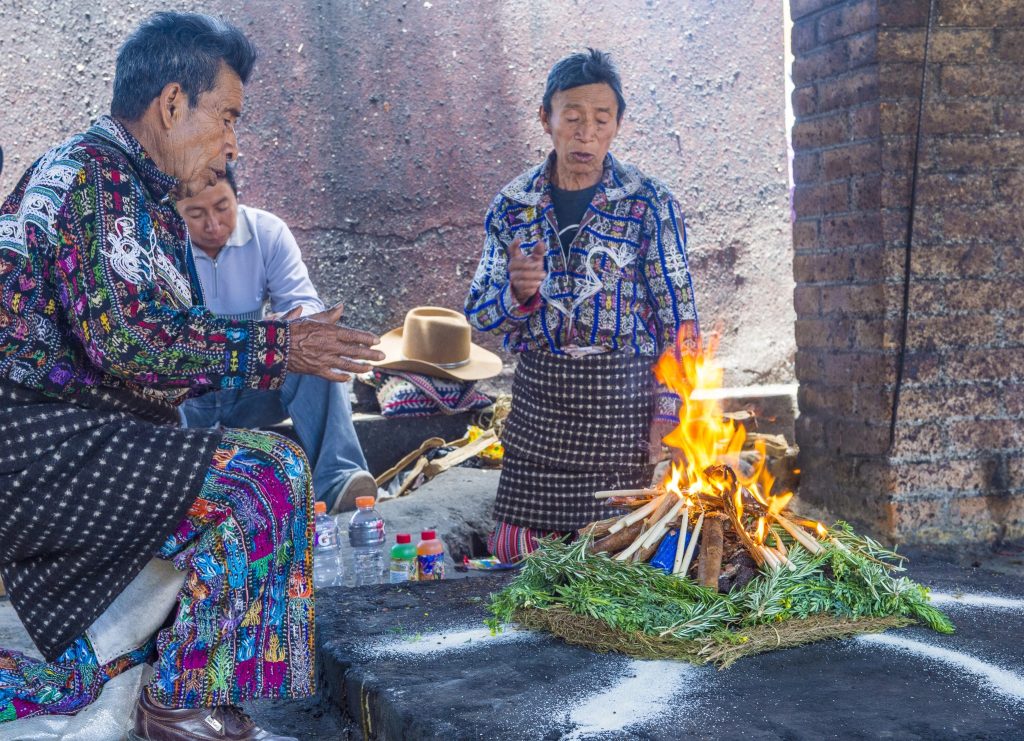
A significant commercial layer has grown up around this, especially at Atitlán. A cacao ceremony offered on a booking platform for $40 per person, held in a hotel courtyard for a group of twenty international travelers, is almost certainly not what it’s being sold as. My guide to cacao ceremonies in Guatemala explains the difference between commercial and genuine, and what questions to ask before you participate. The same applies to temazcal. A genuine temazcal has a specific structure, intention, and trained guide, and a hotel spa version is a different thing entirely. My temazcal guide covers this in full, as does my broader guide to Mayan ceremonies in Guatemala.
📌 RED FLAGS FOR SPIRITUAL TOURISM
Be cautious when: the ceremony is sold on a booking platform with a fixed per-person price; the guide has no clear community or lineage connection they can describe; the ceremony is available on short notice with no preparation guidance; or it’s being conducted primarily for a group of foreigners with no local community presence. None of these guarantee something is fake. All of them are worth paying attention to.
I Know Which Experiences Are Worth Your Trust
The Practitioners, Cooperatives, and Guides I Don’t List Publicly
I’ve been visiting these communities since childhood. I know the difference between a community-run cooperative and a middleman operation dressed up to look like one. Those specific contacts are what I share when helping someone plan a trip. I don’t publish them, because I want them to go to people who show up with respect.
EXPERIENCES WORTH SUPPORTING
Tours and Experiences Built Around Community Benefit
The difference between a good experience and an extractive one usually comes down to one question: who controls it and who benefits? These are experiences where the answer is clearly the community.
The El Mirador Trek via Cooperativa Carmelita (Petén)
This is one of the most genuine community-run tourism operations in Guatemala. Cooperativa Carmelita is the only organization authorized by the Guatemalan government, through CONAP and the Ministry of Culture, to operate the Carmelita-El Mirador circuit. The community of Carmelita has held a government-granted Community Forestry Concession since 1997, managing and conserving 530 square kilometers of the Selva Maya, with over 97% of its natural forest intact.
The trek itself is 5 or 6 days through the northern Petén jungle, reaching the La Danta pyramid at El Mirador, one of the largest Mayan structures ever built. Your guides, cook, and logistics team are all community members from Carmelita. Your money goes directly to the cooperative. This isn’t packaged as a community tourism product. It is community-managed land, where tourism has replaced logging as the primary sustainable income source for around 385 people. Book directly through the cooperative’s office in Flores.
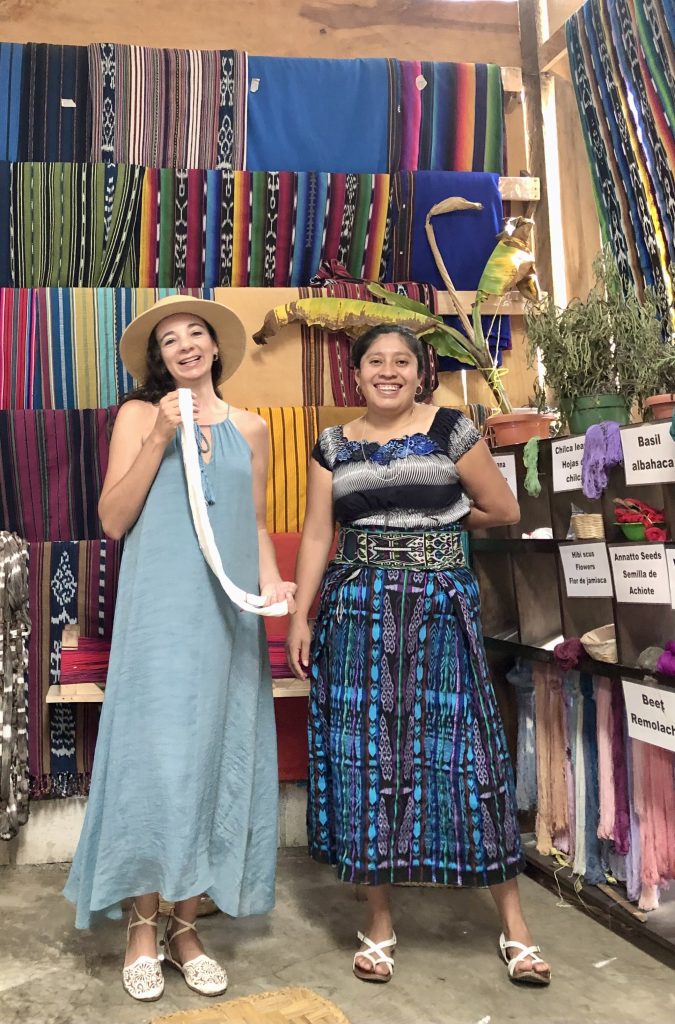
San Juan La Laguna Weaving and Natural Dye Cooperatives (Lake Atitlán)
San Juan La Laguna has the strongest cooperative culture of any village at the lake, and visiting the weaving and natural dye workshops here is one of the best uses of a day at Atitlán. These aren’t demonstrations put on for tourists. They’re working cooperatives where women weave, process plants for natural dyes, and sell directly. The San Juan La Laguna art and culture tour offers guided access to these cooperatives with context that the village market alone doesn’t provide. Or simply take the boat from Panajachel and walk in. The cooperatives are clearly marked and welcome visitors.
Mayan-Focused Walking Tour of Antigua
Most Antigua walking tours are built around the colonial architecture. That’s not wrong. The city is a UNESCO World Heritage Site and the history is genuinely interesting. But Antigua sits in Kaqchikel Maya territory, and the history of the city looks very different depending on whose perspective you start from. The Antigua cultural Mayan walking tour on Viator specifically frames the city through contemporary Mayan culture, traditional clothing, language, spirituality, and religious syncretism rather than through the Spanish colonial lens. It’s the better version of the standard city tour for anyone who wants to understand this place rather than just photograph it.
Iximché Ruins from Antigua
Iximché was the capital of the Kaqchikel Maya Kingdom before the Spanish arrived. It’s one of the best-restored Mayan sites in Guatemala, 90 minutes from Antigua, and it’s still used for active Mayan ceremonies. I’ve written about it at length in my Iximché guide. You can take the Iximché ruins tour from Antigua for a guided visit. The context matters more here than at almost any other site in Guatemala. Understanding what happened at Iximché changes how you read everything else about the country.
Guate4you Community Tourism (Multiple Destinations)
Guate4you is a Guatemalan social enterprise that works with indigenous communities to develop and manage their own tourism offerings. They train communities, help them build direct relationships with travelers, and structure tours so that benefits stay local. If you want to go beyond the standard Atitlán-Antigua circuit and engage with communities that have built their own tourism models on their own terms, this is a good place to start.
WHERE TO STAY
Accommodation That Puts Money in the Right Places
Where you sleep matters. Not all accommodation in Guatemala is equal from a community or environmental standpoint. A large hotel owned by a foreign investor in Panajachel funnels money out of the local economy. A solar-powered lodge built with local materials and staffed by community members does the opposite. These are real properties I can point to.
LAKE ATITLÁN
|
🌿 ECO-RESORT, SANTA CRUZ LA LAGUNA Laguna Lodge Eco-Resort Built entirely of local volcanic stone, adobe, and palm by an indigenous crew. Solar-powered. Accessible only by boat. Sits in its own nature reserve. Recognized by the Center for Responsible Travel. The gold standard for responsible luxury at the lake. |
🌿 ECO-HOTEL, SAN MARCOS LA LAGUNA Fuego Atitlan Built with 90% less concrete than conventional construction using locally sourced materials. Dry-composting toilets, solar-heated showers, no single-use plastics. Built with local Maya community members from San Pablo. Yurts, a loft, and a floating cabin directly on the lakeshore. |
|
🌿 NATURE RESERVE LODGE, PANAJACHEL Reserva Natural Atitlán A working nature reserve with lodging, 1.5 km from the center of Panajachel. The property protects 117 hectares of native forest, 94% of which is conservation land, and staying here directly funds the reserve’s environmental work. Bamboo-structure rooms with lake views, private beach, trails, and a butterfly dome. Book directly at and direct booking at atitlanreserva.com. |
🌿 BOUTIQUE ECO-RESORT, PANAJACHEL Hotel Atitlán INGUAT Sello Q certified. Has a documented and publicly available sustainability commitment focused specifically on lake conservation. The most comfortable base in Panajachel for travelers who need standard amenities, with a genuine conservation program behind it rather than just marketing language. |
ANTIGUA GUATEMALA
|
🌿 CERTIFIED SUSTAINABLE, ANTIGUA Pensativo House Hotel INGUAT Sello Q certified for sustainability since 2017, and holds the Central American SICCS regional certification. One of the only hotels in Antigua with independently verified sustainability credentials covering energy, water, waste, and community. Boutique colonial property four blocks from the central plaza. |
🌿 ECO-LODGE, NEAR ANTIGUA Earth Lodge Runs entirely on solar power. Built from recycled and natural materials on a working avocado farm in the mountains above Antigua. Farm-to-table restaurant. Employs local community members from El Hato and funds the local school breakfast program. Treehouses, cabins, and geodesic domes with volcano views. |
One practical note on reaching the reserves below: places like Los Tarrales and Ranchitos del Quetzal sit on highways far from the shuttle routes, and having your own car is the realistic way to visit them independently. If you rent, my guide to renting a car in Guatemala covers what you need to know first.

CONSERVATION YOU CAN VISIT
Natural Reserves Where Your Visit Funds the Conservation
Guatemala has a network of private and community-managed natural reserves where entrance fees and lodging income directly fund forest protection, reforestation, and wildlife research. Visiting these places isn’t just low-impact. It’s how they survive. A few stand out.
Ranchitos del Quetzal (Baja Verapaz). A family-run private reserve in the cloud forest at km 160.5 on the road to Cobán, right next to the Biotopo del Quetzal. The Álvarez family has been protecting and reforesting this land since the 1970s, and it’s one of the most reliable places in Guatemala to see a wild resplendent quetzal. What makes it a model of responsible tourism is a detail most visitors never notice: the lodging is deliberately limited to four rooms, so the number of overnight visitors never exceeds what the reserve can absorb. Entrance fees and tree-planting contributions fund the conservation work directly. I wrote a full guide to visiting Ranchitos del Quetzal.
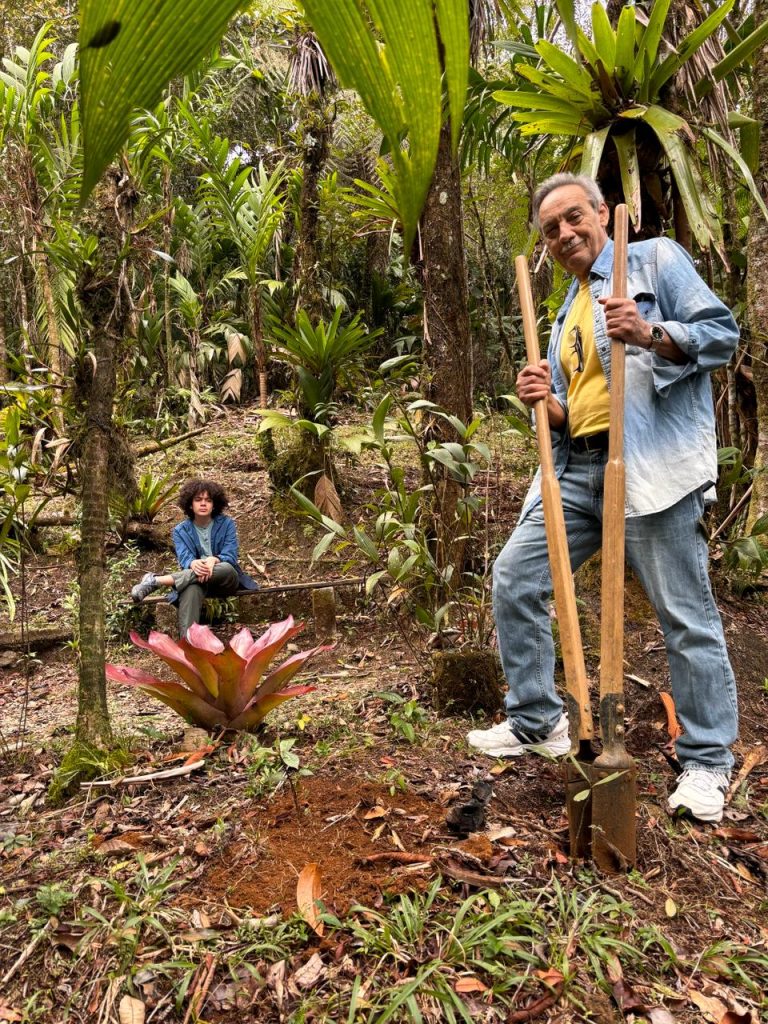
Los Tarrales (Suchitepéquez). A private reserve on the southern slopes of Volcán Atitlán, declared protected by CONAP in 2001, spanning roughly 1,300 hectares from subtropical forest up to cloud forest. Over 300 bird species have been recorded here, including the horned guan and the Cabanis’s tanager, which makes it one of the most important birding destinations in the country. The reserve operates as a self-sustaining model: lodging, birding tours with local guides, and coffee tours fund its management. My guide to Los Tarrales has the full details, and if birds are your thing, start with my guide to birding in Guatemala.
wi
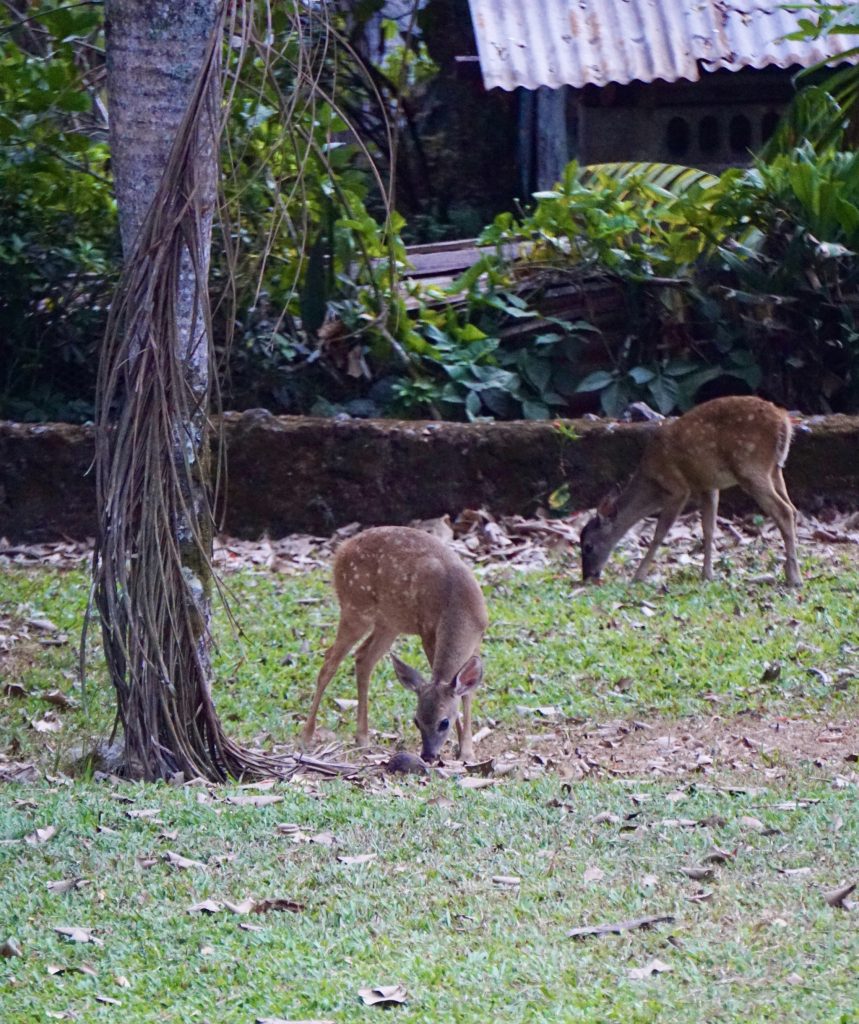
Reserva Natural Atitlán (Panajachel). Covered in the lodging section above, and worth repeating here: 94% of its 117 hectares is protected native forest, and every entrance fee and overnight stay funds that protection. It’s also the easiest reserve on this list to reach, a 12-minute walk from the center of Panajachel. My full guide to visiting the Reserva Natural de Atitlán covers the trails, the butterfly dome, and the zip lines.
✨ EVEN THE FUN STUFF CAN BE DONE RIGHT
Hobbitenango, the Lord of the Rings inspired eco-park in the hills above Antigua, gets dismissed by some travelers as a tourist gimmick. Look closer. It was founded by two Guatemalans, built with local labor and materials on a mountainside in Vuelta Grande, runs on solar and wind power with composting toilets, and now employs over a hundred people from the surrounding villages of El Hato and Vuelta Grande. Its artisan market sells work from local makers. Fun and responsible are not opposites. The question is always the same one: who built it, who works there, and where does the money go?
BEYOND THE TOURIST TRIANGLE
Community Tourism in Las Verapaces, Izabal, and Petén
Most visitors never leave the Antigua-Atitlán-Tikal triangle. That’s a loss for them, and it concentrates tourism pressure on three places while the regions where community tourism actually works best go unvisited. If responsible travel matters to you, these regions are where it’s easiest to do.
The Candelaria Caves (Alta Verapaz). This is what community tourism looks like when it’s real. The Candelaria cave system, 33 kilometers of caves and underground river near Chisec and Raxruhá, sits inside a national park that has been declared a Q’eqchi’ sacred site. The tourism there is managed entirely by the Q’eqchi’ communities themselves, through the Asociación Maya Q’eqchi’ de Desarrollo y Turismo de Candelaria-Camposanto and the community association of Mucbilhá I. Local guides lead the cave walks and river tubing, community-run lodging and food are available on site, and entrance fees fund the protection of a place their ancestors considered an entrance to Xibalbá, the Mayan underworld. Guides will ask you to request permission before entering certain chambers. Do it, and understand why. My full guide to the Candelaria Caves covers logistics, and my guide to Cobán and Las Verapaces covers the whole region, including Semuc Champey.
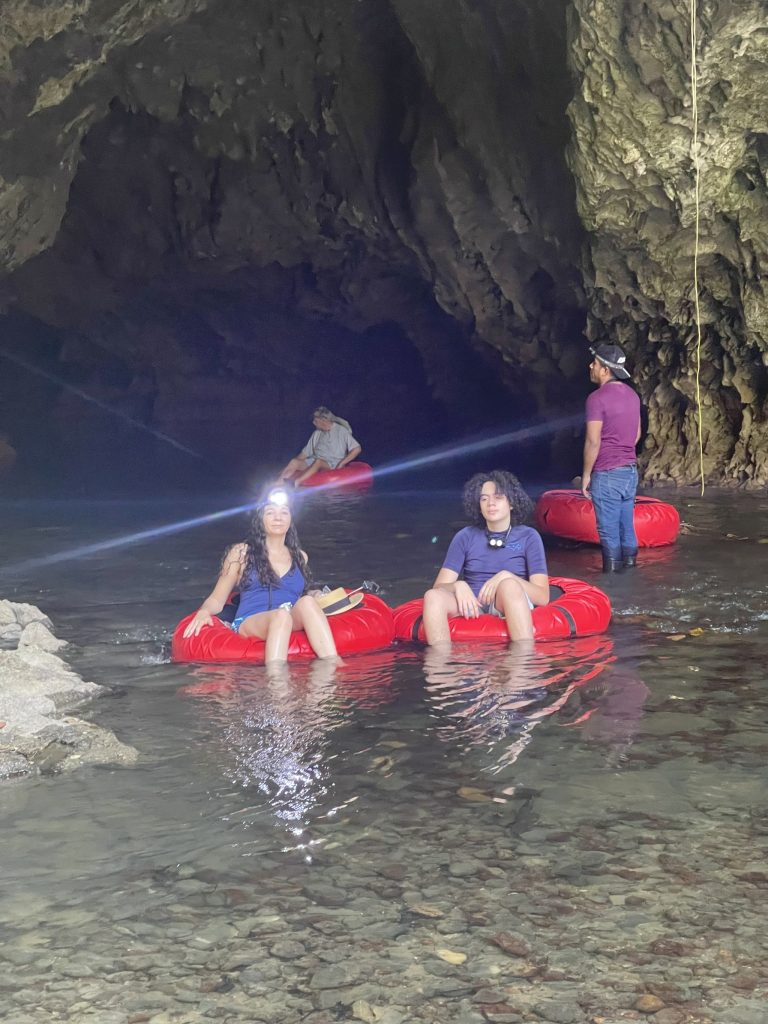
Río Dulce and Livingston (Izabal). The boat journey down the Río Dulce canyon to Livingston passes through one of the most distinctive cultural regions in the country, where Q’eqchi’ Maya and Garífuna communities have built a network of community tourism along the river. The anchor is Ak’ Tenamit (Tenamit Maya), a Q’eqchi’-led organization founded in 1992 and governed by a board of indigenous youth, which runs education, healthcare, and an ecotourism program along the Río Tatín. Its Buga Mama restaurant in Livingston is staffed by students from its vocational tourism program, so eating there literally funds the training of the next generation of local tourism professionals. Community-run sites along the river include the Agua Caliente hot springs and the Cueva del Tigre at Plan Grande Tatín.
Near El Estor, the Q’eqchi’ Maya community of Seacacar runs the Reserva Natural Cañón Seacacar (Izabal) next to El Boquerón canyon, and what you pay for tubing or a cabin there goes toward a school the community has funded since 2014. It’s a smaller operation than Carmelita or Candelaria, but the same principle holds: ask who runs it and who gets paid, and here the answer is straightforward. Pair it with El Boquerón for one full day out of Rio Dulce. My Río Dulce guide covers how to do this trip.
Petén beyond Tikal. Tikal absorbs almost all of Petén’s visitors, and it can handle them. But the region holds alternatives that spread the benefit further. The El Mirador trek through Cooperativa Carmelita, covered earlier in this article, is the deepest community tourism experience in the country. Yaxhá, which I cover in my complete guide to Yaxhá, receives a fraction of Tikal’s visitors, offers sunset views over the lagoon from the top of its temples, and your entrance fee supports a site that needs the income far more than its famous neighbor does.
RESPONSIBLE SHOPPING
How to Buy in a Way That Actually Helps
Guatemala produces some of the most extraordinary handmade textiles, ceramics, wood carvings, and jade work in the world. The question is whether the money you spend on them reaches the people who made them. Most of the time, through market resellers and tourist shops, it doesn’t, or it reaches them at a fraction of the real value.
Buy directly from cooperatives. This is the most reliable way to ensure the artisan benefits. San Juan La Laguna’s weaving cooperatives, the women’s collectives in Santiago Atitlán, and the ceramics producers in San Antonio Palopó all sell directly. My San Antonio Palopó guide covers how to find and buy from the potters directly.
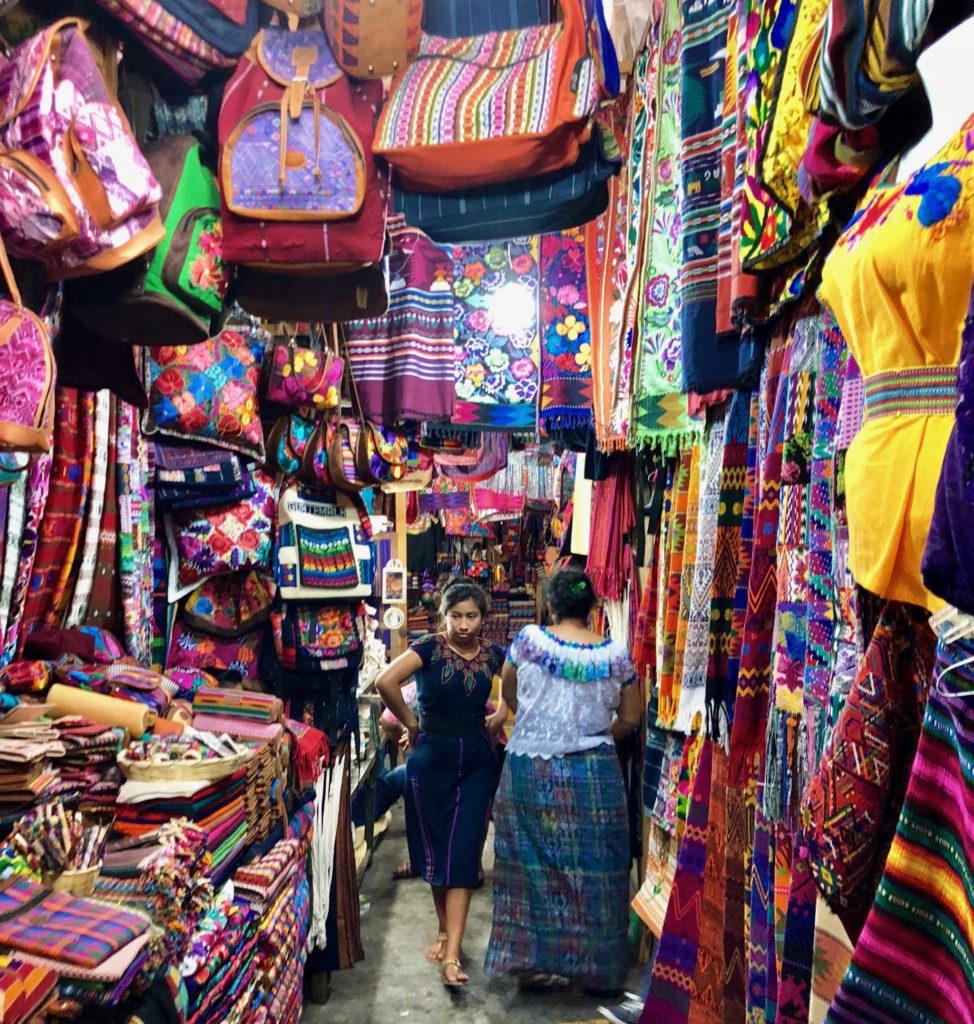
On bargaining. Negotiating price is part of market culture in Guatemala, and a gentle back-and-forth is normal in many contexts. It is not appropriate for handwoven textiles made on a backstrap loom. A huipil can take weeks to complete. The asking price already undervalues that labor by most reasonable standards. A small, respectful negotiation is different from pushing a weaver down on an item she made by hand. Read the situation. If something costs Q50 and you’re trying to get it for Q30, ask yourself whether that Q20 matters more to you or to her.
Watch for imported goods sold as local. The Chichicastenango market is spectacular and worth a full day. It’s also full of merchandise imported from Asia that has nothing to do with Guatemala. The same is true in the Antigua market and on Calle Santander in Panajachel. If something looks machine-made or feels suspiciously inexpensive for a handcrafted item, it probably is. Ask where it was made. Ask who made it. A genuine artisan will usually tell you with pride.
💡 A fuller guide to ethical shopping in Guatemala is coming. For now, the principle is simple: buy closer to the source. The further a product is from the village or person who made it, the less of your money gets there.
WHERE YOUR MONEY GOES
Eat, Stay, and Spend in a Way That Reaches Communities
Tourism money in Guatemala doesn’t automatically reach the people who make the experience worth having. A lot of it pools at the top of the chain: Panajachel hotels owned by foreigners, in Antigua restaurants catering exclusively to travelers, in booking platforms taking cuts from community-run experiences. Being intentional doesn’t require you to spend more. It requires paying attention to where what you spend actually goes.
Eat at locally owned places. In Antigua, this means looking past the international restaurants on the tourist streets toward places where the menu is in Spanish, the clientele includes Guatemalans, and the food is actually Guatemalan. In the lake villages, a comedor run by a local family puts money directly into that household. My guide to Guatemalan food will help you know what to look for and order.
Tip guides well, in cash, at the end of the day. Guides in Guatemala are often the most valuable part of any experience and among the lowest-paid people in the tourism chain. They know the land, the history, the language, and the community. What they get paid rarely reflects that.
Don’t give money or candy directly to children. This is a problem at tourist sites all over Guatemala, and it creates real harm. It incentivizes kids to skip school to approach travelers, building a dynamic of dependency that doesn’t benefit anyone. If you want to support communities with children, find credible local organizations doing this work deliberately.
Plan Your Trip With Someone Who Knows
The Restaurants, Operators, and Cooperatives I Actually Send People To
I don’t publish the specific names because I want them to go to travelers who will show up with the right kind of attention. If you’re planning a trip and want recommendations I’d give my own family, get in touch.
A WORD ON VOLUNTEERING
If You Want to Volunteer in Guatemala, Read This First
Guatemala is one of the most popular voluntourism destinations in the Americas, and much of that industry causes harm. The clearest case is orphanage volunteering. A Disability Rights International investigation found that roughly 95% of children in Guatemalan orphanages have living family. They are institutionalized because of poverty, not because they have no one. Short-term volunteers who arrive, bond with children, and leave reinforce attachment trauma in kids who have already been separated from their families, and the volunteer fees, which run into millions of dollars per year at the largest institutions, create a financial incentive to keep children institutionalized rather than reunited with their families.
The rule is simple: do not volunteer at or visit orphanages, in Guatemala or anywhere. Beyond that, ask the same question this whole article keeps asking: who controls this and who benefits? Good volunteering is skills-based, longer-term, requested by the community rather than designed for the volunteer, and run by organizations with local leadership. If a program charges you a large fee, ask exactly where it goes. If a program lets you work with children after one day and no background check, that tells you everything about how seriously they take child protection. A fuller guide to ethical volunteering in Guatemala is coming. For now, when in doubt, spend your money with community tourism instead. It transfers resources with dignity and without the risks.
THE SHORT VERSION
What Not to Do in Guatemala
Some of this is obvious. Some of it isn’t.
Don’t photograph ceremonies, sacred sites, or people without asking
This applies to fire ceremonies, temazcal, cofradia spaces, and rituals of any kind. It also applies to photographing people in traditional dress in their own communities. Ask. If there’s a language barrier, gesture toward your camera and wait for a clear yes. Silence is not consent.
Don’t use an Acatenango operator that offers horses for cargo
This is not a grey area. The ban has been in effect since December 2021. Using this service funds operators who are operating outside the law and who have already been cited for animal cruelty.
Carry out everything you carry in, on every hike
Guatemala’s waste management infrastructure cannot absorb what tourism generates. This is especially critical on Acatenango, where the volume of trash left by hikers is a documented environmental problem. If your operator doesn’t have a clear carry-out policy, ask why.
Don’t use unlicensed operators on protected land
CONAP and INGUAT licensing exists because these are protected areas with real legal status. Operating without authorization means unauthorized routes, no emergency protocols, and contributing to the degradation CONAP is actively fighting. Very cheap volcano tours usually signal unlicensed operations.
Don’t treat poverty as scenery
If you find yourself describing a village as “unspoiled” or “untouched” in a way that celebrates the absence of economic development, stop and reconsider. Guatemala’s communities are places where people live, work, and navigate the same pressures everyone navigates. They are not preserved for anyone’s visual pleasure.
Don’t give cash or candy directly to children
It creates incentives for kids to approach tourists instead of going to school, and it builds a dependency dynamic that harms the community long after you’ve left. If you want to help, find local organizations working deliberately in the areas you visit.
QUESTIONS PEOPLE ASK
Responsible Travel in Guatemala: FAQ
Is it ethical to travel to Guatemala?
Yes, with intention. Guatemala needs tourism revenue, and many communities have built real economic stability around it. The question isn’t whether to come. It’s how. Traveling with awareness of where your money goes, whose culture you’re engaging with, and what your presence costs the places you visit makes a genuine difference.
Why does Guatemala have a level 3 travel advisory?
The U.S. State Department’s Level 3 advisory (“Reconsider Travel”) is primarily due to crime, including violent crime in certain areas and petty crime in tourist zones. It does not mean Guatemala is uniformly dangerous. Most of the places international travelers visit, Antigua, Lake Atitlán, the western highlands, Panajachel, are far saver than most large American cities. Read the advisory’s specific regional breakdowns rather than the overall rating, take ordinary precautions, and avoid traveling by road at night or hiking in desolate areas without local guides.
Is Guatemala safe for travelers right now?
For most visitors going to the main tourist areas, Guatemala is quite safe with standard precautions and common sense. Petty theft in crowded markets and bag snatching in certain urban zones or desolate areas are the most common crimes. Violent crime targeting tourists is very rare in the places most visitors go. Get current, area-specific information rather than relying on the overall advisory rating.
Is $100 a lot in Guatemala?
It depends how you spend it. Q100, about $13 USD, covers a full meal at a good local restaurant. $100 USD covers a comfortable night in Antigua with money left over. For most Guatemalan households, $100 is a significant sum. Guatemala is affordable by international standards. That’s not a reason to pay less than things are worth. It’s a reason to be thoughtful about where that money goes.
What is responsible travel in Guatemala?
At its core, it means making choices that benefit the communities and environments you visit rather than extracting from them. Using locally owned accommodation and restaurants, buying directly from artisans, choosing licensed operators who pay guides fairly, engaging with indigenous culture respectfully and with consent, and carrying out your environmental impact. None of this requires spending more. It mostly requires paying attention to where what you spend actually lands.
What is community tourism in Guatemala?
Community tourism refers to experiences designed, managed, and owned by local communities rather than outside operators. The weaving cooperatives in San Juan La Laguna, the Carmelita cooperative running the El Mirador trek, community-led temazcal experiences in Maya villages. The distinction matters because it determines who benefits. A community-run tour and a commercially packaged “community experience” can look identical from the outside. The difference is in who controls it and where the money goes.
KEEP READING
Related Guides
|
🌊 LAKE ATITLÁN Which villages to visit, how to move between them, and what to know about the communities that live there. |
🏛 MAYAN TRADITIONS What’s real, what’s commercial, and how to tell the difference from a Guatemalan perspective. |
|
🏔 SANTIAGO ATITLÁN The most culturally rooted Tz’utujil community at the lake, and how to visit with the respect the place deserves. |
🏛 IXIMCHÉ Guide to the Iximché Mayan Ruins The former capital of the Kaqchikel Maya Kingdom, 90 minutes from Antigua, still used for active ceremonies today. |
|
🏛 ANTIGUA Antigua Guatemala Travel Guide Everything you need before arriving in Antigua, from someone who has lived here for years. |
🌎 ITINERARIES Guatemala Itinerary: Every Route for Every Trip Length How to structure your time in Guatemala depending on how long you have, from 4 days to two weeks. |
|
🌄 LAS VERAPACES Guide to Cobán and Las Verapaces Cloud forests, Semuc Champey, the Candelaria Caves, and the Q’eqchi’ heartland of Guatemala. |
🛶 IZABAL The river journey to Livingston through Q’eqchi’ and Garífuna territory on Guatemala’s Caribbean side. |
This Is My Country
Let Me Share It With You the Right Way
I was born here. I’ve spent my whole life watching Guatemala change, watching what tourism takes from it and what it gives back when done right. The trips I help plan are built around that knowledge. If you want to travel responsibly and meaningfully, I’d like to help you do that.
Guatemala will take your breath away regardless of how you arrive. The question is whether you leave it a little better or a little worse than you found it. That choice belongs to you.
Through her writing, Paula helps travelers discover Guatemala beyond the typical tourist route with practical advice, local recommendations, and authentic experiences that connect visitors with the country’s people, culture, and traditions.
Planning a trip to Guatemala? Paula offers personalized Guatemala itinerary planning and trip consultation services tailored to your interests, travel style, and budget. Contact her at [email protected] to learn more.
- San Lucas Tolimán Guatemala: Lake Atitlán’s Best-Kept Secret - September 24, 2026
- Hotel Tolimán Lake Atitlán: A Special Stay in San Lucas Tolimán - September 24, 2026
- Guatemala Dreams in San Lucas Tolimán: A Boutique Stay on Lake Atitlán - September 23, 2026

