
This post is also available in:
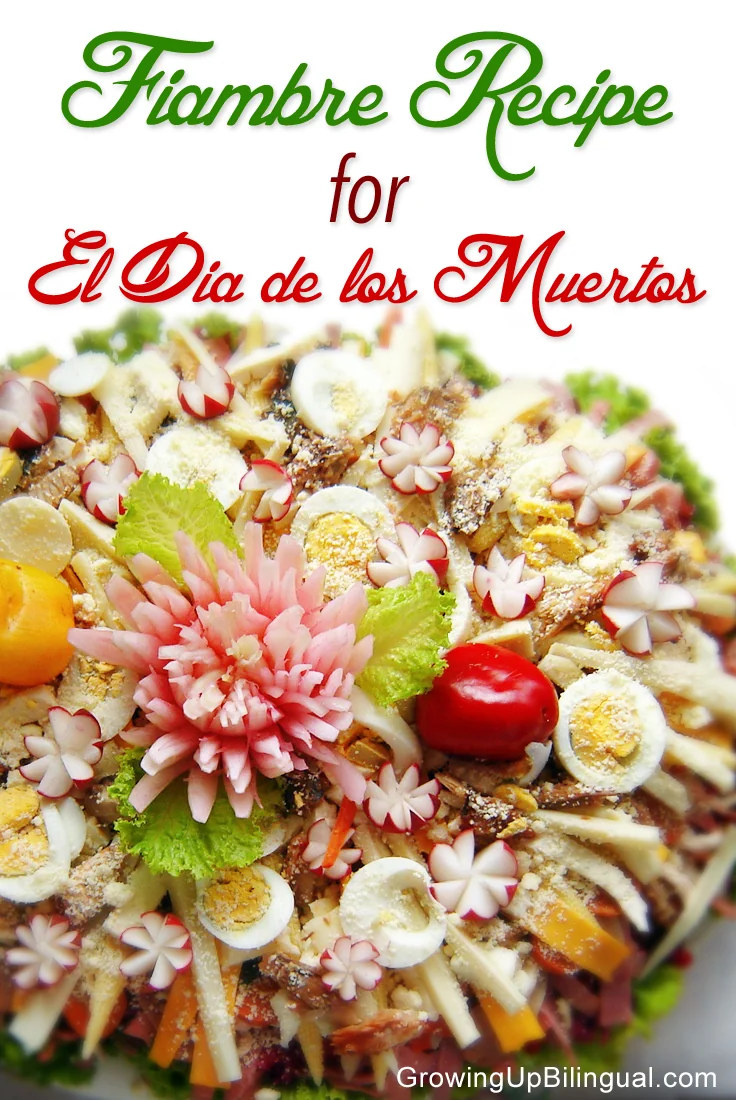
Fiambre is a traditional Guatemalan salad made with over 50 ingredients, served only on November 1st to honor Día de Los Muertos (Day of the Dead) and All Saints Day. Everything gets marinated in caldillo, a vinegar dressing that pulls the vegetables, cold cuts, and cheeses into one dish. It may look intimidating, and honestly, the shopping list is. But the cooking itself is mostly boiling and chopping, and my family has always treated the two days of prep as part of the celebration. This is our fiambre rojo, the red version colored by beets, very close to the one my grandmother made. Follow my easy step-by-step fiambre recipe, and I promise you won’t regret all the hard work!
This article contains affiliate links. If you buy something through one of my links, I may earn a small commission at no extra cost to you. I only recommend products and services I have personally used or vetted.
What Is Fiambre and Why Do Guatemalans Eat It Once a Year
Fiambre is a cold Guatemalan salad of more than 50 ingredients, eaten only on November 1st for Día de Todos los Santos (All Saints’ Day). It brings together pickled and boiled vegetables, cured meats and cold cuts, cheeses, and hard-boiled eggs, all marinated in a vinegary dressing called caldillo. It is the one dish that defines Day of the Dead in Guatemala, and no two families make it exactly alike.
On this day, people typically visit cemeteries to bring flowers, incense, and fiambre to their loved ones. However, this dish is mainly shared nowadays at home, in more private celebrations with family and close friends. Each family has its own recipe for fiambre, passed on from one generation to the next.
There are a few kinds of fiambre. Rojo (red) gets its color from beets. Blanco (white) skips the beets and tends to be a little sweeter, and verde (vegetarian). And there’s also one called divorciado, where every ingredient is kept separate on the plate so each person builds their own. This recipe is for fiambre rojo, and it is remarkably close to the one my grandmother used to make.
Where Does Fiambre Come From?
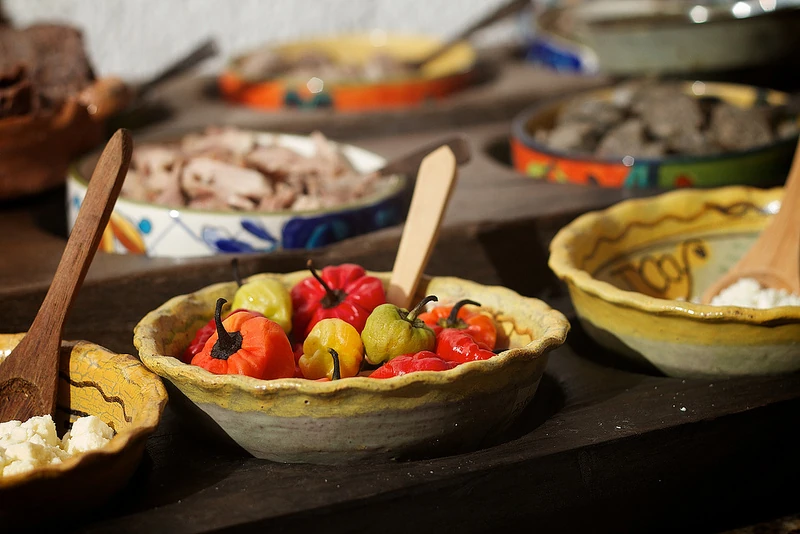
Fiambre is really a map of Guatemala’s history on a single plate. The vegetables and the caldillo dressing come from pre-Columbian roots, the cured meats and cold cuts arrived with the Spanish, and the capers and olives trace back to Arab influence that reached Guatemala through Spain.
Four centuries of mixing, assembled once a year. As the story goes, the dish was born when families combined the different foods they had brought to the cemetery, though every abuela will tell you a slightly different version.
This is where Guatemala parts ways with its neighbors. In Mexico, the Day of the Dead spans both days and centers on home altars and ofrendas. In Guatemala, there are no altars in the Mexican sense; offerings take place at the cemetery itself, and the table at home is built around a single dish that appears only once a year. Same season, same reverence, a completely different plate.
Day of the Dead is a holiday about remembering the people we’ve lost. Traditions like this can open a quiet door to remembrance, and if you’re looking for a gentle way to honor someone you miss, Nebula can offer thoughtful prompts to help you stay spiritually connected.
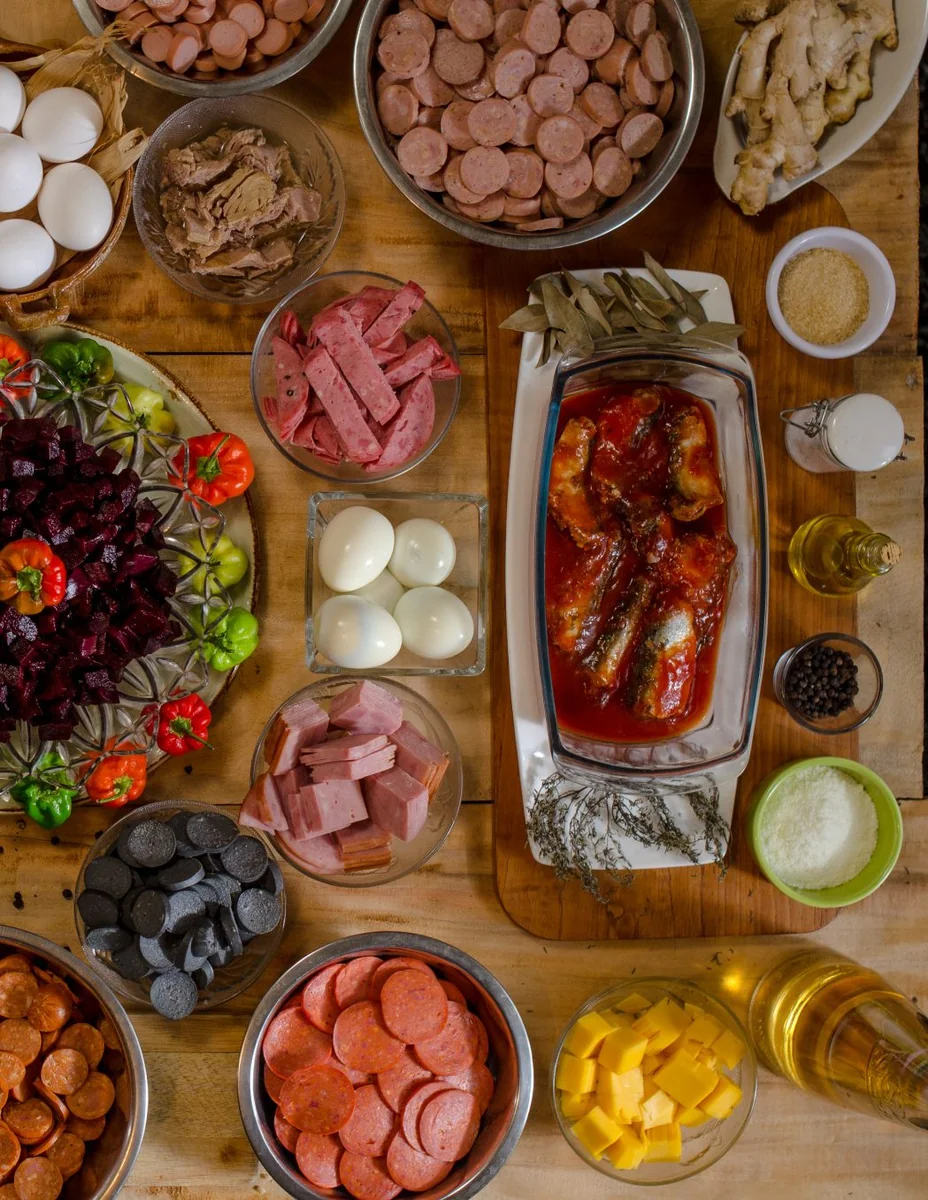
Fiambre Ingredients: Veggies, Meats, Cheeses & Caldillo
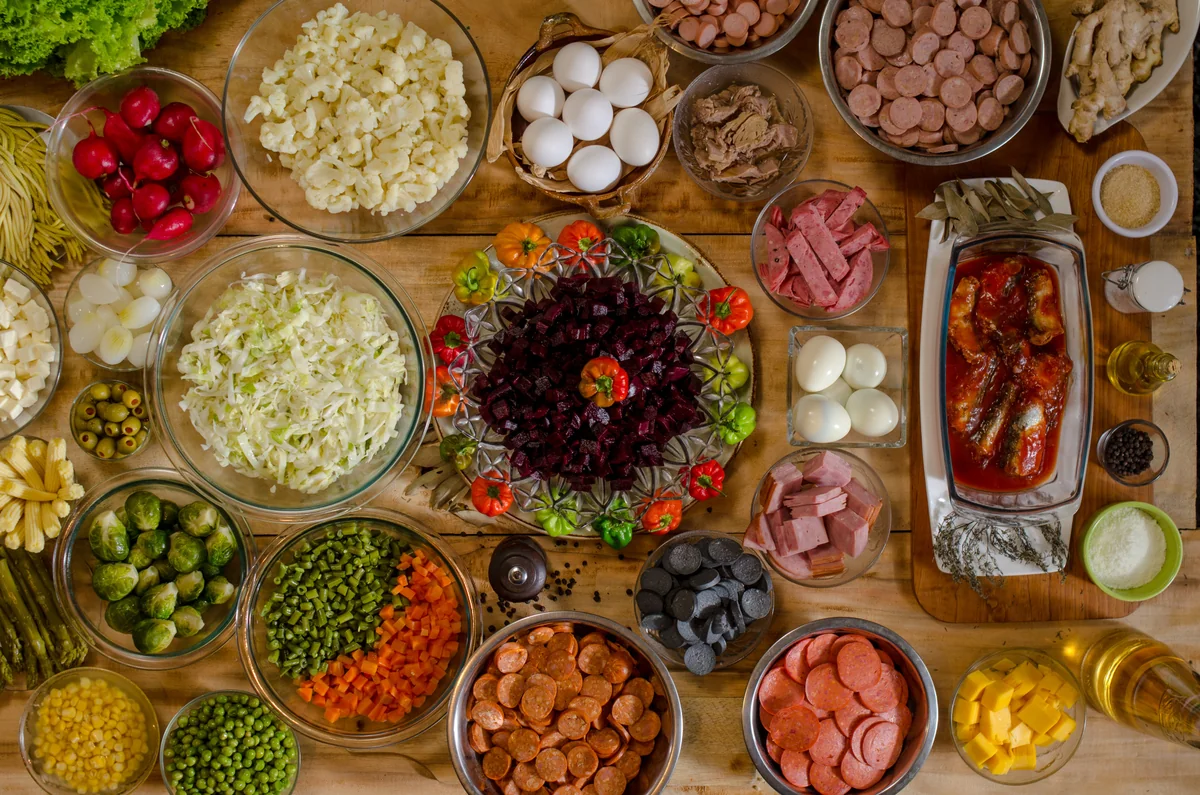
Feel free to add or leave out any ingredients you do not care for. Still, my advice is to leave everything in, because once mixed, even things you wouldn’t normally eat on their own can add overall flavor to the dish (like cecina or cow’s tongue), so try to be a little adventurous here!
Half the battle with fiambre is the shopping. The produce list alone can take over a whole grocery run, so I order what I can ahead of time. I’ve been getting produce and pantry basics from Misfits Market, which makes stocking up for a cook this big easier and keeps good food out of the trash.
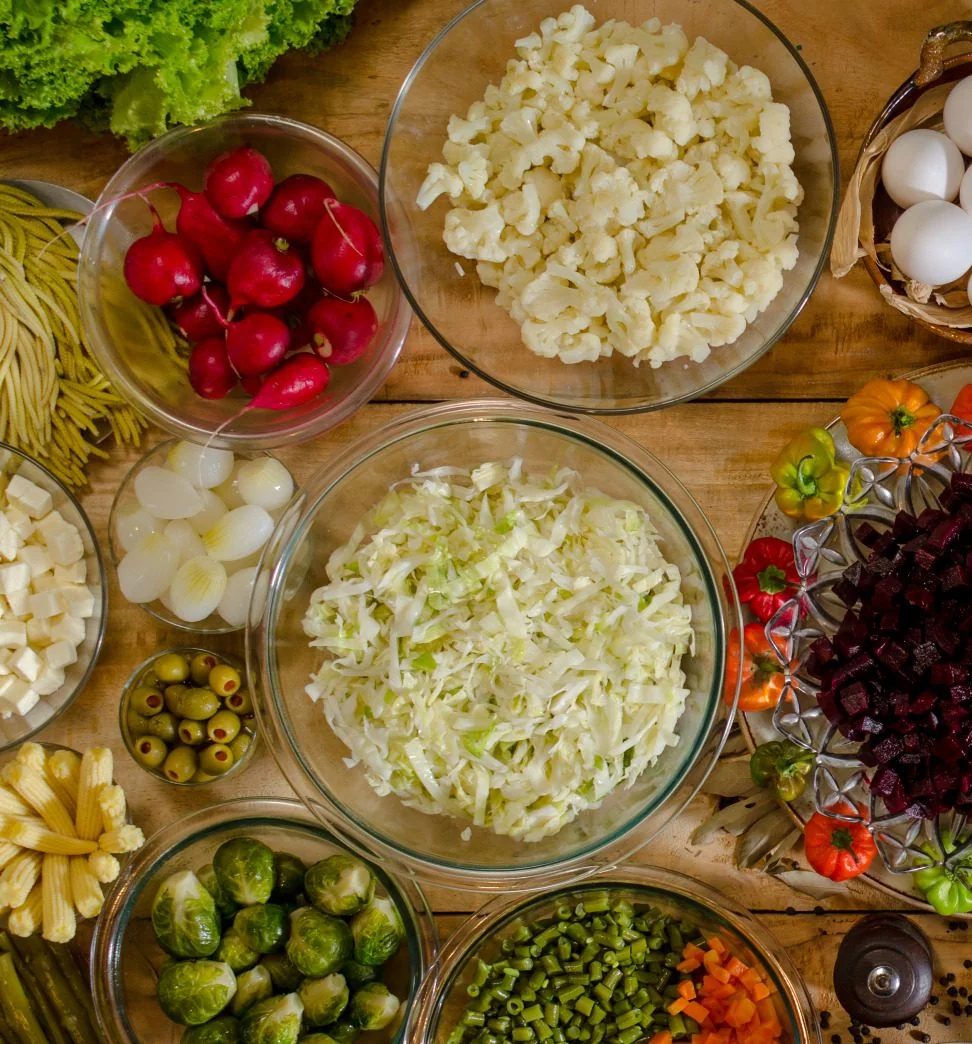
Vegetables
- ½ lb asparagus
- 6 beets, sliced or julienned
- 6 carrots, sliced or julienned
- 4 cups green beans
- 1 cauliflower, cut into sections
- 1 cabbage, cut into fine, long pieces
- 1 lb Brussels sprouts
- 2 cups corn (shelled)
- 25 fresh pacayas (the edible flower of a palm, slightly bitter)
- 1 jar hearts of palm
- 1 jar of pickled baby corn
- 1 jar of pickled baby onions
- ½ lb red beans (canned)
- ½ lb white beans (canned)
- 1 can chickpeas
- 4 cups green peas
- 1 lb fava beans (fresh)
- ¼ lb capers
- ¼ lb green olives
- ¼ lb black olives
- 1 can of pimentos
- 1-2 heads of lettuce
- Radish roses for garnish
Meats
- ½ lb butifarra (sausage made with anis and other spices)
- ½ lb cecina (dried, smoked, and salted beef)
- 1 lb chicken (cooked, removed from the bone, cut into long strips)
- 1 lb chorizo colorado (red chorizo sausage, sliced)
- 1 lb black chorizo sausage, sliced
- 1 lb yellow chorizo sausage, sliced
- 1 lb hot dog, cooked and sliced
- 1 lb ham, cut into long strips
- ½ lb longaniza (sausage with mint and chile, can use Italian sausage)
- 1 lb mortadella, cut into large cubes
- 1 lb salami, cut into large cubes
- ½ lb salted cow tongue
Eggs and Dairy
- 4 hard-boiled eggs
- ½ lb yellow or American cheese (cut into strips)
- Queso fresco (1 small)
- ½ lb Zacapa cheese (can use good Parmesan)
Dressing or caldillo
- 1 bunch of parsley
- 4 bay leaves
- 2 sprigs of thyme
- 1 sprig of oregano
- 1 quart of vinegar
- 1 pint of olive oil
- 6 tablespoons mustard (I like using dark, grainy mustard)
- 1 teaspoon of pepper
- Salt to taste
- 5 tablespoons Worcestershire sauce
- 1 tablespoon nutmeg
How To Make Guatemalan Fiambre: The 3-Day Plan
Fiambre is not hard to make. It is just long. There is no tricky technique, nothing that can curdle or collapse; it is mostly boiling, chopping, and marinating, spread over three days, so the work never piles up. When I was a kid, my favorite part was the last day, building the fiambre in layers and decorating the top with radish roses, baby corn, and long slices of cheese. We made faces and fun designs on it. That is still the best part.
Here is the rhythm of the three days, so you know what you are getting into before you start. For best results, enlist family members in the process. There is a lot of cutting and slicing, so make the preparation and the meal a family event.
Two Days Before
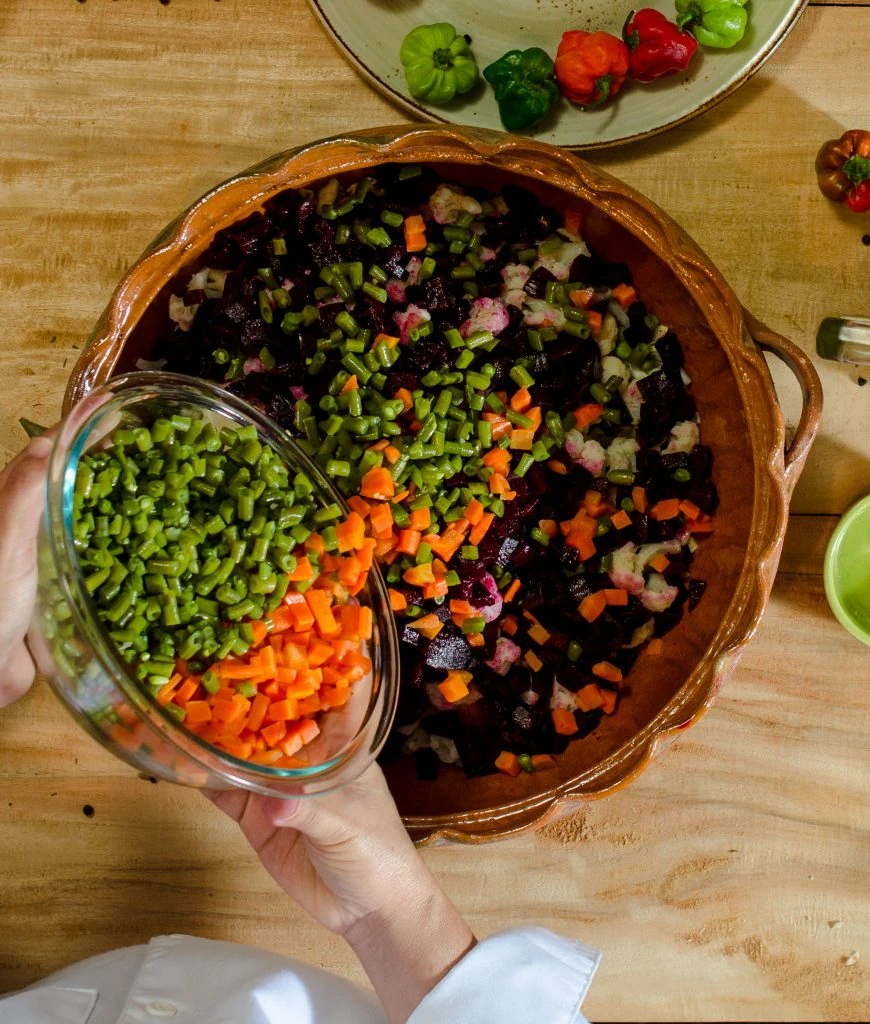
This is the big cooking day. You boil each group of vegetables separately so the colors stay distinct; don’t try to save time by mixing them. It is a lot of pots, but none of the steps are complicated.
First, boil the beets until just cooked but still firm. Then, boil carrots and green beans together until just done. Next, boil the cauliflower and cabbage. Finally, boil peas, fava beans, and corn.
Boil the chicken and parsley, adding salt and pepper to taste. Skim off the fat once it has cooled. To save time, you can buy cooked chicken and use store-bought broth. Then, shred the cooked chicken and store it.
Mix the broth in a blender with vinegar, olive oil, mustard, salt and pepper to taste, Worcestershire, bay leaves, thyme, oregano, and nutmeg. Pour into a pot and simmer for ten minutes, then chill overnight.
The Day Before
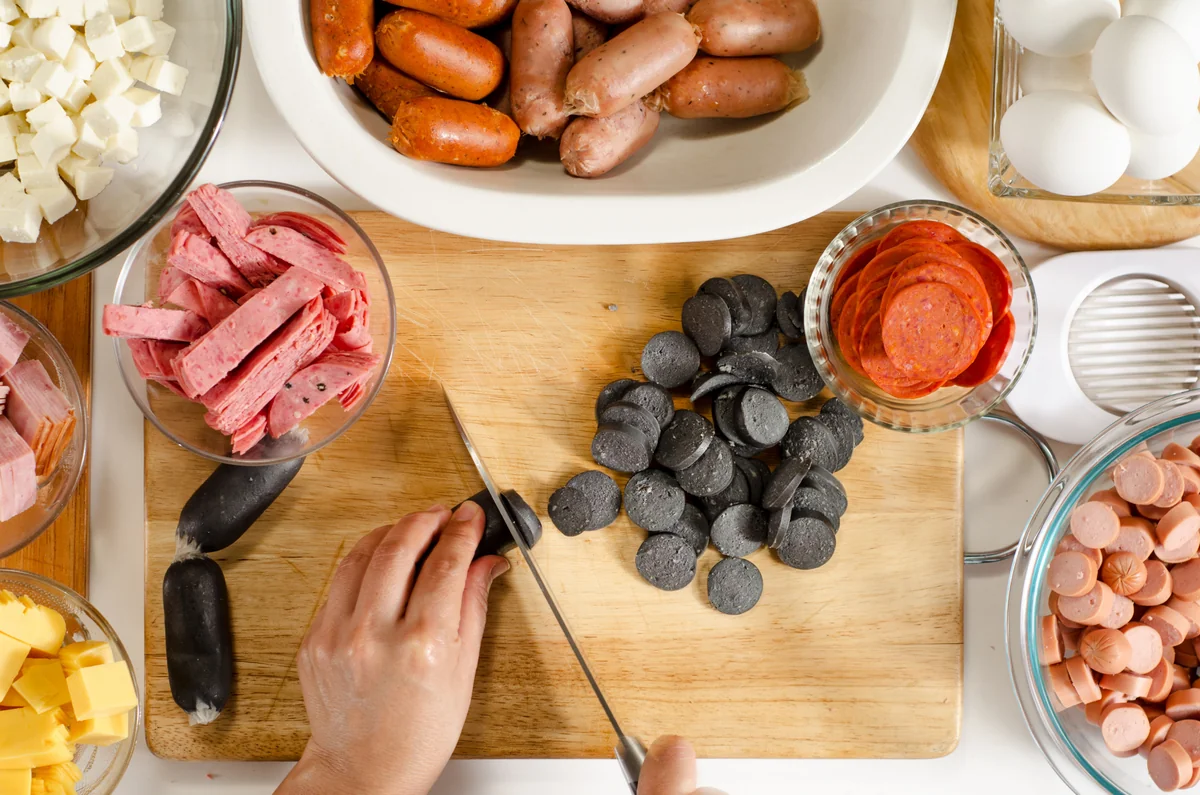
Boil the chorizos with butifarras the day before you serve the fiambre. And chop all your meats so they are ready for the day you assemble your fiambre.
Combine all veggies and pour the chicken broth mixture over them. Let it soak overnight in the refrigerator. This is when the fiambre actually becomes fiambre.
Serving Day
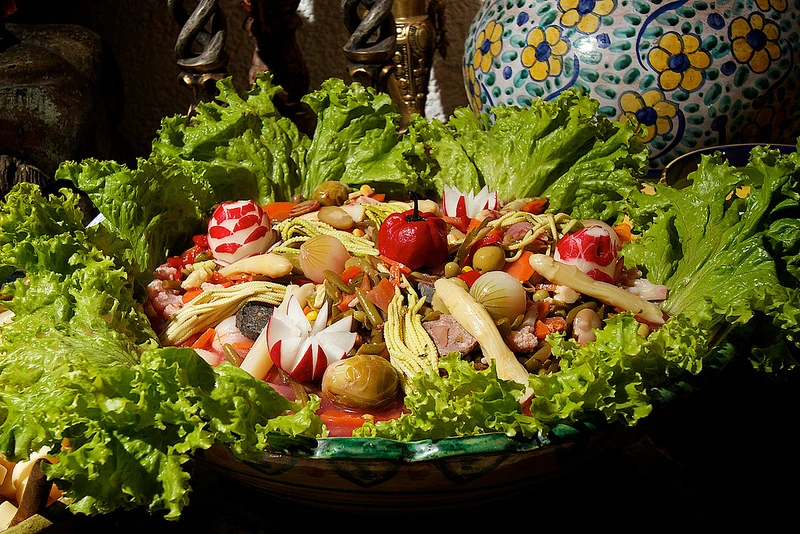
Assembly and decoration. The day you wish to serve the fiambre, place a lettuce leaf on a plate, then layer the veggie mixture, and then add a layer of the meats and cheeses. Repeat at least once and decorate with pimientos, sliced cheese, asparagus, baby corn, radishes, olives, and boiled eggs. Serve chilled. Then it is done, and you will have enough to feed a small army.
Safety Notes
Make sure you handle and store all these ingredients with care. I find it easier to cut everything up and store it separately in Ziplock bags. Refrigerate washed and cut-up vegetables together, but keep meats and cheeses separate.
When all is said and done, I hope no one is scared off by the number of ingredients and the time it takes to prepare this delicious Guatemalan dish. But, BELIEVE ME, THIS FIAMBRE RECIPE IS WORTH IT!
Tips for the Best Guatemalan Fiambre
After years of making this, these are the things I wish someone had told me the first time.
- Keep the beets separate until the very end: This is the one that trips everyone up. Beets bleed, and if you marinate them with the rest of the vegetables, the whole fiambre turns a flat pink. Boil them on their own, marinate them on their own, and add them only when you assemble the plate. That is how you keep the bright contrast of colors that makes fiambre look the way it should.
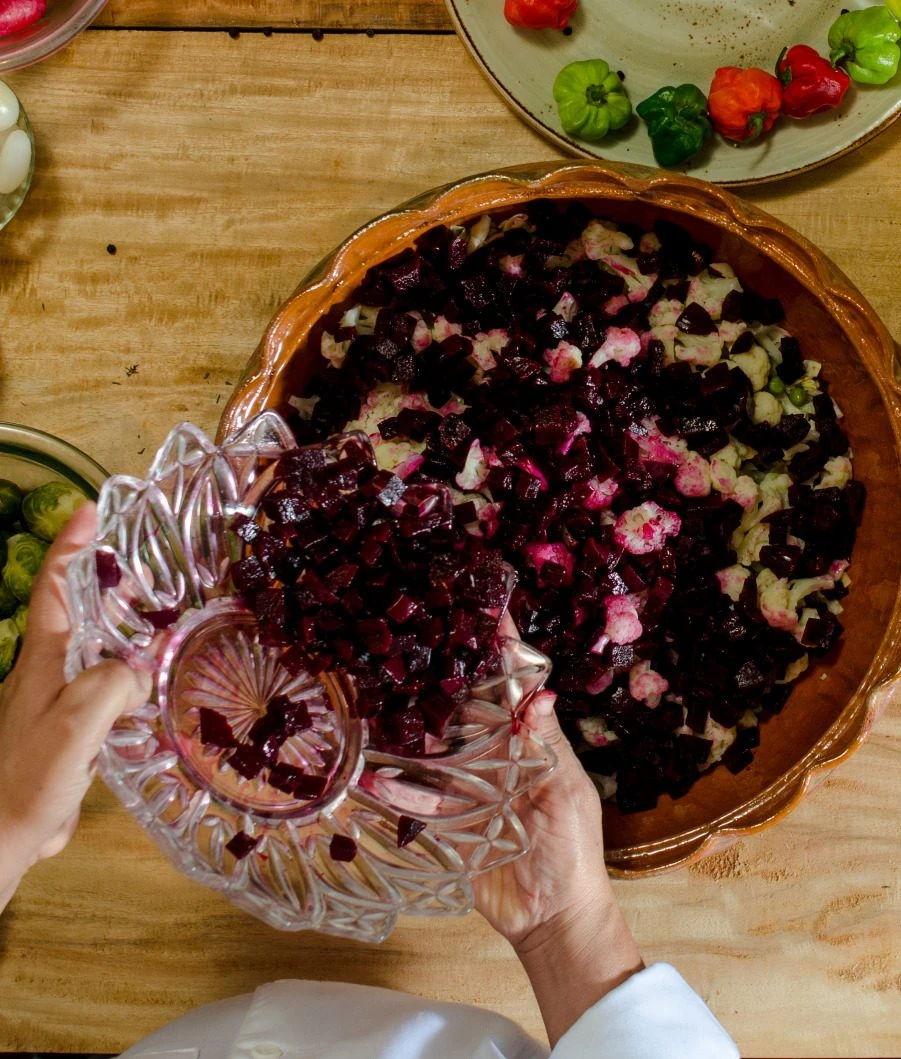
Adding the beets last so they don’t stain everything - Tame the pacayas before they go in: Pacayas, the palm flower, are naturally bitter. Cook them separately in salted water, changing the water two or three times as they cook to draw out the bitterness. The cooking water is too bitter to use for anything else, so drain it. If you cannot find pacayas at all, it is fine to leave them out.
- Shock the vegetables in ice water: Cook the vegetables just to al dente (firm and slightly chewy), still with a little firmness, then plunge them into a bowl of ice water. The cold locks in both the color and the texture, so your carrots stay orange and your green beans stay green instead of going dull and soft. It is a small step that makes a big difference in how the finished dish looks.
- Never marinate in metal: The caldillo is mostly vinegar, and vinegar reacts with metal. Use a large glass or plastic container to marinate, never a metal bowl or pot, or you can end up with an off, metallic taste.
Enjoy your fiambre with a delicious and refreshing glass of rosa de jamaica or agua de tamarindo. And if it’s a cold day, you can warm up with some chocolate caliente with chiquiadores or a delicious atol de elote.
Good to Know Before You Make Fiambre
What does fiambre mean in English?
In Spanish, the word fiambre means cold cuts. In Guatemala, though, it does not refer to deli meat at all. It names this specific once-a-year salad eaten for Day of the Dead, which is why the word can confuse Spanish speakers from other countries.
What are pacayas, and where do I find them?
Pacayas are the edible flower buds of a palm tree, with a slightly bitter taste that mellows once they are cooked and marinated. You can find them fresh in Latino markets or jarred in brine online. If you cannot track them down, it is fine to leave them out; the fiambre will still work.
How long does fiambre last in the fridge?
Kept cold and covered, fiambre holds for about three to four days in the refrigerator, and many people think it tastes even better on the second day once the caldillo has fully soaked in. Keep it chilled until you serve it, since it is never eaten warm.
What day is Day of the Dead in Guatemala?
In Guatemala, the heart of the celebration is November 1st, Día de Todos los Santos (All Saints’ Day), and its traditions. November 2nd, Día de los Fieles Difuntos (All Souls’ Day), is quieter. The fiambre, the cemetery visits, and the giant kites all belong to the 1st.
Making Fiambre Far From Home
Making fiambre is my way of being home for Día de Todos los Santos, even when I am not. If you ever get the chance to be in Guatemala for it, take it. Families gather at the cemetery, and in Sumpango and Santiago Sacatepéquez giant kites fill the sky. If you want to experience the holiday for yourself, I plan custom Guatemala trips, and November is unlike any other time to visit.
More Day of the Dead Recipes From My Kitchen
Fiambre is the centerpiece, but the table never ends there. These are the Guatemalan sweets and dishes my family reaches for around this time of year, most of them simple enough to make alongside the main event.
Atol de Elote
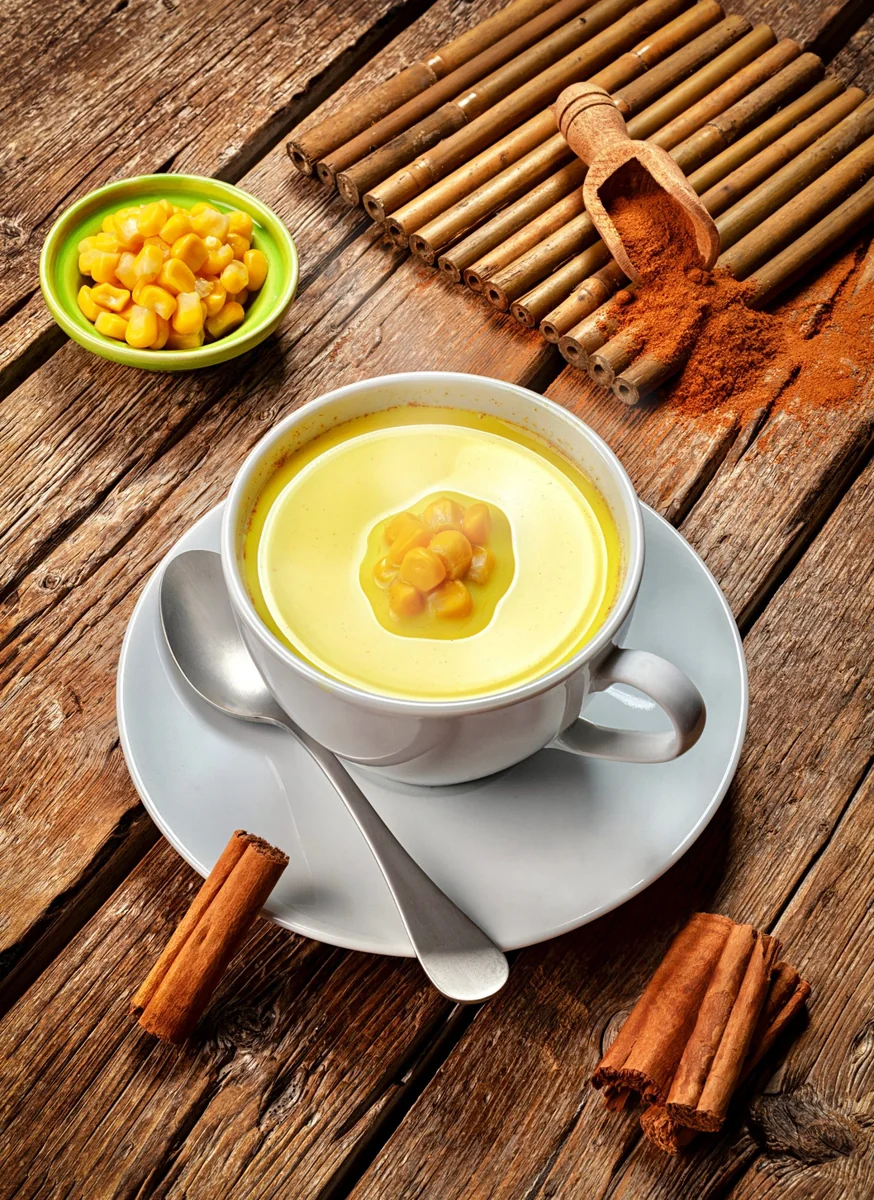
Atol de elote is a warm, sweet corn drink thick enough to hold a spoon. It is exactly what you want on a cool November evening next to a plate of fiambre.
Ayote en Miel
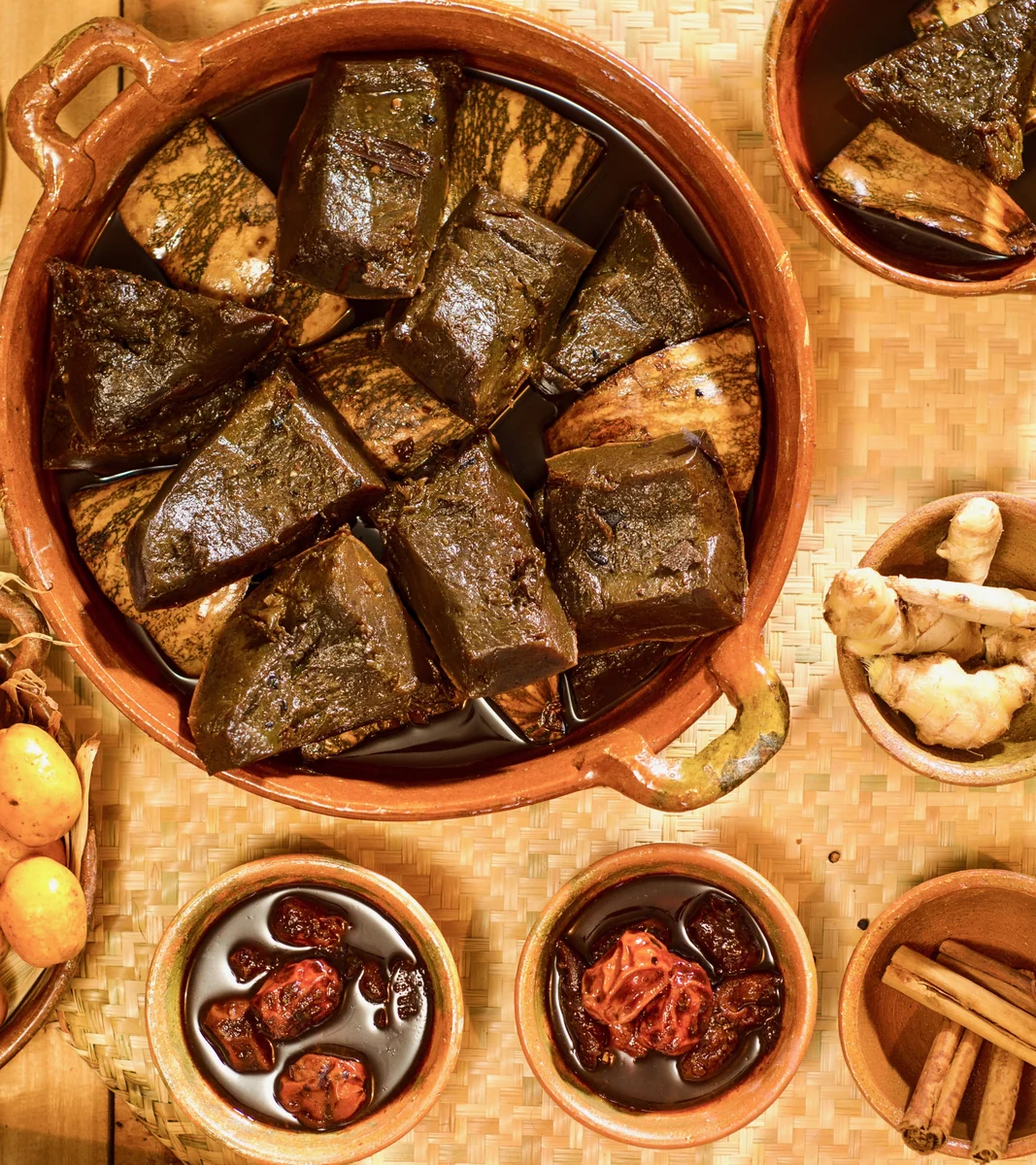
Squash simmered slowly in panela syrup with cinnamon and cloves until it turns deep and glossy. Ayote en miel is a classic Day of the Dead dessert.
Molletes
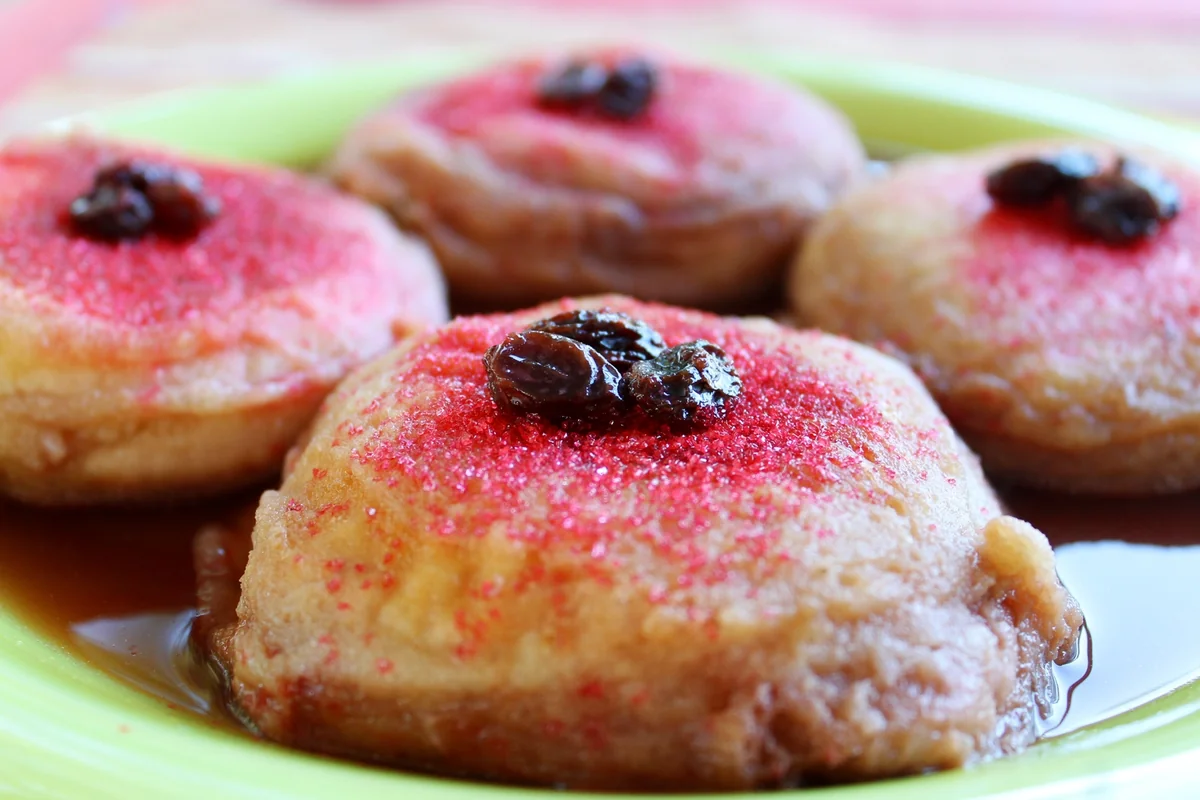
Guatemalan molletes are sweet bread halves filled with custard, battered, fried, and soaked in cinnamon syrup. The dessert fiambre is usually followed by.
Jocotes en Miel
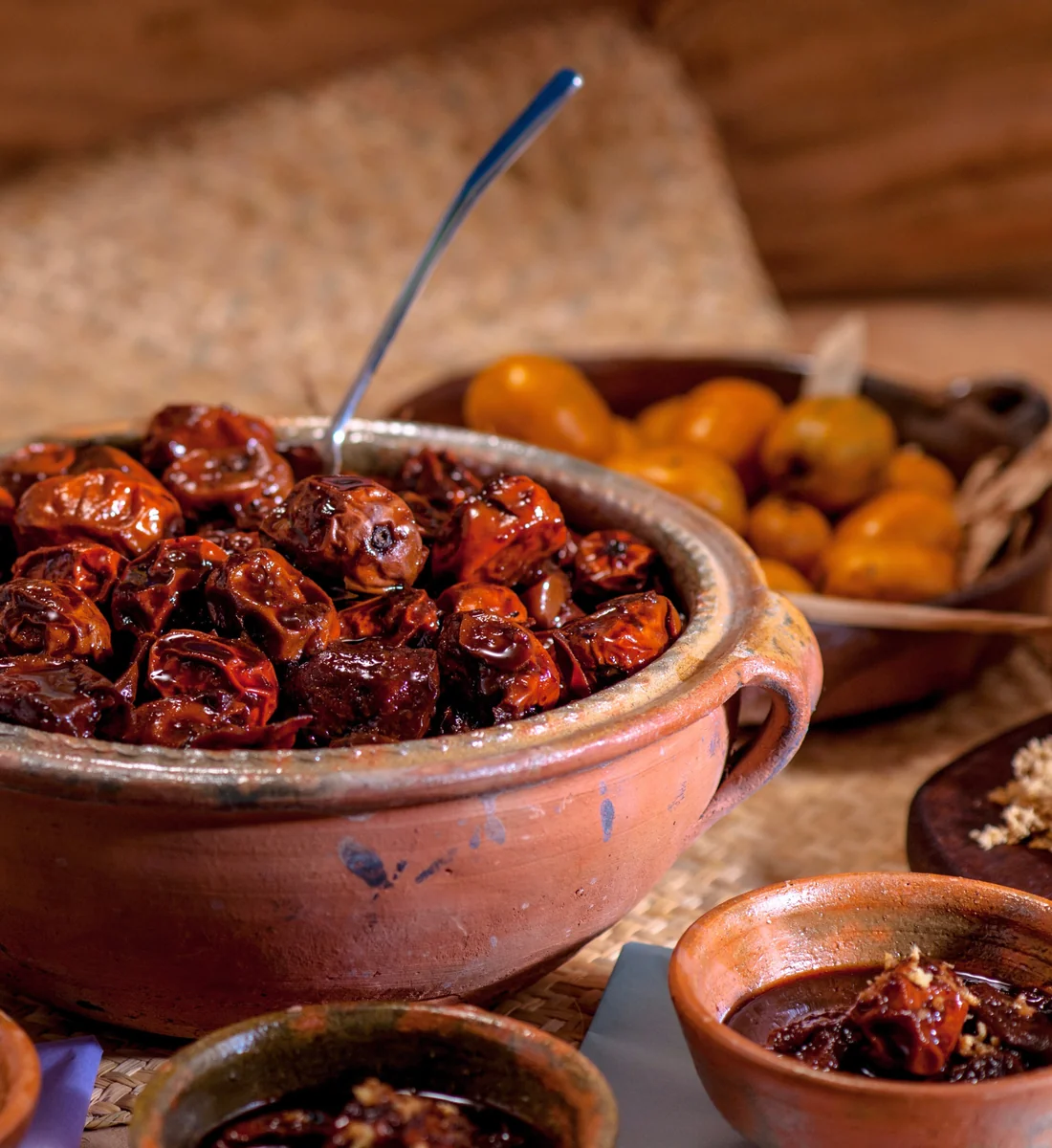
Jocotes en miel are juicy hog plums cooked down in a bubbling sweet syrup with warm spices. It is another classic dessert that shows up all over Guatemala around the Day of the Dead.
Garbanzos en Miel
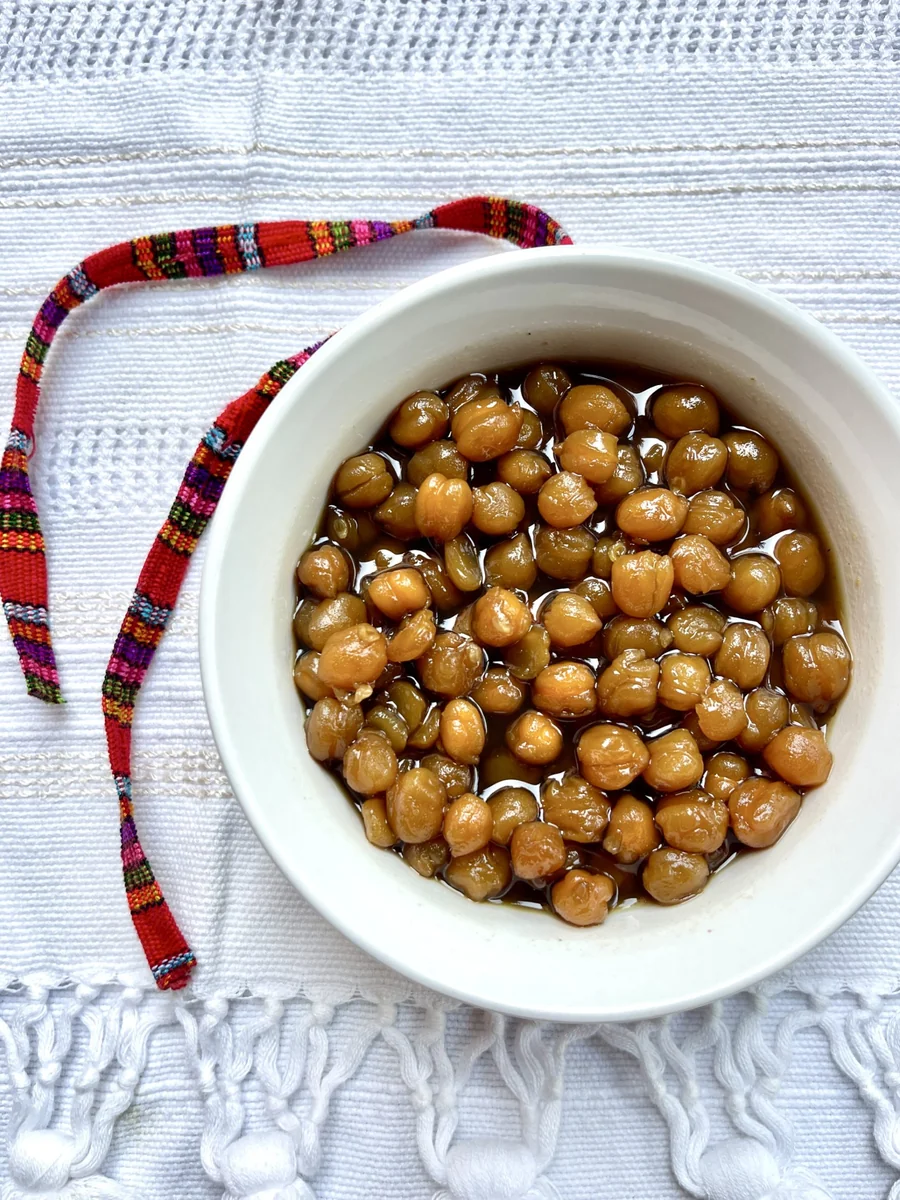
Garbanzos en miel is an easy recipe for chickpeas simmered in spiced panela syrup until soft and sweet. An old-fashioned Guatemalan dessert tied to this season.
Pan de Muerto
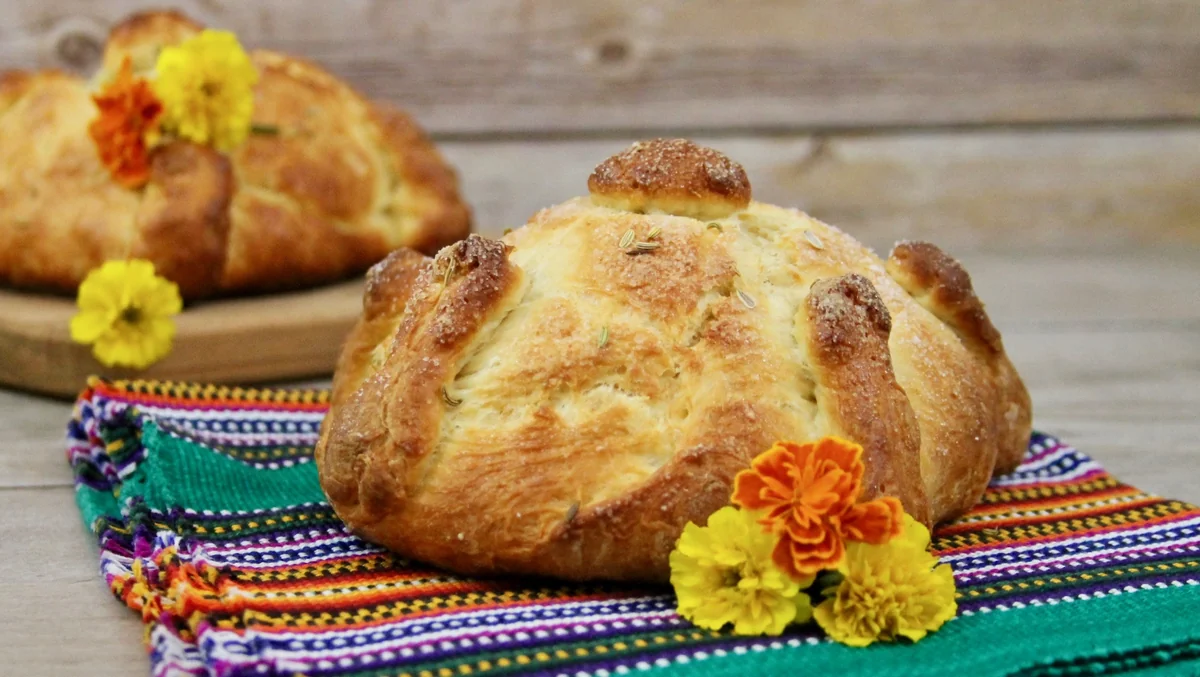
A soft, lightly sweet bread baked for the season. Pan de muerto is Mexican in origin, but it has become part of how many families across the region, including in Guatemala, mark the day.
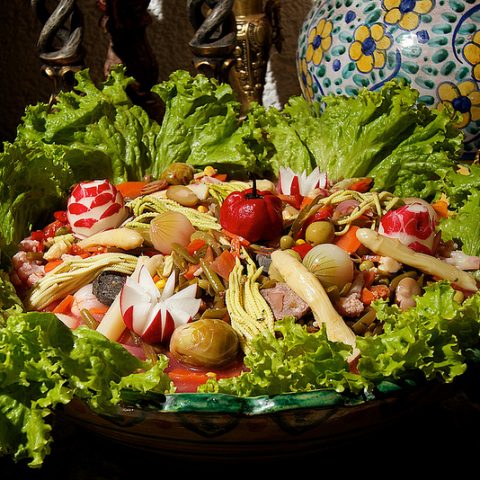
Guatemalan Fiambre: Day of the Dead Cold Salad
Fiambre is a cold dish of more than 50 ingredients, boiled and pickled vegetables, cured meats, cheeses, and eggs, all marinated in a vinegar caldillo. This is my family’s recipe for Guatemalan fiambre rojo.
Ingredients
Vegetables
- ½ lb asparagus
- 6 beets, sliced or julienned (keep separate)
- 6 carrots, sliced or julienned
- 4 cups green beans
- 1 cauliflower, cut into sections
- 1 cabbage, cut into fine long pieces
- 1 lb Brussels sprouts
- 2 cups corn (shelled)
- 25 pacayas (palm flower; fresh in Latino markets or jarred in brine)
- 1 jar hearts of palm
- 1 jar pickled baby corn
- 1 jar pickled baby onions
- ½ lb red beans (canned)
- ½ lb white beans (canned)
- 1 can chickpeas
- 4 cups green peas
- 1 lb fava beans (fresh)
- ¼ lb capers
- ¼ lb green olives
- ¼ lb black olives
- 1 can pimientos
- 1–2 heads lettuce
- 12 Radish roses, for garnish
Meats
- ½ lb butifarra (anise sausage)
- ½ lb cecina (dried, smoked, salted beef)
- 1 lb chicken, cooked, boned, cut into strips
- 1 lb chorizo colorado (red chorizo), sliced
- 1 lb black chorizo, sliced
- 1 lb yellow chorizo, sliced
- 1 lb hot dog, cooked and sliced
- 1 lb ham, cut into strips
- ½ lb longaniza (mint-and-chile sausage; Italian sausage works)
- 1 lb mortadella, cubed
- 1 lb salami, cubed
- ½ lb salted cow tongue
Eggs & Dairy
- 4 hard-boiled eggs
- ½ lb yellow or American cheese, cut into strips
- 1 small queso fresco
- ½ lb Zacapa hard cheese (good Parmesan works)
Caldillo (Dressing)
- 1 bunch parsley
- 4 bay leaves
- 2 sprigs thyme
- 1 sprig oregano
- 1 quart vinegar
- 1 pint olive oil
- 6 tbsp mustard (dark, grainy)
- 1 tsp pepper
- Salt, to taste
- 5 tbsp Worcestershire sauce
- 1 tbsp nutmeg
Instructions
Two Days Before
- Boil each vegetable group separately, never mixed together, so the colors and textures stay distinct. Cook everything just to al dente (firm and slightly chewy) and then plunge it into a bowl of ice water to lock in the color and firmness. Boil in this order: carrots and green beans together; then cauliflower and cabbage; then Brussels sprouts; then peas, fava beans, and corn. Drain each and set aside.
- Boil the beets on their own, separate from everything else, until just cooked but still firm. Keep them apart in their own container. Beets bleed red, so if you mix them in now, they will stain the whole dish pink. They get added at the very end.
- Cook the pacayas separately in salted water, changing the water two or three times as they cook to draw out the bitterness (the pacaya cooking water is too bitter to use). Drain and set aside.
- Boil the chicken with the parsley, salt, and pepper. Let it cool, skim off the fat, then shred the chicken and store it. Save the broth for the caldillo. (To save time, use store-bought cooked chicken and broth.)
- Make the caldillo: blend the reserved broth with the vinegar, olive oil, mustard, salt, pepper, Worcestershire, bay leaves, thyme, oregano, and nutmeg. Pour into a pot and simmer for 10 minutes, then chill overnight.
The Day Before
- Boil the chorizos with the butifarras, then slice them. Chop all the remaining meats too, including the cecina and cow tongue, so everything is ready for assembly day. Keep the meats stored separately from the vegetables.
- In a large glass or plastic container (not metal, the vinegar reacts with it), combine all the cooked vegetables EXCEPT the beets: the carrots, green beans, cauliflower, cabbage, Brussels sprouts, peas, fava beans, corn, and pacayas, along with the hearts of palm, pickled baby corn, pickled baby onions, red beans, white beans, chickpeas, and capers.
- Pour the chilled caldillo over everything, cover, and marinate in the refrigerator overnight. Keep the beets marinating separately in a little of the caldillo.
Serving Day
- On a plate, lay down a lettuce leaf, then a layer of the marinated vegetables, then a layer of meats, then strips of yellow cheese and crumbled queso fresco and Zacapa cheese. Repeat the layers at least once.
- Add the beets on top now (adding them last keeps their color from bleeding into everything). Decorate with pimientos, sliced cheese, asparagus, baby corn, radish roses, green and black olives, and hard-boiled eggs. Serve chilled.
Notes
- Keep everything stored with care: washed, cut vegetables together, but keep meats and cheeses in separate bags. Leave out any ingredient you do not like, but try to keep even the unusual ones (cecina, cow tongue) — once mixed, they give the whole dish its flavor.
- Never marinate in metal: The caldillo is mostly vinegar, and vinegar reacts with metal. Use a large glass or plastic container to marinate, never a metal bowl or pot, or you can end up with an off, metallic taste.
Nutrition Information:
Yield: 20 Serving Size: 1Amount Per Serving: Calories: 247Total Fat: 9gSaturated Fat: 3gUnsaturated Fat: 6gCholesterol: 59mgSodium: 867mgCarbohydrates: 28gFiber: 9gSugar: 7gProtein: 16g
Nutritional values are estimates calculated using standard databases. Actual values may vary based on the specific ingredients and brands used.
Whose Fiambre Is the Real One?
Every Guatemalan family swears their fiambre is the best one: more curtido, no fish, extra chorizos, white instead of red. If you make this recipe, tell me in the comments how yours came out and what your family does differently, especially if you are keeping the tradition alive outside Guatemala. Those stories are my favorite part of this time of year.

Through her writing, Paula helps travelers discover Guatemala beyond the typical tourist route with practical advice, local recommendations, and authentic experiences that connect visitors with the country’s people, culture, and traditions.
Planning a trip to Guatemala? Paula offers personalized Guatemala itinerary planning and trip consultation services tailored to your interests, travel style, and budget. Contact her at [email protected] to learn more.
- San Lucas Tolimán Guatemala: Lake Atitlán’s Best-Kept Secret - September 24, 2026
- Hotel Tolimán Lake Atitlán: A Special Stay in San Lucas Tolimán - September 24, 2026
- Guatemala Dreams in San Lucas Tolimán: A Boutique Stay on Lake Atitlán - September 23, 2026


divino y delicioso!
Se ve delicioso es todo un arte me encanta ls presentacion, ademas me gustata conocer las tradiciones de cada pais. Gracias por compartir!
Wow! Que delisioso se ve. No sabia que en Guatemala se celebraba este dia!
Me gusto mucho la receta… Yo tampoco sabía .. Pero todos los días se aprende algo nuevo.
Que Hermoso, y delicioso se ve!!
Deliciosa la receta y me la imaginé para la navidad, sería un gran éxito!
Que rico se ve todo. Yo tampoco sabía que lo celebraban en Guatemala.
Abrazos.
Que belleza de platillo, espectaculares las fotos, no sabía tampoco que celebraban así el Día de Muertos, gracias
Cuantos colores!! me encanta la decoracion. Muchas gracias me gustan estos platos de Guatemala.
Además de rico, la presentación me pareció fabulosa!!
The colors, textures, and different ingredients make this a unique guatemalan dish!!! thanks for sharing the recipe!
Excelente artículo Paisana. Te felicito. Recientemente llevé a una gringa de Austin Tx, desde San Marcos la Laguna hacia el aeropuerto y todo el camino nos fuimos hablando de comida. Le llamó mucho la atención este plato y quiere cocinarselo a sus papás el 1 de noviembre. No obstante, ella es vegana. Pero creo que un fiambre es vegano al 60%. Así que le voy a mandar tu receta y la voy a ir aconsejando en el proceso. Te mando un gran abrazo desde Fraijanes.