
Women in Santiago Atitlán still wear their beautiful huipiles embroidered with birds and flowers to buy tomatoes at the market, the same way their mothers and grandmothers did long before tourists arrived. I’ve been coming here since I was a kid growing up in Guatemala, and that detail still tells me more about this town than anything else I could say. This is not the Guatemala that got decorated for visitors. This is just Guatemala.
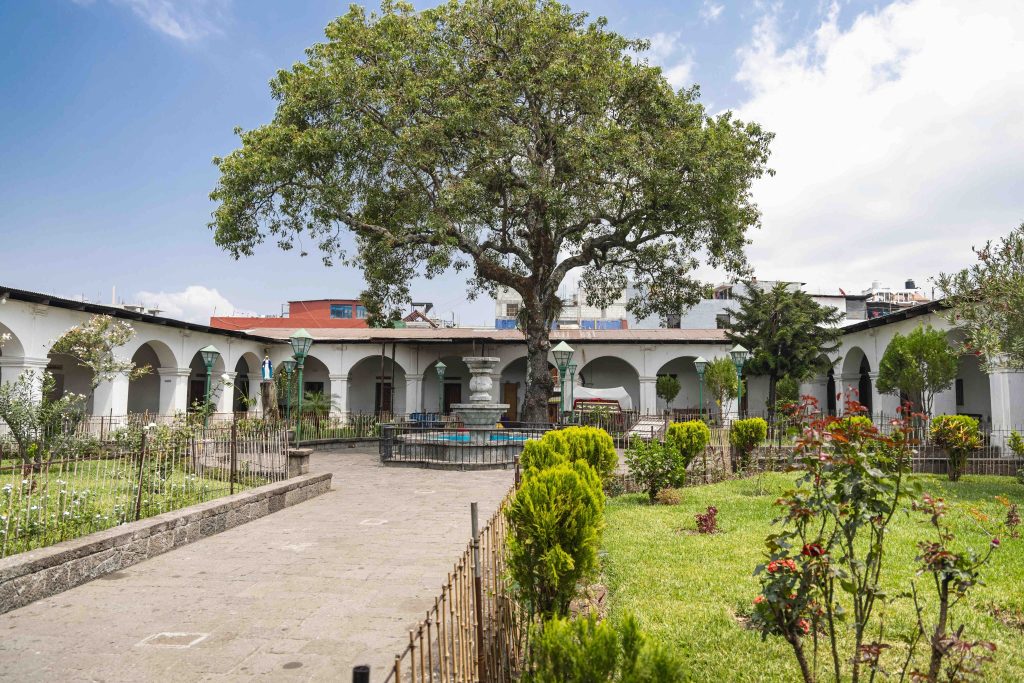
When my friends come visit me from the US and ask where to go for the real Atitlán, I send them here. I bring my own kids here too, the same way my family brought me when I was growing up. Santiago sits on the southern shore, a separate lancha from a different dock, and most tourists skip it for that reason. That is exactly why it’s still the way it is. And every single person I have sent here has come back changed by it.
Most people visit Santiago as a morning day trip from Panajachel or San Pedro. A few realize mid-visit that they should have booked a night. Some make it their base for the lake entirely, which is a completely different experience. This guide covers all three: how to get there, what to eat, the places most visitors walk right past, and how to decide if staying is worth it. Give it a full day if you can. It’s worth every minute.
I came back recently for a much slower visit with my kids, staying both in Santiago at Hotel Tiosh Abaj and outside town at Orilla Casas en Ati. This time I had the chance to do the things a quick day trip never leaves room for: watch sunrise from Rey Tepepul, spend a morning birding in the high-elevation forest, visit Chuitinamit with a local guide, take a cultural tour, shop for Santiago huipiles, meet a contemporary Tz’utujil embroidery artist in his studio, and eat my way through a much bigger cross-section of the town. The recommendations below now reflect that firsthand experience — including the places I would prioritize, where I would stay again, and one popular stop I would personally put much lower on the list.
This guide is for
✓ Day trippers spending a morning in Santiago from Panajachel or San Pedro
✓ Travelers based in Santiago for one or more nights
✓ Families and heritage travelers wanting real Tz’utujil cultural depth
✓ Hikers planning Volcán Atitlán
✓ Anyone wanting to understand what Lake Atitlán actually is before arriving
THE MOST IMPORTANT TOWN ON THE LAKE
Why Santiago Atitlán Belongs on Every Guatemala Itinerary
San Juan La Laguna gets called the most authentic town on Lake Atitlán constantly. I understand why — it has natural dye workshops, weaving cooperatives, murals, and it markets itself beautifully. But the label doesn’t hold up against Santiago. Santiago doesn’t market itself as anything. The women wear their huipiles in the market because those textiles are part of daily life, not inventory. The cofradías that care for Maximón operate on their own calendar. The Sunday market is still primarily for local people, not for the tour groups arriving by lancha at 10 AM.
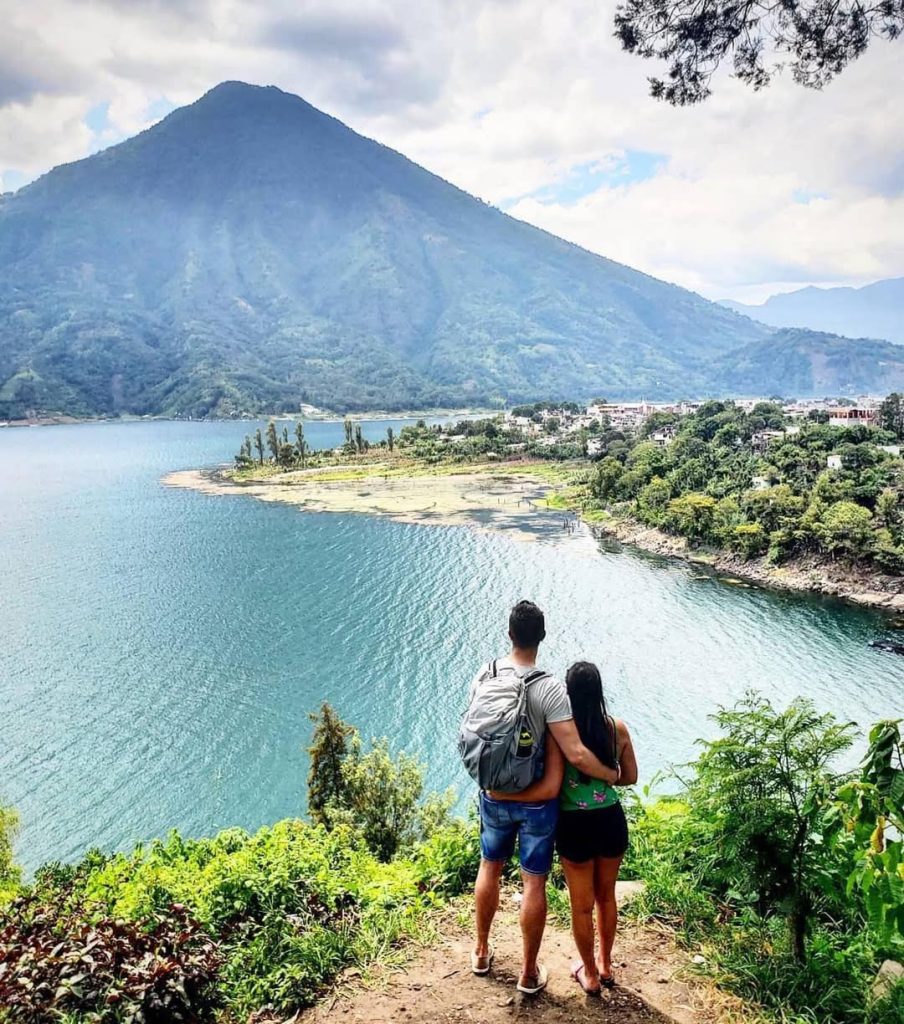
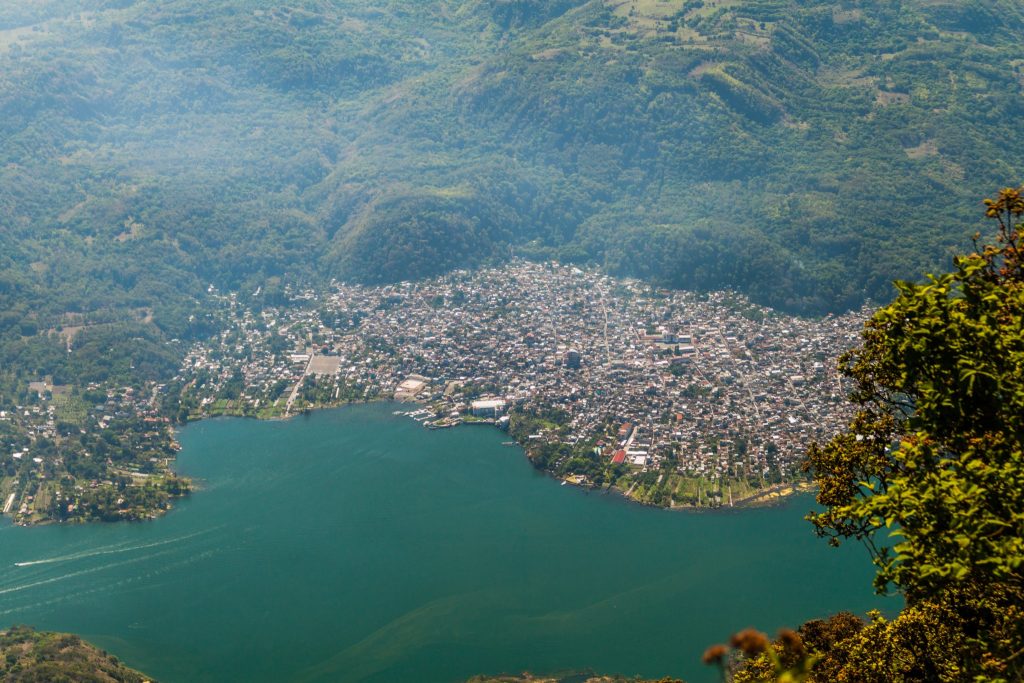
Santiago is the largest town on the lake and the primary population center of the Tz’utujil Maya people in Guatemala. Its territory spans 136 square kilometers. Two volcanoes, Atitlán and Tolimán, rise directly from its land. Its history runs from a pre-Columbian Tz’utujil capital, through the Spanish founding in 1547, through civil war violence and a massacre in 1990, to a moment of community resistance that became nationally significant. No other town on this lake carries a story like that. If you’re putting together a Guatemala itinerary and you’re skipping Santiago, you’re skipping the most important town at the lake.
✨ LOCAL CONTEXT
The Tz’utujil call their town Chíaa — “pueblo cerca del agua,” town near the water. In Nahuatl, that same meaning becomes Atitlán. The Spanish added Santiago when they renamed it after the conquest. The town has been carrying three names, and three histories, ever since. The Tz’utujil name for it, Tz’ikin Jaay, means “house of birds” — a reference to the diverse birdlife around the lake that still draws serious birders today.
GETTING THERE
How to Get to Santiago Atitlán
Getting to Santiago involves two legs: reaching the lake, then crossing it to the right dock. Both matter, and neither is complicated once you know what to expect.
From Antigua
A shared tourist shuttle from Antigua to Panajachel is the standard move — hotel pickup, door-to-door, roughly 2.5 to 3 hours, and around $20-25 USD per person. Most operators run at 8 AM, 12:30 PM, and 4 PM. Book through your hotel the night before. Once in Panajachel, you’ll take the lancha to Santiago (details below). Total journey from Antigua to the Santiago dock: plan for around 4 hours including the crossing. If you’re driving, the route goes via the Pan-American Highway (CA-1) west toward the lake. Park in Panajachel and take the lancha — there is no reason to bring a car to the water’s edge once you arrive.
From Guatemala City
Guatemala City to Panajachel by car or shuttle is roughly 3 to 4 hours depending on traffic — and Guatemala City traffic is notorious, particularly on weekends and holidays. Leave early. The route goes via CA-1 west. From Panajachel, same lancha as below. If you’re building a broader 7-day Guatemala itinerary, the standard flow is Antigua first, then the lake, with Santiago as a full day or overnight within the lake portion.
The Lancha: The Part Most People Get Wrong
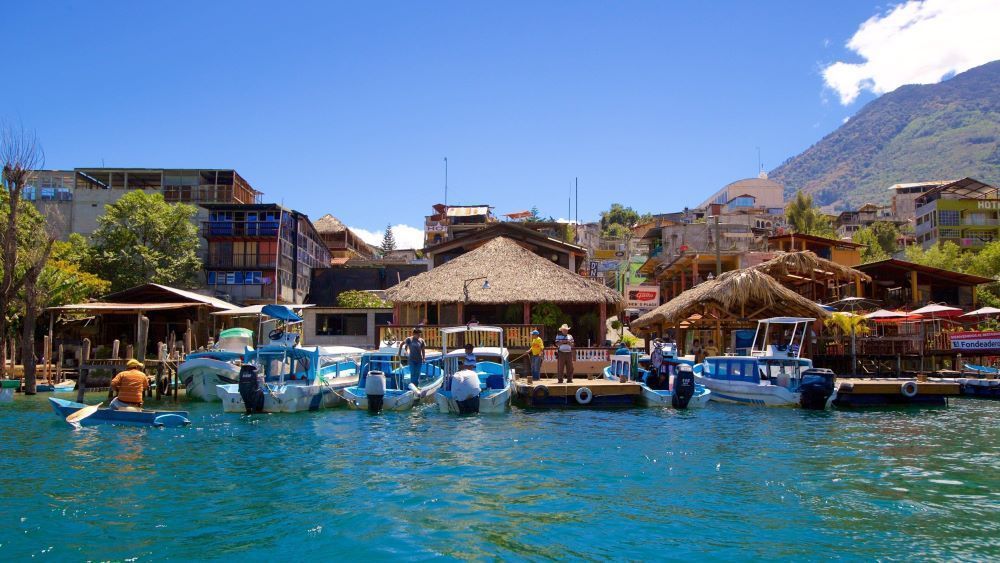
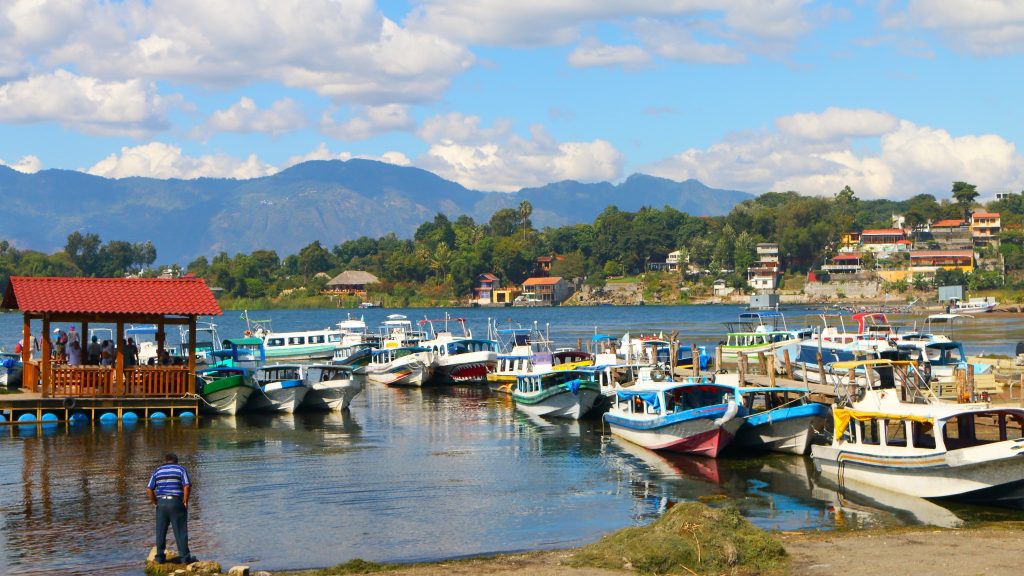
Santiago sits on the southern shore, which puts it on a completely separate lancha route from the main Panajachel-to-San Pedro service. Do not line up at Muelle Tzanjuyú — the dock at the end of Calle Santander. That dock will not get you to Santiago. Head instead to the dock at the end of Calle del Río, also called Calle Rancho Grande. That is the Santiago dock. The crossing takes 30-45 minutes. Fare is around Q25 (roughly $3.25) each way. Boats run 6:30 AM to about 7:30 PM. You can also reach Santiago from San Pedro La Laguna — shorter crossing, about Q10. My complete guide to Lake Atitlán boat services covers every dock and route at the lake.
⚠ THE AFTERNOON WIND
The Xocomil wind comes up every afternoon, typically after noon or 1 PM. Once it picks up, the crossing gets rough — lanchas are small, open boats. Arrive in Santiago in the morning and plan to return before early afternoon. I have watched that wind turn a 30-minute crossing into something nobody enjoys.
💡 Cash and ATMs: Santiago has an ATM but it is not always reliable. Bring cash from Panajachel before you cross. Most restaurants and markets are cash-only. A few hotels accept cards — confirm when you book. Q250-300 covers a solid day of food, entrance fees, and shopping.
PLANNING YOUR VISIT
Should You Stay in Santiago or Day Trip?
Santiago is a completely different experience depending on whether you spend three hours or three days. A morning visit lets you cover the market, the church, Maximón, and the Cojolya Museum. But the version of Santiago that most visitors never see — sunrise above the lake, early-morning birding at Rey Tepepul, slow dinners with volcano views, and the town after the day-trip lanchas leave — is only available if you stay.
💡 My recommendation: If your itinerary allows even one night, take it. If you only have a morning, that morning is still worth the boat ride. Use the half-day itinerary below to make the most of it.
PEOPLE AND HISTORY
The Tz’utujil Maya: Understanding Who Lives Here
Before the Spanish arrived, Santiago Atitlán was a Tz’utujil political and ceremonial center with its own leaders, trade networks, and spiritual systems. The conquest came in 1524 under Pedro de Alvarado. By 1547, Franciscan friars Francisco de la Parra and Pedro de Betanzos had formally founded the town, renamed it after Saint James the Apostle, and begun the blending of Catholic and Maya traditions that defines the town to this day.
That blending never erased one side in favor of the other. The Tz’utujil language is still widely spoken in daily life — in the market, between neighbors, inside the home. The cofradía system organizes religious life and community responsibility through brotherhoods tied to saints, and it still functions as a real social institution, not a ceremonial holdover. Women wear the same huipiles at home that you’ll see in the market because these textiles are part of their daily identity, not a performance for visitors.
Santiago is the largest Tz’utujil municipality in Guatemala, with a population of around 45,000. You’re not visiting a village that preserved some elements of tradition. You’re visiting a community where the tradition is the center of life.
THINGS TO DO
What to Do in Santiago Atitlán
Visit Maximón: The Experience That Surprised Me Most
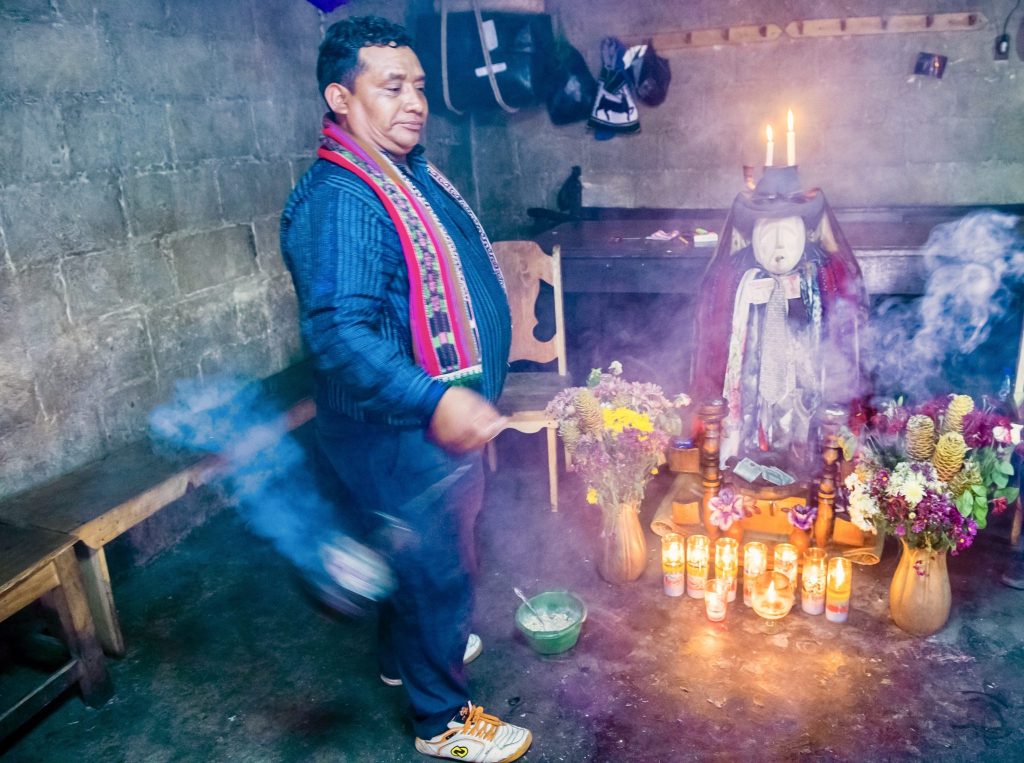
There is a full article on this site dedicated to Maximón, Guatemala’s most mysterious religious figure, and I recommend reading it before you arrive. Maximón — Rilaj Mam in Tz’utujil — is a living spiritual figure cared for by Santiago’s cofradías and moved between family households each year. Devotees bring money, candles, liquor, cigarettes and other offerings and come to ask for protection, healing or help.
On my most recent visit, what caught me completely off guard was not Maximón himself but the room around him. Jesus and Catholic saints shared the same small space with Maximón. I have written about the blending of Maya and Catholic traditions many times, but seeing those figures physically occupying the same room made that syncretism feel much more immediate. The atmosphere was solemn, a little strange and completely fascinating. There were only four visitors when I was there, so it never felt crowded, but the room is small and it is important to remember that you are entering an active sacred space inside a private home.
💡 What I paid in 2026: Q10 per person to enter. Photos and video cost extra; I paid Q50 for video, which also included photos. I also gave Maximón a monetary offering. Prices can change, so treat these as a current reference rather than a fixed fee.
⚠ VISITING RESPECTFULLY
Ask before taking photos or video, never photograph someone in prayer without permission, do not touch the offerings, and keep your voice low. The location changes each year, so ask your hotel, guide or a tuk-tuk driver where Maximón is currently being hosted.
The Church of Santiago Apóstol and Blessed Stanley Rother
The colonial church dates to the sixteenth century, but what makes it singular is what it holds and what it witnessed. Father Stanley Rother was an Oklahoma-born Catholic priest who arrived in 1968, learned Tz’utujil, translated portions of the New Testament into the language, and stayed through the worst years of Guatemala’s civil war. When his name appeared on a death list in 1981, he briefly left. Then he came back. He wrote to his diocese: “The shepherd cannot run.”
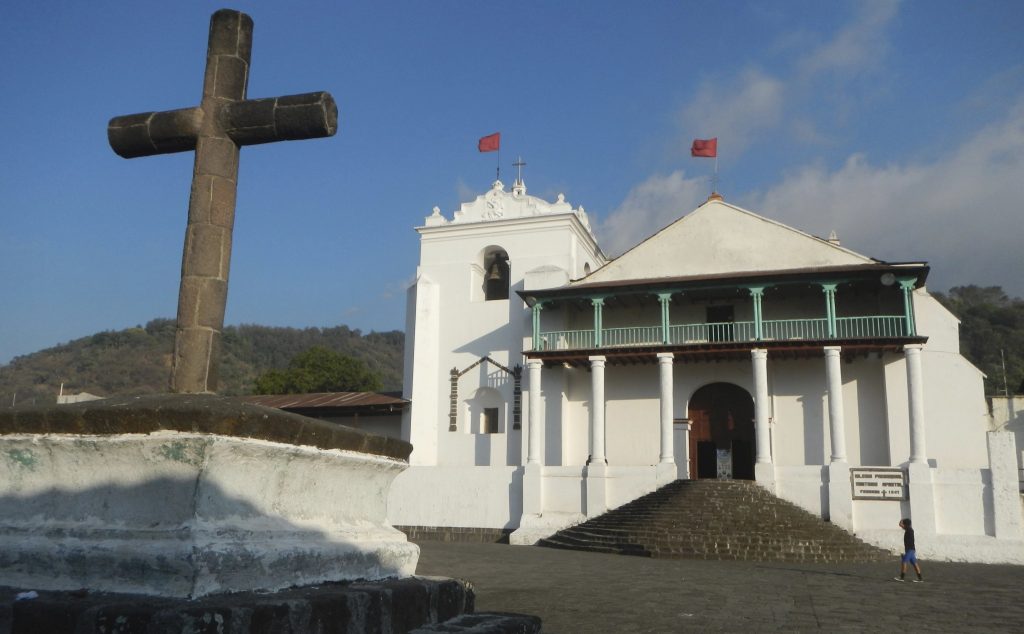
On July 28, 1981, he was killed in his rectory. He was 46. Pope Francis recognized him as a martyr in 2016 — the first recognized martyr born in the United States — and he was beatified on September 23, 2017. His body is in Oklahoma City. His heart, at the specific request of his parishioners in Santiago, was buried under the altar where he served. It is still there. When you stand inside that church, know what you’re standing near.
The Sunday Market
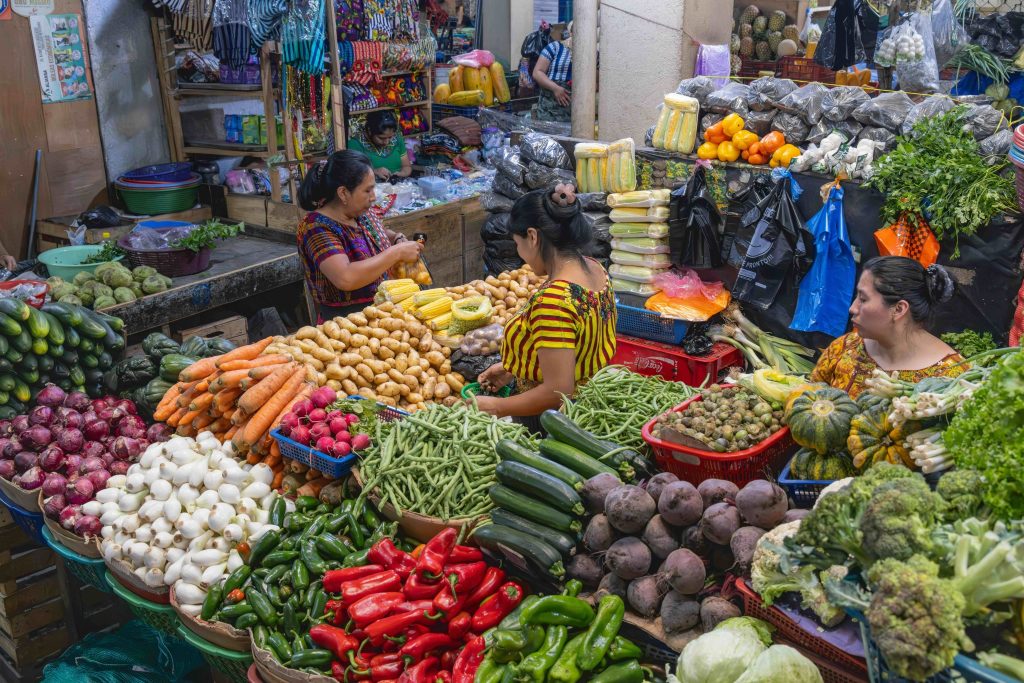
The main market day is Sunday. The daily market operates near the dock throughout the week, but Sundays fill the central area with vendors from the surrounding communities — produce, coffee, textiles, ceramics, and household goods sold primarily to local people. If you can be there by 7:30 AM on a Sunday, do it. The market at that hour, before the tourist lanchas arrive, is a completely different experience from what you’ll find at 10 AM.
✨ WHAT TO LOOK FOR
Textiles made for local use are visibly different from pieces made for tourist markets — thicker fabric, denser embroidery and motifs tied specifically to Santiago. I came home from this trip with several Santiago huipiles, including pieces covered in the embroidered birds that make this town’s textiles so recognizable. If you want to try patín, look for it at the market or go to Don Cangrejo, where I was able not only to eat several versions but also watch how it is prepared.
Cojolya Museum and Weaving Center: The Hidden Gem Most Visitors Walk Past
The Cojolya Association of Maya Women Weavers has been operating in Santiago since 1979, when American designer Candis Krummel began working with local weavers to document and sustain the backstrap loom tradition. The small museum — free admission, no ticket required — traces the entire process from spinning raw cotton to finished textile, with daily weaving demonstrations and a shop where everything sold was made by local Tz’utujil women at fair-trade prices.
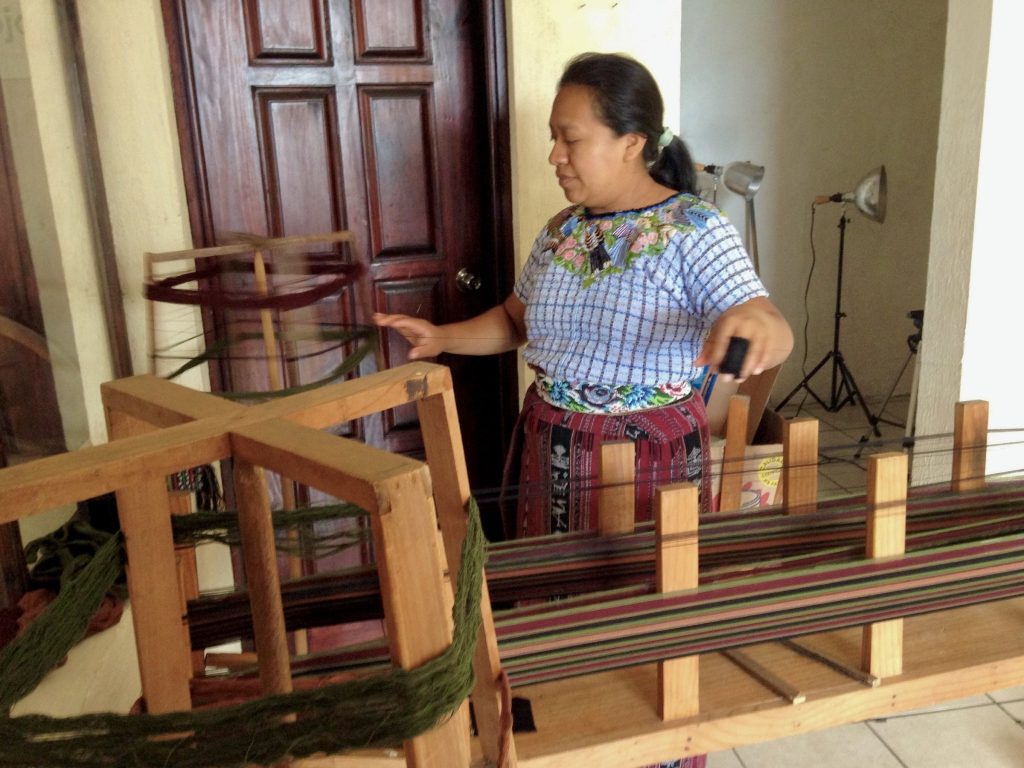
This is the single best place in Santiago to understand the textiles you’re seeing in the market — the specific iconography of the Santiago huipil, the meaning of the bird motifs, how the technique differs from weaving in other communities. They also offer weaving lessons and community tours where you visit artisans in their homes. If you have time for only one paid experience in Santiago, this should be it.
💡 Practical: Free museum entry. Weaving lessons and community tours are paid (confirm current prices with the cooperative directly at cojolya.org.gt). Located in town center — any local can point you there.
Parque de la Paz: A Place to Be Still
⚠ THE 1990 MASSACRE
On the night of December 1-2, 1990, hundreds of Tz’utujil people walked peacefully to the army base at Panabaj, carrying white flags, to ask that the soldiers stop kidnapping and killing community members. The army opened fire. Thirteen people were killed. Twenty-three more were wounded. The community collected 20,000 signatures demanding the army’s expulsion. On December 6, 1990, under decree Acuerdo Gubernativo P-66/90, the base was closed. Every second day of every month, the community holds a Mass in their memory.
That site is now the Parque de la Paz (Peace Park). It is a quiet, unremarkable-looking public space that holds an enormous amount of meaning for this community. Walking through it and knowing what happened there is part of what Santiago requires of its visitors. You don’t need a guide or a schedule to visit, just the intention to be there with awareness of what the ground holds.
Chuitinamit: Visit the Tz’utujil Archaeological Site Across the Bay
Chuitinamit was one of the experiences I most wanted to do on this trip because it connects modern Santiago directly to the pre-Hispanic Tz’utujil history across the bay. It is not a formal archaeological park. There are no restored pyramids, ticket booths or interpretive signs. The archaeological remains extend across private farmland, and the area most visitors see includes a local landowner’s collection of carved stones and artifacts found on the property.
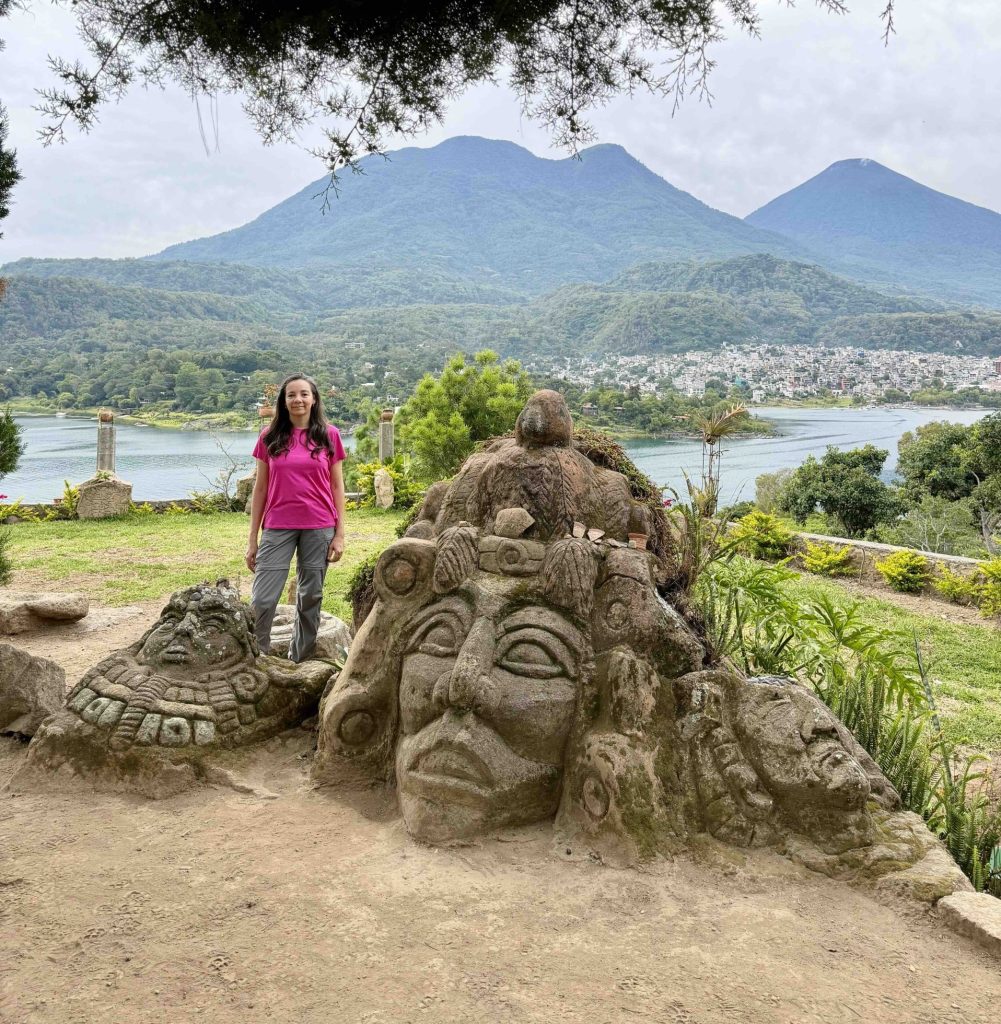
Our experience was much easier to reach than I had expected: about a five-minute private lancha ride from Santiago, followed by roughly 10–15 minutes walking uphill to the collection. We also added the higher mirador, which meant another approximately 20 minutes of considerably steeper, overgrown hiking. The views back across the bay toward Santiago and the volcanoes were fantastic.
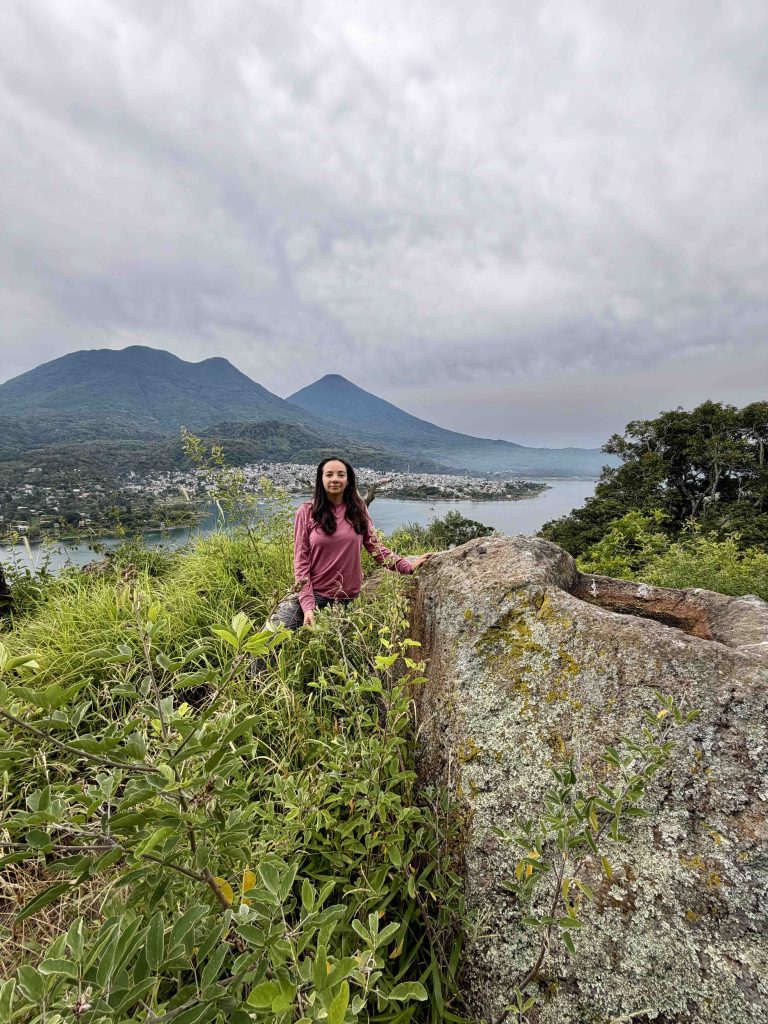
What stayed with me was how much history is still simply part of the landscape here: carved stones beside crops and archaeological material held on private land rather than presented inside a museum. This is one place where I strongly recommend going with a local guide who can arrange the boat and land access and explain what you are seeing.
💡 Read the full guide: My complete guide to visiting Chuitinamit from Santiago Atitlán covers the boat, hike, current costs, land access, the private collection and whether I think the higher mirador is worth adding.
Visit Gerardhi Mesía’s Studio: Contemporary Tz’utujil Art Painted With Thread
Santiago is famous for its painters, but one of my favorite art discoveries on this trip was completely different. The owners at Orilla recommended that I visit Gerardhi Mesía, a Tz’utujil artist who creates what he calls pintar con hilos — painting with threads. Instead of paint, he builds surreal, intensely colorful images through hand embroidery.
I met Gerardhi at his studio and had the chance to hear a little about his trajectory. He learned embroidery from his mother when he was young and later transformed that traditional skill into contemporary fine art. His work has traveled far beyond Santiago; one of his pieces, Paraíso Amarillo, was included in a Sotheby’s-connected charity auction in Germany with a five-figure euro starting price. Seeing the work up close made the technique even more impressive — from a distance some of the pieces read almost like paintings, and then you get close enough to see that every field of color is thread.
He told me that pieces purchased directly from him in Santiago now start around the low four figures depending on size and complexity. Even if you are not shopping at that level, the studio is absolutely worth visiting if you are interested in contemporary Maya art and in seeing how a traditional technique can become something completely new. You can see his current work on Instagram at @gerardhi_mesia.
The Fishing Dock Before Dawn: Only for Overnight Guests
If you’re staying the night in Santiago, set an alarm for 5 AM and walk to the water. The fishing community goes out before dawn — small wooden boats on still water, the three volcanoes just beginning to show against the sky, the first light coming across the lake from the east. There is nothing else like it at the lake. This is not a tourist experience. It’s just what happens here every morning. You’re welcome to witness it quietly.
Shop for Santiago Huipiles and Learn What the Bird Motifs Mean
The traditional Santiago huipil is one of the textiles I most strongly associate with this town. Birds and flowers appear again and again in the embroidery, and many local women still wear these huipiles as everyday clothing rather than as something brought out for visitors. Older women may also wear the distinctive tocoyal, the long woven strip wrapped around the head.
I did a lot of textile shopping on this visit and came home with several Santiago huipiles, including pieces with beautiful embroidered birds. If you are buying textiles, give yourself time to compare older and newer pieces and to ask about how they were made. A cooperative or cultural tour adds useful context because once you understand the weaving and embroidery techniques, the differences between pieces become much easier to see.
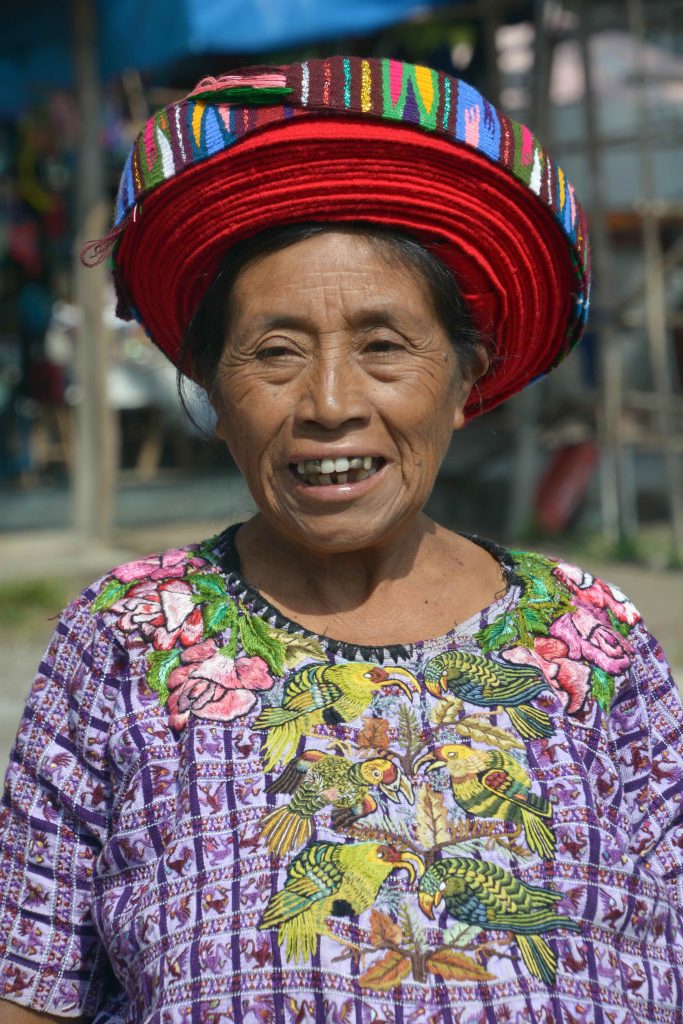
The textile tradition here also connects beautifully with Santiago’s contemporary art scene. That is one reason I recommend combining textile shopping with a cooperative visit and, if you have time, Gerardhi Mesía’s embroidery-art studio.
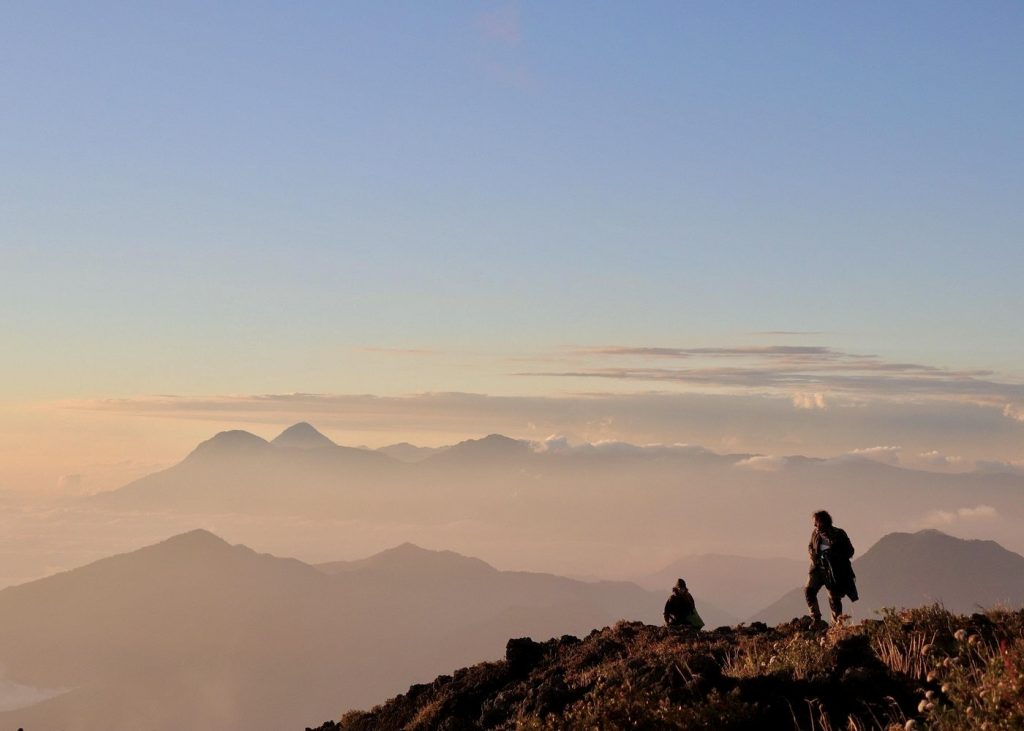
Volcán Atitlán: The Hardest Hike at the Lake
Volcán Atitlán rises to 3,537 meters above sea level. The starting point is Santiago, sitting at around 1,592 meters — meaning close to 2,000 meters of vertical elevation gain in one ascent. The route goes through coffee farms, dense cloud forest, and steep volcanic terrain with loose footing. Most climbs take 7-10 hours round trip. You start at 3-4 AM. A local guide is required — both for navigation and for arranging access across private land or you can book an Atitlán volcano hiking tour.Atitlán volcano hiking tour. My Lake Atitlán hiking guide covers what to expect on this route in detail.
⚠ BEFORE YOU ATTEMPT VOLCÁN ATITLÁN
This is not a casual trail hike. Do not attempt the volcano without a knowledgeable local guide, altitude acclimatization and genuine hiking fitness. The pre-dawn start means navigating in the dark for the first portion. I can connect my travel-planning clients with guides I trust in Santiago.
Sunrise and Birding at Rey Tepepul: One of My Favorite Mornings in Santiago
If you are a birder — or simply want one of the best sunrise views around Santiago — put Rey Tepepul high on your list. My guide picked me up directly at Orilla before sunrise. We first went to the viewpoint, where watching the first light spread over the lake and volcanoes was spectacular, and then continued into the forest for birding.
The hike itself is moderate rather than easy. There are sections of climbing and enough elevation change that I would not describe it as a simple nature walk. I was also there at a less-than-ideal time for both quetzals and migratory birds, and I still came away with 15 lifers. My highlights included an Azure-rumped Tanager that practically posed for photos, Flame-colored Tanager, Chestnut-capped Brushfinch and Rusty Sparrow.
I have birded at Los Tarrales, which is not far away and shares some species, but Rey Tepepul sits higher and gave me a noticeably different mix of birds. That elevation difference is exactly why serious birders should consider both. Orilla is also a particularly convenient base for this outing because it is close to the Rey Tepepul area.
BIRDING AND LOCAL GUIDES
Want to Do This With the Guide I Used?
I don’t publish my guide contacts publicly, but I can arrange Rey Tepepul birding, local cultural experiences and other Santiago activities as part of a custom Guatemala itinerary.
Try the Temazcal at Tiosh Abaj
One of the things I especially enjoyed during our stay at Hotel Tiosh Abaj was the temazcal. Having it right on the property made it easy to build into a slower afternoon instead of treating it as another excursion. Combined with the pool, huge gardens and lakefront setting, it is one of the reasons I think Tiosh Abaj offers so much value for travelers who want a full-service stay in Santiago.
My full article on temazcal in Guatemala explains the history of the tradition, what to expect and how a hotel temazcal differs from a ceremonial experience.
Take a Cultural Tour: Santiago Makes More Sense With Context
I explored plenty of Santiago independently, but I am very glad I also took a local cultural tour. Ours tied together a viewpoint, a textile and art cooperative, the Church of Santiago Apóstol, Parque de la Paz, Maximón and the grave of Concepción Ramírez, the Tz’utujil woman whose profile appears on Guatemala’s 25-centavo coin.
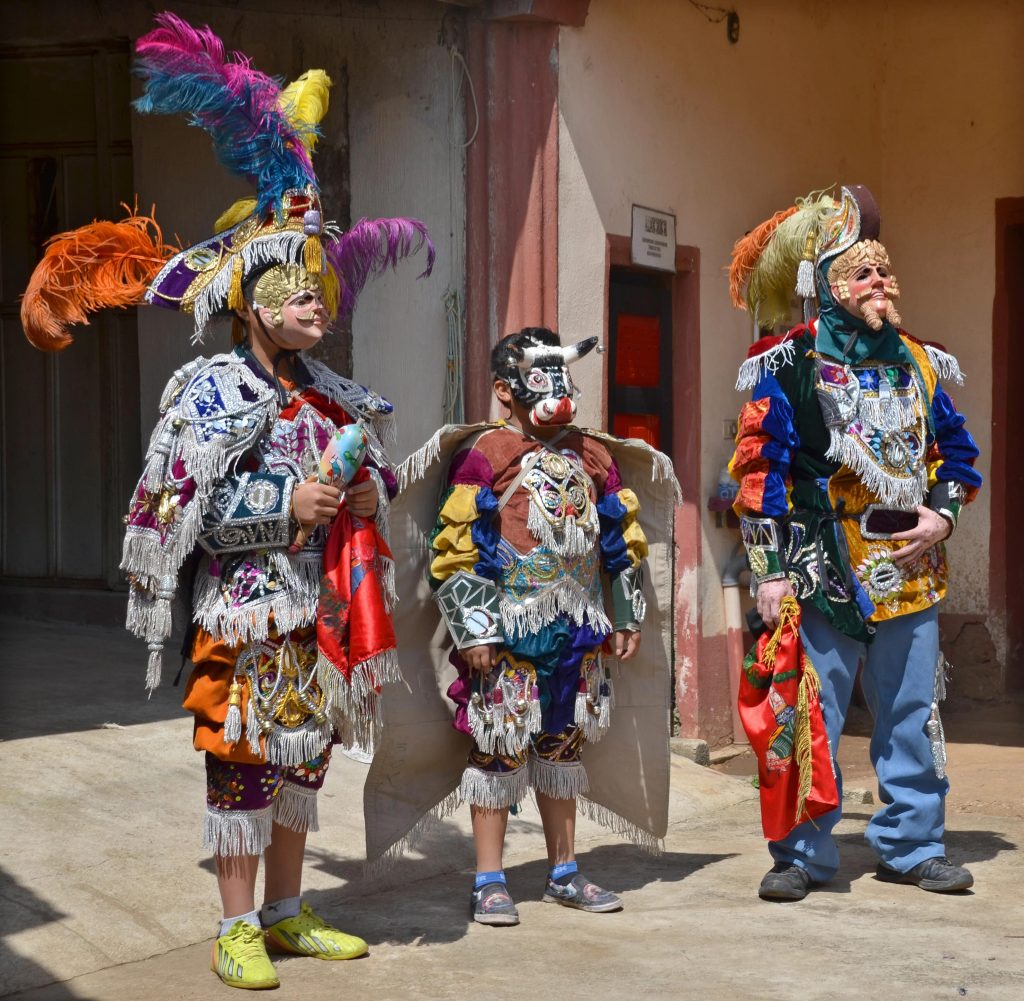
Those places are easy enough to physically reach on your own. What a good guide adds is the relationship between them: the textile iconography, the cofradía system, the civil-war history, the meaning of the tocoyal, and why Catholic and Maya traditions sit so visibly beside one another here. I also love that Santiago is the kind of place where you should leave room for things you cannot schedule. On this trip I happened to run into a traditional dance in the street simply because I was walking around at the right moment.
✨ MY PLANNING TIP
If Santiago is one of the cultural priorities of your Guatemala trip, I would do the guided overview first and then return independently to the market, textile shops, restaurants or artists that interest you most. I can arrange trusted local guides as part of my custom Guatemala travel-planning service.
Guatitland: Fun for the Animals, But Not a Santiago Priority for Me
We also went to Guatitland because my daughter wanted to see the llamas and because patín appeared on the menu. The setting has pretty lake and volcano views and the small farm can be fun if seeing the animals is specifically something you want to do. But I would not put it high on a first-time Santiago itinerary.
The patín was not being prepared the day we visited, even though it was on the menu, and reaching the farm area involved walking roughly five blocks through coffee plantations. That was especially relevant for us because one member of our family has limited mobility. If your time in Santiago is short, I would prioritize Maximón, the church, the market and textiles, a cultural tour, Chuitinamit or Rey Tepepul before making the trip out here.
FOR DAY VISITORS
How to Spend a Morning in Santiago Atitlán
This is the sequence I give people who have one morning. It works. Follow it in order.
7:30 AM — Arrive and go straight to the market
Take the first available lancha from Panajachel. Walk up from the dock toward the market area. This early, it belongs to local people. Buy a coffee. Walk slowly. Try patín from a market vendor if it’s available.
9:00 AM — The Church of Santiago Apóstol
Spend 20-30 minutes here. Know the story of Father Stanley Rother before you arrive. Stand in the space with that knowledge. It changes what you see.
9:30 AM — Visit Maximón
Ask a tuk-tuk driver to take you to the current shrine. When I visited in 2026, entrance was Q10 per person, with separate fees for photos/video. Enter respectfully, leave an offering if you wish, and do not rush the visit.
10:30 AM — Cojolya Museum and Weaving Center
Free to enter. Watch the daily weaving demonstration. Buy something if you’re buying textiles — the prices here are fair and the women made it. This is the most ethically grounded shopping you’ll do in Guatemala.
11:30 AM — Parque de la Paz, then lunch
Walk through Parque de la Paz and sit for a moment. Then choose lunch based on what you want: Don Cangrejo for patín and traditional dishes, Le Antigua for fresh homemade pasta in the center, or Las Lagartijas for a huge casual menu with vegetarian and some gluten-free choices. If the lake is already getting windy, build in extra time before your return boat.
FOOD AND DRINK
What to Eat in Santiago Atitlán
Santiago has specific food worth knowing before you arrive. It does not have the international restaurant scene of San Pedro or the espresso culture of San Marcos — and that is exactly what makes it interesting. The food here is connected to the lake, to the land, and to a culinary tradition that predates tourism at Atitlán by centuries. For a deeper look at Guatemalan food culture, my guide to Guatemalan food gives the full picture.
Patín: The Dish of Santiago Atitlán
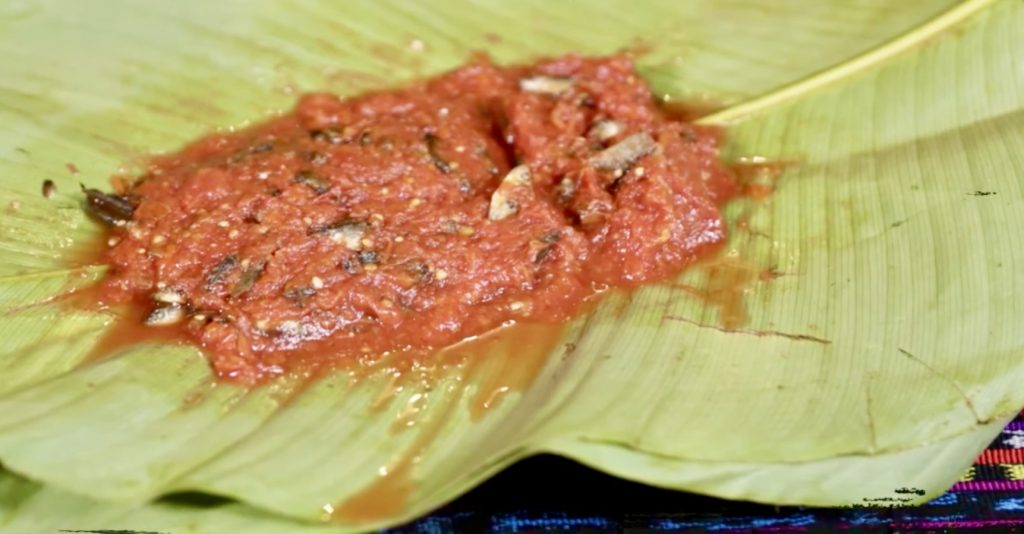
Patín is the dish of this town. The name comes from the Tz’utujil word patii’n, referring to the texture of the preparation. In its traditional form, it’s small dried fish from the lake — pescaditos — in a thick tomato sauce made with chile guaque, wrapped in hoja de maxán, a plant native to the hills around Santiago. The classic version rests for at least 24 hours before being served, which deepens the flavor considerably. It is eaten with tortillas instead of cutlery, accompanied by avocado and white rice.
The market version — sometimes called patín de viajero — uses cecina (dried beef), shrimp, chicken, or mojarra in place of the pescaditos, with a quicker preparation. Both versions are worth trying. Market vendors sell it wrapped in the leaf; you’ll find it on a Sunday morning near the main stalls. Order it, sit down, and eat it the way it’s meant to be eaten.
If trying patín is important to you, my first recommendation is Don Cangrejo. We went specifically for this dish and ended up seeing the full preparation process. We tried a mixed patín with cecina, shrimp and small fish; the cecina version was my favorite, while the pescaditos were stronger and better suited to adventurous eaters. We also tried pepián served in hoja de maxán, mojarra, seafood soup and chipilín soup, which made this one of the most useful meals of the trip for understanding traditional local food.
Other Local Dishes and Drinks
Mojarra — freshwater fish from the lake — appears on menus at several restaurants in town, usually grilled whole and served with rice and tortillas. Caldo de res, beef broth with cooked cabbage, is the dish reserved for special occasions like weddings and baptisms; if you see it on offer, you’re eating what this community serves at its most important gatherings.
Horchata in Santiago is not the Mexican rice-water version. Here it’s made with sesame seeds (ajonjolí) and pepitoria (pumpkin seeds), ground by hand and served cold. If you see a vendor with it in the market, get one. It is nothing like what you’ve had before.
WHERE TO EAT
Best Restaurants in Santiago Atitlán: Where I Would Eat Again
On this trip I made a point of eating at very different kinds of restaurants around Santiago, from a tiny casual place with a gigantic menu to a sunset dinner beside the lake. These are the places I can now recommend from firsthand experience rather than simply from reviews.
✨ ALSO WORTH KNOWING: HOTEL BAMBÚ
The restaurant at Hotel Bambú is another beautiful place for a meal with a view. The gardens are lovely and the restaurant looks back toward Santiago and the lake. I would especially consider it for lunch or an unhurried meal if you are already staying on that side of town.
EVENINGS AND BARS
Nightlife in Santiago Atitlán
Santiago is not a nightlife town, and that is not a criticism. The bar across the street from Posada de Santiago — operated by the same owners — has lake views and a full drink menu, and it functions as the social hub for the small number of travelers who stay in town. That’s where you’ll end up if you want an evening drink with a view, and it’s pleasant. A few other spots near the central plaza serve beer and simple food into the evening.
If you want the full lake nightlife scene — bars, live music, a backpacker social circuit — base yourself in San Pedro La Laguna and day-trip to Santiago. That’s a completely legitimate choice, and the two towns complement each other well. What Santiago offers after dark is something different: the plaza at night, the lake quiet, the stars over the volcanoes. That’s the evening here.
TIMING YOUR VISIT
Best Time to Visit Santiago Atitlán
By Season
November through April is the dry season and the most comfortable time to visit Lake Atitlán generally. Mornings are clear, the volcanoes are visible, and the lake is calmer. The volcano hike is most reliably done in the dry season — cloud cover during rainy season (May through October) often closes off the summit view. That said, the lake’s microclimate means rain can happen any month, and the wet season brings its own lush green quality to the landscape. My seasonal guide to visiting Guatemala gives the full picture across the country.
By Day of Week
Sunday is the single best day to visit because of the market. If you can only go one day, go Sunday and arrive early.
Festivals and Key Dates
📌 DATES WORTH PLANNING AROUND
July 23-27 — Feria Patronal. The main annual festival honoring Santiago Apóstol. July 25 is the principal day. Traditional dances, processions, community events — organized for the town, not for tourists who happen to be there.
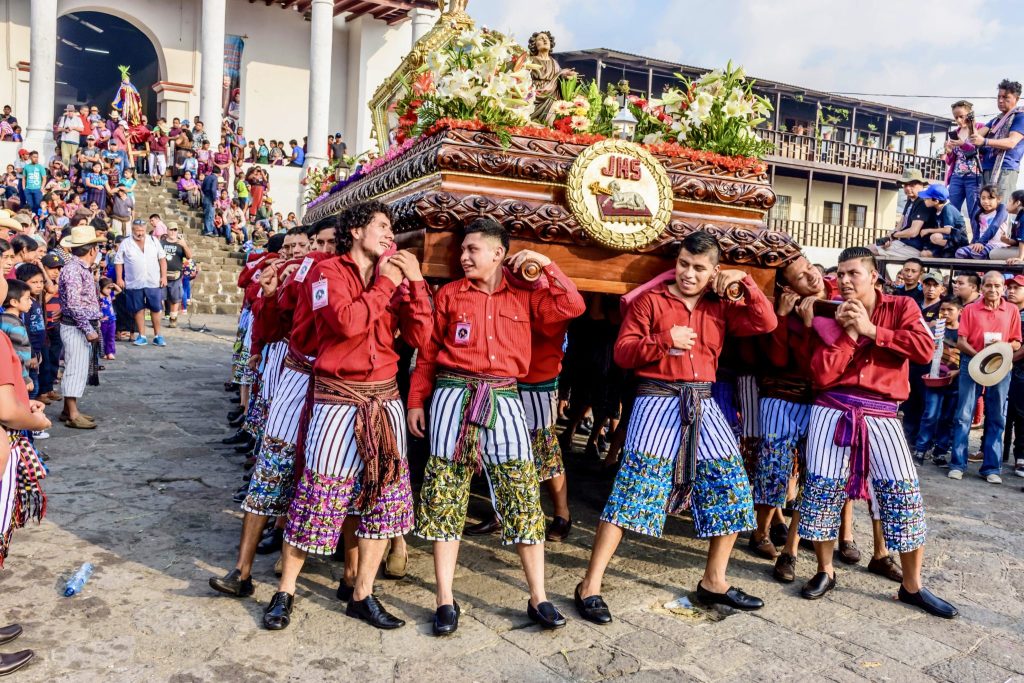
Holy Week (March or April, variable) — Semana Santa. Santiago’s Holy Week is one of the most significant at the lake, blending Catholic processions with Tz’utujil ceremonial tradition in ways no other town on the lake replicates. My full guide to Semana Santa in Santiago Atitlán covers what to expect. Also see my broader guide to Holy Week across the lake villages.
December 2 — Commemoration of the 1990 Massacre. A Mass held at the Parque de la Paz. Not a tourist event, but visitors who are present should be aware of what this day means.
November 1-2 — All Saints Day and Day of the Dead. Connected to Maximón traditions and the cofradía calendar. The ceremonies around this period are active and meaningful in Santiago.
Every Sunday — Market Day. The most consistent reason to plan your visit around a specific day of the week.
💡 Time of day matters: Arrive in the morning. The Xocomil wind comes up after noon most days and makes the return crossing rough. Everything in Santiago is better before midday.
Before You Finalize Your Santiago Day
Some of What I Know About This Town Doesn’t Live on a Booking Platform
I have a contact for private lanchas if you want to be on the water before the crowd. A woman who teaches weaving in her home, not a cooperative showroom. A kitchen where you actually cook the food, not watch someone else do it. These are contacts I’ve built up over years of bringing people here. I share them personally, not publicly. Get in touch and tell me what kind of visit you’re planning.
ACCOMMODATION
Where to Stay in Santiago Atitlán: My Top Picks After Staying Here
After this most recent trip, I would choose where to stay based less on which property looks fanciest online and more on how you want to experience Santiago. I stayed at both Tiosh Abaj and Orilla Casas en Ati, visited Hotel Bambú, and had dinner at Los Olivos while also touring several of its rooms. Those firsthand experiences changed how I rank the options.
⭐ MY BEST-VALUE HOTEL IN SANTIAGO
Hotel Tiosh Abaj: Best for Staying In to Town Without Giving Up the Lake
Tiosh Abaj is now my first recommendation for travelers who want a traditional full-service hotel in Santiago at a very good value. The location is a huge part of that. You are on a quiet street but still close enough to the main dock, church, market, stores and restaurants that getting around is easy even if you do not have a car.
We stayed in the Junior Suite, room 24, and it was enormous: three beds, a fireplace and a balcony with beautiful views. The property itself feels much larger than you expect from the street, with colorful paths, fountains, flowers and so many birds that I was constantly stopping in the gardens. It runs all the way down to the lake and has its own dock. The view of Volcán San Pedro from the dock area is spectacular.
We also used the pool, did the temazcal and appreciated having breakfast included. For a family, those amenities plus the space and location make the value hard to beat. The two caveats I would keep in mind are that there is no elevator and the neighboring church can be audible during the day, especially on Sundays.
⭐ MY TOP VACATION RENTAL / AIRBNB
Orilla Casas en Ati: Best for Privacy, Nature and Your Own Space
Orilla was our family’s favorite stay on this Lake Atitlán trip. Instead of a hotel room, you get one of only two private modern houses tucked into an avocado grove directly on the lake. We stayed in Casa Teo, which gave the three of us two bedrooms, two bathrooms, a full kitchen, generous living space, a private jacuzzi, terrace and fire pit.
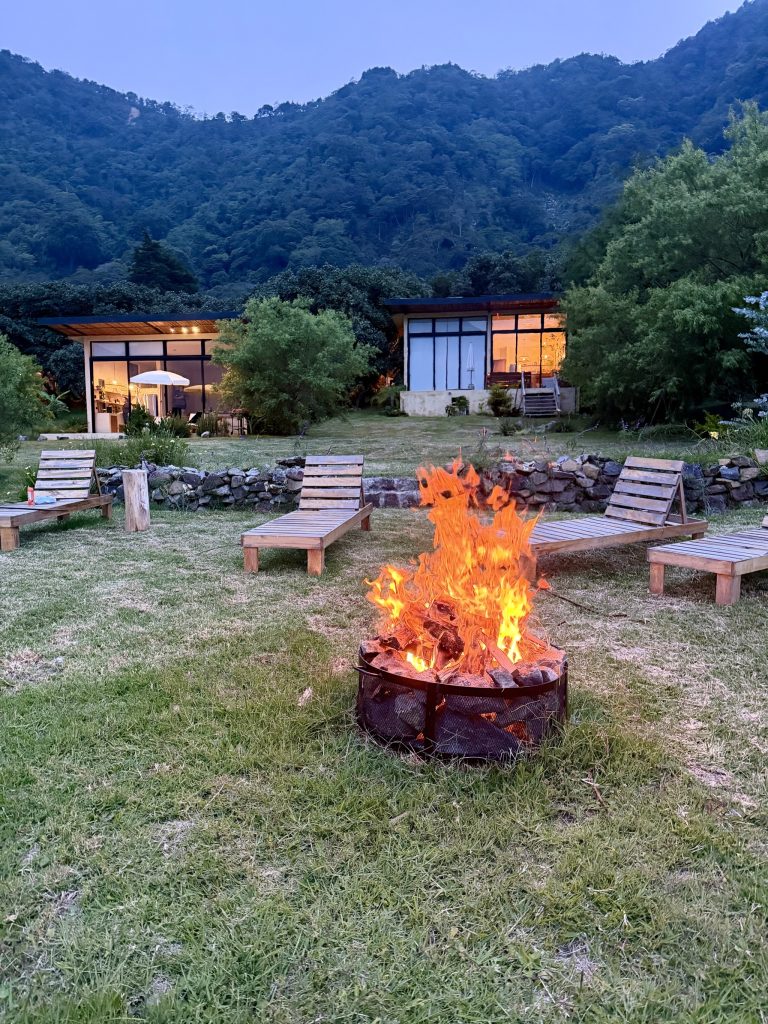
What I loved most was the sense of privacy. We could cook breakfast, watch hummingbirds in the flowers, read by the lake and come back from a day in Santiago to our own space. It also has direct road access and secure parking, so you get that secluded Lake Atitlán feeling without a boat-only arrival. And for birders, the location is especially good because Orilla is very close to Rey Tepepul.
I would choose Orilla over a hotel when the property itself is part of the vacation: families who want room to spread out, couples who want a romantic private stay, road trippers and anyone who is happy making some of their own meals. If you want a restaurant, front desk and pool downstairs, a regular hotel is the better fit. But if you’re looking for a vacation rental in Santiago, Orilla is my first choice.
Read my full Orilla Casas en Ati review →
⭐ BEST FOR QUIET + ROMANCE OUTSIDE TOWN
Hotel Los Olivos
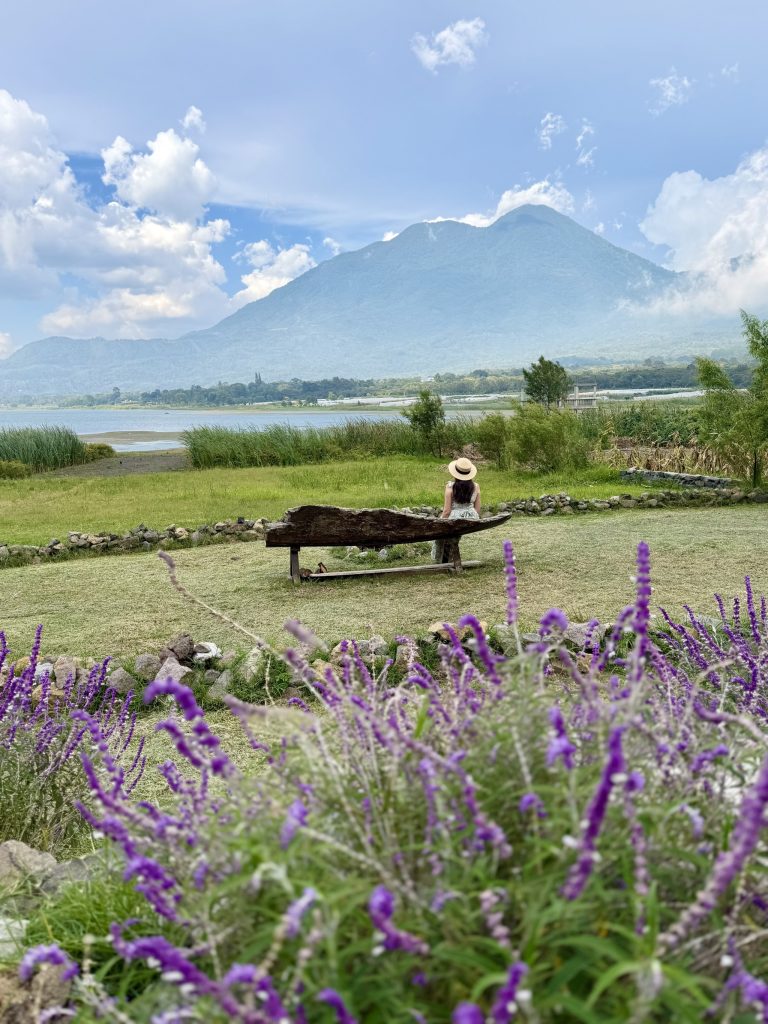
We did not stay at Los Olivos, but we went for dinner and I asked to see the rooms because I was considering it for a future stay. The property feels spacious and quiet, with large gardens, a pool and wonderful views toward Lake Atitlán and the volcanoes. The rooms I saw were large and nicely decorated, and many look over the gardens with the lake and volcanoes behind them.
Because it sits outside the center, I would choose Los Olivos when tranquility matters more than walking everywhere. A car is convenient, although a tuk-tuk gets you into Santiago. The excellent restaurant is another reason I would consider staying here, especially for couples.
ANOTHER BEAUTIFUL OPTION
Hotel y Restaurante Bambú
Hotel Bambú has lovely gardens and a very good restaurant with beautiful views across the lake toward Santiago. I enjoyed visiting the property, but I would rank it below Tiosh Abaj if your goal is to spend a lot of time exploring the center on foot. It is farther out, so walking to the dock, main street and stores is less convenient and you are more likely to rely on a tuk-tuk. Choose it when the gardens, views and a quieter hotel setting matter more than being close to everything.
✨ HOW I WOULD CHOOSE
Tiosh Abaj for the best combination of value, location and hotel amenities. Orilla when privacy and the property itself are part of the trip. Los Olivos for a quiet or romantic stay with a strong restaurant. Bambú for gardens and views if you do not mind being more dependent on tuk-tuks.
For a deeper comparison, see my complete guide to where to stay in Santiago Atitlán. If you are comparing Santiago with other Lake Atitlán towns, my Lake Atitlán hotels and vacation rentals guide puts the choices in context.
Renting a car makes the most sense for getting from Antigua or Guatemala City to Panajachel. Once you’re at the lake, the lanchas handle everything — you will not need a car. But having one for the first leg gives you flexibility on arrival and departure timing without depending on shuttle schedules.

Planning Santiago Beyond the Usual Day Trip?
I Can Build Rey Tepepul, Chuitinamit and Cultural Experiences Into Your Trip
My own Rey Tepepul morning produced 15 lifers even outside peak quetzal and migration season, and the right local guide made a huge difference. I work with trusted local contacts for birding, cultural tours, private lanchas and harder-to-arrange Santiago experiences, and I share those contacts through my travel-planning service rather than posting them publicly.
QUESTIONS PEOPLE ASK
Santiago Atitlán: Your Questions Answered
Is Santiago Atitlán worth visiting?
Yes, without qualification. Santiago Atitlán is the most culturally and historically significant town on Lake Atitlán. It is the heartland of the Tz’utujil Maya, home to the living tradition of Maximón, site of a colonial church that holds the heart of Guatemala’s first recognized martyr, and the community that expelled the Guatemalan army in 1990 through collective resistance. A morning here with proper context is worth more than a week of the sanitized lake experience.
What is Santiago Atitlán known for?
Santiago is known primarily for Maximón (Rilaj Mam), the living spiritual figure venerated by the Tz’utujil Maya. It’s also known for the colonial Church of Santiago Apóstol and the legacy of Blessed Stanley Rother, the Santiago Atitlán huipil textile tradition, the 1990 massacre and the community’s expulsion of the army, the Volcán Atitlán hike, the Sunday market, and the Cojolya weaving museum and cooperative. It is the largest town on the lake and the largest Tz’utujil Maya municipality in Guatemala.
What language is spoken in Santiago Atitlán?
Tz’utujil is the primary language of daily life — spoken in the market, on the street, at home. Spanish is also spoken, particularly in commercial and government contexts. You will hear Tz’utujil throughout town. It is not a language being preserved for cultural reasons. It’s simply the language people speak here.
What is Maximón in Guatemala?
Maximón — Rilaj Mam in Tz’utujil — is a spiritual figure representing a fusion of Maya ancestral belief and Catholic tradition. He is cared for by the cofradías of Santiago and moved between family households each year. Devotees offer candles, rum, cigarettes, and flowers, asking for protection, healing, and guidance. He is a living religious practice. Read my full article on Maximón in Guatemala for the complete picture.
How long to spend in Santiago Atitlán?
A morning is enough for a first look at the church, Maximón, market and one textile stop, but after spending more time here I think two nights is a much better minimum if Santiago genuinely interests you. Add a third night if you want Rey Tepepul birding, Chuitinamit, a cultural tour and enough time to shop and eat without rushing. Staying longer is what turns Santiago from a checklist stop into one of the most memorable parts of the lake.
Why can’t you swim in Lake Atitlán?
Swimming at Lake Atitlán has been affected in some areas by periodic cyanobacteria blooms linked to agricultural runoff and wastewater. The situation varies by area and season. More consistently, the lake’s depth and cold temperatures make open-water swimming risky regardless of water quality. Check current local conditions before entering the water anywhere on the lake.
Is Santiago Atitlán safe for tourists?
Yes. Santiago is a safe destination for travelers who use normal common sense. Keep expensive cameras out of sight in crowded areas, don’t walk the outskirts alone after dark, and be aware of your surroundings as you would anywhere. The town center, the market, the dock area, and the routes to the main sites are all fine. The town sees steady visitor traffic and the community is accustomed to respectful travelers. If you’re concerned about specifics, ask your hotel when you arrive.
KEEP EXPLORING
More From Lake Atitlán and Guatemala
|
LAKE ATITLÁN Why Lake Atitlán Needs to Be on Your Bucket List The big picture — everything you need to know about the lake before you arrive. |
MAYAN CEREMONIES Mayan Ceremonies in Guatemala: A Complete Guide What ceremonies exist, what they mean, and how to engage respectfully. |
|
SEMANA SANTA Semana Santa in Santiago Atitlán The most significant Holy Week at the lake, explained in full detail. |
HOLY WEEK AT THE LAKE Holy Week at Lake Atitlán: Every Town’s Traditions How Semana Santa is celebrated across all the villages at the lake. |
|
BOAT SERVICES Complete Guide to Lake Atitlán Boat Services Routes, prices, docks, and timing — the dock for Santiago is different from the main dock. |
HIKING The Best Hiking Trails in Lake Atitlán Volcán Atitlán, Indian Nose, and every trail worth knowing at the lake. |
|
WITH KIDS Best Things to Do at Lake Atitlán With Kids How to structure the lake experience when you’re traveling with children. |
NEARBY VILLAGE San Antonio Palopó: Pottery and Textiles Another southeastern shore village with its own craft traditions worth knowing. |
This Is My Country
Let Me Help You Show Up to Santiago the Right Way
Every person I’ve brought here has left wanting to come back. Usually because they found something they weren’t expecting: the cooking lesson in someone’s kitchen, the weaving at a real backstrap loom, a private lancha on the water before anyone else was awake. That’s what I help with. Tell me about your trip.
Santiago Atitlán expelled an army through collective dignity, buried its dead with flowers, and kept weaving. The huipiles didn’t change. The Tz’utujil language didn’t stop. Maximón still moves between families every year, still receives his offerings, still watches over his people. This town doesn’t need your validation. But it does deserve your full attention when you arrive.
Through her writing, Paula helps travelers discover Guatemala beyond the typical tourist route with practical advice, local recommendations, and authentic experiences that connect visitors with the country’s people, culture, and traditions.
Planning a trip to Guatemala? Paula offers personalized Guatemala itinerary planning and trip consultation services tailored to your interests, travel style, and budget. Contact her at [email protected] to learn more.
- San Lucas Tolimán Guatemala: Lake Atitlán’s Best-Kept Secret - September 24, 2026
- Hotel Tolimán Lake Atitlán: A Special Stay in San Lucas Tolimán - September 24, 2026
- Guatemala Dreams in San Lucas Tolimán: A Boutique Stay on Lake Atitlán - September 23, 2026

