
If you have spent time around Lake Atitlán, you may have seen women at the market or near the docks selling little bundles wrapped in green leaves and wondered what was inside. One of those bundles might have been patín, one of the traditional foods most closely connected to Santiago Atitlán and the Tz’utujil communities around the lake.
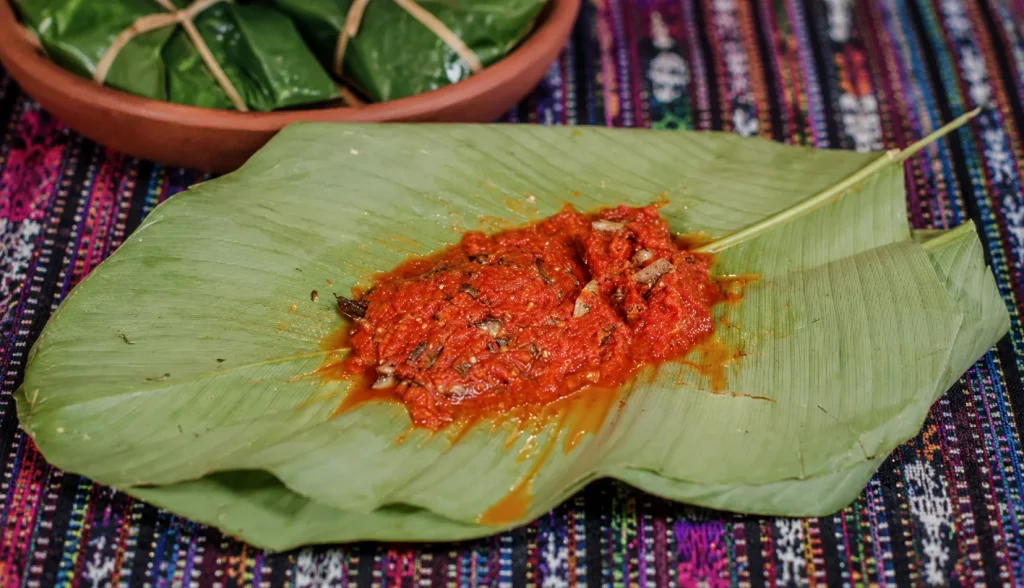
I grew up in Guatemala and have been coming to Lake Atitlán for years, but patín is exactly the kind of dish that reminds me how much there is still to discover about our food. Even many Guatemalans know pepián, tamales and jocón but have never tried patín, or may not even know what it is. And honestly, that is part of what I love about it.
This traditional Guatemalan patín recipe is made with small fish and a thick tomato and chile recado, traditionally wrapped in fragrant maxán leaves. The fish is first toasted and then cooked in the tomato recado before everything is wrapped and left to rest. The ingredient list is surprisingly simple, especially compared with some of Guatemala’s more elaborate recados, but the preparation, the leaf and the resting time are what make it so distinctive.
Patín is nothing like pepián or jocón, two of Guatemala’s better-known recados. There are no layers of seeds and spices competing for attention here. The flavor comes from the fish, cooked tomatoes, chile and the aroma of the leaf they are wrapped in.
It is also one of the best examples of why I think food is such an important part of traveling around Atitlán. Each town has its own traditions, and they change much more than most visitors realize as you move around the lake. I go much deeper into that in my guide to the traditional foods of Sololá and Lake Atitlán.
And if Lake Atitlán is still somewhere on your “someday” list, take a look at why Lake Atitlán needs to be on your travel bucket list. Food like this is one of the many reasons I keep coming back.
What Is Patín?
Patín is a traditional Tz’utujil dish associated especially with Santiago Atitlán, in the department of Sololá.
The traditional fish version combines small fish with a thick recado made mainly from tomatoes and chile guaque. The fish is toasted first, then cooked in the recado so it really absorbs the tomato and chile flavors before being wrapped in maxán leaves and allowed to rest.
One of the things that surprised me when I started digging more deeply into patín is just how few ingredients it actually uses.
Guatemala’s Ministry of Culture and Sports included a traditional version in its Ruta Gastronómica project, shared by Elena Reanda Sisay of Santiago Atitlán. That recipe uses fish from Lake Atitlán, while also noting that patín can be made with cecina, shrimp or chicken. Other local versions use mojarra, which is much easier to find than the tiny fish traditionally used in patín de pescado.
The Ministry also explains that the name comes from patii’n, a Tz’utujil word describing the texture of the food.
So despite the slightly funny name for Spanish speakers—because patín usually makes us think of a skate—this is not a generic Guatemalan fish dish that happens to have an unusual name. Its roots are very specifically tied to Tz’utujil culture around Lake Atitlán.
The History and Cultural Importance of Patín in Santiago Atitlán
The more I learn about traditional foods around Lake Atitlán, the more I realize that looking at a recipe by itself only tells half the story.
Patín is a perfect example.
Santiago Atitlán’s cultural inventory lists several traditional forms of the dish:
- Patín de viajeros
- Patín de gallina
- Patín de ceremonia
- Patín de cecina
For me, that is what makes patín so interesting. It is not simply “a fish recipe from Guatemala.” Different versions have been connected to everyday food, travel and ceremonial traditions.
Santiago itself is one of the most culturally fascinating towns around the lake. It is the home of deeply rooted Cofradía traditions and Maximón, one of Guatemala’s most fascinating religious figures, and food is part of that same living cultural fabric.
I especially love visiting Santiago during Semana Santa, when traditions become even more visible throughout town. My guide to Semana Santa in Santiago Atitlán goes into everything happening there during Holy Week.
Patín also shows why I do not like talking about “Lake Atitlán cuisine” as though every village eats the same food.
Take a boat from Santiago to San Pedro, San Juan or Santa Cruz, or travel around the lake to San Antonio Palopó, a Maya village known for its beautiful pottery and textiles, and the traditional foods change right along with the town.
Patín, however, is one dish I would especially associate with Santiago Atitlán.
Why Is It Called Patín?
This was one of the first things I wanted to know too.
Outside the kitchen, the Spanish word patín usually means a skate or roller skate, so the name sounds a little odd if you have never heard it in this context.
According to Guatemala’s Ministry of Culture, the name comes from patii’n, a Tz’utujil word referring to the texture of the dish.
I think that detail matters because it is another reminder that patín is rooted in Tz’utujil culture rather than simply being one more entry on a generic list of “Guatemalan foods.”
Fish From Lake Atitlán—and What You Are More Likely to Find Today
Traditionally, patín was made with very small fish from Lake Atitlán, including fish that could be dried and salted before being used in the dish.
Today, those small lake fish are much harder to find commercially than they once were.
That means the patín you encounter around Santiago may not always be the tiny-fish version. Cecina is also a traditional preparation, and you may see patín made with dried beef and wrapped in banana leaf.
You may also find patín de mojarra. Mojarra is a much easier fish to find than the tiny lake fish, which makes this one of the more practical fish versions to recreate if you want something closer to the traditional dish without tracking down very small whole fish.
All of these have a place in the tradition, but they are different versions.
When I am looking for foods like this around Guatemala, I have learned not to rely only on restaurant menus. Markets are often much more revealing. In Santiago, it is worth asking specifically what kind of patín is available rather than assuming every leaf-wrapped bundle contains the same thing.
Patín de Viajeros: Food Made for the Road
One of my favorite details about patín is the idea of patín de viajeros, or travelers’ patín.
Long before anyone had coolers or plastic containers, food still needed to travel.
Patín could be wrapped securely in leaves and carried on long journeys, and the traditional preparation was valued because it could keep for several days. Santiago Atitlán’s cultural inventory still includes patín de viajeros as one of the town’s traditional forms of the dish.
I love this because it turns something as simple as a leaf into part of the story.
The leaf was not a decorative restaurant presentation. It was wrapping, transport and protection all at once.
Traveling around Lake Atitlán is considerably easier today—you can cross from village to village by public lancha—and my complete guide to Lake Atitlán boat services explains exactly how the boats work if you are planning to explore several towns.
Different Types of Traditional Patín
Another thing I did not realize until I started researching this dish more closely is that patín is not one single recipe.
Patín de Pescado
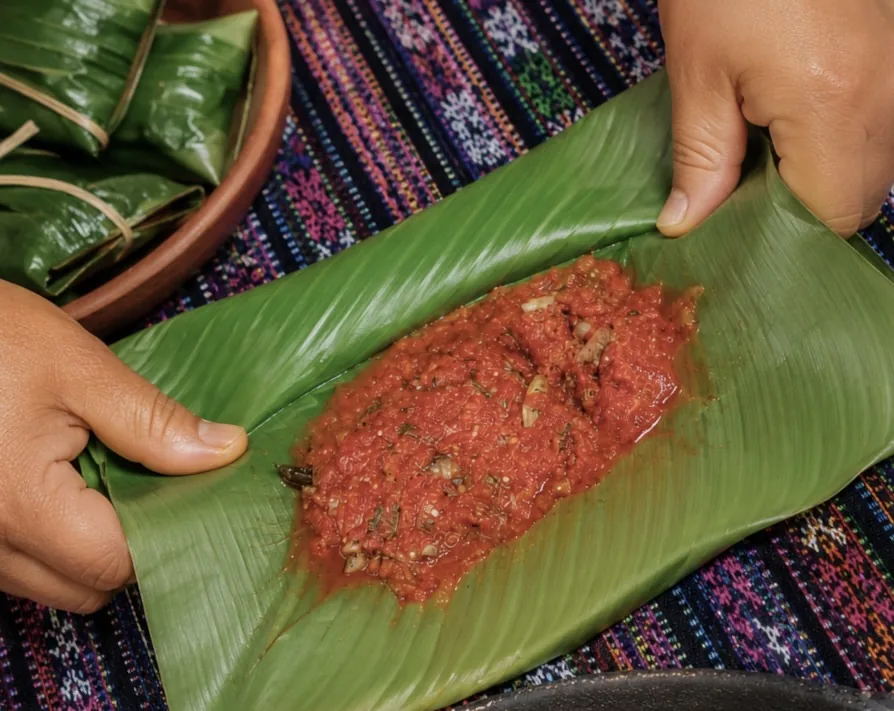
This is the version most people think of when talking about traditional patín from Santiago Atitlán. One of the best-known versions uses small fish, tomato, chile guaque and maxán leaves. The fish is toasted first and then cooked for at least 10 minutes in the thick tomato recado before being wrapped. This is the version my recipe below is based on.
You can also find patín made with other fish, including mojarra. If you are making patín at home, mojarra or a similar fish can make the recipe much easier because it is far more widely available than the tiny fish traditionally used around Lake Atitlán. The finished texture will be different, but it is still a traditional variation of fish patín.
Patín de Gallina
Chicken is another traditional variation.
Patín de gallina appears specifically in Santiago Atitlán’s cultural inventory. The basic idea remains the same—protein combined with the tomato and chile preparation and wrapped in leaves—but naturally the finished flavor and texture are quite different from the fish version.
Patín de Cecina
Patín de cecina is made with dried or cured beef and is also part of Santiago Atitlán’s traditional gastronomy.
Because small lake fish are harder to find today, this is one of the versions you may be more likely to encounter being sold around town.
So when someone tells you they tried patín in Santiago, it is worth asking which kind.
Patín de Ceremonia
Santiago Atitlán’s cultural inventory also lists patín de ceremonia.
There is much less information available about exactly how this version differs or during which ceremonies it is traditionally prepared, and I do not want to fill in those gaps with guesses.
What we do know is that food continues to be closely tied to ceremony and spirituality in many Maya communities. I talk more about that broader cultural context in my guide to Mayan ceremonies in Guatemala.
Ingredients for Traditional Guatemalan Patín
One of the things I really like about this recipe is how short the ingredient list is.
This version is adapted—roughly doubled to make a more practical home batch—from the traditional recipe shared by Elena Reanda Sisay of Santiago Atitlán through Guatemala’s Ministry of Culture and Sports.
- small whole fish, cleaned
- ripe tomatoes
- chiles guaque, stemmed and seeded
- maxán leaves, or thawed banana leaves if maxán is unavailable
- chiltepe chile, crushed, optional
- Salt, to taste
Guatemalan recados usually have a lot more ingredients. The simplicity of the tomato, chile and fish is part of what makes patín taste like patín.
Ingredient Notes
What Fish Should You Use?
Traditionally, patín was made with very small fish from Lake Atitlán.
Obviously, that is not an ingredient most people following this recipe outside Guatemala are going to be able to find and honestly, it can be difficult to source even around the lake today.
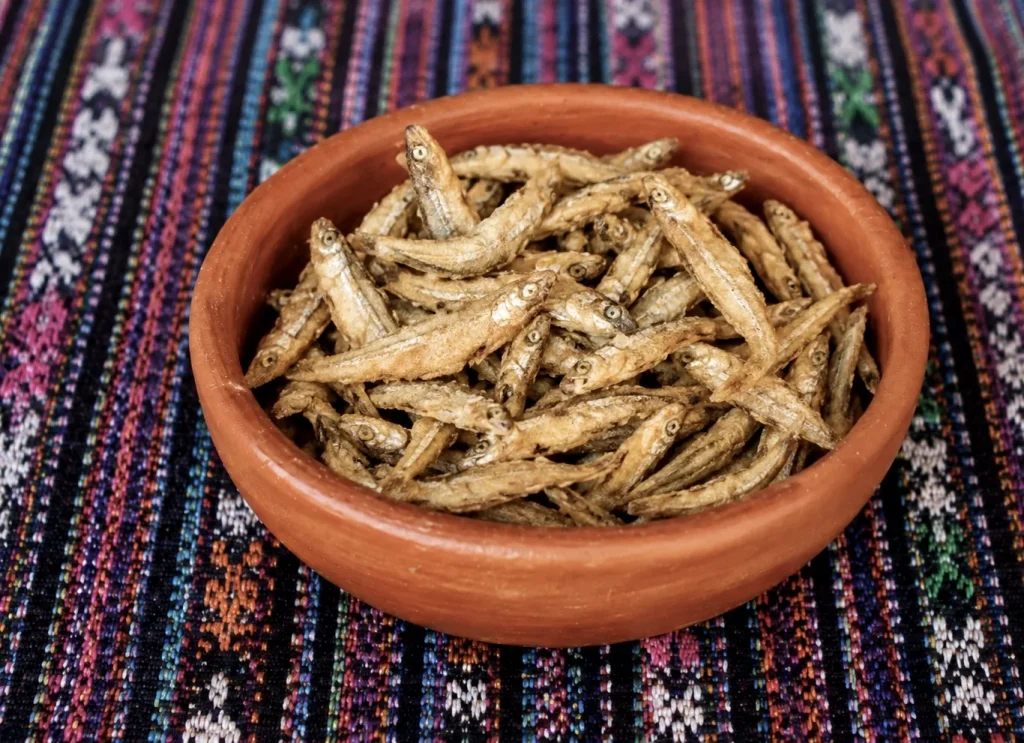
For a practical substitute, look for small whole fish such as:
- Smelts
- Sardines
- Whitebait
These work well because they are small enough to toast whole, which keeps the preparation closer to the traditional technique.
Another great option is mojarra. Patín de mojarra is also prepared around Santiago Atitlán, and mojarra or a similar whole fish is much easier to find than the tiny lake fish. If you are using a larger fish, use manageable pieces and make sure the fish cooks completely through in the recado; larger pieces may need more than the minimum 10 minutes.
Tilapia is another practical option if mojarra is not available.
It will not be exactly the same as patín made with tiny Lake Atitlán fish, but I would much rather give you an honest, workable substitute than pretend an ingredient is easy to find when it is not.
Chile Guaque
Chile guaque is one of those ingredients that comes up again and again in Guatemalan cooking.
It is a dried chile with a moderately smoky, slightly sweet flavor. In this recipe, it does not create a complicated sauce. Instead, it deepens the tomatoes and gives the recado more character without overpowering the fish. That is very different from the role chiles play in something like pepián, where several roasted ingredients build layer upon layer of flavor.
If you cannot find chile guaque, dried guajillo chile is the closest practical substitute.
Maxán Leaves
Maxán is one of those ingredients that immediately feels familiar to me because it appears in so many traditional Guatemalan foods.
The broad green leaves come from Calathea crotalifera and are used throughout Guatemala to wrap foods before cooking or resting.
You may already recognize maxán as the leaf traditionally used for tamales colorados and in dishes such as subanik.
With patín, the leaf is not just wrapping. Its aroma becomes part of the finished dish as the patín rests.
Outside Guatemala, maxán can be frustratingly difficult to find. Frozen banana leaves are much easier to buy at Latin American and Asian markets and are the most practical substitute. They will work, but they are not exactly the same.
To make either maxán or banana leaves easier to fold, pass them briefly over an open flame or hot burner until the leaf darkens slightly and becomes soft and pliable.
How to Make Traditional Guatemalan Patín
What I find especially fascinating about traditional patín is that the process is just as important as the ingredient list.
The version I learned to prepare over a wood fire really brought that home for me: tomatoes slowly softening over the fire, the recado being worked on the stone, and those tiny fish disappearing into this intensely red tomato mixture as they cooked together.
You do not need an outdoor wood fire or a traditional grinding stone to make patín at home, but understanding where the recipe comes from helps explain why the texture matters.
Step 1: Cook the Tomatoes and Chile
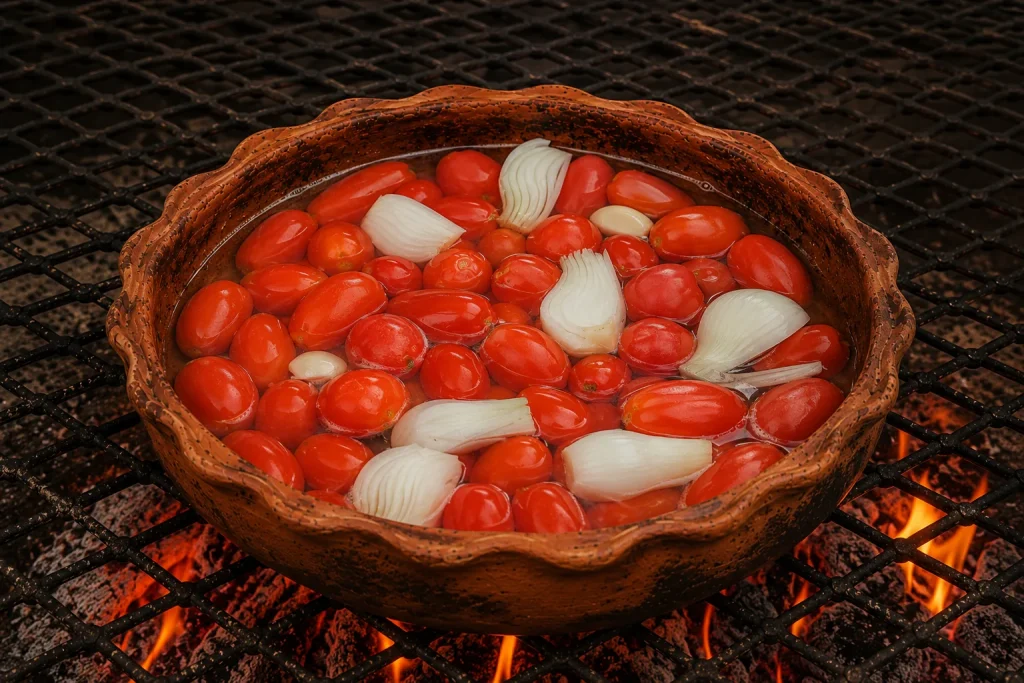
Place the tomatoes and chile guaque in a pot with just enough water to cover them.
Simmer for about 20 minutes, until the tomatoes are completely soft.
You do not want a watery sauce here. Patín needs a thick tomato mixture that will cling to the fish and stay inside the leaf.
Step 2: Grind the Tomatoes Into a Thick Recado
Drain off most of the cooking liquid.
Traditionally, the softened tomatoes and chile can be ground on a stone. At home, a blender makes the process much easier.
Blend or grind everything into a thick recado, then season with salt.
Add crushed chiltepe if you want a little more heat.
I would avoid adding extra liquid unless you absolutely need it. This should look much thicker than a soup or stew.
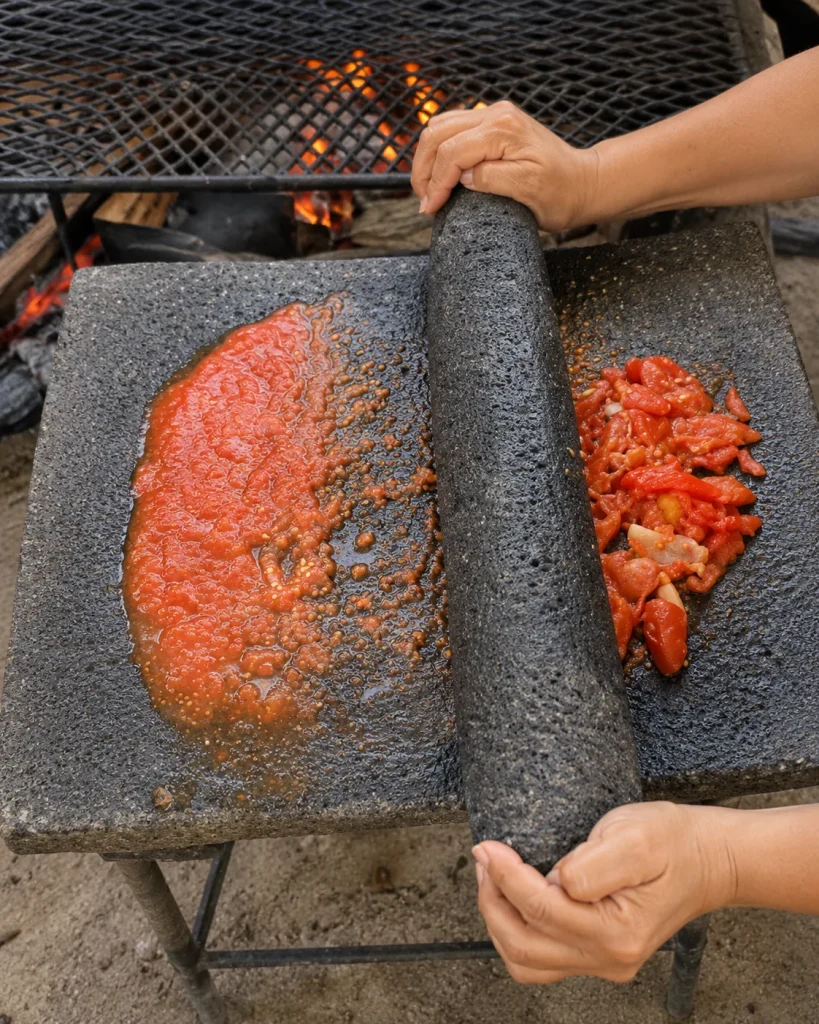
Step 3: Toast the Fish
Place the small fish on a hot, dry comal or heavy skillet.
Toast them for about 10 minutes, turning often, until they begin to brown.
Keep an eye on them. With fish this small, there is not much time between nicely toasted and overdone.
Step 4: Cook the Fish in the Tomato Recado
Once the fish is toasted, add it to the thick tomato recado.
Cook the fish and recado together for at least 10 minutes, stirring gently so the small fish do not completely break apart.
This step is important. The fish is not simply placed into the leaf with sauce spooned over it. Cooking the toasted fish in the recado gives it time to absorb the tomato and chile flavors and lets the sauce thicken around the fish before the patín is wrapped.
If you are using mojarra or another larger fish, make sure it is cooked completely through. Larger pieces may need a little more time.
Step 5: Prepare the Leaves
Wash the maxán leaves and pat them dry.
Pass each leaf briefly over heat or in very hot or boiling water until it becomes flexible enough to fold without cracking.
If you are using frozen banana leaves instead, thaw them completely first and soften them the same way.
Step 6: Assemble the Patín
Lay the leaf flat.
Place a portion of the fish and thick tomato recado in the center.
Add chiltepe if using.
Fold the leaf around the filling to create a secure packet.
Do not worry about making every bundle look perfect. This is food wrapped to hold everything together, not gift wrapping.
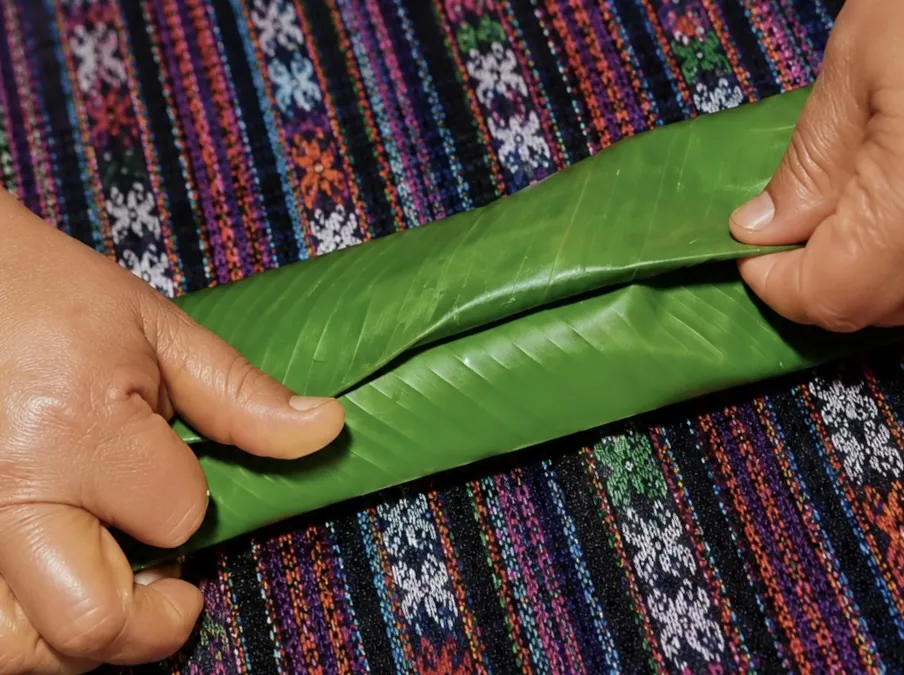
Step 7: Let the Patín Rest
This is the part that surprised me most when I first learned how patín is traditionally prepared. You do not simply make it and eat it immediately.
The traditional preparation calls for letting the wrapped patín rest for at least 24 hours so that the flavors of the fish, tomato, chile and leaf come together.
At home I do that resting time in the refrigerator. Traditional food practices developed in a very different context, and there is no reason to take unnecessary chances with cooked fish.
Step 8: Serve
You can serve the patín at room temperature according to your preference or warm it gently while it is still wrapped.
Open the leaf right at the table and serve with warm corn tortillas and white rice.
What Does Patín Taste Like?
This is probably the hardest question to answer because patín does not taste quite like the Guatemalan dishes most people compare it to.
The recado is much simpler and much more tomato-forward than other traditional Guatemalan dishes like pepián. You taste the fish clearly rather than having it disappear beneath layers of spices and seeds.
Because the toasted fish cooks in the tomato recado before it is wrapped, the sauce really clings to the fish and the flavors become much more integrated than they would if the recado were simply spooned over it at the end.
The chile guaque adds a little smokiness and depth without making the dish particularly spicy, unless chiltepe is added.
That subtle aroma from the maxán leaf is difficult to separate from the rest of the dish once everything has rested together, which is exactly why substituting banana leaf works technically but will never be quite identical.
The texture is also part of what makes patín unusual. The thick recado clings to the fish, so when you eat it with a tortilla it feels almost more like scooping up a rich, rustic mixture than eating fish covered in sauce.
And for me, knowing that this is something people in Santiago have been preparing and carrying in leaf bundles for generations makes eating it much more interesting than the ingredient list alone would suggest.
What to Serve With Patín
Keep this simple.
Traditional accompaniments are:
- Warm corn tortillas
- White rice
The tortillas are honestly my favorite way to eat it because you can tear off a piece and scoop up both the little fish and that thick tomato recado.
White rice makes it a more substantial meal without competing with the flavors.
For something refreshing to drink, I would serve it with a cold rosa de jamaica or Guatemalan horchata.
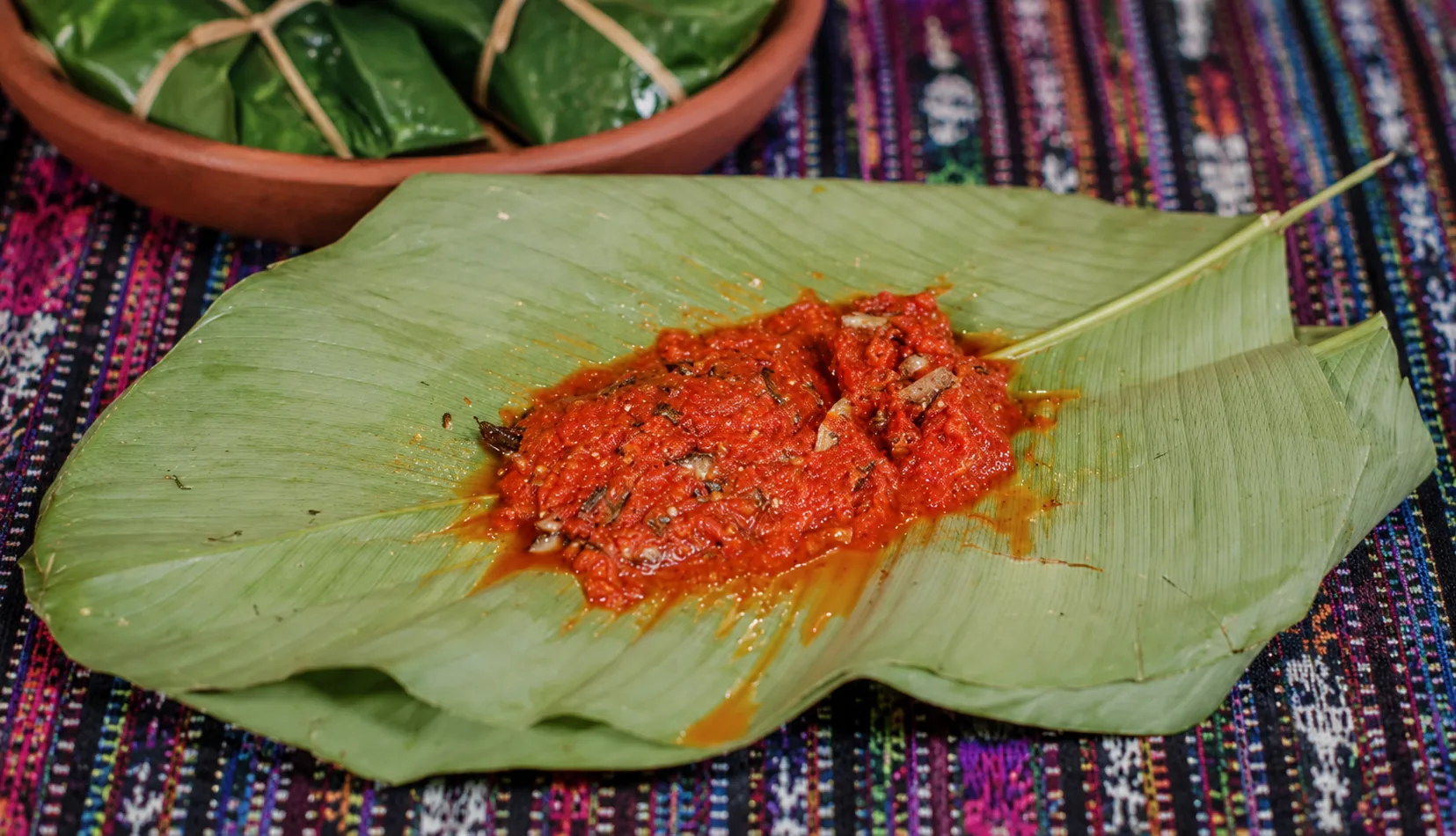
Guatemalan Patín Recipe: A Traditional Dish From Lake Atitlán
This traditional Guatemalan patín recipe is a Tz’utujil dish from Lake Atitlán made with fish cooked in a thick tomato and chile guaque recado, then wrapped in fragrant maxán leaves and allowed to rest so the flavors come together. Patín is especially associated with Santiago Atitlán and can be made with the tiny fish traditionally used around the lake or with larger fish such as mojarra, which is easier to find for home cooking.
Ingredients
- 1 pound small whole fish, cleaned, such as smelts, sardines or whitebait
- OR 1 pound mojarra or a similar fish, cleaned and cut into manageable portions if needed
- 4 pounds ripe tomatoes, quartered
- 4 dried chiles guaque, stemmed and seeded
- 5 maxán leaves, cleaned, or thawed banana leaves as a substitute
- 1 chiltepe chile, crushed, optional
- Salt, to taste
Instructions
- 1. Cook the tomatoes and chile
Place the tomatoes and chile guaque in a large pot and add just enough water to cover them.
Bring to a simmer and cook for about 20 minutes, or until the tomatoes are completely soft.
You do not want a watery sauce, so avoid adding more water than necessary. The finished recado should be thick enough to coat the fish.
2. Grind the tomatoes into a thick recado
Drain off most of the cooking liquid.
Traditionally, the softened tomatoes and chile can be ground on a stone. At home, transfer them to a blender and blend until you have a thick, smooth recado.
Season with salt to taste.
Add the crushed chiltepe if you want a little more heat.
Avoid adding extra liquid unless absolutely necessary. The recado should be thick rather than soup-like.
3. Toast the fish
Heat a dry comal or heavy skillet over medium heat.
Add the cleaned small fish and toast for about 10 minutes, turning frequently, until lightly browned.
Watch them closely, especially if you are using very small fish, since they can go from nicely toasted to overcooked quickly.
If using mojarra or another larger fish, lightly toast or sear the fish on both sides before adding it to the recado.
4. Cook the fish in the tomato recado
Add the toasted fish to the thick tomato recado.
Cook the fish and recado together for at least 10 minutes, stirring or turning the fish gently so it does not fall apart.
This is an important part of making patín. The fish is not simply wrapped with sauce spooned over it. Cooking it in the recado allows the fish to absorb the tomato and chile flavors while the sauce thickens around it.
If using mojarra or another larger fish, cook until the fish is completely cooked through and flakes easily. Larger or thicker pieces may require more than 10 minutes.
Remove from the heat and let cool slightly before wrapping.
5. Prepare the maxán leaves
Wash the maxán leaves and pat them dry.
Pass each leaf briefly over an open flame, hot burner or warm comal until it darkens slightly and becomes soft and pliable.
This makes the leaves easier to fold without cracking.
If using frozen banana leaves, thaw them completely first, then soften them the same way.
6. Assemble the patín
Lay one softened maxán leaf flat.
Place a portion of the cooked fish and plenty of the thick tomato recado in the center.
Add a little crushed chiltepe if using.
Fold the leaf securely around the fish and recado to create a closed packet.
Repeat with the remaining fish and recado.
7. Let the patín rest
Place the wrapped patín in the refrigerator and allow it to rest for at least 24 hours before serving.
This resting time is an important part of the preparation. It allows the flavors of the fish, tomato, chile and aromatic maxán leaf to come together.
For food safety, keep the patín refrigerated during the entire resting period rather than leaving cooked fish at room temperature.
8. Serve
Serve the patín directly from the opened leaf.
You can enjoy it cool, let it sit briefly at room temperature after refrigeration, or warm it gently while still wrapped.
Serve with warm corn tortillas and white rice.
Notes
- Fish: Smelts, sardines or whitebait work well for the traditional small-fish version. Mojarra or tilapia are easier-to-find alternatives; larger pieces may need extra cooking time in the recado.
- Chile: Substitute dried guajillo for chile guaque if needed.
- Leaves: Banana leaves can replace maxán, though the flavor will be slightly different.
- Resting: Refrigerate the wrapped patín for at least 24 hours before serving so the flavors come together.
- Storage: Keep refrigerated and eat within 3 days. Serve with warm corn tortillas and white rice.
Nutrition Information:
Yield: 4 Serving Size: 1Amount Per Serving: Calories: 475Total Fat: 15gSaturated Fat: 2gUnsaturated Fat: 13gCholesterol: 162mgSodium: 380mgCarbohydrates: 57gFiber: 10gSugar: 33gProtein: 34g
Where to Try Patín Around Lake Atitlán
Making patín at home is one thing.
Trying it around Lake Atitlán, where the dish actually comes from, is another.
I would start in Santiago Atitlán, because that is where patín has the strongest cultural connection, but there are a few other places around the lake where you can find it or even learn how to make it.
And if you are planning a Guatemala trip around food and culture, my 5-day Guatemala itinerary covering Lake Atitlán and Antigua is a good starting point.
It is also worth looking at my guide to the best time to visit Guatemala before choosing your dates and my roundup of the best hotels and vacation rentals on Lake Atitlán before deciding where to stay.
Santiago Atitlán
This is where I would look first. Patín is a part of Santiago Atitlán’s traditional gastronomy, including several different versions of the dish.
But I would not go to Santiago expecting to walk into the first tourist restaurant you see and find patín de pescado printed on the menu. Ask. Look around the market. Watch for atiteca women selling leaf-wrapped bundles around town or near the docks.
That is one of the things I love most about searching for traditional food in Guatemala: sometimes the dish you are looking for is not sitting on a laminated menu. You have to know what to ask for.
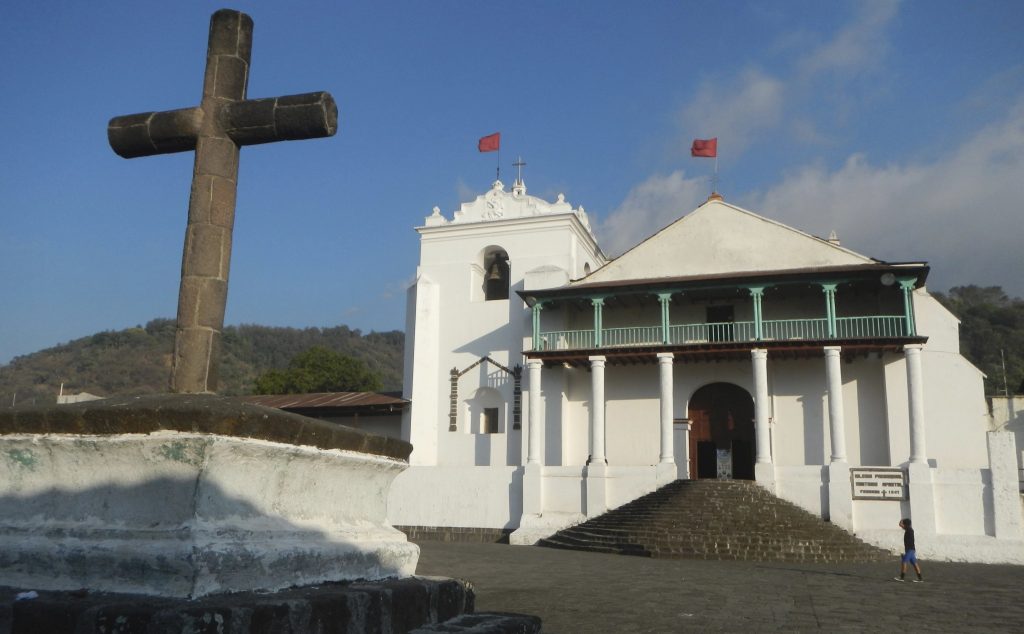
While you are there, give Santiago enough time beyond lunch. It is one of my favorite towns around the lake for culture, from the market and church to the Cofradía of Maximón. My complete local’s guide to Santiago Atitlán will help you plan the visit, and my guide to restaurants in Santiago Atitlán covers where else to eat while you are there.
Guatitland in Santiago Atitlán
If you would rather sit down at a restaurant than hunt for patín at the market, Guatitland is another place to try it.
Guatitland is in San Antonio Chacayá, just outside the center of Santiago Atitlán, right on the lake. Along with lodging and activities, it has a restaurant serving local food, and patín is one of the traditional dishes you can find there.
This can be an easier option if you specifically want to try patín as part of a sit-down meal. I would still contact them before going specifically for the dish, since traditional foods like patín are not always available every day.
Deleite Ancestral in San Juan La Laguna
Another place I would recommend for anyone genuinely interested in traditional Tz’utujil food is Deleite Ancestral in San Juan La Laguna.
This is not the kind of restaurant where you get a huge fixed menu filled with tourist favorites. Esmeralda Pojoy and her partner Josías focus specifically on Tz’utujil Maya cuisine, and what they prepare depends on what is fresh and available. Patín is one of the traditional dishes they work with, along with other Tz’utujil foods that are much harder to find in restaurants around the lake.
What makes Deleite especially interesting is that they also offer traditional cooking classes. For me, that is one of the best ways to experience a dish like patín because you are not simply being handed a plate. You get to experience how the ingredients are prepared, how the leaves are used and why these techniques matter.
Because there is no fixed menu, reserve ahead and ask what they will be preparing that day.
Small, locally run experiences like this are exactly what I look for when I travel around Guatemala. I talk more about why they matter—and how to find them responsibly—in my guide to community tourism in Guatemala.
And while you are in town, my guide to restaurants in San Juan La Laguna has plenty of other places worth trying.
Patín vs. Other Guatemalan Recados
If you already cook Guatemalan food, patín may almost feel too simple when you first look at the ingredients. But that simplicity is exactly what separates it from our better-known recados.
Pepián gets its deep, earthy flavor from layers of toasted seeds, chiles and other roasted ingredients.
Jocón goes in a completely different direction with its fresh green sauce made with miltomate and herbs.
Even revolcado, which also has a tomato-forward sauce, brings in more spices and a completely different protein.
Patín lets just a few ingredients do all the work: tomato, chile, fish and leaf. Toasting the fish and then cooking it directly in the recado before wrapping it is part of what brings those few ingredients together.
That is one of the things I love about Guatemalan food. We talk about “Guatemalan cuisine” as though it is one thing, but recipes from different Maya communities, departments and landscapes can be completely different from one another.
More Traditional Foods From Lake Atitlán and Sololá
Patín is only one tiny piece of the food story around Lake Atitlán.
Once I started researching traditional food town by town, I realized just how much gets lost when we reduce the region to fried fish, tortillas and the same few national Guatemalan dishes.
San Pedro has traditional foods such as pa’t al vapor and local atoles. San Antonio Palopó has B’atz’on and several versions of pulique. Santa Cruz has its own festival foods and dishes made with local greens and pepitoria.
And many of these foods are much easier to find in homes, markets and community experiences than in restaurants catering primarily to visitors.
I go much deeper into all of this in my guide to the traditional foods of Sololá and Lake Atitlán, including where you can actually try some of these dishes today.
For the modern restaurant side of the lake, I also have guides to the best restaurants in Lake Atitlán, restaurants in Panajachel, restaurants in San Pedro La Laguna, and where to eat in Santa Cruz La Laguna.
I actually think reading both kinds of guides together gives you a much better picture of food around Atitlán.
You can have an incredible modern lunch overlooking the lake one day and then spend the next morning looking for a traditional dish at a market. You do not have to choose between the two.
Things People Often Ask Me About Patín
What is patín in Guatemala?
Patín is a traditional Tz’utujil dish from the Lake Atitlán region, most closely associated with Santiago Atitlán. The traditional fish version combines fish with a thick tomato and chile guaque recado and is wrapped in maxán leaves. The fish is toasted and then cooked in the recado before wrapping. Other traditional versions use chicken, cecina, shrimp or fish such as mojarra.
Where does patín come from?
Patín is especially associated with Santiago Atitlán in Sololá, where several versions of the dish are part of the town’s traditional gastronomy.
Is patín always made with fish?
No. Fish is one of the best-known preparations, but chicken and cecina are also traditional, and there are versions made with shrimp as well. Fish patín can be made with the tiny fish traditionally used around Lake Atitlán or with larger fish such as mojarra, which is much easier to find.
Today, you may actually encounter patín de cecina more easily than the tiny-fish version because small lake fish have become harder to source.
What leaves are used to make patín?
Traditional patín uses maxán leaves. They are not just packaging. The leaf contributes its own aroma as the patín rests. Banana leaves can be used as a practical substitute when maxán is impossible to find, but the flavor will not be exactly the same.
What do you eat with patín?
Keep it simple: warm corn tortillas and white rice. Personally, I think tortillas make the most sense because that thick tomato recado is perfect for scooping up.
Can I make patín without maxán leaves?
Yes. Banana leaves are the easiest substitute outside Guatemala and will let you follow the same basic wrapping technique. Just know that you are making a practical adaptation. Maxán has its own aroma, so the finished flavor will be slightly different.
More Traditional Guatemalan Recipes
One of my favorite things about a recipe like patín is that it opens the door to a completely different corner of Guatemalan food.
Once you make it, these are some of the recipes I would explore next:
- Guatemalan Pepián de Pollo – One of Guatemala’s most iconic recados, with a deep sauce built from roasted seeds and chiles. It is almost the perfect contrast to patín’s simplicity.
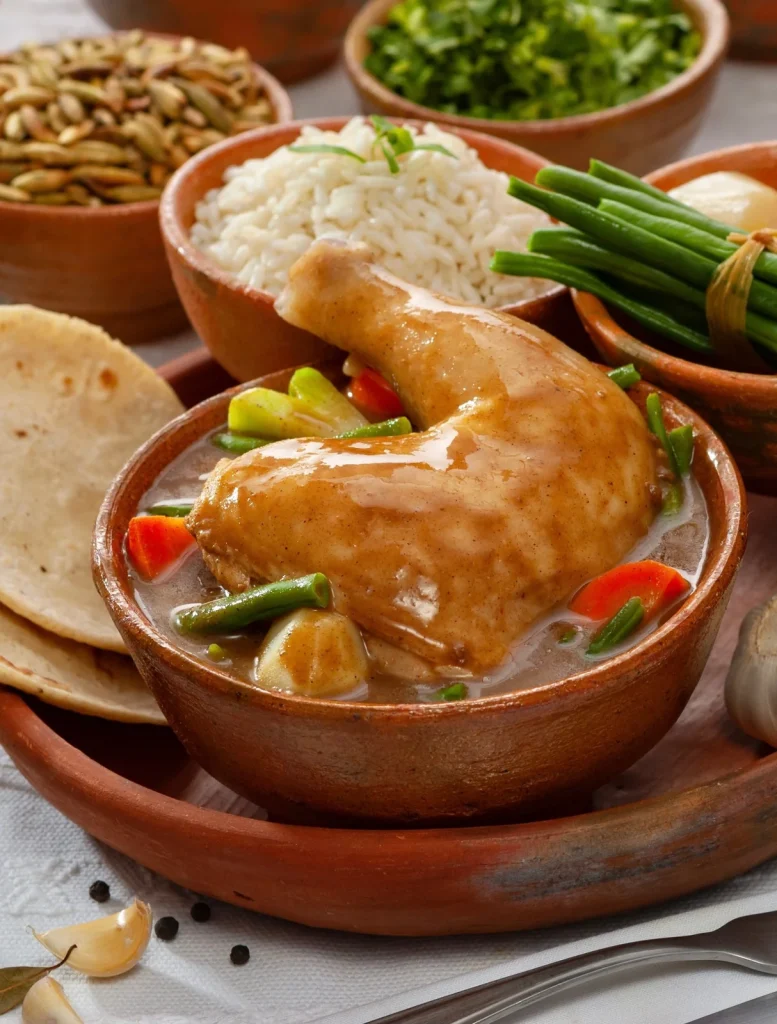
- Pollo en Jocón – Chicken simmered in a bright green miltomate and herb sauce.
- Kak’ik – A traditional Q’eqchi’ Maya turkey soup from Alta Verapaz and one of Guatemala’s most distinctive regional dishes.
- Subanik – Another traditional dish prepared with maxán leaves, this one a Kaqchikel stew from San Martín Jilotepeque. If you manage to find a bundle of maxán for your patín, this is a great way to use more of it.
- Tamales Colorados – The classic Guatemalan tamal wrapped in maxán leaves and one of the foods most Guatemalans immediately associate with this type of wrapper.
- Tamales de Chipilín – Small corn tamales flecked with chipilín leaves, the kind of simple food you will also see around markets in the Guatemalan highlands.
- Guatemalan Hilachas – Shredded beef in a tomato-based recado. If you like the tomato base of patín but want something heartier, make this next.
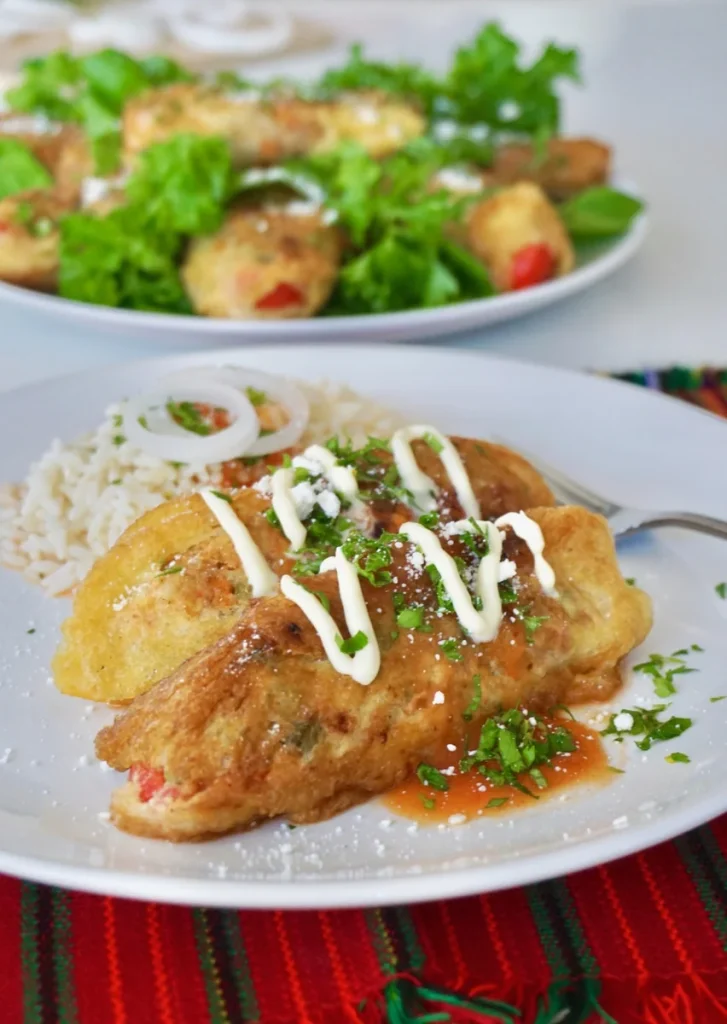
- Guatemalan Chiles Rellenos – Stuffed peppers Guatemalan-style, one of those foods that feels at home both at family tables and traditional food stalls.
- Guatemalan Tapado – Guatemala’s other great regional fish dish, a Garifuna coconut seafood stew from the Caribbean coast. I love comparing these two because patín and tapado show just how differently two fishing cultures in the same small country developed their food traditions.
- Guatemalan Fish Ceviche – A completely different way Guatemalans prepare fish: fresh, citrusy and perfect when you are not in the mood to wait 24 hours for your patín.

Through her writing, Paula helps travelers discover Guatemala beyond the typical tourist route with practical advice, local recommendations, and authentic experiences that connect visitors with the country’s people, culture, and traditions.
Planning a trip to Guatemala? Paula offers personalized Guatemala itinerary planning and trip consultation services tailored to your interests, travel style, and budget. Contact her at [email protected] to learn more.
- San Lucas Tolimán Guatemala: Lake Atitlán’s Best-Kept Secret - September 24, 2026
- Hotel Tolimán Lake Atitlán: A Special Stay in San Lucas Tolimán - September 24, 2026
- Guatemala Dreams in San Lucas Tolimán: A Boutique Stay on Lake Atitlán - September 23, 2026

