Disclosure: This article contains affiliate links. If you book or buy something through one of my links, I may earn a small commission at no extra cost to you. I only recommend places and services I have personally used or vetted.
This guide to the traditional foods of Sololá is about what people eat around Lake Atitlán, how those foods change from one town to the next, and where you can try them. I’ll take you from patín in Santiago Atitlán to pulique, local atoles, tamalitos, fish preparations and dishes most visitors never hear about, with places to eat them around the lake and recipes you can make at home.
That is one of the things I love most about eating my way around this lake. Atitlán looks small on a map, but move from one town to the next and the language changes, the huipiles change, and the food changes too. Some dishes are shared across the region. Others belong much more closely to one community, one celebration or one family tradition.
I’ve included the foods I think are most worth knowing, the towns they are connected to, where you can look for them today, and the recipes you can bring into your own kitchen after the trip. If you are still figuring out which towns to visit and how to put the trip together, my complete Lake Atitlán travel guide is the best place to start.
This guide is for
✓ Travelers who plan trips around food ✓ Anyone curious about Tz’utujil and Kaqchikel cooking ✓ Home cooks who want to make these dishes after the trip
START HERE
There Is No Single List of 10 Traditional Foods of Sololá
It is tempting to write up ten typical dishes and call it done. That would miss the most important thing about food in this department: it changes from one municipality to the next.
Sololá is made up of communities with their own histories, and around Lake Atitlán the Tz’utujil and Kaqchikel Maya towns have kept food traditions that are very much their own. The differences are bigger than most visitors expect. In Santiago Atitlán, traditional food lists include several kinds of patín, ceremonial atol, local greens and pescado en limón. In San Pedro La Laguna, local food traditions include pescado al limón, ejote en pepitoria and distinctive atoles. San Antonio Palopó has pulique made with everything from chicken to crab and shrimp, along with fish, vegetables and seasonal preparations tied to the community.
📌 WORTH KNOWING
A dish can be traditional in Sololá without being unique to Sololá. Pepián, jocón and kak’ik are important Guatemalan dishes you will find on menus around the lake, but they come from broader national and regional traditions. Patín, on the other hand, belongs to Santiago Atitlán in a way those dishes do not belong to anywhere in Sololá.
THE DISHES
Traditional Foods of Sololá and Lake Atitlán You Should Know
Patín: Santiago Atitlán’s Most Distinctive Dish
If there is one dish I would put at the top of a list of foods to seek out around Lake Atitlán, it is patín, especially in Santiago Atitlán.
Patín is made with a thick tomato-and-chile recado and wrapped in leaves, and there are far more versions than most visitors realize. In Santiago Atitlán you will hear about patín de viajeros, patín de gallina, patín de ceremonia and patín de cecina, alongside pescado en limón, pulique and many other local foods. In the fish version I make, the fish cooks in the recado before everything is wrapped in maxán leaves; you can see the full process in my traditional Guatemalan patín recipe.
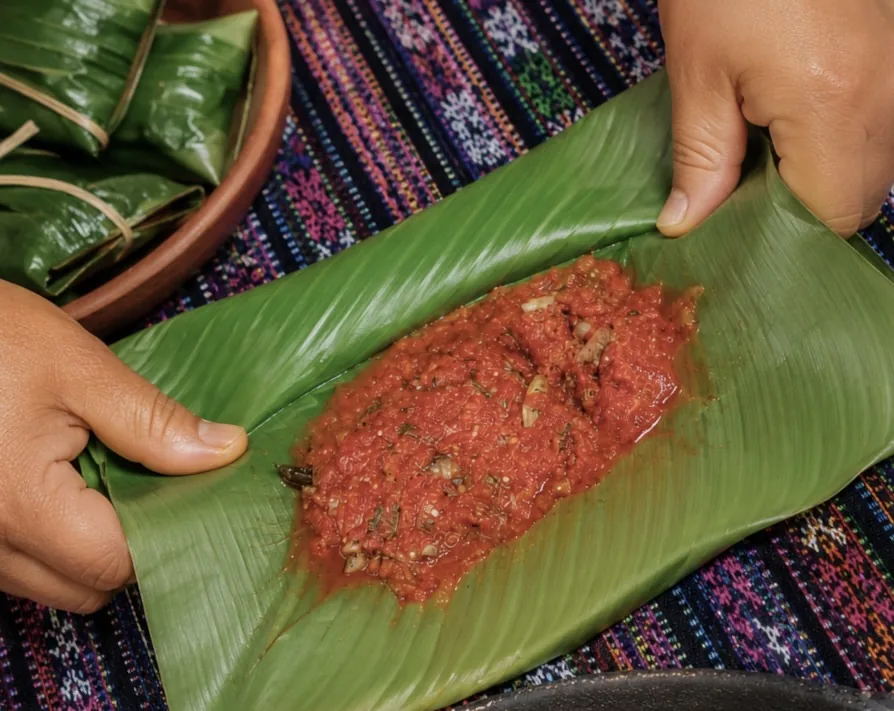
Fish is closely associated with patín, but this is not one fixed fish recipe. The protein and the preparation change, and the dish has historically been connected to travel and ceremony as much as to everyday meals. Patín de viajeros was food you carried with you.
If you want to eat patín where it is most deeply rooted, start in Santiago Atitlán. My guide to restaurants in Santiago Atitlán will help you plan where to eat, and my patín recipe shows you how to make the fish version at home. You can also learn about Tz’utujil cooking in San Juan, which I cover further down.
Pulique de Sololá: One Dish, Many Local Versions
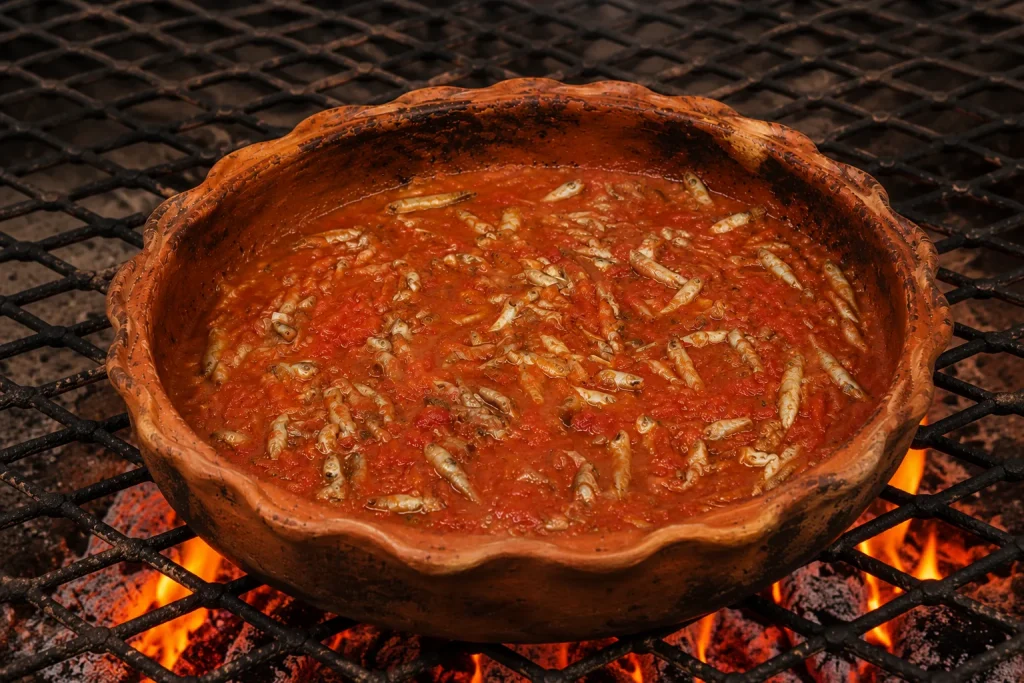
Pulique comes up again and again when you start looking closely at the traditional foods of Sololá, and it is one of the best examples of why there is no single standard version of the food here. The dish exists in other parts of Guatemala, but communities throughout Sololá have their own traditions around it. San Antonio Palopó has versions made with chicken, beef and pork, along with pulique de cangrejo, pulique de camarones and pulique de papa, and it is connected to both celebrations and ceremonies. In Santa Cruz La Laguna, Café Sabor Cruceño describes its pulique as a corn, herb and achiote based dish eaten during festival days in the community.
The name stays the same while the ingredients, the preparation and even the occasion change from town to town. That is one of the things I still want to keep learning more about every time I come back.
Traditional Foods of San Pedro La Laguna
San Pedro La Laguna has traditional foods that are easy to miss if you only eat on the tourist streets near the dock.
Local food traditions from San Pedro include pescado al limón, toasted pepitas with lemon, egg cooked on the comal, ejote en pepitoria and local atoles. These are the kinds of foods I would ask about directly in town, especially around community celebrations and family kitchens, rather than assuming they will appear on a permanent restaurant menu.
These dishes tell a very different story from the San Pedro most travelers meet, where the restaurant scene runs to pizza, international cafés and food from everywhere else. I like that side of San Pedro too. It is worth remembering there is an older tradition underneath it, one that lives more in homes and celebrations than on permanent menus.
Fish, Crab and the Foods Connected to the Lake
You cannot talk about traditional food around Lake Atitlán without talking about what comes out of the water, and the preparations are far more varied than fried tilapia at a lakefront table.
In Santiago Atitlán, traditional preparations include pescado en limón and patín alongside dishes using shrimp and crab. San Pedro has its own pescado al limón. In San Antonio Palopó you find pescado en caldo, pescado asado, pulique de cangrejo and pulique de camarones. If citrus-cured fish is what you are after, my Guatemalan fish ceviche recipe is the closest thing in my kitchen.
⚠ ONE HONEST CAVEAT
Fish served at Lake Atitlán is not necessarily fish caught in Lake Atitlán. Restaurant menus reflect modern supply chains as much as local tradition. When I talk about traditional lake food here, I mean the preparations that belong to these communities, not a promise about where any particular tilapia came from.
Tamalitos, Tayuyos and Why Corn Matters
Corn runs through the traditional food of Sololá, and not only as tortillas.
Tamalitos accompany stews and caldos, appear in ceremonial and everyday meals, and get wrapped in different leaves depending on the town and the season. In Sololá cabecera, tamalitos are traditionally wrapped in canak and milpa leaves. Other municipalities list tamalitos de chipilín, tayuyos and other corn preparations among their traditional foods.
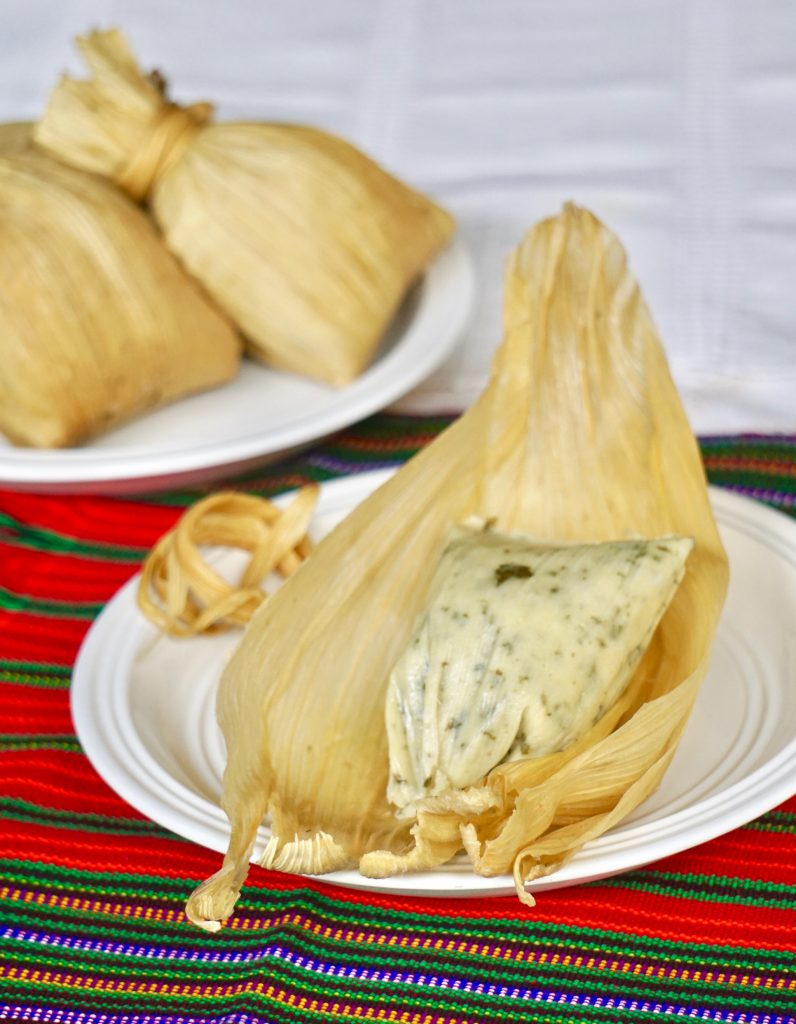
Tayuyos are worth knowing: small corn preparations filled with beans, common in highland communities and completely different from the large Guatemalan tamales most visitors have heard of. If you like the smaller, denser end of the family, chuchitos are the version you will see sold from baskets in every market around the lake.
Do not overlook the small thing served beside the main dish. A tamalito can carry as much local tradition as the stew next to it.
Local Greens, Herbs and Pepitoria
Some of the foods I find most interesting in Sololá are the ones travelers are least likely to recognize on a menu. Look closely at the food around the lake and you find an incredible range of greens, herbs, flowers and vegetables: chipilín, hierba mora, punta de güisquil, flor de izote, pacaya and ejotes. In Santiago Atitlán, herbs are cooked with shrimp or crab and vegetables are prepared with pepitoria. San Antonio Palopó has Kch’on ichaj, made with greens, green beans and pacaya in a pepitoria-based recado. San Pedro has ejote en pepitoria.
Guatemalan cooking is not only meat, heavy recados and tortillas. Seeds, herbs, edible flowers and wild greens carry a large part of the story.
Bebidas Típicas: Traditional Atoles and Ceremonial Drinks
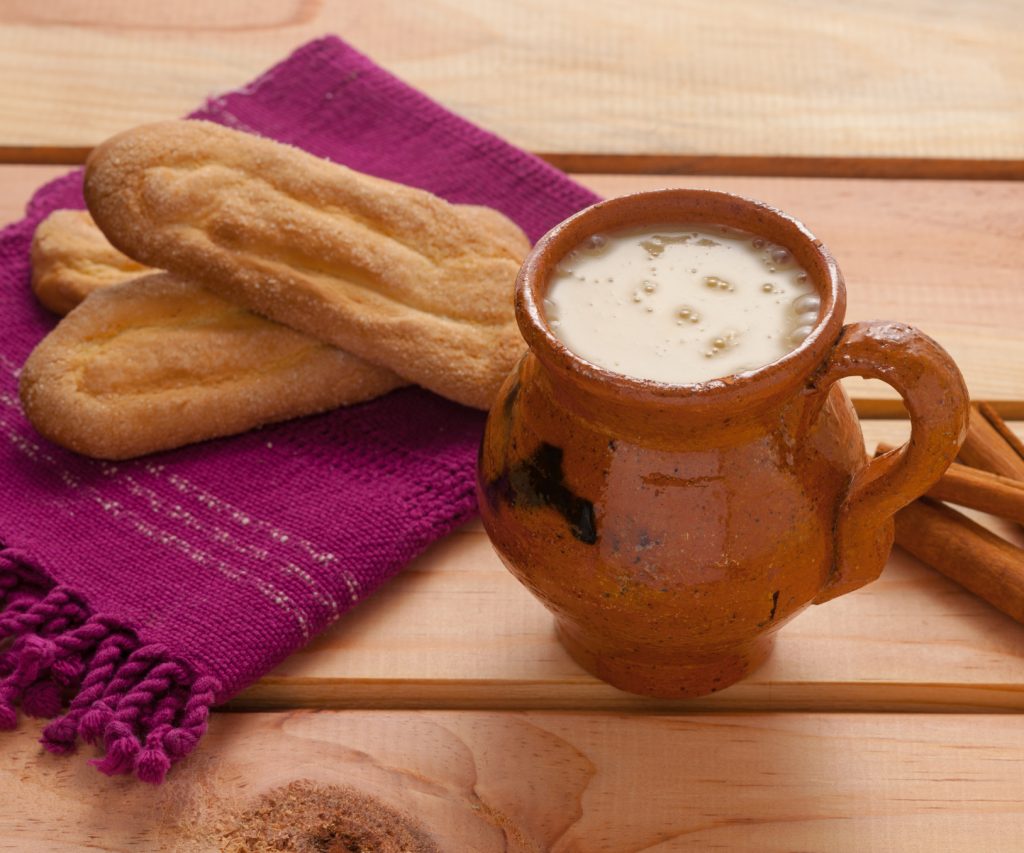
The drinks change as you travel around the lake too. In Santiago Atitlán, Maatz’ is a ceremonial atol, alongside atol de masa, pinol and atol de elote. San Pedro also lists Maatz’, plus Q’utuuj, an atol made with toasted tortilla, artisanal chocolate and pinol. These are easier to meet during celebrations, community events and in homes than in tourist restaurants, which is how travelers spend a week at Atitlán without learning they exist. Food and ceremony overlap often here, so my guide to Maya ceremonies in Guatemala gives useful cultural context for some of those traditions. For the wider picture of what Guatemalans drink and when, see my guide to traditional Guatemalan drinks.
Dulces Típicos: Sweets Cooked in Miel and Panela
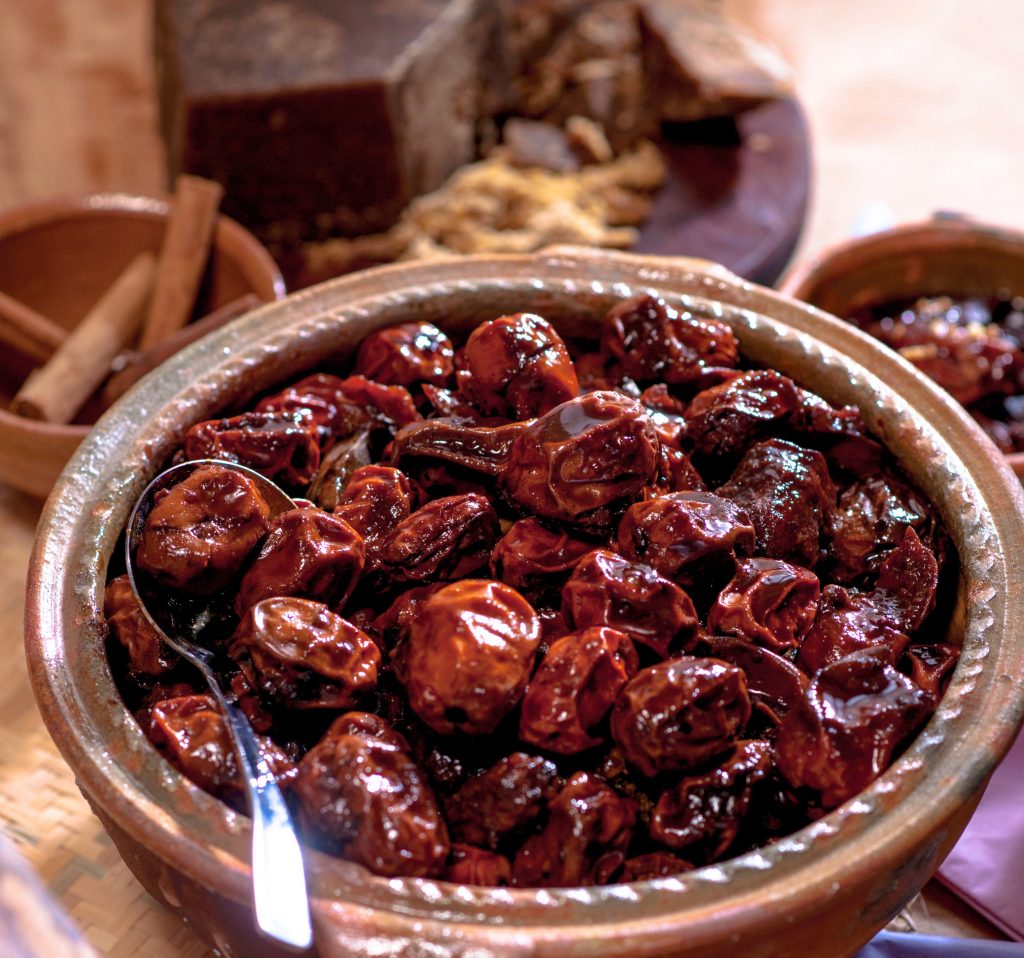
Traditional sweets in Sololá lean on fruit, squash and root vegetables cooked slowly with panela. Depending on the town and the season you may find chilacayote, ayote en miel, jocotes en miel, camote, durazno and garbanzos en miel. In San Antonio Palopó, ayote and chilacayote prepared with panela and corn are especially connected to Semana Santa. If you are visiting during that season, my guide to Holy Week at Lake Atitlán explains how the celebrations change from town to town.
Markets and holidays are where these live, not restaurant dessert menus. The same is true of the traditional Guatemalan candies sold from glass cases in every market town in the highlands.
Eat It Where It Lives
Most of These Dishes Are Never on a Menu
Patín on the right day, pulique during a town festival, an atol at a community event: a lot of the best food here depends on timing. I grew up with this food, and when I plan a Guatemala trip I can build those local meals and experiences into the itinerary. Tell me when you are coming and what you want to taste.
TOWN BY TOWN
Traditional Foods to Look For Around Lake Atitlán, Town by Town
Santiago Atitlán
If food is one of the reasons you travel, Santiago belongs high on your list. This is the town I associate most strongly with patín, and there are several local versions: de viajeros, de gallina, de ceremonia and de cecina. You will also find pescado en limón, pulique, flor de izote, chipilín cooked with shrimp and crab, traditional sweets, and ceremonial drinks including Maatz’.
For patín, look past conventional restaurants. The market and small food vendors matter more here than sit-down dining. My Santiago Atitlán travel guide covers the rest of the town, and my guide to Semana Santa in Santiago Atitlán is useful if you are visiting during Holy Week, when food and ceremony overlap even more.
San Pedro La Laguna
San Pedro is known among travelers for inexpensive international food, and its traditional foods tell a completely different story: pescado al limón, toasted pepitas, ejote en pepitoria, Maatz’, Q’utuuj, artisanal chocolate and pinol.
None of that is visible walking down the main tourist street, so ask directly: ¿Qué comida tradicional de San Pedro preparan? That question gets you much further than asking for comida típica, which will usually get you a national dish rather than something belonging to this town. My San Pedro La Laguna guide covers what to do beyond the restaurant strip, including the parts of town most visitors miss.
San Juan La Laguna
San Juan has become the easiest place around the lake to learn about Tz’utujil culture through weaving, medicinal plants, art, coffee and food. The standout food experience is Deleite Ancestral, built around Maya Tz’utujil cooking rather than a fixed menu, and there are community meal options through the Ixoq Ajkeem association.
San Juan and San Pedro share a Tz’utujil cultural region, which does not make their traditional foods interchangeable. My guide to restaurants in San Juan La Laguna has the full food picture, while my San Juan travel guide covers the weaving cooperatives, natural dyes, murals, coffee and other cultural stops that fit naturally around a meal.
✨ WORTH BOOKING
Food in San Juan sits inside a wider set of Tz’utujil crafts and traditions, and the art and culture tour in San Juan La Laguna walks you through the cooperatives, natural dyes and painting workshops that surround the kitchens. Pair it with a reserved lunch and you have a full day.
San Antonio Palopó
San Antonio Palopó has one of the most interesting traditional food traditions I found: pulique with chicken, beef or pork, and also versions with crab, shrimp and potato, along with fish in broth or grilled, vegetables with pepitoria, tamalitos and seasonal Semana Santa preparations.
Ask about these locally rather than expecting them on a menu. My San Antonio Palopó guide covers the pottery, textiles and what makes this quieter Kaqchikel town worth a stop. It is easy to combine with Santa Catarina Palopó on the eastern shore, and the Santa Catarina and San Antonio Maya tour from Panajachel covers both in a half day if you would rather not arrange transport yourself.
Santa Cruz La Laguna
Santa Cruz has strong food traditions that visitors miss because they arrive at lakefront hotels and never go up into the community. Local foods include pescado en limón, chipilín, patín variations, flor de izote, punta de güisquil, ejote en pepita, mixed greens and traditional sweets.
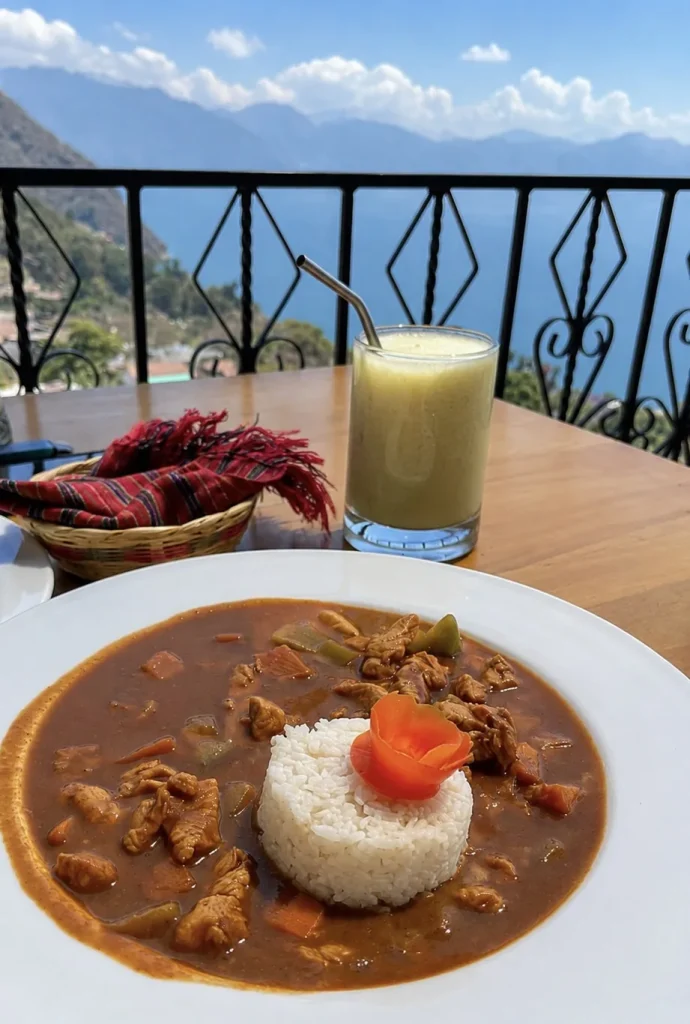
Pulique is the one to chase here, since Café Sabor Cruceño identifies it as festival-day food in Santa Cruz. Getting up the hill and back down to the last boat takes planning, which I cover in where to eat in Santa Cruz La Laguna.
Sololá Cabecera
When I say Sololá here I mean the town itself, not the whole department. Traditional foods here include pulique, caldo de gallina criolla, tamalitos and other corn preparations. Even the leaves used to wrap tamalitos change locally, which tells you how specific these food traditions can be.
The Friday and Tuesday market in Sololá is one of the great highland markets, and it is a better place to understand everyday food culture than any restaurant in the department.
Panajachel
I would not assign Panajachel one traditional dish. Pana works as the food gateway to the lake, and its size makes it the easiest place to try classic Guatemalan dishes from across the country: pepián, kak’ik, hilachas, jocón, alongside international food.
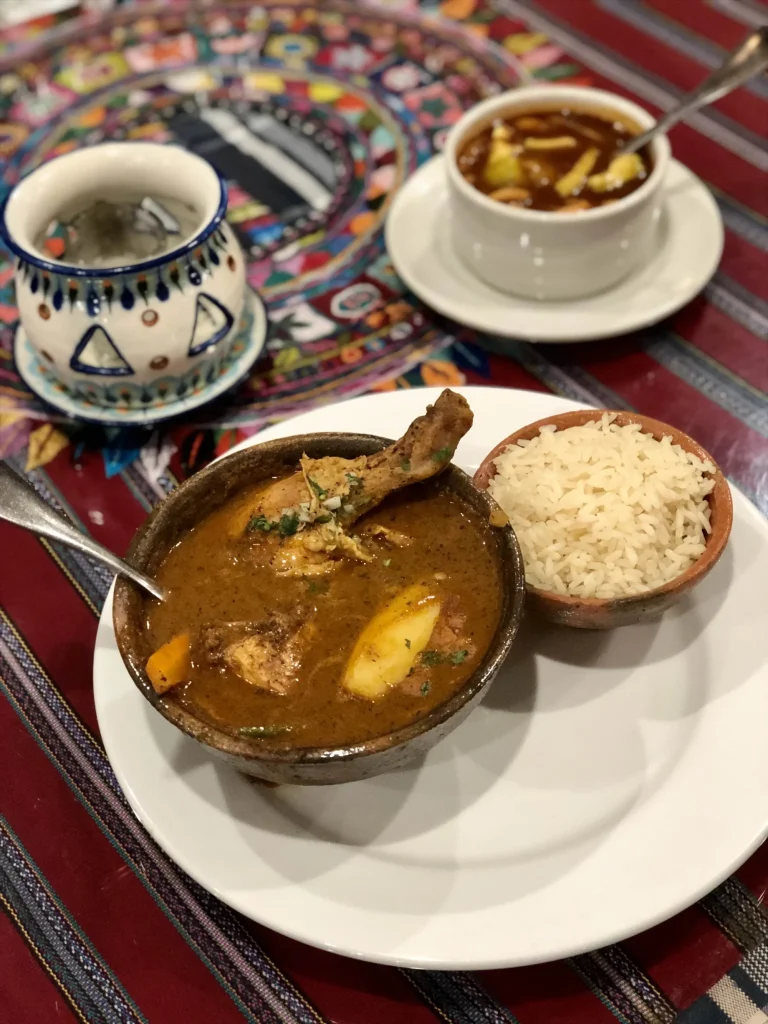
That makes it useful as an introduction to Guatemalan cooking, even when those dishes did not originate in Sololá. My guide to the best restaurants in Panajachel sorts through where to eat, and my Panajachel travel guide covers what to do between meals.
WHERE TO EAT IT
Where to Try Traditional Food Around Lake Atitlán
Not every restaurant serving Guatemalan food is serving food that originated around this lake. Some places specialize in dishes tied directly to local Tz’utujil or Kaqchikel traditions. Others serve classics from across the country. Both are worth your time, and knowing which is which makes the meal more interesting.
Deleite Ancestral, San Juan La Laguna
Deleite Ancestral is the place I would send anyone who wants to go past ordering comida típica. The focus is Maya Tz’utujil gastronomy and there is no fixed menu. Food changes with what is available from the milpa, the gardens and the season. Signature dishes include patín, Tukunik and Chu’pa Cha’am. You reserve ahead by WhatsApp at +502 5875-4092, and the family buys ingredients specifically for your booking.
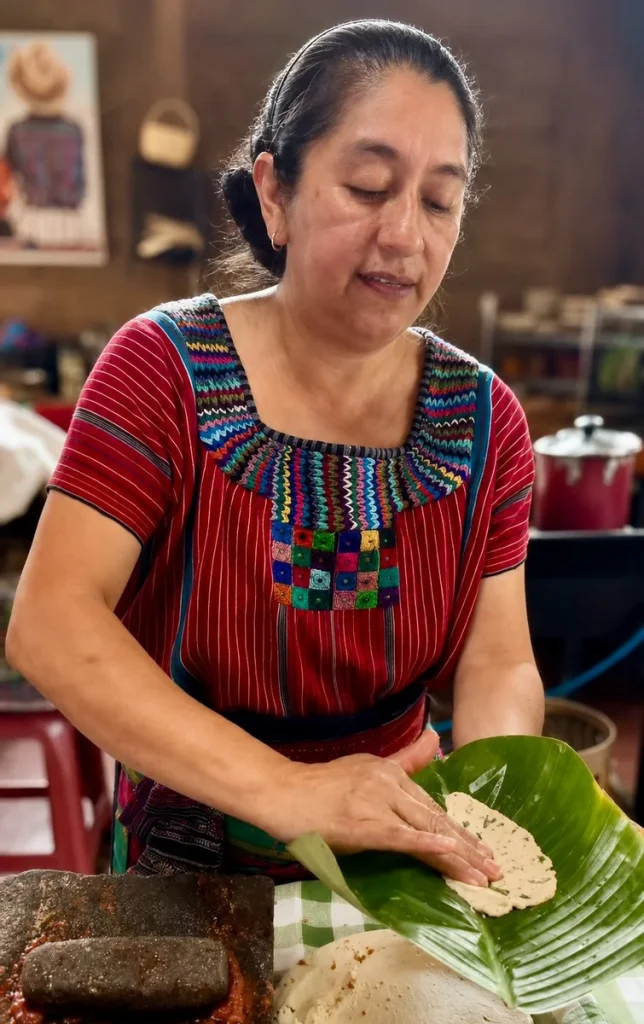
They also teach traditional Tz’utujil cooking classes, and depending on the day and what is on hand, a class may include patín. If you want to understand how ingredients are roasted, ground on the metate, wrapped and cooked, this is the experience I would choose. Patín belongs most strongly to Santiago, but Deleite Ancestral is the easiest place for a traveler to explore it inside a wider Tz’utujil meal.
Santiago Atitlán: The Market and the Local Comedores
For me, Santiago is still where you seek patín out in its own context. Skip the conventional restaurants for this one and check the market and the food vendors, where traditional dishes appear depending on the day.
Ask people where they buy their own patín. Some of the best traditional food around this lake is nowhere near the biggest signs or the highest review counts.
Café Sabor Cruceño, Santa Cruz La Laguna
Café Sabor Cruceño is one of my favorite examples of a menu connected to its own community. It serves pepián, pulique and kak’ik, and the pulique is the one to order: a corn, herb and achiote stew the restaurant describes as festival-day food in Santa Cruz.
The café is a social enterprise tied to the CECAP culinary program, creating training and work for young people from the community. If you want to cook rather than only eat, there is a traditional Lake Atitlán cooking class in Santa Cruz that puts you in the kitchen with local cooks for a morning. Pepián and kak’ik are national dishes rather than Santa Cruz foods, which is worth knowing when you order.
Comedor Comunitario Ixoq Ajkeem, San Juan La Laguna
Comedor Comunitario Ixoq Ajkeem is better understood as a community food experience than a restaurant. Cultural immersion programs in San Juan include lunch at the comedor, with pepián de pollo as the traditional meal. Pepián is eaten throughout Guatemala and is not specific to San Juan, but eating it in a community setting is a different thing from ordering it in a tourist restaurant.
Restaurante Reserva Natural de Atitlán, Panajachel
Restaurante Reserva Natural de Atitlán is one people never think of as a food destination, and it should be. The restaurant inside the reserve on the edge of Panajachel serves Guatemalan plates alongside its regular menu, and the pepián I have eaten there is the real thing rather than a lightened tourist version. Ask what the plato del día is; the kitchen leans traditional more often than the setting suggests.
Eating here works best as the end of a morning in the reserve, after the hanging bridges, the butterfly enclosure and the waterfall trail. My full guide to visiting the Reserva Natural de Atitlán covers hours, prices and what to do first. Traveling as a family, I also include it in my guide to the best things to do at Lake Atitlán with kids.
7 Caldos, Panajachel
For classic dishes from across the country while you are based in Pana, 7 Caldos is one of the easiest places to start. The kitchen specializes in traditional Guatemalan food and serves kak’ik and hilachas, with pepián appearing regularly too. The name comes from the caldos, and those are what I would order first.
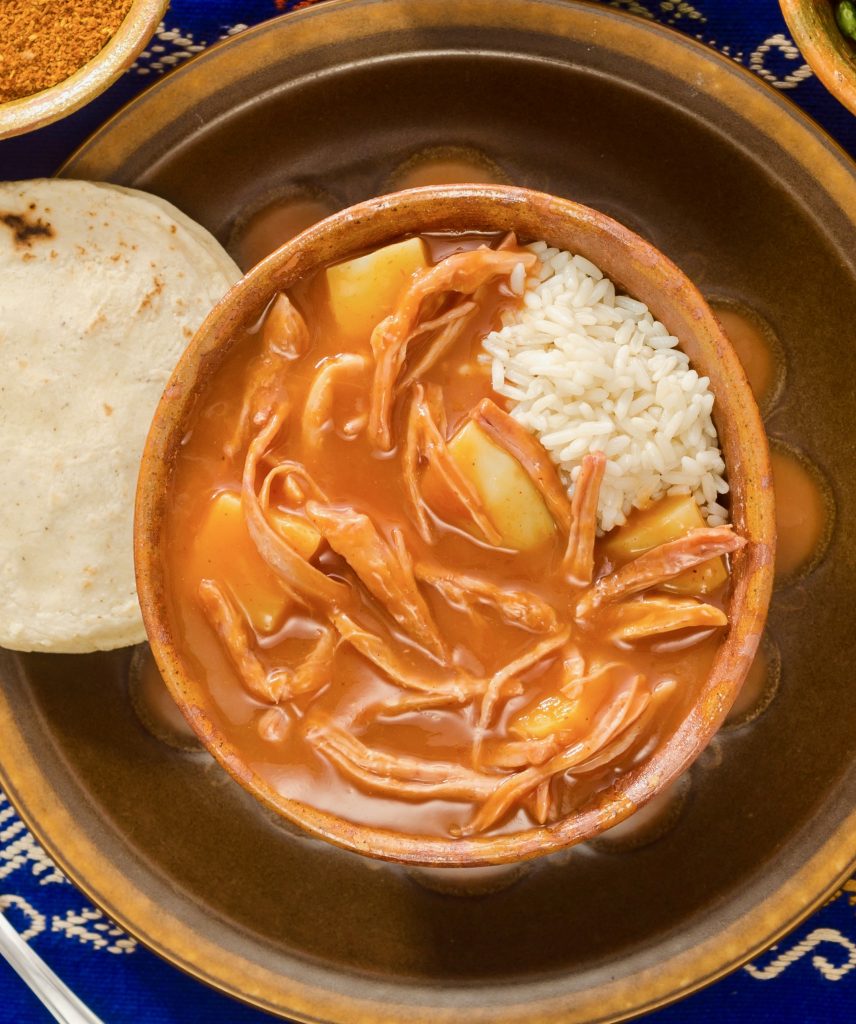
These are not Lake Atitlán dishes. Kak’ik belongs to Alta Verapaz and Q’eqchi’ tradition; pepián and hilachas have broader histories. What 7 Caldos gives you is several of Guatemala’s best-known dishes in one sitting, which is useful on a first trip.
Mayan Kitchen Cooking Class, San Pedro La Laguna
A cooking class is one of the best ways to get your hands into this food. Mayan Kitchen in San Pedro teaches a rotating selection of Guatemalan classics: pepián, jocón, hilachas, tamales, tamalitos, chiles rellenos.
Here is the distinction that matters: these are traditional Guatemalan foods taught in San Pedro, not necessarily foods that belong specifically to San Pedro. For more local traditions, ask about pescado al limón, ejote en pepitoria and the local atoles instead.
✨ COOKING CLASS FROM PANA
If you are staying in Panajachel and do not want to cross the lake for a class, this Maya cooking class from Panajachel is another easy option. It focuses on traditional Guatemalan dishes, with hands-on cooking and a meal at the end.
WHERE TO STAY
Hotels at Lake Atitlán That Serve Traditional Guatemalan Food
Most hotels around this lake default to international menus. These keep Guatemalan dishes on properly, which matters when you have spent a day chasing recados around the towns and want dinner without another boat ride. For the bigger question of which town makes the best base, my Lake Atitlán hotel guide compares where to stay around the lake.
Porta Hotel del Lago, Panajachel
The Cakchiquel Restaurant here sits right on the waterfront at the bottom of Calle Santander, and it is one of the few hotel dining rooms in Pana that keeps Guatemalan dishes at the center of the menu rather than as a token section. The pepián I have eaten there was properly made, with the seeds and chiles toasted the way they should be.
Being on the water at the end of Santander also makes it the easiest dinner in town after a day of boats. My full Hotel del Lago review covers the rooms and the views. Check rates on Expedia →
Regis Hotel and Spa, Panajachel
Regis sits on Calle Santander with hot spring pools out back, and its Paya Restaurant keeps hilachas and pepián on the menu. Hilachas is the shredded beef stew in tomato and chile sauce that most Guatemalan families eat on a weeknight, and finding it on a hotel menu at all is unusual.
Good choice if you want to be walking distance from the market and the street food without giving up a quiet garden. Check rates on Expedia →
Posada de Don Rodrigo, Panajachel
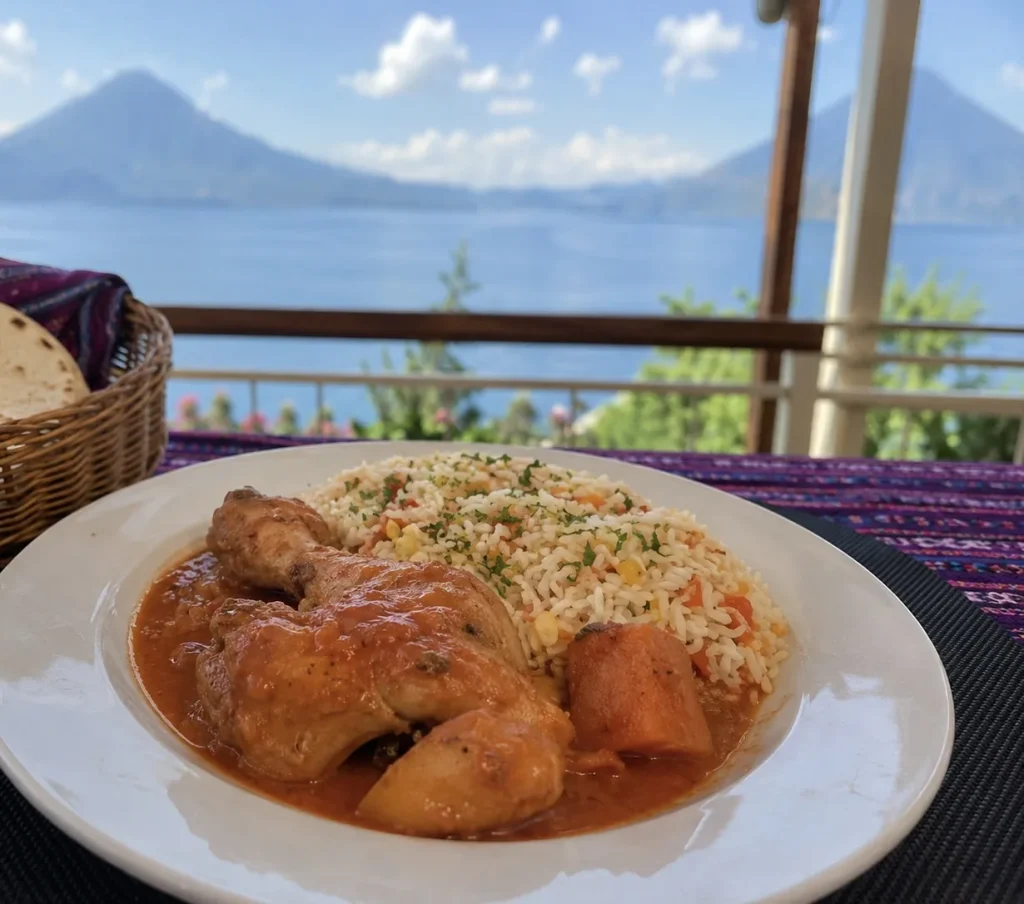
This is one of the most consistently Guatemalan hotel menus at the lake. Restaurante Las Espadas at Posada de Don Rodrigo runs through the dishes people cook at home: chiles rellenos, enchiladas guatemaltecas, and caldo de res, the beef and vegetable soup that is the backbone of a Guatemalan Sunday. The chiles rellenos are the ones I order, and they are made the traditional way, battered in egg and served with tomato sauce rather than the Mexican version people expect.
Guatemalan enchiladas surprise most visitors: a flat crisp tostada piled with picadillo, beet, egg and cabbage, nothing rolled and nothing in sauce. If the caldo hooks you, my grandmother’s cocido recipe is the home version. Check rates on Expedia →
Hotel Atitlán, Panajachel
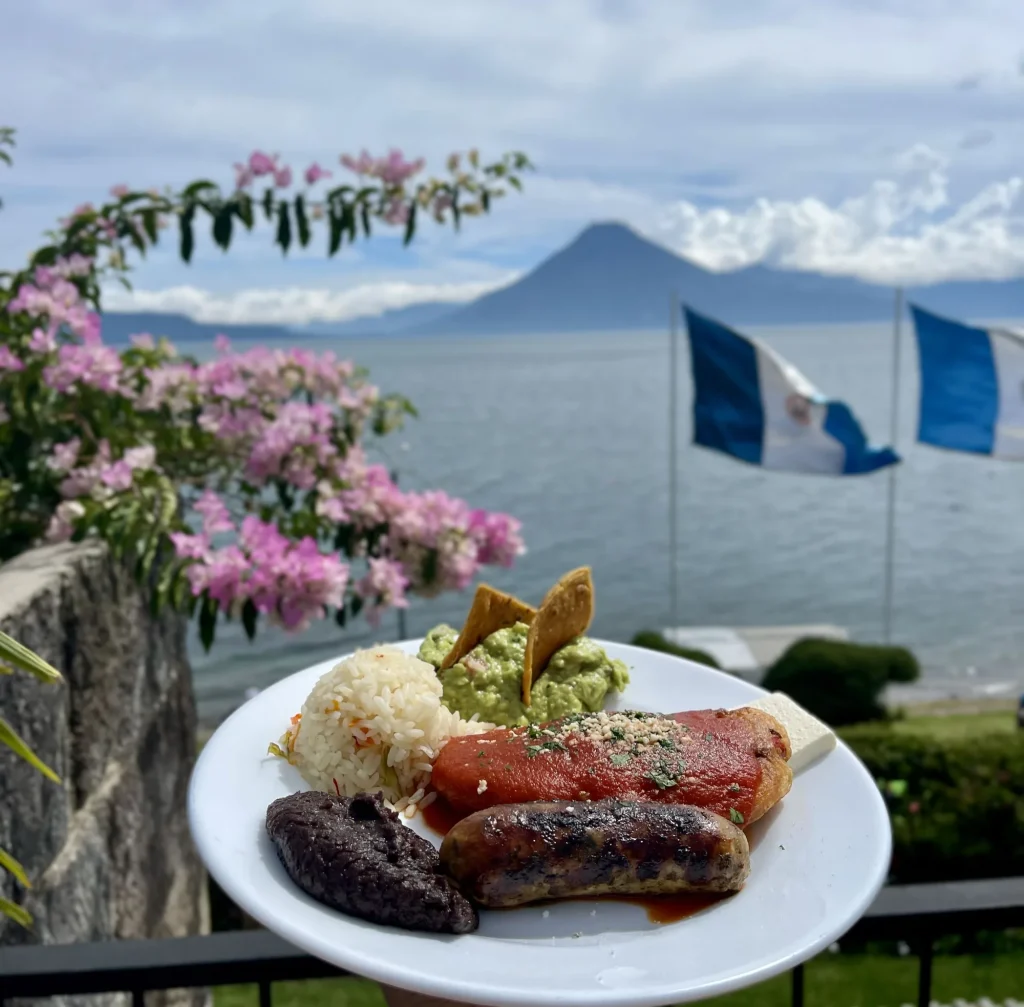
The restaurant at Hotel Atitlán keeps pollo al jocón and pepián de res on the menu, which makes this one of the easiest places near Pana to taste two of Guatemala’s defining recados side by side. Jocón is the bright green one, built on miltomate and fresh herbs. Pepián is the dark, toasted one. Eating them in the same week teaches you more about Guatemalan cooking than any single dish can.
Come an hour before dinner and walk the gardens first. They sit on an old coffee finca and they are full of hummingbirds. Check rates on Expedia →
Casa Palopó, Santa Catarina Palopó
This is where I would go for one of the most special meals at the lake. Kinnik, right on the lakeshore, and Palopó 6.8 in the main house take Guatemalan produce, seeds, chiles and local food traditions in a more polished, contemporary direction. It is different from ordering a traditional home-style dish, but the ingredients and the connection to place are still very Guatemalan.
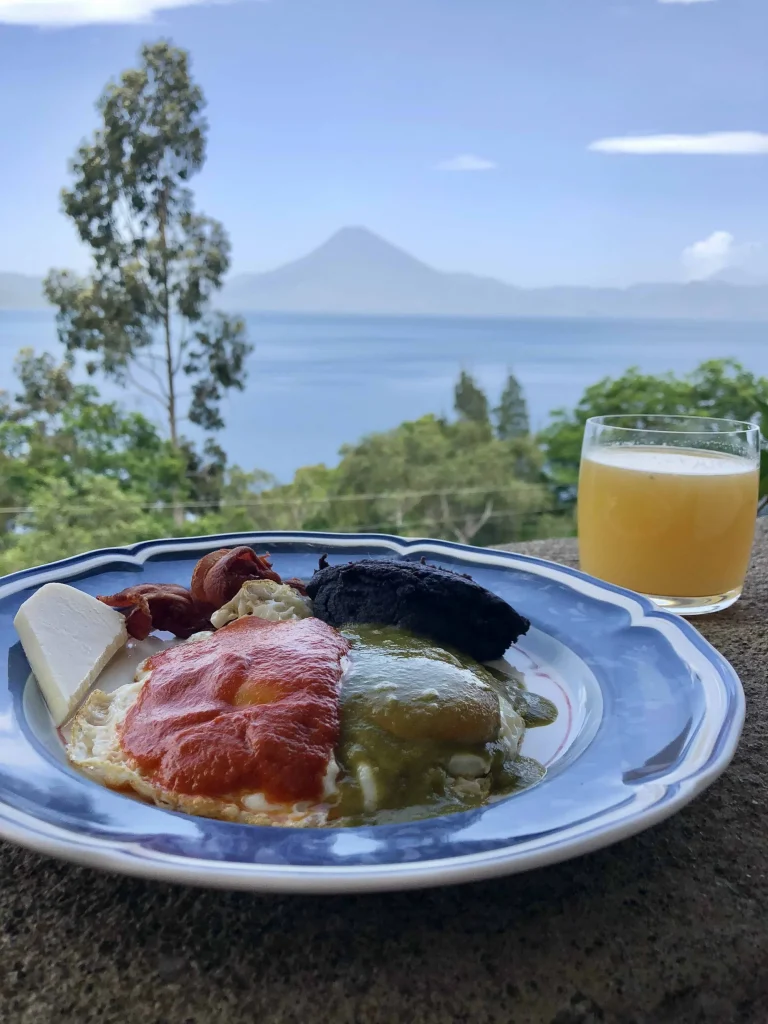
Reserve ahead. Casa Palopó has one of the most dramatic elevated views on the lake, while Kinnik sits right at the water and gives you a completely different lakeside perspective. Check rates on Expedia →
Villa Santa Catarina, Santa Catarina Palopó
This is a practical base if you are especially interested in the eastern shore food traditions in this guide. San Antonio Palopó and its many versions of pulique are minutes away, Sololá market is a short drive up the hill, and the hotel restaurant keeps Guatemalan plates alongside the international ones.
My Villa Santa Catarina review covers the rooms and the lakefront. Check rates on Expedia →
More options in every town are in my guide to hotels on Lake Atitlán.
A rental car helps if you want to reach Sololá market, San Antonio Palopó and San Lucas Tolimán on your own schedule, since those are the food towns the boats do not serve well. Everything on the western shore is easier by lancha.

THE DISTINCTION
Traditional Food and Restaurant Food Are Not the Same Thing
The thing that stands out most to me is that the dishes tied most closely to a community are often the ones you will never see on a menu.
San Pedro is the clearest example. Its local food traditions include pescado al limón, ejote en pepitoria and distinctive atoles, and a visitor walking through town will see pizza, burgers, falafel, curries and smoothie bowls. That does not make the modern restaurant scene less interesting. I love how much variety this lake has now. You can eat a recado at lunch and excellent Indian food at dinner.
Travelers who care about local food culture just have to look a little deeper. Traditional dishes may be cooked mainly at home, available only certain days, tied to festivals or ceremonies, sold in markets rather than restaurants, or made only when an ingredient is in season.
💡 The question that changes the answer: instead of asking for comida típica, ask ¿Qué comida tradicional de aquí preparan? Asking what is traditional here gets you a completely different conversation.
Ask the Right People
The Cooks Whose Kitchens Have No Sign
Every town around this lake has someone who makes the patín or the pulique everybody in the village knows about, and those places rarely have a sign or an Instagram account. I have been eating my way around Atitlán since I was a child, and many of the best introductions still happen person to person. When I plan a trip, that local knowledge is part of what I bring to it.
FIRST TRIP
What Traditional Foods Should You Try First at Lake Atitlán?
You will not find every dish in this guide on one visit, and that is part of what makes eating here interesting. For a first trip, I would start with these six.
- Patín, ideally in Santiago Atitlán, or as part of a Tz’utujil meal at Deleite Ancestral.
- Pulique, especially a locally connected version like the one at Café Sabor Cruceño in Santa Cruz.
- A traditional fish preparation, asking about pescado en limón rather than defaulting to fried tilapia.
- Tamalitos or tayuyos, particularly when they arrive beside a stew as part of a full meal.
- Something with local greens or pepitoria, the part of Guatemalan cooking that never makes the must-eat lists.
- A traditional atol, if you cross paths with one at a market, a festival or a community meal.
Availability shifts by town, season and day of the week, so the best food days come from asking what is being made rather than arriving with a checklist.
TOWN BY TOWN GUIDES
Explore Lake Atitlán Through Its Restaurants
The traditional dishes in this guide are one part of the picture. Each town has developed a completely different restaurant personality: Panajachel has the widest range of Guatemalan and international food, San Pedro is known for inexpensive international cooking, San Juan mixes ambitious new kitchens with Tz’utujil cultural experiences, Santiago holds onto the market traditions, San Marcos leans vegetarian, and Santa Cruz has restaurants built as community projects. If you are planning meals in more than one town, keep my Lake Atitlán boat guide open too; where you eat often depends on the last lancha back.
Start with my overview of restaurants in Lake Atitlán, then go town by town with my guides to the best restaurants in Panajachel, restaurants in San Pedro La Laguna, restaurants in San Juan La Laguna, restaurants in Santiago Atitlán, restaurants in San Marcos La Laguna and where to eat in Santa Cruz La Laguna. I also have a separate guide to the best coffee shops around Lake Atitlán.
BACK IN YOUR KITCHEN
Make Traditional Guatemalan Food at Home
You do not have to wait for your next trip to cook some of this. A few dishes in this guide belong so specifically to their communities that recreating them without local ingredients and knowledge would miss the point. Others are Guatemalan classics that travel perfectly well into a home kitchen.
Start with my traditional Guatemalan pepián recipe, the deep, toasted recado that anchors so many Guatemalan tables and the dish you are most likely to meet around the lake. From the same family of slow-cooked stews, subanik is the one to try next, cooked in the highlands for celebrations and rarely served to visitors.
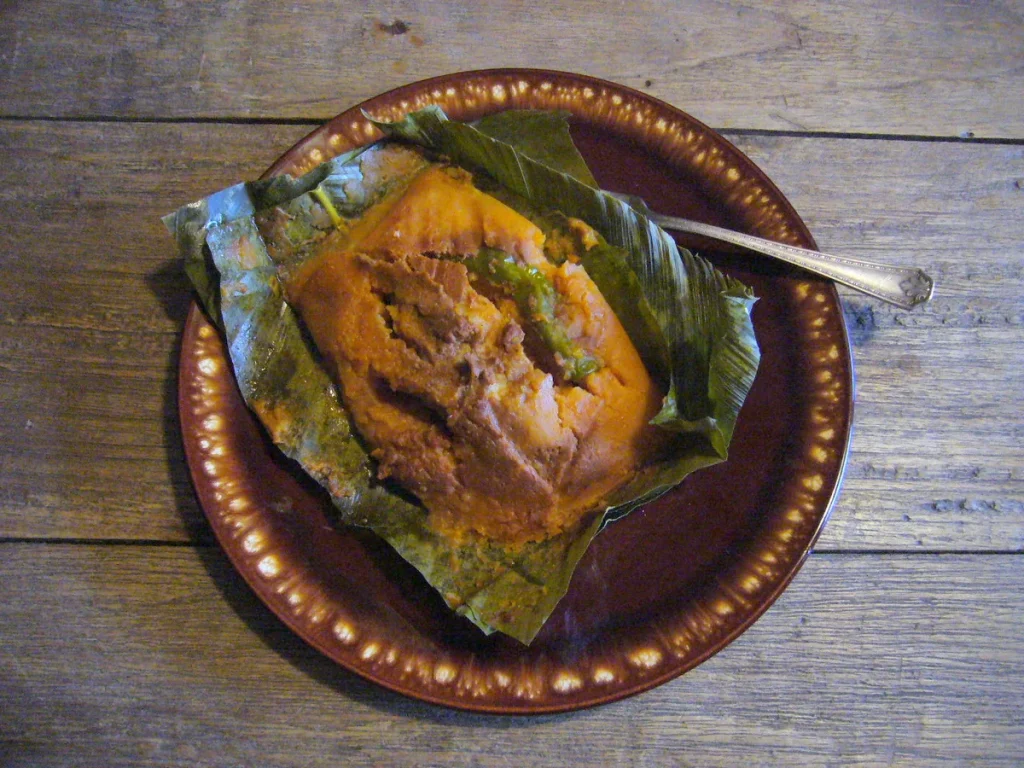
For the corn side of this guide, paches are the potato tamales eaten on Thursdays across the highlands, and my guide to Guatemalan tamales sorts out the whole family. For the sweets, dulce de chilacayote is the closest thing in my collection to what gets cooked in Sololá kitchens at Semana Santa.
And if patín is the dish that sends you home wanting to cook, start with my traditional Guatemalan patín recipe. I walk you through the fish, the tomato-and-chile recado, the maxán leaves and the resting time, with mojarra as an easier option when the tiny fish traditionally used are hard to find.
ONE DISH AT A TIME
Exploring Sololá One Dish at a Time
The more time I spend eating and learning around this lake, the less interested I am in reducing it to a neat list of ten dishes. The real story is much better than that.
Travel a short distance around Atitlán and the language changes, the huipil changes, and so does the food. Patín takes on special weight in Santiago. San Pedro has local atoles and fish preparations most visitors never hear about. San Antonio Palopó has pulique made in versions that include crab and shrimp. In Santa Cruz, pulique belongs to festival days.
And then there is everything that never reaches a menu at all: the greens cooked at home, the tamalitos wrapped in whatever leaf is in season, the food made for ceremonies, the recipes that stay inside families. There is no single Lake Atitlán cuisine to check off. You move around the lake, you ask questions, and you taste it one community at a time.
QUICK ANSWERS
Questions People Ask About Traditional Food in Sololá
What is the traditional food of Sololá?
There is no single traditional food for all of Sololá, because dishes vary by municipality. Pulique, tamalitos and caldo de gallina belong to food traditions in Sololá cabecera, while Santiago Atitlán is known especially for patín. Other communities around Lake Atitlán have their own local preparations, including pescado al limón and distinctive atoles in San Pedro La Laguna and many versions of pulique in San Antonio Palopó.
What food is Lake Atitlán known for?
Patín is the food most closely associated with the Lake Atitlán region, particularly Santiago Atitlán. Traditional food around the lake also includes pulique, fish preparations such as pescado en limón, tamalitos, local greens, pepitoria-based dishes and traditional atoles. The specific foods vary considerably from one town to another.
What is patín in Guatemala?
Patín is a traditional wrapped dish connected to Santiago Atitlán and Tz’utujil food traditions, prepared with a tomato and chile mixture wrapped in leaves. There are several versions rather than one recipe, including patín made with chicken or cecina, as well as versions associated with travel and with ceremonies.
What is pulique de Sololá?
Pulique is a stew found across many communities in Sololá, with versions that change by town. In San Antonio Palopó it is made with chicken, beef, pork, crab, shrimp or potato and is considered both festive and ceremonial. In Santa Cruz La Laguna it is a corn, herb and achiote based dish eaten on festival days.
Where can I try traditional food at Lake Atitlán?
Good starting points are Deleite Ancestral in San Juan La Laguna for Tz’utujil food and cooking classes, Café Sabor Cruceño in Santa Cruz for pulique, community meals through the Ixoq Ajkeem association in San Juan, and places such as 7 Caldos, the Restaurante Reserva Natural de Atitlán and Restaurante Las Espadas at Posada de Don Rodrigo (check rates on Expedia) for broader Guatemalan dishes. Markets and small comedores matter just as much, since many traditional foods never appear on tourist menus.
Let’s Plan It
This Is My Country. Let Me Share It With You the Right Way.
Eating well around Atitlán is often about timing: which market day, which festival, which family is cooking. I grew up with this food, and I brought my own children back every summer so they would know it too. Tell me what you want to taste and I will build the trip around it.
READY TO BOOK
Staying on the eastern shore puts you closest to Sololá market and San Antonio Palopó. Staying in Panajachel puts you within walking distance of the hotel kitchens in this guide. Compare both before you decide.
KEEP EXPLORING
More Lake Atitlán and Guatemalan Food Guides
I have linked the town, transportation, hotel and cultural guides where they make sense throughout this article. These are a few more that are useful when you want to keep exploring beyond the food.
|
AROUND THE LAKE Swimming, cliff jumping, wellness culture and what the town is like beyond its cafés and yoga studios. Best Hiking Trails at Lake Atitlán → Village-to-village walks, sunrise hikes and easier nature options when you want a day away from restaurant tables. Helpful context before visiting Santiago Atitlán so the cofradía tradition does not become just another photo stop. |
GUATEMALAN FOOD & CULTURE A broader introduction to Guatemalan dishes, ingredients and the food traditions behind the recipes in this article. Cacao Ceremonies in Guatemala → · Temazcal Guide → Two traditions you will encounter around Atitlán that deserve more context than a quick wellness-tour description. Unusual Guatemalan Foods to Try → More dishes and ingredients that surprise visitors, including foods you may run into in markets around the highlands. |
“Half an hour by boat and the huipiles change, the language changes, and someone is cooking something you have never tasted. That is why I keep going back.”
Through her writing, Paula helps travelers discover Guatemala beyond the typical tourist route with practical advice, local recommendations, and authentic experiences that connect visitors with the country’s people, culture, and traditions.
Planning a trip to Guatemala? Paula offers personalized Guatemala itinerary planning and trip consultation services tailored to your interests, travel style, and budget. Contact her at [email protected] to learn more.
- San Lucas Tolimán Guatemala: Lake Atitlán’s Best-Kept Secret - September 24, 2026
- Hotel Tolimán Lake Atitlán: A Special Stay in San Lucas Tolimán - September 24, 2026
- Guatemala Dreams in San Lucas Tolimán: A Boutique Stay on Lake Atitlán - September 23, 2026

