
This post is also available in:
Guatemalan tamales colorados are large tamales made of cooked corn masa, a piece of pork or chicken, and a red tomato sauce called recado, wrapped in banana leaves and steamed. My grandmother made them for Christmas dinner and for most of the family occasions that mattered. Once we were living in the US, making them myself for Christmas was how I kept that dinner on our table. This recipe is based on hers, with a few swaps so it works with ingredients you can find in the US, and it makes 20.
This article contains affiliate links. If you buy or book through them, I may earn a small commission at no extra cost to you. As an Amazon Associate I earn from qualifying purchases.
What Is a Guatemalan Tamal Colorado?
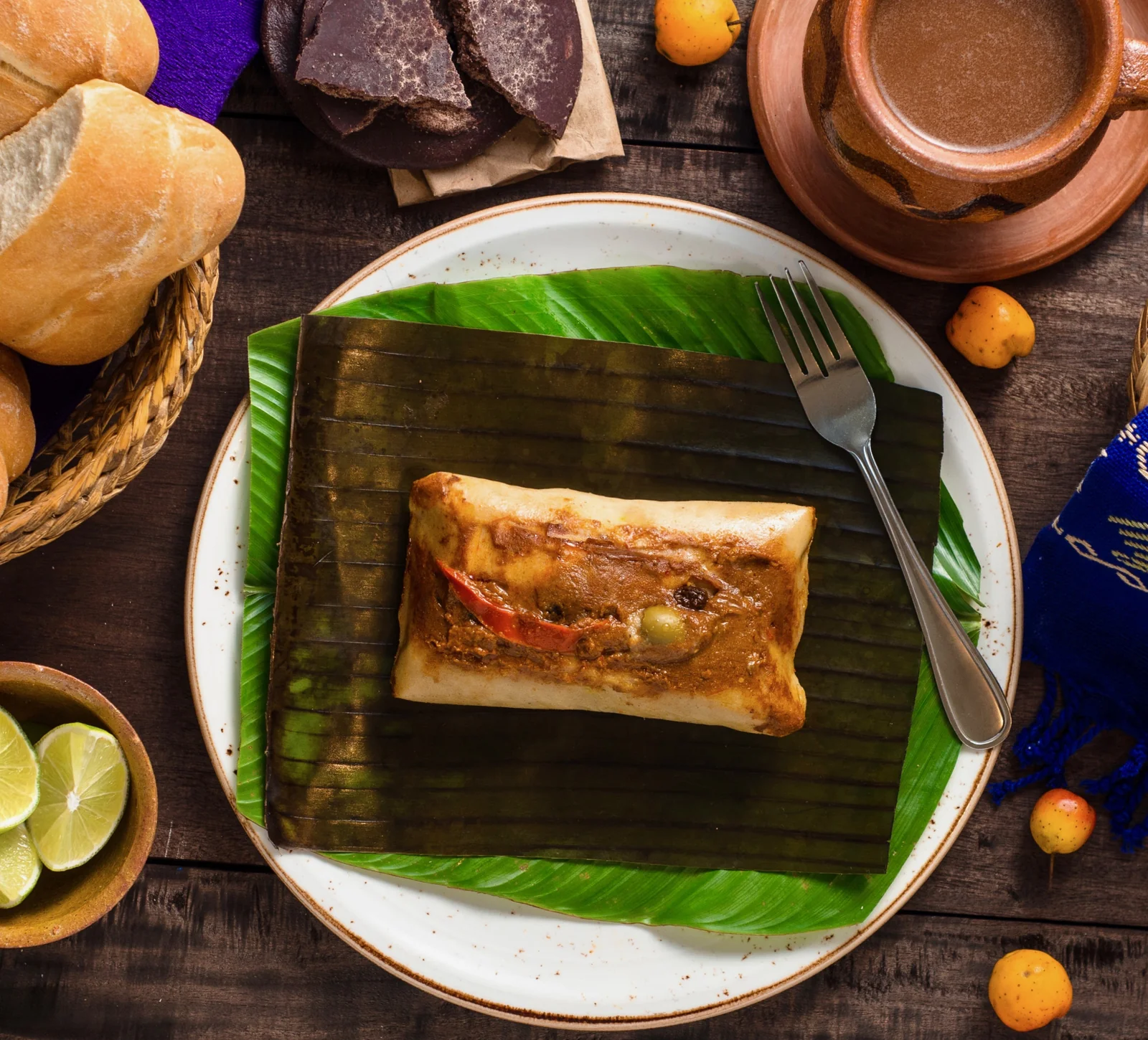
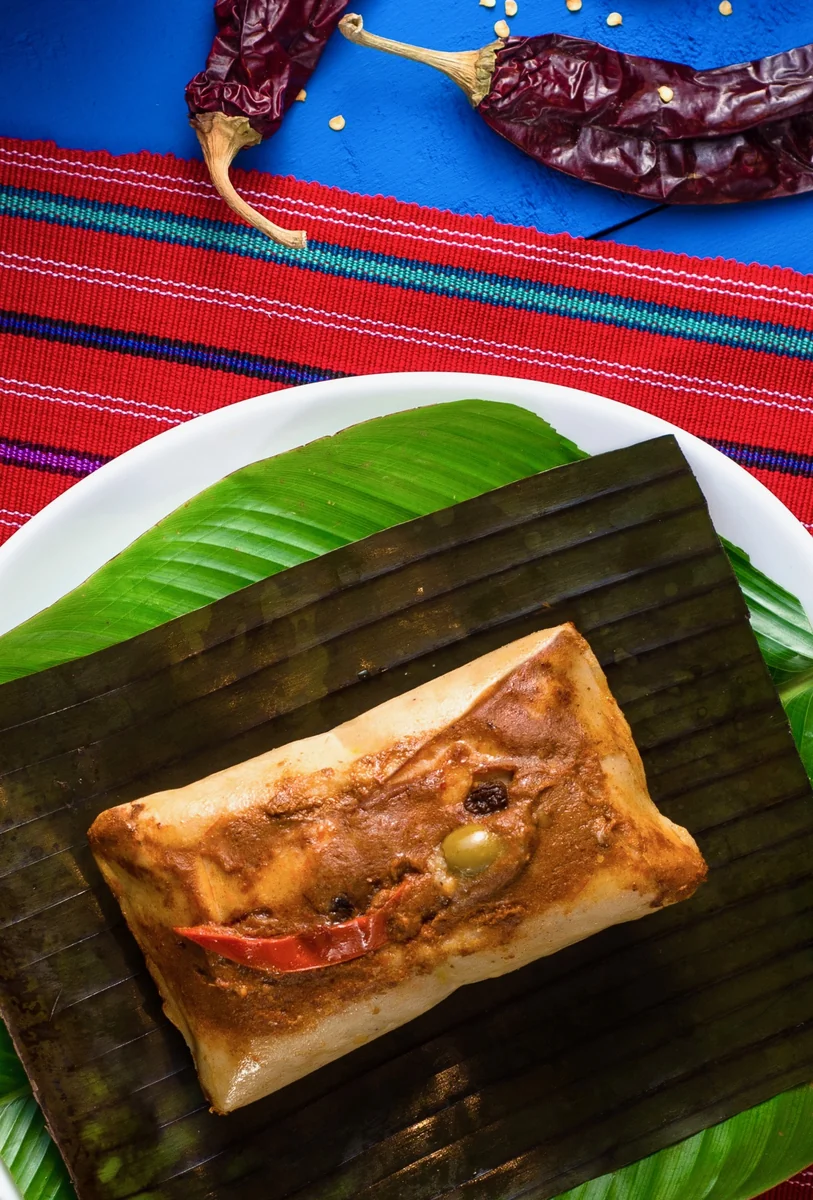
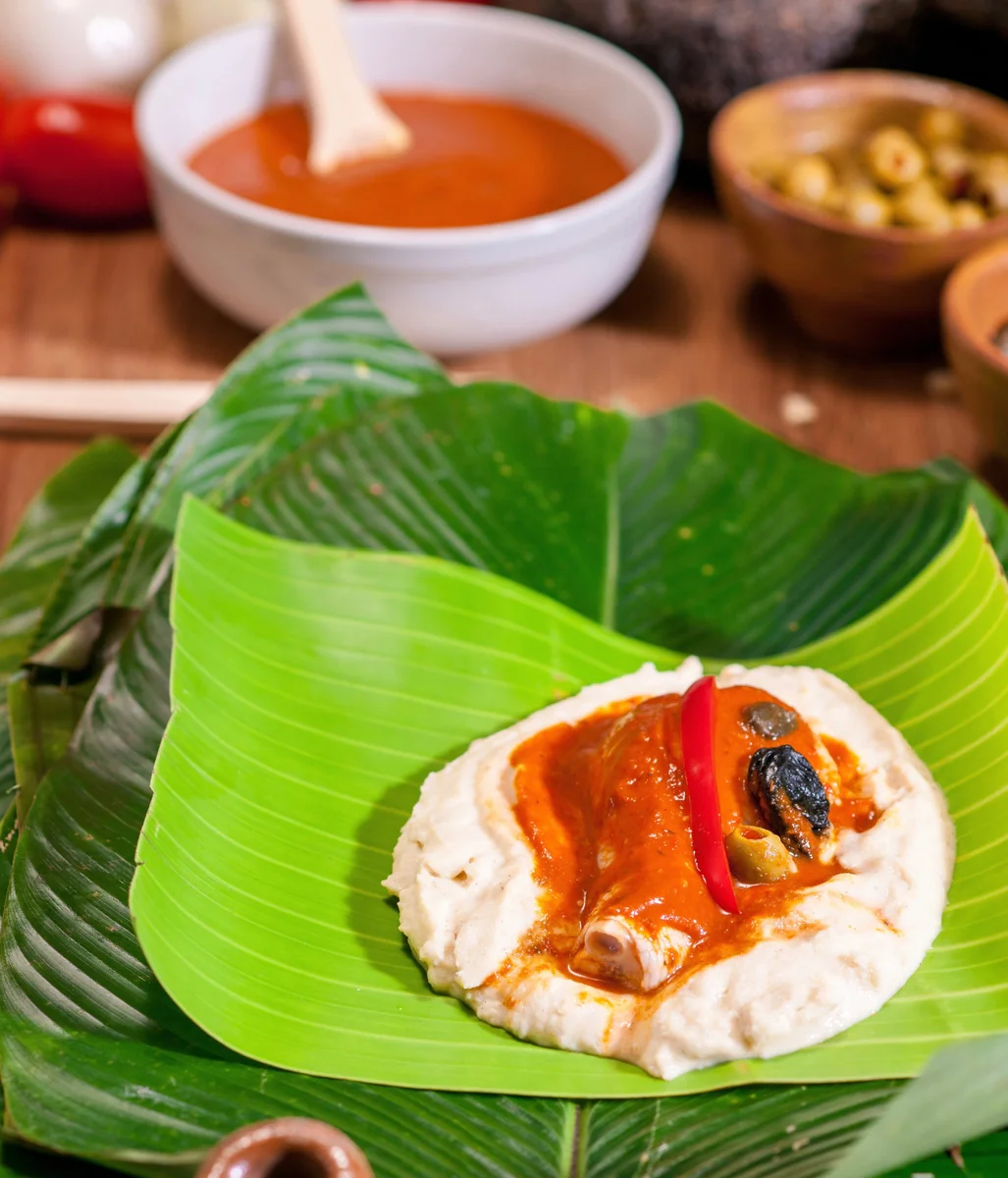
A tamal colorado (red tamal) is Guatemala’s classic savory tamal: a thick layer of corn dough with a piece of pork or chicken, a spoonful of red recado, an olive, and a strip of red bell pepper, wrapped in banana leaves and steamed. The dough known as “masa” starts as corn flour mixed with water, then gets cooked on the stove with lard and salt until it’s thick and smooth. The recado is a tomato sauce with dried chiles and toasted pumpkin and sesame seeds, and it’s what gives the tamal its color.
What sets it apart from most tamales is that the masa gets cooked twice. First, you cook it in a pot, stirring, until it pulls away from the sides. Only then do you spread it on the banana leaf, top it with the meat and sauce, wrap it, and steam. That first cook is why a Guatemalan tamal colorado comes out soft and smooth rather than dense.
The word tamal comes from the Nahuatl tamalli, which means wrapped. These banana leaf tamales come out at midnight on December 24 and again on New Year’s Eve. You’ll also see them on Guatemalan Independence Day (September 15) and during birthdays and baptisms.
When Do Guatemalans Eat Tamales Colorados?
Plenty of chapines (Guatemalans) would call tamales colorados the national dish. They’re Christmas Eve food, but they’re also Saturday food, or as we call it, “tamale day.” In Guatemala City, a red light hanging outside a house or a neighborhood tienda (corner store) still means the tamales are ready.
For me, tamales colorados and Christmas in Guatemala are inseparable. My grandmother made them for Christmas dinner and for Día de la Candelaria (Candlemas, February 2), and when nobody at home was cooking, you could always buy them from someone in the neighborhood. Opening the maxán (a broad leaf used with banana leaves to wrap tamales) to find warm Guatemalan tamales colorados inside still feels like Christmas to me.
In the US, nobody was going to sell me a tamal from their front door, so I started making them myself for Christmas. Red tamales are one piece of a bigger table, too. They share the table with the other traditional foods Guatemalans make for Christmas.
What Are the Main Ingredients for Guatemalan Tamales?
- Corn-based dough, cooked with lard and salt
- Pork or chicken
- Recado, a tomato sauce with dried chiles and toasted pumpkin and sesame seeds
- Green olives and strips of red bell peppers (as garnish)
- Banana leaves for wrapping
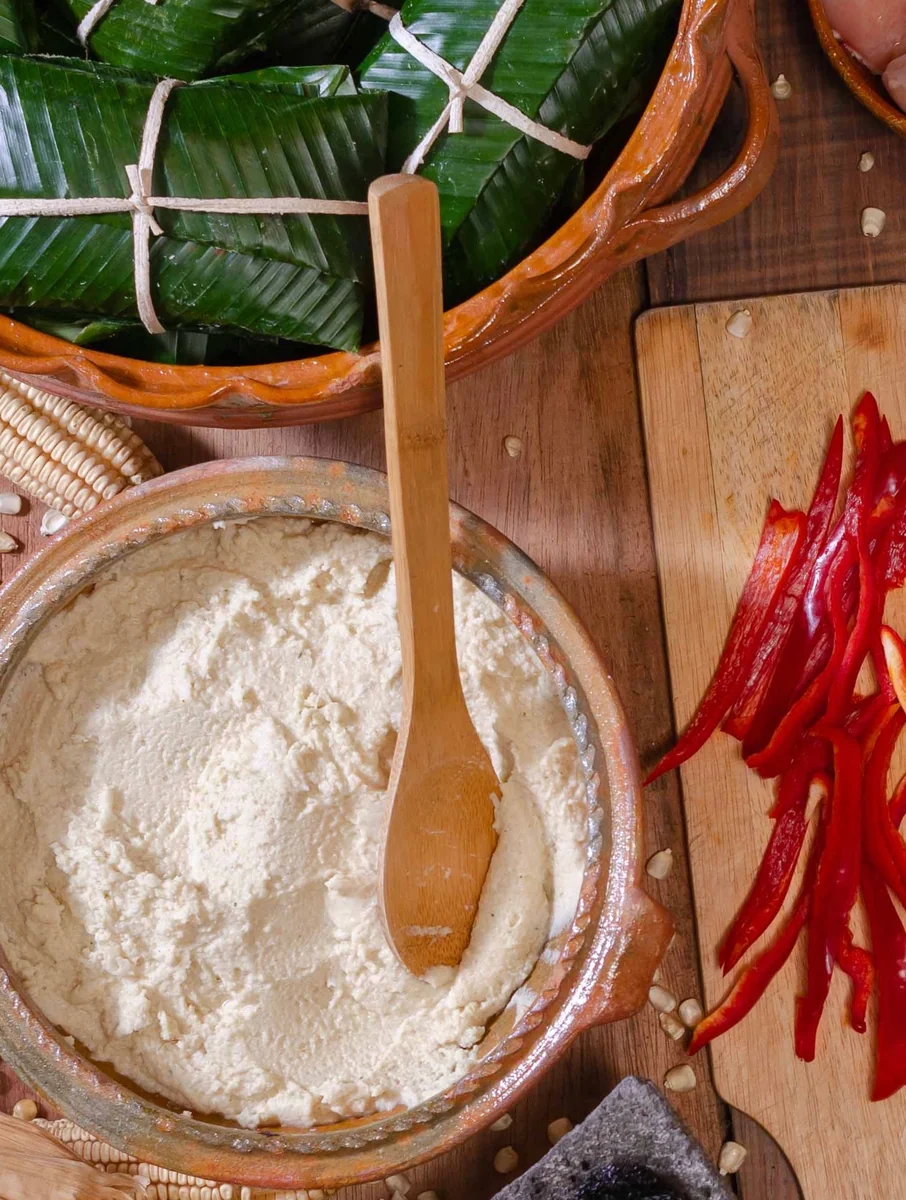
Corn is the base for Guatemalan tamales colorados. You mix instant corn flour with water, then cook it with lard and salt until it’s as thick as porridge. The filling is one good piece of pork or chicken per tamal, covered in recado and finished with an olive and a strip of pepper before the leaves get folded around it.
What Goes Into the Recado?
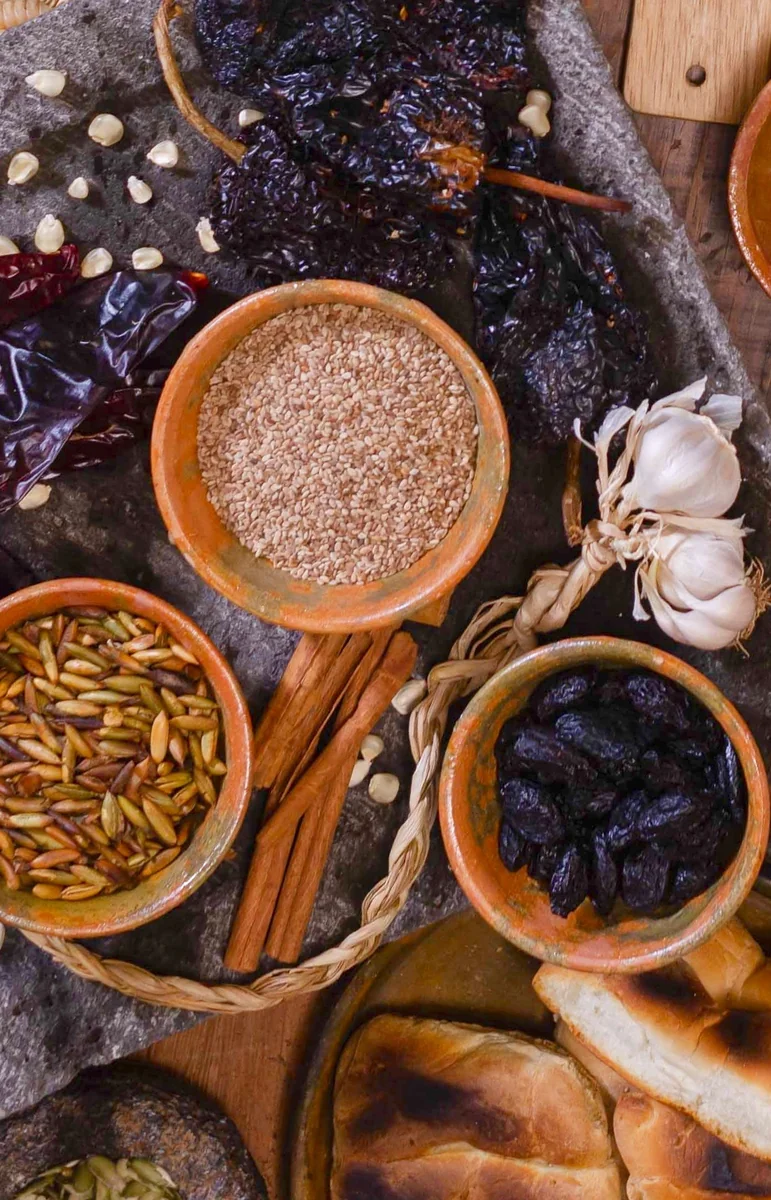
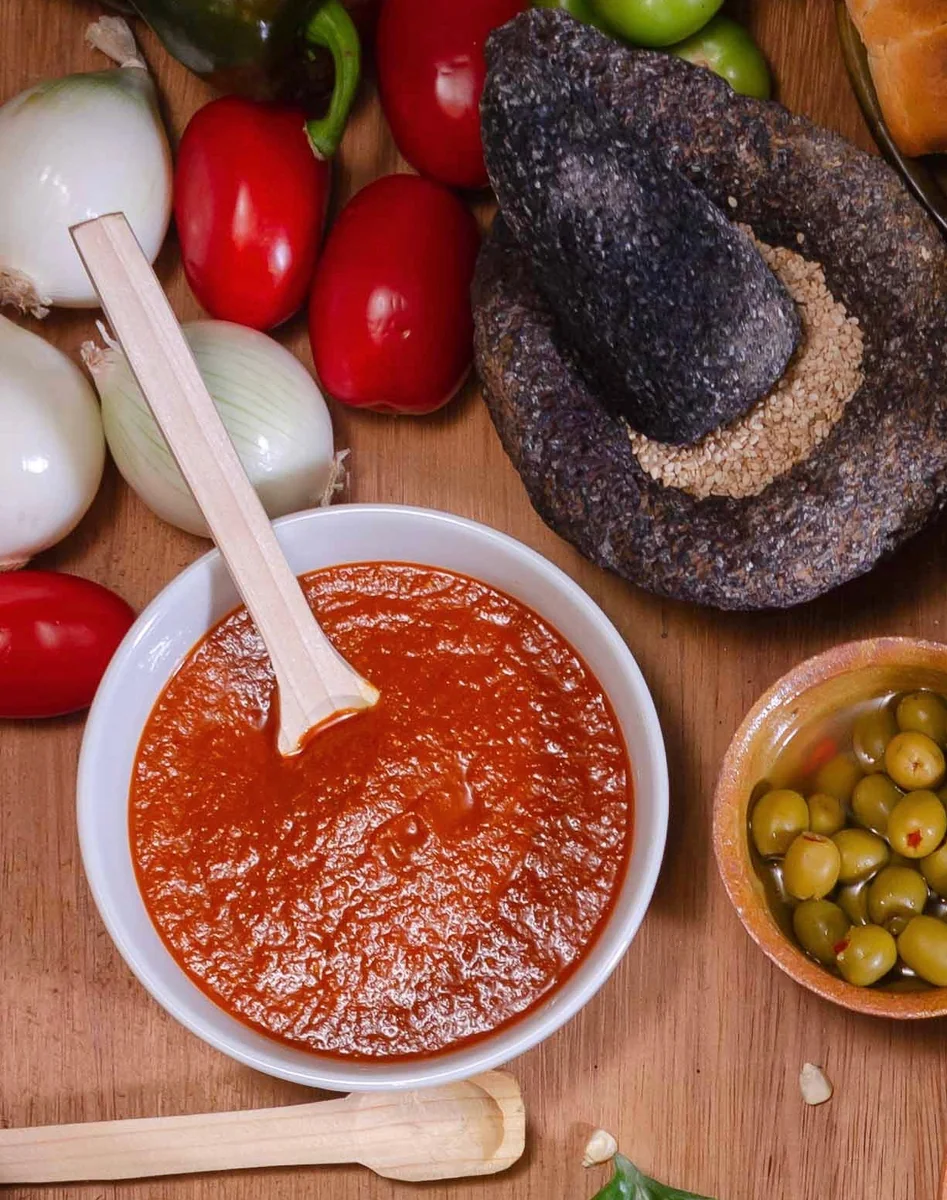
The recado is where families disagree most. Mine is tomatoes and miltomates (small green tomatillos), red bell peppers, onion, garlic, and three dried chiles: chile guaque (sold in the US as guajillo), chile pasa (pasilla), and chile zambo, which you can swap for jalapeño. Then come the toasted pepitoria (hulled pumpkin seeds) and ajonjolí (sesame seeds), which thicken the sauce and give it a nutty, toasted flavor.
For years, I left the seeds out of my recado. I’ve added them because that’s how it’s traditionally made: toast the sesame, the pepitoria, and the dried chiles together, then blend. If you’ve made this recipe before, that’s the one change.
Difference Between Mexican Tamal and Guatemalan Tamal
Mexico and Guatemala share many things, from rich histories to tropical climates and a geographical border. They also share a lot of food, and tamales are where people from both countries argue longest. On paper, the differences look small. Ask anyone from either side, though, and they’ll tell you that a Mexican tamal and a Guatemalan tamal are no more alike than a Mexican taco and a Guatemalan tostada.
Size, Masa, and Spice
You may be more familiar with the Mexican dish, which is usually smaller, uses thicker masa, and has a firmer, drier consistency. The ingredients for both Guatemalan and Mexican tamales change, depending on the region. Both countries have many types of tamales, with endless variations: from sweet to spicy and all in between.
Mexican tamales and Mexican food in general tend to be spicier, using chili purees or dried chili powders in the masa, the filling, or the recado. In contrast, Guatemalan red tamales are usually not that spicy.
Banana Leaves vs. Corn Husks
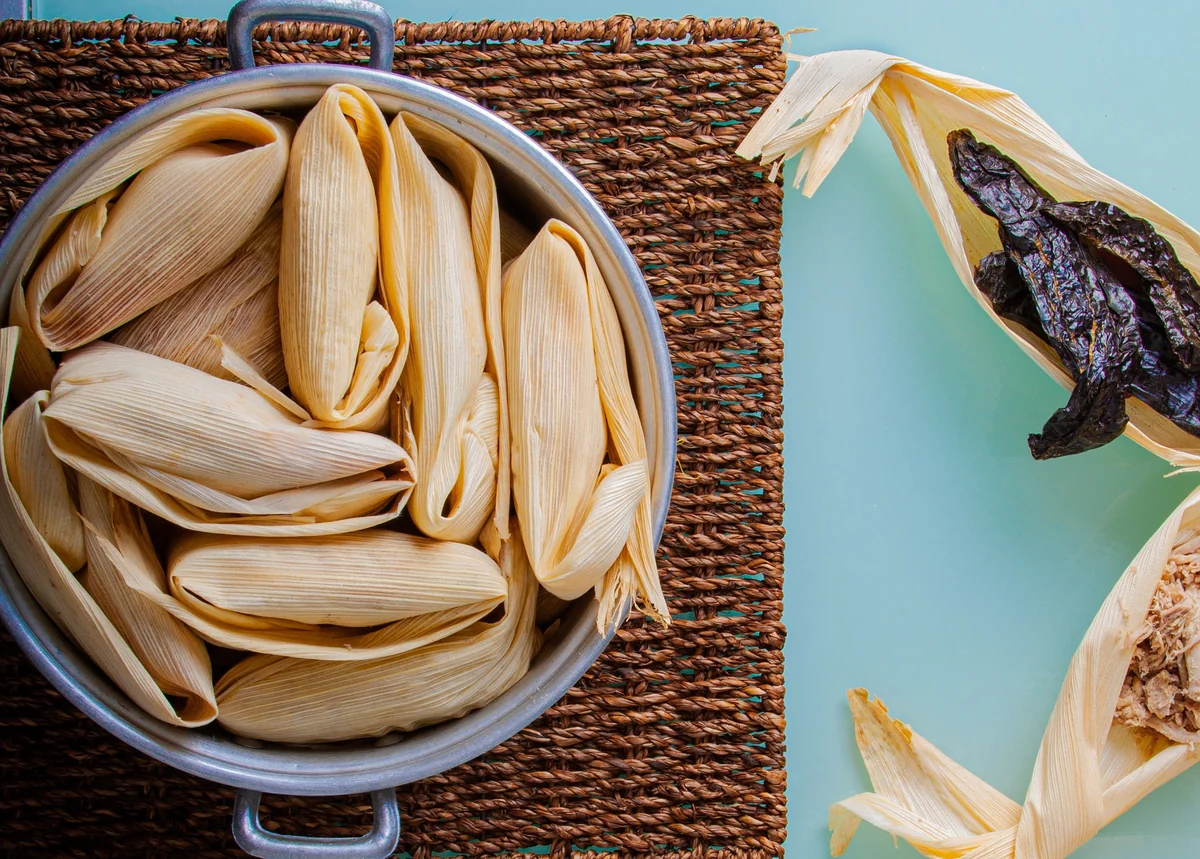
Another difference is the wrapping. In Mexico, they usually wrap the dough in corn husks, while Guatemala’s best-known tamales use banana leaves. It gives them a softer, grassier aroma and makes them noticeably bigger than husk-wrapped tamales. Still, some Guatemalan tamales use corn husks, as with the smaller chuchitos.
Cooked Twice vs. Steamed Once
There are also differences in the cooking method. The Guatemalan tamal recipe calls for two forms of cooking: first, you cook the masa in a pot, then the stuffed wrapping is steamed. The Mexican version is cooked once, hence the thicker consistency. One thing is for sure: you’ll find countless recipes for this tasty dish across Latin America, some very similar and others entirely different, but all bursting with flavor and a rich ancestral tradition.
Tamales Colorados vs. Mexican Tamales Rojos
One thing trips people up online. Search for tamales colorados, and you’ll also get Mexican tamales rojos, the red pork tamales from Mexico, including the Sinaloa and Nayarit styles, made with guajillo and ancho chiles in corn husks with a masa that’s beaten and steamed once. They’re good. They’re just a different tamale. If a recipe calls for corn husks and raw masa, it isn’t a Guatemalan tamal colorado.
Other Guatemalan Tamales to Try!
Guatemalan tamales colorados are the ones most people picture, but the country has plenty more. I keep them all in one place in my guide to the types of Guatemalan tamales, with what makes each one different, and when it gets eaten. Here’s the short version:
- Tamales de masa: The smallest and simplest version is plain in taste, with no filling, cooked in corn husks that give a thicker consistency. They are used in place of bread to dip in soups and salsas rather than eaten alone.
- Tamal negro (black): A darker, sweeter tamal with a chocolate recado, finished with raisins and prunes. If you’re cooking for Christmas, this is the one to make alongside the colorados.
- Chuchito tamales: Smaller, with a thicker masa and chicken or pork in recado, wrapped in corn husk instead of banana leaf.
- Tamales de chipilín: Similar to the chuchitos in size and consistency, these tamalitos are masa mixed with chipilín leaves, wrapped in corn husks, and usually served with tomato sauce and cheese.
- Tamalitos de elote: Sweet tamalitos made from fresh corn blended into a batter, with a few whole kernels and no meat.
- Tamalitos de Cambray: Sweet corn-based dough (no meat) with sugar, pink sugar, and cinnamon, raisins, almonds, and anise, wrapped in corn husk.
- Paches: Made with mashed potato instead of corn masa, filled with meat and recado.
How to Make Guatemalan Tamales Colorados
Yields about 20 tamales
I have broken down the recipe for tamales colorados with a pork filling into sections with clear, step-by-step directions to make the process easier.
You can stuff your tamales colorados with pork or chicken; for this recipe, I used pork shoulder. If you prefer chicken, simply substitute it for the pork. I recommend using dark-meat chicken, such as thighs, but you can also use chicken breast if you prefer white meat.
Traditionally, chicken tamales in Guatemala use bone-in chicken pieces, which makes them challenging to pick out when eating. I prefer using boneless chicken. If using chicken, the cooking time may vary because chicken cooks faster than pork. However, the cooking times for the tamales will be the same.
Ingredients for Guatemalan Tamales Colorados
Half the battle with a recipe like this is finding decent tomatoes and peppers in the quantities it calls for. I now order produce and pantry basics from Misfits Market, which makes cooking from scratch easier and keeps good food out of the trash.
For the Dough (Masa):
- 2 lbs of instant corn flour (like Maseca)
- 4-6 cups of water
- 1 ½ lb of pork lard (or the same weight of vegetable shortening)
- Additional water
- 2 Tbsp of salt
For the Meat Filling:
- 2 lb of boneless pork meat (shoulder) or chicken pieces
- 1 oz of lard
- Salt and pepper to taste
For the Recado Sauce:
- 18 ripe tomatoes
- 8 tomatillos (miltomate)
- 3 red bell peppers
- 1 onion
- 2 garlic cloves
- 2 guajillo peppers (chile guaque), found in Mexican grocery stores
- 1 pasa pepper (Mexican pasilla pepper)
- 2 chile sambo (sometimes spelled zambo) or 2 jalapeño peppers as a substitute
- 2 oz hulled pumpkin seeds (pepitoria)
- 2 oz sesame seeds (ajonjolí)
- 1 tsp powdered black pepper
- 3 allspice seeds (pimienta gorda)
- 2 oz of lard
For Assembly and Garnish:
- 40 banana leaves
- 2 bunches of cibaques (or kitchen twine/cooking strings for wrapping)
- 2 cooked sweet red peppers (cut into 20 strips)
- 20 green olives, pitted or stuffed with red pepper
How to Make the Masa (Corn Dough) for Tamales:
- Mix the corn flour with the water, adding half a cup of water at a time until the dough has reached the consistency needed to make a dense ball of masa.
- In a wide bowl, put the dough and dilute it with the additional water, whisking it to prevent lumps from forming until you get a smooth dough.
- Pour the dough into a large pot and cook it, constantly stirring with a wooden spoon to prevent the batter from settling or sticking to the pot.
- As it comes to a boil, add the lard and salt. Keep cooking and stirring until the dough is thick and smooth, about the consistency of porridge, and add more water if it gets too stiff.
- You’ll know it’s ready when the dough starts to peel off from the edges of the pot with ease. Another way to check it is to put a tablespoon of dough in a glass of water. If the dough does not fall apart inside the water, you are good to go.
- Set aside and let it cool down.
Chicken Filling for Guatemalan Tamal:
If you’d rather use chicken, follow the pork steps below with 1-inch pieces of boneless thigh. The traditional way is a bone-in piece, like a small drumstick or part of a thigh. If you go that route, cook the chicken separately and tuck one whole piece into each tamal.
Pork Meat Filling for Guatemalan Tamal:
- Cut the pork or chicken into 20 cube-shaped pieces and rub them with salt.
- Cook the meat cubes in a large pan with the ounce of lard (you can use oil or cooking spray) until cooked through, about 8 to 12 minutes.
- Set it aside to keep warm.
How to Make the Recado Sauce for Guatemalan Tamales:
- In a large pot, add enough water to cover the tomatoes, tomatillos (miltomates), red bell peppers, onion, garlic, and the guajillo, pasa, and zambo peppers. Bring to a boil, then cook until everything is tender and the tomato skins start to peel off.
- While the vegetables cook, toast the pumpkin seeds and sesame seeds in a dry skillet over medium-low heat, stirring the whole time, until the sesame is golden and the pumpkin seeds start to pop, 3 to 5 minutes. Pull the pan off the heat the moment the sesame turns golden; it burns fast.
- Peel the tomatoes so as not to have any coarse flakes. Put everything in a blender with the toasted seeds, black pepper, and allspice, and blend until smooth. It should look like a thin sauce.
- Pour the tomato sauce into the pan where the meat is, and add the 2 ounces of lard, and check the seasoning.
- If the sauce is still watery, thicken it with 2 tablespoons of corn flour. Keep cooking the sauce until it’s thick enough that it won’t leak when you wrap the tamales.
- Set aside for assembly.
How to Assemble Homemade Tamales:
- Slice the thickest part of the vein for the first 20 banana leaves (lengthwise, about halfway towards the trunk). Cut the other 20 leaves into a rectangular shape, about 12×8 inches.
- Toss all the leaves in boiling water, cleaning them thoroughly. Use tongs to help get them completely immersed in the water. Stack on a plate and cover with a damp cloth.
- Soak the cibaque or string in water and cut it in half when it is already wet (to make it yield).
- Gather all the dough, fillings, and garnishes, and set them up on your kitchen counter or a worktable to start assembling.
- Place a large banana leaf on the counter and then a smaller cut leaf on top (crosswise). With a soup ladle, scoop about 5-6 oz of dough and place it in the center of the leaf. Then press the center of the dough with three fingers to make a small hole.
- Put a piece of meat in the hole and add 1 to 2 tablespoons of recado. Place one olive and one strip of sweet pepper on top.
How to Fold Banana Leaf Tamales:
- Fold the banana leaf side closest to you over the dough and bring the side farthest from you towards yourself. You will end up with a long, skinny rectangle.
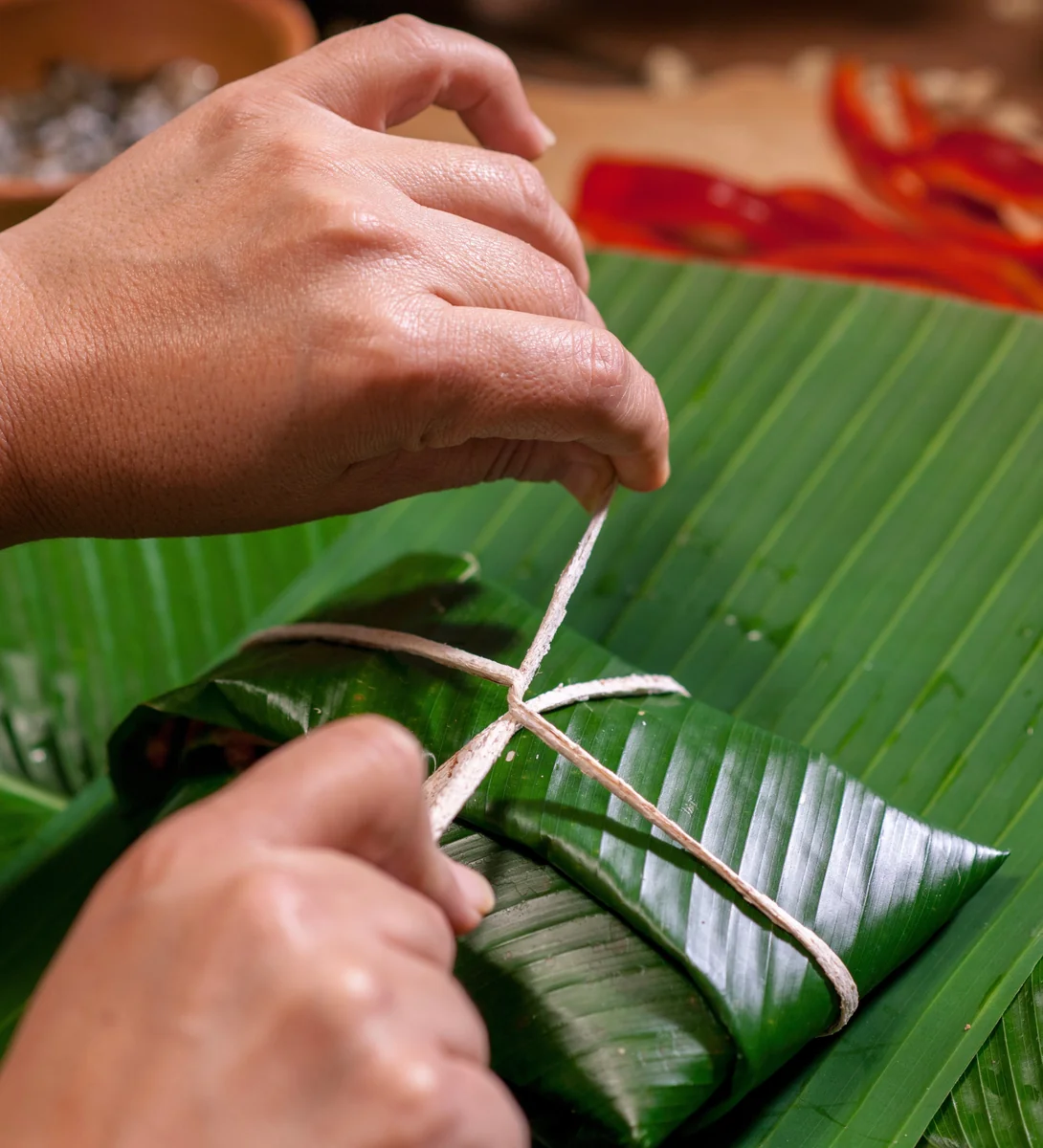
- Carefully wrap the dough by folding one long end under and the other long end over it.
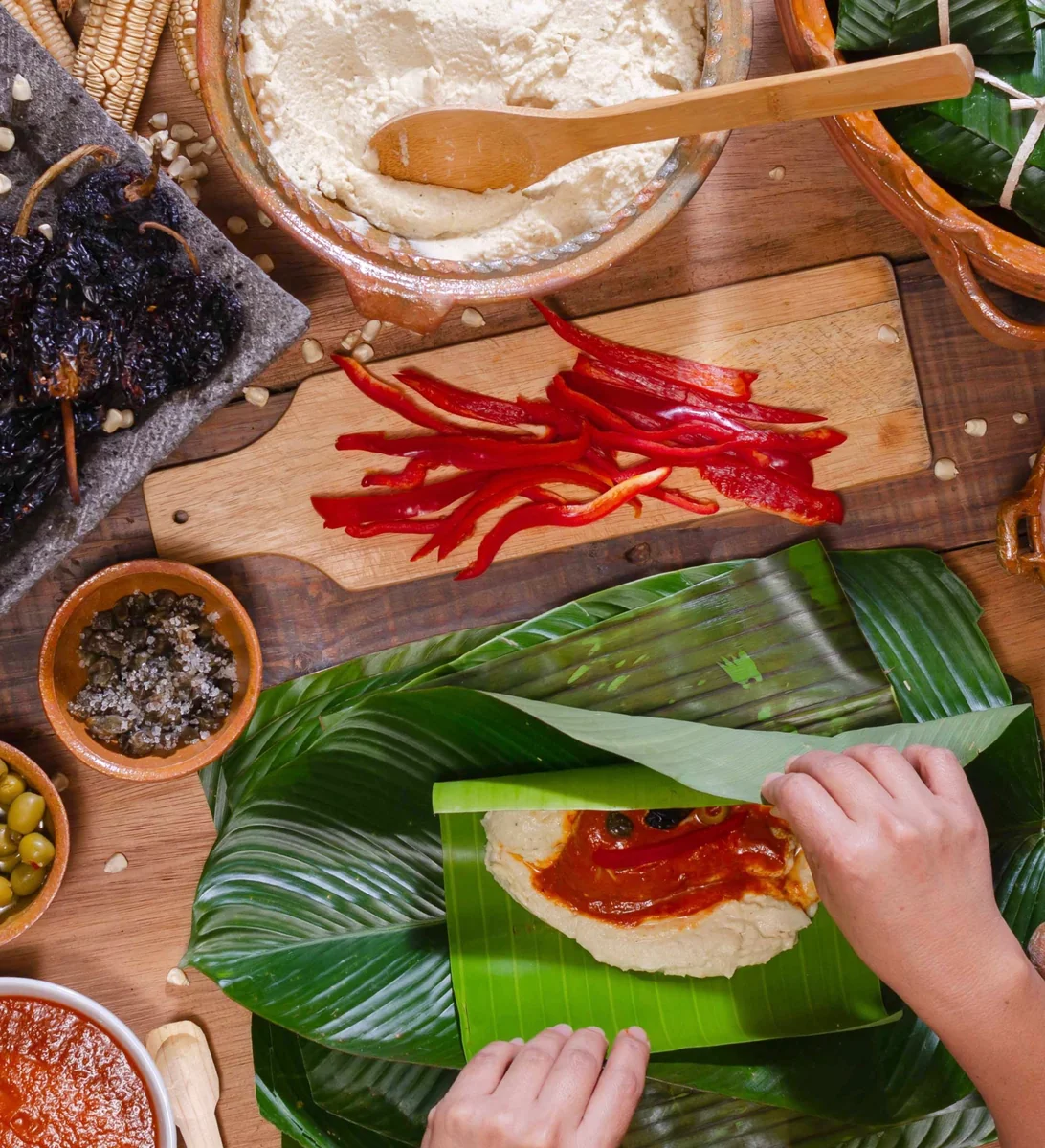
Folding the banana leaf over the filling - Use the string to tie up the wrap, making sure it is tight enough.
- Repeat until you go through all the dough and leaves.
- I like to wrap my tamales with an extra layer of aluminum foil on top of the banana leaves. This extra layer makes it easier to store the tamales once cooked, whether you’re refrigerating them for a few days or freezing them.
How to Cook Tamales
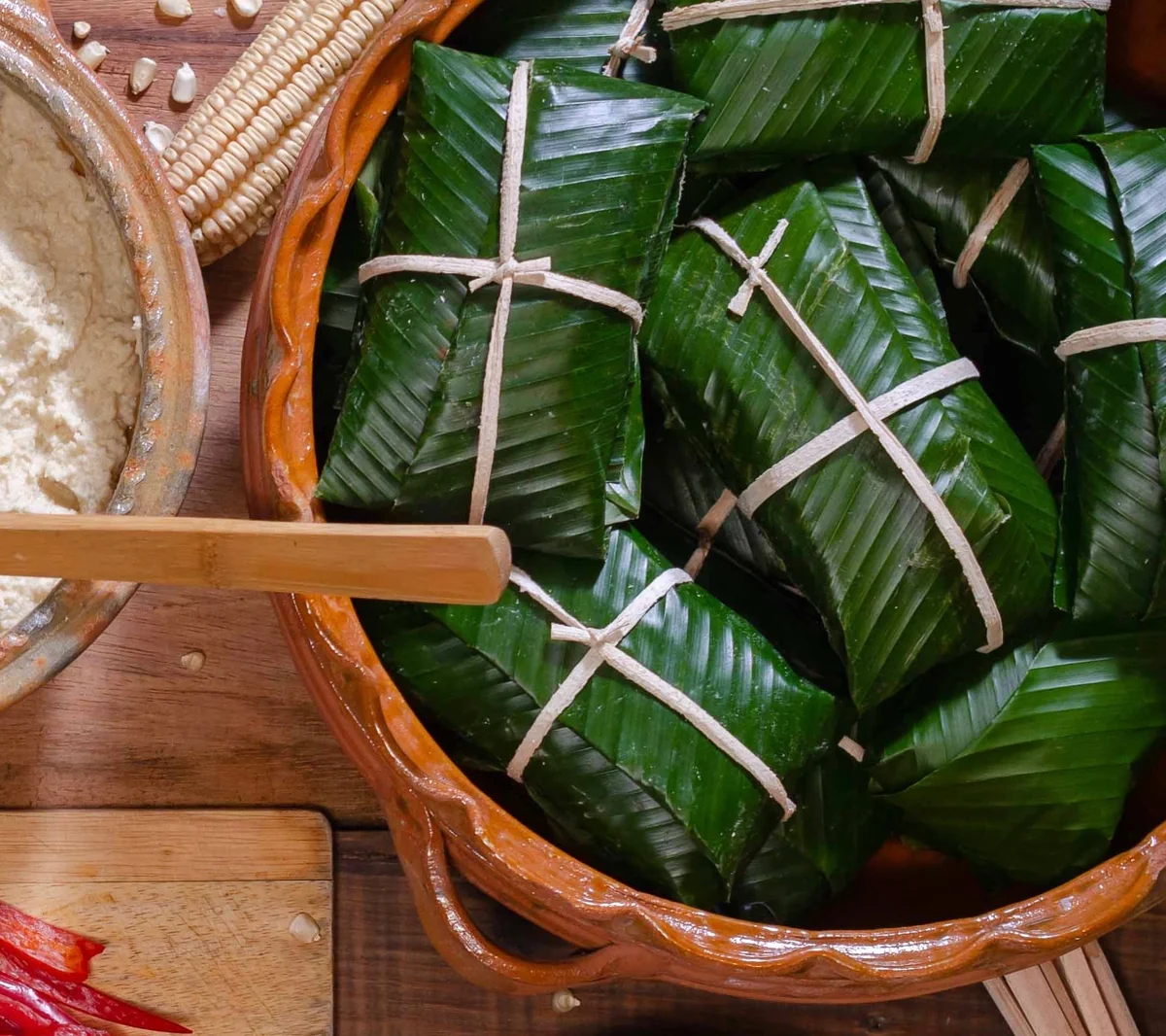
- To cook, place a steam basket on the bottom of a large pot. Add about 2-4 cups of water (depending on the size of your container). Line the basket with some extra pieces of banana leaves.
- Place the wraps in the basket, making sure they don’t touch the water. Cover them with the remaining leaves. Cover the container and bring it to a boil. Add more boiling water if necessary.
- Steam over medium heat for 60-90 minutes until the dough easily separates from the leaf and is slightly firm (they will continue to harden after being removed from the heat).
- Unwrap the tamales and serve them hot or at room temperature.
Make Ahead of Time
This traditional Guatemalan recipe is one of my all-time favorites, but it is also time-consuming. I suggest you make a strategy, as it will take you a couple of hours to finish the entire meal. You can cook everything on the same day or take a few shortcuts, such as cooking the recado sauce ahead of time.
While you are at it, why not make a double batch of recado and save the leftover for another Guatemalan dish? It keeps for a few days in the fridge, and it’s the same sauce you need for chuchitos, the small husk-wrapped tamales, so a second tamal project is already half done. And this sauce is extremely flexible! You’ll use it on loads of different foods, like tostadas, hilachas, and even as a dressing over taquitos or huevos rancheros avocado toasts.
If you choose chicken as your main ingredient for the stuffing, cook it the day before and refrigerate it. However, if you decide on pork, I suggest doing it the same day, as the meat tends to dry up when refrigerated.
As for the dough, it is best to make it the same day, so it doesn’t dry out and become too stiff. But cooking everything else a couple of days in advance is a great idea, freeing up time for the assembly and final steaming.
Tips for Making the Best Guatemalan Tamales Colorados
- Butter Makes Everything Better: Replacing a stick of lard with melted unsalted butter gives the masa a richer taste. Melt it first so it mixes in without lumps.
- Be a Recado Expert: For a smoother recado, it is best to peel the tomatoes after boiling them to get a smoother sauce. Don’t push the sauce through a strainer, as it could lose some of its tangy flavors and body. Better use a blender and work it a little longer for a more delicate sauce.
- Substitutes for banana leaves: You can always use aluminum foil to wrap if you can’t find banana leaves. You may not get the grassy flavor from the leaves, but it works.
- Use a wooden spoon: Wooden spoons are a strong tool that helps you scrape things off the sides and bottom of your pot while mixing the corn dough. In addition, they give you a firm handle on things, making stirring easier and more effective.
What Is the Best Way to Freeze Tamales?
You might be wondering, do I freeze them cooked or uncooked? In my experience, it is best to freeze the tamale wrap after it is cooked, as it retains its consistency and flavors better than uncooked ones. You can keep them in the fridge for a few days or freeze them for up to 6 months. Besides, it makes the reheating process a little easier.
I like to freeze tamales in smaller batches so I can pull out only what we need. Once they are completely cool, wrap them well and store them in freezer-safe bags or airtight containers. Food-safe polyethylene bags or custom Mylar bags can also work well for larger batches, helping protect the tamales from freezer burn and preserving their flavor and texture intact.
If you decide to embark on this culinary adventure with me, you will not make just one, right? This recipe yields 20 portions, and if you are not planning a big family gathering, you will indeed have some leftovers for when you crave a traditional Guatemalan meal. Here are some tips on the correct way to freeze them:
- After steaming, remove the tamales from the heat and place them on a flat surface. Let them cool down at room temperature before freezing.
- Place the tamales in a freezer bag, gently stacking them on top of each other to provide an extra layer of protection against other frozen items and prevent condensation from leaking into the dough.
- Don’t forget to label the bag so you know how long they have been sitting in your freezer.
How to Reheat Tamales
To reheat tamales, follow these simple steps:
- If they are frozen, you will need to thaw the tamales first. To thaw, place them in your refrigerator and let them defrost overnight. Don’t leave any food at room temperature: it is a bacteria magnet!
- When it is time to reheat, simply set a pot with a steamer basket and add an inch or two of water, careful not to get the tamales wet.
- Cover the pot with a lid and place it over medium heat for 10-15 minutes.
How to Reheat Frozen Tamales
You can also reheat the tamales straight from the freezer without thawing. It’s the same process as reheating thawed ones; the only difference is time, 20 to 30 minutes. Before you take the whole batch off the stove, open one wrap to check that it’s defrosted and hot all the way through.
What to Serve With Traditional Guatemalan Tamales?
Traditionally, Guatemalan tamales colorados are served alone on a plate with a squeeze of lime and a slice of traditional pan francés, a traditional Guatemalan bread. It’s also common to eat this Guatemalan dish with black beans and white rice. Platanitos fritos (fried plantains) are also a great side dish that creates a delicious contrast between salty and sweet flavors. For the holiday season and Christmas Eve, tamales colorados are usually accompanied by a warm cup of Guatemalan hot chocolate.
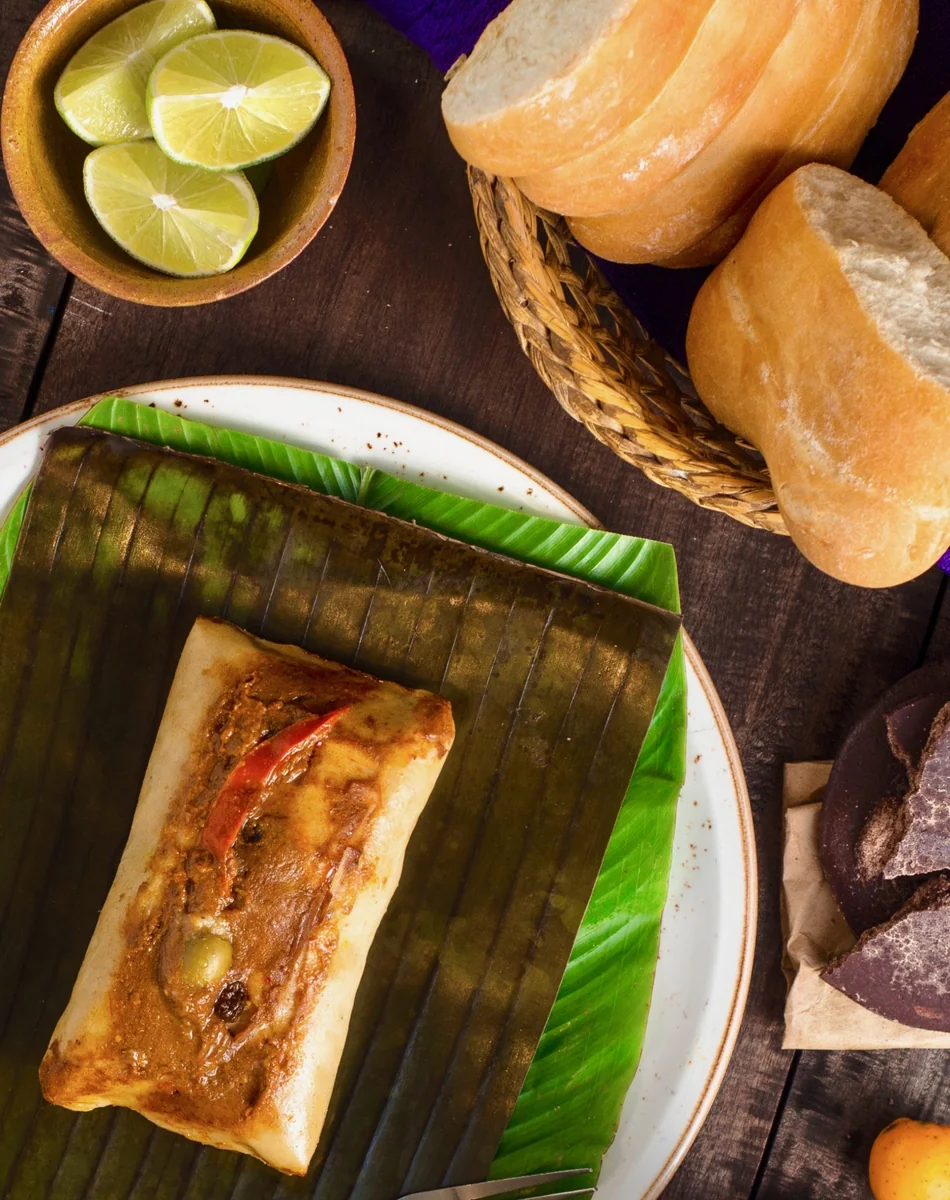
Feel free to accompany your tamales with some non-traditional side dishes like fresh avocado and cucumber salad. One unspoken rule about Guatemalan tamale eating etiquette: You can eat as many as you want, but you can only have one on your plate at a time.
Guatemalan Tamales Colorados: What to Know Before You Start
How many tamales does this recipe make?
About 20, using 2 pounds of instant corn flour and 5 to 6 ounces of cooked masa per tamal. Every extra pound of corn flour yields about 10 more, so 5 pounds makes roughly 50. Scale everything else the same way: one piece of meat, one olive, and one strip of pepper per tamal.
How long do you steam Guatemalan tamales?
60 to 90 minutes over medium heat, with the pot covered. They’re done when the masa pulls cleanly away from the leaf and feels slightly firm. They keep firming up as they cool, so don’t worry if they seem soft straight out of the pot.
What’s the most common mistake with tamales?
Wrapping the masa before it’s cooked enough. If it doesn’t pull away from the sides of the pot, or a spoonful falls apart in a glass of water, keep cooking, or the tamales will come out mushy. The second one is letting the water touch the tamales while they steam.
Can I use shortening instead of lard?
Yes. Vegetable shortening works in the same amount by weight, and it’s the easiest swap if you don’t eat pork. The masa won’t taste quite as rich, so taste it for salt before you take it off the heat.
Where to Eat Tamales Colorados in Guatemala
If you’re ever in Guatemala on a Saturday, look for a red light outside a front door before you look for a restaurant. That’s still the best way to get a tamal colorado. For the rest of the week, I put together a guide to where to eat tamales in Guatemala, from Guatemala City and Antigua to Lake Atitlán, Xela, and Cobán, with what each place makes and when to go.
And if you’re planning a trip, I can help you build an itinerary around the food, with time for local markets, traditional meals, and stops that fit the places you’re visiting. Tamales included, of course!
More Traditional Guatemalan Recipes
Tamales are just one way to bring Guatemalan flavors to your kitchen. These traditional recipes offer more to try, from a comforting bowl of jocón to sweet rellenitos and buñuelos. And if you want the whole picture, start with my guide to Guatemalan food.
Pollo en Jocón
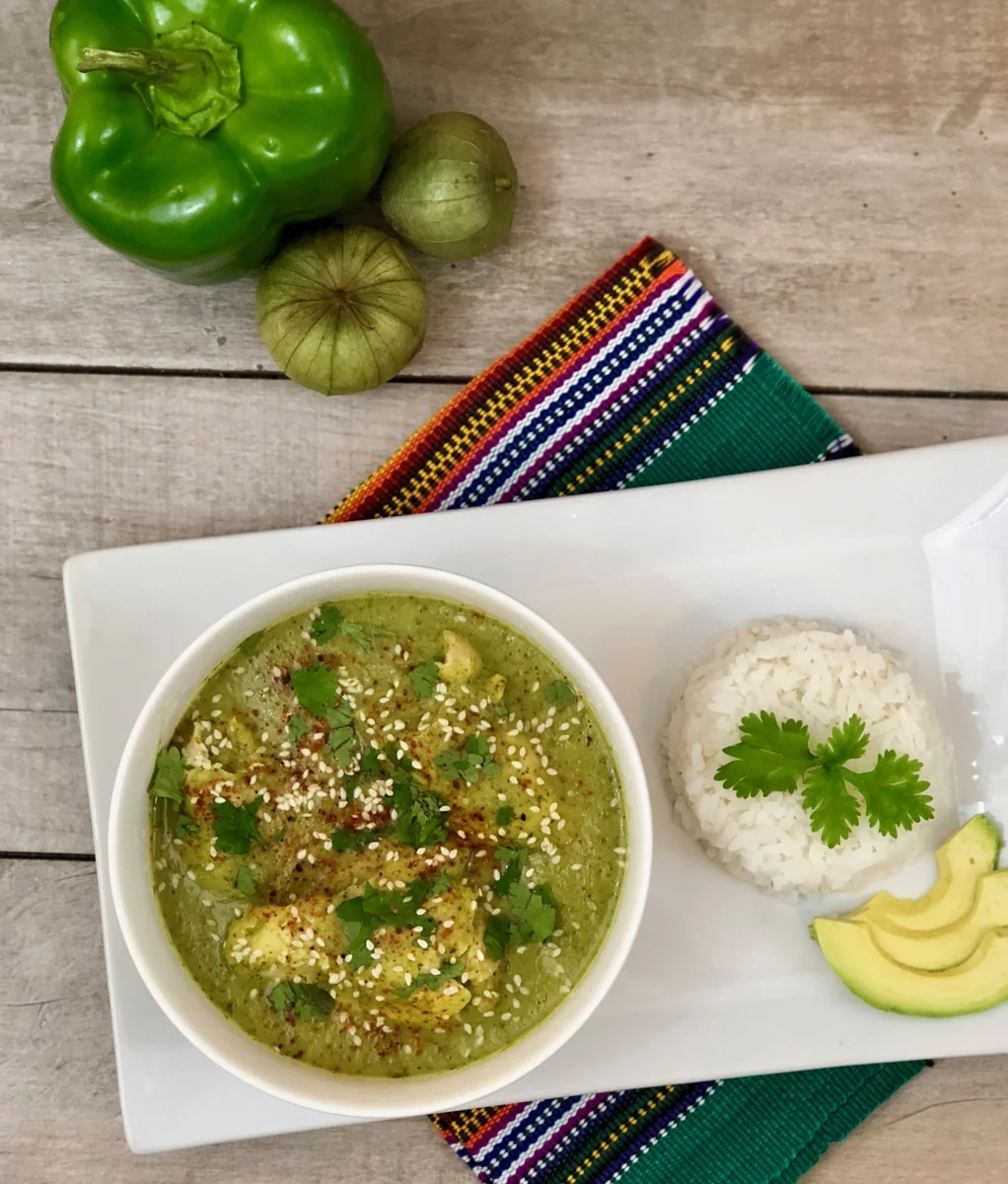
This easy and healthy recipe for pollo en jocón, tomatillo and cilantro chicken stew, is a traditional dish from Guatemala. Delicious and easy to make, it’s the perfect cold-weather comfort food.
Guatemalan Tapado
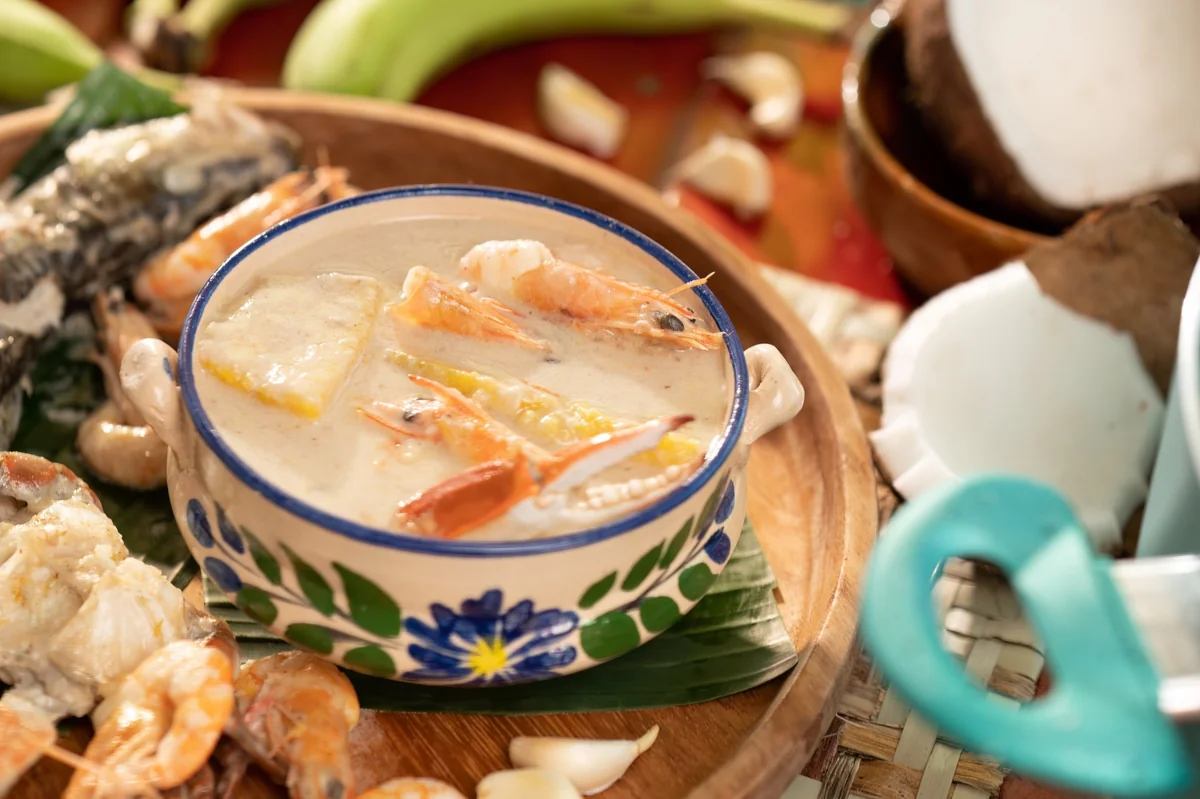
A taste of the Caribbean and Garifuna flavors, Guatemala’s tapado seafood soup is a culinary legacy and an explosion of deliciousness. It’s the brilliant and harmonious mixture of luscious seafood cooked in savory coconut broth.
Guatemalan Chiles Rellenos
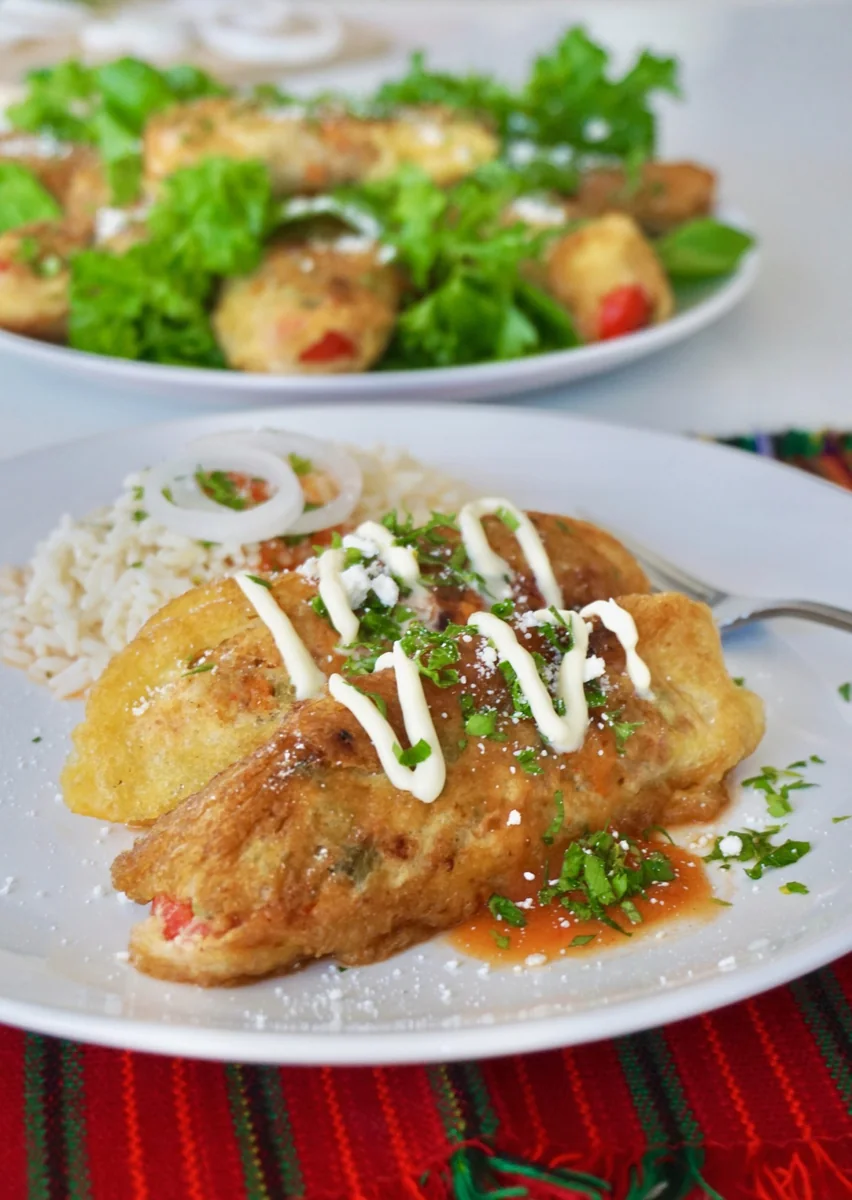
This traditional Guatemalan recipe differs somewhat from Mexican chiles rellenos. It is sweet peppers filled with a concoction of beef and veggies and a drizzle of tomato sauce.
Traditional Guatemalan Enchiladas
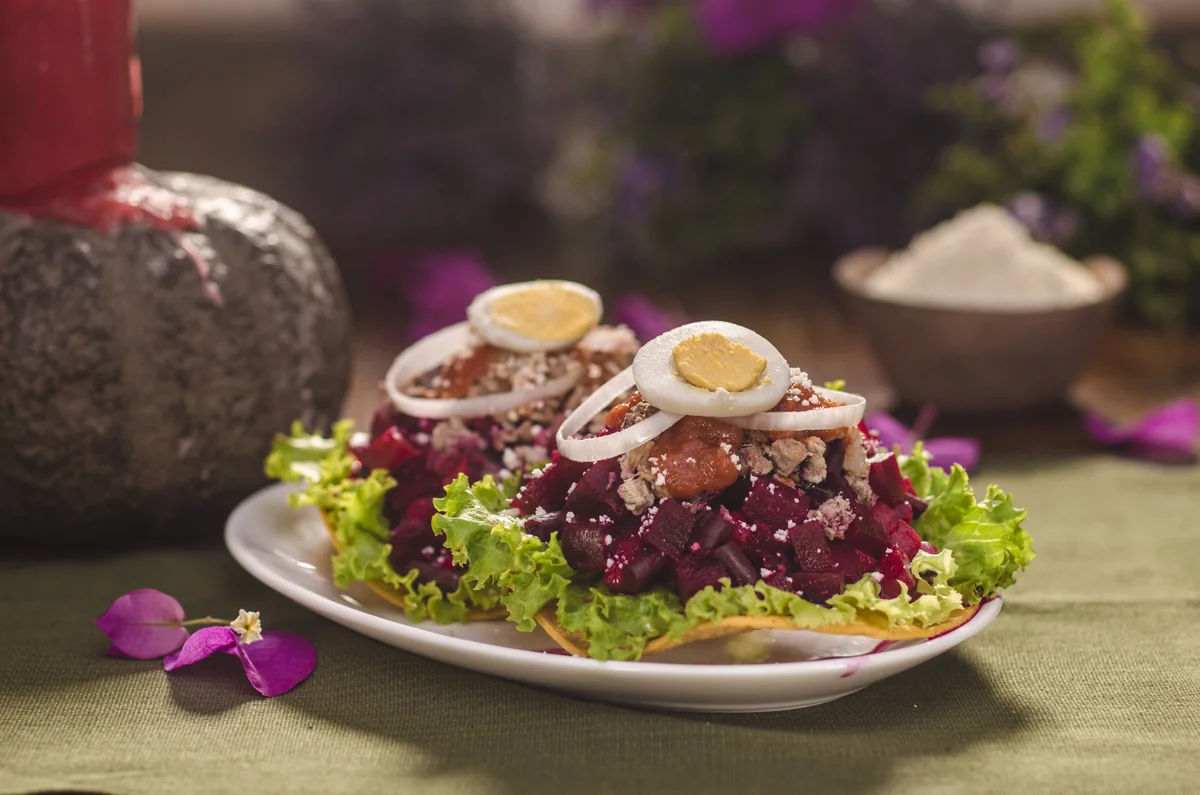
A traditional Guatemalan dish, it is a fairly easy Guatemalan recipe. Made with a toasted tortilla topped with a vegetable mixture or escabeche, ground beef, and tomato sauce, enchiladas (or jardineras) are one of my favorite authentic Guatemalan foods.
Guatemalan Rellenitos
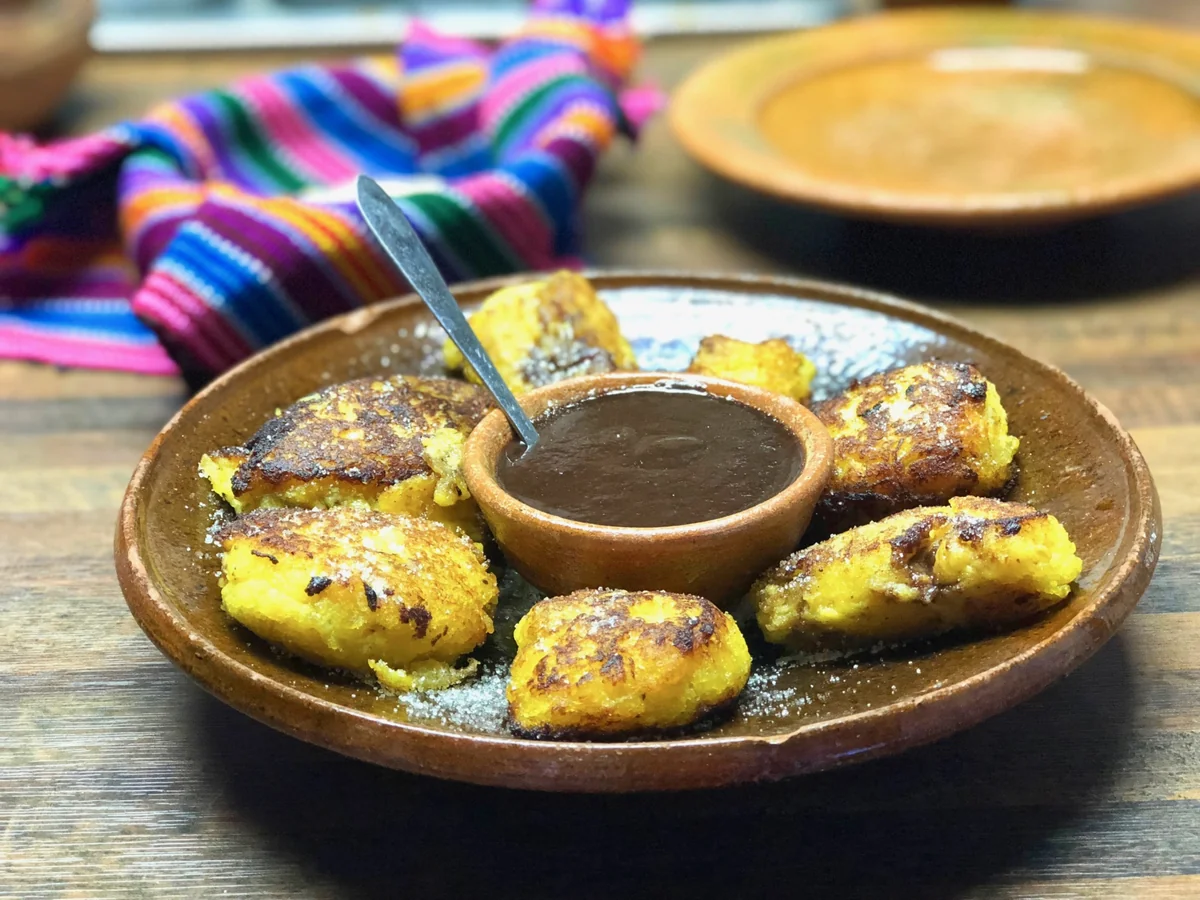
Rellenitos de plátano are made with ripe plantains, filled with beans, and covered in sugar. Although the combination might seem strange, this sweet plantain recipe is one of the most iconic Guatemalan desserts.
Guatemalan Buñuelos
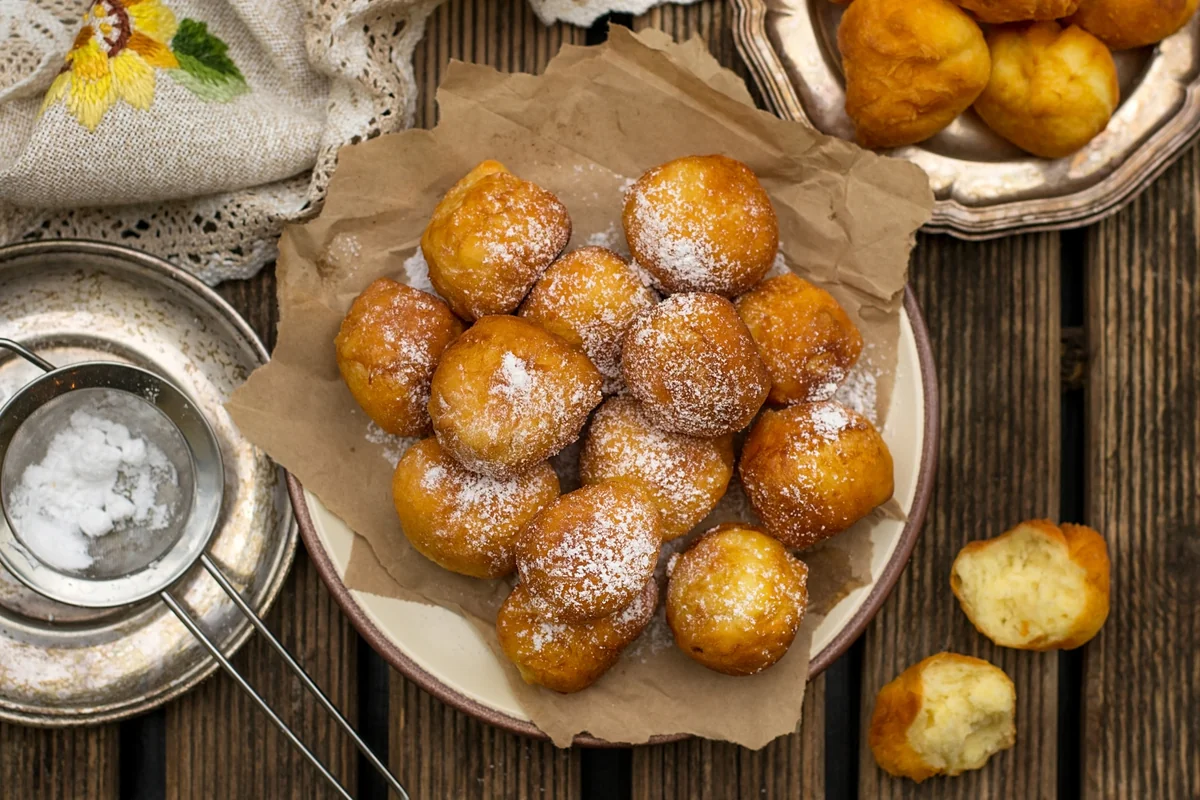
Buñuelos guatemaltecos are fried wheat-based dough balls, crisp on the outside and soft on the inside, covered in white sugar, and served in a light syrup with a hint of anise.
Ponche de Frutas
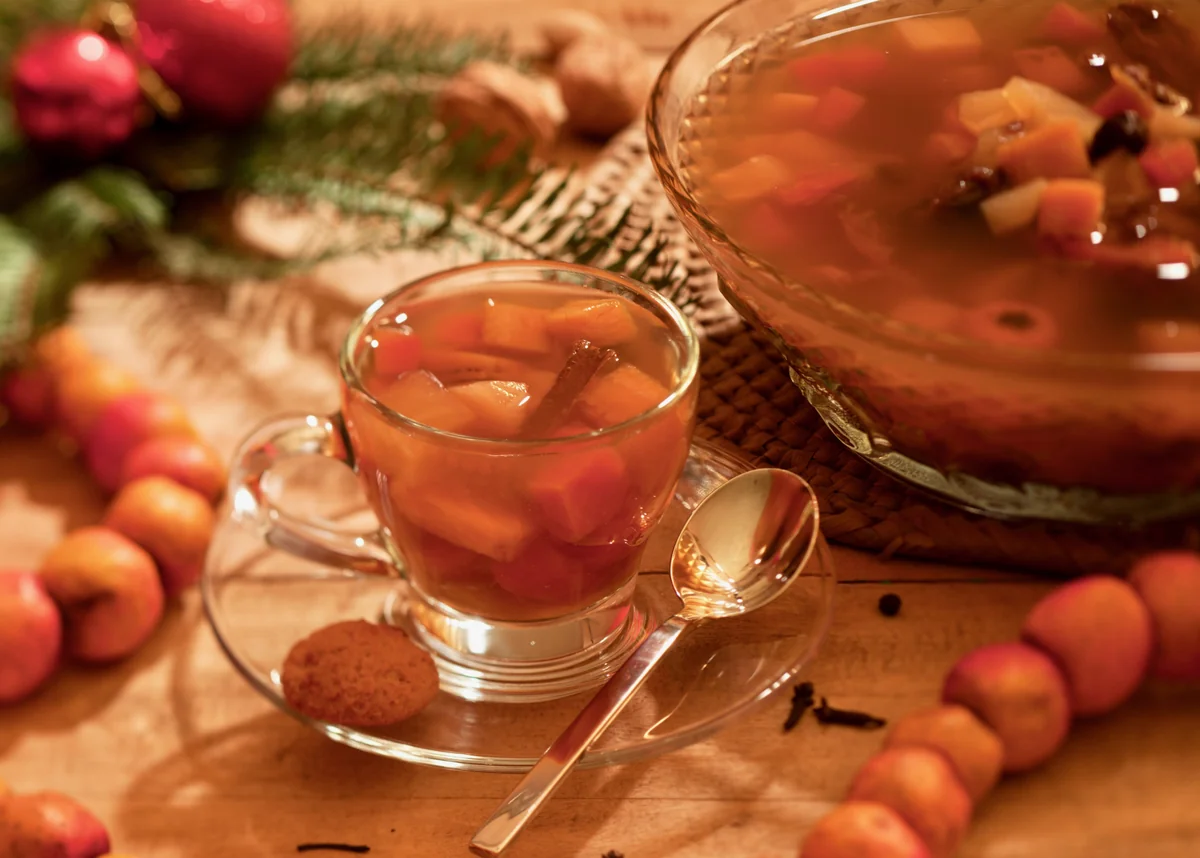
Guatemala’s hot Christmas fruit punch, the drink that sits next to the tamales at midnight!
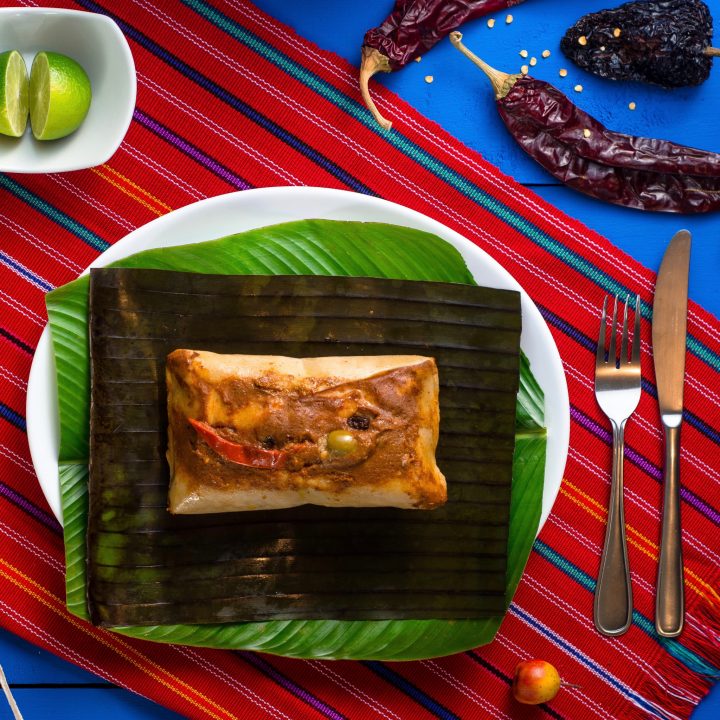
The Best Recipe for Guatemalan Tamales Colorados
Guatemalan tamales colorados are one of my favorite traditional Guatemalan dishes. After lots of experimenting, I have come up with the best recipe for Guatemalan tamales, including easy step-by-step instructions.
Ingredients
For the Dough (Masa):
- 2 lbs of instant corn flour (like Maseca)
- 4-6 cups of water
- 1 ½ lb of pork lard (or the same weight of vegetable shortening)
- Additional water
- 2 Tbsp of salt
For the Meat Filling:
- 2 lb of boneless pork meat (shoulder) or chicken pieces
- 1 tsp of oil or cooking spray
- Salt and pepper to taste
For the Recado Sauce:
- 18 ripe tomatoes
- 8 tomatillos (miltomate)
- 3 red bell peppers
- 1 onion
- 2 garlic cloves
- 2 guajillo peppers (chile guaque)
- 1 pasa pepper (Mexican pasilla pepper)
- 2 chile sambo (or 2 jalapeño peppers)
- 2 oz hulled pumpkin seeds (pepitoria)
- 2 oz sesame seeds (ajonjolí)
- 1 tsp powdered black pepper
- 3 allspice seeds (pimienta gorda)
- 2 oz of lard
For Assembly and Garnish:
- 40 banana leaves
- 2 bunches of cibaques (or kitchen twine/cooking strings for wrapping)
- 2 cooked sweet red peppers (cut into 20 strips)
- 20 green olives, pitted or stuffed with red pepper
Instructions
TO MAKE THE MASA
- Mix the corn flour with the water, adding half a cup of water at a time until the dough has reached the consistency needed to make a dense ball of masa.
- In a wide bowl, put the dough and dilute it with the additional water, whisking it to prevent lumps from forming until you get a smooth dough.
- Pour the dough into a large pot and cook it, constantly stirring with a wooden spoon to prevent the batter from settling or sticking to the pot.
- As it comes to a boil, add the lard and salt. Keep cooking and stirring until the dough is thick and smooth, about the consistency of porridge, and add more water if it gets too stiff.
- You’ll know it’s ready when the dough starts to peel off from the edges of the pot with ease. Another way to check it is to put a tablespoon of dough in a glass of water. If the dough does not fall apart inside the water, you are good to go.
- Set aside and let it cool down.
TO MAKE THE FILLING
- Cut the pork or chicken into 20 cube-shaped pieces and rub them with salt.
- Cook the meat cubes in a large pan with the ounce of lard (you can use oil or cooking spray) until cooked through, about 8 to 12 minutes.
- Set it aside to keep warm.
TO MAKE THE SAUCE
- In a large pot, add enough water to cover the tomatoes, tomatillos (miltomates), red bell peppers, onion, garlic, and the guajillo, pasa, and zambo peppers. Bring to a boil, then cook until everything is tender and the tomato skins start to peel off.
- While the vegetables cook, toast the pumpkin seeds and sesame seeds in a dry skillet over medium-low heat, stirring the whole time, until the sesame is golden and the pumpkin seeds start to pop, 3 to 5 minutes. Pull the pan off the heat the moment the sesame turns golden; it burns fast.
- Peel the tomatoes so as not to have any coarse flakes. Put everything in a blender with the toasted seeds, black pepper, and allspice, and blend until smooth. It should look like a thin sauce.
- Pour the tomato sauce into the pan where the meat is, and add the 2 ounces of lard, and check the seasoning.
- If the sauce is still watery, thicken it with 2 tablespoons of corn flour. Keep cooking the sauce until it’s thick enough that it won’t leak when you wrap the tamales.
- Set aside for assembly.
TO ASSEMBLE THE TAMALES
- Slice the thickest part of the vein for the first 20 banana leaves (lengthwise, about halfway towards the trunk). Cut the other 20 leaves into a rectangular shape, about 12×8 inches.
- Toss all the leaves in boiling water, cleaning them thoroughly. Use tongs to help get them completely immersed in the water. Stack on a plate and cover with a damp cloth.
- Soak the cibaque or string in water and cut it in half when it is already wet (to make it yield).
- Gather all the dough, fillings, and garnishes, and set them up on your kitchen counter or a worktable to start assembling.
- Place a large banana leaf on the counter and then a smaller cut leaf on top (crosswise). With a soup ladle, scoop about 5-6 oz of dough and place it in the center of the leaf. Then press the center of the dough with three fingers to make a small hole.
- Put a piece of meat in the hole and add 1 to 2 tablespoons of recado. Place one olive and one strip of sweet pepper on top.
FOLDING THE TAMALES
- Fold the banana leaf side closest to you over the dough and bring the side farthest from you towards yourself. You will end up with a long, skinny rectangle.
- Carefully wrap the dough by folding one long end under and the other long end over it.
- Use the string to tie up the wrap, making sure it is tight enough.
- Repeat until you go through all the dough and leaves.
- I like to wrap my tamales with an extra layer of aluminum foil on top of the banana leaves. This extra layer makes it easier to store the tamales once cooked, whether you’re refrigerating them for a few days or freezing them.
COOKING THE TAMALES
- To cook, place a steam basket on the bottom of a large pot. Add about 2-4 cups of water (depending on the size of your container). Line the basket with some extra pieces of banana leaves.
- Place the wraps in the basket, making sure they don’t touch the water. Cover them with the remaining leaves. Cover the container and bring it to a boil. Add more boiling water if necessary.
- Steam over medium heat for 60-90 minutes until the dough easily separates from the leaf and is slightly firm (they will continue to harden after being removed from the heat).
- Unwrap the tamales and serve them hot or at room temperature.
Notes
- Melt unsalted butter before replacing lard for richer, lump-free masa.
- For smoother recado, peel boiled tomatoes. Don’t strain the sauce; it can lose its tang and body. Blend it longer for a more delicate texture.
- Use aluminum foil if banana leaves aren’t available. It won’t add their grassy flavor, but it works.
- Use a wooden spoon to scrape the pot’s sides and bottom while mixing corn dough. Its sturdy handle makes stirring easier and more effective.
Nutrition Information:
Yield: 20 Serving Size: 1Amount Per Serving: Calories: 541Total Fat: 11gSaturated Fat: 3gUnsaturated Fat: 8gCholesterol: 57mgSodium: 1182mgCarbohydrates: 99gFiber: 12gSugar: 34gProtein: 19g
Nutritional values are estimates calculated using standard databases. Actual values may vary based on specific ingredients and brands used.
How Does Your Family Make Tamales Colorados?
Nothing says traditional food better than a savory Guatemalan tamales colorados! Every family’s recipe is a little different. Some add raisins or capers; some keep the chicken on the bone; and one reader swears by a spoonful of consomé (chicken bouillon) in the masa. And even though I know this Guatemalan dish is fairly labor-intensive and time-consuming, it is one of the best tamale recipes I have ever tried. Tell me in the comments how your family does it, and if you make this recipe, let me know how it went and what you changed.
Plan to spend half a day making them, but I promise, you won’t regret all the extra effort. Nothing compares to a homemade tamal right out of the pot! My love for Guatemalan tamales colorados is a vital part of my Hispanic heritage, one I love sharing with my family. Here’s an idea: Why not invite the whole family and make it a tamalada party? It could be the beginning of a beautiful family tradition!

Through her writing, Paula helps travelers discover Guatemala beyond the typical tourist route with practical advice, local recommendations, and authentic experiences that connect visitors with the country’s people, culture, and traditions.
Planning a trip to Guatemala? Paula offers personalized Guatemala itinerary planning and trip consultation services tailored to your interests, travel style, and budget. Contact her at [email protected] to learn more.
- San Lucas Tolimán Guatemala: Lake Atitlán’s Best-Kept Secret - September 24, 2026
- Hotel Tolimán Lake Atitlán: A Special Stay in San Lucas Tolimán - September 24, 2026
- Guatemala Dreams in San Lucas Tolimán: A Boutique Stay on Lake Atitlán - September 23, 2026


Thanks for sharing the recipe!!! i will try it for chrismas and make a party out of it!!!
Hi Paula, I make Guatemalan tamales every year for my Guatemalan husband. A few things seem to be missing from your recipe, mainly in the sauce. And maybe the areas the recipe came from are why, but he grew up extremely poor and his family’s tamales only consisted of masa, meat, and recado. But consomé is added to the masa and sauce, and pumpkin seeds and sesame seeds are also toasted and added to the sauce, along with toasted pan franceś. I’ve also seen some recipes that call for toasted cinnamon and cloves. He doesn’t like those (not what his mom ever used) but her instructions were for the sauce, tomatos,onion,garlic,pumpkin and sesame seeds,pan franceś, saborine(accent seasoning here in Illinois),consomé, salt and pepper to taste all toasted and ground and cooked down with a little lard. And you are not wrong about the bone thing, he likes pork neck bones in his, and his sister in law tried to feed me one with a chicken foot in it!
Hi Paula! The tamal recipes do change a lot from region to region and even from family to family. Every family has their own recipe but some of the things you mention sound like good additions. I will try adding consome to the masa and adding the toasted pumpkin and sesame seeds to the sauce.
Hey there!
I just stumbled upon your article about the best recipe for Guatemalan Tamales Colorados, and as someone who loves to experiment with different cuisines, I couldn’t resist reading it. Firstly, let me say that your writing style is fantastic, and it made me feel like I was right there with you in Guatemala, learning how to make this traditional dish.
I particularly loved how you included step-by-step instructions with accompanying pictures, making it easier for even someone like me, who is not an expert in the kitchen, to follow along. The combination of spices and ingredients used in the recipe sounds absolutely delicious, and I can’t wait to try it out myself.
Additionally, I appreciated how you shared the history and cultural significance behind the dish. It’s always fascinating to learn about the traditions and customs of different countries, and your article provided a great insight into the Guatemalan culture. Overall, I thoroughly enjoyed reading your article and I look forward to trying out this recipe and impressing my friends with my newfound cooking skills! Thanks for sharing this valuable information with us.