
This post is also available in:

I was born in Guatemala. Lake Atitlán has been part of my life since before I can remember — my family brought me here as a child, I came back every summer through seventeen years of living in the United States, and now I’m home full-time. I have watched this lake across six decades of change: the quieter Panajachel of my childhood, the growth of the western shore villages, the yoga economy arriving in San Marcos, the painted houses of Santa Catarina Palopó transforming a community’s relationship with visitors, the new miradores opening in 2024 and 2025. I have also watched what gets written about this lake in English, and most of it covers the same four villages, makes the same general recommendations, and misses everything that makes Atitlán worth understanding rather than just visiting.
This guide is the one I wish existed when my own friends started asking me where to go and what to do here. It covers every village on the lake — the ones everyone recommends and the ones nobody mentions. It gives you the honest comparison that tells you which place is right for you rather than which one photographs well. It includes the lesser-known waterfalls and beaches and viewpoints that most travelers miss entirely. And it gives you the practical information — how the boats actually work, which side to sit on during the Xocomil wind, where the ATMs are and which ones run out of cash by noon — that the travel brochures never include.
This guide is for
✓ First-time visitors trying to understand which village to base themselves in ✓ Travelers planning a multi-village lake itinerary ✓ Anyone who wants to go beyond the four villages every travel blog covers ✓ Families, solo travelers, couples, and cultural seekers at every budget level ✓ People who want the ceremonies, activities, and restaurants that don’t appear on booking platforms
WHAT THIS LAKE ACTUALLY IS
What Makes Lake Atitlán Guatemala Special
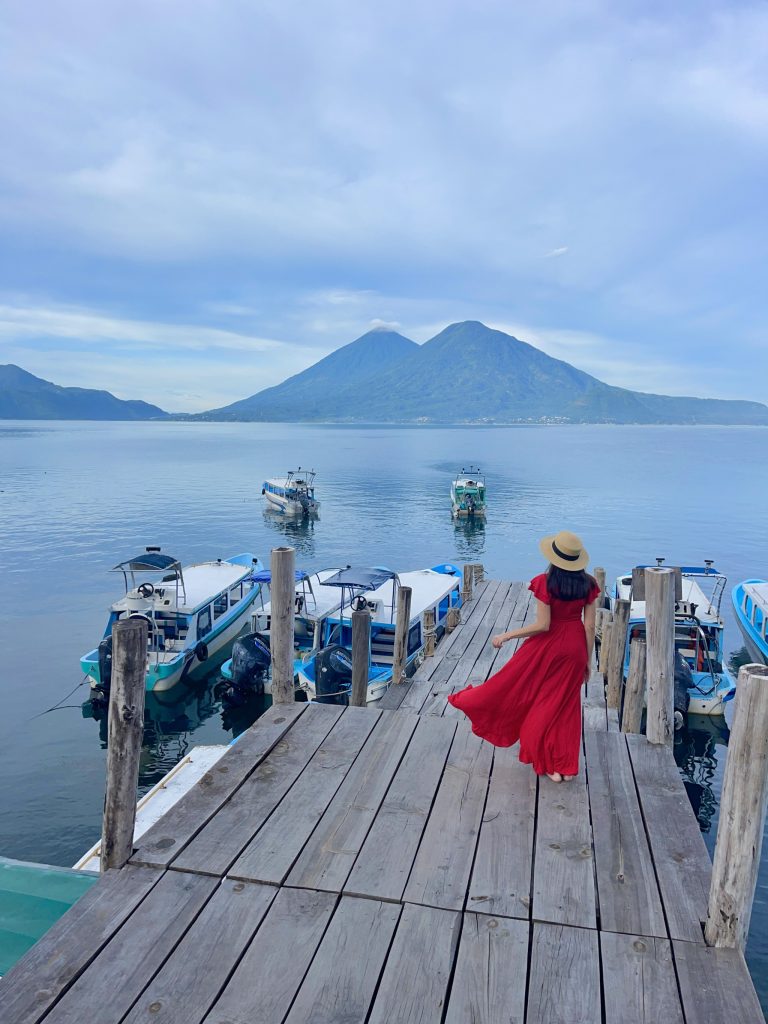
Lake Atitlán Guatemala sits in a massive volcanic caldera in the western highlands of Sololá at 1,562 meters above sea level. The lake is 130 square kilometers of deep blue water — 340 meters at its deepest point, making it the deepest lake in Central America. Three active volcanoes rise from its shores: Volcán Atitlán (3,537m), Volcán Tolimán (3,158m), and Volcán San Pedro (3,020m), and they are visible from virtually every point on the lake. On clear mornings before the clouds form, the view of all three reflected in the still water is the image people spend years trying to photograph and never quite capture.
Aldous Huxley visited in 1934 and wrote that Lake Atitlán was “the most beautiful lake in the world” — more beautiful than Como, he said, which is a claim that has followed the lake through every travel article written since. What he described still exists: the scale is disorienting, the light changes every hour, and the communities that live around it have maintained their distinct Tz’utujil and Kaqchikel Maya identities across colonial history, civil war, and now the pressures of international tourism. That depth — geological, historical, cultural — is what makes this lake different from other beautiful lakes.
There are more than a dozen distinct communities around the lake. Most travel content covers four of them. This guide covers all of them — including the six smaller villages that the standard itinerary misses entirely and that represent some of the most culturally significant and least commercialized experiences available at the lake.
THE VILLAGES
Every Village at Lake Atitlán — What Each One Is
Each village around Lake Atitlán has developed a distinct character. Some of those characters are genuinely rooted in local culture. Others have been shaped primarily by the type of travelers who came and stayed. Understanding the difference before you arrive is the most useful thing I can give you.
The Main Villages
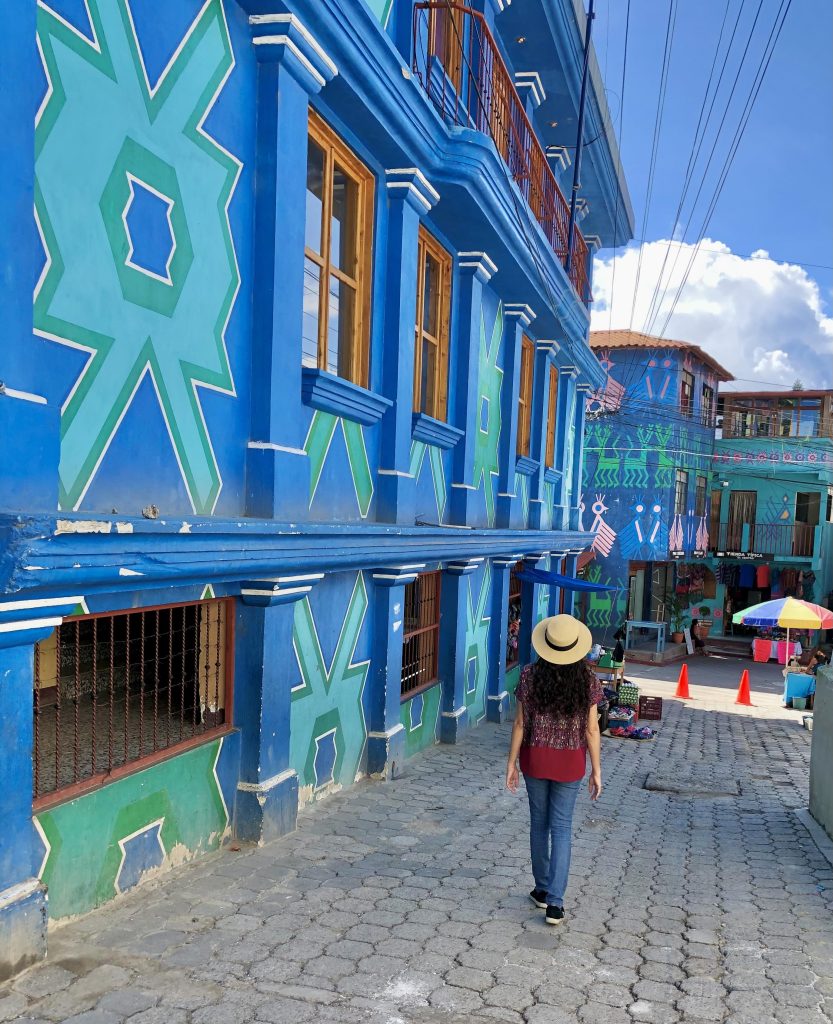
Santa Catarina Palopó painted blue houses traditional Kaqchikel Maya patterns Lake Atitlán Guatemala
The Quieter Shore: Six Villages Most Travelers Miss
The lake is far deeper than the four villages most English-language travel content covers. The six places below represent some of the most culturally significant and least commercialized experiences at the lake. None of them are built around backpacker nightlife or curated tourist experiences. They require intention — and that intention is rewarded.
Santa Catarina Palopó
Twenty minutes from Panajachel by tuk-tuk on the eastern shore road. The village is known for its painted houses — exterior walls decorated in blue, purple, and turquoise with traditional Kaqchikel Maya patterns, a community project started in 2019 that has transformed how the village relates to visitors. The women’s huipiles are distinct to the village, and daily life here moves at a pace shaped by the community rather than tourism trends. Beyond the painted streets: weaving cooperatives, the Mirador de Santa Catarina for lake views, and the Aguas Termales Natural thermal pool. The Santa Catarina and San Antonio Maya tour from Panajachel covers both villages with the cultural context that makes the visit genuinely educational rather than scenic. My review of Villa Santa Catarina covers the best place to stay here.
San Antonio Palopó
A few kilometers beyond Santa Catarina on the same eastern shore road, San Antonio Palopó holds what is arguably the deepest cultural weight of any village accessible from Panajachel by road. The ceramics tradition here is not a souvenir add-on — it is central to the village’s identity. Families have passed down pottery techniques for generations, creating the distinctive blue and earth-toned pieces that represent the town throughout Guatemala. You will still see men wearing traditional embroidered trousers in daily life, something that has largely disappeared in more tourism-oriented villages. The streets are steep, the church overlooks the lake, and the rhythm of life feels grounded in a way that is genuinely rare. My published guide to San Antonio Palopó covers the ceramics tradition, what to look for, and how to visit respectfully.
San Lucas Tolimán
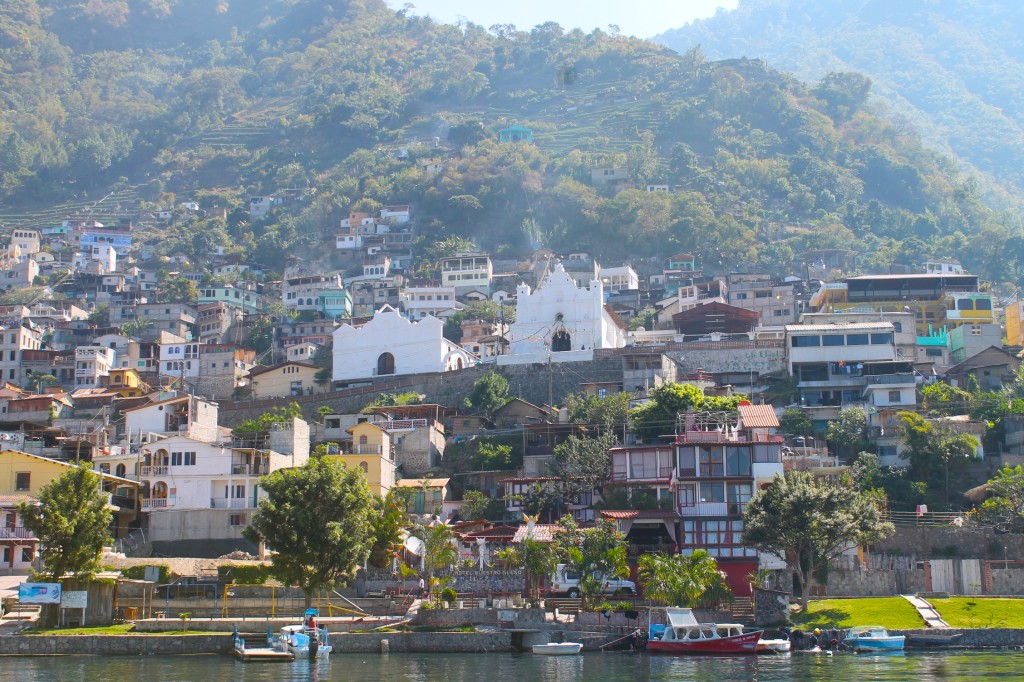
Consistently overlooked, which makes it consistently rewarding. San Lucas Tolimán is a working Tz’utujil town on the southeastern shore between Santiago Atitlán and San Antonio Palopó, at the base of Volcán Tolimán. Life here is slower and shaped by agriculture rather than tourism — corn and coffee farms, family-run kitchens, small workshops. The hiking access to Volcán Tolimán from San Lucas is one of the best in the region. If you want to experience the lake’s daily life without a tourist infrastructure around you, this is the right direction.
Santa Cruz La Laguna
Accessible only by boat on the northern shore, Santa Cruz sits between Panajachel and San Marcos on the western route but remains considerably quieter than either. The village is built on a steep hillside above the water, connected by stone paths rather than roads. Weaving families work in view of the lake. The shoreline trail to Jaibalito — 1.5 to 2 hours on foot, along a path used by local fishermen — is one of the most scenic and least-walked routes at the lake. The Santa Cruz cultural tour including a temazcal experience gives this village proper context.
Jaibalito
One of the smallest villages on the lake. No roads in or out — you arrive by lancha or by walking the shoreline trail from Santa Cruz or Tzununá. Everything moves by foot once you land. Life here is shaped by walking paths and the water: fishing, small farms, the daily rhythms of a community that the boat system has kept partially removed from the main tourist flow. El Indigo Bistro operates at the dock with lake views and serves breakfast through dinner — one of the most visited eating spots in the village. Atitlán Herbals, a small traditional plant medicine and herbal wellness stop embedded in the village, reflects the wider connection to traditional knowledge that Jaibalito has maintained. The pace here is completely different from San Pedro or Panajachel, and that difference is the reason to come.
Tzununá
Tzununá sits in a lush green valley between San Marcos and Santa Cruz, surrounded by steep mountains, forest, and coffee fincas. It remains a small Maya farming community where daily life still revolves around agriculture. In early mornings you’ll see people walking the hill paths to their fields. A handful of thoughtful eco-lodges have established in the hills above the village — Casa Awänímä focuses on connecting travelers with Maya traditions, Bambu Guest House is an eco-retreat with farm-to-table cooking, and Lomas de Atitlán offers gardens and sweeping volcano views. The waterfall hike above Tzununá — 30 to 60 minutes through coffee groves and forest — is one of the least-known hikes at the lake, with views back across the lake and volcanoes that few visitors ever see. Trece Cielos Arts (facebook.com/Trece.Cielos.Arts) is a local community arts space and café with vegetarian-friendly food and a creative program worth knowing about if you’re spending time in the village.
THE DECISION EVERYONE NEEDS TO MAKE
Which Village Is Right for You at Lake Atitlán?
This is the question I get asked more than any other. The honest answer depends entirely on what you’re coming for. There is no single best village — there is the right village for who you are and how you travel.
📌 THE HIPPIE TOWN ON LAKE ATITLÁN
People searching “what is the hippie town on Lake Atitlan” are looking for San Marcos La Laguna — known locally as the “Hippie Highway” (la carretera hippie). San Marcos has developed around yoga, wellness, alternative healing, and spiritual practice. The community is a mix of the original Tz’utujil Maya village and an international layer of retreat centers and long-term residents who arrived for the energy and stayed. My full San Marcos guide is honest about what that means in practice — the real yoga teachers worth finding, the distinction between genuine Mayan ceremony and what gets marketed as Mayan in San Marcos, and how to navigate the spiritual economy without getting sold something that doesn’t exist.
ACTIVITIES
Best Things to Do at Lake Atitlán Guatemala
Cultural and Ceremonial Experiences
Mayan fire ceremony at the sacred caves. A genuine ceremonial experience in the cave altars used by the local community — an ajq’ij-led fire ceremony for purification and healing lasting 2-3 hours. This is accessed through vetted local operators ($60-89 per person for the Los Elementos version). The Sacred Caves Mayan Ceremony from Panajachel is one of the most culturally grounded experiences accessible to visitors. Read my complete guide to Mayan ceremonies in Guatemala before you book anything ceremonial at the lake.
Temazcal. A traditional Maya sweat lodge ceremony rooted in pre-Columbian practice — one of the most requested experiences at the lake for good reason. My guide to temazcal in Guatemala explains what a genuine temazcal is, what the ceremony involves, and how to tell the real thing from the tourist version. The temazcal and dinner experience from Panajachel packages this well.
Cacao ceremony. Before you book one: my guide to the cacao ceremony in Guatemala gives the full historical context, including the fact that cacao does NOT grow near Lake Atitlán (the altitude is too high and too cold — Guatemalan cacao comes from Alta Verapaz, Izabal, and the Pacific coast), and that the group cacao ceremony format common at the lake is a modern creation rather than a pre-Columbian tradition. Cacao has deep roots in Mesoamerican culture. The ceremonies available at the lake can still be meaningful — just not for the historical reasons they’re often marketed under.
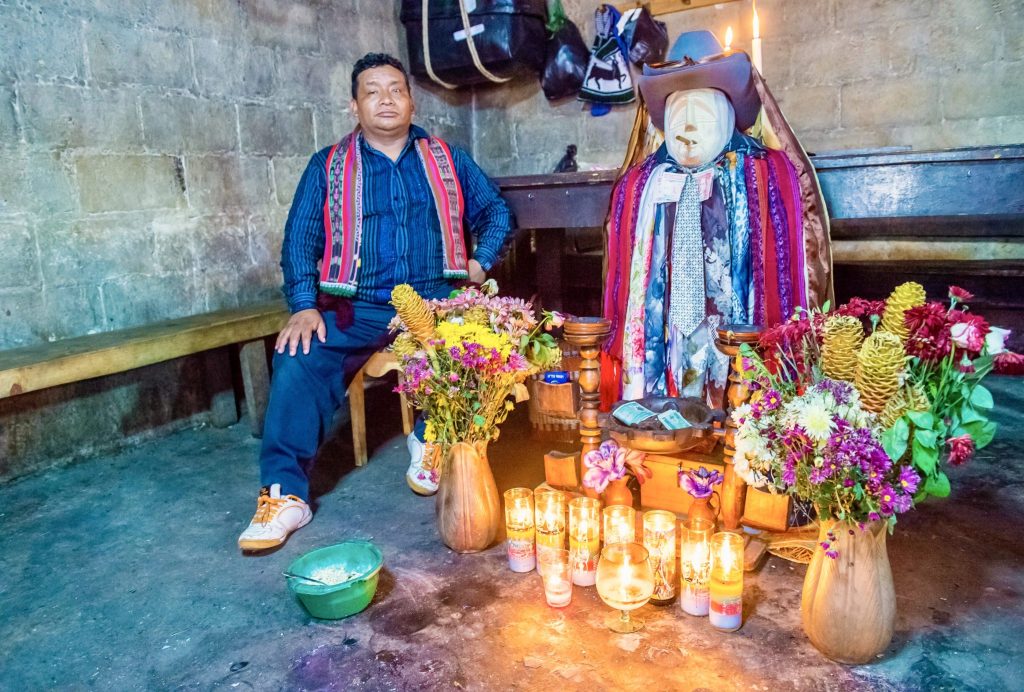
Maximón in Santiago Atitlán. The most unusual and most misunderstood religious figure in Guatemala — a Tz’utujil saint who lives in a different house in Santiago each year, cared for by a rotating cofradia, accepting offerings of rum and cigarettes and money. Visiting requires knowing where to go and how to behave respectfully. My complete guide to Maximón covers everything.
Maya cooking class. The Maya cooking class from Panajachel teaches traditional recipes in a local family’s home — fresh market ingredients, hands-on preparation, and the meal you cook together as the result. For families especially, this is one of the most engaging and culturally connected experiences at the lake.
Weaving workshops and natural dye cooperatives. The most meaningful textile experience at the lake is at Casa Flor Ixcaco and the associated cooperatives in San Juan La Laguna, where organic cotton is grown on-site and dyed with plants and insects before being woven on backstrap looms. Every product is tagged with the name and photo of the woman who made it and the natural ingredients used. This is the real thing, not a curated show. The San Juan art and culture tour includes the cooperatives with proper context.
Hiking and Adventure
Volcán San Pedro (3,020m) is the most accessible volcano summit at the lake — a 4-6 hour round trip through cloud forest from San Pedro La Laguna, with views of the entire caldera and all three volcanoes from the top. The San Pedro volcano hike tour is the right way to do this. My complete Lake Atitlán hiking guide covers every trail from the volcano summits to the waterfall walks.
Indian Nose / El Rostro Maya sunrise hike — the pre-dawn climb to the ridge above the western shore for the most talked-about sunrise experience at the lake. Always book through a reputable guide company; the trail has documented robbery incidents involving solo hikers. The Rostro Maya sunrise experience handles this correctly — organized pickup, vetted guide, proper timing.
Horseback riding through the coffee farms and forest above the western shore gives you the landscape from a completely different angle. Horseback riding in San Pedro La Laguna covers the routes above the volcano that most visitors only see from below.
Gozinex Mirador hike — a moderate trail that climbs above San Pedro and San Juan through farmland, forest, and local fincas to a less-visited viewpoint with a spectacular panorama of the lake and Volcán San Pedro directly across the water. Best before 9 AM on a clear morning when the cloud cover is minimal.
Tzununá waterfall hike — 30 to 60 minutes through coffee groves and forest above the village to a hidden waterfall with views back across the lake. One of the least-known hikes at the lake and one of the most rewarding for the combination of landscape and village life seen along the way.
Cascadas de Metzabal — a hidden waterfall in the mountains above Atitlán, documented by Guatemala.com in Spanish and virtually unknown in English travel content. Ask locally in San Pedro or San Juan for the current access route — this is not yet on major tour platforms.
Cascadas Palopó — a lovely waterfall in the ravine above San Antonio Palopó, reached through terraced onion fields that are a cultural experience in themselves. The hike context — smallholder farming on steep volcanic terrain above the lake — makes this a genuinely unusual way to understand how people work this land.
Paragliding over the caldera (Parapente en Panajachel) — tandem flights launching from above Panajachel over the lake and volcanic caldera. The scale of the lake becomes visible from above in a way that ground-level photography can’t capture. Book directly with the Parapente en Panajachel office.
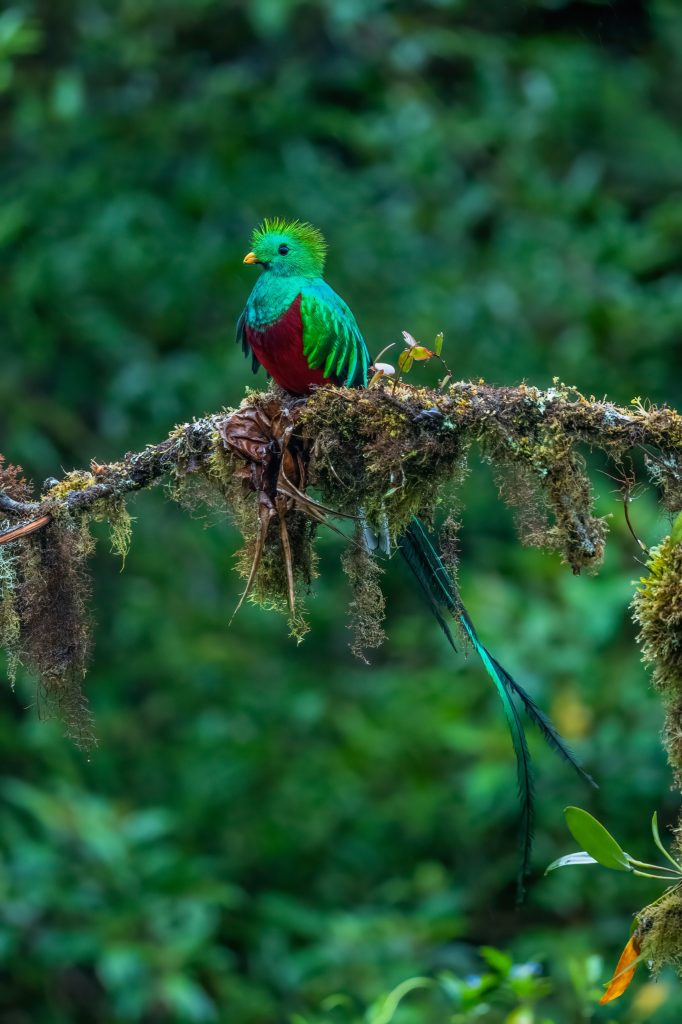
Quetzal viewing at Rey Tepepul near Santiago Atitlán — the resplendent quetzal is Guatemala’s national bird and one of the most sought-after birding experiences in Central America. The Rey Tepepul reserve near Santiago is one of the lake’s documented quetzal habitats, typically best visited in the early morning with a local guide. For serious birding across Guatemala, my complete Guatemala birding guide covers every destination.
Water Activities
Cliff jumping at Cerro Tzankujil (San Marcos) — the 12-meter platform above the lake in a protected nature reserve with forest trails, a Mayan altar, and a secluded swimming area. Q20 entrance. Best before 10 AM before the day-trip lanchas arrive.
Kayaking to Las Cristalinas — a white sand beach accessible by kayak from the western shore, one of the lake’s most remarkable and least-visited spots. The sand is genuinely white in a lake otherwise ringed by dark volcanic shores. This is one of the experiences I book personally for planning clients — not currently on Viator, booked directly with the local provider. Get in touch if you want to make this happen.
SUP, kayaking, and the extreme zipline combination — the SUP and extreme zipline adventure from Panajachel combines morning paddling on the lake with the Reserva Natural zipline system. The kayak and hike adventure from Panajachel adds a lake trail to the paddle. Go before noon — the Xocomil wind makes afternoon paddling on the open lake considerably more challenging.
Zipline and cable bike at Reserva Natural de Atitlán — the Reserva Natural outside Panajachel has a zipline system running through the forest canopy (longest line nearly 1 kilometer) and the bicicleta aérea — an aerial cable bike that you pedal through the trees — one of the more unusual activity combinations at the lake. My published review of the Reserva Natural de Atitlán covers all the activities, the overnight experience, and the secluded private beach at the end of the trail.
Scuba diving — the sunken Mayan city. Lake Atitlán holds one of the most remarkable archaeological sites in the Americas: Samabaj, a Mayan ceremonial center submerged around 250 AD when rising water levels engulfed it. The site is not open to public diving (its location is kept secret to prevent looting), but the Museo Lacustre inside Hotel Posada de Don Rodrigo in Panajachel tells the story and displays what has been recovered. If you have a serious interest in diving the lake, operators in San Pedro can discuss current access to non-restricted areas.
The Places Most Travelers Never Find
La Casa del Mundo — tucked between Jaibalito and Santa Cruz on the northern shore, accessible only by boat. Known for: a communal hot tub with lake and star views (book 8 hours in advance for the water to heat), a shared family-style dinner table where guests and staff eat together, kayaking and swimming off the dock. One of the most genuinely secluded overnight stays at the lake.
Lavanda Guatemala — a lavender field located facing the lake in Sololá, visible above Panajachel. Lavender in a tropical highland volcanic setting is unusual enough to be worth investigating. At the time of writing, this is documented only in local Guatemalan media. Worth checking current opening status locally before making a trip specifically for it.
The shoreline trail between Santa Cruz and Jaibalito — 1.5 to 2 hours on foot along paths used by local fishermen, with lake views that remain largely off the tourist radar. Start from either village. This is the kind of walk that feels nothing like the experience on the main lancha route between the same two points.
Day Trips from the Lake
Lake Atitlán’s position in the western highlands makes it a natural hub for several significant day trip destinations. The Chichicastenango market (Thursdays and Sundays) — one of the largest indigenous markets in Central America — is 1.5-2 hours from Panajachel: the Chichicastenango market tour from Panajachel includes transport and a guide who provides context that makes the market legible rather than overwhelming. The Iximché Mayan ruins — the former K’iche’ capital abandoned at the Spanish conquest and still an active ceremonial site — are accessible via the Iximché tour from Panajachel. My complete guide to Iximché gives the full historical context.
ESSENTIAL PRACTICAL INFORMATION
How the Lake’s Boat System Actually Works
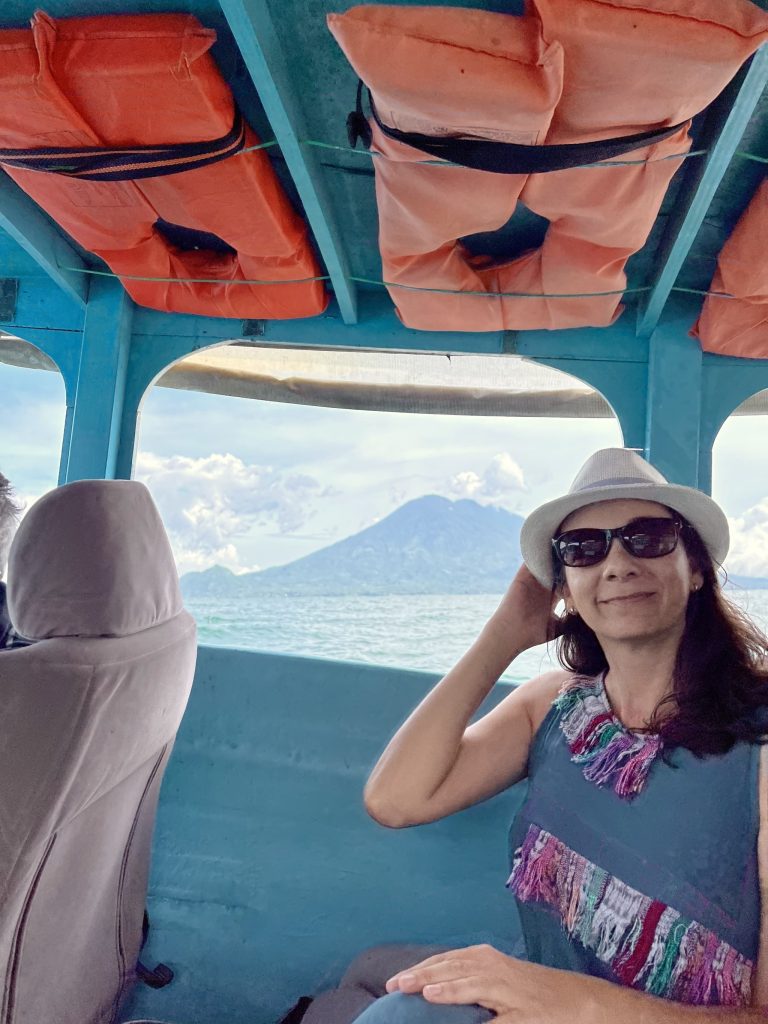
The lanchas are small covered motorboats that serve as the main transportation between all the villages circling the lake. There is no ferry company. Each route is run by independent local boatmen on their own flexible schedule. This system works every day, seven days a week, without a timetable — and once you understand its logic, it makes complete sense.
The route from Panajachel heading west runs: Santa Cruz, Jaibalito, Tzununá, San Marcos, San Juan, and San Pedro. Coming back from San Juan to Panajachel, it’s the same route in reverse. A separate boat runs directly to Santiago Atitlán from the main Panajachel dock — it departs when full and the same applies coming back. For Santa Catarina Palopó, take a tuk-tuk from Panajachel rather than a boat; the boat prices there aren’t standardized.
Timing: Boats start running between 6:30 and 7:00 AM. The last public boats leave most docks around 6:00 to 6:30 PM. Boats leave when they have enough passengers — generally every 20-30 minutes during peak hours. Plan to be back at the dock before 4:30 PM if you’re heading to Panajachel; the Xocomil wind makes late crossings slow and rough.
The Xocomil (pronounced sho-ko-MEEL) is a strong daily wind that sweeps across the lake, usually arriving in the late morning to early afternoon. It’s the result of temperature and pressure differences between the Pacific coast, the mountains, and the lake basin. Every activity recommendation in this guide — kayaking, paddleboarding, boat crossings — comes with the instruction to do it before the wind arrives.
Where to sit: The temptation is to sit at the front (bow) for the view. Don’t. As the boat meets the Xocomil’s chop or crosses another boat’s wake, the bow passengers get bounced hard. The back of the boat is calmer, safer, and where locals who know better always sit.
Fares: Pay the boat attendant in cash on disembarkation. The longest route — Panajachel to San Pedro — costs approximately Q25. Shorter hops cost less. Every boat carries life jackets; ask for one if you want it. If your accommodation is along the route between docks, tell the captain when you board and they’ll drop you at your dock. For pickups, stand on your dock, wave, and point in the direction you’re heading. Someone will stop.
My complete guide to Lake Atitlán boat services covers every dock, route, and timing detail in full.
💡 ATMs at the lake — the honest picture: Panajachel is the only truly reliable ATM hub on the lake, with multiple machines on Calle Santander (5B, Banco Industrial, BAC). San Pedro has 2-4 machines that sometimes run out or have connectivity issues. San Marcos has one ATM that is less reliable. San Juan has a BI machine reported by travelers. Jaibalito and Tzununá have none. Withdraw enough cash in Panajachel before crossing to the western shore. Most places around the lake are cash-only, and Q2,000-Q3,000 daily ATM limits apply. Budget Q300-500 per day for comfortable spending in smaller villages.
GETTING THERE
How to Get to Lake Atitlán Guatemala
From Antigua: Shared tourist shuttle to Panajachel, hotel pickup, 2.5-3 hours, $20-25 USD per person. This is the standard routing for most travelers. Book through your hotel the night before. Some shuttles run direct Antigua-to-San Pedro services — worth asking about if San Pedro is your base.
From Guatemala City: 3-4 hours to Panajachel via CA-1 west. Leave early — weekend and holiday traffic leaving the capital adds significant time. Most travelers arrive via Antigua first, which is the cleaner routing if you’re flying into La Aurora Airport.
From the lake to Flores/Tikal: Tourist shuttles from Panajachel to Flores run approximately 8-10 hours via the northern lowlands. Companies including Línea Dorada operate this route — book at any shuttle office on Calle Santander the evening before. Alternatively, return to Guatemala City by shuttle and fly to Flores (TAG airlines, 45 minutes). My 10-day Guatemala itinerary sequences the lake-to-Petén routing properly. For the full Tikal experience once you’re there, my Tikal guide covers everything.
By car: A rental car is most useful for the Antigua-to-Panajachel leg and for the eastern shore road to Santa Catarina Palopó and San Antonio Palopó. Once in Panajachel, the lanchas handle everything. My Guatemala car rental guide covers the full picture.
TIMING
Best Time to Visit Lake Atitlán
November through April — dry season — gives you the clearest mornings, the most reliable volcano views, and the best conditions for every outdoor activity from volcano hikes to sunrise lancha crossings. The rainy season (May through October) brings lush green hillsides and fewer visitors but regular afternoon downpours and cloud cover that frequently obscures the summit views. The waterfall hikes are best during and just after the rains when flow is highest. For the La Voz coffee cooperative tour, October through February covers the main harvest season when you can pick cherries alongside the farmers. My complete seasonal guide to Guatemala covers the full picture.
📌 KEY FESTIVAL DATES
July 23-27 — Feria de Santiago Apóstol (Santiago Atitlán). The lake’s most significant patron saint festival. Traditional Tz’utujil dances, processions, and community events that show Santiago Atitlán as the living cultural community it is.
June 22-29 — Feria de San Pedro Apóstol (San Pedro La Laguna). San Pedro’s main annual festival, main day June 29.
October 4 — Feria de San Francisco de Asís (Panajachel). Panajachel’s patron saint festival.
Holy Week (Semana Santa, variable March or April). The lake villages each observe Holy Week with distinct traditions. My guide to Holy Week at Lake Atitlán covers every village’s celebrations in detail.
The Names That Don’t Appear on Booking Platforms
The Ceremonies, the Experiences, and the People I Trust — I Share These Personally
I’ve been coming to this lake my entire life as a Guatemalan. The access I share with planning clients — the kayak route to Las Cristalinas, the vetted ceremony practitioners, the village guides who know what they’re talking about — doesn’t appear on Viator. If you want that version of the lake, get in touch.
ACCOMMODATION
Where to Stay at Lake Atitlán
Each village has its own accommodation range. The options below are organized by location, starting with the eastern shore (which I know personally and have reviewed in detail) and moving through the main hubs. For village-specific hotel deep dives, click through to the individual village guides.
EASTERN SHORE — PANAJACHEL AND SURROUNDINGS
|
⭐ MOST UNIQUE OVERNIGHT — NATURE RESERVE Reserva Natural de Atitlán Lodge Sleeping inside the nature reserve surrounded by spider monkeys and birdsong is unlike any other Panajachel experience. The private beach, the sunset restaurant, the ziplines and cable bike — my full published review covers all of it. Small, books up early, worth the planning effort. |
⭐ BEST GARDENS AND SUNSET VIEW Hotel Atitlán, Panajachel The most classic lakefront hotel experience in Panajachel — mature gardens, pool, lake views, and one of the best sunset dinner settings at the lake from the restaurant terrace. Worth visiting even as a non-guest for an early dinner as the three volcanoes go dark. |
|
⭐ BEST POOL AND PRIVATE BEACH Hotel San Buenaventura On a private beach with the most beautiful pool in Panajachel. 8.8/10 Excellent on Expedia. Kayaks available, lakefront access, traditional Guatemalan architecture. The private beach alone makes this the most compelling option for travelers who want water access in Panajachel. |
⭐ MY PERSONAL REVIEW — LAKE VIEWS Lakefront in Panajachel with the volcano views that justify the lake. I have a full published review covering the accommodation, the restaurant, and what the volcano panorama actually looks like from the property. |
SANTA CATARINA PALOPÓ — 20 MINUTES FROM PANAJACHEL
|
⭐ PERSONAL FAVORITE — LAKEFRONT My most-returned-to hotel at the lake. Lakefront, pool, volcano views, easy lancha connections to all villages. I have a full published review. Consistently one of my top recommendations for first-time visitors who want comfort with genuine lakeshore proximity. |
⭐ BEST INFINITY POOL — VOLCANIC VIEWS Tzampoc Resort In Santa Catarina Palopó with an infinity pool overlooking the lake and all three volcanoes, sauna, hot tub, breakfast included, and traditional-decorated rooms with lake view balconies. One of the most visually striking overnight options at the entire lake. Arrives via a steep but navigable tuk-tuk ride. |
WESTERN SHORE — SAN JUAN AND SAN PEDRO
|
⭐ BEST VALUE — WESTERN SHORE Eco Hotel Uxlabil Atitlán Between San Juan and San Pedro on the lakefront. Private dock, free kayaks, lake-view balconies on every room, solar-heated water, bird-filled gardens, temazcal, breakfast included. One of the genuinely best-value hotel experiences at the entire lake. Walkable to both villages. |
⭐ BEST LUXURY — SAN PEDRO Sababa Resort, San Pedro The top-tier option in San Pedro — lakeview suites, pool, and the same kitchen quality as the acclaimed Sababa restaurant. Buffet breakfast (Q70 for non-guests) is one of the best-value morning meals at the lake. Comprehensive San Pedro guide at the link below. |
✨ VILLAGE-SPECIFIC HOTEL GUIDES
Each village guide has its own detailed accommodation section: Panajachel hotels · San Pedro hotels · San Juan hotels · San Marcos hotels · Santiago hotels. Also worth reading: my published reviews of Villas Balam’Yá and Hotel del Lago.
A rental car works best for the Antigua-to-Panajachel leg and the eastern shore road to Santa Catarina and San Antonio Palopó. Once at the lake, the lancha network handles everything.

Guatemala Is My Country
This Lake Is My Home. Let Me Help You Experience It Right.
The kayak route to Las Cristalinas. The fire ceremony practitioners I trust. The village guides who know what they’re talking about. The smaller villages that require someone who knows which trail to take. I share these privately with planning clients. If you want a Lake Atitlán experience that goes beyond what a booking platform can give you, I’m the right person to talk to.
QUESTIONS PEOPLE ASK
Lake Atitlán Guatemala: Your Questions Answered
What is so special about Lake Atitlan?
Lake Atitlán sits in a massive volcanic caldera in Guatemala’s western highlands — surrounded by three active volcanoes, at 1,562 meters above sea level, 340 meters deep (the deepest lake in Central America), and ringed by more than a dozen distinct Maya communities each with their own language, textile tradition, and culture. Aldous Huxley called it the most beautiful lake in the world in 1934. The combination of volcanic geology, Maya cultural depth, and landscape scale is found nowhere else in the Americas.
What are the best towns to stay in around Lake Atitlán?
It depends on what you’re coming for. For Mayan culture and genuine ceremony: Santiago Atitlán. For yoga and serious wellness: San Marcos La Laguna. For hiking, outdoor adventure, and nightlife: San Pedro La Laguna. For weaving cooperatives and coffee culture: San Juan La Laguna. For logistics, infrastructure, and the best volcano panorama: Panajachel. For the quietest and most culturally traditional experience accessible from Panajachel: Santa Catarina Palopó and San Antonio Palopó. For truly off-grid lake life: Jaibalito or Tzununá (both boat-only access).
What are the best things to do in Lake Atitlán?
The lake’s activity range is wider than most visitors expect. The most culturally significant: visiting Santiago Atitlán for Maximón and the living Tz’utujil community; the La Voz coffee cooperative tour in San Juan; weaving workshops at Casa Flor Ixcaco; the Sacred Caves Mayan fire ceremony. The most adventure-focused: Volcán San Pedro hike, Indian Nose sunrise, cliff jumping at Cerro Tzankujil, paragliding, horseback riding. The most underrated: kayaking to Las Cristalinas white sand beach, the Tzununá waterfall hike, the Reserva Natural de Atitlán (including the aerial cable bike), the Santa Cruz-to-Jaibalito shoreline trail.
What is the hippie town on Lake Atitlan?
San Marcos La Laguna — known locally as “la carretera hippie” (the hippie highway). It’s the village that developed most strongly around yoga, wellness retreats, meditation, alternative healing, and a spiritual tourism economy. My full San Marcos guide is honest about what this means in practice — the real yoga practitioners worth finding, and the honest framing on what gets marketed as Mayan ceremony in San Marcos versus what actually has Tz’utujil Maya roots.
What is the #1 attraction in Guatemala?
Tikal is Guatemala’s most internationally recognized single attraction. But Lake Atitlán is the destination most Guatemalans and most repeat visitors to the country identify as the most profound experience. The two are not in competition — most Guatemala itineraries include both. My guide to the best things to do in Guatemala puts both in context alongside the country’s other major destinations.
Is it okay to swim in Lake Atitlan?
Swimming in designated areas is possible at the lake. The lake experiences periodic cyanobacteria (blue-green algae) blooms linked to agricultural runoff and wastewater, which vary by location and season and can be toxic — check current conditions at your chosen swimming spot before entering the water. The safest designated swimming areas are Cerro Tzankujil in San Marcos (Q20 entrance), the private beach at Hotel San Buenaventura in Panajachel, and the Reserva Natural private beach. The lake’s depth and cold temperatures make open-water swimming physically demanding regardless of water quality.
What does Atitlán mean in English?
Atitlán comes from the Nahuatl word “atitlan” meaning “at the water” or “place of water” — from “atl” (water) combined with a locative suffix. The Tz’utujil Maya name for the lake is “Ruk’u’x Ya” meaning “heart of water” or “navel of water,” reflecting its central importance in Tz’utujil cosmology.
How do I get to Lake Atitlán from Antigua?
Shared tourist shuttle from Antigua to Panajachel — hotel pickup, 2.5 to 3 hours, $20-25 USD per person. Book through your hotel the night before. Common departure times: 7 AM, 8 AM, 1 PM. From Panajachel, lanchas run to all lake villages throughout the day.
EXPLORE THE LAKE
Complete Village Guides and Deep Dives
|
CULTURAL CAPITAL Santiago Atitlán: A Local’s Complete Guide Maximón, the massacre, Stanley Rother, and the most historically rooted Tz’utujil community at the lake. |
COFFEE AND COOPERATIVES San Juan La Laguna: A Local’s Complete Guide Natural dye weaving, La Voz coffee tour, Mirador Kaqasiiwaan, and the honest picture of what’s real in San Juan. |
|
ACTIVITIES AND NIGHTLIFE San Pedro La Laguna: A Local’s Complete Guide New miradores, volcano hiking, the best restaurants at the lake, and the social scene. |
YOGA AND WELLNESS San Marcos La Laguna: A Local’s Complete Guide Cliff jumping, yoga, the honest guide to the spiritual economy, and what Eagle’s Nest actually is. |
|
THE GATEWAY Panajachel, Guatemala: A Local’s Complete Guide The Reserva Natural, the volcano view, Circus Bar, Crossroads Café, and the practical guide to the lake’s transportation hub. |
POTTERY AND TRADITION San Antonio Palopó: A Mayan Village with Unique Pottery The ceramics tradition, traditional dress still worn daily, and the quietest culturally intact village accessible from Panajachel. |
|
MAYAN CEREMONIES Mayan Ceremonies in Guatemala: A Complete Guide What genuine ceremony looks like, what to look for before you book anything at the lake, and how to access the real thing. |
TEMAZCAL Temazcal in Guatemala: What It Is and Where to Find the Real Thing The history, the structure, the ceremony — and how to find a genuine temazcal experience at the lake. |
|
CACAO CEREMONY Cacao Ceremony in Guatemala: What Really Happens The honest history and cultural context of the cacao ceremony at the lake — including where Guatemalan cacao actually comes from and why that matters. |
MAXIMÓN Maximón: Guatemala’s Most Mysterious Religious Figure Everything you need to know before visiting Maximón in Santiago — who he is, what the visit involves, and how to do it respectfully. |
|
HIKING The Best Hiking Trails in Lake Atitlán Every trail from volcano summits to waterfall walks — full details on access, difficulty, and timing. |
WITH KIDS Best Things to Do at Lake Atitlán With Kids The Reserva Natural, cooking classes, kayaking, weaving workshops — what actually works for families at the lake. |
|
BOAT SERVICES Complete Guide to Lake Atitlán Boat Services Every dock, every route, every price — the complete map of how to move between lake villages. |
GUATEMALA ITINERARY 7 Days in Guatemala: A Local’s Complete Itinerary How Lake Atitlán fits into the wider Guatemala trip — sequencing the lake with Antigua, Chichicastenango, and beyond. |
This Lake Is My Country
I’ve Been Here My Whole Life. Let Me Show You the Version That Stays With You.
Born Guatemalan. Lake Atitlán in my life since childhood. I plan trips for people who want more than a highlight reel — the ceremony that means something, the village that isn’t built for tourists, the kayak route to a beach that doesn’t appear on maps. If that’s what you’re looking for, I’m the right person to talk to.
Lake Atitlán does not announce itself. It reveals itself slowly — first as scenery, then as a landscape you find yourself standing in, then as a place whose people and history and depth you begin to understand. The lake is still here. The Tz’utujil families in Santiago are still here. The fishermen in Jaibalito are still here. The women weaving in San Juan are still here. Take the time to find them. It is the only way to actually arrive.
Through her writing, Paula helps travelers discover Guatemala beyond the typical tourist route with practical advice, local recommendations, and authentic experiences that connect visitors with the country’s people, culture, and traditions.
Planning a trip to Guatemala? Paula offers personalized Guatemala itinerary planning and trip consultation services tailored to your interests, travel style, and budget. Contact her at [email protected] to learn more.
- San Lucas Tolimán Guatemala: Lake Atitlán’s Best-Kept Secret - September 24, 2026
- Hotel Tolimán Lake Atitlán: A Special Stay in San Lucas Tolimán - September 24, 2026
- Guatemala Dreams in San Lucas Tolimán: A Boutique Stay on Lake Atitlán - September 23, 2026


I have lived in San Pedro for 10 years now. I’m 66 years old and fell in love with it when visiting here. I appreciate your article but to dismiss San Pedro totally as having ‘a bad reputation as a party town’ certainly doesn’t do it justice.
Hi Cynthia, you are right about this I should not dismiss it as just being a party town. I’m sure it’s a great place to live. Would love to hear more about what you love about San Pedro and maybe include some of it in an updated version of the article.
We stayed in San Pedro for 2 weeks in February 2017 and loved it. From what we saw, we wouldn’t call it a party town either. Very laid back. Lots of great restaurants. Friendly people.
I know we will return one day!
Great article!